
Posts by Alex Grinberg

Moscow’s Weakness Behind the Crisis With Baku
PSCRP-BESA Reports No 140 (July 6, 2025)
On June 27th the FSB (Russian Federal Security Service) and police forces conducted simultaneous raids in Yekaterinburg, targeting dozens of ethnic Azerbaijanis. This city is one of the centers of the Azerbaijani diaspora in Russia, which numbers between 2 and 3 million people (not all of them are Azerbaijani citizens). The targets of the raid were portrayed as part of an “ethnic criminal group” involved in unsolved murders dating as far as 2001 and 2011. The operation resulted in the deaths of two brothers, Huseyn Safarov (59) and Ziyaddin Safarov (54), both Russian citizens of Azerbaijani descent, who owned the “Caspian” cafe in the city.
Russian authorities claimed that Ziyaddin died of “heart failure” and provided no cause of death for Huseyn. However, Azerbaijan’s forensic examination revealed extensive evidence of fatal, cruel beatings and torture. The autopsy found broken ribs, deformed chests, internal bleeding, and injuries to the genital areas of both men. Azerbaijan’s chief medical examiner concluded they died from “post-traumatic shock” caused by severe bodily trauma, directly contradicting Russian explanations.
Multiple witnesses and family members reported systematic torture during the raids. Survivors described being “thrown to the floor in separate rooms and beaten with various objects,” with some subjected to electric shocks. One detainee, Vugar Safarov, told journalists that he and his brother were “forced to eat dirt” during transport to the police station and beaten when they refused. Their father, who suffers from a heart condition, was reportedly shocked with an electric taser multiple times.
The Russian independent media outlet Meduza documented that at least one suspect showed visible signs of severe beatings during court appearances, while lawyers confirmed broken ribs for detainees. Video evidence showed security personnel smashing car windows with hammers and forcibly dragging diaspora leader Shahin Shikhlinsky from his vehicle. He was detained but released later as a “witness”.
The death of two detainees and the outright racist brutality of the law enforcement triggered the worst ever crisis in Russian-Azerbaijani relations. It is noteworthy that the relations have already went sour following the shooting down of the Azerbaijan Airlines Flight 8243 in December 2024. The Russian behavior highlights not only the Kremlin’s pathological proclivity to exacerbate the existing problems instead of resolving them, but also the existence of geopolitical stakes. In both cases, the Kremlin has outright refused to admit guilt, thereby aggravating the crisis.
Russian state media and officials consistently framed the events as legitimate criminal investigations targeting Russian citizens involved in decades-old murderswhich were cold cases for a very long time. Foreign Ministry spokesperson Maria Zakharova emphasized detainees were “Russian citizens of Azerbaijani origin” and characterized Azerbaijan’s response as an “absolutely inspired campaign… organized, well-planned against our country.” Kremlin spokesperson Dmitry Peskov blamed Ukraine for trying to “add fuel to the fire” and insisted Russia “has never threatened, and does not threaten Azerbaijan.”
Azerbaijan’s reaction
The Azerbaijani reaction followed the pattern of the reaction to the previous incident with Russia, meaning that Baku was attempting to avoid a full-scale crisis with Moscow to the extent possible. Baku raised the stakes only following the total absence of Russian reciprocity.
Azerbaijani media and commentators have lambasted the Russian policy of “chauvinism and ethnic discrimination.” They said that the violence against ethnic Azerbaijanis in Russia was the continuation of tensions between Moscow and Baku caused by the shooting of an Azerbaijani passenger jet by Russian air defenses.
Azertag news agency compared Moscow’s behavior to the policy of Nazi Germany and said that Russia was looking for a “new enemy” and new conflicts to deal with growing public discontent with the prolonged war against Ukraine. According to Azartac, Moscow still views former Soviet republics as its colonies; it cannot stand Baku’s independent foreign policy, which is why it is trying to put pressure on Azerbaijan through “a hunt for migrants”.
Similarly, the Caliber Telegram channel said that the “massive campaign of pressure” on religious and ethnic minorities was part of the Putin administration’s policy and was aimed at diverting public discontent away from the Russian authorities. Some other Azerbaijani media even compared Putin to Stalin.
The Azerbaijani Ministry of Culture on 29 June called off all cultural events in the country involving the Russian state and private entities. On 30 June, Azerbaijan detained three Russian state media employees—two managers from the Sputnik news agency’s Azerbaijani service in Baku and an employee of the Ruptly news agency. Sputnik news agency is an official Russian propaganda outlet, and its workers are very often intelligence officers under the cover of journalists.
On June 30, the Zakharova, i.e., the Kremlin, blamed Azerbaijan for “unfriendly acts.” The translation of the wording by the Kremlin mouthpiece means Russia may consider further responses.
What is behind the scenes?
Russian arrogance and racism
One should not always look for deeper or hidden reasons; sometimes bad things just happen. The attitude of the Russian authorities towards non-Russian immigrants is very often derogatory and racist. It is very often arbitrarily cruel. Russian law enforcement is perceived on a popular level as criminal as the criminals themselves are. They can beat to death anyone because they can, without having an obvious goal, be it a malicious one. The claim of Azerbaijani media that the Russians see Central Asia and the Caucasus as their former colony is right: Russian authorities got accustomed to the reaction of fear and obedience following their bullying. The fact that Azerbaijan is not ready to play by the rules Russia sets makes the Kremlin even more aggressive.
The growing tensions between Baku and Moscow are of concern for former Soviet Central Asian nations. Numerous immigrants from those post-Soviet republics live in Russia, and they fear becoming victims of the same arbitrary rule of lawlessness. This is why many Uzbek commentators and authors praised Azerbaijan’s stance, suggested emulating Azerbaijan’s behavior towards Russia, and even dared to criticize Putin—which has been unheard of hitherto.
Russia’s weakening region-wide
Yet, it seems that in addition to the criminal behavior that has long been normalized, the atrocities committed by the FSB may have more defined geopolitical objectives. Russia is weakening in the Caucasus, whereas Azerbaijan is getting stronger. Finally, personal Putin motives add fuel to the fire of the “aim’ tensions.
The removal of Russian peacekeepers from Karabakh in June 2024 marked a breaking moment; it was the first time such an event happened before their mandate expired. This followed Azerbaijan’s complete military victory over the Armenian occupying forces in the Azerbaijani territory. The resolution of the Karabakh conflict removed a key tool of Russian influence—the ability to manipulate frozen conflicts to maintain regional control.
The broader geopolitical context includes Russia’s military forces being stretched thin because of the Ukraine war, creating opportunities for assertive behavior by traditionally subordinate allies. Azerbaijan’s strategic location on the Middle Corridor transport route and its energy wealth provide significant leverage in dealing with great powers, while Turkey’s reliable support offers an alternative to Russian security guarantees.
Economic factors also play a crucial role, with historical disputes over oil pricing through the Baku-Novorossiysk pipeline and Azerbaijan’s position as an indispensable partner for Russia’s sanction-busting activities through Iranian and southern routes.
President Putin believes that Ilham Aliyev delivered a personal slight by refusing to attend the May 9th Victory Day parade. Both Valentina Matvienko and Patriarch Kirill invited Aliyev on Putin’s behalf. Putin does not forgive personal insults.
All of this is built against the backdrop of the Kremlin’s dissatisfaction with Baku’s excessive independence and the formation of a Turkey-Azerbaijan axis in the South Caucasus. The Kremlin may believe that Aliyev is deliberately raising the stakes, taking advantage of the current tensions in relations with Pashinyan. In the meantime, the Kremlin considers Armenia’s Pashniyan an agent of influence of the West.
Thus, brutal attacks on the Azerbaijani diaspora in Russia are the only means the Kremlin has at its disposal to “counter” Azerbaijan’s independence.
How do the others see that?
Turkey
Turkish analysts and media likewise see in growing Azerbaijan’s moving out from Russia’s orbit the major reason for the ongoing tensions. The process started following the solution of the Karabakh issue to the detriment of Russia. Prominent Hurriyet writer Abdulkadir Selvi said that Russia’s concern is that Turkey could transport energy resources from Azerbaijan and Central Asian countries to Europe, thus threatening Russian interests, and hinted at a possible solution to the Zangezur corridor problem. Journalist Kemal Ozturk suggests that the root cause of recent Moscow-Baku tensions is that Russia still perceives Azerbaijan as a country under its control, praising Azerbaijani President Ilham Aliyev’s “extremely determined stance against Russia.”
Iran
Iran likewise thoroughly watches the recent developments with hardly concealed sympathy for Russia. Most Iranian official media relate the events starting with the mass arrests of Azerbaijanis by Russian law enforcement. However, it is impossible to understand from their description who handles the current deterioration. Such IRGC-affiliated media as Tasnim overtly tend to prefer the Russian version. In contrast to that, unofficial Iranian analysts draw a clearer picture.
The Caucasus and Russia expert Ehsan Movahedyan, well known for his antisemitic rhetoric, adopts an overt anti-Azerbaijan and pro-Russian stance, expressing full support for the Russian moves. Movahedian quotes an Armenian international relations expert, Benyamin Matusian. The latter dubbed the raid on the Azerbaijanis as “hitting the Azerbaijani brain.” Matusian levels racist accusations against the Azerbaijani diaspora in Russia, claiming that they seek expansion and refuse to integrate into Russian society. He foresees Russian support for keeping the Karabakh issue alive to the detriment of Pashinian.
Finally, the Armenian commentator blames Azerbaijan for supporting Ukraine, justifying the Russian crackdown. On July 5, Movahedyan posted and translated on his Telegram channel a post by a Russian expert of international relations, Dimitri Suslov, pointing out a joint intrigue against Russia by the respective leaders of Armenia, Azerbaijan, and Turkey. Movahedyan has circulated unconfirmed rumors regarding Putin’s dissatisfaction with the visit of Iran’s president, Pezeshkiyan, to Baku.
Ukraine’s involvement added another geopolitical dimension, with President Volodymyr Zelensky directly supporting Azerbaijan and telling President Aliyev that Ukraine stands with Baku “in a situation where Russia is bullying Azerbaijani citizens.” This episode represents a significant expansion of the Ukraine conflict’s impact on regional alignments.
The crisis signals the potential end of the post-Soviet period of Russian hegemony in the South Caucasus. Armenia’s simultaneous pivot toward the West, including EU border monitors and expanded cooperation with France and the United States, leaves Russia with diminished influence across the entire region. However, it is noteworthy that Pashinyan faces serious challenges both in Armenia and among the Armenian diaspora. Most opposition to Pashiniyan is overtly pro-Russian and pro-Iranian. Turkey’s growing role as a security guarantor and economic partner provides former Soviet states with viable alternatives to Russian dominance.
Conclusion
The events of June 27, in Yekaterinburg signify not just a mishandled law enforcement operation —they mark a potential turning point in post-Soviet regional order. The deaths of two ethnic Azerbaijani brothers during Russian police raids have exposed the limits of Moscow’s traditional tools of influence and highlighted the growing assertiveness of its former allies.
The broader implications extend beyond bilateral relations to encompass the transformation of the South Caucasus from a Russian sphere of influence into a more complex, multipolar region. Azerbaijan’s pivot toward Turkey, its alliance with Israel, and potential Western cooperation, combined with Armenia’s simultaneous Western alignment, suggest a fundamental reshuffling of regional power dynamics that may prove irreversible. As Russia’s military and diplomatic resources remain focused on Ukraine, its ability to maintain traditional dominance over former Soviet territories continues to erode. The Yekaterinburg crisis may be remembered as when Russia’s imperial overreach finally caught up with its regional ambitions, forcing a new generation of post-Soviet leaders to choose between subordination and sovereignty.
One must not forget that Russia has no moral qualms whatsoever about resorting to the most cynical pressure for want of better options. Azerbaijan’s neighbors have similar concerns regarding future Russian moves. Russia may lose its influence, yet it is still dangerous for its former colonies. So none of the Central Asian nations, and Azerbaijan, are Russian pawns or Putin’s supporters. Their proximity to Russia requires these nations to exercise caution. Azerbaijan, likewise, is not interested in further deterioration but only in protecting its vital interests vis-à-vis the Kremlin. By its current policies emphasizing moderation and independence, the Caucasian nation proves its indispensability for ensuring the region’s stability between two problematic neighbors: Iran and Russia.
Why Azerbaijan Perfectly Fits Into the Abraham Accords Framework: Clarifications
PSCRP-BESA Reports No 119 (March 15, 2025)
“Azerbaijan is an important strategic ally of Israel in the Caucasus region, with relations encompassing cooperation in security, trade, technology, and energy sectors. Israel will continue to strengthen cooperation with Azerbaijan and the US, and will stand firmly against any attempt to undermine it,” Israel’s Prime Minister’s office said on March 5th, announcing that Jerusalem was in active talks with Washington to advance a three-way alliance, according to The Jerusalem Post.
A week later, on March 14th, Steve Witkoff, the special envoy of US President Donald Trump, landed in Baku after an overnight visit to Moscow, in what appears to be a well-coordinated diplomatic move between Israel, the US, and Azerbaijan. “Sources involved in Israeli-Azeri relations reveal that coordination for the visit became particularly intensive after March 5, when Prime Minister Benjamin Netanyahu emphasized his commitment to the trilateral partnership between the countries in the Knesset,” The Jerusalem Post reported.
For the last month, numerous US and Israeli publications mulled the initiative to integrate the Republic of Azerbaijan into the Abraham Accords. In our two previous papers on the issue, we described how deep the relations between Baku and Jerusalem are and brought up several recommendations on how to effectively engage Azerbaijan in Trump’s regional plans and for the sake of Israel’s interests.
But there are some skeptics who attempted to argue the alleged impracticality of the idea. Their main counterarguments are:
This initiative is irrelevant in the context of Azerbaijan, as the Abraham Accords are signed exclusively between Israel and Arab countries.
These agreements are signed between Israel and Arab states that were previously in a state of war with the Jewish state. Azerbaijan, on the other hand, has never been at war with Israel and established diplomatic relations with it more than 30 years ago.
The Abraham Accords are strictly a Middle Eastern initiative and therefore have no direct relevance to Azerbaijan.
Conceptual Clarifications
· It must be noted that our policy papers did not merely discuss Azerbaijan’s accession to the Abraham Accords, but rather its inclusion in the “club“ of signatory states (“Azerbaijan should be included in the ‘Abraham Accords Club’”). Later, during his address in the Knesset, the MP from the SHAS party, Simon Moshiashvily, similarly stated not only the necessity for Azerbaijan to sign the accords but also that “it would be appropriate to integrate Azerbaijan itself into the Abraham Accords framework.” In both cases, the rationale was based on the fact that following the signing of the Abraham Accords in 2020, the Negev Forum [1] was established in 2022, bringing together the United States, Israel, the UAE, Egypt, Morocco, and Bahrain as a functional mechanism for implementing the agreements. The forum was designed with a structured institutional framework, including a presidency, a steering committee, and working groups focusing on key areas such as: food security, water technologies, clean energy, tourism, healthcare, education, regional security.
Steering Committee meetings were held in Bahrain (June 2022) and the UAE (January 2023), while the first working group seminar took place in Washington (June 2023). However, under the Biden administration, this mechanism did not develop substantial momentum. Now, with the Trump administration’s anticipated expansion of the Abraham Accords, this mechanism is expected to be restructured and relaunched in an updated format. The goal is to establish a formalized platform for multilateral regional cooperation, backed by financial support from the United States and the UAE. When discussions arise about Azerbaijan’s inclusion in the “club” or “framework” of the Abraham Accords, the reference is specifically to this institutional mechanism, just ahead of its planned restructuring.
· The claim that the Abraham Accords are intended exclusively for normalizing relations between Israel and Arab countries is contradicted by numerous publications in leading Israeli media (December 2024 – February 2025), citing sources within the Trump team. According to their information, there are plans to expand these agreements to 14 Muslim-majority countries, including non-Arab nations in Africa and Southeast Asia.
· The assertion that these agreements are signed only by countries that were or still are de jure in a state of war with Israel is refuted by the precedent of the UAE. The United Arab Emirates did not participate in any Arab-Israeli war, never declared war on Israel, and therefore, prior to signing the Abraham Accords in 2020, were not in a state of war with the Jewish state.
There are also skeptics in Azerbaijan, who undermine the initiative, claiming it has no real value for Baku. But they have missed at least three obvious points:
1) The idea of integrating Azerbaijan into the Abraham Accords framework reshapes the prevailing perception of Azerbaijan in the U.S., which has been largely confined to the Armenian issue and the limited geopolitical scope of the South Caucasus.
2) The initiative brings out the following issue: other Muslim-majority countries that have merely signed the Abraham Accords receive political, military, and economic assistance from the U.S. Meanwhile, Azerbaijan, which has been Israel’s most reliable Muslim-world ally for decades, remains subject to U.S. sanctions under Section 907 of the Freedom Support Act. Israeli politicians and Jewish leaders are already calling Trump’s administration to repeal it, as it is outdated and unjust.
3) “Azerbaijani model” of relations with Israel can be set as a precedent for other Muslim-majority countries, that wish to join the Abraham Accords. The essence of this approach is as follows: the Abraham Accords risk becoming ineffective because every time Israeli-Palestinian tensions escalate, Arab signatories immediately freeze all regional partnership initiatives outlined in the accords. This enables Hamas (and Iran) to sabotage the implementation of the Accords, as seen on October 7, 2023: Hamas’ attack derailed the imminent signing of the agreement between Israel and Saudi Arabia. As for Azerbaijan, it continues to strengthen its partnership with Israel regardless of the Israeli-Palestinian relations, and despite external pressures from Iran and Turkey. If accepting Azerbaijan’s approach to its partnership with Israel turns to be the prerequisite condition for the future Abraham Accords members, it might not only enhance Azerbaijan’s image in Israel and the U.S., but also strengthen its strategic position in the eyes of Muslim-majority countries in Africa, Southeast Asia, and South Asia that are looking to advance their own lobbying efforts in Washington.
How to Effectively Engage Azerbaijan in Trump’s Regional Plans and in Israel’s Interests: Practical Recommendations
The concept and recommendations presented below were developed by the authors, who are Israeli experts, based on discussions with several former Israeli diplomats and ex-Knesset members, as well as with several American and Azerbaijani Jews. What unites us all is a commitment to strengthening regional alliances and deepening Israel’s integration into the “Greater Middle East.” Our approach is guided solely by the long-term interests of the Jewish state.
The authors have not coordinated their position with any official representatives of Azerbaijan. Therefore, it is only natural that situations may arise where Azerbaijani officials express opinions that contradict the authors’ perspective.
On January 15, we published a conceptual paper titled “Azerbaijan: One of the Pillars of Israel’s Regional Security System – A Brief Overview for the Trump Administration“. This publication is based on statements from Israeli officials, including heads of government and numerous ministers, as well as materials from Israeli media and think tanks covering the strategic partnership with Azerbaijan from 1995 to 2024.
Our “brief overview for the Trump Administration” sparked widespread discussion in Israel, the U.S., and, quite unexpectedly, even in India. Prestigious publications and think tanks that referenced it or analyzed our data and conclusions included: Atlantic Council, Forbes, The National Interest, Townhall, The Jerusalem Post, Israel Hayom, The Economic Times. The document was discussed during the recent forum on religious tolerance, convened by the U.S. Jewish organizations in Congress, with participation of the congressmen, legislative staffers, and State Department representatives. The booklets containing our analysis were distributed among them.
As the office of Foreign Minister Gideon Sa’ar informed the chief rabbi of Baku’s Sephardic community Zamir Isayev, the BESA report from January 15 “serves as an example of the importance of Israel-Azerbaijan relations and presents the substantive richness of their ties in the most positive light. A copy has been provided for [personal] review by Foreign Minister Sa’ar.” Our briefing also garnered significant interest among senior officials of major Jewish organizations in the U.S. Moreover, we have reliable information that several members of the new president’s inner circle have carefully reviewed the BESA report.
As a result, in recent weeks, we have been contacted by Knesset members, prominent figures in American Jewry, and representatives of leading conservative think tanks in the U.S. Many of them noted that, despite their deep understanding of Middle Eastern realities, they had never considered Azerbaijan’s geopolitical significance specifically within the framework of Israel’s regional strategic security architecture. Furthermore, our interlocutors emphasized that they share this broader vision of Israel’s ally in the Caucasus. At the same time, they raised an important question: What can be done to elevate Azerbaijan’s regional status and rebrand it in the eyes of the new administration in a way that would further strengthen Israel’s position? Initially, we addressed this question individually for each inquiry. However, as the number of such requests continues to grow, we decided to prepare another report—this time with practical considerations. But first, let us revisit the key indicators of Azerbaijan’s special significance from the perspective of Israeli interests, as outlined in our previous publication.
Key Indicators of Azerbaijan’s Special Role for Israel
• Among all Muslim-majority countries, Azerbaijan has the longest-standing and most comprehensive partnership with Israel.
• It is the only strategic partner in the Muslim world of the U.S.’s main ally in the Middle East that shares borders with both Iran and Russia.
• The long-term partnership between the two countries positions Azerbaijan as one of the pillars of Israel’s regional strategic security architecture. This is reflected in three areas that are vital to the Jewish state:
For 30 years, this Muslim-majority country has been a key pillar of Israel’s energy security, serving as its largest supplier of energy resources. Israel’s economic growth in the 1990s and 2000s was significantly supported by Azerbaijani energy supplies. In 2024, during the war with Hamas and Hezbollah, when the IDF had an urgent need for an uninterrupted fuel supply, Azerbaijan increased its oil exports to Israel by 55%.
Azerbaijan is one of the largest importers of Israeli defense products. The billions of dollars generated from these deals not only support the livelihoods of many Israelis working in the defense industry but also fund new military developments essential for Israel’s own security.
Azerbaijan is one of Israel’s key partners in countering Iran. Both countries view the Ayatollah regime as an existential threat and have been cooperating in this context for many years.
• Despite pressure from Iran and Turkey, during Israel’s war against Hamas and Hezbollah, Azerbaijan not only maintained but even intensified its partnership with Israel. This occurred at a time when all other moderate Muslim-majority countries, including those that signed the Abraham Accords, distanced themselves from the Jewish state. A similar situation occurred during the Second Intifada (2000–2004), when Azerbaijan remained Israel’s only reliable partner in the Muslim world.
• The special importance of Azerbaijan for the Jewish state is recognized by representatives of all major political factions in Israel, even those that often disagree on other foreign policy issues. Thus, the significance of the partnership with Azerbaijan falls within the framework of a broad Zionist consensus.
• Azerbaijan serves as a model of Muslim-Jewish coexistence and actively facilitates Israel’s engagement with other Muslim countries. Prime Minister Netanyahu has described this as an example of “how Muslims and Jews work together to secure a better future for both.” According to recent report by the Institute for Monitoring Peace and Cultural Tolerance in School Education (IMPACT-se), a British nonprofit organization that analyzes schoolbooks and curricula around the world, Azerbaijan has become the first Muslim-majority country to include a definition of antisemitism in its textbooks. The report emphasized that Judaism is “highly regarded in the textbooks,” and the books also correctly portray the Holocaust as a genocide of six million Jews, highlighting antisemitic measures such as arbitrary killings and imprisonment rather than trying to downplay or deny the Nazis’ atrocities.
Current Geopolitical Clarifications
Against the backdrop of the Trump administration’s efforts to reshape the global order, Azerbaijan’s significance—both for U.S. and Israeli strategic interests—has grown even further. This is driven by key trends in Washington’s new foreign policy approach, within which Azerbaijan’s advantages and capabilities can be effectively leveraged:
• Setting the stage for the normalization of U.S.-Russia relations. It is important to consider that, under Western sanctions, Russia’s dependence on Azerbaijan for exports to Iran and the Middle East has sharply increased. A significant portion of Russian freight transport in the southern direction passes through Azerbaijan (from 2021 to 2023 alone, the capacity at the land border tripled).
• The desire to exert maximum pressure on Iran to force it to abandon its nuclear program.
• Implementation of a comprehensive plan for integrating Israel into the “Greater Middle East” through Saudi-Israeli normalization, expansion of the Abraham Accords, and inclusion of the Jewish state in regional development and defense projects. As noted in our previous material, Azerbaijan has facilitated Israel’s efforts to establish relations with the Gulf monarchies, particularly the UAE, as well as other moderate Muslim countries. Furthermore, since 2008, official Baku has served as an unofficial communication channel between Ankara and Jerusalem.
• A policy of strengthening regional alliances among U.S. allies to reduce American defense expenditures. In this context, Azerbaijan serves as a model of long-term military-strategic partnership between a Muslim-majority country and the Jewish state. The impact of this cooperation can be significantly enhanced by integrating bilateral defense projects with specific areas of military collaboration between Israel and the U.S., as well as between Israel and the UAE—and, in the longer term, with certain other Gulf monarchies.
How Israel and Pro-Israel Forces in the U.S. Can Leverage Azerbaijan in Trump’s Plans for Restructuring the “Greater Middle East”
1. In the U.S., Azerbaijan is predominantly perceived through the lens of certain lobbyists who claim to represent Armenian interests and have close ties to the Democratic Party. To advance their own agendas, they extensively exploit the memory of the tragic events of the Armenian Genocide in the Ottoman Empire. At the same time, a deliberate effort is made to portray Azerbaijan as a puppet of Turkey. From this, the conclusion is drawn that Azerbaijan is allegedly seeking to repeat the genocide. This statement is completely refuted by Azerbaijan’s entirely independent stance on its partnership with Israel. In 2024, amid Israel’s war against Hamas and Hezbollah, Ankara persistently pressured official Baku to halt its cooperation with Jerusalem. However, Azerbaijan, on the contrary, intensified this partnership. Unfortunately, even those American Jews who wholeheartedly support Israel are often unaware of the unique role this Muslim country plays in the regional security architecture of the Jewish state. Therefore, it is crucial for pro-Israel forces in the U.S., both Jewish and non-Jewish, to stop viewing Azerbaijan through the narrow narratives promoted by certain factions within the Armenian diaspora. It is essential to view Azerbaijan within a broad regional perspective. This is especially important as the Trump administration works to pressure Iran and to further integrate and solidify Israel’s presence within the framework of the “Greater Middle East.” As for certain ethnic lobbyists linked to the Democratic Party, even Armenian Prime Minister Pashinyan has distanced himself from their outdated positions. This suggests that their primary concern is not the well-being of modern Armenia but rather the preservation of their own status and influence in American politics. As a result, they seek to perpetuate hostility and mutual grievances between Armenians and their closest neighbors, even at the expense of Armenia’s legitimately elected leadership. Meanwhile, Yerevan and Baku are engaged in negotiations to reach a peace agreement and renounce territorial claims. Applying pressure on Azerbaijan through the lens of century-old narratives only complicates the process of normalizing Armenian-Azerbaijani relations. Of course, it is entirely legitimate that certain politicized diaspora figures have personal interests that do not necessarily align with the position of official Yerevan. Likewise, it is equally legitimate that pro-Israel forces in the U.S. have their own interests in strengthening Israel’s role in integration processes with the moderate Muslim world and in countering Iran. It is within this context that Azerbaijan’s regional significance should be understood and promoted. And there is no need to shy away from this: this stance is not anti-Armenian but rather pro-Israel. Moreover, it fully aligns with the strategic foreign policy priorities of the Trump administration.
2. The foundations of the Israel-Azerbaijan partnership were laid in the U.S. exactly 30 years ago. This took place during a meeting between the leaders of the two countries, Yitzhak Rabin and Heydar Aliyev, in New York in October 1995. However, according to a December 2024 assessment by the leadership of the American Israel Public Affairs Committee (AIPAC), Azerbaijan’s longstanding support for Israel and its contribution to regional stability have not been adequately recognized by the United States. Moreover, since 1992, the U.S. Congress has enforced “Section 907,” a legislative amendment that discriminates against Azerbaijan compared to other post-Soviet republics in terms of receiving American assistance. After September 11, 2001, the Bush administration managed to secure only a temporary suspension of this amendment due to the need for security cooperation with Azerbaijan—a collaboration that ultimately proved highly effective. However, to this day, the amendment remains an obstacle to the development of U.S.-Azerbaijan relations. This has led to an absurd situation in which the U.S. provides extensive financial and political support to Muslim countries that only agreed to recognize Israel and establish diplomatic relations in 2020 under the Abraham Accords. Meanwhile, the only Muslim country that has been a reliable strategic partner of America’s key Middle Eastern ally for three decades receives no U.S. support and has, in fact, been subject to sanctions from Washington throughout this entire period. For the U.S. and Israel to fully leverage Azerbaijan’s advantages and opportunities within the new “Greater Middle East” architecture being shaped by the Trump administration, it is essential to eliminate the existing formal obstacles. Section 907 must be repealed.
3. Azerbaijan should be included in the “Abraham Accords Club”. The Muslim states that signed the Abraham Accords in 2020 received significant benefits in return: approval for advanced U.S. arms sales, official U.S. recognition of their territorial claims, and investments from the Abraham Fund—established by the U.S., Israel, and the UAE—to promote regional economic cooperation with the Jewish state. It is expected that countries joining this “club” during the upcoming expansion of the accords will receive similar, if not greater, dividends. It is absurd that Muslim countries that only recently recognized Israel stand to gain substantial benefits from establishing diplomatic ties, while Azerbaijan—one of the pillars of Israel’s regional security for over two decades—not only receives nothing in return but remains subject to U.S. sanctions under Section 907.
4. Azerbaijan’s unique conceptual and practical experience in Muslim-Jewish cooperation can be leveraged to expand the Abraham Accords to Muslim countries in the Middle East, Asia, and Africa. Several senior officials from Azerbaijan’s Ministry of Foreign Affairs and Ministry of Economy have been actively engaged in bilateral relations with Israel for years and could serve as consultants for The Friedman Center for Peace Through Strength and The Abraham Fund as the accords expand. Building on Azerbaijan’s experience—and with the participation of Israel, the U.S., Azerbaijan, and other Muslim nations—new regional development projects can be launched in energy, agriculture, and healthcare. A crucial factor in this context is that the UAE, one of the architects and key participants in the Abraham Accords, is also Azerbaijan’s top partner in the Arab world (both in investment volume and frequency of high-level state visits in 2023-2024). This Azerbaijani-Emirati partnership can serve as an expert and conceptual foundation for expanding the Abraham Accords, while also providing a practical model for multilateral regional cooperation involving Israel and the U.S.
5. Israel and pro-Israel forces in the U.S. should actively advocate for Azerbaijan’s inclusion in American-Israeli regional development, investment, and technology partnerships. Israel is already advancing a trilateral partnership model for Morocco, involving American companies, and plans to extend this approach to Sunni Gulf monarchies and the U.S. in defense, AI, and cybersecurity as part of the Abraham Accords expansion. Azerbaijan’s participation in such initiatives would strengthen the Muslim component of Israel’s regional partnerships. Moreover, this fully aligns with the Trump administration’s strategy of expanding multilateral cooperation among U.S. allies to reduce Washington’s financial burden on regional development and defense projects.
6. President Trump has clearly outlined his intentions for the full-scale reconstruction of the Gaza Strip. On February 9, he stated that certain Middle Eastern and other countries might participate in the effort. Despite protests in the Muslim world, the American leader appears determined to follow through with his declared plans. If Washington ultimately manages to reach an agreement with key moderate Arab leaders regarding their participation—one way or another—in Gaza’s reconstruction, the U.S. will likely seek to involve additional Muslim countries in the project. However, if the proposed plan is adjusted to accommodate the positions of Riyadh, Cairo, and Amman, then the reconstruction—which is necessary in any case—will most likely involve the UAE, Egypt, and possibly other Arab states. In any scenario, Washington may turn to Baku with a proposal to participate on a humanitarian basis, acting as a free supplier of energy resources needed for reconstruction efforts and for the needs of the Palestinian population during the project’s active phase. Of course, Azerbaijan’s involvement would only be considered if at least several other Muslim countries also take part.
7. Between 2007 and 2024, Azerbaijan, through the Heydar Aliyev Foundation, sponsored the restoration of at least two dozen world-renowned cultural and historical monuments and religious sites in France, Germany, Italy, Bulgaria, and the Vatican. For example, the foundation contributed to the restoration of the Notre-Dame Church in Strasbourg, the Basilica of Saint Paul, and the Catacombs of Saints Marcellinus and Peter in the Vatican. Despite Azerbaijan investing millions of dollars in these projects, European countries have not publicly highlighted its role in preserving key symbols of Christian civilization. Meanwhile, in the Middle East and North Africa, there are numerous historical sites revered in Islamic, Jewish, and Christian traditions, as well as 26 Jewish and Christian sites in Iraq, Syria, and Lebanon, some of which are in a state of partial ruin. In this context, an initiative could be proposed—aligned with the spirit of the Abraham Accords—to establish a joint fund with the participation of Azerbaijan, the UAE, and ideally Turkey (which, notably, has shown particular care at the state level in preserving religious sites of all three faiths). This fund could take on the role of restoring, preserving, and promoting these monuments internationally. Such an initiative would be especially relevant for countries in the region that have been affected by military conflicts in recent years. The project would benefit all three major monotheistic religions, as well as the states where these historical sites are located. In the long run, it could lay the groundwork for an international interfaith tourism program, which in turn could become a key avenue for the broader development of the Middle Eastern region.
The considerations presented here are advisory in nature. They can be further refined and adapted to specific projects and initiatives. Our goal was to provide a set of practical ideas that can now be utilized by consultants and officials in Israel, the U.S., and Azerbaijan who are interested in enhancing the Israel-Azerbaijan partnership and expanding their cooperation. By leveraging this experience, they can contribute to Israel’s deeper integration into the Greater Middle East and to the strengthening of regional stability.

Azerbaijan Crisis Management: A Case Study in Statecraft
PSCRP-BESA Reports No 111 (Jan 14, 2025)
On December 25, Azerbaijan Airlines Flight 8243 crashed near Aktau, Kazakhstan, while en route from Baku to Grozny. The Embraer 190 aircraft, carrying 67 people, including five crew members, broke apart upon impact, resulting in 38 fatalities. The victims included citizens of Azerbaijan, Russia, and Kazakhstan, with the remaining passengers hospitalized with various injuries.
Initially perceived as a tragic accident, it has now become a case study of Russian military negligence and Azerbaijan’s diplomatic prowess. The incident was neither caused by human error nor technical failure but rather by what evidence suggests was a catastrophic series of failures by Russian military authorities.
The sequence of events began forty minutes after takeoff when the aircraft entered Russian airspace over Chechnya. The pilots reported the loss of GPS signals and other navigational aids, likely due to Russian military jamming systems deployed against Ukrainian drones operating in the region. An object, likely shrapnel from a Russian air defense missile, struck the aircraft shortly after, causing a loss of control.
The official Russian narrative claimed that heavy fog over Grozny forced the aircraft to divert to Makhachkala. However, the plane never reached this alternate destination. Instead, facing severe control issues, the crew initiated emergency protocols and attempted to reach Aktau, where the aircraft ultimately crashed.
Crucial evidence from the crash site revealed perforated holes in the tail section inconsistent with the Russian authorities’ initial explanation of a bird strike. These markings matched the characteristic damage pattern of surface-to-air weaponry. The timing coincided with Ukrainian drone activities in Chechnya, which had prompted heightened Russian air defense alertness.
The root of the tragedy lies in a critical oversight: Russian authorities failed to implement the “Carpet plan”—a” mandatory protocol requiring verification of civilian aircraft presence before activating air defense systems. The GPS jamming intended to interfere with Ukrainian drones instead disabled the civilian aircraft’s navigation systems, which made this negligence worse.
The aftermath revealed a pattern of attempted cover-ups by Russian authorities. While official channels maintained the bird strike narrative, pro-war Telegram channels, including Fighterbomber and Rybar, contradicted this version, suggesting the involvement of Russian air defense systems. The VChK-OGPU channel specifically pinpointed the incident to Chechnya’s Naursky district, approximately 18 kilometers northwest of Grozny airport, an area known to host military units equipped with air defense systems.
Chechen authorities have not issued any official comments regarding the plane crash. Following the tragedy in Aktau, Akhmat commander Apti Alaudinov praised air defense personnel for their “high professionalism.” Meanwhile, Chechen leader Ramzan Kadyrov presented an award to his nephew, who serves as the republic’s Security Council Secretary, after the latter reported that all targets over Chechnya had been eliminated on the day of the crash.
Azerbaijan’s response demonstrated remarkable diplomatic finesse. While avoiding direct confrontation, Azerbaijani authorities systematically dismantled the Russian narrative. They first rejected the bird strike theory, then strategically released information through international media. Caliber.az identified a Pantsir air defense system as the likely culprit, with Reuters independently confirming this assessment.
The situation reached a turning point on December 29, when Russian President Vladimir Putin called President Ilham Aliyev to express condolences and apologize. However, the Kremlin’s official communication notably downplayed the incident, referring to it merely as “a tragic incident in Russia’s airspace.”
Azerbaijan has maintained a strategic advantage by ensuring the aircraft’s black boxes were transferred to Embraer, the Brazilian manufacturer, guaranteeing an independent investigation. President Aliyev rejected Russia’s proposal for an interstate aviation investigation, citing Kazakhstan’s involvement as the crash site location.
This incident may have broader implications for regional politics, potentially affecting negotiations over the Zangezur corridor—a crucial commercial route connecting Azerbaijan to Turkey and Europe while bypassing Iran.
The crisis has demonstrated that effective confrontation with Russia requires a delicate balance: maintaining firmness while preserving diplomatic channels. Azerbaijan’s handling of the situation offers valuable lessons in modern statecraft, showing that even regional powers can successfully manage conflicts with larger nations through calculated, strategic responses while pursuing concrete diplomatic objectives.
Azerbaijan: One of the Pillars of Israel’s Regional Security System – A Brief Overview for the Trump Administration
The Trump administration, which begins its work on January 20th, places the security of Israel, its primary ally in the Middle East, at the forefront. Statements from Trump’s close associates clearly indicate that his doctrine includes provisions for expanding the Abraham Accords. In this context, the Israeli leadership and national diplomacy—both governmental and public—should judiciously direct Washington’s attention to those actors in the geopolitical landscape of the Eastern Mediterranean and Western Asia who have long-established strategic partnerships with Jerusalem and can positively impact the role of the Jewish state in Trump’s envisioned “new Middle East”.
Azerbaijan deserves special attention as it holds the longest and most comprehensive partnership with Israel among Muslim nations. During a December 2024 meeting with the President of Azerbaijan, leaders of the American Israel Public Affairs Committee (AIPAC) acknowledged that the U.S. had not fully appreciated Azerbaijan’s longstanding support for Israel and contributions to regional stability. “For the Trump administration and the State of Israel, Azerbaijan holds significant value,” noted the Maariv, covering the meeting.
As Mark Fish acknowledges in The Jerusalem Post: “The arrival in Baku of both the current and incoming leaders of AIPAC demonstrates a clear recognition of Azerbaijan’s pivotal role in regional stability and its unwavering support for Israel. It also reflects an acknowledgment that past U.S. administrations did not fully appreciate the value of engaging with Azerbaijan”.
In its turn, Maariv emphasized that, against the backdrop of the weakening of Iranian influence in the Middle East, “the leader of Azerbaijan is capable of contributing to a reduction in tensions in a region that the American administration views as being of high strategic importance“.
Indeed, as Songer Cagatay of The Washington Institute for Near East Policy (WINEP) noted in 2005: “Washington has many reasons to further improve its relationship with Azerbaijan and to support that country in the international arena. In this context, it should applaud the Azerbaijani friendship with Israel”. Given the changed geopolitical realities, there are now more reasons to “improve relations with Azerbaijan”. Therefore, when shaping its policy in the South Caucasus, the Trump administration should consider the following factors:
Azerbaijan is the only country in the world that has maintained a 30-year-long military-strategic partnership with the U.S.’s key ally in the Middle East while bordering two of America’s geopolitical rivals—Russia and Iran.
Azerbaijan shares a 765 km border with Iran, with Tehran just 365 km away, and ethnic Azerbaijanis, Iran’s largest minority, comprise approximately 20% of Iran’s population (17.7 million).
Azerbaijan is vital to Europe’s energy security, supplying oil and gas to 17 EU countries as a key alternative to Russian supplies.
Azerbaijan is an important hub for regional transit trade. In November 2024, the Israeli ambassador to Baku stated: “Israeli companies are now recognizing the strategic importance of Azerbaijan, not only as a partner but also as a crossroads between East and West – the Middle Corridor – serving as a gateway to Central Asia”.
Azerbaijan is the largest country in the South Caucasus in terms of territory, population, economy, and military power.
Since the 1990s, Azerbaijan, a secular, Muslim-majority state, has been a discreet pillar of Israel’s regional security, key to U.S. interests.
According to Globes, these relations “have flourished since 1992” and are “the most stable” among all that the Jewish state maintains in the Muslim world. As reported by Haaretz, in 1998 Azerbaijan was already designated as a “key state” in internal documents of Israel’s MFA. In 2009, Deputy Director-General of the MFA, Pinhas Avivi, declared: “Relations between Israel and Azerbaijan are of a strategic nature“. In 2011, Infrastructure Minister Uzi Landau remarked: “Israel needs a strong Azerbaijan”. In 2013, the Globes emphasized: “Israel views Azerbaijan as an important ally and a true friend…“. In 2022, Foreign Minister Yair Lapid stated: “Azerbaijan is an important partner for Israel”, while former Israeli Ambassador to the UN, Danny Danon, noted: “Azerbaijan is one of our most important allies in Asia…“.
In December 2023, Ynet noted that “Azerbaijan is the only Muslim country in the world supporting Israel in the war” (against Hamas and Hezbollah). In February 2024, INN reported, citing government sources in Jerusalem and leaders of the Jewish diaspora, that despite pressure from other Muslim countries, President Aliyev unequivocally stands with the Jewish state amid the war. Around the same time, Srugim referred to Azerbaijani leader as a “friend of Israel“, emphasizing his special role in advancing bilateral relations. In July, representatives of both countries’ leadership, including Azerbaijan’s Minister of Defense, held talks on “strengthening regional cooperation”. Ynet highlighted that despite pressure on Baku, the intensification of the partnership occurred precisely during the height of the war (while all moderate Muslim countries distanced themselves from the Jewish state).
Even when most of the Western airlines suspended flights to Israel, Azerbaijan’s state-owned airline continued operating flights with only brief interruptions, and Israeli tourist flow to Azerbaijan increased by 50%. In October, Foreign Minister Eli Cohen once again reaffirmed that relations with this Muslim-majority country are “of strategic importance“. In November, Ynet noted that, against the backdrop of Yerevan’s anti-Israel stance and its ties with Tehran, Jerusalem intends to further strengthen its ties with Baku.
Azerbaijan holds the longest and most comprehensive partnership with Israel among Muslim nations. “Here is an example of how Muslims and Jews work together to ensure a better future for both,” PM Netanyahu stated in 2016.
The following facts demonstrate Azerbaijan’s special importance for the national security and regional defense capabilities of the Jewish state:
Since the 1990s, Azerbaijan has been key to Israel’s energy security. A senior Israeli intelligence source told Israel Hayom that Azerbaijani supplies were crucial even before Arab relations normalized (1994) and Israel discovered major gas fields (1999–2009). Azerbaijan’s energy bolstered Israel’s economy in the 1990s and 2000s, remaining its sole reliable partner in the Muslim world during the Second Intifada (2000–2004). The Israeli ambassador to Baku noted: “We believe that true friendship is tested in times of need, and I think this friendship between our countries has been proven in those critical times”. Israel Hayom reported in 2019 that Azerbaijan is the source of over 60% of the gasoline that Israelis consume. In 2021, Foreign Minister Gabi Ashkenazi stated: “Azerbaijan is an ally, a friend, and the largest supplier of energy resources to Israel“. In 2022, the Zman.co.il stated: “Most of the fuel in Israel comes from Azerbaijan — from gasoline for private cars to jet fuel for the Air Force’s fighter jets“. As Ynet noted in 2024, during the height of the war (when Israel’s armed forces particularly needed uninterrupted fuel supplies), Azerbaijan increased its oil exports to the Jewish state by 55%.
Since the late 2000s, Azerbaijan has been a top importer of Israeli military products, with Israeli supplies comprising 60–69% of its military imports in the 2010s. A new agreement was signed in September 2024. These deals generate billions, supporting Israeli jobs, funding new military developments, and contributing to joint Israeli-U.S. projects critical to Israel’s security.
Azerbaijan is a key Israeli partner against Iran, with both viewing the Ayatollah regime as an existential threat and cooperating for many years. “We share a common dangerous enemy—the Iranian tyranny that threatens the destruction of both our peoples”, Knesset members stated in 2023 in a collective message to their Azerbaijani counterparts.
It is symbolic that the foundation of this partnership to counter the Iranian threat was laid 30 years ago in the U.S. In October 1995, during a meeting in New York with Israeli Prime Minister Yitzhak Rabin, President Heydar Aliyev emphasized that his “country has a very long and tense border with Iran” and requested assistance in the field of security[1]. In 1997, Prime Minister Benjamin Netanyahu visited Azerbaijan, where he held talks with Heydar Aliyev. This meeting gave a significant impetus to the strategic partnership between the two countries.
“Particularly since Ilham Aliyev became Azerbaijan’s president in October 2003, Iran has engaged in a campaign of intimidation toward the country. A group of high-level Iranian military officers visited Baku in August 2004, urging Azerbaijan to cease security cooperation with Israel and stop receiving Israeli military and intelligence officers…” noted WINEP. In June 2006, Infrastructure Minister Binyamin Ben-Eliezer stated: “Azerbaijan is a Muslim country with a large Shia population, bordering Iran. The location of this country is of great interest to us“. Government sources in Jerusalem clarified this statement in the context of the potential use of Azerbaijani territory in the event of an American or U.S.-Israeli operation against Iran. In December 2006, Brigadier General (Res.) Oded Tira emphasized: “We should also coordinate with Azerbaijan the use of airbases in its territory and also enlist the support of the Azeri minority in Iran“. In 2008, Foreign Minister Tzipi Livni stated: “There are very close ties between Israel and Azerbaijan in strategically important areas such as security and intelligence sharing“. In 2009, U.S. Deputy Ambassador to Baku Donald Lu, describing the security cooperation between Israel and Azerbaijan, quoted Aliyev in a document sent to the State Department. In a private conversation, Aliyev stated that these relations resemble an iceberg: “Nine-tenths of it is below the surface“.
In February 2012, the Associated Press noted that Azerbaijan had become an important base for Israeli intelligence. At the same time, The Times, citing a Mossad operative in Baku, reported that dozens of Israeli intelligence operatives were active in Azerbaijan. “Last year, we increased our presence, and this has brought us much closer to Iran,” the operative told the publication. In March 2012, Foreign Policy Magazine reported: “If Israeli jets want to land in Azerbaijan after an attack, they’d probably be allowed to do so. Israel is deeply embedded in Azerbaijan, and has been for the last two decades“.
The visit of Israel’s Defense Minister to Baku in 2014 “served as proof of the high level of military coordination between the two countries“. At the time, he confirmed that Azerbaijan and Israel are “engaged in broad-based strategic cooperation“. In 2015, The Institute for National Security Studies (INSS) emphasized that the Iranian threat serves as a unifying factor, as both countries view it as an “existential threat“. “Mossad has a large and significant presence in Azerbaijan,” reported a prominent Israeli intelligence analyst in 2016. “Intelligence cooperation between the two countries makes it very difficult for the ayatollahs’ regime,” stated Israel Hayom in 2021.
The Second Karabakh War (2020) solidified Israel’s regional position
In the war, Azerbaijan reclaimed much of its territory—which had been occupied for 30 years with the tacit support of Iran, extending its border with Iran by 100 km. “During the war between Azerbaijan and Armenia, Israel sided with Azerbaijan, while Iran supported Armenia,” reported Globes. “The Iranians’ aspirations to ensure the success of the Armenians and to maintain the minimum length of the common border with Azerbaijan were effectively countered by Baku, which is relying on Israeli weapons on a large scale…,” noted Israel Hayom. “The Iranians did not like what happened during this war because it complicated their situation,” stated in February 2021 the former head of the AMAN Military Intelligence Analysis Directorate, Yossi Kuperwasser. “The effectiveness of the deep friendship between the two countries became evident to the entire world during the Second Karabakh War, in which Azerbaijan achieved a brilliant victory through Israeli arms,” emphasized Israel Hayom. The Azerbaijani Foreign Minister added: “During the war, Azerbaijan received genuine support from its Israeli friend“.
The members of the Azerbaijani parliament noted in a collective address to the Members of the Knesset: “The Azerbaijani people appreciate and will never forget Israel’s consistent support for Azerbaijan’s justified position during the 44-day patriotic war“. “The outcomes of the Second Karabakh War heightened tensions between Iran and Azerbaijan”, observed INSS. The Ayatollah regime attempted to pressure Baku. In 2021-2022, the Islamic Revolutionary Guard Corps held two drills near Azerbaijan’s border simulating troop deployment, while Tehran and its proxies ran intimidation propaganda campaigns aimed at Azerbaijan’s leadership. They claimed that “Aliyev is a puppet of the Zionist regime” and that “the government has been in the hands of Zionists for 30 years“.
The deputy speaker of the Iranian parliament issued a clear warning to Azerbaijan’s leader: “Read some modern history to learn about the fate of leaders who trusted America and Zionism“. Blatantly antisemitic propaganda was also employed: Aliyev was depicted in a grotesque image as a religious Jew. Against this backdrop, in October 2022, Defense Minister Benny Gantz visited Baku and emphasized the “importance of the strategic relationship” between the two countries. A month later, Azerbaijan announced the opening of its embassy in Israel. In 2023-2024, Iranian provocations, subversive activities, and attempts to intimidate Azerbaijan continued, including those aimed at its relations with Israel.
Azerbaijan works to normalize Turkey-Israel relations and mediates during crises between them
“President Aliyev, who has previously proved his mediation capabilities between Turkey and Israel, is likely to play a similar role again in the coming years (under the Trump administration),” Maariv reported in December 2024. During the 2008-2010 Turkey-Israel crisis, Azerbaijan worked to restore dialogue. In June 2012, the IzRus website, focused on Israeli foreign policy in the former Soviet Union, reported, referring to “diplomatic sources in Jerusalem“: “Officials in Baku are trying hard to reconcile the opposing sides“.[2] That same year, INSS noted: “As Israeli-Turkish relations worsened, Turkey tried to pressure Azerbaijan to cool relations with Israel. President Aliyev’s regime has so far refused Turkey’s entreaties”.In 2018, the leader of Azerbaijan mediated between Ankara and Jerusalem, increasing efforts after the 2020 Karabakh War, when Azerbaijan relied on both partners’ support.
“Armenia’s military actions are supported by Iran and Russia, while Azerbaijan is supported by Israel and Turkey,” emphasized Globes in 2020. “Azerbaijan is one of the few arenas where Israel and Turkey have a common strategic interest…” In December 2020, NewsWalla cited governmental sources in Jerusalem, reporting that Aliyev, in his communication with Erdogan, was making efforts to normalize relations between Turkey and Israel. In 2021, the Assistant to the Azerbaijani President confirmed: “We are interested in ensuring that our allies also maintain friendly relations with each other”.
The attempted normalization between Turkey and Israel in November 2021 – March 2022 took place with the tacit participation of Azerbaijan, namely its Foreign Intelligence Service (XKX), which maintains close ties with Mossad and MİT. “The fact that both Ankara and Jerusalem are perceived as important allies of Baku and that Azerbaijan’s victory in the Second Nagorno-Karabakh War is attributed in part to the assistance received from these two countries were among the factors that contributed to the warmer relations between Turkey and Israel over the past year”, noted INSS in the fall of 2022. In October 2022, during Benny Gantz’s Baku visit, Azerbaijan urged renewing Israel-Turkey military ties, leading to the first Israeli Defense Minister’s Ankara visit in 12 years.
Azerbaijan exemplifies Muslim-Jewish symbiosis and fosters Israel-Muslim ties
A century before the Abraham Accords, Azerbaijan became the first modern Muslim state to showcase such cooperation, evident in Jewish representation in its parliament[3], senior government[4] roles, and leadership of state institutions[5] during the Azerbaijan Democratic Republic (1918–1920). Azerbaijan is the only Muslim country with a large Jewish settlement (over 3,000 residents). It is also the only place in the Muslim world where street names are displayed in Hebrew. As it was reported by Israel Hayom, “Azerbaijan is the only Muslim country in the world where, during celebrations and marches commemorating military victories, local residents display Israeli flags”. In December 2024, AIPAC leaders reminded that after Hamas’s invasion of southern Israel on October 7, 2023, Azerbaijani citizens brought flowers and lit candles outside the Israeli embassy to honor the victims. Expressions of sympathy and solidarity with Israelis were even voiced by members of Azerbaijan’s parliament.
This uniquely positive attitude towards the Jewish state, unparalleled in the Muslim world, reflects Azerbaijan’s exceptional relationship with Israel.As early as 2009, the Israeli ambassador in Baku noted that Azerbaijan could serve as a model for other Muslim countries in terms of relations with Israel[6]. In 2012, Foreign Minister Avigdor Lieberman stated that Azerbaijan could act as a mediator between Israel and the Arab world. In 2020, Dr. Baram from the Truman Research Institute at the Hebrew University of Jerusalem emphasized that: “…Azerbaijan has played a behind-the-scenes role in facilitating Israel’s relations with Gulf states and moderate Muslim countries. I myself witnessed meetings in Baku between Israelis and senior figures from the Arab world years before they became official in Israel”. Immediately after the signing of the Abraham Accords, Baku became one of the first venues for establishing contacts between Israeli and UAE diplomats. In 2023, President Herzog, addressing President Aliyev, stated: “It is no secret that your country is a Muslim nation, with the majority of its population being Shia. Despite this, the love and affection between our peoples is an example of how we can change the world and move forward”. As Maariv underlined in December 2024, Azerbaijan serves as a “successful model of coexistence” between Muslims and Jews.
[1] Maariv 24.10.95 (saved in the printed version).
[2] Publication of the Israeli Russian-language site IzRus (saved in the printed version)
[3] Address-calendar of the Republic of Azerbaijan for 1920. Baku, 1920. Part IV. pp. 2, 45; Azerbaijan Democratic Republic (1918-1920). Baku, 1998. p. 55;
[4] Address-calendar of the Republic of Azerbaijan for 1920. Baku, 1920. Part IV. pp. 3,13.
[5] Address-calendar of the Republic of Azerbaijan for 1920. Baku, 1920. Part IV. pp. 17.
[6] Haaretz, 28.06.09 (saved in the printed version)
Secret Weapon Deal with Armenia Helps Iran to Disrupt the South Caucasus
PSCRP-BESA Reports No 73 (July 29, 2024)
Iranian weapons murder Israeli Children
Iran is waging war against Israel and its allies on all fronts. On July 28, an Iranian-made Falaq missile fired by Hezbollah struck a playground in Majdal Shams, killing 14 children. Iranian media initially praised “Hezbollah’s crushing blow that killed six Zionists“. However, shortly after, Iranian propaganda altered the narrative, claiming that an Iron Dome interceptor had hit the children in Majdal Shams. The IRGC channel on Telegram reported that claim.
Yerevan plays the destructive role assigned to it by Tehran
Iran’s actions extend beyond military assaults on Israel through its proxies; it is actively working in other regions to undermine Israel’s allies. The American Persian-language channel Iran International revealed the existence of a major arms deal between Iran and Armenia, estimated at half a billion dollars. The Armenian shopping list includes UAVs (Shahed 136 loitering munitions and attack drones) and air defense systems such as 3 Khordad, Majid, 15 Khordad, and Arman.
The Armenian Ministry of Finance reported that defense expenditures have increased by eighty percent this year compared to 2020. Armenia’s defense budget for 2024 is $1.4 billion, meaning the amount intended to finance the deal with Iran constitutes one-third of the defense budget. Armenia is a poor country with limited revenue sources, which raises questions about the funding for this deal with Iran. Payment may be made through loans or services provided by Armenia to Iran.
Iran International emphasizes that the arms deal is not limited to supplying weapons, but also includes strengthening relations and cooperation in security, intelligence, training, and instruction. Most concerningly, one clause mentions establishing military bases on Armenian soil. If the deal goes through, Iran will not only increase its influence over Armenia but also maintain an overt Iranian military presence on Armenian territory.
Implementing some of this cooperation practically is necessary as air defense systems and UAVs require demanding and prolonged training – these complex weapon systems cannot simply be operated upon delivery. This will also necessitate the presence of Iranian experts in Armenia.
The Armenian Ministry of Defense and Ministry of Foreign Affairs have vehemently denied the existence of any such deal. However, the tone of their emphatic denial suggests that there may be truth to the reports. Yet the analyst David Karapetain maintained that Armenia’s need for Iranian weapons was urgent, suggesting that Armenian officials were right to deny the deal because it would compromise Iran.
Armenia Has Never Sung a Song of Peace
To understand the nature of the relationship between Armenia and Iran, one must consider the broader geopolitical picture in the Caucasus. Armenia was defeated by Azerbaijan in the Second Karabakh War in 2020. The Karabakh issue itself was resolved in January 2024. It’s important to note that the conflict between Armenia and Azerbaijan is not a typical dispute between the two countries where each side has legitimate claims.
Ethnic Armenians, who never wanted to live under Azerbaijani rule, inhabited the Karabakh region located in the territory of sovereign Azerbaijan. They also refused to accept Azerbaijani citizenship. Armenia has no legal basis for its claims in this conflict: Karabakh is internationally recognized Azerbaijani territory. Armenia itself has never recognized Karabakh’s independence, but supported the uprising of Armenian separatists and supplied them with weapons. The Armenian leadership, up to the current Prime Minister Nikol Pashinyan, had no peace plans or intentions to reach a political settlement with Azerbaijan.
Western attitudes toward Israel are always critical; no Israeli claim is taken for granted. For instance, Israel has always had to propose peace plans or alternatives. International journalists not only ask Israelis tough questions, but they only ask tough questions with no empathy whatsoever. Israel never enjoys indulgences of any kind. No report from the IDF press office is taken as a reliable source of information. Israel is always under constant scrutiny.
The Western stance on Armenia contrasts with this attitude: no one has ever demanded that the Armenian leadership suggest ways to resolve the conflict with Azerbaijan. The Armenian leadership has never faced the requirement to make “tough decisions” and relinquish its historical rights to Karabakh, which they refer to as Artsakh. During the Second Karabakh War in 2020, Armenia’s representatives were facing a host of amicable media that rarely bothered to fact-check Armenian side’s statements.
The leniency shown by the West allowed the Armenian leadership to overlook two immutable facts: Armenia’s lack of resources and weak alliances, and Azerbaijan’s status as an influential energy exporter and ally of Turkey. Finally, Armenia was unable to back up its claims legally, given that Karabakh is on Azerbaijan’s sovereign territory. As such, the issue of Karabakh could never be framed as a geopolitical controversy.
The Karabakh conflict ended with the voluntary decision of the ethnic Armenians to leave the region. Shortly after the repatriation of the Karabakh Armenians to Armenia, Prime Minister Pashinyan decided to end the conflict with Azerbaijan. Despite this, numerous obstacles stand in Pashinyan’s way.
A striking contrast can be noted between the Jewish and Armenian diasporas in terms of their attitudes towards the geopolitics of their ethnic countries. The Jewish diaspora as a whole never automatically supports the most hawkish Israeli politicians and certainly does not pressure Israelis to adopt hawkish political positions. The Armenian Diaspora has the most intransigent stance towards Azerbaijan and Turkey. Many Armenians in Armenia consider Pashiniyan a traitor.
Antisemitism of the most violent and ugly kind is widespread among Armenians. It cannot be explained, let alone justified, by supply of Israeli weapons to Azerbaijan. If arms supply is the reason, it would be much more logical for Armenians to hate Turkey more than Israel, as Turkish aid to Azerbaijan is much more significant. After October 7, Armenian Telegram channels erupted with antisemitic curses, Holocaust denial, and identification with Hamas. Some Armenian antisemitic tropes seem to echo Tehran’s talking points, translated from Persian.
Why Does Shiite Iran Support Christian Armenia?
Iran closely watches developments in the Caucasus, as the region holds strategic value for Tehran. The Tehran regime expresses concern over the possibility of a route from Azerbaijan to Turkey along the Zangezur corridor: the materialization of this project would facilitate the passage of goods and energy from Azerbaijan through Turkey to Europe and the Middle East, sidelining Iran.
Iran views Azerbaijan as a bitter enemy and, of course, accuses Baku of giving a foothold to Zionists and NATO. However, one must keep in mind that Azerbaijan bothers Iran not only because of its relations with Israel, but also because of its very existence as a secular Shiite state with a Western orientation. No one can ignore the elephant in the room: the problem of ethnic Azerbaijanis in northern Iran. They are the most significant ethnic minority in Iran, numbering over forty million people. They are Iranians and Shiites but speak Azerbaijani language. The Iranian regime practices ethnic discrimination: it prevents Azerbaijanis and other ethnic minorities from realizing the right to educate their children in their national language along with Persian and to consume media in their national language. Azerbaijanis in Iran, of course, support Azerbaijan, contrary to the regime, which fully supports Armenia.
The Iranian regime is concerned about the weakening of Russian influence in the Caucasus, which leads to the strengthening of Azerbaijan and Turkey. Accordingly, the importance of Armenia is also growing. Iranian influence in Armenia is only increasing. The Iranian presence in Armenia has a destructive potential as it undermines the fragile stability. Iranian propaganda pits the Armenian population against Pashinyan’s government and Israel. As military ties between Iran and Armenia strengthen, Iran may push Armenia into new military ventures against Azerbaijan. Armenia’s use of Iranian weapons is an excellent testing ground for Iranians to examine the quality of their products under operational conditions and then transfer them to Hezbollah or the Houthis. Iran’s physical presence in Armenia will facilitate terrorist and sabotage operations by the Quds Force of the Revolutionary Guards against Azerbaijan and Israel.
Even before the disclosure by Iran International, many indications were pointing to the strengthening of military cooperation between Armenia and Iran. A French-speaking Armenian published a few days before Iran International that Iran and Armenia were conducting negotiations towards signing an agreement or arms deal. The military advisor to the Iranian leader, Rahim Safavi, noted that Iran is interested in exporting its UAVs, and that among the customers are countries like Venezuela and Armenia. Both Western and Armenian sources reported that Armenia was equipping itself with Iranian UAVs. An Iranian pro-regime YouTube channel reported on July 23 about the supply of Iranian missiles to Armenia. An Iranian Telegram channel specializing in reports about the Caucasus also reported on the deal and added that the news was confirmed by Armenian sources. In a telegram post, detailed images of all types of weapons included in the deal were added to the verbal report.
A Terrorist Facilitator in Diplomat’s Clothing
Iran’s ambassador to Armenia, Mehdi Sobhani, vehemently denied the existence of the deal. However, alongside the denial, Sobhani angrily denounced the illegitimate American interference in relations between Iran and Armenia. Sobhani a much more important figure than his role as Iran’s ambassador to Armenia. Prior to his appointment as Ambassador to Armenia, Mehdi Sobhani was Iran’s Ambassador to Damascus. The position of the Iranian ambassador to Damascus is staffed by senior officers of the Revolutionary Guards. Thus, the role of the Iranian ambassador to Damascus or Beirut is not a diplomatic position but a military one: the Iranian ambassador in these two Arab capitals is engaged in coordinating the actions of the Quds Force of the Revolutionary Guards with Hezbollah in Lebanon or with the Assad regime in Syria.
Mehdi Sobhani is also constantly engaged in incitement against the State of Israel. On April 16, the Russian-language Revolutionary Guards channel quoted Sobhani as saying explicitly, “Certain media outlets are slandering Iran after the Iranian attack against the Zionists. Israeli weapons killed Armenian soldiers during the Second Karabakh War; Israel causes instability in the Caucasus.”
The appointment of a senior Revolutionary Guard officer like Mehdi Sobhani as ambassador to Yerevan shows the military importance the Iranian regime attaches to the Caucasus and Armenia. This should worry not only Azerbaijan and Israel but also the West.
Yerevan must choose between the West and Tehran
Armenia is taking advantage of its distancing itself from Russia and receiving support from the West in the form of financial contributions and military aid, particularly from France.
Yerevan cannot continue to play a double game: it wants to get closer to the West to receive Western weapons and aid, while strengthening its ties with the Iranian regime. Iranian presence in the Caucasus threatens the security of the region. In addition, Armenia serves as a transit point to circumvent sanctions for Russia and Iran. Iranian and Russian intelligence services and military experts are very active in Armenia.
There is no reason to allow them free access to modern Western weaponry. The Iranian regime is murderous and illegitimate, and any contact with it, especially the use of its lethal weapons, is unacceptable.
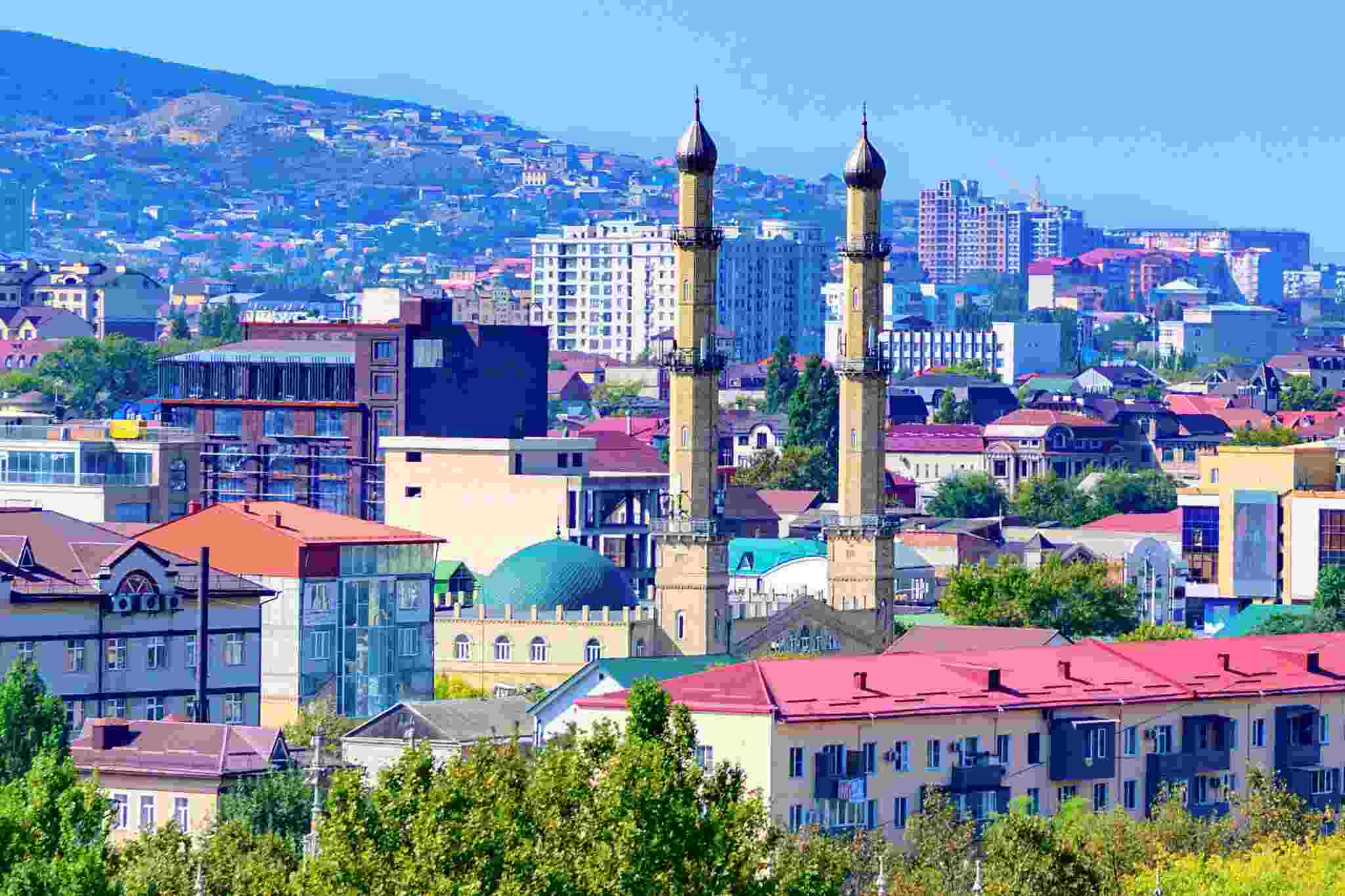
Islamist Danger and Antisemitism in Dagestan (the Russian Federation)
PSCRP-BESA Reports No 69 (July 10, 2024)
Dagestan witnessed a series of terrorist attacks on June 23, when anonymous terrorists attacked churches and synagogues in Derbent and Makhachkala. After this, the militants attacked an Orthodox Church on Lenin Street and then set fire to the Kele-Numaz Synagogue on Tagi-Zade Street while continuing to exchange fire with the police. The church and synagogue burned down. Simultaneously, militants in Makhachkala set fire to a synagogue on Yermoshkin Street and opened fire on a traffic police post in the same area. The Holy Assumption Cathedral, where 19 people took shelter after the shooting began, also came under fire.
The authorities launched a counter-terrorist operation, which ended on June 24. According to the Interfax news agency, 22 people lost lives as a result of the terrorist attacks and counter-terrorist operations. These terrorist attacks cannot be considered unrelated to the anti-Semitic riots at the Makhachkala airport on October 29. A mob of hundreds of rioters, chanting anti-Semitic slogans, stormed the airport after the arrival of a flight from Israel. The rioters checked the passports of the passengers and airport workers, looking for Jews among them. The authorities did nothing to stop the riots, whereas riot police (OMON) arrived only after the riots had stopped. Anti-Semitic riots broke out in other cities of Dagestan as well.
Most comments in the Western and Russian liberal media focus criticism on the ineffectiveness of the Russian authorities, arguing that the Kremlin’s current policy of brute force is not working. While it is difficult to question the ineffectiveness of the Russian authorities in fighting terrorism in the Caucasus, it should be remembered that the Russian authorities are ineffective everywhere in Russia, and Dagestan is hardly an exception. Most analysts, while rightly drawing attention to the lack of good governance and human rights violations in Russia, avoid addressing Islamist terrorism and anti-Semitism as separate problems in Dagestan. Likewise, no liberal media outlet (Western or Russian) has attempted to offer reasonable explanations for the anti-Semitic and anti-Christian nature of the riots and subsequent terrorist attacks. While the Kremlin has no qualms to instrumentalize anti-Semitism for its political needs, there are no grounds to blame it for the violent anti-Semitic riots. Such an approach absolves the concerned population of responsibility for what happens in their country.
Some precedents of anti-Semitism in Dagestan
Antisemitism in Dagestan is neither a new phenomenon nor an innovation introduced by the federal authorities. For the first time, anti-Jewish violence in the Caucasus broke out in the 19th century during the Caucasian War. The level of religious confrontation increased, and intolerance towards non-believers appeared, which forced Jews to migrate under the protection of Russian fortresses in the North Caucasus. This led to the establishment of Jewish communities in Grozny, Nalchik, Kizlyar and other Russian fortresses. During the Civil War, violence was widespread in the Caucasus — there were both pogroms and murders.
Anti-Semitic incidents also occurred after World War II. In August 1960, an article titled “Without God, the Road is Wide” was published in a Buynaksk newspaper. It claimed that Jews were buying 5-10 grams of Muslim blood, diluting it in a large bucket of water and selling it to other Jews. On the same day, the contents of this article were broadcast on local radio. The situation almost ended in a pogrom, which did not happen only thanks to Moscow’s intervention.
During the Six-Day War, a rally condemning Israel was held in a mosque in Derbent. It was addressed by kolkhoz (collective farm) chairmen and directors of factories and plants, who called on the authorities to “strike at the aggressor.” The people in the streets took these words as permission to attack Jews, and an impending pogrom loomed in the city. Jews appealed to the authorities for protection and also organized self-defense units in case of an attack. That time, it was avoided.
In the early 1990s, immediately after the collapse of the Soviet Union, Mountain Jews in Dagestan became the target of very severe criminal violence, including property seizures and murders. Many Mountain Jews left for major Russian cities and Israel.
Foreign violent Islamism
The exact ideological affiliation of the perpetrators remains unclear, although some Telegram channels identified them as Osman and Adil Omarov. They both were killed in a shootout with law enforcement. The Baza channel published footage of the attack in Makhachkala and claimed it had been filmed by Osman Omarov.
Al-Azaim, the media of the Russian branch of IS, Khorasan, praised the attack by “their brothers from the Caucasus” for demonstrating their capabilities. Given that Al-Azaim referred to their Caucasian “brothers” without claiming responsibility for the attack, it can be assumed that the direct culprit is Wilayah al-Qawqaz (Islamic State — Caucasus Province, IS-CP), which is also an ISIS branch.
IS-CP was established in June 2015 and has previously claimed responsibility for a number of terrorist attacks in the Caucasus and elsewhere in Russia. In 2017, the group claimed an attack on a Russian National Guard unit in Chechnya that killed six servicemen. In 2019, the terrorists claimed responsibility for the explosion in an apartment building in Magnitogorsk on December 31, 2018, which killed 39 people. Also in 2019, the group claimed an attack on police officers near the residence of Chechen head Ramzan Kadyrov in Grozny.
Roots of Islamism in Dagestan
ISIS and other types of violent Islamism spread across the Caucasus; however, they have never been uprooted. The structure of local society in Dagestan may provide an explanation for how the Caucasus has become a hotbed for all kinds of imported violent Islamism.
Local Dagestani traditions have always been intertwined with Islam. The peculiarities of the region are manifested in the clan system and the ubiquity of the Muslim mystical tradition, Sufism. Jamaat in Dagestan is not a synonym for an Islamist cell, but rather another word for clan. Islam in the Caucasus is a popular traditional religion, not necessarily a political ideology. Sufism throughout the Muslim world is divided into various Sufi orders which are called “tariqats”.
The” import” of Saudi Wahhabism and Islamism began in the 1990s. Numerous Arab emissaries came to the Caucasus and influenced local youth. The interaction between the two varieties of Islam created tensions between young people and more traditional adults. Salafis and Wahhabis supported armed struggle not only against the Russian authorities but also against local authorities, who were considered “kuffar” and “tawaghit” (infidels and tyrants).
One of the Salafi leaders of Dagestan, Bahauddin Kebedov attempted to conquer the mountain regions of Dagestan with his troops. Salafi “daawah” (preaching of Islam) appealed to Caucasian youth who were experiencing economic deprivation, unemployment and lack of prospects for the future. Salafism in its imported form opposes any understanding and cooperation with the authorities. Of course, economic hardship alone does not lead to radicalization, so poverty and deprivation cannot be considered the ultimate cause of Islamism. However, there is no doubt that socio-economic grounds coupled with certain cultural-historical metrics enhance susceptibility to the violent messages of Islamism. Moreover, the more people suffer from hardship in the present, the more their propensity to embrace an Islamist political utopia increases.
Dagestan is a very multi-ethnic region, as its population consists of at least seven Muslim ethnicities, including Avars, Lezgins, and Chechens. Many Dagestani Islamists were Chechens, so thus, the two Chechen wars had a direct impact on the dynamics of Islamism in Dagestan. The ethnic heterogeneity of the population warrants tensions and lack of national cohesion. Islamism fills this lacuna and therefore creates an alternative community that replaces the missing national one.
Connection with the Middle East
From the very beginning, the spread of Islamism in the North Caucasus has been closely linked to geopolitical fluctuations in the Middle East, starting with Arab veterans of the jihad against the USSR in Afghanistan. They later spread their ideology throughout the Muslim world and shared their combat experience with the Caucasians. Islamic preachers in Dagestan are generally well versed in Arabic and learn from native Arabic speakers.
Thanks to Arabic media such as Al-Jazeera, Dagestani Muslims closely follow the plight of the Palestinians. Having embraced Islamism, Dagestanis also adopted a virulent form of anti-Semitism, which has been superimposed on already existing antisemitic patterns.
Genesis of anti-Semitism among Russian Muslims
The dogmatic and conspiratorial anti-Semitism is thus inextricably linked to the ideology of Muslim radicals who aggressively criticize the state of Israel. Anti-Zionism among Muslims can manifest itself in various forms, from expressing solidarity with the “struggling Palestinian people” to supporting fanatical terrorists. While few are willing to participate in a war against “infidels and Zionists,” there is a consensus among Russian Muslim leaders in support of “the just right of the Palestinian people to establish an independent state with Jerusalem as its capital.”
Dogmatic anti-Judaism may well be part of the ideology of Islamic fundamentalists, which implies taking the foundations of the Muslim faith seriously. Russian Islam has for centuries actively interacted with both Orthodoxy and the pagan traditions of the peoples of Russia, which means that there is an acute conflict between Islamism imported from abroad and the generally accepted, traditional forms of Islam in Russia. In addition, fundamentalism implies an uncompromising struggle not only with Judaism, but also with Christianity, and even more so with the secular model of the state.
The inevitable conflict with the authorities and Islamic clergy interested in stability pushes hardened radicals underground, which, of course, is fraught with extremism and terrorist methods of struggle.
Anti-Zionism, on the other hand, can be considered acceptable both to the broader Muslim population (due to a sense of solidarity with the Palestinian part of the Ummah) and to the political establishment in modern Russia (due to the traditions of Soviet propaganda). Anti-Zionism was part of the official ideology and propaganda of the Soviet regime. Therefore, Muslim leaders can easily find common ground on this issue with Russian anti-Semites.
Modern Islamic fundamentalism is a political rather than a purely religious movement, and anti-Semitism plays an important role in it, helping to mobilize and consolidate supporters in the face of a common (albeit mythological) enemy. This enemy is described in religious terms but is perceived in political realities.
In terms of political ideology, Islamic fundamentalism is characterized by a declared war against modern Western democratic values that are perceived as “Jewish”. The essence of a democratic society is that Jews can engage in debauchery, lies and deceit with minimal consequence. [1] Another author argues that anyone who separates the Ummah from its religion and Quran can only be a Jewish agent, willingly or unwillingly, regardless of their origin.[2]
The distinctive feature of Muslim anti-Semites is that they do not merely oppose Jews as agents of modernism, democracy and, according to Islamists, universal human values incompatible with the Quran. Instead, their struggle takes on the character of confronting a metaphysical, absolute evil. One prominent Islamic theologian asserts that Allah has commanded Muslims to fight those whom he considers “friends of Satan” wherever they are. And among those who are considered Satan’s best friends in our time are the Jews.
In essence, anti-Zionism is tantamount to anti-Semitism because it is directed against the legitimacy of Israel’s existence, not against specific policies of the Israeli state. It is simply a semantic ploy that allows anti-Semites to claim that they are merely objecting to Israeli policies. In both Soviet and contemporary Iranian discourse, the official parlance uses the term “world Zionism” to avoid using the word “Jews”.
Finally, modern leftist ideologies, including Soviet propaganda and Islamism (both Sunni and Iranian Shi’ite), deny the Jewish nation, claiming that Judaism is merely a religious denomination. Consequently, they argue that Jews have no right to self-determination as a nation.
Samples of Anti-Semitic Content
Content analysis of Dagestan Islamist Telegram channels fully confirms the above-mentioned trends. The channel Islam Dag positions itself as “an information channel for Muslims in Dagestan”. However, its URL address is revealing: it is called “ahlu sunna Dagestan”, which hints at its Salafist affiliation. The channel is rife with anti-Semitic content.
The channel’s owner Dawood Abu Jamal has posted antisemitic content since October 2023
On June 25, he posted a link to an antisemitic YouTube video in which Russian nationalists discuss “the plans of Chabad followers to destroy Russia through the implementation of the Dulles Doctrine and the Harvard Plan ((Harvard Project on the Soviet Social System (HPSSS))” .
On June 5, he posted a link to footage claiming that “Chabad is preparing to stage a nuclear apocalypse”. Abu Jamal posted a link to a YouTube video about “the Chabad mystical sect controlling the world”.
On June 9, Abu Jamal reposted several pieces from Russian news agencies condemning the “Ukrainian regime” and reporting on “human rights violations in Crimea (by Ukrainian authorities prior to Russia’s annexation of Crimea)”.
The channel’s owner posted a link to an interview with Caucasian mystic Alan Mamiyev. The latter went into lengthy explanations about occult energies that govern the world. “One such energy is the Kaballah, which strengthens the Mossad, the IDF and Israel as a whole. The fact that Israel’s banking system continues to operate proves that this occult energy is effective. Yet it strengthens not only the power of Israel, but also the power of the Jews throughout the world — judging by the effectiveness of their control over everything”. [3]
On June 05, Abu Jamal posted a link to an interview with author Alexandre Usanin. In his musings, Usanin delves into the conspiracies of Freemasons, who he says exert control over the media. He repeatedly praises Putin and the KGB, claiming that the Russian media is held back by liberals who forbid the broadcast of positive content and are interested in spreading drugs and alcohol among Russians. In the interview, Usanin echoed some typical features of Russian propaganda, including the claim that there is no real conflict between the West and Russia, just as there is no conflict between Ukraine and Russia. Only those who hold opaque liberal views and control the media seek to create conflict. In this context, he argues that the German media is controlled by liberals and Freemasons of Jewish descent. The latter exercise control over the German media to the extent that they see fit. After World War II, the Jews forced Germany to make financial contributions, while Russia never received compensation. Usanin argued that the Soviet Union was effective in maintaining the nation’s spiritual health. Despite its atheistic nature, the censorship prevented the broadcasting of negative materials such as pornography, drugs, and alcohol.
His wording regarding World War II fits perfectly with the Kremlin’s narrative bordering on the Holocaust denial. According to this narrative, the primary victim of the Nazis was the Soviet Union (with the Russian people implied), not the Jews.
On June 23, Abu Jamal reposted a news story about Israel’s ongoing war with Hamas and Hezbollah. Prior to that date, he had consistently portrayed Jews as “descendants of the children of apes and pigs”, a typical Islamic pejorative term for Jews in Arabic. [4]
On June 29, Abu Jamal posted a YouTube video of a Dagestani Jew appealing to the leadership of Dagestan to stop anti-Semitic riots. The footage also showed a destroyed synagogue. Sounds of a firefight during the counter-terrorist operation could be heard.
He added the following text to the link: “Here’s another one coming out to whine about his Jews. This scumbag is snitching to the FSB about Khabib and Islam Makhachev because they support Palestine. In this situation, all the Jews of Dagestan will be on the screens and we will know their faces, these assholes will sweep away all the diapers from the store shelves.”
All Islamist channels in Dagestan are full of Arabic content. Some of this content is blatantly anti-Semitic and is no different from Hamas propaganda. One such channel is “Khawater Daghestaniya” (Thoughts of a Muslim Woman). The address of the channel bears the name of Salma Kebedova, who may be a relative of the aforementioned Dagestani terrorist. Her posts are full of the most anti-Jewish quotes from the Quran and Hadith and support for Palestine. [5]
Another channel, Daru Salataw, on October 8 quoted a verse of the Quran calling on Muslims to fight the infidels and praying to Allah to shake the earth beneath the feet of the Jews.
On October 10, Daru Salataw posted a statement by Egyptian sheikh Ali Tantawi: “I curse Hitler in his grave — if he has a grave — not for what they falsely claimed he did to the Jews, but for not ridding humanity of the abomination of the Jews completely”.
Conclusions and Implications
The revealed patterns of anti-Semitic content fully correspond to Likhachev’s methodological description of the patterns of anti-Semitism among Russian Muslims. Anti-Semitism in Dagestan functions in two interrelated directions:
On the one hand, it fully coincides with both Kremlin propaganda clichés and popular Russian anti-Semitism. This anti-Semitism echoes the Kremlin’s war on Ukraine, which seeks to minimize the conflict between the West and Russia and to appropriate the Holocaust by claiming that Russian people were its real victims.
On the other hand, the Arabic content of the Dagestani Islamist media is no different from the most violent Islamist propaganda, including that of Hamas. These anti-Semitic statements also meet all the characteristics of Muslim fundamentalist anti-Semitism. These characteristics include Holocaust denial, portraying Jews and Israel as demonic, metaphysical enemies couched in political terms, and completely ignoring the atrocities perpetrated by Hamas.
Despite the Russian authorities’ undeniable responsibility for the current difficulties in the region, Islamism and the virulent anti-Semitism it engenders are themselves a serious problem in Dagestan. Neither the leadership nor the population of Dagestan should enjoy the condescending attitude of the West.
[1] Sayid Qutb, Our battle with the Jews. The main ideologue of the Muslim Brotherhood, Sayid Qutb authored a book “Ma’rakatuna ma’ al-Yahud (Our Battle with the Jews). The book is quoted abundantly by Islamists on the Web. https://www.odabasham.net/مقالة/109072-معركتنا-مع-اليهود-للأستاذ-سيد-قطب
[2] Abd Al-Halim Mahmoud, al-Jihad wa-l-Nasr ( Jihad and Victory), p.50, https://www.noor-book.com/en/ebook-الجهاد-عبد-الحليم-محمود-pdf
[3] https://t.me/ahlu_sunna_dagestan/3223 ; https://www.youtube.com/watch?v=-k6Qc36b5H4
[4] https://t.me/ahlu_sunna_dagestan/3215; https://www.jewishvirtuallibrary.org/muslim-clerics-jews-are-the-descendants-of-apes-pigs-and-other-animals
[5] https://t.me/kebedovaSalma1994/683; https://t.me/kebedovaSalma1994/762; https://t.me/kebedovaSalma1994/1709