
Posts by Vakhtang Maisaya
Three Scenarios for the Crisis in Georgia
PSCRP-BESA Reports No 105 (Dec 17, 2024)
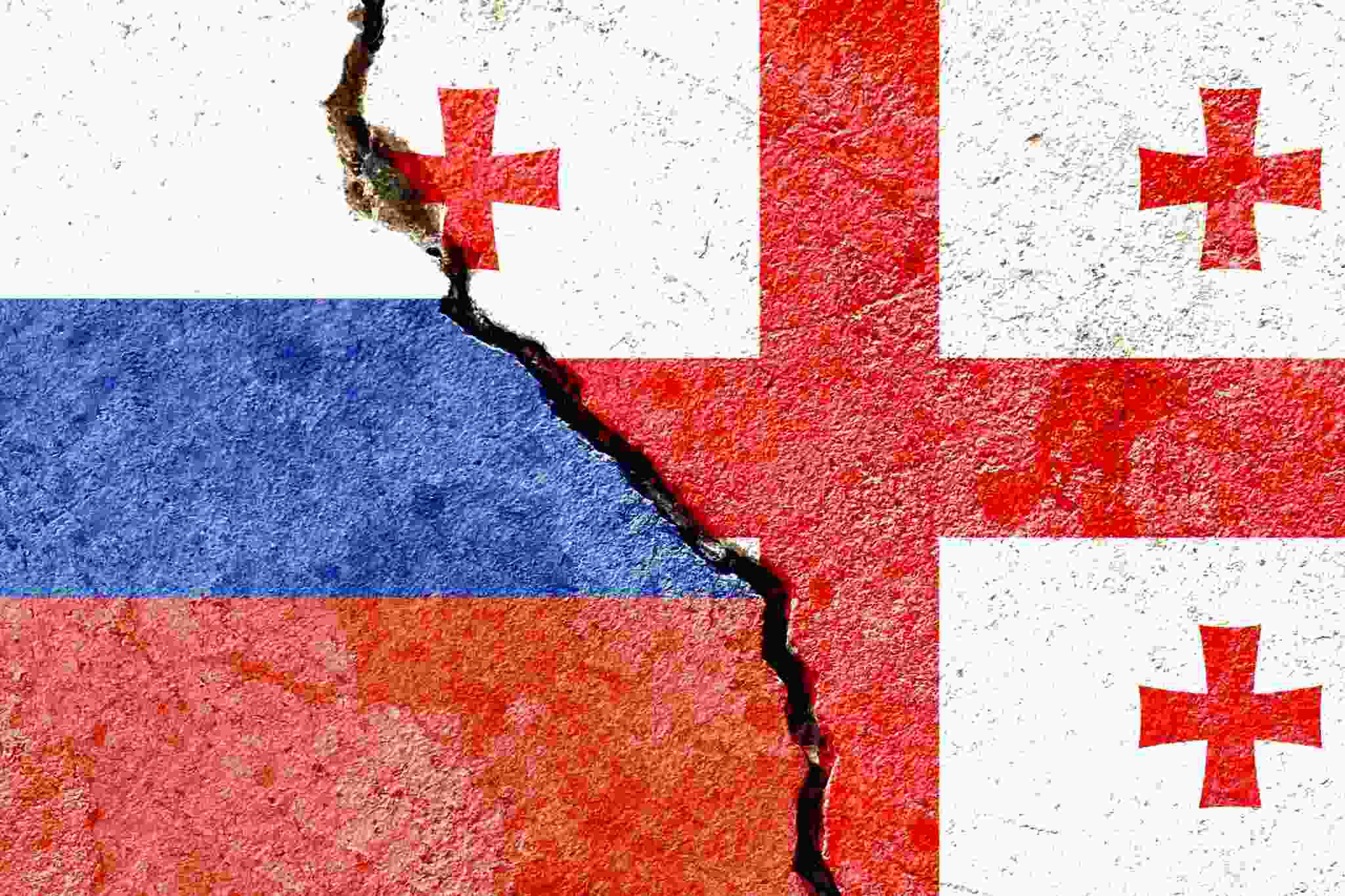
The revolutionary situation in Georgia could reach its climax on December 29, influenced by two factors: external and domestic.
The external factor relates to Salome Zourabichvili’s successful foreign visit to Paris. During the opening ceremony of the Notre Dame Cathedral, facilitated by President Macron, she met with Donald Trump and Volodymyr Zelensky. She also held talks with Italy’s Prime Minister Giorgia Meloni. Many believe that Western leaders might recognize Salome Zourabichvili’s legitimacy as president, even though her term has officially ended. Meanwhile, new presidential elections were held under the so-called “Electoral College,” consisting of 300 members, primarily parliament deputies and representatives of local governments. In a one-day vote, they elected a new president, the pro-Russian leader of the “People’s Power” movement, former football player Mikheil Kavelashvili.
The situation is expected to become most critical between December 29 and 31, when the “winner” of this political contest will be determined. Salome Zourabichvili, recognized by Western countries (except Hungary and Turkey), refuses to vacate her position despite the results of the recent elections. Much attention is now focused on the security forces, who could have the decisive say. However, the Ministry of Internal Affairs, along with special forces units such as the Defense Forces, the State Security Service (SSG), and even the General Prosecutor’s Office, currently maintain predominantly “neutral” stances.
The ruling “Georgian Dream” party and its political team face a significant “security dilemma.” How will events unfold after December 29? How will they inaugurate the newly elected favorite, Mikheil Kavelashvili? And when will the inauguration take place?
The ruling party’s candidate, Mikheil Kavelashvili, was elected by the Electoral College on December 16 with 224 votes. So far, only Serbia, Belarus, Azerbaijan, and Armenia have recognized the pro-Russian president. No other country has extended congratulations.
The situation could escalate dramatically as mass demonstrations in support of Salome Zourabichvili continue. Protesters demand that Zourabichvili remain in office.
The current government may resort to force to oust Salome Zourabichvili, potentially including her arrest. Irakli Kobakhidze has accused Zourabichvili of being a “foreign state agent.”
Will Europe or the United States support Zourabichvili? Could there be new severe sanctions against the current political leadership of “Georgian Dream,” including suspension of Georgia’s visa-free regime?
Both pro-Western and pro-Russian forces are preparing for drastic measures.
Based on these developments, three potential scenarios for the crisis can be outlined:
The Pro-Russian Government Uses Force:
The new government, with its elected president, might attempt to resolve the situation through force. This could involve employing Russian mercenaries, various private military companies, or even representatives of Ramzan Kadyrov’s “private army.” This would result in mass political terror under the pretext of preventing a “state coup.” Martial law could be declared, limiting rights and freedoms, effectively leading to the “Belarusization” of Georgia. The West would sever all ties with Georgia.Salome Zourabichvili Establishes a New Power Center:
Zourabichvili and opposition parties, supported by mass protests, might create a new power center, forming a “technical interim government” to prepare for new parliamentary elections. In this scenario, government structures and law enforcement officers might side with the protesters. This could resemble a “Plohatniuk 2” scenario, forcing Bidzina Ivanishvili to flee the country.A 50/50 Compromise and Political Stalemate:
Zourabichvili could step down but refuse to recognize the current government led by “Georgian Dream.” Dual power might emerge in Georgia, leading to a sustained resistance and political imbalance. The outcome would depend on which side successfully mobilizes both internal and external forces to prevail in this confrontation.
A unique aspect of the current situation is the weakness of the Georgian opposition, which lacks charismatic leaders and a unified platform. Meanwhile, “Georgian Dream” comprises several political factions (at least five), making it susceptible to internal shocks and potential collapse. This risks plunging the country into political chaos.
Georgia’s Foreign Policy at Odds and Geopolitical Turbulence Scenarios after the Parliamentary Elections
PSCRP-BESA Reports No 91 (Oct 21, 2024)
The Georgia’s political situation remains strained and has turned into a real geopolitical dilemma. Formally, the incumbent authority of Georgia, led by the ruling party “The Georgian Dream,” has cut off relations with the EU and the USA. The Charter on Strategic Partnership between Georgia and the USA, signed on January 9, 2008, is no longer active. Even the date of the complete breakdown in relations has been set for May 30, 2024. Relations between the Georgian government and the Western world have stiffened at all levels. Consequently, the pro-Western community of Georgia, led by President Salome Zourabichvili and the four main opposition parties, has begun a fierce battle against the ruling coalition of “The Georgian Dream” and “People’s Power” parties.
Moreover, three key geopolitical demands have been put forward by the pro-Western community toward the incumbent government led by tycoon Bidzina Ivanishvili:
Abolish the so-called “Russian Law” and return to the pro-Western foreign policy stipulated in Article 78 of the Constitution of Georgia;
Cancel any strategic relations with China, including the annulment of the Anaklia Sea Port business deal with the Chinese Consortium, and eliminate Chinese influence;
Reverse relations with Russia and sever ties with Belarus. Prime Minister Irakli Kobakhidze announced in May 2024 during his visit to Berlin the country’s “Strategic Appeasement Policy”, which involves a neutral foreign policy agenda accepted by the Russian leadership.
These demands were announced to high-ranking officials from the USA (James O’Brian) and the EU (Foreign Policy Commissioner Josep Borrell) and fully supported by Georgia’s pro-Western opposition. However, they have been outright rejected by the incumbent Georgian government.
Regarding the Russian-occupied territories, the “Georgian Dream” party, as part of its pre-election campaign, introduced a policy of “strategic patience” over the regions of Abkhazia and Tskhinvali (South Ossetia). The government aimed to “seize the opportunity for reunification when the time is right” by maintaining peace and avoiding rash actions. This policy involves:
Resolving the occupation through multiple approaches, including international pressure and a government strategy to prevent escalation;
Restoring a non-confrontational approach toward Russia and finding a common position for reconciling the conflict zones;
Building relations with the Abkhazian and Ossetian communities through various forms of “People Diplomacy.”
In this case, the Russian government has been tacitly supporting the policy. After a closed-door meeting between Dmitry Kozak, Deputy Head of Russia’s Presidential Staff, and Abkhazian de-facto President Aslan Bzhania on August 19, 2024, the Kremlin suspended financial aid to Abkhazia starting September 1, 2024. Russia has invested over 110 billion Russian roubles in Abkhazia since 1992, providing 8-9 billion roubles annually. It appears that Russia and Georgia are collaborating on dealing with the conflict zones, potentially introducing a “Confederation” model of statehood and the reopening of the “Abkhazian Railway Route.” The ruling “Georgian Dream” party seems to align with this policy, expressing an intention to pardon separatist leaders and revitalize economic and transit projects, such as restoring the “Abkhazian Railway” corridor connecting Sukhumi with Zugdidi.
Given these developments, three main scenarios could emerge from the elections:
First Scenario – “Belarusization”: In this scenario, the ruling party rigs the elections, securing a constitutional majority in parliament, allowing it to abolish Article 78 and implement a “Strategic Appeasement” policy with Russia. This would result in the West severing ties with Georgia, leaving Russia to dominate the region. Georgia would join pro-Russian projects like the “North-South” corridor, possibly rejoining the CIS and seeking membership in BRICS and the Shanghai Cooperation Organization. Political persecution of opposition leaders would also follow.
Second Scenario – “Political Anarchy”: Neither the ruling party nor the opposition secures enough seats to form a government, resulting in a political deadlock and the need for additional elections. In this case, the interim government would continue its foreign policy, which could provoke a pro-Western coup or revolution. However, the success of such a coup is doubtful.
Third Scenario – “The Polish Option”: The opposition wins a majority and forms a coalition government. However, the ex-ruling party, led by Ivanishvili, attempts a coup d’état with support from Russia. The outcome would be uncertain, but there’s a higher likelihood that the coup would succeed.