
Posts by Ariel Kogan
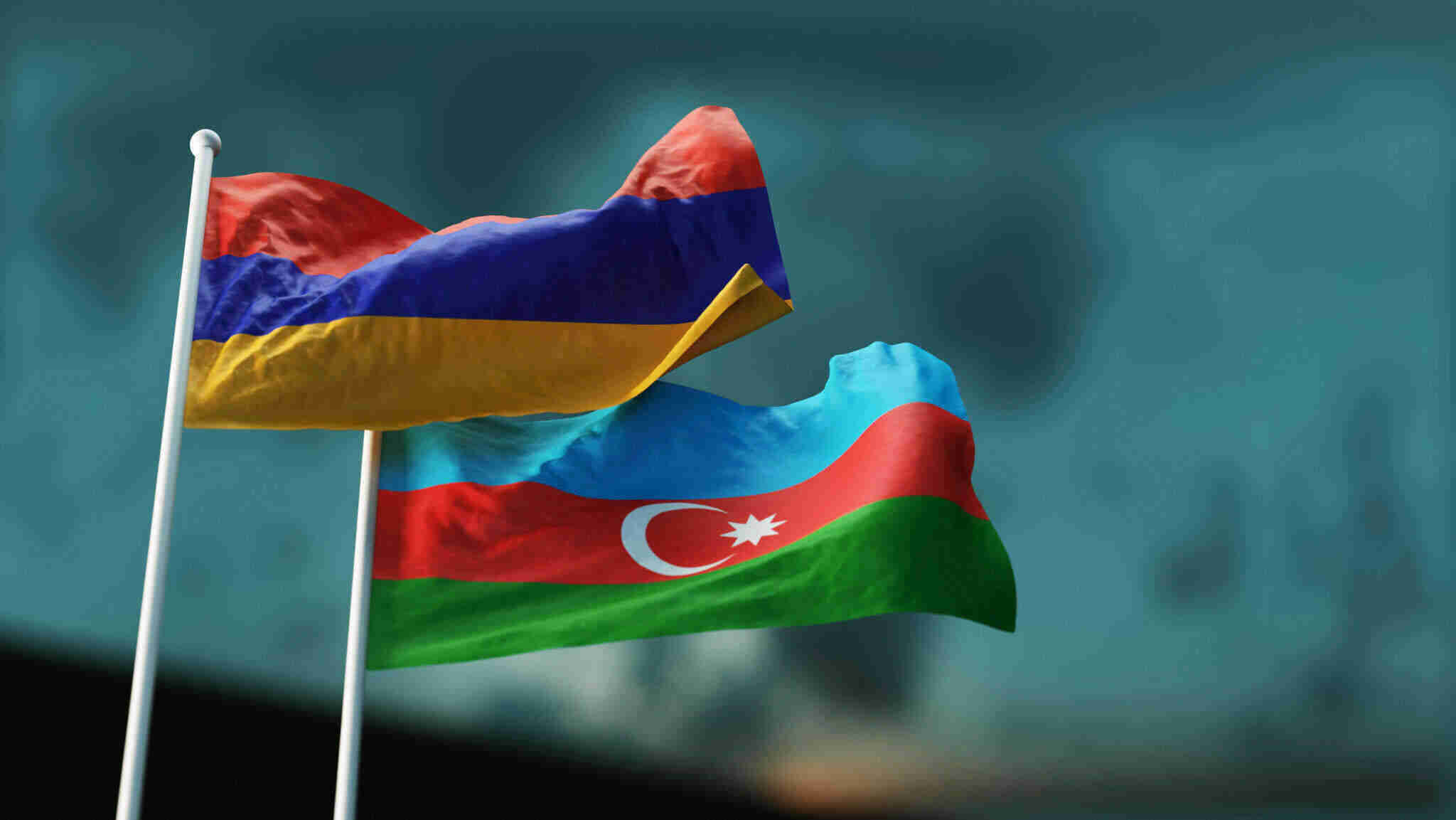
Azerbaijan, Armenia and the Abraham Accords: A Harmful Precondition
PSCRP-BESA Reports No 144 (August 8, 2025)
A trilateral meeting of the leaders of the United States, Azerbaijan, and Armenia is anticipated in Washington on August 8. The agenda includes the possibility of reconciliation between Baku and Yerevan, along with a potential declaration regarding Azerbaijan’s ascending to the Abraham Accords.
What are the reasons for not conflating these two processes?
According to Reuters, President Donald Trump’s administration is actively discussing with Azerbaijan the possibility of bringing that nation and some Central Asian allies into the Abraham Accords, hoping to deepen their existing ties with Israel. The agency cites “five sources with knowledge of the matter.”
According to sources in Baku, President Trump is expected to host Azerbaijani President Ilham Aliyev and Armenian Prime Minister Nikol Pashinyan at the White House on the coming Friday (August 8). “The anticipated meeting is being seen as a significant diplomatic step toward resolving decades of conflict between the two countries. The expected announcement follows recent talks between the Azerbaijani and Armenian leaders held in Abu Dhabi, where both sides reportedly made progress on the key terms of normalization,” points out the AzerNews agency.
It’s unclear if these two reports are related or if someone is trying to create an artificial connection between them. The Reuters report quotes three sources who assert that the “sticking point is Azerbaijan’s conflict with its neighbor Armenia, since the Trump administration considers a peace deal between the two Caucasus nations as a precondition to joining the Abraham Accords.” This version is unverified, and there are several reasons why the mixing up of these two processes could be detrimental to both.
1. Relations with Israel are a key factor in joining the Abraham Accords. Among all Muslim countries in the world, Azerbaijan has the longest and most comprehensive partnership with Israel. It is the only strategic partner of the United States’ main ally in the Middle East in the Muslim world, bordering both Iran and Russia. Israel views Azerbaijan as one of the pillars of the regional architecture of strategic security. Israeli and American analysts, as well as Israeli Prime Minister Netanyahu, have repeatedly noted that Azerbaijan is a model of Muslim-Jewish symbiosis and facilitates Israel’s relations with other Muslim countries. Reconciliation with Armenia is a process that is unfolding on its own and does not add any weight to the Abraham Accords. Relations with Armenia do not hold strategic value for Israel.
2. The goal of the Abraham Accords project is to normalize relations between Israel and the Muslim world in order to resolve the Palestinian-Israeli conflict. Armenia is not a Muslim country and has no relation to this conflict (except for the cooperation between Armenian and Palestinian terrorist organizations since the 1980s).
3. Mandating Azerbaijan to negotiate a peace treaty with Armenia as a prerequisite for joining the Abraham Accords is unproductive. The conflict in the South Caucasus has no relation to the Accords; it is a result of the policies of the Russian Empire and later the USSR, aimed at creating ethnic tensions. Specific reasons, such as articles in Armenia’s constitution that form the basis for Armenian extremists’ claims to Azerbaijan’s internationally recognized territory, obstruct the signing of a peace treaty. Signing a peace treaty without removing these articles preserves all the preconditions for the continuation of the conflict in the South Caucasus in the near future. This undermines the status of the Abrahamic Accords, turns them into an empty formality, and, in the event of renewed conflict, casts a shadow over Trump’s peacekeeping initiative.
4. Almost the same story happened with Abraham Accords 1.0, signed in the first of Trump’s presidential terms, where the idea was almost exclusively about establishing full diplomatic relations between Israel and moderate pro-American Arab regimes concerned about the Iranian threat. The long-awaited official accession of Saudi Arabia to this process (and along with it, the expected joining of the rest of the Saudi bloc countries that have yet to have diplomatic relations with Israel) faced the obstacle of the Palestinian state issue. Pushing this issue before signing Abrahamic Accords 2.0, which is envisioned as a much wider model—the formation of a U.S.-led defense and economic alliance with the participation of Israel and the Arab countries of the Saudi bloc—might again harm this breakthrough idea. Conversely, Yerevan’s acceptance of the principal guidelines for joining the new model of the Abraham Accords could serve as a significant catalyst for resolving the Azerbaijan-Armenian conflict. As President Aliev put it, speaking about energy security, transportation, political dialogue, investments, and economic advantages, “Armenia could have been part of that process… When an agreement between Azerbaijan and Armenia is signed, then, of course, there will be no obstacle to the beginning of cooperation.”
5. Similar preconditions have never been imposed on other countries before their ascending to the Accords; for example, no one required Morocco to reconcile with Algeria as a condition for joining the format. Introducing such a precondition, especially toward a country so allied with Israel, constitutes a dangerous double standard. According to American and Israeli analysts, Trump is using the Abraham Accords to establish an elite “club” of countries that the U.S. can depend on for its foreign policy. This “club,” with significant financial and intellectual resources, could serve as an alternative to European countries whose interests conflict with Trump’s vision. In the past, Special envoy Witkoff has even mentioned that Armenia could join the Accords. But it has no value for such a structure. On the contrary, Armenia’s close ties with France, which opposes Trump’s initiatives, make it a potentially destabilizing factor.
6. Iran, as the primary opponent of the Abraham Accords process, responsible for derailing the normalization between Israel and Saudi Arabia (the terrorist attack on October 7, 2023), poses an existential threat to both Israel and Azerbaijan. In turn, Armenia maintains close strategic relations with Iran; officials in Armenia consistently emphasize the alignment of interests between Yerevan and Tehran. Armenian media and the Armenian diaspora actively participate in Iran’s media campaign to demonize Azerbaijan for its ties with Israel. Preconditioning Azerbaijan’s entry into the Abraham Accords on reconciliation with Armenia provides Iran with another tool to derail Trump’s initiative. In other words, Iran may see an advantage in disrupting peace agreements between Baku and Yerevan, for instance, through military provocations or terrorist acts.
Pool of Terror: Iran is Recruiting Operatives From the Former Soviet Union to Target Israelis
PSCRP-BESA Reports No 101 (Nov 29, 2024)
Recent events in the UAE and Central Asia show that Iran is again boosting recruitment of individuals from former Soviet republics for various purposes, including terrorist attacks and intelligence-gathering activities. Tehran plans to use these individuals directly against Israeli “targets” this time. The abduction and murder of Rabbi Zvi Kogan by three Uzbek terrorists is the most recent case. Despite the lack of public disclosure of definitive evidence linking this attack to Iran, experts point to several factors that support this conclusion.
The Modus Operandi is consistent with Iranian tactics:
The circumstances surrounding Rabbi Kogan’s murder align with methods previously attributed to Iranian operations, such as targeting individuals abroad through criminal proxies.
The incident occurred amid heightened tensions between Israel and Iran, with Iran historically opposing normalization efforts between Israel and Arab states, with an emphasis on the Persian Gulf emirates.
While direct ties of the apprehended perpetrators to Iran have not been confirmed, the use of foreign nationals in such operations is known to be a trademark tactic of the IRGC. One might think to first look into the Muslim denomination these terrorist operatives are a part of, however, no concrete evidence has surfaced to link them with Shia Islam – the primary religion in Iran.
ISIS might have carried out the attack, but it is well known that this organization consistently takes responsibility for the sake of clout, while Iran consistently refutes any involvement in such actions. Besides, the MO of the attack is different from those preferred by ISIS, which focus less on individual clandestine assassinations and more on mass casualty attacks.
Tajiks are known to be the IRGC’s primary recruiting pool; however, what about the Uzbeks?
Let’s examine previous cases in more detail. From December 2023 till January 2024, there were a series of failed attempts to attack Jewish Agency offices and the Ohr Avner Jewish Center in Almaty (Kazakhstan), an arson attempt on a farm belonging to the Israeli Saxovat Broyler Co. in Tashkent (Uzbekistan), and smaller events following the same pattern.
In August 2024, it became known that the organization behind these attempts was the IRGC-controlled Iraqi militia, Kata’ib Hezbollah (Hezbollah Brigades). The main coordinator, according to several sources, was Tajik operative Muhammad Ali Burhanov, also known as Sayed Hamid al-Tajiki.
According to the GFATF (Global Fight Against Terrorism Funding), Burhanov was recruited while studying at Al-Mustafa University in Iran—a known recruitment center for Tehran-backed militant groups, which is operating under the Islamic Propaganda Bureau of the Qom Seminary. The IRGC Qods Force’s Department 400 coordinates Burhanov’s activities. His handlers are Hossein Rahmani and Hossein Rahban, who are behind other attempts to murder Israelis abroad. For example, a November 2022 case in Georgia, where agents of the IRGC tried to kill a prominent Israeli businessman.
According to The Washington Institute, Qods Force’s Department 400 sometimes collaborates with ISIS and the Taliban despite deep-seated sectarian differences and opposing objectives.
It is crucial to remember that such sectarian differences as Sunni vs Shia Islam have not stopped the IRGC and Qods force from supporting Sunni terrorist groups before, as is the case with Hamas and the Palestinian Islamic Jihad.
This brings us back to the recent murder of Rabbi Kogan in the UAE, where three Uzbek nationals were involved. Previously there were no cases of IRGC recruiting Uzbeks—Iranians prefer Tajik Shias. Tajikistan’s population shares linguistic and cultural ties with Iran, as both are Persian-speaking nations. Since 2013, the IRGC has enlisted Tajiks to fight in Syria alongside pro-Assad forces. They were instrumental in key battles, including the recapture of Aleppo, under the command of Iranian military advisors.
By recruiting Tajiks, Iran aims to extend its influence into Central Asia, countering the presence of other regional powers and promoting its ideological and political interests. Furthermore, the emergence of ISIS-Khorasan (ISIS-K), also known as the Islamic State Khorasan Province (ISKP), in Afghanistan and its recruitment of Central Asians, including Tajiks and Balochis, presents a significant threat to Iran. By recruiting Tajik Shia fighters, Iran seeks to counterbalance Sunni groups.
Interestingly enough, ISIS-Khorasan is actively recruiting Uzbeks to fight in Afghanistan. Reports indicate that ISKP has deliberately expanded its social media efforts in the Uzbek language.
As previously mentioned, the relationship between ISKP and Iran is hostile. In January 2024, ISKP claimed responsibility for twin bombings in the Iranian city of Kerman, Iran, during a ceremony commemorating Qasem Soleimani, resulting in nearly 100 fatalities. In August 2024, Iran’s Intelligence Ministry announced the detention of 14 ISKP members, alleging their involvement in planning attacks within the country.
It is difficult to imagine that the IRGC and ISKP have found common ground. However, taking into account the above-mentioned Qods Force’s Department 400 ties to ISIS and desperate need for any retaliatory action against Israel (considering the failed attacks in Uzbekistan and Kazakhstan), there is the probability of a joint operation aimed to murder a prominent Israeli citizen. ISIS may have “loaned” its operatives or provided a “blessing” for the use of Uzbeks.
Another possibility exists, one that carries even greater risk. There is a chance that IRGC emissaries have found a way to recruit representatives of a tiny (between 200,000 and 300,000) Uzbek Shia minority living in Bukhara and Samarkand. Their existence is hardly common knowledge in the Arab world and in the West, as they are primarily comprised of descendants of ethnic Iranians, who live there for 2-3 hundred years. Uzbek extremists, being associated with Sunni groups such as Al Qaeda and ISIS, are much less visible and identifiable as IRGC agents and thus constitute a larger threat.
The history of the IRGC’s recruiting of the citizens of the FSU countries:
The IRGC has reportedly engaged criminal gangs from former Soviet regions for operations abroad, including espionage and violent acts. This strategy leverages existing criminal networks to conduct activities that further Iran’s strategic interests while maintaining plausible deniability. As was mentioned above, Tajikistan and ethnic Tajiks are the major recruiting pools for Iranian proxy militias. Yet they are not the only source of operatives that share cultural and ideological affinity with Iranians.
Conversely, Azerbaijan is one of the most frequent locations where the IRGC attempts to carry out terrorist attacks against Jewish and Israeli targets. The highly experienced local national security service DTX foils the vast majority of such plots.
In 2004, 2007, 2012, 2017, and 2022, DTX neutralized and apprehended several mixed groups of terrorists, comprising both local and foreign citizens (Lebanese and Afghans, for example). Iran trained most of them to gather intelligence and carry out attacks on Israeli and, occasionally, other Western embassies.
It should be mentioned that the IRGC has its own proxy organization for spreading khomeinist ideology inside Azerbaijan, Hussainiyoun. This organization aims to destabilize the government of Azerbaijan per the mission given to it by Tehran. If and when the opportunity presents itself, Husayniyun operatives emphasize their opposition to Azerbaijani ties with Israel through incitement of local unrest. It is no mere coincidence that the leader of Husayniyun, Tawhid Ibrahim Begli, started his organization in Qom, a known recruitment center for these types of groups, as previously presented. The organization was even named by Qassem Soleimani himself.
In March 2023, an Iranian agent tried to murder Azerbaijani MP Fazil Mustafa, known for his staunch support for strengthening relations with Israel.
An Afghan citizen received a 10-year sentence in October 2024 for his attempt to attack the Israeli embassy in Baku in July 2023. He had several local accomplices, recruited by the IRGC, who were also apprehended.
In October 2021, Cypriot authorities arrested a dual Russian-Azerbaijani national suspected of planning attacks on Israeli businessmen in Cyprus. He was using a Russian passport to operate from Turkish-controlled Northern Cyprus as an operational and transit area.
In November 2022, Georgian security services thwarted an IRGC plot to assassinate an Israeli businessman in Tbilisi. A hitman of Pakistani origin had a support team of several persons with dual Iranian-Georgian citizenship, who provided him with weapons and transportation.
The IRGC primarily seeks to enlist kindred Shia Muslims to act out its bidding across the globe, yet occasionally even cooperates with Sunni groups, as long as their geopolitical goals surpass the cultural and religious differences. However, there have been cases where non-Muslims and non-Islamic entities have served other purposes. For instance, money laundering, sanction evasion, and the supply of dual-use materials have involved several Armenian businessmen and companies, including banks.
All this demonstrates how much influence and free reign the tentacles of Tehran have throughout the southern hemisphere of the post-Soviet world, especially now, when there is no longer the same level of Russian influence to stave off the propagation of extremist, fundamentalist, and Islamic ideas.
Iran Fights for Influence in the post-Soviet Space: Turkic States Are Cautious
PSCRP-BESA Reports No 88 (Oct 13, 2024)
The war in Ukraine has substantially weakened Russia’s position in Central Asia and the Southern Caucasus, requiring an increasing amount of resources to sustain. Iran is endeavoring to fill the power vacuum that Russia left in these post-Soviet regions while simultaneously exercising caution to prevent conflict. Tehran is committed to the economic integration of the post-Soviet republics in these regions, with an emphasis on fortifying its relationships with the Eurasian Economic Union (EAEU) and its member states (Armenia, Belarus, Kazakhstan, Kyrgyzstan, and Uzbekistan) as well as the Economic Cooperation Organization (ECO). Nevertheless, Iran’s success is inconsistent, and its underlying objectives are a source of debate.
The following is an examination of the situation regarding Iran’s relations with key countries in both aforementioned regions: Kazakhstan, Uzbekistan, Azerbaijan, and Armenia. Three of these nations are Turkic, meaning Tehran also competes with Ankara for influence over them.
Kazakhstan
This Central Asian republic is perhaps among the richest in natural resources in the entire world, maintaining vast mines of many different metals, chiefly uranium, as well as oil. Being a Muslim country and geographically positioned in Central Asia, Kazakhstan has three regional superpowers around it, all eyeing its resources curiously: China, Russia, and Iran. Lately, Iran has been playing the Muslim affinity card more than ever in order to strengthen its ties with Kazakhstan.
Previously, Kazakh trade would go either to China through other neighbors or would utilize Russia as a gateway to the markets of the West, such as Europe. However, the outbreak of the war in Ukraine led to Russia’s exclusion from most European markets, preventing Kazakh products from reaching their intended consumers. Naturally, Kazakhstan would have to look elsewhere in order to ensure it can generate wealth through trade as well as import goods.
Local media highlight that the main areas of cooperation between Tehran and Astana are energy and agriculture, but despite Iran’s efforts, there has been little progress in both sectors.
“Tehran used to serve as a conduit for Kazakhstan to the Persian Gulf for oil exports to northern Iran. It was the fastest route to global markets, but sanctions have now closed this access,” reports Eurasia Today. “Iran is not a significant trading partner for us, although it is of interest for diversifying export routes,” says Meruert Makhmutova, director of the Public Policy Research Center.
In the agriculture sphere, Kazakhstan’s Majilis began ratifying a free trade agreement between the Eurasian Economic Union and Iran in early October, but this is not seen as a major milestone, as the initial agreement was signed in Russia in December 2023.
Iran is interested in obtaining EAEU observer state status. The decision to grant such status to a foreign partner must be adopted by the heads of the EAEU member states at the Supreme Eurasian Economic Council’s meeting. The closest one will take place in May 2025, and its agenda is not published yet.
Local media report that Kazakhstan is preparing to sign a free trade agreement with Iran, with a potential trade volume of up to $3 billion, primarily focusing on agricultural products, particularly grain. However, this agreement might only materialize in 2025 and will depend on crop yields. In mid-2024, Iran declined to purchase Kazakh grain due to a very high domestic harvest.
In the political sphere, Iran failed to influence Kazakhstan’s stance on the Gaza and Lebanon conflicts. In early October, Kazakhstan’s Foreign Ministry urged all parties to take immediate steps to restrain violence, emphasizing the inadmissibility of force to prevent civilian casualties and avoid further escalation into a full-scale military conflict.
Despite pressure from Iran, Qatar, and other Muslim countries, Kazakhstan seeks to maintain favorable relations with Israel, adopting a neutral stance on the conflicts in Gaza and Lebanon. This is driven by both strong economic ties—Kazakhstan is a major oil supplier to Israel—and political interests. Kazakhstan, through its connections with Israel and major Jewish organizations, is engaged in a legal battle in the U.S. to recover billions of dollars laundered through BTA Bank.
Uzbekistan
Similarly to Iran’s attempt to warm ties and cooperate with Kazakhstan, Tehran also seeks to push up trade and joint projects with Uzbekistan, one of the largest countries in the region in terms of population. Uzbekistan’s population is third in the region, behind Pakistan and Afghanistan. Iran already maintains strong ties with Pakistan, while Taliban-ruled Afghanistan is somewhat hostile to it.
The substantial Uzbek population provides Tehran with a significant market for exporting goods, including construction materials, tea, and various food products, while importing energy resources, metals in considerable volumes, and cotton. Uzbekistan is the fourth largest producer of cotton.
Being a landlocked nation, Uzbekistan is prioritizing its involvement in transit initiatives and communication corridors, notably the Iran-Afghanistan-Uzbekistan transit project via the Chabahar port. The southern ports of Iran—Chabahar and Bandar Abbas—are strategic for Uzbekistan, with priority given to transportation and utilizing these capacities in economic relations with Iran.
However, these cooperation initiatives are not going well. Throughout the first 7 months of 2024, Uzbekistan and Iran experienced over 17% decline in trade turnover to nearly $256 million, while during the same period in 2023 trade turnover was almost $300 million. Uzbek exports have declined almost 30%.
A year ago, in June, during the 15th Iran-Uzbekistan Joint Economic Cooperation Committee, the sides signed a memorandum of understanding aiming to increase bilateral trade to $1 billion within the next two years. As of now, it seems they will not be reaching that benchmark. However, this issue does not stem from the Uzbek side, as their total foreign trade turnover increased by 5.4% in the first 7 months of 2024 compared to the same period in 2023.
The stalling of the Uzbekistan-Turkmenistan-Iran-India transport corridor, as envisioned in the Ashgabat Agreement of 2016, could be the reason for this. Alternatively, quoting PSCRP expert Vladimir Mesamed, “despite the solid groundwork for integration, Uzbek-Iranian relations still have a distinct smell of confrontation… In the sphere of bilateral relations, there is still a chill of mutual distrust, which is explained by the religious factor. The creation of independent Uzbekistan was accompanied by a kind of Islamic boom, which naturally emerged after decades of dictate of official state atheism. The authorities tried to forcefully curb the manifestations of fundamentalism without eradicating its causes. Under these circumstances, the development of bilateral interaction between the Republic of Uzbekistan and the Islamic Republic of Iran, where the principle of governance is based on Islamic laws, was destined if not for harsh rejection by the Uzbek leadership, then certainly not for the most favorable treatment.”
On October 12th, Uzbek President Shavkat Mirziyoyev and Iranian President Masoud Pezeshkian met during an international forum in Ashgabat, Turkmenistan. However, no significant joint statements were made following their meeting.
Like in the case of Kazakhstan, Uzbekistan is not exactly siding with Iran in its current conflict with Israel. Boycotting Israel is not a viable option. This September, Israeli authorities signed a grain agreement with Azerbaijan and Uzbekistan that will guarantee all of Israel’s wheat needs against the backdrop of the global food crisis and the ongoing war in Ukraine. In exchange for wheat, Uzbekistan will receive advanced agricultural technologies from Israel.
Azerbaijan
The nearly year-long attempt at demonstrative rapprochement with Baku was effectively nullified by a series of statements from Tehran, which hinted at the possibility of strikes on Azerbaijani energy facilities as an act of revenge aimed at Israel.
“Top generals within the Islamic Revolutionary Guard Corps (IRGC) are insisting on a direct strike on Tel Aviv and other Israeli cities, focusing on military bases to avoid civilian casualties. But Masoud Pezeshkian, the newly elected president, has suggested targeting secret Israeli bases in Iran’s neighboring countries,” the British Telegraph reported in August. In October, the threat was reiterated: IRGC-linked social media accounts have already spread reports that Tehran has warned the United States that in the event of action against Iranian oil refineries, the Islamic Republic will target oil facilities in Azerbaijan and in Arab states.
The reopening of the Azerbaijani embassy in Tehran after the terrorist act (Baku succumbed to Iranian pressure) and the visit of the late President Raisi to Azerbaijan to improve bilateral ties still did not matter. Despite everything, Tehran considers Baku first and foremost an ally of Israel. “Azerbaijan supplies 40% of Israel’s energy needs, and Azerbaijan’s oil and gas infrastructure is the backbone of its independence in the geopolitically tense region. Not only does Azerbaijan meet nearly 40% of Israel’s demand for crude oil, Azerbaijan’s state energy giant SOCAR, alongside British Petroleum and Israel’s NewMed, was awarded a license to explore an area to the north of Israel’s Leviathan gas field in the Eastern Mediterranean,” notes the Modern Diplomacy project.
The strategic relations between Israel and Azerbaijan, particularly in defense and intelligence, have long been a point of concern for Iran. In recent developments, Iranian media outlets have repeated unfounded claims about the presence of Israeli military bases in Azerbaijan. These allegations have been heightened in the context of possible Israeli retaliation for Iran’s missile strikes. Iran’s diplomat Abbas Mousavi has also falsely accused Israel of deploying military planes and other assets in Azerbaijan as part of sabotage efforts against the Islamic Republic, fueling further tension in the region. Iranian media also resumed their demonization of Azerbaijan, accusing it of attempting to instigate unrest among the Southern Azerbaijani minority, a group that has endured decades of discrimination. They also present the alleged instigation as a component of the “Zionist scheme.”
But Israel is not the only problem for Iran. Recently, Iran and Russia have found themselves at odds over the Zangezur Corridor Project, a proposed transit route through Armenia that would link Azerbaijan to Turkey. Iran opposes this plan as it threatens its geopolitical influence in the South Caucasus and potentially isolates Iran by reducing its role in regional transit routes. Russia, on the other hand, sees the corridor as a strategic opportunity to bolster its influence in the region and maintain leverage over Armenia and Azerbaijan. For the time being, Tehran and Moscow managed to quell this disagreement by considering their alliance in the war against Ukraine, but the issue persisted.
Thus, the relations between Baku and Tehran are stumbling, as the latter almost always finds the reason for escalation.
Armenia
Despite Armenia being a Russian satellite for three decades since the fall of the USSR, Iran has long used Armenia as a transit point for the sale of weapons, money laundering, and the procurement of sanctioned materials, including for its nuclear program. IRGC agents have reportedly been active in Armenia for at least two decades. The importance of Armenia for Iran is rising today, as it serves as a key transit country for Iranian goods, particularly as international sanctions limit Iran’s access to global markets.
Tehran evidently does not take statements of the Armenian leadership about leaving Russia for the West at their face value. The Iranian state news agency Mehr reported on the inauguration of Iran’s Trade Center in Yerevan on October 1st, calling it Tehran’s “gateway to the Eurasian Economic Union (EAEU).
“This could mark a new chapter and a fresh start for the further development of economic relations between Armenia and Iran. The cooperation formed in this center will create a bright future and opportunities for business representatives,” said Iran’s Minister of Industry, Mines, and Trade, Seyed Mohammad Atabak. This year, Armenia chairs the Eurasian Economic Union (EAEU), and on October 1, Yerevan hosted the III Eurasian Economic Forum, coinciding with the Eurasian Intergovernmental Council meeting. A special EAEU-Iran business dialogue honored Iran’s representatives, including First Vice President Mohammad-Reza Aref.
Less than a month before that, Iran announced collaboration with Armenia amounting to approximately $3 billion. Iran’s Ambassador to Armenia, Mehdi Sobhani, said that foresees “great potential for cooperation between our countries. The fields in which we already collaborate can serve as a strong foundation for the further development of commercial, political, and economic relations between Armenia and Iran,” adding, “We are determined to utilize all available potential”.
At the end of July, it became known that Iran and Armenia had signed a major arms deal worth $500 million. Iran plans to supply Armenia with drones like Shahed 136, Shahed 129, Shahed 197, Mohajer, and air defense missile systems like 3rd Khordad, Majid, 15th Khordad, and Arman.
Armenia has set its defense budget for 2024 at $1.4 billion, potentially allocating $500 million—more than a third—for purchases from Iran. Given Armenia’s limited financial capacity, this substantial allocation suggests the possibility of alternative arrangements as part of a broader secret agreement—Armenia has agreed to the establishment of Iranian bases on its soil.
Despite the heavily publicized pivot to the West, the Russian military (over 3500 soldiers) remains stationed in Armenia, with no clear dates set for their departure. Therefore, Armenia could potentially host both the Russian and Iranian military simultaneously.
Thus, Iran has failed to strengthen its position in both Central Asia and the South Caucasus, particularly in energy-rich countries such as Kazakhstan and Azerbaijan, which have multivector policies. Uzbekistan is ready to cooperate, but it is not as much like Armenia, which sees in Iran not just an economic partner but an ally. Armenia provides Iran with a crucial partner in the South Caucasus, especially as Tehran seeks to counterbalance Turkish and Azerbaijani influence in the region, which plays into Yerevan’s hands.
New Chapters in Iran’s Proxy Strategy to Fight the West
BESA Center Perspectives Paper No. 2,197, May 18, 2023
EXECUTIVE SUMMARY: With the outbreak of war in Ukraine, the Islamic Republic of Iran found a new avenue through which to carry on its anti-Western and anti-Israeli missions. Tehran has pledged to support its Russian ally in Ukraine and is sending weapons and other supplies to the Russian war effort. It is similarly assisting Armenia, its ally in the Caucasus, in its ongoing conflict with Israel- and-Turkey-backed Azerbaijan.
The Russian Invasion of Ukraine
The Russian war effort in Ukraine has stalled. Major Western military aid to Ukraine, utilized by now battle-hardened Ukrainians, has caused Russia to lose the initiative, as evidenced by the Kharkiv counteroffensive in September, the liberation of Kherson in November, and the Bakhmut stalemate.
This decline in momentum began to change, however, when Iran ramped up its delivery of military equipment, primarily drones and engines, to Russia. Iranian deliveries to Russia include several types of UAVs, chief among them the Shahed 136 loitering munition. This weapon has been used extensively to target Ukrainian civilian infrastructure and the power grid.
Iran has also smuggled Mohajer 6, Shahed 129, and Shahed 191 drones to the Russian Navy using an Iranian state-owned airline and boats. Some deliveries went via “Iran Air Cargo” planes that traveled through Armenian air space and used civilian airports there. These more sophisticated drones provide aerial surveillance and engage targets using armaments fitted under their wings.
The provision of these drones represents a steep escalation in Iran’s aid to the Russian war machine. According to a CNN report, the Shahed 136 warhead was substantially modified by its Iranian manufacturers to comply with Russian demands that they inflict greater damage on Ukrainian targets, primarily civilian infrastructure.
Despite official Iranian claims that the drones were delivered to Russia before the outbreak of the war, reports by the UK Defense Ministry state that new batches were supplied as late as mid-March 2023. While new shipments from Iran to Russia are being counteracted by additional air defense systems sent to Ukraine by the West, no supply is limitless, and Iran’s efforts to drag out the conflict may lead to a gradual halt in Western support for Ukraine.
We are already seeing several EU countries push for a diplomatic solution in order to mitigate the potential for lasting economic damage caused by the billions spent on military aid to Ukraine. In the aftermath of the invasion, many European countries drastically increased their own defense spending, leading to a general European rearmament reminiscent of the Cold War. The increase in European defense budgets is diverting funds from other enterprises. This trend is likely to continue as long as countries such as Iran maintain a steady stream of military aid to the Russian side.
Tehran is also using Moscow’s war effort as a proving ground for its munitions. The feedback received from Russian troops is analyzed by Iran’s DIO (Defense Industry Organizations) and then used to improve the weapons’ efficiency elsewhere. For example, improvements resulting from Russian feedback are applied to the weapons Iran sends to Hezbollah and Hamas to use in their conflict with Israel.
US media reports claim that Iranian officials have toured a site in Russia where a new drone factory is to be set up to supply the Russian army in Ukraine. According to the Ukrainian General Staff, Iranian instructors have been sighted in occupied Luhansk Oblast. Their mission, apparently, is to teach the Russians how to operate the UAVs. Tehran is no doubt giving such support to Russia in the hope of getting something in return – support for its nuclear program, for instance.
Iran stands to gain from a prolonged Ukrainian conflict not only from the opportunity it provides to test weaponry but also from the reduction in global media coverage of Iran’s domestic crises. Large-scale bloody protests aimed at achieving basic human rights are still going on inside Iran. Media coverage of these protests is much more limited than it once was, due in part to Iranian censorship but also because the world’s focus is on Ukraine. The more Tehran helps Russia prolong the war, the more it stands to benefit from reduced media attention to problems on its own soil. In September 2022, the so-called “Hijab Revolution” took place, and in February 2023, the fight for independence of Southern Azerbaijan began in northwestern Iran. Both of these movements have suffered from diminished global media attention.
Escalating Conflicts in the Caucasus
The Caucasus region has been plagued by hostilities between Azerbaijan and Armenia for decades. Iran has long maintained that it will not tolerate an Israeli military or intelligence presence in Azerbaijan and has pledged support to Armenia on multiple occasions. Iranian munitions – the same ones now undergoing field testing in Ukraine – were actively used by the Armenian military during the previous round of fighting, and Iranian UAVs were used by Armenia in April 2023. Iranian emissaries are reported to have been seen in Karabakh, a separatist enclave populated by Armenians on Azerbaijani territory.
By assisting Yerevan, Tehran is inflicting a serious blow to the West and to Israel. Azerbaijan is a major energy supplier, especially now that Russia is under sanctions and Europe is searching for alternative sources of energy. Attacks on Azerbaijan may damage gas and oil exports and hit Israel’s economic security.
Building on that, Iran’s IRGC and Land Force exercises on the Iranian-Azeri border last October and official regime statements proclaiming them to be a show of force and response to Israeli activity in Azerbaijan, indicate that Tehran has no qualms about assisting Armenia against Azerbaijan and attempting to weaken Israeli influence.
A major point of Iranian hostility towards Azerbaijan is the planned Zangezur corridor. Azerbaijan is split by Armenia into the mainland to the east and the exclave of Nakhchivan bordering Turkey to the west. As part of the ceasefire agreement after its victory in the 2020 Karabakh war, Azerbaijan pushed for the creation of a corridor to connect the mainland with Nakhchivan. This would cut Armenia off from its ally Iran, which vehemently opposes it.
The corridor would bring an end to Azerbaijan’s transport of goods to Nakhchivan through Iranian territory, limiting Iran’s control of the area and the cargo that passes through it. Tehran has been using Yerevan as a route through which to bypass Western sanctions, so cutting it off would severely damage the Iranian economy and particularly its military industrial complex.
Tehran has been outspoken about alleged “Zionist puppeteering of Azerbaijan” for years, claims that have often been accompanied by anti-Semitic statements and caricatures. Tehran’s accusations include direct involvement in the Zangezur corridor project. According to numerous Iranian official statements, such as from IRGC leadership, the Zangezur project is a case of “cooperation between NATO, Israel and additional enemies of Iran”. Some official statements from Tehran claim the corridor should never be constructed because the whole region in fact belongs to Iran, and go so far as to call for the annexation of Nakhchivan.
Iran is also meddling in the Caucasus with regard to the foreign enclave on Azerbaijani territory. This land is recognized internationally as part of Azerbaijan but is populated by ethnic Armenians, and it now hosts Russian military “peacekeepers”. According to The Armenian Weekly, the Iranian media did not cover “Artsakh” much until the 2020 war. Following that war, it became one of Iran’s most discussed topics. According to several Western media outlets, the Iranians and the Russians see this enclave as a “kill switch” for the supply of Azerbaijani energy resources to the EU and to Israel.
Tehran has increased its involvement in the Caucasus by means of weapons supplies and military cooperation with Armenia. In addition, the IRGC unit “Qods Force”, once commanded by Qassem Soleimani, created a number of Khomeinist-Islamist organizations made up of Khomeinist ethnic Azeris who had fled Azerbaijani territory. One such organization, created in the image of other IRGC proxies in the Middle East, is the Hüseyniyyun group. Several members of the organization were trained by the Qods Force, heeding Soleimani’s instructions and orders, and were then sent to engage enemies of Iran in Syria and Azerbaijan. According to the subscription-locked Telegram channel AZfront, members of the Islamist organization in Azerbaijan would act as Iranian propagandists and destabilizers, attempting to sway public opinion against the pro-Israel government and to initiate a “return to roots” by advertising Iran as a friendly neighbor and crucial ally against “Western imperialism”.
On January 27, 2023, the Azerbaijani embassy in Tehran was stormed by a gunman armed with military-grade firearms. It is believed that the attack was orchestrated by the IRGC. Tehran denies these claims despite many coincidences and facts that make it seem pre-planned.
The response from Baku was swift: the embassy suspended its work in Iran following the deadly attack. The attack exacerbated tensions between Iran and Azerbaijan, leading to speculation about whether an escalation towards open hostilities might take place.
Fighting the Jewish State
The third proxy war in which Iran is engaged is its war against Israel. The Qods force has been operating in Syria for a long time with the object of establishing infrastructure to enable strikes into northern Israel while creating a more efficient arms supply route to other Iranian proxies in the region.
Until recently, the Syrian regime had the undivided attention and military backing of Russia. The Syrian civil war even saw the Russian air force and special forces assist in training as well as fighting alongside Assad’s army. This changed once Russia’s invasion of Ukraine started going downhill. Russian activity in Syria decreased swiftly and drastically, and the majority of assets were transferred to the Ukrainian theater. The power vacuum left by the Russians in Syria allowed the Qods force to ramp up its own activity on a massive scale.
The Qods force was already actively transporting weapons, constructing intelligence networks, and initiating strikes into Israel before the Russian withdrawal. With a larger power base in Syria, Iranian subterfuge presents a greater threat to Israel and its security interests on the Syrian border. Before the war in Ukraine, Moscow agreed with Jerusalem that it would block Iranian weapons shipments to its cells in Syria and Lebanon. It was also understood that Russia would not interfere with IAF missions to destroy Iranian/Syrian targets threatening Israeli security. These agreements are no longer relevant due to the minimizing of Russian influence in Syria, a change that leads directly to more conflict on this front.
Iranian influence on terrorist organizations doesn’t end in Syria. Tehran has ties with and smuggles weapons to Islamic Jihad in Gaza, Jenin, and Hebron, from where they have launched countless attacks on Israel. Whether it be rocket strikes from Gaza and Lebanon or incitement of Palestinians to commit terrorist attacks, the IRGC’s fingerprints are everywhere. Moreover, Iranian-sponsored cells of ethnic Azerbaijanis, trained by Hüseyniyyun, were sent to target Israelis in Cyprus and Georgia but were apprehended by local security services.
How This Strategy Is Backfiring on Iran
Opposition to Tehran is not sitting idly by while Iran injects itself into all these conflicts. We are witnessing the formation of a global anti-Tehran coalition composed of all the nations Iran has wronged and fought against in recent years. But there are still those who ally themselves with Iran.
Beijing endorsed Tehran with an official visit on February 14 from Chinese leader Xi Jinping, who met with Iranian President Ebrahim Raisi. They reportedly discussed how Tehran, Beijing, and Moscow form a counterweight to Washington’s global hegemony.
With regard to Ukraine, we are seeing political pushback at the UN and in international conferences calling out Iran’s military support for Russia. According to the Telegram-based Strategic Study Forum, the US pledged to give seized Iranian weaponry and ammunition to Ukraine. Meanwhile, Israeli drone strikes in Iran like the one on January 28, 2023, as well as other intelligence operations, harm the Iranian drone industry and consequently support Ukraine.
In December 2023, Azerbaijan reacted to the Iranian encroachment by conducting military exercises together with Turkey on the border with Iran. The joint drills mirrored Iran’s military muscle-flexing, when it tried to intimidate Azerbaijan by crossing the Araks River and demonstrating its ability to capture strategic heights. Azerbaijan and Turkey were unfazed by the Iranian exercises and demonstrated their ability to match and even surpass Iranian strength, as when Turkey displayed its advanced F-16 jets.
In January 2023, Israel and the US conducted the Juniper Oak 23 exercise, the largest joint exercise between CENTCOM and the IDF to date. With this in mind, experts from the Foundation for Defense of Democracies believe it is in Kyiv’s best interests to align itself with Israel and join Jerusalem in its fight against Tehran and its proxies.