
Posts by Boris Ginzburg
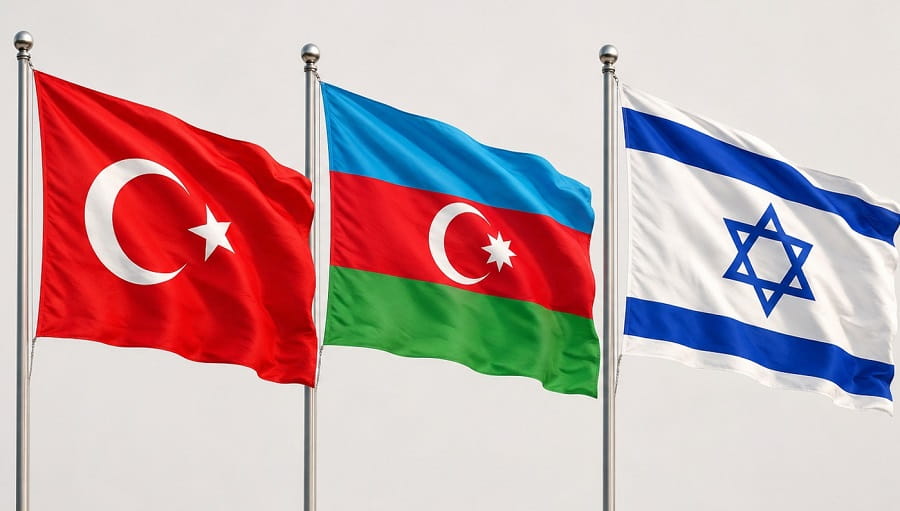
What Azerbaijan’s Mediation within the Israeli-Turkish Disputes Reveals about the Current State of Affairs between Jerusalem and Ankara
PSCRP-BESA Reports No 219 (July 23, 2026)
One of the geopolitical aftermaths of the Hamas terrorist attack on Israel on October 7, 2023, is the deteriorating bilateral relations between Israel and Türkiye. The South Caucasus state of Azerbaijan, which considers both states its closest allies, unsurprisingly once again serves as a mediator between the two antagonists. Drawing on expert interviews and qualitative data, this paper will be the first to illuminate these mediation efforts in greater detail. Focusing on Azerbaijan’s mediation formats and policies enables analysts to gauge the current state of Israeli-Turkish relations more precisely. In addition to generating policy recommendations for Jerusalem at the end, this analysis will also highlight why Jerusalem and Baku should consider Germany a constructive additional component in the Azerbaijani-led mediation efforts between Israel and Türkiye.
Talk to My Friend
Since the Hamas terrorist attack on Israel on October 7, 2023, the Turkish government around President Recep Tayyip Erdoğan has hardened its rhetoric against the Jewish state to such a degree that it openly fantasizes about invading Israel and capturing Israel’s capital Jerusalem. Unsurprisingly, such rhetoric multiplies Israeli concerns that a Türkiye-led Sunni axis might replace the plummeting Iran-led Shia axis. One state, however, sees both countries as its most important allies: Azerbaijan. Therefore, it is unsurprising that Baku often served as a mediator between the two states. The Azerbaijani President Ilham Alijew first officially mentioned Azerbaijani involvement in such initiatives in April 2025 during an address at the Azerbaijani Diplomatic Academy (ADA) in April 2025 when he stated:
“Both countries [Israel and Türkiye] are close friends of Azerbaijan. […]. As it is already known, though we never made it public ourselves, but already it has been circulated quite broadly. The first successful reconciliation between Türkiye and Israel was to a certain degree facilitated by Azerbaijan. […]. But I would say that Azerbaijan was number one in this process. Again, it was behind the scenes. We never made it public. […] We just wanted to help our ally and brother Türkiye and our friend Israel to rebuild their relationship.”
These Azerbaijani mediation efforts, especially after October 7, 2023, deserve more attention, as their format and procedures reveal much about the current state of Israeli-Turkish relations and, more broadly, about the trilateral relations among Baku, Ankara, and Jerusalem. Drawing on expert interviews and qualitative data, this analysis will be the first to illuminate these mediation efforts in greater detail, focusing on their formats. By doing this, this BESA paper will formulate policy recommendations for Jerusalem at the end. Moreover, it will showcase why Baku and Jerusalem should consider Germany as a constructive additional component in the Azerbaijani-led mediation efforts between Israel and Türkiye.
Azerbaijan and its Mediation Efforts in the Israeli-Turkish Conundrum since October 7, 2023
Since Israel’s creation in 1948, Türkiye always managed to be a reliable strategic partner of the Jewish state, while at the same time supporting Palestinian statehood and a so-called “Two-State Solution.” Although Erdoğan’s rise to power since the early 2000s and his departure from Atatürk’s secularism produced the first eruptions in bilateral relations, a radical qualitative change occurred after October 7, 2023. Erdoğan replaced his pro-Palestinian stance with an open pro-Hamas stance. This circumstance became particularly evident by hosting parts of the Hamas politburo in Türkiye and labeling this internationally recognized Islamist terrorist organization “freedom fighters.” Considering the poor state of the Turkish economy, the flourishing corruption practices, and high youth unemployment in the country, it is nothing new in world history that leaders with such domestic problems play the Anti-Zionism and Anti-Semitism card to distract from their domestic problems. As was often the case in human history, anti-Semitism helps such governments to create a rally-around-the-flag effect among the actually economically and politically unsatisfied citizenry in support of their government. Interestingly, one can observe a similar development in the left-wing Pedro Sánchez -led minority government in Spain. The latter cannot escape continuous political, economic, and corruption scandals, yet has proclaimed itself the West’s alleged moral compass – especially when it comes to Middle East affairs.
Taking notice of the rising tensions, Azerbaijan has conducted several mediation initiatives between Israel and Türkiye between 2008 and 2010, in 2018, and between 2022 and today. These helped ease Israeli-Turkish tensions. Yet, after regular periods, these disagreements erupted repeatedly. Because of this, some observers express skepticism towards Baku’s mediation initiatives. This critique often states that, although Baku has made several mediation attempts between Israel and Türkiye since 2008, relations between Jerusalem and Ankara have always returned to disputes. Thus, doubts could emerge about the effectiveness of these Azerbaijani mediation efforts. At first glance, this could seem like a legitimate critique, yet another perspective on this issue might be more crucial.
Independently of each other, Azerbaijani and Israeli experts familiar with this matter point out that the Azerbaijani mediation initiative should not be seen as the ultimate panacea for Israeli-Turkish disagreements. Rather, they constitute ad hoc measures to de-escalate tensions between Jerusalem and Ankara, aiming to prevent them from spilling over into an open military conflict. The establishment of a direct communication line between the Turkish and Israeli militaries in Syria via Azerbaijani diplomacy in May 2025 is one such instance. It aims to help both states avoid unintended clashes in post-Assad Syria.
The Mediation Formats as an Expression of the Current State of Affairs between Jerusalem and Ankara
Strikingly, the changed Turkish attitude towards Israel since October 7, 2023, is also reflected in the way the Azerbaijani-mediated Israeli-Turkish talks proceed. Throughout 2025, most of these talks proceeded only indirectly. Allegedly, only in one of the discussion rounds in 2025 did both antagonists manage to talk directly to each other. This situation exemplifies once more the often-mentioned current low point in Israeli-Turkish relations. If one considers that in September 2023 Azerbaijani officials managed to organize a personal meeting between Erdoğan and the current Israeli Prime Minister Benjamin Netanyahu in New York on the sidelines of the annual UN General Assembly and compares it to the above-mentioned current situation where both sides mostly do not manage to sit in one room anymore, this deterioration of relations becomes even more evident.
What is also interesting is that these talks are allegedly not conducted at the level of the foreign ministries, but rather directly through the presidential offices of Azerbaijan and Türkiye, as well as the Israeli Prime Minister’s Office. Although this is not an unusual practice in international relations, the fact that the highest hierarchical levels of the executive branches in all three states deal personally with this issue shows how much weight all three involved parties (Azerbaijan, Türkiye and Israel) place on the current tensions between Israel and Türkiye.
For Azerbaijan, this is a particularly delicate issue, as it fears that an escalation between its two most important allies could put it in a political dilemma. This concern is one of the reasons why Baku tries so relentlessly to calm the waters between Jerusalem and Ankara again and again. As discussions with Azerbaijani experts reveal, for Baku, the best-case scenario would be a strong, stable trilateral strategic partnership among Azerbaijan, Türkiye, and Israel.
Conclusion: Policy Recommendations for Jerusalem
As the author of this analysis mentioned in his previous BESA paper, discussions with Israeli and Azerbaijani experts highlight in a repeated manner how both sides view the current Turkish-Israeli relations as simultaneously the biggest risk (should the Turkish-Israeli relations further deteriorate) and the biggest (economic and security-related) opportunity for the Azerbaijani-Israeli strategic partnership (as soon as the tensions between Ankara and Jerusalem calm down). The points above showed what these mediation initiatives look like and, more importantly, what they tell about the seriousness of the current tensions between Israel and Türkiye.
As the Middle East security order is still evolving after the ongoing crumbling of the Iran-led Shia axis, new (potential) conflict zones between Middle Eastern states emerge, making it profoundly difficult to say with guarantee that the Azerbaijan-led mediation efforts in Israeli-Turkish relations will succeed. Thus, this analysis calls for a dualistic Israeli foreign policy approach by extending an open hand and a fist towards Ankara. Such an approach could consist of Israel’s expressed readiness to de-escalate further its relations with Türkiye if Ankara shows a gesture of goodwill –for instance by giving up its holding of a protective hand over the living rest of the Hamas politburo members residing in Türkiye) (“the open hand”). In parallel and until then, precautionary measures should remain the call of the hour for Israeli foreign policy as well (“the fist”) – especially when it comes to Erdoğan’s Neo-Ottoman aspirations, which are also seen critically by Baku and other predominantly Muslim states in the region. Additionally, Israeli foreign policy should consider the following points in this regard:
Differentiating between Turkish Domestic and International Rhetoric: Although the current Turkish foreign minister, Hakan Fidan, has tempered his tone toward Israel in a recent media appearance on July 10, 2026, stating that Ankara is not in conflict with Israel, but rather with the current Israeli government, analysts should register Fidan’s mood change with utmost caution. Fidan made this statement to a foreign media platform (The National). In interviews with domestic media outlets, the Turkish foreign minister’s rhetoric is exactly the opposite. This fact became clear just one week before his interview for “The National” when he described in an interview for CNN Türk that the “[…] [Israeli] people have become a burden that humanity can no longer bear.” Moreover, as the analysis above showed, even if Fidan is truly committed to de-escalation, Israel should keep in mind that the foreign ministries of both states are not the primary actors in the crisis management of the Israeli-Turkish tension, but the presidential and prime ministerial administrations of the respective countries. Thus, it remains unclear how much political weight Fidan’s de-escalation statements truly have.
The Repercussions of Reducing the Role of National Foreign Ministries in Crisis Management: Circumventing or reducing the role of national foreign ministries and their diplomats in the crisis management of Israeli-Turkish relations risks missing the opportunity to fortify the relationship between Israel and Türkiye. Elected officials come and go, and the same applies to their staffers within their administrations. Diplomats, however, remain in their profession, often throughout their careers. States should view such binding measures and contacts between the diplomatic personnel of all involved states as a political investment in the future, especially given that some of these diplomats might later assume political offices. Their collective experience in dealing with “the other side” might be an important trust base on which future Israeli-Turkish relations can operate.
Keeping the New Syrian Regime out of Lebanon: Although US President Donald Trump hinted in June 2026 that he would like the new regime in Syria (instead of Israel) to fight against the Shia terrorist organization Hezbollah in Lebanon, Jerusalem should be aware of the risks this might entail. As the new Syrian regime is closely aligned with and highly dependent on Ankara, the danger might arise that Türkiye might use the Islamist militias around the new Syrian leader, Abu Mohammad al-Julani, as a proxy to increase its influence in Lebanon. Indeed, such a scenario showcases once more the security risk for Israel of inadvertently replacing the former Iran-led Shia crescent with a Türkiye-led Sunni crescent.
Strengthening the Hellenic Alliance further: As a precautionary measure, Israel should expand the existing security ties within the Hellenic Alliance, namely the already-established security partnership among Israel, Greece, and Cyprus, to counterbalance Turkish influence in the Eastern Mediterranean and gain bargaining chips vis-à-vis Ankara. Moreover, the issue of Cyprus, with its since 1974 Turkish-occupied northern part, presents one of several other unexploited loopholes (like the Kurdish issue) allowing Israel to highlight the contradictions within Ankara’s international demeanor – especially concerning Ankara’s constant condemnation of Israel’s security policies in the Palestinian territories. Here, a newly recalibrated and more profoundly designed Israeli public diplomacy than before (by relying also on international expertise) can highlight the hypocrisy of Turkish foreign policy and the ignorance of the current paradoxical international liaison between Islamism and left-wing self-proclaimed progressivism in many Western states.
Germany and the Azerbaijani-Led Mediation Efforts in the Strained Israeli-Turkish Relations: Germany should be considered an additional pillar of support for these mediation efforts. Not only is Berlin, due to its past dark role in Jewish history, now one of the strongest allies of Israel, but it is also the home of the largest Turkish diaspora in the world (approximately 3 million people, of which 1,5 million are German citizens with voting rights). Therefore, similar to Azerbaijan, an escalation of the current Israeli-Turkish relations might also put Germany in a very precarious position. For Azerbaijan, this would allow it to deepen its ties with the biggest economy in Europe. For Germany, it would be a step toward stepping up its role as a peace facilitator. Several German officials practice self-criticism by pointing out that Germany has lost its past role as a mediator between Israel and the Lebanese government. However, it seems the officials in Berlin have not yet recognized that the Israeli-Turkish tensions might be even more significant to them than the Israeli-Lebanese issue, as it could also affect very sensitive German domestic issues. Furthermore, for Israel, it would be an opportunity to strengthen an important ally, such as Germany, on the international stage. This goal might be particularly important now, as Germany suffered an international blowback in June 2026 in its failed quest to secure a non-permanent seat on the UN Security Council. In addition to miscommunication between Germany and other EU states seeking such seats (Austria and Portugal), an anti-German campaign by Russia among UN members from the so-called Global South, driven by Berlin’s siding with Ukraine, also contributed to Germany’s defeat. However, an additional reason for Germany’s unsuccessful application lies in its open support for the Jewish state’s security. Thus, strengthening the international role of an ally like Germany also has advantageous implications for Jerusalem.
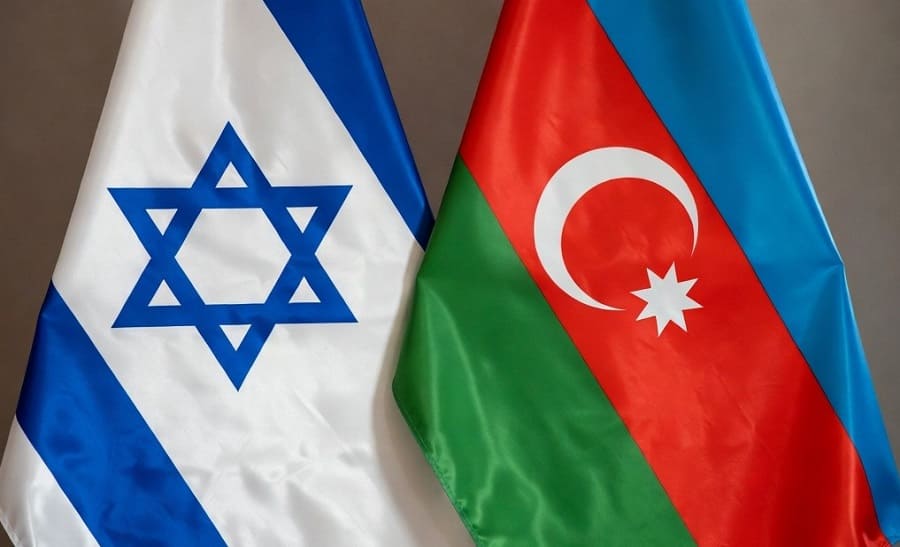
Revisiting Abraham’s Iceberg: The Israeli-Azerbaijani Strategic Partnership and the Abraham Accords
PSCRP-BESA Reports No 211 (June 17, 2026)
In a previous study for the “Caucasus Analytical Digest” published by the Center for Security Studies at the ETH Zurich (Switzerland) and the University of Bremen (Germany) in fall 2025, the author of this BESA analysis explored Azerbaijan’s motivations to consider membership in the US-brokered “Abraham Accords Declaration (AAD).” In 2020, the AAD resulted in the establishment of diplomatic relations between Israel and the two Arab Gulf states, Bahrain and the United Arab Emirates (UAE). Morocco, Sudan, and Kazakhstan became subsequent members. Motivated by a rising threat from the Iran-led Shia axis in the region, the Abraham Accords included a series of common economic and security agreements between Israel and the other AAD-states. Since 2025, American-Israeli security discourse has repeatedly put Azerbaijan forward as a possible AAD candidate state, even though fruitful cooperation between Jerusalem and Baku has existed since April 1992, when both states established diplomatic relations.
The previous study was the first to delve deeper into Baku’s deliberations over whether to join the AAD. Ultimately, it identified the following five major Azerbaijani motives to consider membership in the AAD:
Baku hopes to achieve a final American repeal of the burdensome Section 907 regulation in the Freedom Support Act of 1992 (Motive 1).
By emphasizing Azerbaijan’s mediation efforts in the Middle East, Baku aspires to draw the White House’s attention to the value Azerbaijan can bring to fostering American peace initiatives in the region (Motive 2).
Azerbaijan seeks a geopolitical role as a regional power (Motive 3).
Azerbaijan aims to increase its military-qualitative edge over its Arab allies in the region (Motive 4).
Baku strives to deepen its security cooperation with Washington (Motive 5).
However, in hindsight and after proceeding with the research, qualitative data collection, and expert conversations on the AAD framework, the Azerbaijani-Israeli strategic partnership, and Israeli-Muslim relations after the publication of the aforementioned study, its author would have probably added a question mark at the end of the title of his first study on this topic (the title of the first analysis “About Icebergs and Abraham: The Strategic Partnership Between Azerbaijan and Israel on Course for the Abraham Accords”). But why?
Baku’s Calculus and Concerns
The answer is manifold: First, it seems that for the Azerbaijani side, after a first consideration of joining the AAD, questions have arisen about whether the realization of Baku’s goals mentioned above is indeed achievable only through joining the AAD.
Second, a closer look at the motives mentioned above reveals that most of them are actually focused more on improving Azerbaijan’s standing in Washington. The upgrading of its valuable relationship with Israel to the AAD level thus becomes, ultimately, “only” a means to this ultimate goal.
Third, it is striking to observe that over the last months (since the author’s first study on this special relationship was published), the discourse of Azerbaijani officials and Azerbaijani (state) media focuses less and less on the AAD topic (with a few exceptions). The reasons for this lie, on the one hand, in the fact that the Azerbaijani-American relations have deepened even without Baku’s membership in the AAD. This circumstance has been most evident in Baku’s accession to the US-led “Peace Board” initiative for post-Hamas Gaza and the signing of the “Charter on Strategic Partnership between the Government of the United States of America and the Government of the Republic of Azerbaijan” on February 10, 2026.
On the other hand, fourth, Baku’s avoidance of discussing the AAD publicly stems from Azerbaijan’s fear of retaliatory measures by Tehran’s regime if Baku decides to upgrade its relations with the Jewish state further. That the Iranian regime is capable of such behavior has been shown by Tehran’s recent drone attacks on Azerbaijan’s Nakhchivan exclave on March 5, 2026, and past attacks on Azerbaijani diplomatic staff. Although the current second US-Israeli war against Iran have weakend the Teheran regime, Teheran still poses a security risk not only to Baku: The current Iranian regime’s internal power reconsilidation process will for now – and at least for a while – have the side effect that the command structures within the Iranian Revolutionary Guards – and in the Iranian state more broadly – will be more decentralized, in disarray, and could eventually compete with each other in the future, making it to some degree unpredictable. The very contradictory explanations of the now “Revolutionary Guard” regime in Tehran on its attack on Azerbaijan’s airport in its Nakhchivan exclave on March 5, 2026, are a prime example of this decentralization argument. In consequence, Baku should view any security guarantees formulated by Tehran towards Baku with the utmost caution, and yet, at the same time, stay loyal to its patient foreign policy approach of the last decades and acknowledge that – in metaphorical terms – the current Iran-War has injected the toxin into the veins of the Tehran regime, which needs time to take full effect.
What Does This Mean for Israel?
A reassessment of the idea of including Baku into the AAD framework, taking into account the points mentioned above, requires an honest self-reflection on this issue by Israeli foreign policy. Does this idea truly offer strategic added value for Jerusalem, or should it ultimately be seen as a political “add-on” that merely makes the already broad partnership with Baku appear even more impressive on paper, while leaving everything unchanged in substance? If the primary objective is simply public diplomacy aimed at using the Israeli-Azerbaijani strategic partnership, upgraded to the AAD level, as an additional regional showcase of how a solid partnership between the Jewish state and a predominantly Muslim state can look, there is a risk that Jerusalem underestimates the perception capacities of other Muslim states in the region. Many of these eligible and potential AAD-candidate states understand that the partnership between Jerusalem and Baku has made significant progress, even without the AAD, and continues to do so.
Regarding the Israeli public diplomacy sector, a few points should be emphasized: for an analyst of Israeli foreign policy living in Germany (like the author of this analysis), it has become clear since October 7, 2023, that Israel’s public diplomacy in the West has clearly failed over the last few years. This problem is all the more significant and astonishing when one considers, firstly, how quickly Israel ceded the field of public diplomacy to its enemies within Western societies shortly after the largest massacre of Jews since the Holocaust, and secondly, how little the European public knows about the added value of the Israeli security sector for European security. The most “positive” publicity Israel is getting in the West is for its creative counter-terrorism operations against the Iran-led Shia Axis (e.g., the Pager operation against Hezbollah or the precise liquidation campaigns against the current Iranian leadership, etc.). This is even more paradoxical, as these examples concern Israel’s security sector, which primarily operates in secret. At the same time, Israel’s public diplomacy – which actually should be the most public operational arm of Israeli foreign policy – remains mainly unnoticed in Western societies. However, what does this have to do with the Israeli-Azerbaijani strategic partnership?
From the author’s experience, many Europeans and Americans are extremely surprised to learn that, in addition to the USA and Germany, two predominantly Muslim states are among the Jewish state’s most important allies (the United Arab Emirates (UAE) on the Persian Gulf and Azerbaijan in the South Caucasus). This observation is another indication of Israel’s failure in public diplomacy. Considering the renewed rise of antisemitism in Western societies, this is almost tragic, as the Israeli-Azerbaijani partnership has the potential to serve Israeli public diplomacy. For this purpose, upgrading and institutionalizing this partnership to the AAD level is not a prerequisite.
However, if Jerusalem is really keen to see Baku join the AAD framework, it must clearly convey the advantages of membership to Baku. This can be accomplished by emphasizing and expanding the role of the “Negev Forum” and “Abraham Fund.” As a reminder, both institutions are exclusively available to AAD members and offer generous economic, technological, and military packages that the US partially finances.
Conclusion
The insights of this analysis allow a more detailed look at the Israeli-Azerbaijani strategic partnership. Drawing well-thought-out conclusions from this is even more essential for Israel, as many security-related issues depend heavily on the future trajectories of this important partnership. Following this, Azerbaijan’s value to the Jewish state will continue to remain crucial in the near future – even outside the Iranian issue and even if Baku remains outside the AAD. Among many other sectors (not mentioned here), such looming issues include:
The Israeli-Azerbaijani partnership vis-à-vis the new Syrian regime: Baku is largely engaged in the reconstruction of post-Assad Syria. Moreover, it has already served as a mediator between Israel and the new Syrian regime. Surely, this Azerbaijani communication platform will retain its crucial importance for Israel, given the ongoing evolution of the Middle East security order. Since the new Syrian leader, Abu Mohammad al-Julani (also known in the West by his birth name, Ahmed Hussein al-Sharaa), remains a controversial and very opaque figure, any additional communication channels into the new Syrian regime are helpful for Israel.
The Israeli-Azerbaijani partnership vis-à-vis Türkiye: Azerbaijan’s role remains also relevant in the current strained relationship between Israel and Türkiye – the latter is next to Israel, Azerbaijan’s most important ally. Talking to Israeli and Azerbaijani experts indicates that both groups identify the current status of Turkish-Israeli relations as simultaneously the biggest risk (if the current low point in Turkish-Israeli relations is not overcome) and the biggest opportunity for the Azerbaijani-Israeli strategic partnership (as soon as a détente between Ankara and Jerusalem resumes). Furthermore, Israel should not underestimate Baku’s influence in Türkiye, especially in a post-Erdoğan Türkiye and if the current low point in relations between Israel and Türkiye cannot be overcome with the current Turkish president.
The Israeli-Azerbaijani partnership vis-à-vis Russia: Although the current Azerbaijani-Russian relations are very volatile, Israel should use any progress on the Azerbaijani-Russian track to secure (via Azerbaijani help in parallel) at least a modest continuation of Russian military presence in post-Assad Syria. Such a scenario can allow Israel to counterbalance the Turkish neo-Ottoman influence in Syria. Interestingly, this development would benefit even Europe (and Ukraine) since Russia would be forced to waste its already strained military capacities (again) on Syria instead of accumulating them more near Eastern Europe. According to Jerusalem Post, Russian emissaries already visited the Israeli-Syrian border in fall 2025.
The Israeli-Azerbaijani partnership vis-à-vis France: This analysis expects a tensening of the Azerbaijani-Israeli partnership towards France. Paris’s traditional diplomatic support for Armenia, especially in the last Nagorno-Karabakh wars, is one reason. The other lies in its breach of the Oslo Accords by initiating a wave of recognition of undefined Palestinian statehood among other UN members in September 2025, without prior Israeli-Palestinian reconciliation. Additionally, France’s escalating domestic surge of antisemitism does the rest.
Boris Ginzburg is a doctoral researcher at the Institute for East European Studies (Politics Department) at the Freie Universität Berlin (Germany).
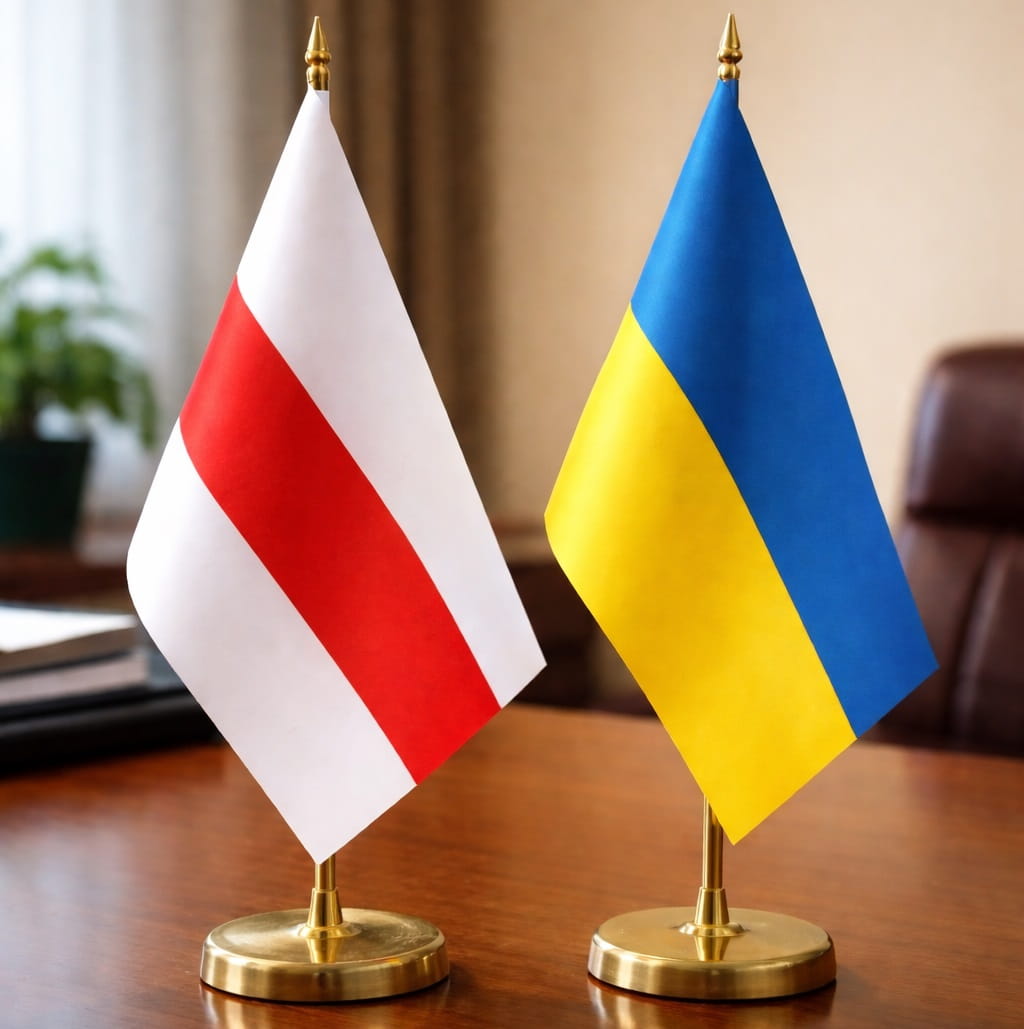
Walk, Don’t Run: A Cautious Reassessment of the Zelenskyy-Tsikhanouskaya Meeting in Vilnius in Light of Israel’s Second Iran-War
PSCRP-BESA Reports No 195 (April 9, 2026)
Several international media outlets have euphorically portrayed the first official meeting between Ukrainian President Volodymyr Zelenskyy and Belarusian opposition leader Sviatlana Tsikhanouskaya in Vilnius on January 25, 2026, as a fundamental moral shift in Kyiv’s stance toward the Belarusian opposition – from strategic distance to meaningful cooperation. Several interpretations presented the alleged motives behind Ukraine’s adapted policy toward the Belarusian dissidents, while ignoring the argumentative weak spots within them. This analysis reassesses the so-called “first official” Zelenskyy-Tsikhanouskaya Meeting and it presents interpretations not mentioned yet in the public discourse: these include Ukraine’s motives to (1) strengthen the pro-European branch of the Belarusian opposition in exile, (2) gain leverage in negotiations with Washington, (3) promote Ukraine’s fast-track EU accession, and (4) Ukrainian domestic politics. These developments can affect Israel’s security policies especially during its ongoing second war with the Mullah Regime in Tehran and even afterwards.
1. Introduction
Since the beginning of 2026, Zelenskyy’s tone towards the Lukashenka regime in Belarus has indeed grown harsher. During a speech at the annual Davos Economic Forum on January 22, 2026, Zelenskyy criticized his Western allies for failing to take decisive action against the Lukashenka regime during the violent crackdown on the protests against the rigged presidential elections in Belarus in August 2020. Three days later – in Vilnius on January 25, 2026 – Zelenskyy dedicated an immense part of his speech to the Belarus issue during a commemoration of the 1863 January Uprising – a revolt against the Russian tsarist empire on the territories of today’s Ukraine, Poland, Lithuania, and Belarus. According to him, Minsk now poses a direct threat to Ukraine and Europe due to the deployment of the Russian Oreshnik missile systems. During this event, what Belarusian exile media dubbed the “first official meeting” between Ukrainian President Volodymyr Zelenskyy and Belarusian opposition leader Sviatlana Tsikhanouskaya took place (even though there had already been several sporadic encounters between the two politicians on the sidelines of international forums). It was reportedly at this meeting that Zelenskyy invited Tsikhanouskaya to visit Ukraine for the first time.
On February 18, 2026, the Ukrainian president also announced that he had imposed targeted sanctions against the Belarusian leader Alyaksandr Lukashenka because of the deployment of the Russian Oreshnik system and Minsk’s provision of its own infrastructure to the Kremlin for controlling Russian combat drones. On February 23, Zelenskyy followed up with further actions. For the first time since the start of the second Russian invasion of Ukraine in February 2022, the Ukrainian president, after several cancellations, gave an interview to a Belarusian exile media outlet – in this case, “Zerkalo.” In it, he stated his intention to differentiate between the Belarusian regime and its citizens. However, he simultaneously issued indirect threats against Belarus, claiming that the Belarusian regime, with its anti-Ukrainian behavior of recent months, was putting all of Belarus at “great risk”, adding that NATO should view the Oreshnik system in Belarus as a legitimate military target. On March 11, 2026, Ukrainian parliamentarians also addressed the issue of Belarus by formally requesting five EU member states – Poland, Finland, Lithuania, Latvia, and Estonia – to completely cease all transit activities between themselves and Belarus, as well as Russia, since the proceeds from it would benefit the Russian war machine.
Due to this, one can witness a flood of comments on this issue within several media outlets during the last weeks, euphorically portraying the so-called “first official meeting” between Zelenskyy and Tsikhanouskaya as a starting point of a fundamental moral shift in Kyiv’s stance toward the Belarusian opposition, from a strategic distance in the past to an alleged meaningful cooperation. Indeed, although Belarus assisted Russia logistically at the beginning of Russia’s second invasion into Ukraine in February 2022, Kyiv was not eager to deepen its cooperation with Lukashenka’s exiled opponents. Instead, Ukraine kept the opposition at arm’s length, trying not to provoke the Lukashenka regime into sending its own troops to Ukraine via the 1000-km long Belarusian-Ukrainian border. Along with other factors, Kyiv was most concerned about the possibility of having to stretch its military forces further along its northern border at the expense of protecting its south-eastern front.
However, this analysis calls for prudence. A reflection on the possible motives behind Ukraine’s cautious overtures in favor of the Belarusian opposition in exile reveals that Kyiv’s slightly adjusted foreign policy approach may be linked to (1) the emergence of a new actor on the Ukrainian-Belarusian track, (2) to gain leverage vis-à-vis Washington, and (3) to promote Ukraine’s fast-track EU accession. (4) Domestic political factors, too, may play a decisive role. In sum, the following will show why this foreign policy adjustment reflects Kyiv’s adaptation to gradually changing geopolitical developments in Eastern Europe that will not lead to a complete shutdown of relations between Kyiv and Minsk and will not prompt Kyiv to put all its eggs in one basket, namely, the basket of the exiled Belarusian opposition.
2. Evaluating previous interpretations and reactions
Previous comments on the Vilnius meeting between Zelenskyy and Tsikhanouskaya showed a wide range of diverse reactions and possible interpretations. However, the relevance of these arguments depends very much on the strength of their argumentation:
Additional Gains in Soft Power and Normative Differentiation from the EU’s Belarus Policy: Some commentaries evolved into speeches of gratitude toward the Ukrainian president, as he dedicated a significant portion of his speech in Vilnius in January 2026 to the issue of Belarus. Particular emphasis was placed on Zelenskyy’s words of reproach directed at Ukraine’s European partners for their alleged inaction during the violent suppression of protests by the Belarusian regime in August 2020, which allowed that regime to remain in power. However, this narrative overlooks the fact that, compared to the EU (which condemned the repression), it was actually Kyiv itself that failed to show much diplomatic sensitivity toward the Belarusian civil society: On August 11, 2020—two days after the crackdown on protests began on August 9, 2020—the then-Ukrainian Minister for Economic Development, Trade, and Agriculture, Ihor Petrashko, met in Kyiv with the then-Belarusian Minister of Agriculture and Food, Ivan Krupko. The subject of their discussion was the promotion of bilateral agricultural cooperation between the two states. This meeting took place during Zelenskyy’s presidency.
Russian Oreshnik missile systems on Belarusian soil: One of the motives that the Ukrainian president himself frequently cites as the official reason is the deployment of the Russian Oreshnik missile system in Belarus. There is no doubt that this—much like the alleged use of Belarusian infrastructure to control Russian drones targeting Ukraine—poses a direct threat to the Ukrainian state. However, the Kremlin has already demonstrated that it does not rely on Belarusian territory to use these weapons against Ukraine. The Oreshnik attacks on Ukraine known to date—those targeting Dnipro in November 2024 and Lviv in January 2026—were launched from Russian territory.
Lukashenka’s changed calculus due to the US-Belarus reapproachment: Similarly, assuming that Ukraine no longer needs to appease Lukashenka, since the Belarusian autocrat has no interest in a direct conflict with Ukraine, given its reapproachment with the White House since January 2025, falls short. The contact between Kyiv and Minsk will remain necessary not only because of political considerations (e.g., preventing Lukashenka from falling entirely into the Kremlin’s hands), but also for humanitarian reasons. Those include maintaining future prisoner-of-war exchanges with Moscow via Belarusian territory. The last exchange of this kind took place in Belarus on March 6, 2026, and thus right in the middle of the current Ukrainian-Belarusian disputes. Moreover, it seems unlikely that Kyiv will risk obstructing the return of abducted Ukrainian children, who were left behind by Russian forces in Belarus, as well as the humanitarian corridor via Belarusian territory for Ukrainians who try to leave the Russian-occupied Ukrainian territories in order to reach the Ukrainian mainland.
The appointment of Budanov as the new head of the Ukrainian Presidential Office: The replacement of the long-serving head of the Ukrainian Presidential Office—Andriy Yermak—on January 2, 2026 (amidst a corruption scandal surrounding the Ukrainian president’s closest circle) by the military intelligence chief, Kyrylo Budanov, is also a very frequently cited argument. The former was a harsh critic of the Belarusian dissidents due to their ambiguous positions on the pre-2022 Russo-Ukrainian relations. The latter, however, functioned as the official responsible for Kyiv’s policy toward the Belarusian opposition in exile since the war began in 2022 (including its political wing, represented by the Tsikhanouskaya camp, as well as its former armed wing, the so-called “Kastus Kalinouski Regiment”). Yet, the proponents of this line of argument fail to note that Budanov played a dual role in this regard: In parallel, he has also served as the personified channel of communication between the Zelenskyy administration and official Minsk since the beginning of the war. Consequently, one should not be too quick to assume that, from now on, only the Belarusian opposition possesses a direct line to the Ukrainian Presidential Office. The aforementioned recent Ukrainian-Russian prisoner exchange conducted on Belarusian territory in March 2026 also points to Kyiv’s continuous contact with Belarusian officials.
So how can Kyiv’s softening attitude toward the Belarusian opposition around Sviatlana Tsikhanouskaya be explained?
3. Reassessment of the “first official” Zelenskyy-Tsikhanouskaya Meeting in Vilnius
3.1. Strengthening the pro-European Branch of the Belarusian Opposition in Exile
As the author of this analysis wrote in his policy memo for the “Program on New Approaches to Research and Security in Eurasia (PONARS Eurasia)” at the George Washington University in February 2026, analysts should pay much more attention to the details of how the December 13, 2025, prisoner release in Belarus unfolded. Here, he wants to elaborate more on this thought:
First, during this event, 123 Belarusian political prisoners were released by the Lukashenka regime. 114 of them were then deported to Ukraine at once, and the other nine to Lithuania. This procedure was particularly unusual: In the past, Minsk handled such releases differently, deporting all released dissidents mainly to Lithuania. Strikingly, among the 112 people deported to Ukraine were the two most internationally famous members of the Belarusian opposition (besides Tsikhanouskaya). One of them was Viktar Babaryka, the former head of Belgazprombank, a subsidiary of Russia’s Gazprom, and later a presidential candidate in the fraudulent 2020 Belarusian elections. The other one was his chief of staff during the 2020 presidential election campaign, who later became a central opposition figure, Maria Kalesnikava. Both received political asylum in Berlin, Germany, after their release. Due to their biographical ties to the Kremlin and their very ambiguous and evasive statements about the Russo-Ukrainian war shortly after their release, one should view them as powerful parts of a, if not pro-Russian, then at least of a Russian-affine sentiment within the Belarusian opposition in exile. Taking this viewpoint, it cannot be in Ukraine’s interest to allow this actor to rise on the horizon of the Ukrainian-Belarusian conundrum. Kyiv is thus well-advised to soften its stance towards the Tsikhanouskaya camp, which represents the Belarusian opposition’s pro-European wing. Consequently, Zelenskyy’s readiness to set up the first official meeting with Tsikhanouskaya in Vilnius on January 25, 2026, could also be interpreted as a preventive move to strengthen the Belarusian opposition’s pro-European camp.
Second, the release of Belarusian political prisoners via Ukrainian territory in December 2025 signaled that Minsk does not fear the contact between Kyiv and its own dissidents. Thus, should Tsikhanouskaya indeed visit Ukraine in the near future, as she states, Minsk will unlikely rethink its attitude towards Ukraine – at least not as long as Kyiv does not introduce Tsikhanouskaya as an official representative of Belarus (but rather as a “private” individual or activist). Moreover, the December 2025 release once again demonstrated the existence of a functioning communication channel between Kyiv and Minsk.
Third, to some degree, preventing the rise of the Russian-affiliated branch within the Belarusian opposition movement becomes, paradoxically, a “common interest” among Kyiv, Minsk, and the Tsikhanouskaya camp: Kyiv does not need an additional internationally active player on the Ukrainian-Belarusian track with an ambiguous position on the Russo-Ukrainian war. Lukashenka’s goal to minimize his dependence on Moscow and to secure an advantageous power transfer for his clan in the future – as hinted at by the constitutional amendments in Belarus on February 27, 2022 – also prevents him from passively observing the rise of additional internal opponents with ties to the Kremlin. Thus, through Ukrainian involvement, both Kyiv and Minsk intertwined Babaryka’s and Kalesnikava’s post-release images with the Ukrainian state. Should they ever again take an unclear position on the Russo-Ukrainian war, or even nurture their Russia-affine stance in the future, it could create an internationally visible reputational burden on both oppositionists. Both would appear ungrateful towards Kyiv on the one hand, which was involved in their liberation, as well as towards their European host countries on the other hand, which follow a clear “Ukraine-First” line. Consequently, Kyiv’s move to set up a short video conference on the next day of the respective prisoner release between Zelenskyy and some of the released dissidents – including Babaryka and Kalesnikava – should be considered a well-thought-out political move by Kyiv. Both dissidents had to publicly and on record state their gratitude to the Ukrainian state and express condemning words about Russia’s war of aggression against it.
Even Tsikhanouskaya should be interested in minimizing the influence of this sentiment within her movement. Not only because figures like Kalesnikava express interest in finding common ground with Lukashenka (whereas Tsikhanouskaya seeks more pressure), but also to weaken such strong competitors to her leadership. It is important to note that such an intersection of interests does not mean that all parties are aware of it or have pre-discussed their overlapping priorities. Rather, the calculus of each party could be based on a more solo-conducted rational level, which can sometimes result in a paradoxical intersection of interests between conflicting parties.
3.2. Bargaining Chips vis-à-vis Washington
Previous comments saw in Kyiv’s alleged course correction towards the Belarusian opposition a clear counter-signal to the Trump administration’s gradual rapprochement with Minsk since January 2025. This lens has some inherent weaknesses, such as the point that Ukraine is unlikely to anger Washington too much while seeking American security guarantees in a post-war period, especially not for the sake of the Belarusian opposition movement. However, a deeper look at the content of the recent Ukrainian sanctions package against Lukashenka and the Ukrainian parliament’s appeal to Poland, Finland, and the three Baltic States suggests that Kyiv is indeed worried about where this recent American-Belarusian détente could lead.
It is striking, in fact, that both Ukrainian initiatives advocate tightening restrictions on the transit of (mineral) resources into and out of Belarus. Indeed, the recently enacted U.S. sanction waivers against the Belarusian potash sector can only take their full effect if Minsk gets access to ports in Lithuania, Latvia, Poland, and/or Ukraine. Among U.S. circles dealing with Belarus, some voices view the prospect of Belarusian potash transit through Ukrainian ports in Odesa not merely as an economic advantage, but also as a peace initiative—one that economically binds two hostile states together, thereby potentially minimizing future military conflicts (resembling, to some degree, the logic behind the European Coal and Steel Community of 1951, which established economic interdependencies primarily between the two former European belligerents: Germany and France). Thus, Kyiv’s call for stricter trade sanctions against Belarus—along with its overtures to Lukashenka’s political opponents—can be interpreted, on the one hand, as a signal of opposition to Washington’s visions for the future of Ukrainian-Belarusian relations. On the other hand, however, it can also be viewed as a bargaining chip vis-à-vis Washington, aimed at securing satisfactory American security guarantees for Ukraine in a post-war period.
3.3 Other possible reasons
However, two additional reasons also deserve attention:
I. Fast-track EU accession: One can also view the first formal meeting between Zelenskyy and Tsikhanouskaya as a political investment by Kyiv in its relations with Lithuania and Poland, whose officials were also present in Vilnius. Both countries are considered the most prominent supporters of the exiled Belarusian opposition and the fiercest critics of the Lukashenka regime. Moreover, Lithuania will assume the EU Council Presidency in the first half of 2027 and promises to keep Ukraine on the EU agenda. In recent weeks, Zelenskyy has once again announced his interest in Ukraine’s fast-track EU accession by 2027. With Poland, on the other hand, Kyiv is trying to intensify its energy and air defense partnership.
II. Presidential election/Strongman-Image: Zelenskyy’s harsher tone towards the Lukashenka regime may also be linked to domestic political developments. Should negotiations for a ceasefire between Kyiv and Moscow prove successful, the presidential elections—which were postponed due to the wartime situation in Ukraine—would have to take place. Here, Valerii Zaluzhnyi could be Zelenskyy’s strongest rival in this context. Zaluzhnyi has served as Commander-in-Chief of the Armed Forces of Ukraine since July 2021. After disagreements with Zelenskyy, he lost his position in February 2024 and was sent to the United Kingdom in July 2024 to serve as Ukraine’s Ambassador there. Followingly, Zelenskyy’s more robust stance toward Belarus allows him to style himself as a “strongman” and, potentially, minimize the reputational contrast between himself and the seasoned military figure Zaluzhnyi. By the same logic, one can also view Zelenskyy’s changed communication strategy since January 2026. Not only does Belarus get rhetorically targeted by the Ukrainian politician (Zelenskyy on January 25, 2026: “For now, Lukashenka’s white spitz has more rights than the people of Belarus, unfortunately” (own translation)). Similarly, Zelenskyy relies on a populist-tinged rhetoric against other critics of Ukraine—such as Hungarian Prime Minister Viktor Orbán (Zelenskyy on March 5, 2026: “[…] we will pass this man’s [Orbán] address to the [Ukrainian] armed forces — let them call him and speak to him in their own language”)—or against Chechen leader Ramzan Kadyrov. Following the United States’ removal of Venezuela’s authoritarian ruler, Nicolás Maduro, on January 3, 2026, Zelenskyy proposed to Washington on January 7, 2026, that it apply the same procedure to Kadyrov.
4. Conclusion: Why Israel should care
This analysis reassessed the so-called “first official” Zelenskyy-Tsikhanouskaya Meeting in Vilnius on January 25, 2026, and its meaning for Ukrainian-Belarusian relations. By highlighting argumentative strengths and weaknesses within the common explanations of this first offical encounter between both politicians, this policy paper presented to the reader analytical lenses not applied yet: these were (1) the strengthening of the pro-European branch of the Belarusian opposition in exile, (2) gaining leverage in negotiations with Washington, (3) the promotion of Ukraine’s fast-track EU-accession, and (4) Ukrainian domestic politics. It is important to emphasize that the mentioned motives do not exclude one another.
To what extent are these developments on the Ukrainian-Belarusian track actually relevant to Israel from a security policy perspective? The Belarusian opposition in exile is, in its majority, generally regarded as being sympathetic to Israel—a sentiment demonstrated particularly by its clear stance of support toward Israel and its existential struggle against the Iran-led Shiite Axis following the Hamas terrorist attack on October 7, 2023. The Minsk regime, conversely, is considered a key ally of the Mullah regime in Iran. Following Israel’s successful elimination of Iranian Supreme Leader Ali Hosseini Khamenei on February 28, 2026, Lukashenka hosted the Iranian Ambassador to Belarus, Alireza Sanei, at his residence on March 4, 2026. During the meeting, the Belarusian leader expressed his condolences and described Khamenei as a “humanist.” However, it remains an open question—not only for Israel but also for Ukraine and Europe—how much the Belarusian opposition in exile actually has serious channels of influence within Belarus’s domestic political landscape that could prove relevant in a post-Lukashenka era.
For now, the above-described developments on the Ukrainian-Belarusian track could have only indirect implications for Israel: During a visit by Lukashenka to China in August 2025, Beijing allegedly emphasized that Belarus’s role as a transit country for Chinese goods into Europe had grown significantly—particularly in the wake of the “12-Day War” between Iran and Israel in the summer of 2025—as that conflict had starkly highlighted the vulnerability of the transit routes for Chinese goods passing through the conflict region. The Chinese calculus behind this statement was based on the hindsight-correct assumption that a new round of the Israeli-Iranian conflict was imminent. Consequently, Beijing urged Minsk not to unnecessarily strain its relations with other transit states, such as Poland and Lithuania. Thus, if Zelenskyy now specifically intends to target Belarus’s role as a transit hub—as outlined above—such a move could run counter not only to American (and European) economic interests but also to Chinese ones. Consequently, this could provide yet another reason for Beijing to exert pressure on one or all of the current belligerents in the ongoing second Iran war. This applies even to the aftermath of the conflict – when the guns will fall silent – to prevent future military eruptions.
However, this analysis casts doubt on whether Kyiv will succeed in compelling Belarus’s EU neighbors to impose stricter restrictions on the movement of (mineral) resources through and from Belarus. Within these EU states, debates are already underway regarding the extent to which the wording of the EU sanctions against Minsk actually prohibits potash imports from Belarus at all. Even a final judicial decision in a legal dispute between Minsk and Vilnius on this matter is awaited by 2027. Additionally, doubts among the Polish and Lithuanian political elites arise regarding the economic and political rationale for these potash sanctions against Minsk, as, on the one hand, the European dependence on Russian potash increases (which is not under EU sanctions). On the other hand, it also multiplies Belarus’s economic and political dependence on access to Russian ports, thereby bringing more money into the Kremlin’s coffers and forcing Minsk to tolerate Moscow’s revisionist plans.
Boris Ginzburg is a political scientist at the Institute for East European Studies (Politics Department) at the Freie Universität Berlin (Germany)
How to Attend a Wedding Even Without an Invitation: Lukashenka’s Middle East Tour And Its Meaning for Israel (and Europe)
PSCRP-BESA Reports No 184 (February 18, 2026)
Between November 27 and December 7, 2025, Belarusian leader Alyaksandr Lukashenka undertook a major foreign trip. In addition to visiting two Asian countries (Kyrgyzstan and Myanmar), the internationally isolated politician focused his travels primarily on the Middle East and North Africa (MENA) region. From November 28 to December 2, 2025, he visited the Sultanate of Oman. From there, he traveled to Algeria. Three days later, on December 5, 2025, Lukashenka travelled back to Oman, where, after two days of government consultations in Muscat, he returned to his homeland on December 7, 2025. In parallel, Lukashenka’s middle son, Dzmitry Lukashenka, Belarus’s Honorary Consul in Ethiopia and his father’s Special Representative for Asian and African Affairs, was in Indonesia for government talks. On January 27, 2026, the Emirati news agency WAM reported that the eldest son of the Belarusian ruler, Viktar Lukashenka, who is also the president of the Belarusian Olympic Committee and his father’s personal Middle East envoy, met with Emirati vice president Sheikh Mansour bin Zayed Al Nahyan in Abu Dhabi, United Arab Emirates (UAE).
The trips’ motives sparked much speculation. Belarusian state media portrayed the journey as an attempt to further the supposedly flourishing economic ties between Belarus and the countries Lukashenka visited. However, Belarusian exile media pointed to minimal trade between Minsk and the host countries, thereby undermining the Belarusian state media’s argument. Belarusian opposition figures in exile, such as Pavel Latushko, Deputy Head of the Belarusian United Transitional Cabinet, accused the Belarusian autocrat of using these alleged political trips as a pretext to hide and launder abroad the illegally acquired funds of the Lukashenka clan. However, there is no concrete evidence to support this claim.
A far more realistic argument, put forward by Belarus experts like Valery Karbalevich, is the PR function of this foreign trip: Lukashenka’s latest MENA tour signals that the Belarusian state is by no means isolated. On the contrary, it has—if it so chooses—other markets abroad besides Europe and Russia. Lukashenka’s own electorate at home would ostensibly also be an audience for this message.
Regardless of the possible motives mentioned above, it remains overlooked that this trip reflects many inherent elements of Belarusian foreign policy under Lukashenka. Ignoring these features results in the loss of important insights that could inform a more judicious policy by Western states towards Belarus. By pointing to Minsk’s past international engagements, this analysis uses Lukashenka’s MENA-Tour to highlight the main characteristics of Belarus’s current diplomacy. These include: (1) Foreign policy as a tool for international recognition, (2) the preference for a personalistic foreign policy approach, and (3) proactive foreign policy initiatives to remain internationally relevant. Taking these insights into account helps to understand why Lukashenka’s involvement in the Middle East is highly relevant to Israel (and Europe).
Lukashenka’s MENA-Tour 2025/26 as a reflection of Minsk’s Foreign Policy Approaches
1. Belarusian Foreign Policy as a Legitimacy Tool
Due to state-controlled political competition in domestic affairs (especially during elections), autocracies’ political legitimation process proceeds more complicatedly than in democracies. This fact makes it all the more important for autocrats to close this legitimacy-related “deficit” through their own foreign policy activities.
In the case of Belarus, the rigged 2020 presidential elections and their repressive aftermath exacerbated this legitimacy problem. Many Western states withdrew their ambassadors or now manage their actual relations with Belarus only through so-called chargés d’affaires. Current examples of this are Germany and Israel. This situation allows the respective foreign ministries to avoid formally recognizing Lukashenka as Belarus’s head of state by issuing a letter of credence, while simultaneously enabling them to maintain a diplomatic presence in Belarus.
Lukashenka’s recent foreign trip, with its grand economic promises, also falls into the well-established pattern of using Belarusian foreign policy as a legitimacy tool. As in Oman, Algeria, and Myanmar, during Lukashenka’s nearly 32-year rule, there were grand promises of flourishing interstate economic relations with other countries (like Argentina, Cuba, and Libya). These promises, however, never materialized. However, they allow the regime to maintain, at a “cosmetic” level, its self-proclaimed multi-vector foreign policy, which seeks to balance among the different global power poles. Secondly, Minsk allegedly intends to demonstrate to both Europeans and Russians that it is not entirely dependent on either market. In addition, thirdly, the aforementioned domestic political signal sent by such trips is certainly decisive. At least, the extent to which Belarusian state propaganda exploits such trips strengthens this assumption.
Be that as it may, the first analytical conclusion drawn from Lukashenka’s MENA trip is that the Lukashenka regime is still striving for international political legitimacy (Element 1).
2. Belarusian Foreign Policy as a Sign of Lukashenka’s Distrust of the Diplomatic Profession
Two central developments of Belarusian foreign policy since Lukashenka’s rise to power in 1994 are the increasing personalization of foreign policy by Lukashenka and the curtailment of the Belarusian Foreign Ministry’s competencies. Over the past few decades, the Belarusian Foreign Ministry has increasingly become a ministry of foreign economic affairs. This fact significantly complicates the collection of qualitative research data on Belarusian foreign policy. Therefore, analysts and political stakeholders must treat the references to statements by Belarusian diplomats with extreme caution.
This development has its roots in Lukashenka’s peculiar distrust of the diplomatic profession and his self-proclaimed anti-bourgeois image. A prime example is the so-called “Drozdy conflict” of 1998, in which Lukashenka “bullied” the European and American embassies out of their residences in the Minsk suburb of Drozdy and established his new presidential residence there. According to the Belarusian leader, the embassies engaged in espionage activities against Belarus from this location. Even today, this particular attitude is still evident. During a meeting with the heads of Belarusian diplomatic missions on July 31, 2025, Lukashenka openly stated:
“There is no room here for betrayal and nepotism, which our Foreign Ministry has always suffered from. […] I am afraid it still exists somewhere. […] I will be honest. I have instructed our law enforcement agencies: Any betrayal by a Foreign Ministry employee … [short silence by Lukashenka] … I am afraid even to mention [the possible consequences awaiting such “traitors”]” (own translation).
Lukashenka’s recent trip to the Middle East further underscores this point. He did not hide that his eldest son, Viktar Lukashenka, and his youngest son, Nikolai Lukashenka, participated in the talks with the Omani Sultan Haitham bin Tariq Al Said. Besides them, no Belarusian diplomat attended this meeting, except for Lukashenka‘s personal translator, Sergei Zelenkevich – a close associate of Lukashenka’s eldest son Viktar. As mentioned above, Viktar is his father’s special envoy for Middle Eastern affairs.
Interestingly, especially Belarus’s relations with Oman demonstrate that the Belarusian leader himself is susceptible to a personalized foreign policy by other states as well. It becomes particularly evident in the Omani government’s continued use of the so-called “Belarusian Omani,” Jamal Al Moosawi. The Omani Sheikh Al Moosawi was born in Russia to an Omani father and a Belarusian mother from Rechytsa, Belarus. He studied cultural studies in the United Kingdom, and currently serves as Director-General of the National Museum in Oman. Muscat repeatedly uses the “Belarusian Omani” as a key liaison between the Sultanate and Lukashenka. On October 6, 2025, during a previous visit by Lukashenka to Oman, he agreed with the Omanis that Al Moosawi would play a supporting role in the construction of the new National Museum of Belarusian History in Minsk. On December 20 2025, Al Moowasi indeed appeared in Minsk to oversee the project’s planning.
Thus, this subchapter yields three further important insights into the Lukashenka regime’s foreign policy: Belarusian diplomacy pursues a personalized foreign policy approach (Element 2). In this respect, it prefers to bypass official channels that would normally go through institutions such as the foreign ministry (Element 3). Moreover, Lukashenka himself is susceptible to such a foreign policy approach from his partner states, as he is highly distrustful of the diplomatic profession (Element 4).
3. Belarusian Foreign Policy as an Intruder
The author of this analysis often points to the advantage of relying on research on (post-)Soviet organized crime and its modus operandi when analyzing the autocracies of the post-Soviet region. Similar to autocracies, organized crime groups also operate within highly hierarchical structures, where informational asymmetries persist between the leader and his closest circle (“winning coalition”). Even here, it can serve as a tool to point to a fifth element of Lukashenka’s foreign policy:
Over the centuries of the Russian-speaking organized crime groups’ existence, reaching back to tsarist times, their members not only nurtured a quasi-religious cult of their lifestyle, but also developed their own language, or jargon. In Russian, the linguistic feature of organized crime is called “fenya” («феня»). Within its rich vocabulary, one jargon term could be helpful for further analysis: the Russian criminal term “razvodyashchii” («разводящий»). There is no direct English translation of this word. However, the term has its roots in the Russian word “razvod” («развод»), which can mean “divorce” or “separation”. Thus, a razvodyashchii is someone who conducts such separating acts during times of conflict.
High-ranking members appointed by an organized crime group‘s leader often assume this position. In many cases, however, the leader itself takes this role. To this day, this phenomenon exists within and beyond the post-Soviet prison system. The main task of this “separator” is to mediate between conflicting factions within a crime group and resolve disputes among them. However, the role and logic of this “quasi-judge” can be much deeper than often assumed. A razvodyashchii can use this role to foster his position within his crime group. Since conflicting factions cannot use the official legal system (as the Russian-speaking organized crime does not acknowledge state-related authorities), they rely more on their own codex (so-called “ponyatiya” («понятия»)). Consequently, they are dependent on the razvodyashchii to resolve their internal conflicts. This dependence often gives the “separator” the power and position to have the last word in a conflict. Simultaneously, behind the scenes, he is well-positioned to enjoy being spoiled by each side of the conflict, which often tries to win over the “referee” to its side.
Yet, a razvodyashchii with greater affinity for power will not only be active in ongoing conflicts. He will find ways – untraceable to his own person – to artificially create conflicts between factions, deepening the groups’ dependency on him. Such a mechanism allows him to increase or at least maintain his relevance to the conflicting parties. In other words, he will create problems in order to be needed to solve them. The same modus operandi can apply to autocratic regimes during inner-elite conflicts. Besides domestic examples not mentioned here, Lukashenka has proven several times that he can also apply a razvodyashchii’s logic on the international level:
On the one hand, Lukashenka does not shy away from playing both sides of a conflict. Belarus’s relations with Israel are quite a good example of this. Given the Jewish community in Belarus (approximately 40.000 people) and the many Israelis with roots in this former Soviet republic (approximately 130.000; famous examples include former Israeli Prime Ministers Yitzhak Shamir and Shimon Peres), Israel and Belarus are historically intertwined. At the same time, from 2004 on, Lukashenka’s Belarus was several times sanctioned by the US in the last decades for helping the Mullah regime in Iran to circumvent the international sanctions against its nuclear program. Moreover, Belarus is a global arms exporter that was also involved in selling weapons to Palestinian terrorist organizations in the past. Not even Belarus’s main partner, Russia, is safe from Lukashenka’s double-games. Besides aiding the former Assad regime with defense technology during the Syrian civil war, investigative journalists showed in 2017 how Minsk also supplied Syrian rebel groups with arms who were fighting not only Assad but also his Russian ally.
On the other hand, Minsk has never felt obligated to wait for a formal invitation to participate in resolving current international disputes. Like an experienced razvodyashchii, it lives by another mantra: If a given political constellation promises political dividends for Minsk, it will appear at the “wedding” even without an invitation. By doing this, Lukashenka becomes a stakeholder in diverse political events and secures a seat for himself at the negotiation table during ongoing or future conflict-resolution processes. Lukashenka’s current 32-year reign presents manifold past examples of this kind. This analysis will limit itself to mentioning the latest but still most often forgotten examples:
On July 29, 2020, just days before the rigged presidential election in Belarus on August 9, an incident known in Ukrainian politics as “Wagner-Gate” took place. 33 mercenaries from the Russian mercenary group “Wagner” were arrested by Belarusian security forces in Minsk. According to the Belarusian leader, their task was to destabilize the domestic political situation in Belarus on the Kremlin’s behalf. Minsk likely fabricated this pretext, which points to the actual, very contentious relationship between Lukashenka and Putin. However, rumors persist that Lukashenka was intervening in an ongoing Ukrainian special forces operation. Ostensibly, Kyiv has tried to bring the mercenaries, whom Kyiv accused of committing war crimes in the Donbas, to Ukraine after their stopover in Belarus and put them on trial in Ukraine. Indeed, Kyiv tried (vainly) to convince Minsk to extradite the mercenaries to Ukraine. Thus, Lukashenka obtained bargaining chips vis-à-vis Kyiv and Moscow.
Another instance related to the Wagner mercenary group is Lukashenka’s mediating role during their revolt against the Kremlin in June 2023. A part of the mercenary group was thereafter stationed in the Belarusian forest and is allegedly involved in training the Belarusian armed forces. At the same time, Lukashenka displayed to the Kremlin his pivotal role in Russian internal and external affairs. The artificially created migration crisis at the Belarusian-Polish border in the winter of 2021/22 is also worth mentioning. Thus, Lukashenka created the political circumstances in which the then-German chancellor, Angela Merkel, was forced to conduct two phone conversations with the persona non grata Lukashenka and discuss the issue with the Belarusian politician, whom the European Union refuses to recognize as the president of Belarus since the rigged 2020 elections.
Accordingly, the Lukashenka regime’s latest MENA tour can also be assessed through this lens. Oman was, and once again is, an important mediation hub for the ongoing crisis between Belarus’s ally, Iran, on the one hand, and the US (and Israel) on the other. Also, it is noteworthy that the government consultations held by Lukashenka’s eldest son, Viktar, in Abu Dhabi on January 27, 2026, happened just one day after the end of the “peace talks” between Ukraine and Russia, mediated by the US and the UAE from January 24 to 26, 2026, also in Abu Dhabi. Since the outbreak of the second Russo-Ukrainian War in February 2022, Lukashenka has repeatedly emphasized that any renegotiation of a new European security order must involve Belarus’s active participation. For Minsk, it is crucial to receive security guarantees—not only from NATO but also from any future expansionist endeavours by the Kremlin, which could also target Belarus.
In this respect, the analysis identifies a fifth element of Belarusian foreign policy under Lukashenka: the Lukashenka regime does not wait for a formal invitation to become involved in global issues. If necessary, it creates this “access” itself to remain politically relevant and involved – often at the expense of the actual parties to the conflict (Element 5). However, it would be premature to assume that this strategy always works out: A razvodyashchii is inclined to forget that “black swans” might sometimes intervene in one’s plans.
Conclusion: Recommendations for Jerusalem
This analysis examined the Lukashenka regime’s recent Middle East Tour in Winter 2025/26. By using examples of past interactions between Minsk and the international community, it showed how Lukashenka’s MENA-Tour falls into the familiar pattern of Lukashenka’s foreign policy approaches. The analysis identified five main features (elements) of Lukashenka’s foreign policy approach:
Element 1: The Lukashenka regime uses foreign policy to compensate for its deficits in political legitimacy (Element 1).
Element 2: Belarusian diplomacy pursues a personalized foreign policy approach tailored to the Belarusian leader and, preferably, conducted independently by him or his family members.
Element 3: It prefers to bypass official channels that would normally go through institutions such as the foreign ministry.
Element 4: Simultaneously, Lukashenka himself is susceptible to such a foreign policy approach from his partner states, as he is highly distrustful of the diplomatic profession.
Element 5: The Lukashenka regime does not wait for a formal invitation to become involved in global issues. If necessary, it creates its own “access” to remain internationally involved and relevant – often at the expense of the actual parties to the conflict.
One might ask why Israel should be interested in the findings of this analysis. What is interesting about Belarus for Israel, apart from the presence of a Jewish diaspora in the country, whose members may be eligible for aliyah (return to Israel)? Moreover, isn’t this country primarily a European-Russian problem that has little impact on Israel’s security interests? Such a reduction of the “Belarus issue” might lead Israel to repeat the mistakes made by the Europeans and Americans in recent decades. By assuming that Belarus is merely a protectorate under complete Russian control, both Brussels and Washington long failed to recognize that Belarus can act as an independent spoiler in international relations—often in conflict with its “big brother” to the east (Russia). Following this false example carries risks for Jerusalem, including missing out on opportunities to enhance its own security and its role in Europe, the post-Soviet region, and the Middle East. Followingly, this analysis mentions these opportunities and generates six points (recommendations) derived from the gained insights that Israel and Europe should acknowledge as common security interests:
Element 5 (Intervening in ongoing disputes/the Iranian threat): In August 2025, Iranian President Massoud Peseshkian visited Several agreements were signed there, covering economics, science, and defense. Due to the effects of Israeli strikes in the Twelve-Day War in 2025, Tehran might also be trying to establish weapons depots in various locations worldwide beyond Israel’s reach. Furthermore, one has to be concerned that Minsk might also use the renewed cooperation to learn from the Iranian drone technology. For now, Belarus is “only” using weather balloons to disrupt air traffic in states like Lithuania. Thus, unlike its direct neighbors (Ukraine and Russia), Belarus is still behind in drone technology, making cooperation with Iran in this sphere even more attractive to Minsk.
Element 5 (Intervening in ongoing disputes/the Iranian threat): The above-mentioned circumstances have raised several new areas of shared interest between Europe (and Ukraine) and Israel. Consequently, deepening cooperation projects in defense technology between the Baltic states and Israel also appears feasible.
Element 5 (Intervening in ongoing disputes/the Iranian threat): Tehran and Minsk also agreed in December 2025 to work more closely together in circumventing international sanctions against them. Indeed, as long-time sanction targets, both states have vast experience in sanction busting.
Elements 2-4 (Personalistic foreign policy approach): The elements 2-4 present another way to minimize Iranian involvement in Belarus and counter Belarusian spoiler activities. Lukashenka not only prefers a personalized foreign policy but also responds to it (as the Omani case demonstrates). The appointment of Roman Gofman as Israel’s new Mossad director could play into this. Gofman was born in Belarus in 1976 and emigrated to Israel in 1990. These biographical facts and his position make him particularly well-suited to act as a communication channel to Minsk. Since Gofman is not a diplomat by profession, Israel can assume that Lukashenka will not react negatively to such an interlocutor. The case of Kyrylo Budanov, the former head of Ukrainian military intelligence and current head of the Ukrainian presidential office, shows that Minsk prefers to communicate with people with a security background. Budanov is considered the curator of Ukrainian-Belarusian relations since the Kremlin’s second invasion of Ukraine, in which Belarus served as Russia’s logistical supporter.
Elements 2-4 (Personalistic foreign policy approach): Simultaneously, it might be in Israel’s interest not to ignore Lukashenka’s eldest son, Viktar. Not only is he his father’s personal Middle East envoy, but he could also play a central political role in the era after his father’s reign. Due to the constitutional amendments passed in Belarus on February 27, 2022, in the shadow of the early days of the Second Russo-Ukrainian War, Viktar Lukashenka is, as a member of the Belarusian Security Council, predisposed to play a key role after his father’s political departure (Article 88 of the Belarusian Constitution).
Element 1 (Search for international legitimacy): Other historical cases, such as the beginning of Israel’s strategic partnership with Azerbaijan in the early 1990s, and Baku’s related interest in improving its relations with Washington via Israeli help in light of the American Section 907 sanctions against Azerbaijan, demonstrate that Israel’s special relationship with the US can be a particular asset of Israeli foreign policy. The signals sent by Minsk to Washington since the beginning of 2025, through the release of political prisoners in Belarus and the resulting improvement in Belarusian-American relations, reveal that Minsk is interested in further improving its stance in Washington. In this respect, this fact represents a potential lever of influence for Jerusalem vis-à-vis Minsk, which has increasingly sought international legitimacy since the 2020 protests. The analysis’s author wants to emphasize here that this analysis does not recommend upgrading the Israeli-Belarusian relationship to a strategic partnership level (as in the Israeli – Azerbaijani case) – the reputational cost for Israel in such a scenario might be too high. It rather calls for using its close ties to Washington as an incentive vis-à-vis Minsk to move Belarus to recalibrate its liaison with Tehran.