
Posts by Prof. Vladimir (Ze’ev) Khanin
Russia-Israel Relations at the Backdrop of Wars in the Middle East and the Eastern Europe
PSCRP-BESA Reports No 226 (August 24, 2026)
Diplomatic Prelude
Since their restoration on the eve of the collapse of the USSR, one can conventionally divide relations between Russia and Israel into three main stages.
The first, covering Boris Yeltsin’s presidency in the 1990s and Vladimir Putin’s first term in the early 2000s, was characterized by rather restrained relations between the two countries. Although high-level political dialogue already existed at the time, the approach of the Israeli political establishment rarely extended beyond strengthening ties with Russian Jews and encouraging their repatriation to Israel, importing energy resources, and taking rather sluggish steps to provide diplomatic and legal support for the activities of Israeli businesspeople in the Russian market.
Visits to Russia by senior Israeli officials were highly irregular and sporadic at the time. They were intended either to urgently defuse a sudden crisis in bilateral relations (as, for example, during Netanyahu’s 1997 trip, when he attempted to derail the Russian-Iranian nuclear contract in a single stroke), or to present the Kremlin with yet another regional initiative that had already been agreed with the United States, the European Union, and the Arab states. Or simply to appear on Russian television channels broadcast in Israel ahead of yet another election in pursuit of Russian-speaking voters.
Within the framework of Russia’s Middle Eastern interests, the Israeli track also remained relatively peripheral for a long time, although bilateral trade and tourism gradually increased, joint industrial and commercial projects existed, and references to the “million compatriots living in Israel” became almost ritualistic. Another factor was the Kremlin’s understanding that Russia, unlike the USSR, could not stand in the region “on one Arab leg” alone and therefore sought, at least outwardly, to observe a principle of “balance of interests.”
The second stage, which coincided with Putin’s next two presidential terms and his tenure as prime minister, as well as with Russia’s “return” as one of the important players in the Middle East in the second half of the 2000s, saw a noticeable improvement in Russian-Israeli relations. Moving Israeli-Russian relations toward a close partnership was declared one of the foreign-policy priorities of Benjamin Netanyahu’s second government in 2009–2013. The same period also marked a significant strengthening of Russian-Israeli economic partnership. This included growth in bilateral trade, investment in real estate and finance, and joint projects in transportation, pharmaceuticals, agriculture, space, information technology, high tech, and other sectors.
There were also experiments with transfers of Israeli defense technologies—although this practice was discontinued in 2014 after Russia’s annexation of the Crimean Peninsula. At various times, prospects for Russian participation in strategic Israeli infrastructure and energy programs, including the development of new gas fields, were discussed, though they ultimately came to nothing. Scientific, cultural, and other humanitarian ties also expanded, while tourism grew rapidly after the visa regime was abolished in 2008. Mutual visits at the highest, intergovernmental, and interparliamentary levels reflected, in the words of Russian political scientist Fyodor Lukyanov, the unusual situation in which Russia’s relations with Israel (with the exception of the Iranian issue) were better than with virtually the entire Arab world.
It is generally believed that the rapprochement between Moscow and Jerusalem was largely driven by the “special personal relationship” between Israeli Prime Minister Benjamin Netanyahu and Russian President Vladimir Putin, including the existence of a kind of “hotline” for direct communication between them, allowing misunderstandings and frictions to be resolved in real time. From his return to the post of prime minister in 2009 until he went into opposition in the summer of 2021, Netanyahu met Putin around two dozen times—roughly twice as often as he met with the presidents of the United States, Israel’s closest partner and ally. In reality, this was less a matter of friendship than of mutual trust between two politicians who respected one another. In a sense, in the eyes of the Russian president, Netanyahu symbolized Israel as a powerful regional superpower capable of withstanding external pressure while possessing a strong lobby in America. Bibi, for his part, clearly regarded his relationship with the Russian leader as an important resource not only in foreign policy but, to a considerable extent, in domestic politics as well.
Even then, however, some members of Israel’s elite and broader society expressed concern that Russia, as the successor to the USSR, which had led the anti-Western camp during the Cold War, was by definition a power whose fundamental interests would sooner or later come into conflict with those of Israel. This was particularly so because the Kremlin’s Middle East policy, in some respects, also catered to growing anti-American sentiment in Russian public opinion. But there was another view as well: that Russian-Israeli relations had failed to reach the level of a strategic partnership not because of insurmountable “civilizational and political contradictions,” but simply because Israeli and Russian interests in the region did not always coincide. Accordingly, it made sense to develop relations with Moscow in areas of mutual interest while keeping outside the scope of those relations the issues on which Israel and Russia had “agreed to disagree.”
In any case, at that stage the relationship was better described as a tactical partnership based on overlapping interests and agreements to observe rules of the game acceptable to both sides. Overall, it was clear that if the vector changed, the interests would change as well.
Two Wars and a New Format of Relations
This assessment was fully borne out during the current, third stage of interstate relations, whose formal and substantive beginning was Russia’s full-scale military invasion of Ukraine on February 24, 2022. It makes sense to distinguish two sub-stages—before and after October 7, 2023, when militants from Hamas, the terrorist organization controlling the Gaza Strip, carried out a brutal massacre of residents of Israeli communities near the border. Israel responded to this aggression with the Israel Defense Forces’ (IDF) counterterrorism operation “Swords of Iron,” which became the prelude to the current major Middle Eastern war between Israel and its allies, on the one hand, and Iran and its radical Islamist proxies, on the other.
In the years since the beginning of the war in Ukraine, virtually every major dimension of Israeli-Russian relations—political and diplomatic partnership, civil and cultural contacts, and economic cooperation—has undergone an evident decline.
Israel immediately condemned the Russian invasion, has provided and continues to provide Ukraine with substantial humanitarian and material assistance, diplomatic and political support, and has supplied the Ukrainian Armed Forces with protective equipment and certain types of defensive, non-lethal weapons (as well as some other items not publicly disclosed). However, unlike NATO member states, which had previously provided Ukraine with security guarantees, Israel, contrary to Kyiv’s expectations, did not directly join the bloc of Western countries confronting Russia.
The Israeli leadership, concerned with ensuring the security of the Jewish state amid the clearly growing threat posed by Iran and its regional satellites, apparently continued by inertia to assume that the Russian-Israeli understandings and mechanisms developed in previous years had not lost their relevance. At first glance, this position by Jerusalem also initially seemed officially acceptable to Moscow. Gradually, however, the latter began to display increasing irritation as voices in Israel grew louder in arguing that, in light of Russia’s strategic rapprochement with Iran, the previous paradigm of relations with Moscow had run its course.
Many expected a change of direction on the Jerusalem-Moscow track after Benjamin Netanyahu returned to the Israeli prime minister’s office in November 2022. Such hopes (or fears) were based on the fact that, while in opposition from July 2021 to December 2022, Netanyahu sharply criticized then-prime minister Naftali Bennett and Foreign Minister Yair Lapid, who succeeded Bennett as prime minister in July 2022. Netanyahu claimed that Lapid, by supporting Ukraine and condemning Russian aggression, had allegedly destroyed the “balanced, measured, and responsible relationship with Russia that had been built over years” and endangered “interests vital to Israel.” These included, according to Netanyahu, the “coordination between the IDF and the Russian military in the security sphere over Syrian airspace” that he himself had achieved and that, in his view, constituted a “cornerstone of Israel’s national security.” However, after Netanyahu’s Likud party and its allies returned to power, no substantial changes occurred in relations between Israel and Russia. Nevertheless, for some time both sides continued trying to maintain the appearance of “business as usual.”
After October 7, this became considerably more difficult. Russia almost openly supported Hamas as an Iranian satellite, as demonstrated by a long list of moves by official Moscow: from receiving members of the terrorist organization’s leadership at the official level and accusing Israel of “war crimes” to high-profile anti-Israeli diplomatic steps and Russian economic assistance to “Hamasstan.” This was accompanied by the pronounced anti-Israeli line adopted by Russia’s state-controlled media.
Russia’s support for the Palestinian National Authority in the West Bank, whose leaders sided with Moscow from the very beginning of Russia’s military invasion of Ukraine, fits into the same pattern. In return, Moscow continues to repeat the mantra that the creation of an independent Palestinian state with East Jerusalem as its capital is the key to resolving the Middle East conflict—even though the relevance of this idea has long been in doubt.
Still, although some in Israel acknowledge that pro-Palestinian, including pro-Hamas, narratives frequently voiced in Moscow at the governmental level and in the media fuel anti-Israeli sentiment in the region, the assumption of Russia’s direct involvement in the current war appeared doubtful. Far more obvious were the benefits the Kremlin might hope to gain from the new situation. These included the propaganda effect of portraying the outbreak of Israel’s war with “Hamasstan” as a failure of American diplomacy, and the slowdown of Saudi-Israeli normalization, which would effectively have brought the century-old Arab-Israeli conflict in its classical forms to an end. Another potential gain was the disruption of a possible defense alliance involving the United States, Israel, and pro-American Arab regimes (a “Middle Eastern NATO”), which would have posed a serious challenge to the interests of Russia, Iran, and China in the region.
In the broadest sense, Moscow’s regional geostrategic vision still appears to fit the normative framework characteristic of a substantial and influential segment of Russia’s foreign-policy elite: Iran is Russia’s strategic partner in the region. Accordingly, the survival of Iranian proxies such as Hamas, which in Russia is regarded as an organization with which it is acceptable to engage, corresponds to Russia’s Middle East agenda—unlike the interests of Israel, a strategic ally of Russia’s adversary, the United States.
There is no doubt that the current war between the United States, Israel, and their allies, on the one hand, and Iran and its terrorist proxies, on the other, is affecting other regional conflicts, including the Russian-Ukrainian war. As expected, the reactions of the leaders of these two opposing states were diametrically opposed. Ukrainian President Volodymyr Zelensky issued an official statement supporting the military strike against the ayatollahs’ regime, while Moscow, equally predictably, condemned the attack.
History, Politics and People-to-People
Among the achievements of the brief Russian-Israeli “honeymoon” of the latter half of the 2000s and the 2010s was the development of a shared narrative framework regarding World War II, including criticism of attempts to revise its outcome and of Holocaust denial. In 2018, Prime Minister Benjamin Netanyahu was one of only two foreign leaders—the other being Serbian President Aleksandar Vučić—who joined Vladimir Putin at the military parade in Moscow commemorating the 73rd anniversary of Victory in the Great Patriotic War. Netanyahu also made a symbolic gesture at the time that generated considerable discussion in Israel and internationally: he took part in the “Immortal Regiment” march, a commemorative initiative launched by Russian civil society that soon became part of the state’s official ideological narrative.
However, the information and propaganda campaign accompanying Russia’s war against Ukraine—one prominent component of which is the Russian side’s characterization of supporters of Ukrainian independence as “Banderites” (radical nationalists) and fascist accomplices of Hitler—has led to a sharp erosion of the previous understandings between Moscow and Jerusalem. For the same purpose, the Kremlin also actively manipulates the concepts of genocide and the Holocaust, using them as tools to accomplish a range of objectives related to delegitimizing the Ukrainian leadership. Ukraine, in turn, where many leaders are of Jewish origin, has advanced the thesis of “Russian aggression as a new Holocaust,” widely used to influence international public opinion and draw Israel into the confrontation. As long as the war continues, a restoration of the previous shared narratives in this area does not appear likely.
Economy and Trade
Available data show that economic relations—trade, investment, and other business activity—between the two countries are substantially weaker today than they were half a decade ago. Israel did not join the sanctions packages imposed by Western countries on the Russian economy, but neither did it make efforts to circumvent them. Understandably, Israeli state-owned and private companies, in addition to moral considerations for those guided by them, have had to take into account the possibility of secondary sanctions from the EU and, especially, the United States.
One result, in particular, was a noticeable decline in Israeli exports to Russia in 2022 (around $640 million) compared with the previous year (approximately $720 million). In the following year, 2023, Israel’s Central Bureau of Statistics recorded a modest 2% increase, but in the first half of 2024 Israeli exports to Russia again fell by one-third, from $310 million to $218 million, while Israeli exports to Ukraine tripled in the same year. Imports from Russia to Israel also declined by 20%, from $103 million to $83 million.
Overall, according to Bloomberg, although the volume of bilateral trade fluctuated that year, it reached $3.86 billion. Israeli exports consisted mainly of agricultural products, fruit and vegetables, as well as certain optical instruments, and totaled $489.96 million. Russian exports to Israel in 2024 amounted to $2.37 billion and were distributed fairly evenly among oil, grain, and construction materials; in the following year, 2025, the figure remained virtually unchanged at $2.36 billion.
Another factor has been the tariff policy of the U.S. administration. Thus, in early 2026 it became known that, in an effort to persuade Washington to ease tariffs on Israeli exports, the Israeli government intended to impose a 50% tax on feed wheat from all countries except the United States. If this decision is implemented despite protests from Israel’s agricultural lobby, Russia will be the most adversely affected party, having supplied 60% of Israel’s total wheat imports in 2025.
Among projects of this kind, one may mention the opening of the first hotel in Israel by the Russian hotel chain Azimut Hotels, owned by Russian-Jewish businessman Alexander Klyachin. This was announced on Monday, June 8. The new hotel complex is located in central Jerusalem on Shamai Street, near the Ben Yehuda pedestrian mall. Investment in the project exceeded 150 million shekels.
Outwardly, Russian-Israeli relations today represent a combination of tactical clashes of interests on one level and fundamental uncertainty on another. As a participant in a discussion at the Moscow Chamber of Commerce and Industry told the author, the current leitmotif of Russian-Israeli business contacts can be summed up as follows: “This is a tactical pause for now, but we are prepared and looking to the future with optimism.” A similar narrative prevails among Russian experts and officials involved in business.
Future Prospects
It can be concluded that, overall, there has been no definitive rupture in ties between Jerusalem and Moscow. The Russian leadership continues to condemn the actions of Israel and the United States in their current war with Iran and their policies toward Iranian satellites, but at the same time generally avoids steps that could lead to irreversible escalation in relations with Washington and Jerusalem. It appears that, for the time being at least, Russia does not wish to see Israel among its overt enemies. This does not, however, prevent certain members of the Russian political establishment, and especially pro-Kremlin media circles, from participating in anti-Israeli propaganda campaigns; it is difficult to doubt that such campaigns have been sanctioned at a sufficiently high level.
As for the Israeli government, it continues, to one degree or another, to maintain with Moscow the appearance of “business as usual,” although the “special relationship” between Prime Minister Benjamin Netanyahu and President Vladimir Putin, forged at the height of the Israeli-Russian “honeymoon” in the second decade of this century, has clearly become a thing of the past. It is possible that the current Israeli leadership’s policy toward Moscow will also take into account the approach of the Donald Trump administration, which does not regard Russia’s presumed support for Iran as a major problem. And, as some observers believe, it is prepared to ease anti-Russian sanctions as part of a worldview rooted in the 1980s—one that is not particularly realistic in the present circumstances and may even be destructive and risky, especially for the Middle East: friendship with Moscow combined with confrontation with Tehran, skepticism about NATO’s authority, and the use of tariffs.
On the other hand, certain developments that have become public knowledge may lead to adjustments in this approach. In addition to Russia’s supply of drones to Iran, attention was drawn to information obtained by The Jerusalem Post, according to which Russian intelligence provided Iran with a detailed list of 55 sites belonging to Israel’s critical energy infrastructure, potentially enabling Iran to carry out precision missile strikes capable, in principle, of paralyzing the country’s national energy system.
It is difficult to say whether developments of this kind, should they recur, will become a “red line” requiring the Israeli leadership to abandon its traditional “balance of interests” and substantially reassess relations with the Russian Federation. For now, what is visible are isolated cases such as the coordination in April of this year between Russian diplomats and the Israel Defense Forces over the evacuation of around two hundred employees of Russia’s state atomic energy company working at the Bushehr Nuclear Power Plant following Israeli-American strikes in the area.
At the same time, the real “red lines” remain fairly clear and can be reduced to a simple formula: Israel does not participate directly in the war in Ukraine and does not provide it with large-scale military assistance, while Russia does not intervene in the Middle Eastern conflict on Iran’s side and does not directly assist the development of Iran’s nuclear program.
It should be assumed that the principal dialogue between Jerusalem and Moscow takes place behind the scenes, and for now its substance can only be guessed at.
Diplomatic Blow in the Wrong Direction? Gideon Sa’ar’s Initiative for Israel to Recognize the Armenian Genocide
PSCRP-BESA Reports No 215 (July 2, 2026)
It is well known that the Knesset has traditionally preferred not to adopt resolutions dealing with issues of historical memory. A clear example is the repeatedly debated, yet never adopted, bill recognizing the Armenian Genocide.
On Thursday, June 25, 2026, an unusual diplomatic development attracted the attention of both the Israeli public and international observers. On that day, Israeli Foreign Minister Gideon Sa’ar announced on his official X account that he intended to submit, at the next cabinet meeting, a draft resolution calling for Israel’s official recognition of the genocide committed against the Armenian people by the Ottoman Empire during the final years of the First World War. Three days later, the resolution—which, according to the foreign minister, represents “a moral and historical obligation” of the Jewish state and also condemns “the denial, minimization, or distortion of historical truth”—was unanimously approved by the government. The next step, it was announced, will be a vote in the Knesset.
Previous Attempts
In fact, the issue of the Armenian Genocide has been raised in the Israeli parliament on numerous occasions. Among the officially registered parliamentary lobbies in the Knesset is an Armenian lobby. However, unlike Gideon Sa’ar—who recently returned to the ruling Likud party and positions himself as a right-wing politician—the leading voices within this lobby have traditionally come from the political left.
These included Zahava Galon, leader of the left-wing Meretz party, who initiated parliamentary committee discussions on the issue, and Tamar Zandberg, then leader of the moderately left-wing Labor Party (Avoda), who introduced legislation seeking official recognition of the 1914–1916 events in Ottoman Turkey as genocide.
Another prominent figure from Israel’s left, the late Yossi Sarid, sought to introduce the study of the Armenian Genocide into the national school curriculum. Outside this political camp, one may also mention Yaakov Margi, a veteran member of the ultra-Orthodox Sephardic Shas party. As chairman of the Knesset Education, Culture and Sports Committee, he secured the committee’s adoption of a resolution recognizing the Armenian Genocide during one of its sessions in the summer of 2016. He also called on both the government and the Knesset to follow suit—though without any tangible practical outcome.
Russian-speaking members of the Knesset also contributed to efforts aimed at securing Israel’s official recognition of the Armenian Genocide. Among them was Alexander Tzinker, a native of Yerevan who represented the Democratic Choice party in the Knesset from 1999 to 2003. Democratic Choice was a center-left splinter faction that had broken away from Yisrael BaAliyah, the political movement established in 1996 by immigrants from the former Soviet Union.
Another notable supporter was Ze’ev Elkin, originally from Kharkiv, who left Likud together with Gideon Sa’ar in 2021 before returning to the party alongside him three years later. It should be noted, however, that today, as Co-Chairman of the Azerbaijan–Israel Joint Commission, Elkin has completely distanced himself from this issue.
During the speakership of another Russian-speaking Likud politician, Yuli Edelstein, toward the end of the previous decade, there were also plans to bring a similar resolution before the Knesset plenary. Like previous initiatives of this kind, it would not, in principle, have been binding on the government. Nevertheless, these plans, too, ultimately failed to materialize.
There were two main reasons for this.
The first was that, although the average Israeli is deeply sympathetic to the tragedies suffered by other peoples—and generally believes that the Jewish people, with their centuries-long history of persecution, are uniquely capable of understanding the suffering of others—very few are willing to equate those tragedies with the Holocaust of European (and North African) Jewry.
Numerous sources of Russian origin maintain that following the Russo-Turkish War of 1877–1878, Russian intelligence used the Armenian population of the Ottoman Empire to advance its geopolitical interests by encouraging demands for autonomy and by arming Armenian partisan units that later took part in the fighting during the 1914–1917 campaigns. By contrast, before the Holocaust, Germany’s Jews neither sought territorial autonomy nor engaged in subversive activities; on the contrary, the overwhelming majority sought to integrate into German society.
The Ottoman authorities carried out the mass killing of Armenians on their own territory during wartime—and there can be no justification for these atrocities. At the same time, unlike Nazi Germany, the Ottoman government’s objective was not the systematic extermination of every Armenian in the world. Moreover, despite significant restrictions, a substantial Armenian community continued to exist in Istanbul throughout that period. Whatever their personal views on the Armenian Genocide issue, Israeli politicians have long felt compelled to take these distinctions into account.
The second reason was Israel’s complex relationship with Turkey.
During the era of Mustafa Kemal Atatürk and his successors, when Jerusalem and Ankara maintained what was effectively a strategic partnership—including close military and security cooperation—Israeli leaders deliberately avoided touching an issue that remained extremely sensitive for Turkish nationalism. Israel traditionally maintained a position of neutrality, viewing the matter as an “internal dispute” between Turkey and Armenia that should be addressed through historical research and the opening of archives, rather than through political campaigns and parliamentary declarations.
Israeli governments attempted to adhere to this approach even after the rise to power, during the first decade of this century, of Recep Tayyip Erdoğan’s Islamist government. Initially regarded as relatively moderate, Erdoğan’s regime gradually became increasingly radicalized, promoting the doctrine that modern Turkey is the rightful successor to the Ottoman Empire and therefore entitled to political leadership in territories that had once been under Ottoman rule.
This vision naturally entailed dismantling Turkey’s strategic partnership with Israel. Erdoğan embraced that course all the more readily because it aligned with his own increasingly radical Islamist worldview, his pronounced antisemitic tendencies, and his deep hostility toward the Jewish state. Added to this was Ankara’s support for radical Islamist regimes, such as Qatar, as well as terrorist organizations including Hamas and Syrian branches of the Islamic State.
The decisive turning point in Turkish-Israeli relations came with the highly publicized May 2010 “Freedom Flotilla” incident, in which a convoy of vessels attempted to breach Israel’s naval blockade of the Gaza Strip—a blockade that, according to the conclusions of the UN Panel of Inquiry at the time, was legally justified. Documents recovered by Israeli commandos after boarding the Turkish flagship Mavi Marmara indicated that Erdoğan himself had personally supported the organizers of the operation.
It was generally during periods of deteriorating Turkish-Israeli relations that the above-mentioned initiatives to recognize the Armenian Genocide resurfaced. Nevertheless, successive Israeli governments continued for many years to avoid unnecessarily escalating tensions and sought, wherever possible, to preserve a business as usual relationship with Ankara. Given Turkey’s continued interest in maintaining—and even expanding—its trade and economic ties with Israel, Israeli policymakers hoped that relations would eventually normalize. Indeed, from time to time, during the intervals between Erdoğan’s recurrent anti-Israel campaigns, they did.
Why Now?
As we can see, the situation today is fundamentally different. What is at issue is no longer the personal initiative of individual politicians or symbolic parliamentary gestures, but rather a formal declaration by the foreign minister and a decision adopted by the Government of Israel—something that has never happened before.
The Foreign Ministry’s June 28 press release refers to earlier “relevant statements” by Prime Minister Benjamin Netanyahu and by Israel Katz during his tenure as foreign minister. However, it provides no indication as to whether those statements contained any concrete commitments.
Clearly, much has changed since Hamas’s brutal October 7, 2023 attack on Israel. Following the launch of the IDF’s Operation Iron Swords—which became the catalyst for the current full-scale war in the Middle East—Ankara’s anti-Israel and antisemitic rhetoric reached unprecedented levels. This included repeated, highly inflammatory, and entirely unfounded accusations that Israel was committing “genocide” against the population of the Gaza Strip.
Against this backdrop, the Jewish state’s official recognition of the genocide committed by the Ottoman authorities against the Armenians more than a century ago appears to be a diplomatic response based on the principle of measure for measure. Sa’ar, however, sought to reject any interpretation of his initiative as an act of political retaliation, insisting that his decision was motivated solely by “a moral and historical obligation.”
Jerusalem is also deeply concerned about the current regional strategy pursued by the Turkish leadership. Many Israeli policymakers believe that Ankara is attempting to replace the anti-Israel Shiite Islamist axis led by Iran and its terrorist proxies—which has been significantly weakened by the IDF and the Israeli-American alliance—with an equally anti-Israel Sunni axis led by Turkey.
From this perspective, Sa’ar’s move can also be interpreted as part of the ideological groundwork for a possible future direct confrontation with Ankara, including in Syria.
If this assessment is correct, many in Israel will likely find such an approach understandable. This remains true even if, alongside broader national interests, Sa’ar is also motivated by domestic political considerations—specifically, securing a favorable position on the Likud electoral list, where not everyone has welcomed the return of the former party defector with open arms.
Viewed more broadly, however, the long-term effectiveness of such a move remains far from obvious.
The Azerbaijani Context
Beyond the Turkish dimension, the entire story has another important—and considerably less encouraging—aspect: Azerbaijan.
As we have previously noted, relations between Jerusalem and Baku have, in recent years, evolved into a genuine strategic partnership. Azerbaijan is Israel’s principal supplier of energy and participates in natural gas exploration projects off Israel’s Mediterranean coast. In return, Azerbaijan imports advanced Israeli agricultural and civilian technologies and has become one of the largest purchasers of Israeli defense products. These systems played an important role in Azerbaijan’s victory during the Second Karabakh War in 2020 and in the rapid conclusion of military operations in September 2023. It is also widely believed that Baku provides Israel with an important platform for intelligence activities directed toward Iran.
Beyond the bilateral partnership itself, Azerbaijan’s leadership views cooperation with Israel within the broader framework of its regional and extra-regional strategic interests.
It was Heydar Aliyev, the first president of independent Azerbaijan, who developed the country’s geopolitical doctrine in which Israel occupied a clearly defined and important place. The fundamental contours of the long-term strategic partnership between the two countries were formulated at the highest level as early as 1997. At that time, for most other former Soviet republics—and, until almost the end of the 1990s, even for Moscow, despite retaining some assets in the Middle East remained a relatively peripheral issue, both in itself and within the broader regional context.
It is telling that Heydar Aliyev’s son and successor, President Ilham Aliyev, who inherited his father’s geopolitical vision, has on several occasions acted as an intermediary in efforts to normalize Turkish-Israeli relations. Those efforts were repeatedly undermined by Erdoğan himself, who consistently derailed the process from within—but that, of course, can hardly be attributed to Aliyev.
The significance of the level of partnership that Jerusalem and Baku have managed to achieve over recent decades has been demonstrated by Israel’s current war against radical Islamist regimes. Despite pressure from the Turkish leadership, Azerbaijan has continued—and continues—to provide Israel with critically important energy supplies and other services, while discreet defense cooperation, against the backdrop of shared challenges and threats, continues to develop.
But now a serious rift may be emerging in relations between the two countries—if it has not already appeared. As in Turkey, the issue of the Armenian Genocide is received very painfully in Azerbaijan, though in a different context. The long-standing confrontation, including three rounds of armed conflict between Baku and Yerevan, is largely connected to the expulsion of more than 800,000 Azerbaijanis from Karabakh in the 1990s, the massacre in Khojaly—which, according to Yerevan’s official narrative, was a response to the Armenian pogrom in Baku on the eve of the collapse of the USSR—and three decades of occupation of roughly 20 percent of Azerbaijani territory.
The reconciliation process between Azerbaijan and Armenia, launched in Washington on August 8, 2025, rests on a painfully difficult decision by both sides to abandon the continuation of a long and bloody conflict. The desire to open a new chapter in relations, reinforced by a major joint economic project—the TRIPP corridor promoted by President Trump—enabled the parties to set aside the pain of past tragedies.
The revision of Israel’s previously cautious approach to this explosive issue, in a certain sense, brings old disagreements back to the center of the agenda. In effect, what Tehran and Ankara were unable to do—damage or downgrade the strategic partnership between Azerbaijan and Israel—may now be facilitated by the Israeli government’s demarche, initiated at Sa’ar’s prompting.
The Israeli foreign minister’s position and the government’s vote have caused bewilderment and sharp criticism within Azerbaijan’s Jewish community, which in recent years has served as a kind of bridge for Azerbaijani-Israeli cooperation. Thus, one member of the community, a local businessman, told the Israeli publication IsraLife that, in his view and in the view of his colleagues, Gideon Sa’ar had effectively shot Israeli-Azerbaijani relations in the foot. The leaders of all three Jewish communities—Sephardic, Ashkenazi, and Mountain Jewish—sent letters to the Knesset and, separately, to Israel’s religious parties, asking them to take measures to ensure that recognition of the genocide is not adopted in a parliamentary vote.
It is also worth noting separately that Armenian Prime Minister Nikol Pashinyan reacted rather sharply to Sa’ar’s initiative. “Even if Turkey itself recognizes the genocide, we will not consider ourselves obliged to comment on such an event, so as not to undermine the peaceful trends in relations between our countries or turn this process into a political weapon against Turkey.”
As a result, commentators who share this view believe that advancing the Israeli foreign minister’s bill will strengthen Erdoğan’s standing among Islamist circles in Turkey, worsen the attitude of many Azerbaijanis toward Israel, and is unlikely to improve relations between Jerusalem and Yerevan. Armenia is clearly interested, within the framework of the new “Western vector” of its foreign policy, in developing relations with the Jewish state as part of the “collective West.” But as Pashinyan’s reaction shows, not by this route.
What Next?
Does all of the above mean that Israelis should ignore the humanitarian and moral dimensions of the Armenian Genocide? Of course not. The question is rather whether elected officials, before taking steps and making statements whose benefit to their own country may be questionable, should first leave the consideration of such controversial issues to specialists, followed by a calm public discussion of historical narratives within the societies of the countries concerned.
It should be noted that the Jewish state does have experience in reaching understandings on such extremely difficult issues. One example is the Holodomor of the 1930s, a subject that for many years overshadowed otherwise generally positive relations between Israel and Ukraine. In Israel, the events of those years are viewed as a tragedy of the peoples of Ukraine who fell victim to a criminal regime, among them Jews as well—the residents of Jewish collective farms, who, like Ukrainian peasants, were decimated by famine. This was precisely the point of contact that Israel and Ukraine were able to find, although, of course, other views also exist there. What is very important is that all these “grievances” remain on the far periphery of bilateral relations.
There is no reason why the same approach could not be applied within the Jerusalem-Baku-Yerevan triangle. The main thing is to avoid sharp, ill-considered steps without first coordinating one’s position with long-standing and loyal allies.
Russia and the Second Iran War: Interim Results
PSCRP-BESA Reports No 206 (May 25, 2026)
At the time this article was written, it was still unclear whether the White House intended to resume large-scale strikes on the infrastructure of the Islamic Republic of Iran — or whether it would heed the recommendations of the leadership of Pakistan, Qatar, and the UAE to continue negotiations with Tehran. It is clear that, in the event of a military decision, Israel would also join the United States — its leadership is unlikely to take such a step without a “green light” from Washington. For now, however, there appears to be no consensus on this issue within the U.S. president’s team.
In any case, it is still too early to speak of the end — at least of this stage — of the full-scale regional confrontation between the American-Israeli bloc, supported by a number of Arab Gulf states, on the one hand, and the bloc of Iran and its radical Islamist proxies, backed by Russia and China, on the other. Nevertheless, some interim results of this conflict can already be assessed. For example, to what extent each of the regional and global players involved, regardless of further developments, will be able to count the outcome as an unequivocal gain — or will instead have to calculate the balance of geopolitical and economic losses.
Who Came Out Ahead?
In the first weeks of the “Second Iran War,” which began on February 28, a number of observers did not rule out that Russia could become one of the main — if not the main — beneficiaries of what was happening. As during the first “12-day” war between Israel and Iran in the summer of 2025, supported by the United States and its partners, Moscow chose not to intervene directly in the current, far larger and more prolonged conflict either. It limited itself to general statements in support of Tehran and criticism of the United States and Israel, while also offering to assist in “advancing peaceful solutions.” Russia’s support for Iran under the strategic partnership agreement between the two countries, announced in January 2025, and under the package of agreements signed in the spring of that year in the fields of diplomacy, the economy, humanitarian affairs, and security, has been and remains minimal in this war.
Moscow’s position at the beginning of the war was expressed quite clearly by Kremlin spokesman Dmitry Peskov in the formula “this war is not our war”, making it clear that, despite diplomatic solidarity with Tehran, Moscow does not consider itself an active participant in this campaign. According to him, Russia must minimize the consequences for the Russian economy of “those global shocks which, as we can already see, are beginning. We probably need to secure benefits for ourselves wherever possible, cynical as that may sound.”
As we have already noted, in exchange for its “limited non-intervention,” fate gave Moscow an opportunity to receive unexpected additional dividends. Apart from hopes that the massive use of American Tomahawk missiles to destroy Iranian facilities theoretically makes supplies of such missiles to Ukraine less likely, any prolonged blockade of the Strait of Hormuz or destruction of oil and gas export capacity in the Persian Gulf expands the market for sanctioned Russian energy resources.
“Moscow rushed to load crude onto tankers to take advantage of soaring oil prices triggered by Iran’s effective closure of the Strait of Hormuz,” Bloomberg’s observer believed. “A tariff waiver courtesy of Donald Trump, whose administration is under growing pressure over spiking gasoline prices, now permits buyers to purchase those barrels without fear of sanctions tied to the Kremlin’s 12-year war on Ukraine.”
Indeed, if Russian budget revenues from oil and gas in January–February 2026 were almost 50% lower than a year earlier, the budget deficit reached 3.45 trillion rubles — about $44 billion — which was more than 40% higher than in January–February 2025, and the situation was moving toward a 10% cut in non-military budget items, then by March the financial situation had begun to improve significantly. Overall, according to expert estimates, depending on the duration of the conflict, Russia could receive between $45 billion and $151 billion in additional budget revenues in 2026. Moreover, if the war lasts three months, additional export revenues would exceed Russia’s entire budget deficit for 2025; under a six-month scenario, Moscow could even achieve a budget surplus and replenish its sovereign fund, sustaining elevated military spending for many years.
However, not everything ultimately looks so rosy. First, it should be taken into account that the Iranian underground plants destroyed by American cruise missiles and the Israeli Air Force will, until the regime is able — if that is even possible — to resume their operation, cease for the foreseeable future to be sources of weapons and ammunition supplies for the Russian army.
Second, Russia’s refusal to condemn the terrorist strategy of the Islamic Republic of Iran, and its de facto support for the war Tehran is waging with drones against the UAE and Saudi Arabia, are already seriously damaging Moscow’s position in the Gulf states, including by forcing these countries to seek help in securing their airspace not only from the United States and Israel, but also from Kyiv. Not to mention that further strengthening of cooperation between the Gulf states and Western powers during the conflict may mean a further erosion of Russian influence in the region.
Another factor is that Russia has been receiving its share of the sanctioned goods it needs thanks to schemes developed by Iran, which for decades built networks of companies and intermediaries in the UAE, Turkey, and Southeast Asia to circumvent international sanctions. However, Iran’s direct military confrontation with the Arab Gulf states is quite capable of undermining this established mechanism. Not to mention that Iranian aggression may accelerate the formation of a broader regional coalition to contain Iranian ambitions — something that, presumably, would not greatly coincide with Russian interests in the Middle East.
Most importantly, the cessation, at this stage, of hostilities on the Iranian track forces a substantial revision of the most optimistic hopes for windfall profits from oil and gas exports, which account for roughly one fifth of the Russian budget. According to recently published Reuters calculations, although Russia’s state oil and gas revenues are set to rise by 39% year on year in May to $9.8 billion, thanks to a global oil price rally, revenues are expected to decline from April by around 17% due to cyclical payments of profit-based tax. Russia’s budget will also lose out from increasing subsidies to refineries in the form of the reverse excise tax and damper payments.
It would seem that the blockade of the Strait of Hormuz first by Iran, and then the U.S. fleet’s blockade of Iranian seaborne oil exports — which has affected https://news.usni.org/2026/05/22/russian-crude-exports-increase-as-other-strait-of-hormuz-transits-remain-low China, Japan, India, and other countries of Southeast and East Asia — opens up additional opportunities for Russia, especially for its energy supplies to China. Some expectations of this kind were linked to Russian President Vladimir Putin’s visit to Beijing, where 42 intergovernmental documents were signed on May 20 of this year. However, the “flagship” project of the current stage of the energy partnership — an agreement on Chinese investment in the construction of the Power of Siberia 2 gas pipeline and the corresponding commercial contracts for Russian supplies — was not signed. In Beijing, experts believe, there is still uncertainty over whether China needs another route for Russian hydrocarbons, given the two already existing routes and its own oil reserves, which have not yet been tapped. Especially if, under the current circumstances, the Russian side — lacking other major sales markets — seeks to raise its traditionally low, at times near-dumping, prices.
Russia and Israel
It is also important to understand where Israel fits into this entire configuration, and whether this is affecting — or may affect in the future — its relations with Russia. Over the past two decades, Moscow has built these relations against the backdrop of balancing its partnership with Tehran in its confrontation with the United States and Israel, including military-technical cooperation with the Islamic Republic of Iran, and attempts to maintain working contacts with the Jewish state. Within official or semi-official Russian discourse, which is also broadcast to a number of other post-Soviet countries, the United States and Israel are often portrayed as key actors of the “global West,” pursuing aggressive foreign policies and seeking to preserve global hegemony. Accordingly, international crises are interpreted as the result of actions by Western powers, while their opponents are often presented as victims or participants in a defensive struggle.
Moscow continues to condemn the actions of Israel and the United States in their current war with Iran, but at the same time generally avoids steps that could lead to irreversible escalation in its relations with Washington and Jerusalem. It seems that, at least for now, Russia does not wish to see Jerusalem among its open enemies. This, however, does not prevent individual representatives of the Russian political establishment, and especially pro-Kremlin information circles, from participating in anti-Israeli propaganda campaigns — and it is difficult to doubt that these were sanctioned at a fairly high level.
The presence of corresponding messages, or “understandings” of the mood in these circles, explains, for example, the detention by Russian security forces of at least 40 Israeli citizens who arrived at Moscow’s Domodedovo Airport on a flight from Tel Aviv — both holders of dual Israeli and Russian citizenship and those with only Israeli citizenship. According to media reports, people were held for about five hours without water, food, or access to a toilet, and during interrogations they were told directly that Iran is Russia’s ally, and therefore “Iran’s enemy is our enemy as well.” They were released only after the intervention of the Israeli Foreign Ministry and the Israeli Embassy in Moscow.
Another important indicator of what is happening is the mood of the Russian public, a significant part of which still forms its political worldview under the influence of federal television channels. Thus, a survey by the authoritative Moscow-based Levada Center, conducted in late March 2025, showed that in the current conflict around 40% of Russians sympathized with Iran, while only 2% sympathized with Israel and the United States. Another 53% of respondents expressed sympathy for neither side.
Given the systematic and consistent language of hatred that has taken root in the post-Soviet space after October 7, 2023, and in particular after Operation “A People Like a Lion,” the new antisemitic wave against the backdrop of the start of Operation “Lion’s Roar” did not come as a surprise, says researcher Nati Kantorovich. However, in stark contrast to the reaction to the operation in June 2025, this time enormous volumes of such language were recorded from the very first day of the operation. According to the data he presented, by March 14, 2026 — two weeks after the start of the war — about 76% of the 59,000 relevant messages analyzed in traditional media and social networks contained antisemitic or anti-Israeli rhetoric to one degree or another. This contrasted with 5–10% — with a significantly smaller volume of source material — in the period preceding the operation.
For their part, more than 80% of Israelis, according to an April 2025 study by the American Pew Research Center, said they had a negative view of Russia — whereas before February 24, 2022, Russia’s image among Israeli citizens had generally been positive. Among repatriates from the former USSR, according to the results of a survey, conducted in December 2025 by the popular Israeli Russian-language news portal NewsRu.co.il — “Israel’s main friends are Azerbaijan and the United States, enemies are Iran and Turkey”. More than half of respondents, 55%, named Russia an enemy of Israel. This compares with 71% in 2024, less than half — 49% — in 2022, and less than a third — 32% — in 2016.
Another 37% of those surveyed at the end of last year believed that Russia was neither a friend nor an enemy of Israel, while only 6% considered Russia its friend. At the same time, more than half of the Russian-speaking Israelis surveyed acknowledged that their attitude toward Russia is influenced by the nature of its voting — usually in support of anti-Israel resolutions — at the UN. Some 52% said that this voting affects them “to a significant extent,” and among those who consider themselves patriots of Israel, the figure was 54%.
As for the Israeli government, it continues, to one degree or another, to maintain the appearance of “business as usual” with Moscow, although the “special relationship” between Prime Minister Benjamin Netanyahu and President Vladimir Putin, which took shape at the height of the Israeli-Russian “honeymoon” in the second decade of this century, is clearly a thing of the past. One of the few exceptions was the conduct of current Israeli Foreign Minister Gideon Sa’ar, who, during a visit to Kyiv in July 2025 aimed at launching a strategic dialogue with Ukraine on the Iranian threat, stated that “Israel strongly condemns Russia’s attacks on the civilian population.” He also reaffirmed his country’s commitment to supporting Ukraine and the Ukrainian people.
Sa’ar’s statement during a visit to Estonia was even tougher, when he argued that Russia, China, and North Korea form an “axis of authoritarianism” supporting the “axis of terror” — Iran and its allies in the Middle East: Hamas, Hezbollah, Shiite formations in Iraq, and Palestinian militants. However, apart from some media resonance in Israel and relatively neutral, mildly critical mentions in official Russian media, these démarches had almost no practical significance.
It is possible that the position of the current Israeli leadership toward Moscow will also be shaped with regard to the line of the Donald Trump administration, which does not see Russia’s presumed support for Iran as a major problem. Some observers believe it is prepared to ease anti-Russian sanctions within the framework of an unrealistic — and possibly even destructive and risky, especially for the Middle East — 1980s worldview: friendship with Moscow alongside confrontation with Tehran, doubts about NATO’s authority, and the use of tariffs. Trump’s downplaying of Russia’s alleged support for Iran and easing of sanctions reflect a 1980s-era worldview that favors befriending Moscow, confronting Tehran, questioning NATO, and using tariffs. These views are shaping U.S. policy in ways that may be disruptive and risky, particularly in the Middle East.
On the other hand, some developments that have become public may introduce certain adjustments to this approach. In addition to the supply of Russian drones to Iran, attention was drawn to information obtained by The Jerusalem Post, according to which Russian intelligence provided Iran with a detailed list of 55 critical energy infrastructure sites in Israel, which would allow Iran to carry out precision missile strikes capable, in principle, of paralyzing the country’s national energy system.
It is difficult to say whether such episodes, if repeated, will become a “red line” requiring the Israeli leadership to abandon its traditional “balance of interests” and substantially revise relations with the Russian Federation. For now, only isolated cases are visible on the surface, such as the coordination in April of this year between Russian diplomats and the Israel Defense Forces over the evacuation of about 200 employees of the Russian state nuclear company working at the Bushehr nuclear power plant after Israeli-American strikes in the area. Presumably, the main dialogue between Jerusalem and Moscow is taking place behind the scenes, and its content can only be guessed at for now.
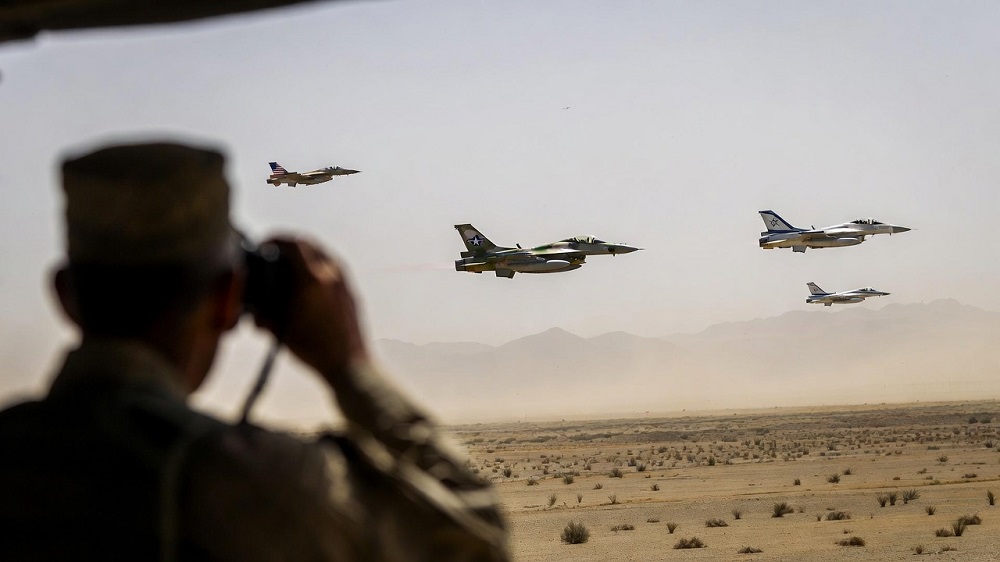
Kyiv, Moscow and Three Scenarios For Iran
PSCRP-BESA Reports No 187 (March 7, 2026)
By the time of this writing, the Israeli and US military operation “Lion’s Roar/Epic Fury” against the fundamentalist ayatollah regime in Iran had passed its eighth day. The strategic objective of this operation would be either the collapse of the Iranian regime or the infliction of such severe damage that it would be unable to restore its military and geopolitical capabilities for a long time. This strategy relies heavily on targeting the leadership. Strikes have already eliminated the first and second circles of Iran’s religious-political and military command structures. Inside Iran, this has produced a rapid reshuffling of positions. In some cases, a person who holds one post in the morning may be replaced by evening as new appointments are made.
But the critical question is whether these newly appointed figures actually control the situation. It remains unclear whether they are capable of coordinating the actions of the Islamic Revolutionary Guard Corps, the regular army, and the country’s intelligence services. At the same time, signs are emerging that internal pressure inside Iran is growing. Protest activity appears to be intensifying, and ethnic minorities are becoming more active. Reports have also suggested that Kurdish forces may be entering the picture, including Kurdish militias from Iraq as well as Iranian Kurdish groups.
In other words, the Iranian leadership itself is under serious time pressure. Its options are limited: either continue fighting despite the mounting risks or begin seeking a political exit. Recent reports indicate that American and Israeli forces have begun striking not only the top leadership but also the middle layers of the command structure. In some cases, Iranian units may now be operating according to previously prepared plans that no longer correspond to the rapidly changing reality. This may explain why some retaliatory actions appear chaotic.
At the same time, there are indications that Tehran is attempting to send signals to Washington through unofficial channels, suggesting the possibility of renewed negotiations. Trump, however, has publicly stated that the opportunity for negotiations may have passed. According to him, many of the individuals who were involved in earlier discussions are no longer in positions of authority.
Another key factor is the reaction of the so-called Saudi bloc, particularly Saudi Arabia and the United Arab Emirates. The current developments appear to have shocked these countries. The UAE in particular has long served as a financial and logistical hub through which Iran was able to obtain equipment, technology, and goods despite international sanctions. Many of the supply chains and financial channels that helped sustain the Iranian economy ran through Emirati networks.
Under the new circumstances, Arab states may find it increasingly difficult to continue their previous strategy of balancing relations simultaneously with Israel, the United States, and Iran. The regional environment may be forcing them to reassess that approach. From Trump’s perspective, the Iranian regime appears to be gradually weakening — militarily, diplomatically, and especially economically. But Washington still faces a strategic choice.
One possibility would be to escalate into a full-scale war. Yet such a war could last for years and carry serious risks. The example of the Iraq invasion in 2003 remains a powerful reminder: the United States entered Iraq quickly but struggled for many years to stabilize the situation afterward. The alternative would be to bring the conflict to a rapid conclusion. However, this requires the existence of a credible negotiating partner inside Iran — someone capable of speaking on behalf of the system. At the moment, such a figure is not clearly visible among the hardliners within the Revolutionary Guard who currently dominate the political landscape.
Some observers mention Ali Larijani as a possible interlocutor. Although he has publicly stated that negotiations with the United States are impossible, it cannot be ruled out that quiet discussions may be taking place behind closed doors. This leads to what could be described as the second scenario: an elite-level political transformation inside Iran. In such a case, a new leadership might emerge that includes not only figures from the current establishment but also elements of the opposition. Some observers also refer to Reza Pahlavi, the son of the last Shah of Iran. He is currently based in Washington and remains a symbolic figure for parts of the Iranian opposition. However, both Washington and Jerusalem understand that he represents more of a symbol of protest than a single unifying political leader.
Finally, there is a third scenario — one that depends less on external actors and more on developments inside Iran itself. Regardless of what major powers or regional players such as Israel, Saudi Arabia, or Türkiye may want, the decisive factor could ultimately be the Iranian people. If protests expand, involving ethnic minorities, urban intellectuals, and other social groups, Iran could experience a profound internal political shift.
Russia and Ukraine: Gainers and Losers
At the same time, there is every reason to suppose that the current war of the USA and Israel and their allies with Iran and its terrorist proxies may have a substantial impact on other regional conflicts, including the Russia-Ukraine war. The leaders of these two confronting states reacted with diametric opposition, as expected. Ukrainian President Volodymyr Zelensky has issued an official statement supporting the intervention.
On the contrary, RF President Vladimir Putin, in his letter to Iranian President Masoud Pezeshkian on 28 February expressed his “deepest condolences over the assassination of Ali Khamenei and his family members,” which was defined in this letter as “a cynical violation of all norms of human morality and international law.” Unlike the kidnapping of Venezuelan dictator-president Maduro, the Russian leader, who, as Alexander Baunov noted, “failed to fulfill his role as savior of an old ideological and political ally,” could not remain silent. Although he did not specifically say whether the US or Israel killed Khamenei, he did so to avoid direct accusations against Donald Trump, with whom Putin’s inner circle still hopes to reach an agreement on the division of spheres of influence and especially on the conditions for ending military action in Ukraine.
More stringent was the statement by the Russian Foreign Ministry regarding “military aggression of the United States and Israel against Iran”. This document described the attack as “a deliberate, premeditated, and unprovoked act of armed aggression… under the cover of the renewed negotiation process”. As well as insisted that this action will (allegedly) damage “the global non-proliferation regime” and called for an immediate return to a political and diplomatic track. (Indicative that this statement Russian Foreign Ministry, like in the Soviet times, refer to Israel as “Tel-Aviv” rather than “Western Jerusalem”, as Moscow deed it on the pick of Israeli-Russian rapprochement in the second half of the last decade).
Another difference was that Russia, suggested to assist in advancing peaceful solutions grounded in international law, mutual respect, and a balanced consideration of interests. While Kyiv expressed it willingness to provide assistance to the US in response to its request for help in dealing with Iranian Shaheed drones in the Middle East.
Russia has also benefited from Iranian military technology, particularly drones that Moscow has used extensively in its war against Ukraine; however, the relationship has not been entirely reciprocal. Russia and Iran officially declared themselves as strategic partners about a year ago and signed an accord around diplomatic, economic, humanitarian, and security affairs. This doesn’t mean either country will fight for the other.
As part of that cooperation, Russia has supplied Iran with some air defense systems, military aircraft, and tanks, while Iran has provided Russia with unmanned flying vehicles and drones for use in Ukraine. However, despite various promises, Iran has not received the most advanced fighter jets or air defense systems from Russia. When tensions escalated between Israel, the United States, and Iran earlier this year, Russia did not intervene militarily, and it is unlikely to do so now. They might exchange some sort of intelligence information, but not more than that.
In addition, the current conflict does not involve only Israel, the United States, and Iran. Iran has drawn in multiple regional actors, particularly Gulf states, where Russia also has significant strategic and economic interests. Moscow has been working to maintain ties across the region, including with Gulf countries and with Israel. Because of these interests, Russia will act cautiously. If Gulf states work more with Western powers during the conflict, Russia risks losing its influence in the region.
Another factor is Russia’s reliance on Iran as a workaround to sanctions. Iran has spent decades building networks of companies and intermediaries in places such as Dubai, Turkey, and Southeast Asia. These networks have helped Iran bypass international sanctions and have also enabled Russia to obtain goods it could not easily obtain through official channels. If Iran now loses this network, that will be a very bad piece of news also for Russia – and very good for Ukraine.
Besides, Russia poured billions of dollars into North-South Corridor (INSTC): railways and ports to transport cargo across the Caspian Sea to the Iranian port of Bandar Abbas and onward to India and Asia. This was their “backdoor” to bypass the Suez Canal and the European seas. Now this route is becoming toxic and dangerous. The ports are under attack, the railway is paralyzed. If so, Russia may be cramped once again in the Baltic and Black Seas, where NATO control awaits.
On the other hand, Russia may expect to gain some profits from the current war. First, any prolonged blockade of the Strait of Hormuz or the destruction of oil and gas export capacity in the Persian Gulf could also revive the market for sanctioned Russian energy products. Tankers left with unsold oil since the US pressured India to reduce its purchases from Moscow may likely find buyers. That indeed happened 6 March, when Washington, in order to alleviate the oil crisis caused by the war in the Persian Gulf, the world’s key oil-producing region, suspended sanctions against Russian oil and the shadow fleet due to the war in Iran, although only for a month and only for India.
Second, the US is firing Tomahawk missiles at Iran to destroy the launchers and factories on which Tehran’s ability to launch retaliatory attacks depends. However, the pace of US missile strikes in the Persian Gulf makes such supplies to Ukraine increasingly unlikely. However, the opposite is also true: the more US and Israeli cruise missiles land on Iran’s underground Isfahan factories, the fewer weapons and ammunition the Russian army will have to bomb Ukrainian cities. And the overthrow of Iran’s radical Islamist regime will remove one of its key elements from the Moscow-Tehran-Beijing axis.
Quo Vadis?
The current escalation around Iran cannot be understood without taking into account the political calendars of two key leaders: U.S. President Donald Trump and Israeli Prime Minister Benjamin Netanyahu. Both face crucial elections in November 2026. In the United States, the country will hold the midterm elections—congressional and Senate races that take place in the middle of a presidential term. For Trump, securing a stable Republican majority in Congress is essential if he wants to continue advancing his domestic and foreign policy agenda.
Netanyahu faces his own electoral test at roughly the same time: parliamentary elections to the Knesset. For both leaders, therefore, the coming months are politically decisive. In fact, the official election campaigns in both countries will begin in roughly four to five months. In the language of modern politics, that means they begin almost immediately.
For this reason, both Trump and Netanyahu need to approach the elections with what might be called a clear “picture of victory.” In their political narrative, that victory would be framed as a decisive blow against what they portray as the radical Islamist regime of the Iranian ayatollahs. Yet the domestic political environments in the United States and Israel differ significantly. Netanyahu, as it was shown by the March 4 flash opinion poll of the Israeli Democracy Institute, currently benefits from broad support for the actions of the Israeli government and the IDF. In the United States, however, public opinion is more divided. According to polling data, more than half of Americans do not support the idea of a military attack on Iran.
That means Trump faces a particular challenge: he must persuade voters that the objectives of the operation were justified and that the results exceeded expectations. This leads us to the question of possible scenarios. The first scenario is based on a simple political reality: neither Trump nor Netanyahu wants a long war. On the contrary, both leaders would strongly prefer a short and decisive campaign. Trump himself has mentioned a timeframe of four weeks or less. The first week has already passed, leaving roughly three weeks—or it will demand much more.
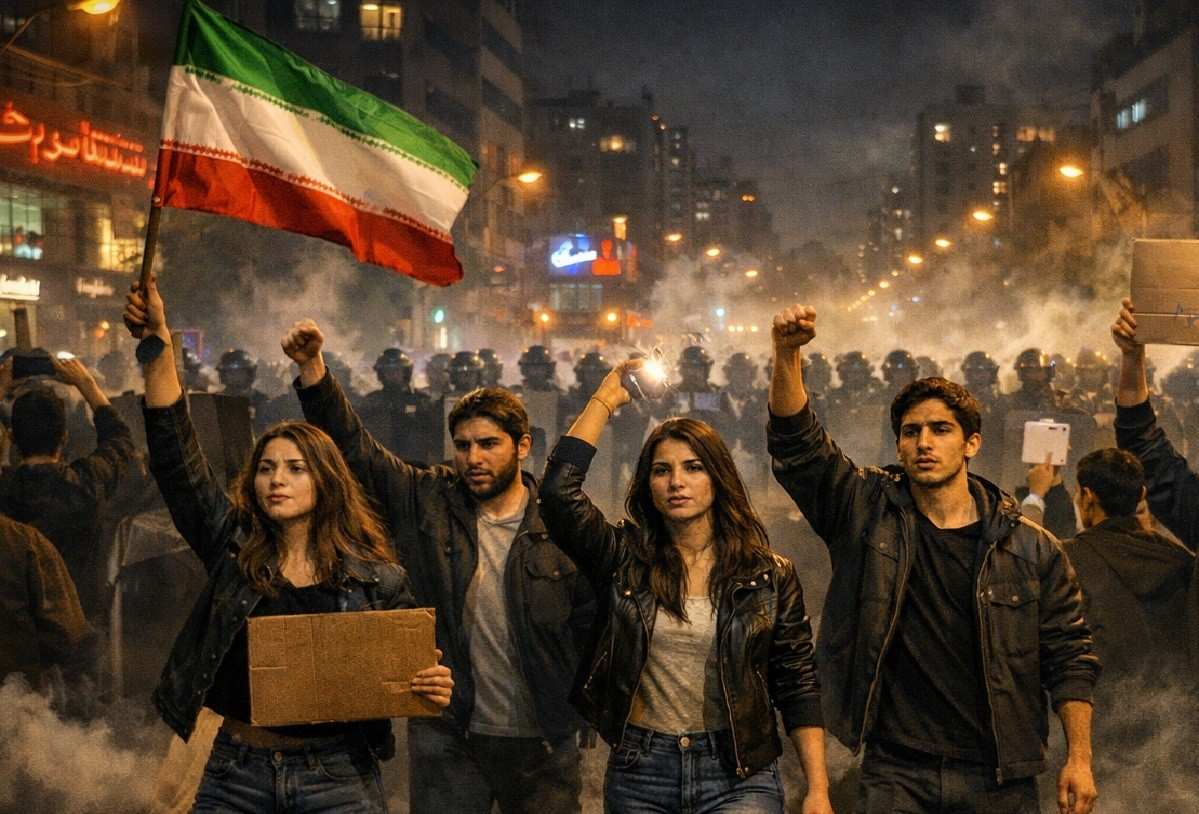
Iranian Protest Movement as Seen from Kyiv and Moscow
PSCRP-BESA Reports No 180 (January 27, 2026)
At the end of 2025 and the beginning of 2026, Iran was gripped by mass public protests unprecedented in recent decades both in scale and in the level of violence. They began as a reaction to the most severe economic and environmental crisis in the country’s history, which reached its peak by January 2026, but within a few days evolved into an anti-government political movement. At the time of writing, it is still impossible to determine whether the leaders and participants of the protests will succeed in overthrowing the fundamentalist regime of radical Shiite Islamists, or whether the authorities, as in the past, will manage to suppress the burgeoning revolutionary process.
What is already clear, however, is that the events unfolding in Iran directly affect not only the interests of the great powers—the United States, the EU, and China—but also several countries that are parties to conflicts in other regions, such as Russia and Ukraine.
Ukraine’s Position
In this context, the position of official Kyiv appears the most obvious and transparent, as it has unequivocally expressed support for Iran’s civil and political opposition. The reasons for this are clear. Since Russia’s full-scale invasion of Ukraine on February 24, 2022, Tehran has been one of Russia’s largest suppliers of weapons and military technologies, which Moscow has widely employed on the Ukrainian front.
Thus, according to U.S. government sources cited by Bloomberg, Iran has supplied Russia with ballistic and air-defense missiles worth around US$2.7 billion, which were used by the Russian army in its war against Ukraine. This included hundreds of Fath-360 short-range ballistic missiles, nearly 500 other short-range ballistic missiles, and around 200 surface-to-air missiles for air-defense systems. According to the same sources, Russian forces also received millions of rounds of ammunition and artillery shells, as well as Shahed-136 kamikaze drones and the transfer of technology to produce them on Russian territory under the name Geran-2, worth US$1.75 billion.
Accordingly, Ukraine’s President Volodymyr Zelensky, commenting on the mass protests in Iran, which he described as “effectively an uprising,” said that “these things won’t get easier for Russia.” He urged the international community “not [to] miss this moment when changes are possible,” since “every decent person on this planet,” in his words, “truly wants the people of Iran to finally free themselves from the current regime that has brought so much evil to Ukraine and to other countries.” That is why, Zelensky concluded, “every leader, every country, and international organizations must step in now and help the people remove those guilty of what Iran has sadly become.”
Judging by opinion polls, the Ukrainian leader’s view largely reflects public sentiment in Ukraine. Thus, in a survey by the Kyiv International Institute of Sociology (KIIS) conducted in July–August 2025—that is, several weeks after the end of the 12-day Iran–Israel war—
42% of respondents said they supported Israel, and only 3% supported Iran. (Another 42% of those surveyed sympathized with neither side, and 13% were unable to answer the question.) The same trend was evident in an earlier KIIS survey conducted in early 2023, which showed that after the full-scale invasion—especially after Russia used lethal weapons supplied by Iran—64% supported Israel, while only 1% supported Iran, and 18% did not support either side.
This contrasted sharply with the institute’s survey in December 2021, conducted before the full-scale invasion, when 54% of respondents supported neither side, 28% supported Israel, and only 1% supported Iran. It also revealed a significant divergence from public opinion in Russia, where, according to Levada Center data, only 3% of respondents sympathized with Israel, while 25% sympathized with Iran and 53% with neither side.
Russia’s Position
As for official Moscow, its stance toward the events unfolding in Iran and the model of the repeatedly proclaimed allied relationship with Tehran remains rather ambivalent. On the one hand, in January of last year the long-discussed 20-year “Comprehensive Strategic Partnership Plan” between the two countries was signed. The agreement, ratified in April and May respectively by the Russian and Iranian parliaments, demonstrated a new phase of military and economic rapprochement between Moscow and Tehran.
On the other hand, Iran did not conceal its skepticism regarding Russia’s reliability, given that Moscow refrained from providing direct support to Tehran during the 12-day Iran–Israel war in June 2025. Nevertheless, on December 17, 2025, the foreign ministers of Russia and Iran signed a document in Moscow establishing a framework for consultations in 2026–2028 aimed at the practical implementation of the aforementioned plan, which, judging by all appearances, was intended to demonstrate that the incident had, at least at this stage, been resolved.
Iran clearly needs cooperation with Russia, primarily in the nuclear sphere. Russia, for its part, undoubtedly needs Iran’s support in coordinating sanctions-related issues and in confronting the pro-American bloc in regions that still represent significant geopolitical interests for Moscow, such as the South Caucasus and the Middle East. This is all the more so because, due to the war in Ukraine, as commentators note,
Russia has already lost—or risks losing in the near future—several of its key allies, such as the Assad regime in Syria in 2024 and Nicolás Maduro in Venezuela.
Against this backdrop, Iran’s value to Moscow appears, at first glance, only to have increased. Thus, at the end of October 2025, Russia’s ambassador to Tehran, Alexey Dedov, said in an interview with the ISNA news agency that cooperation between the two countries had reached an unprecedented level, and that Russia supports Iran in seeking solutions to issues related to its nuclear program. Indeed, already at the end of September of that year, Rosatom and Iran Hormoz signed a US$25 billion contract to build the first four of the eight planned new nuclear power plants in Iran.
There is little doubt that the declared “purely civilian nature” of Iran’s nuclear program includes a powerful military component. In fact, on November 2, Iranian President Masoud Pezeshkian effectively confirmed this, stating, according to the same agency, that Iran would make every effort to rebuild nuclear facilities destroyed in June 2025 by Israeli and U.S. air strikes. It is no coincidence that in Jerusalem and Washington in recent months the likelihood of a new confrontation with Iran has been seriously discussed, although the team of U.S. President Donald Trump clearly hoped—and apparently still hopes, even amid mass anti-government protests in Iran—that such a scenario can be prevented through diplomatic means.
Given these trends, it would have been logical to expect Moscow to side with Iran’s leadership in the current socio-political crisis, which poses a real threat to the survival of the ayatollahs’ regime. However, at the official level Russia has so far avoided direct assessments of what is happening in Iran. One of the few more or less explicit declarations by the Russian authorities was a statement by Foreign Ministry spokesperson Maria Zakharova, condemning the United States and Israel for threatening to strike Iran in response to the killing of protesters by Iranian security forces. Otherwise, the rhetoric of Russian officials has remained quite restrained.
An example is the statement by the Russian embassy in Iran, which, unlike its unequivocal support for Iran’s nuclear program almost three months earlier, this time limited itself to a cautious expression of concern over clashes by “certain elements with law enforcement officers who are doing their job to ensure order and legality.” It also assured that despite “protests and demonstrations in some provinces” linked to “economic difficulties that the government is actively addressing… overall, normal life continues as usual.” Nearly two weeks later, during which Moscow remained largely silent, Russian Foreign Minister Sergei Lavrov himself declared that “no third party can alter the fundamental nature of relations” between the two countries. However, this was not followed by any sustained concrete steps on Russia’s part.
Among the likely motives behind the cautious stance of the Russian authorities is, apparently, their reluctance—despite regular attacks on the Americans—to enter into direct confrontation with Donald Trump, on whom the Kremlin still pins hopes that the U.S. president will be able to bring about an end to the war in Ukraine on Moscow’s terms. Therefore, it likely does not seem rational to them to take actions that could provoke unproductive irritation from the White House, whose occupant has openly—albeit so far mostly at a declarative level—supported Iranian society’s protest against the Islamist fundamentalist regime. Another possible motive may be the interests of Russia’s oil lobby, which may well be рассчитыing that Iran’s exit from the relatively narrow energy markets available to sanctioned regimes—primarily India and China—will trigger price growth and allow Russian companies to occupy the niche vacated by Iran.
Nevertheless, Moscow may well provide some form of support to its Iranian allies. It is clear that Moscow will not rescue Iran through direct military intervention. Thus, media reports have already appeared about possible Russian deliveries to Iran of military equipment that could be effective in suppressing armed resistance by regime opponents, such as Mi-28 attack helicopters and Spartak armored vehicles. In any case, they will clearly try to provide such assistance without much publicity.
Much more visible is Russia’s propagandistic and diplomatic support for Iran’s theocratic regime. On the former point, it appears that most efforts are directed at criticizing “external forces” allegedly responsible for destabilizing Iran and its surroundings, preferably doing so on international platforms, primarily within organizations of the “Global South.”
The diplomatic dimension looks somewhat more substantial. Moscow, which is trying to regain the mediator status in the Middle East that it lost after invading Ukraine, is making visible efforts to reduce the threat of a possible U.S.–Israeli attack on Iran’s military facilities and governing institutions. In doing so, it seeks to give its Tehran partners an additional chance to preserve their regime, while also restoring—at least partially—its own reputation in the region and in the world at large.
In this regard, a telling example is the phone call initiated by Vladimir Putin with Israeli Prime Minister Benjamin Netanyahu, during which the Russian president offered his services to de-escalate tensions between Jerusalem and Tehran. According to available information, Netanyahu responded positively to the idea. In fact, several days before mass protests erupted in Iran in late December, Israeli officials, according to American and Israeli media, used Russian channels to convey a message to the Iranian leadership that Israel would not strike Iranian targets if it were not attacked first, receiving a positive response in return.
It appears that after the protests began in Iran, the position of the Israeli leadership did not change, despite the fact that, as an opinion poll published on January 16, 2026 showed, three out of every four Israelis support Israel joining a hypothetical U.S. attack on Iran (of these, 29% supported this idea only if Iran first attacked or was preparing to attack Israel, while 44% would support Israeli participation regardless of Iranian actions). Only 19% believed that an attack should be left to the U.S. alone. In this sense, members of Israel’s political leadership deemed it advisable to join the recommendations of several U.S. Arab partners urging the American administration to refrain from attacking Iran, which, in their view, “can bring instability into the region”.
In turn, the Israeli leadership argued that the Iranian regime has not yet weakened to the point where U.S. military strikes could lead to the fall of the ayatollahs’ regime. They also fear the opposite scenario—that at this stage, external military intervention could “fail to finish the job” begun by demonstrators in their protest against the regime. According to a report by The New York Times, later widely cited by other international and Israeli media, another argument in favor of asking the U.S. to refrain from striking Iran at this stage, voiced—according to the same sources—by Prime Minister Benjamin Netanyahu in his phone conversation with Donald Trump, was Israel’s alleged lack of readiness and a shortage of interceptors. (Boaz Levy, CEO of Israel Aerospace Industries—one of Israel’s main producers of advanced and unique air-defense systems—while not directly addressing the unconfirmed NYT publication, effectively refuted this argument by stating that “interceptors are produced around the clock,” and that Israel is ready for an Iranian challenge.)
In any case, President Donald Trump soon stated that he decided not to strike Iran “on his own,” dismissing claims of outside pressure, and praised Tehran for canceling what he said were planned mass executions of detained protesters. At the same time, as can be noted, he continues to maintain suspense over whether he might at some point return the option of military intervention in Iran to the agenda.
Indeed, just a few days after this statement, it became known that the United States was sending a carrier strike group to Iran’s shores, redeploying fighter jets and bombers of various types to the region, along with air-defense systems. For its part, the IDF had already by January 22, 2026 fully completed preparations for a possible American operation. Even in this situation, however, different scenarios remain possible.
Against this backdrop, Moscow may, fairly or not, chalk up one or two diplomatic points to its credit and continue to refrain from binding steps and statements.
What the Authorities Think, What the Media Say?
Naturally, Russia’s leaders do not like the current domestic political situation in Iran. It too closely resembles the experience of the “color revolutions” in post-Soviet countries, which resulted in Moscow losing a significant part of its influence in a space that it still considers—more than three and a half decades after the collapse of the USSR—to be a zone of its exclusive geopolitical interests. But while at the official level Russian officials still speak cautiously, at most allowing themselves from time to time to criticize “external forces” for their “interference in the crisis in Iran,” the real attitude of the Russian authorities toward what is happening is freely voiced by the pro-Kremlin press.
In publications by Russian state media, reviewed by journalist Sergey Rybalkin, Iranian protesters are described as “mutineers,” “rebels,” or “rioters,” while the protests themselves are labeled “disturbances,” with almost no mention of the causes that triggered the current powerful wave of protests in the country. Likewise, the widespread violence by security forces—leading to the deaths or injuries of many thousands of Iranian citizens—is ignored. And when these facts can no longer be silenced, a classic propaganda device is employed: claims that it is “armed terrorists” who are opening fire on people, allegedly exploiting the protests.
At this stage, it is still difficult to say whether such statements and assessments will, as has happened in the past, become the language of official Russian government documents. For now, commentators believe that Moscow’s willingness to save the Iranian regime should not be overstated. Therefore, Tehran can count on Russian consultations and supplies of suitable weapons, as well as the possibility of providing asylum to Iranian leaders—just as was previously done for Yanukovych, Assad, and the heads of other regimes allied with Russia when matters took a serious turn for them. But at this stage—hardly more than that.
Reconfiguration of Power in the Middle East: The Russian and Post-Soviet Dimension
PSCRP-BESA Reports No 174 (January 01, 2026)
Among the important international developments of the past few days that may have a significant impact on the balance of power in regions where large-scale military conflicts and violent confrontations continue—namely, the post-Soviet space and the Eastern Mediterranean—one should also mention the latest (already the 10th) trilateral summit Israel–Greece–Cyprus, which took place on 22 December this year in Jerusalem with the participation of Israeli Prime Minister Benjamin Netanyahu, Greek Prime Minister Kyriakos Mitsotakis, and Cypriot President Nikos Christodoulides.
The Turkish factor
Apparently, we are witnessing a revival of the process of building strategic cooperation between Israel and the two “Hellenic” states, which had been developing rapidly at the end of the previous decade but later slowed down somewhat, as an alternative to Jerusalem’s former strategic partnership with Ankara. (The previous summit was held in Nicosia on 4 September 2023, shortly before the events of 7 October 2023). A certain indicator of intentions to return to “business as usual” among the three partners could be seen in recent months, when Israeli officials—such as the Prime Minister’s Military Secretary Maj. Gen. Roman Goffman, Deputy IDF Chief of Staff Maj. Gen. Gil Reich, and Israeli Air Force Commander Maj. Gen. Tomer Bar—held multiple consultations with their Greek and Cypriot counterparts on regional security and political and regional issues.
The goal of the current summit, held against the backdrop of concerns over Ankara’s rapid modernization and expansion of its military capabilities—especially in the air and naval domains —and rising tensions between Israel and Turkey, as well as between Turkey on the one hand and Greece and Cyprus on the other, is to build a mechanism of defensive deterrence vis-à-vis Turkey, in order to restrain Ankara from escalation and prevent it from turning from a rival into an enemy. Observers believe that, in this context, the meeting discussed, among other things, previously debated prospects for the creation of joint rapid reaction forces to address military challenges in the region, with a total strength of about 2,500 personnel. However, no decisions regarding the structure or mandate of such forces were taken, and the parties for now limited themselves to planning large-scale joint exercises, enhancing the operational readiness of their armed forces, and exchanging intelligence.
A separate area in which Israel, Greece, and Cyprus are strengthening trilateral ties is the energy sector. One of the initiatives discussed by the “trio” предполагает. Another key aspect is the “trio’s” partnership in the gas sector. Cyprus is exploring the possibility of building its own gas processing plant, which could potentially allow it to compete with Egypt in the region.
At the same time, Greece and Cyprus are participating in discussions on the post-conflict arrangement of the Gaza Strip, according to sources cited by Yedioth Ahronoth. Despite the fact that the transition to the second phase of conflict resolution in the coastal enclave is complicated by problems related to the creation of international peacekeeping forces and the reluctance of Hamas to disarm, Greece has already expressed interest in reconstructing local infrastructure.
In addition to a defensive alliance among the three countries, as well as cooperation in the areas of energy connectivity (for example, connecting all three countries to a common power grid, which would mean integrating Israel into the European energy network), civil protection, and innovation, the agenda also includes the topic of the “Middle Corridor” (the Middle Corridor – TITR)—a trade route from Southeast Asia to Europe through the states of Central Asia. An even more ambitious project is also under discussion—the India–Middle East–Europe Economic Corridor (IMEC), an alternative to China’s Belt and Road Initiative, which includes a 5,000-kilometer railway line, power transmission networks, oil and gas pipelines, and other infrastructure components.
It is obvious that projects to transport Israeli and Cypriot gas to Europe bypassing Turkey—discussed for almost 10 years within the framework of the trilateral Israeli–Hellenic partnership—could become an important, and possibly key, segment of a macro-regional defense and economic bloc that may take shape around the ideas of TITR and IMEC. It is therefore no coincidence that the third topic of the Jerusalem summit was the discussion of expanding the 3+1 cooperation format with the United States.
Unsurprisingly, this development provoked a sharp rejection from Ankara. According to a statement made on the eve of the trilateral summit in Jerusalem by Turkish President Recep Tayyip Erdoğan, while his country “does not want any tensions, crises, or conflicts with any country,” Ankara “will not allow its rights or what belongs to it to be violated”. This was naturally perceived as a hard confirmation of Turkey’s maritime and strategic claims.
Back in September 2025, Turkish authorities had already expressed “serious concern” over Cyprus’s intention to abandon Russian air defense systems and purchase from Israel the well-proven PULS and Barak MX air defense systems. According to Turkish Defence Ministry sources quoted by Turkish media, “as Israel and the Greek Cypriot administration, two governments harbouring hostility toward Türkiye, advance their ties, Ankara stressed it will not allow security threats to develop on the divided island”.
According to information from Erdoğan’s “court” newspaper Yeni Şafak, quoted by Israeli media, Ankara’s reaction to the current trilateral Jerusalem summit included instructions to Turkish defense and diplomatic agencies to consider Israel as “threat number one” for Turkey. An additional irritant for Turkey was the participation of Greece and Cyprus in discussions on the postwar reconstruction of the Gaza Strip.
In Ankara, this move is perceived as a challenge to its aspiration to replicate in Gaza the Syrian model—that is, to establish external control over the enclave and keep in power the radical Islamist group Hamas, ideologically close to the Turkish leadership, including through a significant presence of Turkish troops as part of future stabilization forces in Gaza. In this context, the Greek and Cypriot initiative becomes a substantial reinforcement of the categorical refusal of official Jerusalem to accept any civilian, and especially military, presence of a regime sharply hostile to Israel on its southwestern border.
Therefore, in order to “rein in” Israel and its regional partners, Erdoğan will apparently find it difficult to do without the consent and support of the US administration. And given that Trump’s attempts—despite his declared friendly attitude toward the Turkish leader—to persuade the Israelis to lift their categorical “no” have so far remained rather weak, Erdoğan will likely have to look for additional diplomatic levers of influence on Washington. For example, he may try to mobilize for this purpose those partners from the “Global South” who have a concrete interest in the situation in the Gaza Strip, as well as a desire to influence the final configuration of the “new Middle East à la Trump.”
It is quite obvious that from this not-too-long list of global and regional powers, neither China nor, even more so, Iran is suitable for this role. The Saudis, who lead the pro-American bloc of “moderate” Arab-Muslim countries, despite having formally “working” relations with Ankara, still largely share today the statement made back in 2012 by former Arab League Secretary-General Amr Moussa that the interest of Sunni Arabs in the modern era is to prevent a situation in which “the Arab Middle East will be governed by Iran or Turkey”.
There is also another rising regional center of power in the eastern segment of the “Greater Middle East”—Azerbaijan, which, among other things, is planned to play the role of a “hub” for the northern vector of the economic and geostrategic TITR and IMEC projects. Relations between Baku and Washington sharply deteriorated after the US Senate adopted a bill in November 2023 blocking American military aid to Azerbaijan, but after Donald Trump’s return to the White House in January 2025 they began to improve rapidly (including with Israel’s assistance).
Therefore, it would seem difficult to imagine a better candidate for lobbying Turkey’s interests, given the close strategic partnership cemented by an official treaty between Azerbaijan and Turkey. However, Baku is unlikely to be ready to use the still limited political capital it has built up in its interactions with the White House and the US State Department to resolve Erdoğan’s problems before addressing issues of primary national importance for itself. This is precisely why the Azerbaijani leadership’s readiness to consider the idea of sending its military contingent as part of the emerging “stabilization forces” in the Gaza Strip looks much more like a goodwill gesture toward the US president than (if at all) support for the geopolitical ambitions of the Turkish leadership.
What the Kremlin and Smolenskaya Square want
It appears that under such circumstances, Moscow remains almost the last candidate for this role, where some euphoria is still felt over the resumption of “constructive,” as it seems there, relations with the US president. And especially over Washington’s willingness—interested in a rapid end to the war in Ukraine—to take Russian conditions into account despite Kyiv’s firm disagreement with most of them.
The Russian leadership indeed views Turkey as an important partner, despite the regular ups and downs in relations between the two countries, and Moscow’s own interests may theoretically coincide with Turkey’s on certain points. However, today Russia’s position on the issue discussed in this article, unlike its relations with Tehran, looks rather ambivalent.
On the one hand, Russia’s traditionally positive relations with Greece and Cyprus (as well as, incidentally, since the mid-2000s, with Israel, though that is a somewhat different story) have shifted sharply in a negative direction due to the pro-Ukrainian stance adopted by the two Hellenic states after Russia’s full-scale invasion of Ukraine on 24 February 2022. With Athens and Nicosia joining, albeit not fully, European economic sanctions against Russia, Moscow substantially revised its more or less neutral approach toward Greece and Cyprus on issues sensitive to them and moved significantly closer to Ankara’s position.
This primarily concerned the jurisdictions of Greece and Cyprus in the Eastern Mediterranean, the Ionian and Aegean Seas, including exclusive economic zones with promising natural gas fields. In addition, Moscow was interested in preventing or limiting the expansion of Greece’s territorial waters in the Aegean Sea in order to ensure the passage of Russian warships and merchant vessels into and out of the Black Sea without the need to obtain special permits.
With regard to Cyprus, the shift in Russia’s line manifested itself in a departure from the unconditional recognition of Nicosia’s sovereignty over the entire territory of the island state, including the zone in the northeast of the country (about 37% of its total area) occupied by Turkish troops in 1974, where the “Turkish Republic of Northern Cyprus” was proclaimed in 1983. Moscow’s new approach on this issue was articulated in an interview with the official YouTube channel “Diplomat.Ru” on 14 January 2025 by Russian Foreign Minister Sergey Lavrov, according to whom the status of Cyprus should be the subject of bilateral agreements between Greek Cypriots and Turkish Cypriots. That is, de facto, Moscow placed an equals sign between an internationally recognized state and the regime of Cypriot ethnic Turkish separatists, recognized by no one except Turkey itself.
Since then, relations between Moscow and the capitals of the Hellenic states have steadily deteriorated. A telling example is the inclusion, in October this year, in the official list of authors of “Russophobic statements” for 2024 on the website of the Russian Foreign Ministry of such politicians from Cyprus and Greece as, respectively, Cypriot President and Speaker of Parliament Nikos Christodoulides and Annita Demetriou, Greek Prime Minister Kyriakos Mitsotakis, and Greek Foreign Minister Nikos Dendias.
Accordingly, by the logic of things, Russia should have supported Turkey in its confrontation with the Athens–Jerusalem–Nicosia triangle, as well as Turkish ambitions in the Gaza Strip—especially given that Moscow does not consider Hamas a terrorist organization and has officially received its leaders at the Foreign Ministry level on three occasions. And in Ankara they have taken as a given the consent of their client regime in Syria, Ahmed al-Sharaa (Abu Muhammad al-Julani), to the continued operation of Russian naval and air bases in that country.
In practice, however, everything is far more complicated. Current events are unfolding against the backdrop of Russia’s growing irritation with Turkish leadership policies, the factors of which include Turkey’s arms supplies to Ukraine, a sharp decline—compared to peak levels in 2022—in bilateral trade turnover and previously promising cooperation in the energy sphere, as well as Turkey’s overthrow of a pro-Russian and pro-Iranian regime in Syria and Ankara’s attempts to enter post-Soviet regions where Russia’s presence, weakened by the war in Ukraine, is diminishing, but which Moscow still considers zones of its exclusive interests.
Over the past couple of years, this irritation—fueled by what is perceived in Moscow as Erdoğan’s political flirtation with Trump and the EU (albeit without fundamental breakthroughs so far)—has gradually approached a critical point. One of the triggers of the current cooling in Russia–Turkey relations is widely seen as Erdoğan’s readiness to return to Russia the S-400 air defense systems purchased a decade ago, in exchange for lifting US sanctions on Turkey’s defense industry enterprises and resuming US deliveries of F-35 fighter jets to Turkey.
That is, the return of Turkish defense companies to a prestigious and promising project from which they were excluded due to the purchase of Russian-made air defense systems, costing them, according to Pentagon estimates, about $9 billion. Especially since for the Turkish army, which adheres to NATO standards, Russian air defense systems have rather limited utility. For its part, Ankara is clearly not enthusiastic about Russia’s attempts, as part of its return to Syria, to become involved in American-backed behind-the-scenes mediations in defense deal negotiations between Damascus and Jerusalem. Moreover, as Israeli media report, Jerusalem may be interested in deploying Russian troops in areas adjacent to Israel’s border on the Golan Heights as a counterbalance to Turkey, as was previously the case with Iran.
And yet, neither this storyline nor even the issue of Turkey “returning” the S-400 systems to Russia is today the main problem in bilateral relations, which could improve just as quickly as they have deteriorated. A much more significant issue is another one, related to post-Soviet Central Asia.
Moscow still believes it possible to keep this region within its sphere of influence, despite the desire of local countries—especially after Russia’s full-scale invasion of Ukraine in February 2022—to diversify their systems of strategic partnerships with global superpowers, including the United States, which has noticeably intensified its activity in this direction with the start of Donald Trump’s second term.
As far as one can judge, this trend does not yet overly concern the Kremlin and Russia’s foreign policy establishment on Staraya Square. The leaders of Central Asian states, while demonstrating rapprochement with Western countries, maintain demonstratively correct relations and cooperation with Russia. But even more important for Moscow is the fact that US President Donald Trump also considers (or at least this is what is believed in Moscow) this region to be Russia’s sphere of influence, within the framework of his vision of American foreign policy in the style of a new version of the Monroe Doctrine.
According to our interlocutor, who is well and closely acquainted with the decision-making mechanisms and the foreign and domestic political intricacies in Russia’s corridors of power, it is believed there that with regard to Russia, Trump—besides cooperation with his plan to end the war in Ukraine—is today more interested in three things. First, access to rare earth minerals, in reserves of which Russia ranks second in the world after China; second, prospective investment in and exploitation of the Northern Sea Route; and, not least, preventing China from joining Russian systems of long-range detection of military aircraft and ballistic missiles, which would be of enormous importance in the event of a direct military confrontation between the United States and China.
If this is so, then Moscow has no reason to restrain its considerable irritation with Ankara’s ambitions for leadership in the Turkic world and, accordingly, its active intervention in post-Soviet Central Asia and other zones of Russian interest. And therefore, the Turkish leadership apparently should not, for the time being, particularly count on Russia’s assistance in relations with Washington—nor, for that matter, in addressing challenges from the strengthening alliance of Israel and the Hellenic states, especially against the backdrop of a renewed, if not “special relationship,” then at least a more active dialogue between Netanyahu and Putin.
At least until the geopolitical and diplomatic winds change.
Antisemitic Conspiracy Narratives in the Post-Soviet Geopolitics
PSCRP-BESA Reports No 170 (December 9, 2025)
War conflicts and violent clashes in the post-Soviet space and the Eastern Mediterranean, alongside territorial, geopolitical, diplomatic and economic dimensions, also includes the ethnopolitical one. This is also true of two all-out wars in the FSU —Azerbaijan–Armenia in 1992–1994 and 2020–2022/3, and Russia’s war with Ukraine since 2014; and the current war of Israel and its allies with the block of the Jihadist regime of Iranian Ayatollahs with their radical Islamist allies and terrorist proxies in the Middle East. All of them also have a visible Jewish aspect.
“Instrumentalization of antisemitism,” which means using this topic in isolation from real problems for political purposes, primarily to discredit opponents, has been used repeatedly in the post-Soviet space. Thus, since Russia’s succession and appending of the Ukrainian Crimea peninsula and active military and diplomatic involvement on the side of Eastern Ukraine separatists against the Ukrainian pro-European regime in 2014 and till now, both Kyiv and Moscow have viewed the Jewish world as a positive asset for the achievement of their immediate and strategic goals. From the initial state of the conflict, the formation of an enemy image, in which the antisemitic component enjoyed a prominent place, played a key role in mobilizing grassroots support in both Ukraine and Russia, but it was even more important in the areas of foreign diplomacy and propaganda.
Antisemitism in the rhetoric of Russian authorities became the third marker defining the new Kyiv authorities, following only “Fascists” and “Banderites.” Such an image should have become a sufficient “humanitarian” basis for the initial undeclared and, since February 2022, full-scale Russian intervention in the Ukrainian conflict. In response, Ukrainian propaganda has consistently emphasized, both in domestic political discourse and in the international arena, that the Putin regime has set out to restore the “Soviet empire” and is in fact the heir to the antisemitic Soviet regime.
In Russian rhetoric, an increasingly visible place has gradually been occupied by “classical” antisemitic tropes, including in statements by Russian leaders and pro-Kremlin media—both in relation to the ethnic Jew, President of Ukraine Volodymyr Zelensky, and other Jews in his entourage, that ironically were simultaneously accused of being both Fascist-anti-Semites and Jewish (RF Foreign Minister Sergey Lavrov, who had defended the “denazification” of the ethnic-Jewish, Zelensky-run Ukraine by saying “some of the worst antisemites are Jews,” was a prominent example of this narrative), as well as toward “hostile Jewry” in general. As could have been expected, this met with understanding—or, at the very least, did not encounter rejection—among a significant segment of Russian society, in whose consciousness latent and at times overt antisemitic clichés continue to circulate.
In Ukraine, a similar phenomenon is represented to a somewhat lesser extent, primarily among marginal circles that, like their national-radical counterparts in Russia, insisted that “Maidan [supposedly] was organized by the Jews.” It also appears in the official and semi-official rhetoric of East Ukrainian pro-Russian separatists in the self-proclaimed Donetsk and Luhansk “people’s republics,” established in 2014 and ultimately annexed by the Russian Federation in 2022.
The IDF’s Operation “Swords of Iron” against Hamas in Gaza Strip, which comes in response to the massacre carried out on October 7, 2023, by the terrorist group’s militants in Israeli communities adjacent to the Strip, also occupied a significant place in the ideological and political discourse of the armed conflicts in the post-Soviet space, both in terms of comprehending the realities of this confrontation between Israel and Hamas and the Palestinian-Israeli conflict in general and in the context of geopolitical interests and ambitions of specific USSR successor states. The positions of Moscow and Kyiv toward the Jewish state’s war with “Hamastan” are among the most corpulent of the allegoric beasts.
For all the significant diplomatic friction between Kyiv and Jerusalem over the past years, Ukrainian leaders have unequivocally supported Israel and sharply condemned Hamas and its patrons in Tehran. Russia’s position in the new war in the Middle East was radically different. As the fighting in Gaza develops, Russia’s position is becoming increasingly clear. Moscow parted from its traditionally declared role as an “impartial mediator” between all participants in the Middle East conflict and almost openly, although so far mostly at the declarative level, sided with the opponents of the Jewish state.
Supporters of backing Israel in its confrontation with Hamas were and are a clear minority in the Russian establishment. It is dominated by the exact opposite stance, which explains the long list of pro-Hamas demarches by official Moscow, from the official reception held in Moscow for the terrorist group’s leadership and accusations of “war crimes” against Israel to loud anti-Israeli diplomatic steps and Russian economic aid to the Hamastan, as well as the pronounced pro-Palestinian and, accordingly, anti-Israeli policy pursued by the Russian state media. This amounted to a return to the seemingly forgotten anti-Zionist frameworks that once legitimized state antisemitism in Soviet times. Moreover, on this very point they found common ground with those circles in Western countries that only lightly mask their antisemitic views as supposedly “legitimate criticism of Israel”.
The Armenian model of reacting to the current outbreak of the Middle Eastern conflict represented a variant of classical everyday antisemitism—formally not encouraged, yet not met with serious resistance from the authorities either. According to an analysis by Dr. Nati Kantorovich, head of the research department of Nativ, the Liaison Bureau with Jews in Eastern Europe under the Office of the Prime Minister of Israel, Armenian social media—reflecting antisemitic terminology that has spread in the country over the past three years—displayed an enthusiastic reaction to the Hamas attack. They began massively disseminating visual propaganda of Palestinian terrorists, expressing joy over the supposedly “well-deserved punishment of Israel,” issuing explicit calls to support Hamas, and promoting incendiary comparisons of Israel and its close strategic partner, Azerbaijan, with Nazi Germany.
A similar phenomenon—although in a significantly more limited form—can be found among the radical Islamist circles in Azerbaijan that oppose the country’s secular leadership and are openly supported by Iran.
Conspiracies of “new Khazaria”
To a large extent—and in a number of cases, to a determinative degree—the anti-Israeli and anti-Jewish narratives were promoted from the outside, through the propaganda and influence of Israel’s enemies and geostrategic rivals, Turkey and Iran, whose messaging at a certain point moved far beyond “anti-Zionist” rhetoric and incorporated explicit antisemitic themes. (In particular, Iranian Jewish Studies Center has published over 1,000 pieces of antisemitic content). A marginal yet highly illustrative motif within this propaganda was the narrative of “Jewish settlement colonialism” – likely intended as a counterweight to the increasingly popular narrative of “settler-colonialism by Palestinian Arabs”.
Suffice it to mention, for example, a report by Iran’s Fars News Agency, affiliated with the Islamic Revolutionary Guard Corps (IRGC), designated a terrorist organization in most democratic countries. According to the agency’s claims, in recent years the presence and settlement of Jews in Azerbaijan has been “rapidly growing,” with new residential areas being created in various cities where “Jewish families are placed in an organized manner,” allegedly resembling the “formation of a ‘second Israel’ on Iran’s very doorstep.” Consequently, the increased presence of Jews in the Republic of Azerbaijan and the (supposedly) imposed silence surrounding it, the agency concludes, “is a sign of an organized project promoted through soft cultural and propaganda power… [and] external forces and internal lobbies do not want the truth to reach the people of Iran and the religious authorities”.
Turkey, too, periodically contributes to this narrative through its informational and intellectual circles—clearly in the spirit of the “neo-Ottomanism” concept, i.e., the extension of Ankara’s direct or behind-the-scenes influence over the countries and regions of the Near East and Eastern Mediterranean that once formed part of the Ottoman Empire. One example of this can be found in what appears at first glance to be a purely academic article on the history of Jews in Cyprus, written by Izzet Derkan, a faculty member at one of Turkey’s universities. While correctly noting that modern Jews’ connection to Cyprus stems from their longstanding presence on the island, the author concludes the article with a purely propagandistic passage: “Jews … supported each other and they wanted to have all Cyprus one day. Today, the richest and most elite people in the world are Jews. After 1980s Jews bought a lot of lands in Northern Cyprus. Their dreams on Cyprus are performed with the money”.
In Russia, this idea found its real-world expression on 28 October 2023, when an aggressive crowd in the city of Khasavyurt (Republic of Dagestan, RF) arrived at the Flamingo Hotel, where, according to rumors, “refugees from Israel” were allegedly staying. The following day, rioters carrying Palestinian flags stormed the airport in Makhachkala. In both cases, the trigger for the outbreaks of violence was a rumor that Israelis were arriving in the republic intending to settle there and subsequently seize the territory, similar to “what they did in Palestine”. However, this particular trend did not prove useful in the eyes of the Russian leadership and was quickly suppressed.
Far more widespread in certain Russian circles were the relatively popular conspiracy theories of the “new Khazaria”: the idea that Jews had planned or were planning to move to “our” territories in order to create their own state there. In particular, since the first Kyiv Maidan (2004), a conspiratorial antisemitic theory about the “revival of Khazaria” had been circulating in the Russian information space, and in this way “migrated” onto the territory of Ukraine.
In his work, historian Konstantin Mogarichev cites a number of illustrative manifestations of the myth of “Jewish domination” in Ukraine, such as the periodically reproduced fake (2018–2021) about the Knesset allegedly allocating 84 billion dollars for the purchase of Ukrainian land, or the claim published in April 2022 by the well-known antisemitic politician Sergey Glazyev that “Zelensky’s strategy, in carrying out the will of the Rothschilds, consists in destroying Ukraine’s male population with Russian weapons in order to create on the banks of the Dnipro a new Promised Land for the chosen (i.e., Jewish) people”.
It is difficult to doubt that the “Khazar myth,” like other similar conspiracy theories—despite their absurdity from the standpoint of conventional logic—may, under certain circumstances, when overlaid on latent or overt antisemitism in a “not sufficiently modernized” or “postmodern” public consciousness, become a trigger for both domestic and international conflicts. All the more so if they are in demand or encouraged by the authorities.
Azerbaijan, Kazakhstan and the Abrahamic Accord 2.0
PSCRP-BESA Reports No 166 (November 21, 2025)
Reviving the “Abraham Accords” — the process of normalizing relations between Israel and the previously hostile yet “moderate” Sunni Arab regimes of the Saudi bloc (the UAE, Bahrain, Morocco, and Northern Sudan), initiated by U.S. President Donald Trump during his first term — has become one of the top priorities of the Republican administration following Trump’s return to the White House in January 2025.
From the Saudi bloc to Azerbaijan — and beyond?
Part of this package was the achievement of a ceasefire in the Gaza Strip, with the prospect of transforming it into a long-term truce capable of ending the two-year war that began with the bloody aggression against Israel by Hamas — the radical Islamist terrorist organization controlling the Strip — on 7 October 2023, followed by the IDF’s response operation Iron Swords. That escalation, in turn, derailed the process of rapprochement between Israel and Saudi Arabia.
The normalization of relations between Israel and the Kingdom of Saudi Arabia would undoubtedly become a trigger for the establishment of full diplomatic relations between the Jewish state and not only other pro-American Arab regimes in the Middle East, but also a number of non-Arab Muslim states, such as Pakistan, Malaysia, and Indonesia — the latter being the world’s most populous Muslim-majority country. Therefore, the end of the war in the Gaza Strip (though not yet in the Middle East as a whole) may revive the dialogue between Jerusalem and Riyadh, especially given that Trump’s plan envisions the involvement of the Saudis and their allies in the Washington-designed plan for “external administration” and reconstruction of the Strip “after Hamas.”
However, this time Donald Trump’s vision for the scope and meaning of the Abraham Accords is clearly far broader. Abraham Accords 2.0 envisions the formation, under U.S. auspices, of a large-scale economic, political, and — not least — defense-oriented strategic alliance in the eastern segment of the “Greater Middle East.” Such an alliance could become a serious counterweight to the anti-Western axis of Moscow and Beijing across Central, South, and Southeast Asia, and in the Middle East — to the jihadist regime of the Shiite ayatollahs in Tehran and its satellites, patronized by those global competitors for influence in the “Global South.”
In light of these prospects, the expanded version of the Abraham Accords could also include states that have maintained diplomatic and partnership relations with Israel for several decades already, in some cases quite close ones.
It was expected that among such states the first candidate to join this project would be Azerbaijan, which has maintained long-standing strategic partnerships with Israel in diplomacy, economics, and security, driven by shared challenges and threats emanating from the Iranian bloc. Moreover, it was assumed that Baku would be able to persuade other post-Soviet Central Asian states — and the entire Turkic world — to join this “pact of reconciliation”.
Unsurprisingly, the pro-government Iranian think tank Iran Diplomacy expressed concern, stating that “by bringing Central Asian countries closer to Israel, Baku is seeking to enhance its own ties with the United States and bolster its role in Washington’s regional policy”.
Their concerns were well-founded: with Baku launching the ambitious Middle Corridor (TITR) project — a trade route from Southeast Asia to Europe via Central Asian states — Azerbaijan is becoming one of the critical links in a developing transcontinental network. Israel may find itself integrated not only into this promising trade architecture, but also into the merging of the “extended” Abraham Accords with the India–Middle East–Europe Economic Corridor (IMEC) — a 5,000-kilometer transport and infrastructure system consisting of a rail link, an electricity grid, a hydrogen pipeline, a high-speed data cable, and other elements. IMEC is envisioned as an economic-geopolitical alternative to China’s Belt and Road Initiative.
Why Kazakhstan?
Yet the first post-Soviet Turkic state to openly declare its intention to join Abraham Accords 2.0 was Kazakhstan — as officially announced by President Kassym-Jomart Tokayev during his meeting with Donald Trump on 7 November of this year.
Signs that such an initiative was already being diplomatically prepared became evident earlier, on 12 June of this year, following a meeting in Washington between U.S. Secretary of State Marco Rubio and his Kazakh counterpart Murat Nurtleu.
The starting point for the process that culminated on 6 November at the second “U.S.–Central Asia” summit, held at the White House, was the creation ten years earlier of a forum aimed at advancing economic and geopolitical cooperation between the United States and the five post-Soviet Central Asian states — Kazakhstan, Kyrgyzstan, Tajikistan, Turkmenistan, and Uzbekistan.
For the first several years, cooperation occurred primarily through contacts among foreign ministers. However, the clear mutual interest — and the regional leaders’ desire to diversify their systems of strategic partnership beyond Russia, which had remained the dominant geopolitical force in the region for three decades after the USSR’s collapse — gradually elevated U.S.–Central Asian cooperation in the C5+1 format to the highest political level.
This trend accelerated sharply after Russia’s full-scale invasion of Ukraine in February 2022. In the same year, the Secretariat of the C5+1 group was established, aiming to further institutionalize the platform and expand U.S.–Central Asian engagement in support of shared priorities.
And already in September of the following year, 2023, the summit in New York brought together the leaders of the post-Soviet Central Asian republics — hosted by then U.S. President Joe Biden.
The new/old master of the White House, Donald Trump, continued this tradition: the second summit of the C5+1 forum took place in Washington a little over a year later — on 7 November 2025. It was on this occasion that the official and ceremonial announcement of Kazakhstan’s entry into the Abraham Accords was made.
Although many observers, noting that Kazakhstan — the largest and most economically powerful state in the region — has actually had formal relations with Israel since 1992, downplayed the significance of Astana joining the Accords and considered its move primarily a symbolic gesture, as noted by Dov Zakheim, a columnist for the semi-official Washington outlet The Hill, in fact, Kazakhstan’s accession signifies far more than merely a rubber stamp of a long-standing relationship.
Indeed, Kazakhstan, according to observers, has emerged as the United States’ primary economic partner in Central Asia, accounting for over 96% of Central Asia’s U.S. exports (approximately $2.4 billion out of a regional total of $2.5 billion). U.S.–Kazakhstan trade has grown meaningfully in recent years. Bilateral trade peaked in 2024 at $4.2 billion, the highest level in six years, with U.S. exports to Kazakhstan accounting for 53.2% of the total.
Although in the first eight months of 2025 total trade between the two countries experienced a 25.8% drop compared to the same period in 2024, U.S. exports to Kazakhstan remained relatively stable. So for the United States, Kazakhstan might be seen as a “flagship” in converting diplomatic engagement into tangible deliverables: critical minerals (antimony, tungsten, rare earth elements, and 40% of the uranium deposits in the world), regional connectivity, and security coordination.
In light of these trends, for Astana — as President Kassym-Jomart Tokayev openly stated while departing for the Washington summit — joining the expanded version of the Abrahamic alliance “means that we will receive certain dividends in terms of economic cooperation,” that is, this is mostly about bilateral relations with the United States. And the traditional “good relations with Israel and the Middle Eastern countries” serve as a positive backdrop on the way to that goal. (In the wording of the country’s Foreign Ministry statement — “this important decision is taken exclusively in the interests of Kazakhstan and fully corresponds to the balanced, constructive, and peace-loving foreign policy of the republic”.)
Although even in this sense it is hardly worth fully accepting the opinion of those who see Astana’s move — and, potentially, future moves by other Central Asian leaders — as “an attempt to find creative ways to secure foreign policy victories for Trump and earn his favor at minimal cost to themselves.”
In any case, in the vision of Trump’s team, however important the economic aspect may be for the United States in its relations with Kazakhstan, and whatever political image dividends it might bring, this is clearly not the limit of their ambitions. Likewise, in our view, it is not limited to the desire to find an alternative to the stalled process of expanding the first circle of the “Abraham Accords,” which came to a halt after the Hamas terrorist attack on Israel on 7 October 2023 and the beginning of Israel’s military operation in the Gaza Strip.
The struggle for rare earths and other valuable minerals is a critical element of Washington’s regional and global geopolitical game — including, and possibly among its highest priorities, in its confrontation with Beijing and, to some extent, Moscow. And Central Asia occupies far from the least important place in this context. All the more so because it is precisely there that the eastern flank of the strategic geopolitical and economic alliance of U.S. partners on the Asian continent is located.
By entering Central Asia on such a scale, Trump, in search of a weak link on the geographic axis between the two contenders for leadership in the “Global South,” as noted in conversation with the author by the respected Israeli military and political analyst Grigory Tamar, “is in effect putting his boot between China and Russia.” If Trump indeed succeeds in linking all these states — from post-Soviet Central Asia to Israel and Saudi Arabia, and the members of its bloc — into a single economic and defensive alliance, Tamar argues, “then considering their combined volume of raw materials, technologies, military capabilities, economic and industrial resources, and so on, we will get a construction that may well surpass the former Soviet Union in its potential… And integrating such a conglomerate with India would allow Trump to build a monster that even China will not be able to cope with”.
Interim conclusions and possible prospects
So, while the American strategy on this issue is complex, multifaceted, yet overall fairly transparent, their South Caucasian and Central Asian counterparts are still determining not so much the general idea — which appears broadly acceptable to them — as the methods of integrating themselves into the Abraham Accords 2.0 and the potential consequences of such a step.
On the one hand, for the Central Asian states, participation in the project offers an opportunity to maintain their multi-vector foreign policies, avoiding dependence on either Russia or China. On the other hand, as they move closer to the West, it remains equally important not to damage relations with Moscow or Beijing. It is telling that on 11 November, exactly four days after participating in the Washington “5+1” summit, Tokayev travelled to Moscow for a meeting with Russian President Vladimir Putin. The meeting resulted in the signing of a Declaration on elevating interstate relations between Russia and Kazakhstan to the level of a comprehensive strategic partnership and alliance, which, as one can see, was not hindered by Astana’s recently announced rapprochement with Washington and may even have accelerated the process. (Notably, once the presidential aircraft crossed into Kazakhstan’s airspace, it was escorted by an honor guard of the Russian Air Force.)
Another indicator of Astana’s updated multi-vector policy was a speech delivered on 11 November of this year at the academic conference “Expanding Horizons of BRICS Cooperation” held at the Moscow State Institute of International Relations. Rustem Kurmanguzhin, a professor at Narxoz University in Almaty, proposed an innovative idea: that BRICS countries should view the current U.S. Republican administration not as a geopolitical rival or adversary, but as a “potential situational ally”.
It is difficult to imagine that this proposal — voiced by Kurmanguzhin, a figure close to President Kassym-Jomart Tokayev and formerly his colleague in Kazakhstan’s Foreign Ministry — was not previously coordinated and likely approved at the level of both Kazakh and Russian leadership. And considering that today China, even more than Russia, sets the tone within BRICS — an organization created, as analysts note, “to expedite the rebalancing of global power away from the West”, this seemingly academic proposal also contains a message directed toward Beijing.
The next unresolved question concerns the reasons why Azerbaijan did not become the first to embark on the path toward a new interpretation of the Abraham Accords. Three explanations are commonly offered.
The first: Azerbaijan had indeed hoped to become the first post-Soviet Muslim country in Asia to join the Abraham Accords 2.0, expecting that, along with importing weapons from Israel and Turkey, it would gain direct access to American defense technologies. In this view, Kazakhstan’s move came as a considerable surprise to Baku. However, it is difficult to believe that Azerbaijan was so unaware of ongoing developments that — had it had such intentions — it would have failed to stake its claim to a leading role in the emerging process of rapprochement among the Muslim states of the former USSR.
The second explanation: Azerbaijan, whose relations with Israel are at the level of de facto strategic partnership, must also take into account the position and interests of its strategic partner both de facto and de jure — Turkey, including the moods (and at times, the “whims”) of that country’s president, Recep Tayyip Erdoğan. President Ilham Aliyev has repeatedly succeeded in reducing tensions between Jerusalem and Ankara and even achieving, at least at the declarative level, normalization of their economic and diplomatic contacts. Yet Erdoğan has consistently disrupted this process from within.
Today, despite Azerbaijan’s considerable political experience and successful diplomatic efforts within the Baku–Jerusalem–Ankara triangle, its leadership appears somewhat constrained in its maneuverability along the Israel–Turkey axis. If so, a declarative accession of Azerbaijan to a defense alliance with Israel could appear as a provocative gesture toward Turkey, whose leader is currently displaying yet another escalation of anti-Israeli rhetoric. If this is the case, then Azerbaijan — especially against the backdrop of its increasingly complicated relations with Russia over the past year — clearly cannot afford to provoke Ankara, whose assistance, including military assistance, Baku may need in the event of new tensions with Moscow.
And the third hypothesis — which to the author of these lines appears the most logical, though it may not exclude the previous two — is the following: from the perspective of Azerbaijan’s leadership, it would be far more rational if the official declaration of Baku’s accession to the expanded version of the Abraham Accords were to become a symbolically significant culmination of the formation of the aforementioned U.S.–Middle Eastern supra-regional bloc, rather than a loosely binding “declaration of intent.”
If this hypothesis is at least partially correct, the Azerbaijani leadership may be taking into account the experience of the Saudi leadership, which at the dawn of the Abraham Accords 1.0 preferred to “let their closest allies from the Saudi bloc — the UAE and Bahrain — go first,” expressing their intention to join the process only if it proved its relevance, and not before the United States and Israel were able and willing to accommodate the requirements and conditions of official Riyadh. Considering that Azerbaijan, within the new geopolitical framework outlined by the Abraham Accords 2.0, is expected to become a key supporting element of the Washington–Jerusalem–Baku axis — playing on the western-northern flank of the Middle East–South Caucasus macro-region a role similar to that which Saudi Arabia is supposed to play on its western-southern flank in the Washington–Jerusalem–Riyadh vector — the Azerbaijani leadership indeed has no need to rush.
And finally, what place does the Jewish state itself occupy in this diplomatic wave triggered by Kazakhstan’s announcement of its accession to the Abraham Accords?
At first glance, the main contacts and negotiations with the project’s new potential participants are being conducted directly by the U.S. administration, giving the Israeli leadership, for the moment, the role of a “side observer.” At the same time, there is reason to assume that behind Trump’s message about the “very good,” as he put it, phone conversation he held in parallel on 7 November with Israeli Prime Minister Benjamin Netanyahu and Kazakhstan’s President Kassym-Jomart Tokayev, there is something more than a polite gesture toward the Israeli partner. At least in theory, this gives the Prime Minister’s Office grounds to claim that everything is taking place in close coordination with Jerusalem — which may well correspond to reality. And it may allow Netanyahu and his government to somewhat strengthen their not especially high standing in the eyes of Israeli society, where the news of the U.S.–Kazakh initiative was received positively, but without the excitement that accompanied the first reports of breakthroughs in relations with the Arab monarchies of the Persian Gulf a little more than five years ago.
Moreover, even at this early stage, Israel is already gaining new and interesting opportunities. In particular, there is considerable potential for expanding Israeli arms exports to the Central Asian states, including Kazakhstan, with which Israel’s defense industry previously carried out a number of joint military projects (especially in 2007–2009), though later cooperation declined due to access-level restrictions. Clearly, Kazakhstan’s participation in the Abraham Accords is capable of lifting such restrictions, and Israel’s defense industry may gain access to a market that was previously partially closed.
Last but not least for Israel: unlike the Saudis — who demand a solution to the Palestinian issue as an ultimatum-like condition for normalizing relations with Israel — the Kazakh leadership, it appears, is not particularly concerned with this matter. In any case, Astana virtually ignored the statement issued by the leaders of the Hamas terrorist organization, who described Kazakhstan’s decision to join the Abraham Accords and strengthen the country’s ties with Israel as “justifying genocide,” allegedly committed by Israel in the Gaza Strip, and called for “Islamic solidarity,” demanding that all Muslim countries sever relations with Israel. Tokayev himself limited his response to a noncommittal affirmation of the “good relations with Israel and the countries of the Middle East” that Kazakhstan had always maintained, and that its accession to the Abraham Accords would be “a logical continuation of current policy.”
It is not impossible that a similar reaction could be expected from the leaders of other potential entrants into the Abrahamic bloc with the United States and Israel among the post-Soviet Central Asian states — including Uzbekistan, Turkmenistan, and possibly even (though less likely) Tajikistan, where, unlike in the more moderate, “ethnically Muslim” Kazakhstan, internal and external threats from radical Islamist groups are felt quite acutely. However, at the time of writing, these states are still refraining from binding steps or statements.

Peace and War Perspectives in the Public Opinion in Russia and Ukraine
The diplomatic blitz undertaken in August 2025 by the U.S. president, during which Donald Trump and members of his administration sought to persuade the leaders of Russia and Ukraine to make mutual concessions in order to end the active phase of the war that has been ongoing between these countries for three and a half years, had, as of this writing, produced no clear results that were even roughly acceptable to all sides. Although, according to the media, President Trump still assures his allies that the talks are proceeding according to plan, in practice these negotiations—which were supposed to culminate in a trilateral summit within a week—are moving slowly.
President Donald Trump’s hopes for a meeting between Vladimir Putin and Volodymyr Zelensky to conclude a peace agreement have not been realized, and Trump’s fallback plan, which envisaged a personal meeting between the presidents of Russia and Ukraine, has likewise not materialized. As a result, according to The Washington Post’s commentators, “recent optimism has faded, and Trump is looking for new answers.” One such answer, according to a remark by a disappointed Trump quoted by the media, is that if Kyiv and Moscow fail to reach any agreement in the very near future, Washington will withdraw from the negotiating process, leaving them to sort out their relations on their own.
Whether such a turn will occur or not, and what the subsequent course of events might be if either of the two scenarios is realized, depends on numerous strategic and operational circumstances. Not least among them are the level of trust in the leaders and the prevailing attitudes toward continuing military action or achieving peace as quickly as possible—not only among the elites but also among the publics of the two countries. A general—yet, by all appearances, fairly accurate—picture of these sentiments is provided by a series of polls conducted from May to August in the two countries by four reputable sociological agencies. In Ukraine, they were carried out by the American research service Gallup; the Kyiv International Institute of Sociology (KIIS); and the Sociological Group “Rating.” In Russia, similar research on related topics was conducted by the Moscow-based Yuri Levada Analytical Center (the Levada Center).
Do Ukrainians Want the War…
The full-scale invasion of Ukraine by Russian forces on February 24, 2022, the collapse of Moscow’s plans to achieve Kyiv’s military and political capitulation within weeks, and the subsequent counteroffensive launched by the Armed Forces of Ukraine (AFU) a few months later resulted in a powerful surge of patriotism and unity within Ukrainian society. Despite the disappointment over the unsuccessful conclusion of the AFU’s active offensive operations in the summer and fall of the following year, 2023, and the transition of the conflict into a “war of attrition,” the overall mood of public sentiment initially changed very little. This was all the more so as subsequent events demonstrated that Russia, despite its overwhelming advantage in manpower and material resources, was incapable of securing a decisive victory over Ukraine.
On the other hand, it also became clear that Ukraine, despite massive military, financial, and diplomatic support from Western countries, was likewise unlikely to achieve a breakthrough on the battlefield. Growing awareness of this long-term reality, against the backdrop of mounting fatigue and a decline in the population’s willingness to be conscripted into the AFU, reinforced the public’s inclination to move toward negotiations that could bring the war to an end. Nevertheless, at least until mid-2024, for the majority of Ukrainians, judging by public opinion polls at the time, anything less than the withdrawal of Russian troops and the restoration of the country’s sovereignty within its “1991 borders” was hardly a matter of serious discussion.
It should also be noted that in Russia, by that time, more than half of the population, according to a Levada Center poll, supported a transition to peace negotiations. Yet at the same time, three-quarters of Russians, according to the same data, believed that Russia should not make concessions to Ukraine in order to end the “special military operation” and sign a peace agreement. All this, at least in the context of public opinion, looked like a “dead end,” with virtually no rational solution.
A certain shift in public sentiment, at least on the Ukrainian side, became noticeable with Donald Trump’s return to the White House in January 2025. As is well known, he made ending this largest military conflict since World War II one of the main foreign policy priorities of the first half of his second presidential term—albeit, as noted above, still without much success. Thus, according to Gallup’s annual monitoring, in 2022 and 2023 only 22% and 27% of surveyed Ukrainian citizens, respectively, favored a diplomatic resolution of the conflict, while 73% and 63%, respectively, believed it was necessary to fight until Kyiv had fully restored sovereignty over all Ukrainian territories seized by Russia.
A turning point in attitudes occurred in 2024, when more than half (52%) of respondents supported a diplomatic solution, while those in favor of continuing the war until full victory over Russia (36%) found themselves, for the first time, in the minority. A year later this gap became even more striking: by July 2025 the share of respondents who believed that Ukraine should seek to negotiate an ending to the war as soon as possible had reached 69%, while only about a quarter (24%) of Ukrainian citizens still insisted on a military solution. Moreover, according to this study, “support for the war effort has declined steadily across all segments of the Ukrainian population, regardless of region or demographic group.”
Similar trends were captured by surveys on Ukrainians’ perceptions of peace plans, conducted in May and again in late July–early August 2025 by the Kyiv International Institute of Sociology (KIIS). According to their findings, despite the continuation of active hostilities and the heavy civilian toll from Russian air and missile strikes on Ukrainian cities, public opinion still shows a readiness for negotiations. Thus, the joint Kyiv–Brussels plan, which envisaged Ukraine obtaining reliable security guarantees from Europe and the United States, advancing toward EU membership while Russia retained control of the occupied Ukrainian territories, and—should a stable peace be achieved—the gradual easing of international sanctions on Moscow, was supported in the two polls by 51% and 54% of respondents, respectively (with 35% and 31% opposed).
By contrast, Moscow’s plan—which, in exchange for agreeing to Ukraine’s progress toward EU membership, demanded a substantial reduction of Ukraine’s army and armaments, its renunciation of NATO membership, official recognition of Russia’s annexation of Crimea and the entirety (i.e., including the areas still controlled by Kyiv and the AFU) of Donetsk, Zaporizhzhia, and Kherson regions, as well as the lifting of all Western sanctions against Russia—was rejected by 82% of respondents in May and 76% in July–August.
Finally, the intermediate American “Trump–Vitkoff plan” is, according to the KIIS survey conducted in July–August 2025, accepted by 29% and 39% of respondents, and rejected by 62% and 49%, respectively. This can be seen as a consequence of the decline—documented in the Gallup Agency’s research—in the status of the United States as Ukraine’s main military ally, which in the eyes of Ukrainian society fell from 66% in 2022 to just 16% in 2025.
A similar result was obtained in a study conducted three weeks later (August 21–23, 2025) by the Sociological Group “Rating”: 59% of respondents supported stopping the fighting on the battlefield and seeking a compromise, 20% supported fighting until the return of Donbas and Crimea, and 13% supported fighting until the demarcation line/borders as of February 23, 2022, are restored. At the same time, 82% considered negotiations to be a realistic way to end the war (62% in favor of finding a compromise with the involvement of other countries, 20% in favor of direct negotiations with Russia).
In other words, judging by the slight increase in the share of those willing to support at least one of the proposed plans, Ukrainians today—albeit reluctantly—are allowing for the possibility of endorsing difficult decisions. At the same time, however, most Ukrainians harbor no particular illusions about the prospect of an imminent peace. Only 25% of KIIS respondents in the summer of 2025 believed that active hostilities were likely to end within the next 12 months, and just 5% assessed this probability as “high,” while 68% considered the end of the active phase of the war within a year unlikely.
Roughly the same opinion was held by Ukrainian citizens surveyed in May 2025 by the Kyiv-based Sociological Group “Rating”: only a quarter of respondents at that time believed that the negotiations then taking place in Turkey would bring Ukraine closer to peace. Nevertheless, three-quarters (74%) supported the then-relevant initiative (before Trump agreed to Putin’s proposal of “negotiations under fire”) for a 30-day unconditional ceasefire, believing that Ukraine should continue to demonstrate openness to dialogue. And nearly half (47%) thought that President Zelensky—whose approval rating among Ukrainians had stabilized at 70–74%, compared to 53–58% at the beginning of the year—could participate in such talks even in the absence of his Russian counterpart.
… and Do Russians Want Peace?
Given that “it takes two to tango,” it is important to understand what messages Russian society is sending to the authorities—or, more precisely, how in today’s Russian context the messages delivered through the media by the country’s leadership resonate with the public. An answer is provided to a large extent by the nationwide survey published in June 2025 by the Moscow-based Levada Center, whose report included comparative data from its ongoing monitoring of Russian attitudes since 2022.
According to this report, the peak share of respondents who considered it “definitely” or “rather” necessary to continue military operations in Ukraine (a combined 48%) was recorded in May 2023; at the same time, 45% of respondents thought it “rather” or “definitely” made sense to start peace negotiations. Two years later, in May 2025, the picture appeared to have shifted almost radically. Only 28% of respondents insisted on continuing the war, while nearly two-thirds (64%) of surveyed Russians believed that it was now time to move to peace negotiations—both record highs for peace supporters and record lows for proponents of continued fighting across all years of Levada Center research. At that time, an overwhelming majority of Russians—87%—supported talks between the Russian and Ukrainian sides in Istanbul; only 6% held the opposite view.
Two months later, in July 2025, two-thirds of Russians still supported the idea of moving to peace negotiations rather than continuing military action (a position held by less than one-third of respondents). This can therefore be seen as a fairly stable trend. Adding to this, nearly half of those surveyed in September 2024 said that the “special military operation” in Ukraine had brought Russia more harm than good—almost twice the share of those who thought otherwise (by May of that year, amid the new U.S. administration’s apparent “understanding” of Russian interests, the gap was less stark: 40% versus 33%). Taken together, the obvious conclusion is that Russian society has a clear demand for winding down the military campaign.
It is also reasonable to assume with a high degree of confidence that the majority of Russian citizens would be ready to support President Vladimir Putin, whatever peace formula he might propose. Indeed, as Russian researcher Alexey Levinson noted in early 2025, citing Levada Center survey data, when asked the hypothetical question, “Would you support President Putin if he decided this week to end the military conflict with Ukraine?” 65% of male respondents and 79% of female respondents answered positively.
However, rushing to such a conclusion is clearly premature. Responses to follow-up questions in the same study, cited by Levinson, regarding whether Russian citizens believed that Russia should make certain concessions to Ukraine in order to end the war and sign a peace agreement were negative in 65–77% of cases. In the following months this picture hardly changed: in July 2025, among various scenarios for ending the Ukrainian conflict, nearly three-quarters of respondents (73%) supported the option under which the parties would first eliminate the “root causes of the conflict” (which, according to the official government narrative, meant Kyiv’s departure from Moscow’s sphere of influence and its movement toward NATO and EU membership), and only after that agree to a ceasefire. The opposite view—that there should first be a ceasefire and end of hostilities, followed only later by resolution of other issues—was shared by just 18% of respondents.
“As much as people may want a ceasefire, the majority of respondents believe that the decision should be made by the authorities—‘they know better, and we are just ordinary people,’” observes Moscow sociologist Denis Volkov. “Most Russians have long wanted peace, but they leave the resolution of this issue entirely in the hands of the authorities” .

The Armenian-Azerbaijani Conflict: The End of the Beginning or the Beginning of the End?
PSCRP-BESA Reports No 149 (August 26, 2025)
On August 8, 2025, U.S. President Donald Trump welcomed Azerbaijani President Ilham Aliyev and Armenian Prime Minister Nikol Pashinyan to the White House, where the two leaders signed a joint declaration on peace, ending nearly four decades of bitter conflict between the two post-Soviet states in the South Caucasus. The declaration, which still requires approval by the parliaments of both countries, not only ended the state of war between them and opened up travel, business, and diplomatic relations, but also paved the way for bilateral economic agreements—signed at the same meeting between each country and the U.S. — in the fields of trade, transit, energy, infrastructure, and technology. The key element of this agreement appears to be the U.S. intention to help build a major transit corridor, to be named the Trump Route for International Peace and Prosperity (TRIPP). Today thus marks a return to an issue first raised on the eve of the Soviet Union’s collapse but frozen for many years, remaining a stumbling block to resolving the smoldering and repeatedly escalating conflict in the South Caucasus. Both of its key dimensions—political and ethnic (or ethno-confessional) — have largely been tied to the so-called Zangezur corridor, a 40-kilometer extraterritorial transport artery running through Armenian territory and linking Azerbaijan with its exclave of Nakhchivan, which borders Turkey.
Post-imperial Mosaic
The problem of ethnic and religious diversity in the South Caucasus is by no means new. It is a legacy of two empires: Russia, which annexed the region during a series of Russo-Iranian and Russo-Turkish wars in the first half of the 19th century, and the Soviet empire that replaced it. In 1921, the South Caucasus was incorporated de facto into the Soviet sphere, and with the formation of the USSR in 1924, Armenia, Azerbaijan, and Georgia—states that had existed independently for just over three years (1918–1921) — were officially absorbed.
The administrative borders drawn by Moscow between these “union republics” reflected the classic imperial strategy of divide and rule. Territories claimed by the Armenian national movement were included in Soviet Azerbaijan in the form of the Nagorno-Karabakh Autonomous Oblast (NKAO) within the Azerbaijan SSR. The NKAO encompassed, among other areas, the former capital of the Karabakh Khanate – city of Shusha, which was predominantly populated by Azerbaijanis and holds major significance for their cultural and historical identity. The oblast was separated from the Armenian SSR only by the narrow Lachin Corridor, inhabited mainly by Muslim Kurds, along with a majority Azerbaijani population.
At the same time, the Nakhchivan Autonomous Soviet Socialist Republic — where, according to the 1926 census, 84.5% of the population were Azerbaijanis and 10.77% were Armenians — was placed under Baku’s administrative authority, despite not sharing a border with Azerbaijan. The Zangezur region, which separated it from the main Azerbaijani territory, was incorporated into the Armenian SSR.
In addition, four Azerbaijani villages became exclaves of the Azerbaijan SSR, surrounded entirely by Armenian SSR territory, while one Armenian village became an exclave of the Armenian SSR within Azerbaijan SSR territory. According to the 1926 census, Azerbaijanis accounted for 9.73% of the population of the Armenian SSR, while Armenians made up 12.4% of the population of the Azerbaijan SSR, including Nakhchivan and Nagorno-Karabakh.
Despite the Soviet-era declarations of “friendship between peoples,” Armenians in the Azerbaijan SSR and Azerbaijanis in the Armenian SSR were subject to migration policies and to the ethnopolitical strategies of regional elites. This contributed to the near-total ethnic homogeneity of the Nakhchivan Autonomous Soviet Socialist Republic—where, according to the 1989 census, Armenians made up only 0.65% of the population — as well as to a gradual rise in the proportion of Azerbaijanis in the Nagorno-Karabakh Autonomous Oblast (NKAO). Nevertheless, Armenians remained a stable ethnic majority in Nagorno-Karabakh, constituting about 77% of the population until the end of the Soviet period.
Meanwhile, the authorities of the Armenian SSR encouraged the repatriation of Armenians from abroad while at the same time conducting campaigns to evict Azerbaijanis. As a result, by the time of the last Soviet census in 1989, Armenians made up only 5.6% of the population of the Azerbaijan SSR (including the NKAO and Nakhchivan), while Azerbaijanis accounted for just 2.6% of the population of the Armenian SSR.
Interethnic tensions, which had simmered beneath the surface throughout the Soviet period, erupted with the first signs of weakening central authority. On February 20, 1988, the regional council of the NKAO formally appealed to the Supreme Councils of the USSR, the Azerbaijan SSR, and the Armenian SSR demanding to transfer the oblast to Armenia. A week later, pogroms started in both republics, resulting in thousands of people fleeing from both sides. These events became the catalyst for a mass exodus: Azerbaijanis left Armenia, and Armenians left Azerbaijan. As a result, by the end of the Soviet period, the Azerbaijani minority in Armenia and the Armenian minority in Azerbaijan outside Nagorno-Karabakh had effectively ceased to exist.
On September 2, 1991, a joint session of the NKAO Regional Council and the Shaumyan District Council of Azerbaijan proclaimed the Nagorno-Karabakh Republic as part of the USSR. Almost immediately afterward, the First Karabakh War broke out, lasting two and a half years, during which a de facto “exchange” of territories and populations occurred.
One of the bloodiest episodes of this conflict was the Khojaly massacre, which, even more than 30 years later, remains an unhealed wound for the Azerbaijani people. At the time, more than 600 people were killed in this act of ethnic cleansing, most of them civilians. In many cases, the killings were accompanied by abuse and desecration of the victims’ bodies, as documented by numerous Western media outlets and human rights organizations. Among those killed were several families of Meskhetian Turks, who had fled another conflict zone of the late USSR shortly before the war in Karabakh: following the infamous Fergana pogroms of 1989, many thousands of members of this ethnic group had been forced to leave Uzbekistan.
In May 1994, Armenia and Azerbaijan signed a ceasefire agreement that formalized the situation established during the war, which then remained largely unchanged for more than a quarter of a century. Azerbaijan retained parts of two districts of the NKAO, part of the Shaumyan district, and the Armenian-populated section of the Khanlar district, which was not part of the NKAO. Armenian forces captured five districts of Azerbaijan in their entirety and two districts in part—together amounting to approximately 10 percent of Azerbaijani territory — forcing the vast majority of the local population to flee. All exclaves were also seized by the opposing sides. As a result, the Republic of Artsakh (Nagorno-Karabakh), which had declared independence in December 1991, came to control a compact territory bordering the Republic of Armenia and populated almost exclusively by Armenians.
The victory in the First Karabakh War was a powerful source of national pride for Armenians, but the subsequent quarter-century proved to be an unquestionable strategic fiasco. Not only did the international community—whose key members in this case preferred to uphold the principle of “the inviolability of post-imperial and post-colonial borders” — but Armenia itself, while supporting Karabakh, refrain from officially recognizing its independence or incorporating it into its territory. In doing so, Armenia effectively acknowledged Azerbaijan’s sovereignty over Nagorno-Karabakh. More significantly, Armenian leaders were unable, and in practice made little serious effort, to encourage diaspora Armenians to resettle in Karabakh.
Throughout virtually the entire existence of this self-proclaimed republic, emigration consistently exceeded immigration. The Republic of Armenia itself experienced a similarly negative migration balance. The primary reasons for mass emigration were economic.
After numerous attempts to resolve the conflict diplomatically failed to produce meaningful results, full-scale military operations resumed in September 2020, this time resulting in a decisive victory for Baku over the unrecognized republic of Artsakh and Armenia, which had supported it. It quickly became clear that the trilateral ceasefire agreement signed by Russia, Armenia, and Azerbaijan had only temporarily stabilized the situation. The final blow came at the end of September 2023, when renewed fighting in Nagorno-Karabakh led to the dissolution of the unrecognized republic, the disbanding of its army, and the withdrawal of Armenian armed forces from the region.
The Zangezur Corridor: From Problem to Solution
At first glance, with the disappearance of its primary point of contention, the Azerbaijani-Armenian conflict might — or even should — have ended there. However, the situation proved to be more complex. Immediately after the cessation of hostilities in September 2023, Azerbaijan began negotiations with Armenian representatives in Nagorno-Karabakh on the reintegration of the region within Azerbaijan’s internationally recognized borders. According to the plan presented on September 21, 2023, the residents of Nagorno-Karabakh were guaranteed the rights to preserve, use, and develop the Armenian language and culture, to practice freedom of religion, and to ensure the protection of cultural and religious monuments.
Nevertheless, nearly the entire Armenian population of Karabakh chose to evacuate to the Republic of Armenia even before any contact between the local civilians and Azerbaijani army occurred. Together with the mass fleeing of Ukrainian citizens following the Russian invasion 3.5 years ago, this became one of the largest episodes of ethnic exodus in the post-Soviet space. In practical terms, such movements could have affected relations between Baku and Yerevan, potentially turning indirect tensions into direct armed interstate confrontation, largely—if not primarily—driven by acute mutual resentment on both sides. In addition, the issue of four Azerbaijani exclaves controlled by Armenia and one Armenian exclave controlled by Azerbaijan remains unresolved.
To this can be added the foreign policy vacillations of the Armenian leadership. On the one hand, there is irritation—both within the leadership and in society as a whole — at the actions, or rather the lack thereof, of the official guarantor of the 2020 agreements, the Russian Federation. Preoccupied with the war in Ukraine, Russia did not provide Yerevan with the support it expected. Meanwhile, Russian peacekeepers along the line of contact in Karabakh chose not to intervene. In this context, the course of action pursued by Nikol Pashinyan’s government — seeking rapprochement with the West as an alternative to reliance on Russia—seems quite logical.
However, despite promising statements and isolated steps taken by Washington and Brussels, Yerevan remained uncertain for quite some time about the seriousness of its Western partners’ intentions. This uncertainty was heightened by the lack of a unified strategic line among Western leaders regarding the region. In particular, France, which has traditionally sympathized with Armenia, pursued its own agenda and, by the end of 2020, had almost officially sided with Armenia in its conflict with Azerbaijan. Paris was also concerned about the growing geopolitical activity of Turkey, a close ally of Azerbaijan in the region. As a result, Pashinyan’s team — “triangulating” between Russia, the West, and Iran — was in no hurry to abandon its partnership with Russia or its role as an important intermediary in the Moscow-Tehran strategic axis.
One potential way out of this, let us call it, “persistently unstable situation,” could be a compromise on an issue of critical economic and geostrategic importance to most of the major political players in the South Caucasus. In fact, such an issue was the creation of the “Zangezur corridor” mentioned at the beginning of this article — a 40-kilometer extraterritorial transport artery passing through Armenian territory and connecting Azerbaijan with its exclave of Nakhchivan on the border with Turkey.
Azerbaijan and Turkey pushed for the creation of such a corridor, while Armenia—like its recent patron Iran—traditionally opposed the plan. If implemented, Armenia would lose its border with Iran, while Azerbaijan would gain a land route to Turkey, transforming it into a major hub for transporting its own and Central Asian hydrocarbons and other goods to Europe, bypassing Iran, which perceives the corridor as a potential threat to its influence in the region. Russia’s position on the issue was initially, to say the least, ambiguous.
As a result, the issue—which, if resolved, could have paved the way for ending the Azerbaijani-Armenian conflict, brought enormous economic benefits to both countries, and, most importantly, created a mutually acceptable plan for the return or adaptation of Armenian, Azerbaijani, and other forced migrants and displaced persons — seemed to have no solution for a long time.
The situation changed with the start of U.S. President Donald Trump’s second term, when he returned to the White House with ideas for ending regional conflicts he considered “unnecessary” for America. Among other initiatives, he decided — and, as events have shown, quite successfully so far — to address the conflict in the South Caucasus. Trump apparently believed, not without reason, that the current balance of power in the region is closely linked to the broader Middle East confrontation between the United States’ strategic ally, Israel, and its partners, and the radical Islamist “axis of evil” led by Tehran.
The moment to take practical action arrived when Israel weakened Hamas, decapitated Hezbollah in Lebanon, and struck the Houthis in Yemen; when Iran’s key ally, the Assad regime in Syria, collapsed; and when the outcome of Israel’s 12-day war—with U.S. participation—against Iran resulted in an apparent defeat for the Islamic Republic. All of these developments cast serious doubt on the Ayatollah regime in Tehran’s claims to set the agenda in the regions it considers its sphere of influence.
While Iran remains unequivocally opposed to this U.S.-led initiative, which alters the balance of power in the South Caucasus, Russia — expected to play only a limited role in the project — has so far been very cautious in its public statements. This is hardly surprising: Russia is currently heavily dependent on its relationship with Turkey, particularly in areas such as trade and energy diversification, according to Israeli and Kazakhstani foreign policy expert Andrei Kazantsev-Vaisman. “… Moscow’s focus on the conflict in Ukraine, its influence in the post-Soviet space, especially in the South Caucasus and Central Asia, has weakened considerably. It is therefore unlikely that Moscow will confront Turkey, especially over the Armenian issue, where Russia has already lost much of its former influence after the Second Karabakh War.”
Within this framework, the issue of the Zangezur corridor shifts from being a problem to becoming a key element of its solution. The same applies to Armenia, which gains the opportunity to stabilize its domestic situation and, without losing its previous ties while acquiring new partners, strengthen its international standing.

Azerbaijan, Armenia and the Abraham Accords: A Harmful Precondition
PSCRP-BESA Reports No 144 (August 8, 2025)
A trilateral meeting of the leaders of the United States, Azerbaijan, and Armenia is anticipated in Washington on August 8. The agenda includes the possibility of reconciliation between Baku and Yerevan, along with a potential declaration regarding Azerbaijan’s ascending to the Abraham Accords.
What are the reasons for not conflating these two processes?
According to Reuters, President Donald Trump’s administration is actively discussing with Azerbaijan the possibility of bringing that nation and some Central Asian allies into the Abraham Accords, hoping to deepen their existing ties with Israel. The agency cites “five sources with knowledge of the matter.”
According to sources in Baku, President Trump is expected to host Azerbaijani President Ilham Aliyev and Armenian Prime Minister Nikol Pashinyan at the White House on the coming Friday (August 8). “The anticipated meeting is being seen as a significant diplomatic step toward resolving decades of conflict between the two countries. The expected announcement follows recent talks between the Azerbaijani and Armenian leaders held in Abu Dhabi, where both sides reportedly made progress on the key terms of normalization,” points out the AzerNews agency.
It’s unclear if these two reports are related or if someone is trying to create an artificial connection between them. The Reuters report quotes three sources who assert that the “sticking point is Azerbaijan’s conflict with its neighbor Armenia, since the Trump administration considers a peace deal between the two Caucasus nations as a precondition to joining the Abraham Accords.” This version is unverified, and there are several reasons why the mixing up of these two processes could be detrimental to both.
1. Relations with Israel are a key factor in joining the Abraham Accords. Among all Muslim countries in the world, Azerbaijan has the longest and most comprehensive partnership with Israel. It is the only strategic partner of the United States’ main ally in the Middle East in the Muslim world, bordering both Iran and Russia. Israel views Azerbaijan as one of the pillars of the regional architecture of strategic security. Israeli and American analysts, as well as Israeli Prime Minister Netanyahu, have repeatedly noted that Azerbaijan is a model of Muslim-Jewish symbiosis and facilitates Israel’s relations with other Muslim countries. Reconciliation with Armenia is a process that is unfolding on its own and does not add any weight to the Abraham Accords. Relations with Armenia do not hold strategic value for Israel.
2. The goal of the Abraham Accords project is to normalize relations between Israel and the Muslim world in order to resolve the Palestinian-Israeli conflict. Armenia is not a Muslim country and has no relation to this conflict (except for the cooperation between Armenian and Palestinian terrorist organizations since the 1980s).
3. Mandating Azerbaijan to negotiate a peace treaty with Armenia as a prerequisite for joining the Abraham Accords is unproductive. The conflict in the South Caucasus has no relation to the Accords; it is a result of the policies of the Russian Empire and later the USSR, aimed at creating ethnic tensions. Specific reasons, such as articles in Armenia’s constitution that form the basis for Armenian extremists’ claims to Azerbaijan’s internationally recognized territory, obstruct the signing of a peace treaty. Signing a peace treaty without removing these articles preserves all the preconditions for the continuation of the conflict in the South Caucasus in the near future. This undermines the status of the Abrahamic Accords, turns them into an empty formality, and, in the event of renewed conflict, casts a shadow over Trump’s peacekeeping initiative.
4. Almost the same story happened with Abraham Accords 1.0, signed in the first of Trump’s presidential terms, where the idea was almost exclusively about establishing full diplomatic relations between Israel and moderate pro-American Arab regimes concerned about the Iranian threat. The long-awaited official accession of Saudi Arabia to this process (and along with it, the expected joining of the rest of the Saudi bloc countries that have yet to have diplomatic relations with Israel) faced the obstacle of the Palestinian state issue. Pushing this issue before signing Abrahamic Accords 2.0, which is envisioned as a much wider model—the formation of a U.S.-led defense and economic alliance with the participation of Israel and the Arab countries of the Saudi bloc—might again harm this breakthrough idea. Conversely, Yerevan’s acceptance of the principal guidelines for joining the new model of the Abraham Accords could serve as a significant catalyst for resolving the Azerbaijan-Armenian conflict. As President Aliev put it, speaking about energy security, transportation, political dialogue, investments, and economic advantages, “Armenia could have been part of that process… When an agreement between Azerbaijan and Armenia is signed, then, of course, there will be no obstacle to the beginning of cooperation.”
5. Similar preconditions have never been imposed on other countries before their ascending to the Accords; for example, no one required Morocco to reconcile with Algeria as a condition for joining the format. Introducing such a precondition, especially toward a country so allied with Israel, constitutes a dangerous double standard. According to American and Israeli analysts, Trump is using the Abraham Accords to establish an elite “club” of countries that the U.S. can depend on for its foreign policy. This “club,” with significant financial and intellectual resources, could serve as an alternative to European countries whose interests conflict with Trump’s vision. In the past, Special envoy Witkoff has even mentioned that Armenia could join the Accords. But it has no value for such a structure. On the contrary, Armenia’s close ties with France, which opposes Trump’s initiatives, make it a potentially destabilizing factor.
6. Iran, as the primary opponent of the Abraham Accords process, responsible for derailing the normalization between Israel and Saudi Arabia (the terrorist attack on October 7, 2023), poses an existential threat to both Israel and Azerbaijan. In turn, Armenia maintains close strategic relations with Iran; officials in Armenia consistently emphasize the alignment of interests between Yerevan and Tehran. Armenian media and the Armenian diaspora actively participate in Iran’s media campaign to demonize Azerbaijan for its ties with Israel. Preconditioning Azerbaijan’s entry into the Abraham Accords on reconciliation with Armenia provides Iran with another tool to derail Trump’s initiative. In other words, Iran may see an advantage in disrupting peace agreements between Baku and Yerevan, for instance, through military provocations or terrorist acts.

The Baku Process: An Open Triangle in Israel–Azerbaijan–Turkey Relations
PSCRP-BESA Reports No. 133 (June 11, 2025)
Almost half a decade has passed since the diplomatic breakthrough in the previously informal relations between Israel and the “moderate” Sunni regimes of the Saudi-aligned Arab countries. The establishment, under U.S. auspices, of full diplomatic relations between Israel and the United Arab Emirates and Bahrain in September 2020 marked the beginning of the “Abraham Accords” process, which was subsequently joined by Sudan (North) and Morocco.
However, the widely anticipated “wave” of recognition of Israel by Arab states did not materialize at that time. There were several reasons for this, including two primary ones. The driving force behind these agreements—U.S. President Donald Trump—was not re-elected for a second term in the November 2020 election. Those countries that had opted to wait for the outcome of the U.S. election before joining the process—such as Oman, which was expected to inaugurate a second round of agreements—ultimately did not become part of it.
Another influential factor was the position of King Salman bin Saud of the Kingdom of Saudi Arabia—the leading country of the pro-American Arab bloc—who declared that his nation would be the last to normalize relations with Israel, and only after Jerusalem demonstrates a willingness to establish a Palestinian state. Moreover, this would be expected more in accordance with the parameters of the Saudi (Arab) Initiative than with the provisions of the “Deal of the Century”—a comprehensive regional conflict resolution plan presented by U.S. President Donald Trump on January 28, 2020.
Abraham Accords 2.0
The Democratic administration of Joe Biden was, to a considerable extent, aligned with the vision of official Riyadh, yet nevertheless sought to continue the policy trajectory of its predecessors and, as far as can be judged, considered the normalization of relations between Israel and the Kingdom of Saudi Arabia (KSA) to be one of the primary focal points of its Middle East policy. As a result, at a certain point, the Saudis appeared to be relatively close to establishing diplomatic relations with Israel without making the creation of a Palestinian state a precondition.
However, the war launched by Hamas on October 7, 2023, disrupted this trajectory. According to internal Hamas leadership protocols cited by The Wall Street Journal and discovered by Israeli forces in tunnels under Gaza, one of Hamas’s principal goals was to derail the process of Israeli-Saudi rapprochement.
Just days after October 7, officials from Saudi Arabia announced the suspension of talks with the United States regarding normalization with Jerusalem and, as expected, joined the chorus of Arab-Muslim states and antisemitic (and anti-Zionist) circles in the West accusing Israel of committing a “genocide of Palestinians.” The reason lay in the powerful anti-Israeli sentiments of the “Arab street,” which even the pro-Western Arab leaders—often lacking deep pro-Palestinian sentiment themselves—could hardly afford to ignore, especially in the wake of the region’s past upheavals during the Arab Spring and the “ISIS Summer,” and given the renewed wave of public radicalization sparked by the Gaza war. That said, it would likely be inaccurate to speak of a complete identity between the sentiments of the Saudi establishment and those of the broader society.
For instance, a study published in December of last year (2024)—a content analysis of thousands of opinion articles and columns published throughout the year in leading Saudi English-language media outlets (Asharq Al-Awsat, Arab News, the Saudi Gazette, and others)—conducted by the Diane and Guilford Glazer Foundation Information and Consulting Center of the Jewish People Policy Institute (JPPI), revealed two opposing trends. On the one hand, the tone of the overwhelming majority of the analyzed publications regarding Israel was very negative, or at best simply unfavorable, with an almost complete absence of articles presenting the Jewish state in a positive light. On the other hand, articles specifically addressing the issue of normalization between KSA and Israel tended, in most cases, to present this topic in a relatively neutral and balanced manner.
It would be premature to interpret this data as an indication of a return to the pre-October 7 status quo. Nevertheless, one may reasonably concur with the conclusion drawn by the authors of the study: in a country where the media operates under the control of the monarchy, such a tone in relation to the idea of normalization likely reflected a directive from the authorities. If this is the case, then the chances of a resumption of the negotiation process along the Riyadh–Jerusalem track should not be considered negligible.
Such assessments gained additional momentum following the return of Donald Trump to the White House, along with renewed hopes for the resumption of processes that could expand the circle of participants in the Abraham Accords. The cost of such an agreement had long been understood: the first and foremost component remains Riyadh, which would normalize relations with Israel in exchange for US security guarantees; US assistance with the kingdom’s nuclear program; cooperation on technology; and progress on Palestinian statehood. The final demand left open the question of how much progress would precisely be required—indicating that the Saudis would, for the time being, be willing to settle for general statements of intent.
A certain cooling in relations between Israeli Prime Minister Benjamin Netanyahu and Donald Trump—particularly in terms of divergent interests and approaches to resolving Middle Eastern conflicts, and most notably the White House’s growing frustration with the Israeli leadership’s position on how to bring the Gaza war to a close—also influenced the sentiment of the United States’ Arab allies. With some of these allies, including Saudi Arabia and the UAE, Trump reportedly preferred to negotiate with minimal (if any) coordination with Israel. One indicator of this was a recent statement by Saudi Crown Prince and de facto ruler Mohammed bin Salman, who declared that normalization of relations with Israel would not begin until the war in Gaza ends and a political process is initiated that leads to the creation of a Palestinian state. At this stage, vague declarations of intent to move in such a direction are clearly no longer sufficient for the Saudis and their Arab allies.
Nevertheless, it can be asserted with a high degree of confidence that the idea of abandoning plans for expanding the Abraham Accords as a strategic American-Israeli-Arab regional project is not under consideration. This possibility—indeed, its potential realization in the near future—was hinted at on May 5, 2025, during Israel’s 77th Independence Day celebration at the Israeli Embassy in Washington, D.C., by U.S. Special Envoy to the Middle East Steve Witkoff. It is safe to assume that policymakers in both Washington and the Arab capitals fully understand that “not pursuing this treaty would be rewarding Hamas”.
Moreover, in this new, second phase of the Abraham Accords, consideration is being given not only to expanding the agreements to Arab countries within the Saudi-aligned bloc that currently lack diplomatic relations with Israel but also to including certain non-Arab Muslim states. Importantly, this includes countries that already have relatively close partnerships with Israel, which may also be integrated into the emerging strategic alliance.
Azerbaijan in the New Regional Order
First on the list of this third category of potential members of the expanded Abraham Accords is Azerbaijan—a post-Soviet country in the South Caucasus whose long-standing partnership and alliance with Israel surpass, by a significant margin, those linking Jerusalem with any of the Arab signatories of the original Abraham Accords. The most frequently cited fact—namely, that Azerbaijan supplies Israel with 50% of its oil needs and, in return, receives 60–70% of its weapons imports from Israel—is perhaps the most vivid indicator of this phenomenon. Another illustrative example: despite widespread anti-Israel sentiment in the Muslim world since the outbreak of the current war with Hamas in Gaza, and despite pressure from Turkey on Azerbaijan to halt its energy exports to the Jewish state, Baku did the opposite—substantially increasing oil shipments to Israel.
Jerusalem and Baku are also connected through a wide array of business, diplomatic, scientific, technological, cultural, and other forms of cooperation. Many of these areas represent only the “tip of the iceberg” of a far-reaching strategic partnership between the two states, which extends well beyond the confines of bilateral relations. Among the public examples of this partnership, one of the most recent is a $900 million deal through which Azerbaijan’s national oil company, SOCAR, acquired a 10% stake in Israel’s Tamar gas field. As part of the same deal package, SOCAR, in partnership with British Petroleum, won a March 2025 tender for new natural gas exploration in Israeli waters. Notably, it was clear from the outset that this cooperation extends far beyond purely economic considerations.
For Baku, Israel is a vital partner in the pursuit of its regional and supra-regional interests. Among other factors, the rapprochement between the two states is grounded in shared geopolitical challenges—first and foremost, those posed by the radical Islamist regime in Iran. The key difference, however, is that while Israel has long regarded the Shiite fundamentalist regime of the Iranian ayatollahs—who regularly threaten to “wipe” the Jewish state “off the political map of the Middle East”—as an open and declared enemy, Azerbaijan officially maintains what President Ilham Aliyev has termed “working relations” with the new administration in Tehran. Nonetheless, there is no doubt that in Baku—despite formally accepting Iranian leaders’ rhetorical assurances of “good neighborly intentions”—Iran’s imperial ambitions in the eastern segment of the “Greater Middle East” (including the Persian Gulf, the Levant, and the South Caucasus) are perceived as an existential threat to national security.
For its part, Baku, whose foreign policy doctrine is based on building balanced relations with Turkey, Israel, Russia, the European Union, the United States, and China, is ready and willing to respond to requests to mediate conflicts in the Middle East—or to initiate its own diplomatic efforts to reduce tensions—whenever such initiatives are in line with its national geopolitical interests.
In this sense, Jerusalem’s efforts to promote Azerbaijan’s inclusion in the Abraham Accords—in its renewed form as a regional economic and defense alliance capable of effectively countering Iranian and other threats — are fully consistent with Baku’s geopolitical vision. This alignment has, from time to time, been conveyed to Israeli interlocutors (including the present author) by members of the Azerbaijani political and diplomatic establishment directly involved in strategic decision-making processes within the country.
It is telling that in Tehran, this possible course of events is viewed as entirely realistic—and evidently causes considerable concern. According to the Tasnim news agency, which is affiliated with the Islamic Revolutionary Guard Corps (IRGC), Iran expects that following Azerbaijan, the “reconciliation pact” (i.e., the Abraham Accords) will attract the participation of Central Asian states and the broader Turkic world. In Tasnim’s words, “Baku plays a key role in persuading these countries.”
This conclusion is further supported by Azerbaijan’s launch of an ambitious initiative to position itself as one of the critical links in the Middle Corridor (TITR)—a trade route connecting Southeast Asia to Europe via Central Asia. From its side, Baku has recommended that Israel join this promising framework as well.
But the scope of potential expansion does not stop there: the broader vision for the Abraham Accords includes not only additional Arab nations—from Saudi Arabia to Indonesia (the world’s most populous Muslim-majority country)—but also states across Africa. Moreover, a number of experts and political figures have proposed that the “extended” Abraham Accords vision could be effectively integrated with the India–Middle East–Europe Economic Corridor (IMEC)—a 5,000-kilometer network including railway lines, an electricity transmission cable, a hydrogen pipeline, a high-speed data cable, and other strategic infrastructure components —envisioned as an economic and geopolitical alternative to China’s Belt and Road Initiative.
Finally, one of the most significant contributions of the India–Middle East–Europe Economic Corridor (IMEC) could be its potential to reduce the global economy’s reliance on critical maritime chokepoints such as the Suez Canal. The corridor offers an alternative route that could alleviate congestion and significantly enhance trade resilience for countries like India, another major Israeli and American ally in South and Southeast Asia. This would represent an entirely new strategic configuration, offering both new and existing participants in the “Abraham Accords 2.0” substantially broader long-term geopolitical and economic prospects.
Accordingly, the inclusion of Azerbaijan in the U.S.-Israeli regional development framework—encompassing investment, technological partnerships, defense cooperation, and other strategic engagements—as part of an economic, diplomatic, and defense alliance built on the foundation of the Abraham Accords would constitute a full realization of Azerbaijan’s geopolitical potential within the emerging architecture of the “Greater Middle East.” It is also reasonable to assume that Baku could expect tangible benefits from participation at an early stage of implementation. For example, at a minimum, it might seek dividends comparable to those received by the Muslim-majority states that joined the Abraham Accords in 2020, including the lifting of U.S. sanctions under Section 907.
There is ample reason to believe that, if these plans come to fruition, the Washington–Jerusalem–Baku axis would emerge as a key structural pillar of the broader geopolitical framework outlined above. In strategic terms, it would play a role on the western-northern flank of the Middle Eastern–South Caucasian macro-region analogous to that which, on the western-southern flank, appears increasingly likely to be assumed by the Washington–Jerusalem–Riyadh vector. Within a framework of coordinated and complementary efforts, both axes could play a decisive role in constraining the destructive influence of the Iranian ayatollah regime and in advancing the interests of alliance members and their partners across critical domains such as energy, infrastructure, and regional security.
If the initiators of the “expanded version” of the Abraham Accords indeed share this vision, then the pairing of Israel and Azerbaijan on one axis and Israel and Saudi Arabia on the other—each operating under the aegis of Washington—will play a leading role in the implementation of corresponding programs on the ground.
The only distinction lies in the fact that, as of today, the formalization of the Israel–Saudi Arabia partnership, including the establishment of full diplomatic relations, remains contingent upon a series of preconditions set forth by Riyadh, as previously mentioned, and is further complicated by the negative public sentiment toward Israel within the kingdom in connection with the ongoing war in Gaza.
By contrast, the diplomatic relations between Jerusalem and Baku, established a quarter-century ago, have consistently experienced positive development, ultimately evolving— as demonstrated above—into a relationship of strategic partnership between the two states.
Notably, there have been no public protests against Israel in Azerbaijan in response to the current events in the Middle East. On the contrary, there have even been expressions of solidarity with the Jewish state, further underscoring the distinctive nature of Israeli-Azerbaijani relations in the context of the broader regional landscape.
The Cancelled Visit and Future Prospects
However, even on the Azerbaijani-Israeli track, certain challenges have emerged in the present context. One of the outward manifestations of these issues was the cancellation of a planned visit by Israeli Prime Minister Benjamin Netanyahu to Baku on May 7 of this year, where he was scheduled to meet with Azerbaijani President Ilham Aliyev. The timing of the visit was not accidental: the meeting between the two leaders was intended to take place shortly after the visit to Baku by Iranian President Masoud Pezeshkian and then that of U.S. Middle East Envoy Steve Witkoff, during which Azerbaijan presented itself as a mediator in regional stabilization efforts—reflecting the prevailing view in both Israel and the United States of Ilham Aliyev as a figure capable of engaging in dialogue with virtually all sides in the region.
The five-day program for the Israeli prime minister’s visit was to include the presentation of Israel’s perspective on the content and prospects of the U.S.–Iran nuclear negotiations. However, the main focus was expected to be the discussion of final details and parameters—largely outlined during Witkoff’s visit—regarding Azerbaijan’s accession to the Abraham Accords. Notably, this was likely to occur within the broader macro-regional geopolitical context mentioned above, including, according to media reports, “strengthening Baku’s influence in Central Asia.”
However, the Netanyahu visit ultimately did not take place. On May 3, the Prime Minister’s Office announced his decision to postpone the trip to Baku to a later date, citing “developments on the Gaza and Syria fronts, as well as an intensive schedule of political and security commitments.”
Nevertheless, other explanations have circulated in the information sphere. One such version claims that Netanyahu’s visit to Azerbaijan was postponed due to threats from senior Iranian military officers, including IRGC Commander-in-Chief Hossein Salami. Supporters of this theory refer to information published by Raja News, the media outlet of Iran’s ultra-conservative Front of Islamic Revolution Stability party, and subsequently cited by several media sources.
A third version, presented by the popular Israeli news agency Walla, cites its own sources and suggests that Netanyahu was forced to cancel the trip due to Turkey’s refusal to allow his aircraft to transit through Turkish airspace—a significant development given that Israeli–Turkish relations had already reached a “boiling point” following the events of October 7, 2023—and the inability to secure alternative flight routes.
If the first explanation did not convince everyone in Israel—at least because throughout a year and a half of war, even amid dramatic political and security developments, Netanyahu still found time for international visits—then the second and third versions appear, at first glance, more plausible. Indeed, both similar explanations were acknowledged as early as November 2024, when Israeli President Isaac Herzog canceled his planned appearance at the United Nations COP29 climate conference in Azerbaijan, citing “security considerations” as the official reason. However, commentators suggested that the real reason was Turkey’s refusal to allow the “Wing of Zion” jet to pass through its airspace.
In fact, Turkish President Recep Tayyip Erdoğan’s objectives are not limited to hostile anti-Israeli rhetoric—bordering on, and at times crossing into, antisemitism—nor to the demonstrative trade embargo on Israel (which, incidentally, was ignored by Baku, which not only refused to curtail but significantly increased the flow of Azerbaijani oil to Israel through Turkish territory after October 7, 2023).
Erdoğan’s ambitions are far broader and more global. Upon coming to power in 2003, and in contrast to the earlier “European orientation” of Turkish foreign policy, he advanced the doctrine of “Neo-Ottomanism”—a vision of dominance in the Mediterranean region formerly ruled by the Ottoman Empire and, through that position, the aspiration to be a major actor in both the Arab-Islamic world and global politics more broadly.
The gradual cooling and eventual dismantling of the strategic partnership that had existed between Turkey and Israel since the era of Ben-Gurion and Atatürk, along with Erdoğan’s claim to be a protector of the Palestinian Arabs (allegedly “suffering under the yoke of Israeli occupation”), was envisioned as a natural path to winning influence and prestige among Arab nations and populations. This strategic calculation, however, proved fundamentally flawed. The proclaimed Turkish policy of “zero problems with neighbors” quickly devolved into conflicts not only with Israel, but with nearly every country in the region, as well as with many external powers. As a result, Neo-Ottomanism was, for a time, shelved.
In recent times, however, amid the noticeable weakening of the Iranian Shiite axis—which has suffered significant damage from Israeli Defense Forces operations against Iranian proxies including Hamas in Gaza, Hezbollah in Lebanon, Shiite militias in Iraq, and (in coordination with the U.S.) the Houthis in Yemen—and a corresponding shift in the regional balance of power, Erdoğan’s team has made efforts to resurrect the earlier doctrine.
In this context, a major success for Turkey was the fall in November 2024 of the pro-Iranian Alawite Assad regime in Syria and the rise to power of a pro-Turkish Sunni government led by Ahmad al-Sharaa (Abu Mohammad al-Julani), the head of Hay’at Tahrir al-Sham, a jihadist group that originally split from ISIS. Following these developments, Ankara, as the chief patron of the new Syrian regime, dramatically increased its presence in Syria, including a significant military buildup.
It is evident that Jerusalem views with little enthusiasm the prospect of replacing the collapsed hostile Iranian-Shiite foothold on territories adjacent to Israel’s northeastern borders with a similarly adversarial Turkish-Sunni presence. This concern is particularly acute given that, beyond Erdoğan’s standard “ideological” anti-Zionist motives, there may also be a desire to deflect attention from Turkey’s domestic problems by escalating confrontation with Israel.
Such a volatile situation not only further complicates already severely deteriorated bilateral relations between Jerusalem and Ankara, but also threatens the integrity of the entire northern flank of the geostrategic alliance being constructed on the basis of the expanded Abraham Accords framework.
This turn of events inevitably raises concern in Baku, where, by all indications, the leadership is seriously committed to joining the alliance and playing one of its key roles. Judging by recent developments, Azerbaijan does not intend to remain a passive observer. On April 9, 2025, during a keynote address at the Azerbaijan Diplomatic Academy on the country’s geopolitical strategy, President Ilham Aliyev emphasized the following: “Both countries [Turkey and Israel] are close friends of Azerbaijan.” With the former, he noted, Baku has officially been allied since 2021, and regarding the latter, “for many years, mutual friendship [between Azerbaijan and Israel] has been demonstrated in difficult times for both of us.” He further underlined that: “It is always bad when your friends have bad relations. It is bad for them. It is bad for us, and bad for the world.” Finally, Aliyev expressed his hope that “despite legitimate concerns and despite quite a high level of mistrust, still, there can be found the grounds for normalization, and the areas of mutual interest.”
In fact, Baku already has experience mediating between Jerusalem and Ankara: this occurred in 2022. Following the visit of Israeli President Isaac Herzog to Ankara, and Erdoğan’s meetings with then-Prime Minister Yair Lapid—after which, in August 2022, Israel and Turkey restored full diplomatic relations—and later with Lapid’s successor Benjamin Netanyahu, it seemed that the bilateral relationship might finally emerge from years of decline.
At the time, Aliyev’s role in this process was not publicly acknowledged (he officially confirmed it for the first time in the aforementioned April 9 address). Understandably, it was not his fault that, after October 7, 2023, Erdoğan chose to deliberately dismantle the fragile Israeli–Turkish détente from within.
Nevertheless, President Aliyev clearly did not consider the situation irreversible. In fact, on the very same day he expressed confidence in the possibility of détente on the Turkish–Israeli track, talks were already underway in Baku at his initiative between an Israeli negotiating team—led by National Security Council head Tzachi Hanegbi—and a high-level Turkish delegation. In Jerusalem, the meeting was described as the launch of a “dialogue for the sake of regional stability”; in turn, Ankara referred to it as the “first technical meeting between Turkey and Israel aimed at establishing a deconfliction mechanism to prevent unwanted incidents in Syria.” This appears to have been, at least in part, a response to the warning reportedly issued during the Baku contact that Israel “made it unequivocally clear that any change in the deployment of foreign forces in Syria, in particular the establishment of Turkish bases in the Palmyra (Tadmor) area, is a red line.”
According to the Israeli Public Broadcasting Corporation, Israel is pressing two principal demands: (1) the prevention of the deployment of forces that could pose a threat near its border with Syria, and (2) opposition to the presence of strategic weaponry on Syrian territory that might be used against it.
Despite mutual distrust, these contacts appear to have had some tangible impact. In mid-May, it was reported that Israel and Turkey have established a permanent direct communication line to prevent misunderstandings and possible military escalation in Syria.
A few days later, it was further revealed that direct, non-public talks between Israeli and Syrian officials had taken place in Azerbaijan, with Turkish observers present.
Finally, according to a Reuters report citing Middle Eastern sources, Israel and Syria are holding direct talks in an Israel-controlled area along the border between the two countries.
In parallel, rumors began circulating in diplomatic and media circles—shortly after the May 14 meeting between Donald Trump and Ahmad al-Sharaa in Riyadh—regarding a (still unconfirmed) interest on the part of Damascus in joining the Abraham Accords. This would potentially include mutual recognition of Israeli and Syrian sovereignty, the establishment of official diplomatic relations, and the formal conclusion of the state of war that has existed between the two countries since 1948.
In an interview with the Jewish Journal, Syria’s new president, Ahmad al-Sharaa addressed the subject of Syrian–Israeli relations:
“We have common enemies, and we can play an important role in regional security.”
He called for a return to the 1974 disengagement agreement, which, as the publication noted, he invoked not merely as a ceasefire line, but as a potential foundation for mutual respect. Al-Sharaa also stressed the need to protect civilian populations, particularly the Druze communities residing in southern Syria and the Golan Heights.
None of this, of course, would have been possible without a “green light” from the Turkish leadership to Damascus and strong encouragement from Washington to Israel. The remaining question is what policy line Jerusalem should adopt—especially considering that the level of trust toward Ankara, even after all these developments, remains only marginally above zero, and not without reason.
Currently, neither sustainable cooperation nor a strategic partnership seem feasible. The most Israel can realistically afford under current conditions is to follow the same principle that Baku applies to Iran: namely, to maintain what President Ilham Aliyev has termed “working relations” with the new administration in Tehran—formally accepting Iranian leaders’ rhetorical assurances of good neighborliness while realistically assessing their imperial ambitions through the lens of Azerbaijan’s national interests and security.
If this analogy holds, then the process of constructing—even if not yet fully consolidated—a triangle of Israeli–Azerbaijani–Turkish relations, facilitated by what might be termed the “Baku Process” (a term still unofficial), and, in parallel, the development of substantial segments of the emerging “Abrahamic Alliance 2.0”, would indeed hold significant long-term promise.

“Russian” Israel’s view of the Russian-Ukrainian War and Moscow’s Policies in the Middle East
PSCRP-BESA Reports No 131 (May 14, 2025)
Russia has always been a country of significant interest to Israelis, partly because a substantial portion of Israeli Jews have familial roots in either Tsarist Russia or the USSR. On the one hand, Russia — as the successor to the USSR, which led the anti-Western camp during the Cold War — has long been perceived by Israeli society as a force with fundamentally opposing interests. Such views persist among much of Israel’s intellectual and political elite today. On the other hand, at the level of public consciousness, Russia has never been considered an “inherent” enemy of Israel.
The renewed interest in Russia in the early 2000s stemmed from two key developments: Moscow’s “return” to the Middle Eastern arena as a significant player directly affecting Israel’s interests, and the successful integration of the “Great Aliyah” (Jewish repatriation) from the late USSR and post-Soviet states. Over a third of this aliyah consisted of immigrants from Russia, contributing to a sharp increase in cultural, familial, and emotional-historical ties between citizens of the two countries. These factors influenced public opinion in both nations — an element their leaders had to consider, albeit to varying degrees, when shaping bilateral relations.
Since Benjamin Netanyahu’s return to power in February 2009, the intensification of Israel’s foreign policy toward Russia has been evident across nearly all levels — from intergovernmental and interparliamentary contacts to joint commissions on trade, economic and cultural cooperation. This approach marked a radical departure from the policies of previous governments (including Netanyahu’s first term), which focused primarily on strengthening ties with Russian Jews, encouraging their immigration to Israel, importing energy resources, and providing only lukewarm diplomatic and legal support for Israeli businesses in the Russian market. Vladimir Putin’s visit to Israel in May 2012, which Israeli authorities deemed highly significant, solidified this “new trend” in bilateral relations.
This intensification is typically explained by two main factors. First, Israel’s desire to find alternative spots of support amid strained relations with the United States following the Obama administration’s pressure on Israel as part of its reevaluation of Middle East policy. Second, the Israeli political establishment’s recognition of Russia’s growing influence in political and economic-strategic processes directly tied to Israel’s interests in both the “small” (the Arab-Israeli conflict zone) and “greater” (from the Maghreb to Central and South Asia) Middle East.
Reactions to these processes within Israeli political, media, business, and analytical circles were mixed. These circles —along with Israeli society as a whole — quickly split into two camps, each interpreting the Middle East implications of the “new reading” of Russian geopolitical and economic interests quite differently. The “Kremlin pessimists” continued to suspect that the Kremlin’s new course was de facto reinforcing a pro-Arab and therefore anti-Israeli bias in Moscow’s strategy. It was expected that, as Russia sought to reclaim its status as a major world power — and increasingly entered into political confrontation with the U.S. and the West in general — it would eventually revert to the global political models and perceptions of the late Soviet era, including a view of Israel as a potential adversary due to its strategic partnership with the U.S.
Their opponents — the “Kremlin optimists” — believed Russia’s assurances that it was returning to the Middle East not as a bearer of ideology, but for purely pragmatic reasons. From this perspective, Russian military supplies to Israel’s enemies — Syria and Iran (including weapons that, despite numerous agreements and assurances from the Russian side, often ended up in the hands of Hezbollah and other terrorist organizations in southern Lebanon) — were seen as “nothing more than business.” According to this view, Russia’s shifting policies toward these regimes were simply a matter of price — in the most basic and transactional sense of the word. https://ridl.io/russia-and-israel-the-end-of-special-relations/
Amid these dynamics, the community of immigrants from the former USSR — often referred to as “Russian Israel” — served as a kind of reference group for Israeli elites and society. For example, the introduction of a visa-free regime with Russia in 2016 (and later with Ukraine and Belarus) was adopted by the Israeli government primarily at the insistence of the Yisrael Beiteinu party, which represents the interests of Russian-speaking voters. Yisrael Beiteinu made visa-free travel a condition for joining the ruling coalition.
At the time, the political, diplomatic and economic benefits of this step were far from obvious to most Israeli leaders. However, politicians could not ignore the sentiments and demands of the nearly one-million-strong community of former Soviet immigrants, which at various times accounted for 13% to 16% of the electorate — and often played a decisive role in determining the success or failure of candidates for prime minister and several Israeli parties in national elections. For Israeli politicians, “good relations with Russia” are seen as a key to securing the support of the Russian-speaking electorate, though the community’s actual views are far more nuanced.
Do “Russian” Israelis Need Russia?
Between 2009 and 2017, the sociological agencies Mutagim and PORI, following a program proposed by the author of this article, conducted a series of four surveys among Russian-speaking Israelis. These surveys measured, among other things, attitudes toward the idea of an Israeli-Russian strategic partnership. The results indicate that this topic was quite relevant to respondents: only about 10% — peaking at 17% in 2015 — refrained from expressing an opinion on the issue.
However, support for shifting away from the U.S. in favor of partnerships with other strategic allies, including Russia, remained limited — ranging from 4−5% to just over 10%. Roughly two to three times as many respondents held the opposite view, asserting that “Russia’s interests will primarily lie in the Arab world, so the reliability of its partnership with Israel will always be questionable.” Among immigrants from Moscow and St. Petersburg, this view was nearly 1.5 times more prevalent than among those from other regions of Russia.
“Russian” Israelis clearly understood that, in the existing global political context, Israel could not pursue a policy of “permanent neutrality”. As a result, the share of “isolationists” advocating for “equidistance from various global centers of power” remained low, fluctuating between 15% and 20%. At the same time, the majority of former Soviet immigrants did not believe that an unconditional partnership with the U.S. was Israel’s only foreign policy option.
The most popular stance — garnering votes from between one-third and nearly half of post-Soviet immigrants — was the view that Israel should “strengthen and expand its relations with Russia, but not at the expense of its special relationship with the U.S.” Fluctuations in support for this position (ranging from 8% to 12% across the four survey waves) were attributed to both external and internal factors, including frustration with the Obama administration’s pro-Arab stance, the arrival of a large group of immigrants following Russia’s annexation of Crimea and the war in eastern Ukraine, the introduction of visa-free travel, and other events.
No significant differences were observed among supporters of different parties or among representatives of various waves of aliyah from the former USSR on this issue. The exception was a slightly higher share of “Kremlin optimists” among immigrants from Russia who arrived during the post-default era of the late 1990s — many of whom were motivated to emigrate to Israel primarily by economic considerations. Additionally, a higher proportion of this group returned to Russia after the crisis there had subsided.
Overall, the data demonstrate that the community of former Soviet immigrants is not characterized by so-called “ex-patriotism of political consciousness” — that is, an orientation toward their country of origin or identification with its political interests. Studies of immigrants from the former USSR show that the vast majority (for example, nearly 70% of respondents in a PORI survey conducted in March 2017) consider themselves “to a large extent” or “exclusively” Israeli. The share of those who do not identify as Israeli has rarely exceeded 20% in surveys, a trend observed not only among ethnic Jews but also among their family members of mixed or non-Jewish background. Early 1990s expectations — voiced by some left-wing and Arab circles — that the secular and partially non-Jewish immigrant population would weaken Israel’s Jewish character have not been borne out.
“Russian Israel” as a Party to the Conflict
A 2014 study, conducted shortly after Russia’s annexation of Crimea, revealed that the “Russian” Israeli community was almost evenly split on the issue. One segment supported one side in the conflict, while the other sympathized with neither Russia nor Ukraine — had no opinion at all. Among those who did take a side, support for Ukraine outnumbered support Russia by a ratio of two to one. However, only about 10% of respondents advocated for active Israeli support for either side, with a slight preference for Kyiv. By 2017, that share had declined to just 5%.
Differences in opinion were influenced by length of residency in Israel and country of origin. Immigrants from 1988−1989 — often former activists in the Jewish movement in the USSR — tended to hold pro-Ukrainian views, seeing Russia as the heir to the empire they had once resisted and fled. Pro-Ukrainian sentiments were also common among immigrants who began arriving in the early 2010s, particularly those from major cities who were socially established, relatively young, and part of the first (“Crimean”) wave of “Putin’s Aliyah” from both Russia and Ukraine.
Among immigrants from Ukraine, active pro-Ukrainian positions were far more common than pro-Russian ones. Among those from Russian-speaking regions of eastern Ukraine — primarily Jewish immigrants from the 1990s and early 2000s — supporters of Kyiv outnumbered those backing pro-Russian separatists by nearly four to one. However, two-thirds of respondents in 2017 supported neither side or expressed no interest in the issue.
At first glance, Russia’s full-scale invasion of Ukraine in February 2022 appears to have radically altered this picture. The shock felt by citizens of many countries was shared by Israelis — especially as one of the first consequences of the conflict was the emergence of tens of thousands of Jewish refugees in Europe for the first time since World War II. In March 2022, over 70% of Israelis told researchers at the Israel Democracy Institute (IDI) that they were following events in Ukraine “very closely” or “fairly closely”, with an even higher share—85%—among Russian-speaking Israelis. Two-thirds of Israelis overall, and three-quarters of Russian-speaking Jews, blamed Russia’s leadership for starting the war, while the share attributing blame to Kyiv fell within the margin of error.
Israeli civil society — particularly its organized and informal Russian-speaking segment — enthusiastically mobilized material aid for Ukrainians and engaged in pro-Ukrainian public diplomacy. Pro-Kremlin groups, meanwhile, remained largely invisible, especially after Hamas’s attack on October 7, 2023, when Russia adopted an anti-Israel stance, at least at the declarative level.
However, there is another aspect of this issue — namely, the relationship between Israeli and Ukrainian leadership following the start of Russia’s full-scale invasion. Israel immediately condemned the invasion and, from the first weeks, provided Ukraine with extensive humanitarian and material aid, as well as diplomatic and political support. While Israel did not officially join the Western economic sanctions against Russia, it also took no steps to help circumvent them. Although Israel is not a NATO member and does not serve as an official guarantor of Ukraine’s security, it supplied protective gear, certain defensive systems, and non-lethal weaponry. According to Israeli leaders, these actions demonstrated the country’s commitment to Ukraine and its people. However, Kyiv did not consider Israel’s support sufficient.
At the same time, about 60% of Israelis — and slightly more among former Soviet immigrants — who participated in the aforementioned 2022 IDI study fully or mostly supported the Israeli government’s approach to the war in Ukraine. Similar sentiments were observed in subsequent periods. According to a 2024 study, the results of which were kindly shared with the author by its initiator, Elina Bardach-Yalov, roughly one-third of surveyed former Soviet immigrants — half as many as seven years earlier — supported neither side in the Russia-Ukraine conflict and believed Israel should not intervene. A similar share expressed passive support for Ukraine (and very few for Russia). Only a quarter believed Israel should openly support Ukraine, while just 1−3% favored Russia. This time, differences between “veteran” immigrants and members of “Putin’s Aliyah” were minimal.
In other words, the Soviet and post-Soviet heritage of immigrants — including those from the most recent “war aliyah” from Russia — once again proved less significant than their Israeli experience, contrary to stereotypes. While they were not lobbyists for unconditional Israeli-Russian cooperation, they were, at certain points (especially during the Russian-Israeli rapprochement of the 2010s), quite willing to serve as a key bridge for rationally structured cooperation. However, they hardly saw themselves as a local branch of the “Russian world.” Over the three decades since the start of the “Great Aliya”, Russian-speaking immigrants have largely integrated into Israeli society and adopted its dominant system of values and political beliefs.

Why Azerbaijan Perfectly Fits Into the Abraham Accords Framework: Clarifications
PSCRP-BESA Reports No 119 (March 15, 2025)
“Azerbaijan is an important strategic ally of Israel in the Caucasus region, with relations encompassing cooperation in security, trade, technology, and energy sectors. Israel will continue to strengthen cooperation with Azerbaijan and the US, and will stand firmly against any attempt to undermine it,” Israel’s Prime Minister’s office said on March 5th, announcing that Jerusalem was in active talks with Washington to advance a three-way alliance, according to The Jerusalem Post.
A week later, on March 14th, Steve Witkoff, the special envoy of US President Donald Trump, landed in Baku after an overnight visit to Moscow, in what appears to be a well-coordinated diplomatic move between Israel, the US, and Azerbaijan. “Sources involved in Israeli-Azeri relations reveal that coordination for the visit became particularly intensive after March 5, when Prime Minister Benjamin Netanyahu emphasized his commitment to the trilateral partnership between the countries in the Knesset,” The Jerusalem Post reported.
For the last month, numerous US and Israeli publications mulled the initiative to integrate the Republic of Azerbaijan into the Abraham Accords. In our two previous papers on the issue, we described how deep the relations between Baku and Jerusalem are and brought up several recommendations on how to effectively engage Azerbaijan in Trump’s regional plans and for the sake of Israel’s interests.
But there are some skeptics who attempted to argue the alleged impracticality of the idea. Their main counterarguments are:
This initiative is irrelevant in the context of Azerbaijan, as the Abraham Accords are signed exclusively between Israel and Arab countries.
These agreements are signed between Israel and Arab states that were previously in a state of war with the Jewish state. Azerbaijan, on the other hand, has never been at war with Israel and established diplomatic relations with it more than 30 years ago.
The Abraham Accords are strictly a Middle Eastern initiative and therefore have no direct relevance to Azerbaijan.
Conceptual Clarifications
· It must be noted that our policy papers did not merely discuss Azerbaijan’s accession to the Abraham Accords, but rather its inclusion in the “club“ of signatory states (“Azerbaijan should be included in the ‘Abraham Accords Club’”). Later, during his address in the Knesset, the MP from the SHAS party, Simon Moshiashvily, similarly stated not only the necessity for Azerbaijan to sign the accords but also that “it would be appropriate to integrate Azerbaijan itself into the Abraham Accords framework.” In both cases, the rationale was based on the fact that following the signing of the Abraham Accords in 2020, the Negev Forum [1] was established in 2022, bringing together the United States, Israel, the UAE, Egypt, Morocco, and Bahrain as a functional mechanism for implementing the agreements. The forum was designed with a structured institutional framework, including a presidency, a steering committee, and working groups focusing on key areas such as: food security, water technologies, clean energy, tourism, healthcare, education, regional security.
Steering Committee meetings were held in Bahrain (June 2022) and the UAE (January 2023), while the first working group seminar took place in Washington (June 2023). However, under the Biden administration, this mechanism did not develop substantial momentum. Now, with the Trump administration’s anticipated expansion of the Abraham Accords, this mechanism is expected to be restructured and relaunched in an updated format. The goal is to establish a formalized platform for multilateral regional cooperation, backed by financial support from the United States and the UAE. When discussions arise about Azerbaijan’s inclusion in the “club” or “framework” of the Abraham Accords, the reference is specifically to this institutional mechanism, just ahead of its planned restructuring.
· The claim that the Abraham Accords are intended exclusively for normalizing relations between Israel and Arab countries is contradicted by numerous publications in leading Israeli media (December 2024 – February 2025), citing sources within the Trump team. According to their information, there are plans to expand these agreements to 14 Muslim-majority countries, including non-Arab nations in Africa and Southeast Asia.
· The assertion that these agreements are signed only by countries that were or still are de jure in a state of war with Israel is refuted by the precedent of the UAE. The United Arab Emirates did not participate in any Arab-Israeli war, never declared war on Israel, and therefore, prior to signing the Abraham Accords in 2020, were not in a state of war with the Jewish state.
There are also skeptics in Azerbaijan, who undermine the initiative, claiming it has no real value for Baku. But they have missed at least three obvious points:
1) The idea of integrating Azerbaijan into the Abraham Accords framework reshapes the prevailing perception of Azerbaijan in the U.S., which has been largely confined to the Armenian issue and the limited geopolitical scope of the South Caucasus.
2) The initiative brings out the following issue: other Muslim-majority countries that have merely signed the Abraham Accords receive political, military, and economic assistance from the U.S. Meanwhile, Azerbaijan, which has been Israel’s most reliable Muslim-world ally for decades, remains subject to U.S. sanctions under Section 907 of the Freedom Support Act. Israeli politicians and Jewish leaders are already calling Trump’s administration to repeal it, as it is outdated and unjust.
3) “Azerbaijani model” of relations with Israel can be set as a precedent for other Muslim-majority countries, that wish to join the Abraham Accords. The essence of this approach is as follows: the Abraham Accords risk becoming ineffective because every time Israeli-Palestinian tensions escalate, Arab signatories immediately freeze all regional partnership initiatives outlined in the accords. This enables Hamas (and Iran) to sabotage the implementation of the Accords, as seen on October 7, 2023: Hamas’ attack derailed the imminent signing of the agreement between Israel and Saudi Arabia. As for Azerbaijan, it continues to strengthen its partnership with Israel regardless of the Israeli-Palestinian relations, and despite external pressures from Iran and Turkey. If accepting Azerbaijan’s approach to its partnership with Israel turns to be the prerequisite condition for the future Abraham Accords members, it might not only enhance Azerbaijan’s image in Israel and the U.S., but also strengthen its strategic position in the eyes of Muslim-majority countries in Africa, Southeast Asia, and South Asia that are looking to advance their own lobbying efforts in Washington.

How to Effectively Engage Azerbaijan in Trump’s Regional Plans and in Israel’s Interests: Practical Recommendations
The concept and recommendations presented below were developed by the authors, who are Israeli experts, based on discussions with several former Israeli diplomats and ex-Knesset members, as well as with several American and Azerbaijani Jews. What unites us all is a commitment to strengthening regional alliances and deepening Israel’s integration into the “Greater Middle East.” Our approach is guided solely by the long-term interests of the Jewish state.
The authors have not coordinated their position with any official representatives of Azerbaijan. Therefore, it is only natural that situations may arise where Azerbaijani officials express opinions that contradict the authors’ perspective.
On January 15, we published a conceptual paper titled “Azerbaijan: One of the Pillars of Israel’s Regional Security System – A Brief Overview for the Trump Administration“. This publication is based on statements from Israeli officials, including heads of government and numerous ministers, as well as materials from Israeli media and think tanks covering the strategic partnership with Azerbaijan from 1995 to 2024.
Our “brief overview for the Trump Administration” sparked widespread discussion in Israel, the U.S., and, quite unexpectedly, even in India. Prestigious publications and think tanks that referenced it or analyzed our data and conclusions included: Atlantic Council, Forbes, The National Interest, Townhall, The Jerusalem Post, Israel Hayom, The Economic Times. The document was discussed during the recent forum on religious tolerance, convened by the U.S. Jewish organizations in Congress, with participation of the congressmen, legislative staffers, and State Department representatives. The booklets containing our analysis were distributed among them.
As the office of Foreign Minister Gideon Sa’ar informed the chief rabbi of Baku’s Sephardic community Zamir Isayev, the BESA report from January 15 “serves as an example of the importance of Israel-Azerbaijan relations and presents the substantive richness of their ties in the most positive light. A copy has been provided for [personal] review by Foreign Minister Sa’ar.” Our briefing also garnered significant interest among senior officials of major Jewish organizations in the U.S. Moreover, we have reliable information that several members of the new president’s inner circle have carefully reviewed the BESA report.
As a result, in recent weeks, we have been contacted by Knesset members, prominent figures in American Jewry, and representatives of leading conservative think tanks in the U.S. Many of them noted that, despite their deep understanding of Middle Eastern realities, they had never considered Azerbaijan’s geopolitical significance specifically within the framework of Israel’s regional strategic security architecture. Furthermore, our interlocutors emphasized that they share this broader vision of Israel’s ally in the Caucasus. At the same time, they raised an important question: What can be done to elevate Azerbaijan’s regional status and rebrand it in the eyes of the new administration in a way that would further strengthen Israel’s position? Initially, we addressed this question individually for each inquiry. However, as the number of such requests continues to grow, we decided to prepare another report—this time with practical considerations. But first, let us revisit the key indicators of Azerbaijan’s special significance from the perspective of Israeli interests, as outlined in our previous publication.
Key Indicators of Azerbaijan’s Special Role for Israel
• Among all Muslim-majority countries, Azerbaijan has the longest-standing and most comprehensive partnership with Israel.
• It is the only strategic partner in the Muslim world of the U.S.’s main ally in the Middle East that shares borders with both Iran and Russia.
• The long-term partnership between the two countries positions Azerbaijan as one of the pillars of Israel’s regional strategic security architecture. This is reflected in three areas that are vital to the Jewish state:
For 30 years, this Muslim-majority country has been a key pillar of Israel’s energy security, serving as its largest supplier of energy resources. Israel’s economic growth in the 1990s and 2000s was significantly supported by Azerbaijani energy supplies. In 2024, during the war with Hamas and Hezbollah, when the IDF had an urgent need for an uninterrupted fuel supply, Azerbaijan increased its oil exports to Israel by 55%.
Azerbaijan is one of the largest importers of Israeli defense products. The billions of dollars generated from these deals not only support the livelihoods of many Israelis working in the defense industry but also fund new military developments essential for Israel’s own security.
Azerbaijan is one of Israel’s key partners in countering Iran. Both countries view the Ayatollah regime as an existential threat and have been cooperating in this context for many years.
• Despite pressure from Iran and Turkey, during Israel’s war against Hamas and Hezbollah, Azerbaijan not only maintained but even intensified its partnership with Israel. This occurred at a time when all other moderate Muslim-majority countries, including those that signed the Abraham Accords, distanced themselves from the Jewish state. A similar situation occurred during the Second Intifada (2000–2004), when Azerbaijan remained Israel’s only reliable partner in the Muslim world.
• The special importance of Azerbaijan for the Jewish state is recognized by representatives of all major political factions in Israel, even those that often disagree on other foreign policy issues. Thus, the significance of the partnership with Azerbaijan falls within the framework of a broad Zionist consensus.
• Azerbaijan serves as a model of Muslim-Jewish coexistence and actively facilitates Israel’s engagement with other Muslim countries. Prime Minister Netanyahu has described this as an example of “how Muslims and Jews work together to secure a better future for both.” According to recent report by the Institute for Monitoring Peace and Cultural Tolerance in School Education (IMPACT-se), a British nonprofit organization that analyzes schoolbooks and curricula around the world, Azerbaijan has become the first Muslim-majority country to include a definition of antisemitism in its textbooks. The report emphasized that Judaism is “highly regarded in the textbooks,” and the books also correctly portray the Holocaust as a genocide of six million Jews, highlighting antisemitic measures such as arbitrary killings and imprisonment rather than trying to downplay or deny the Nazis’ atrocities.
Current Geopolitical Clarifications
Against the backdrop of the Trump administration’s efforts to reshape the global order, Azerbaijan’s significance—both for U.S. and Israeli strategic interests—has grown even further. This is driven by key trends in Washington’s new foreign policy approach, within which Azerbaijan’s advantages and capabilities can be effectively leveraged:
• Setting the stage for the normalization of U.S.-Russia relations. It is important to consider that, under Western sanctions, Russia’s dependence on Azerbaijan for exports to Iran and the Middle East has sharply increased. A significant portion of Russian freight transport in the southern direction passes through Azerbaijan (from 2021 to 2023 alone, the capacity at the land border tripled).
• The desire to exert maximum pressure on Iran to force it to abandon its nuclear program.
• Implementation of a comprehensive plan for integrating Israel into the “Greater Middle East” through Saudi-Israeli normalization, expansion of the Abraham Accords, and inclusion of the Jewish state in regional development and defense projects. As noted in our previous material, Azerbaijan has facilitated Israel’s efforts to establish relations with the Gulf monarchies, particularly the UAE, as well as other moderate Muslim countries. Furthermore, since 2008, official Baku has served as an unofficial communication channel between Ankara and Jerusalem.
• A policy of strengthening regional alliances among U.S. allies to reduce American defense expenditures. In this context, Azerbaijan serves as a model of long-term military-strategic partnership between a Muslim-majority country and the Jewish state. The impact of this cooperation can be significantly enhanced by integrating bilateral defense projects with specific areas of military collaboration between Israel and the U.S., as well as between Israel and the UAE—and, in the longer term, with certain other Gulf monarchies.
How Israel and Pro-Israel Forces in the U.S. Can Leverage Azerbaijan in Trump’s Plans for Restructuring the “Greater Middle East”
1. In the U.S., Azerbaijan is predominantly perceived through the lens of certain lobbyists who claim to represent Armenian interests and have close ties to the Democratic Party. To advance their own agendas, they extensively exploit the memory of the tragic events of the Armenian Genocide in the Ottoman Empire. At the same time, a deliberate effort is made to portray Azerbaijan as a puppet of Turkey. From this, the conclusion is drawn that Azerbaijan is allegedly seeking to repeat the genocide. This statement is completely refuted by Azerbaijan’s entirely independent stance on its partnership with Israel. In 2024, amid Israel’s war against Hamas and Hezbollah, Ankara persistently pressured official Baku to halt its cooperation with Jerusalem. However, Azerbaijan, on the contrary, intensified this partnership. Unfortunately, even those American Jews who wholeheartedly support Israel are often unaware of the unique role this Muslim country plays in the regional security architecture of the Jewish state. Therefore, it is crucial for pro-Israel forces in the U.S., both Jewish and non-Jewish, to stop viewing Azerbaijan through the narrow narratives promoted by certain factions within the Armenian diaspora. It is essential to view Azerbaijan within a broad regional perspective. This is especially important as the Trump administration works to pressure Iran and to further integrate and solidify Israel’s presence within the framework of the “Greater Middle East.” As for certain ethnic lobbyists linked to the Democratic Party, even Armenian Prime Minister Pashinyan has distanced himself from their outdated positions. This suggests that their primary concern is not the well-being of modern Armenia but rather the preservation of their own status and influence in American politics. As a result, they seek to perpetuate hostility and mutual grievances between Armenians and their closest neighbors, even at the expense of Armenia’s legitimately elected leadership. Meanwhile, Yerevan and Baku are engaged in negotiations to reach a peace agreement and renounce territorial claims. Applying pressure on Azerbaijan through the lens of century-old narratives only complicates the process of normalizing Armenian-Azerbaijani relations. Of course, it is entirely legitimate that certain politicized diaspora figures have personal interests that do not necessarily align with the position of official Yerevan. Likewise, it is equally legitimate that pro-Israel forces in the U.S. have their own interests in strengthening Israel’s role in integration processes with the moderate Muslim world and in countering Iran. It is within this context that Azerbaijan’s regional significance should be understood and promoted. And there is no need to shy away from this: this stance is not anti-Armenian but rather pro-Israel. Moreover, it fully aligns with the strategic foreign policy priorities of the Trump administration.
2. The foundations of the Israel-Azerbaijan partnership were laid in the U.S. exactly 30 years ago. This took place during a meeting between the leaders of the two countries, Yitzhak Rabin and Heydar Aliyev, in New York in October 1995. However, according to a December 2024 assessment by the leadership of the American Israel Public Affairs Committee (AIPAC), Azerbaijan’s longstanding support for Israel and its contribution to regional stability have not been adequately recognized by the United States. Moreover, since 1992, the U.S. Congress has enforced “Section 907,” a legislative amendment that discriminates against Azerbaijan compared to other post-Soviet republics in terms of receiving American assistance. After September 11, 2001, the Bush administration managed to secure only a temporary suspension of this amendment due to the need for security cooperation with Azerbaijan—a collaboration that ultimately proved highly effective. However, to this day, the amendment remains an obstacle to the development of U.S.-Azerbaijan relations. This has led to an absurd situation in which the U.S. provides extensive financial and political support to Muslim countries that only agreed to recognize Israel and establish diplomatic relations in 2020 under the Abraham Accords. Meanwhile, the only Muslim country that has been a reliable strategic partner of America’s key Middle Eastern ally for three decades receives no U.S. support and has, in fact, been subject to sanctions from Washington throughout this entire period. For the U.S. and Israel to fully leverage Azerbaijan’s advantages and opportunities within the new “Greater Middle East” architecture being shaped by the Trump administration, it is essential to eliminate the existing formal obstacles. Section 907 must be repealed.
3. Azerbaijan should be included in the “Abraham Accords Club”. The Muslim states that signed the Abraham Accords in 2020 received significant benefits in return: approval for advanced U.S. arms sales, official U.S. recognition of their territorial claims, and investments from the Abraham Fund—established by the U.S., Israel, and the UAE—to promote regional economic cooperation with the Jewish state. It is expected that countries joining this “club” during the upcoming expansion of the accords will receive similar, if not greater, dividends. It is absurd that Muslim countries that only recently recognized Israel stand to gain substantial benefits from establishing diplomatic ties, while Azerbaijan—one of the pillars of Israel’s regional security for over two decades—not only receives nothing in return but remains subject to U.S. sanctions under Section 907.
4. Azerbaijan’s unique conceptual and practical experience in Muslim-Jewish cooperation can be leveraged to expand the Abraham Accords to Muslim countries in the Middle East, Asia, and Africa. Several senior officials from Azerbaijan’s Ministry of Foreign Affairs and Ministry of Economy have been actively engaged in bilateral relations with Israel for years and could serve as consultants for The Friedman Center for Peace Through Strength and The Abraham Fund as the accords expand. Building on Azerbaijan’s experience—and with the participation of Israel, the U.S., Azerbaijan, and other Muslim nations—new regional development projects can be launched in energy, agriculture, and healthcare. A crucial factor in this context is that the UAE, one of the architects and key participants in the Abraham Accords, is also Azerbaijan’s top partner in the Arab world (both in investment volume and frequency of high-level state visits in 2023-2024). This Azerbaijani-Emirati partnership can serve as an expert and conceptual foundation for expanding the Abraham Accords, while also providing a practical model for multilateral regional cooperation involving Israel and the U.S.
5. Israel and pro-Israel forces in the U.S. should actively advocate for Azerbaijan’s inclusion in American-Israeli regional development, investment, and technology partnerships. Israel is already advancing a trilateral partnership model for Morocco, involving American companies, and plans to extend this approach to Sunni Gulf monarchies and the U.S. in defense, AI, and cybersecurity as part of the Abraham Accords expansion. Azerbaijan’s participation in such initiatives would strengthen the Muslim component of Israel’s regional partnerships. Moreover, this fully aligns with the Trump administration’s strategy of expanding multilateral cooperation among U.S. allies to reduce Washington’s financial burden on regional development and defense projects.
6. President Trump has clearly outlined his intentions for the full-scale reconstruction of the Gaza Strip. On February 9, he stated that certain Middle Eastern and other countries might participate in the effort. Despite protests in the Muslim world, the American leader appears determined to follow through with his declared plans. If Washington ultimately manages to reach an agreement with key moderate Arab leaders regarding their participation—one way or another—in Gaza’s reconstruction, the U.S. will likely seek to involve additional Muslim countries in the project. However, if the proposed plan is adjusted to accommodate the positions of Riyadh, Cairo, and Amman, then the reconstruction—which is necessary in any case—will most likely involve the UAE, Egypt, and possibly other Arab states. In any scenario, Washington may turn to Baku with a proposal to participate on a humanitarian basis, acting as a free supplier of energy resources needed for reconstruction efforts and for the needs of the Palestinian population during the project’s active phase. Of course, Azerbaijan’s involvement would only be considered if at least several other Muslim countries also take part.
7. Between 2007 and 2024, Azerbaijan, through the Heydar Aliyev Foundation, sponsored the restoration of at least two dozen world-renowned cultural and historical monuments and religious sites in France, Germany, Italy, Bulgaria, and the Vatican. For example, the foundation contributed to the restoration of the Notre-Dame Church in Strasbourg, the Basilica of Saint Paul, and the Catacombs of Saints Marcellinus and Peter in the Vatican. Despite Azerbaijan investing millions of dollars in these projects, European countries have not publicly highlighted its role in preserving key symbols of Christian civilization. Meanwhile, in the Middle East and North Africa, there are numerous historical sites revered in Islamic, Jewish, and Christian traditions, as well as 26 Jewish and Christian sites in Iraq, Syria, and Lebanon, some of which are in a state of partial ruin. In this context, an initiative could be proposed—aligned with the spirit of the Abraham Accords—to establish a joint fund with the participation of Azerbaijan, the UAE, and ideally Turkey (which, notably, has shown particular care at the state level in preserving religious sites of all three faiths). This fund could take on the role of restoring, preserving, and promoting these monuments internationally. Such an initiative would be especially relevant for countries in the region that have been affected by military conflicts in recent years. The project would benefit all three major monotheistic religions, as well as the states where these historical sites are located. In the long run, it could lay the groundwork for an international interfaith tourism program, which in turn could become a key avenue for the broader development of the Middle Eastern region.
The considerations presented here are advisory in nature. They can be further refined and adapted to specific projects and initiatives. Our goal was to provide a set of practical ideas that can now be utilized by consultants and officials in Israel, the U.S., and Azerbaijan who are interested in enhancing the Israel-Azerbaijan partnership and expanding their cooperation. By leveraging this experience, they can contribute to Israel’s deeper integration into the Greater Middle East and to the strengthening of regional stability.

Azerbaijan: One of the Pillars of Israel’s Regional Security System – A Brief Overview for the Trump Administration
The Trump administration, which begins its work on January 20th, places the security of Israel, its primary ally in the Middle East, at the forefront. Statements from Trump’s close associates clearly indicate that his doctrine includes provisions for expanding the Abraham Accords. In this context, the Israeli leadership and national diplomacy—both governmental and public—should judiciously direct Washington’s attention to those actors in the geopolitical landscape of the Eastern Mediterranean and Western Asia who have long-established strategic partnerships with Jerusalem and can positively impact the role of the Jewish state in Trump’s envisioned “new Middle East”.
Azerbaijan deserves special attention as it holds the longest and most comprehensive partnership with Israel among Muslim nations. During a December 2024 meeting with the President of Azerbaijan, leaders of the American Israel Public Affairs Committee (AIPAC) acknowledged that the U.S. had not fully appreciated Azerbaijan’s longstanding support for Israel and contributions to regional stability. “For the Trump administration and the State of Israel, Azerbaijan holds significant value,” noted the Maariv, covering the meeting.
As Mark Fish acknowledges in The Jerusalem Post: “The arrival in Baku of both the current and incoming leaders of AIPAC demonstrates a clear recognition of Azerbaijan’s pivotal role in regional stability and its unwavering support for Israel. It also reflects an acknowledgment that past U.S. administrations did not fully appreciate the value of engaging with Azerbaijan”.
In its turn, Maariv emphasized that, against the backdrop of the weakening of Iranian influence in the Middle East, “the leader of Azerbaijan is capable of contributing to a reduction in tensions in a region that the American administration views as being of high strategic importance“.
Indeed, as Songer Cagatay of The Washington Institute for Near East Policy (WINEP) noted in 2005: “Washington has many reasons to further improve its relationship with Azerbaijan and to support that country in the international arena. In this context, it should applaud the Azerbaijani friendship with Israel”. Given the changed geopolitical realities, there are now more reasons to “improve relations with Azerbaijan”. Therefore, when shaping its policy in the South Caucasus, the Trump administration should consider the following factors:
Azerbaijan is the only country in the world that has maintained a 30-year-long military-strategic partnership with the U.S.’s key ally in the Middle East while bordering two of America’s geopolitical rivals—Russia and Iran.
Azerbaijan shares a 765 km border with Iran, with Tehran just 365 km away, and ethnic Azerbaijanis, Iran’s largest minority, comprise approximately 20% of Iran’s population (17.7 million).
Azerbaijan is vital to Europe’s energy security, supplying oil and gas to 17 EU countries as a key alternative to Russian supplies.
Azerbaijan is an important hub for regional transit trade. In November 2024, the Israeli ambassador to Baku stated: “Israeli companies are now recognizing the strategic importance of Azerbaijan, not only as a partner but also as a crossroads between East and West – the Middle Corridor – serving as a gateway to Central Asia”.
Azerbaijan is the largest country in the South Caucasus in terms of territory, population, economy, and military power.
Since the 1990s, Azerbaijan, a secular, Muslim-majority state, has been a discreet pillar of Israel’s regional security, key to U.S. interests.
According to Globes, these relations “have flourished since 1992” and are “the most stable” among all that the Jewish state maintains in the Muslim world. As reported by Haaretz, in 1998 Azerbaijan was already designated as a “key state” in internal documents of Israel’s MFA. In 2009, Deputy Director-General of the MFA, Pinhas Avivi, declared: “Relations between Israel and Azerbaijan are of a strategic nature“. In 2011, Infrastructure Minister Uzi Landau remarked: “Israel needs a strong Azerbaijan”. In 2013, the Globes emphasized: “Israel views Azerbaijan as an important ally and a true friend…“. In 2022, Foreign Minister Yair Lapid stated: “Azerbaijan is an important partner for Israel”, while former Israeli Ambassador to the UN, Danny Danon, noted: “Azerbaijan is one of our most important allies in Asia…“.
In December 2023, Ynet noted that “Azerbaijan is the only Muslim country in the world supporting Israel in the war” (against Hamas and Hezbollah). In February 2024, INN reported, citing government sources in Jerusalem and leaders of the Jewish diaspora, that despite pressure from other Muslim countries, President Aliyev unequivocally stands with the Jewish state amid the war. Around the same time, Srugim referred to Azerbaijani leader as a “friend of Israel“, emphasizing his special role in advancing bilateral relations. In July, representatives of both countries’ leadership, including Azerbaijan’s Minister of Defense, held talks on “strengthening regional cooperation”. Ynet highlighted that despite pressure on Baku, the intensification of the partnership occurred precisely during the height of the war (while all moderate Muslim countries distanced themselves from the Jewish state).
Even when most of the Western airlines suspended flights to Israel, Azerbaijan’s state-owned airline continued operating flights with only brief interruptions, and Israeli tourist flow to Azerbaijan increased by 50%. In October, Foreign Minister Eli Cohen once again reaffirmed that relations with this Muslim-majority country are “of strategic importance“. In November, Ynet noted that, against the backdrop of Yerevan’s anti-Israel stance and its ties with Tehran, Jerusalem intends to further strengthen its ties with Baku.
Azerbaijan holds the longest and most comprehensive partnership with Israel among Muslim nations. “Here is an example of how Muslims and Jews work together to ensure a better future for both,” PM Netanyahu stated in 2016.
The following facts demonstrate Azerbaijan’s special importance for the national security and regional defense capabilities of the Jewish state:
Since the 1990s, Azerbaijan has been key to Israel’s energy security. A senior Israeli intelligence source told Israel Hayom that Azerbaijani supplies were crucial even before Arab relations normalized (1994) and Israel discovered major gas fields (1999–2009). Azerbaijan’s energy bolstered Israel’s economy in the 1990s and 2000s, remaining its sole reliable partner in the Muslim world during the Second Intifada (2000–2004). The Israeli ambassador to Baku noted: “We believe that true friendship is tested in times of need, and I think this friendship between our countries has been proven in those critical times”. Israel Hayom reported in 2019 that Azerbaijan is the source of over 60% of the gasoline that Israelis consume. In 2021, Foreign Minister Gabi Ashkenazi stated: “Azerbaijan is an ally, a friend, and the largest supplier of energy resources to Israel“. In 2022, the Zman.co.il stated: “Most of the fuel in Israel comes from Azerbaijan — from gasoline for private cars to jet fuel for the Air Force’s fighter jets“. As Ynet noted in 2024, during the height of the war (when Israel’s armed forces particularly needed uninterrupted fuel supplies), Azerbaijan increased its oil exports to the Jewish state by 55%.
Since the late 2000s, Azerbaijan has been a top importer of Israeli military products, with Israeli supplies comprising 60–69% of its military imports in the 2010s. A new agreement was signed in September 2024. These deals generate billions, supporting Israeli jobs, funding new military developments, and contributing to joint Israeli-U.S. projects critical to Israel’s security.
Azerbaijan is a key Israeli partner against Iran, with both viewing the Ayatollah regime as an existential threat and cooperating for many years. “We share a common dangerous enemy—the Iranian tyranny that threatens the destruction of both our peoples”, Knesset members stated in 2023 in a collective message to their Azerbaijani counterparts.
It is symbolic that the foundation of this partnership to counter the Iranian threat was laid 30 years ago in the U.S. In October 1995, during a meeting in New York with Israeli Prime Minister Yitzhak Rabin, President Heydar Aliyev emphasized that his “country has a very long and tense border with Iran” and requested assistance in the field of security[1]. In 1997, Prime Minister Benjamin Netanyahu visited Azerbaijan, where he held talks with Heydar Aliyev. This meeting gave a significant impetus to the strategic partnership between the two countries.
“Particularly since Ilham Aliyev became Azerbaijan’s president in October 2003, Iran has engaged in a campaign of intimidation toward the country. A group of high-level Iranian military officers visited Baku in August 2004, urging Azerbaijan to cease security cooperation with Israel and stop receiving Israeli military and intelligence officers…” noted WINEP. In June 2006, Infrastructure Minister Binyamin Ben-Eliezer stated: “Azerbaijan is a Muslim country with a large Shia population, bordering Iran. The location of this country is of great interest to us“. Government sources in Jerusalem clarified this statement in the context of the potential use of Azerbaijani territory in the event of an American or U.S.-Israeli operation against Iran. In December 2006, Brigadier General (Res.) Oded Tira emphasized: “We should also coordinate with Azerbaijan the use of airbases in its territory and also enlist the support of the Azeri minority in Iran“. In 2008, Foreign Minister Tzipi Livni stated: “There are very close ties between Israel and Azerbaijan in strategically important areas such as security and intelligence sharing“. In 2009, U.S. Deputy Ambassador to Baku Donald Lu, describing the security cooperation between Israel and Azerbaijan, quoted Aliyev in a document sent to the State Department. In a private conversation, Aliyev stated that these relations resemble an iceberg: “Nine-tenths of it is below the surface“.
In February 2012, the Associated Press noted that Azerbaijan had become an important base for Israeli intelligence. At the same time, The Times, citing a Mossad operative in Baku, reported that dozens of Israeli intelligence operatives were active in Azerbaijan. “Last year, we increased our presence, and this has brought us much closer to Iran,” the operative told the publication. In March 2012, Foreign Policy Magazine reported: “If Israeli jets want to land in Azerbaijan after an attack, they’d probably be allowed to do so. Israel is deeply embedded in Azerbaijan, and has been for the last two decades“.
The visit of Israel’s Defense Minister to Baku in 2014 “served as proof of the high level of military coordination between the two countries“. At the time, he confirmed that Azerbaijan and Israel are “engaged in broad-based strategic cooperation“. In 2015, The Institute for National Security Studies (INSS) emphasized that the Iranian threat serves as a unifying factor, as both countries view it as an “existential threat“. “Mossad has a large and significant presence in Azerbaijan,” reported a prominent Israeli intelligence analyst in 2016. “Intelligence cooperation between the two countries makes it very difficult for the ayatollahs’ regime,” stated Israel Hayom in 2021.
The Second Karabakh War (2020) solidified Israel’s regional position
In the war, Azerbaijan reclaimed much of its territory—which had been occupied for 30 years with the tacit support of Iran, extending its border with Iran by 100 km. “During the war between Azerbaijan and Armenia, Israel sided with Azerbaijan, while Iran supported Armenia,” reported Globes. “The Iranians’ aspirations to ensure the success of the Armenians and to maintain the minimum length of the common border with Azerbaijan were effectively countered by Baku, which is relying on Israeli weapons on a large scale…,” noted Israel Hayom. “The Iranians did not like what happened during this war because it complicated their situation,” stated in February 2021 the former head of the AMAN Military Intelligence Analysis Directorate, Yossi Kuperwasser. “The effectiveness of the deep friendship between the two countries became evident to the entire world during the Second Karabakh War, in which Azerbaijan achieved a brilliant victory through Israeli arms,” emphasized Israel Hayom. The Azerbaijani Foreign Minister added: “During the war, Azerbaijan received genuine support from its Israeli friend“.
The members of the Azerbaijani parliament noted in a collective address to the Members of the Knesset: “The Azerbaijani people appreciate and will never forget Israel’s consistent support for Azerbaijan’s justified position during the 44-day patriotic war“. “The outcomes of the Second Karabakh War heightened tensions between Iran and Azerbaijan”, observed INSS. The Ayatollah regime attempted to pressure Baku. In 2021-2022, the Islamic Revolutionary Guard Corps held two drills near Azerbaijan’s border simulating troop deployment, while Tehran and its proxies ran intimidation propaganda campaigns aimed at Azerbaijan’s leadership. They claimed that “Aliyev is a puppet of the Zionist regime” and that “the government has been in the hands of Zionists for 30 years“.
The deputy speaker of the Iranian parliament issued a clear warning to Azerbaijan’s leader: “Read some modern history to learn about the fate of leaders who trusted America and Zionism“. Blatantly antisemitic propaganda was also employed: Aliyev was depicted in a grotesque image as a religious Jew. Against this backdrop, in October 2022, Defense Minister Benny Gantz visited Baku and emphasized the “importance of the strategic relationship” between the two countries. A month later, Azerbaijan announced the opening of its embassy in Israel. In 2023-2024, Iranian provocations, subversive activities, and attempts to intimidate Azerbaijan continued, including those aimed at its relations with Israel.
Azerbaijan works to normalize Turkey-Israel relations and mediates during crises between them
“President Aliyev, who has previously proved his mediation capabilities between Turkey and Israel, is likely to play a similar role again in the coming years (under the Trump administration),” Maariv reported in December 2024. During the 2008-2010 Turkey-Israel crisis, Azerbaijan worked to restore dialogue. In June 2012, the IzRus website, focused on Israeli foreign policy in the former Soviet Union, reported, referring to “diplomatic sources in Jerusalem“: “Officials in Baku are trying hard to reconcile the opposing sides“.[2] That same year, INSS noted: “As Israeli-Turkish relations worsened, Turkey tried to pressure Azerbaijan to cool relations with Israel. President Aliyev’s regime has so far refused Turkey’s entreaties”.In 2018, the leader of Azerbaijan mediated between Ankara and Jerusalem, increasing efforts after the 2020 Karabakh War, when Azerbaijan relied on both partners’ support.
“Armenia’s military actions are supported by Iran and Russia, while Azerbaijan is supported by Israel and Turkey,” emphasized Globes in 2020. “Azerbaijan is one of the few arenas where Israel and Turkey have a common strategic interest…” In December 2020, NewsWalla cited governmental sources in Jerusalem, reporting that Aliyev, in his communication with Erdogan, was making efforts to normalize relations between Turkey and Israel. In 2021, the Assistant to the Azerbaijani President confirmed: “We are interested in ensuring that our allies also maintain friendly relations with each other”.
The attempted normalization between Turkey and Israel in November 2021 – March 2022 took place with the tacit participation of Azerbaijan, namely its Foreign Intelligence Service (XKX), which maintains close ties with Mossad and MİT. “The fact that both Ankara and Jerusalem are perceived as important allies of Baku and that Azerbaijan’s victory in the Second Nagorno-Karabakh War is attributed in part to the assistance received from these two countries were among the factors that contributed to the warmer relations between Turkey and Israel over the past year”, noted INSS in the fall of 2022. In October 2022, during Benny Gantz’s Baku visit, Azerbaijan urged renewing Israel-Turkey military ties, leading to the first Israeli Defense Minister’s Ankara visit in 12 years.
Azerbaijan exemplifies Muslim-Jewish symbiosis and fosters Israel-Muslim ties
A century before the Abraham Accords, Azerbaijan became the first modern Muslim state to showcase such cooperation, evident in Jewish representation in its parliament[3], senior government[4] roles, and leadership of state institutions[5] during the Azerbaijan Democratic Republic (1918–1920). Azerbaijan is the only Muslim country with a large Jewish settlement (over 3,000 residents). It is also the only place in the Muslim world where street names are displayed in Hebrew. As it was reported by Israel Hayom, “Azerbaijan is the only Muslim country in the world where, during celebrations and marches commemorating military victories, local residents display Israeli flags”. In December 2024, AIPAC leaders reminded that after Hamas’s invasion of southern Israel on October 7, 2023, Azerbaijani citizens brought flowers and lit candles outside the Israeli embassy to honor the victims. Expressions of sympathy and solidarity with Israelis were even voiced by members of Azerbaijan’s parliament.
This uniquely positive attitude towards the Jewish state, unparalleled in the Muslim world, reflects Azerbaijan’s exceptional relationship with Israel.As early as 2009, the Israeli ambassador in Baku noted that Azerbaijan could serve as a model for other Muslim countries in terms of relations with Israel[6]. In 2012, Foreign Minister Avigdor Lieberman stated that Azerbaijan could act as a mediator between Israel and the Arab world. In 2020, Dr. Baram from the Truman Research Institute at the Hebrew University of Jerusalem emphasized that: “…Azerbaijan has played a behind-the-scenes role in facilitating Israel’s relations with Gulf states and moderate Muslim countries. I myself witnessed meetings in Baku between Israelis and senior figures from the Arab world years before they became official in Israel”. Immediately after the signing of the Abraham Accords, Baku became one of the first venues for establishing contacts between Israeli and UAE diplomats. In 2023, President Herzog, addressing President Aliyev, stated: “It is no secret that your country is a Muslim nation, with the majority of its population being Shia. Despite this, the love and affection between our peoples is an example of how we can change the world and move forward”. As Maariv underlined in December 2024, Azerbaijan serves as a “successful model of coexistence” between Muslims and Jews.
[1] Maariv 24.10.95 (saved in the printed version).
[2] Publication of the Israeli Russian-language site IzRus (saved in the printed version)
[3] Address-calendar of the Republic of Azerbaijan for 1920. Baku, 1920. Part IV. pp. 2, 45; Azerbaijan Democratic Republic (1918-1920). Baku, 1998. p. 55;
[4] Address-calendar of the Republic of Azerbaijan for 1920. Baku, 1920. Part IV. pp. 3,13.
[5] Address-calendar of the Republic of Azerbaijan for 1920. Baku, 1920. Part IV. pp. 17.
[6] Haaretz, 28.06.09 (saved in the printed version)