
Theme - Baltic states
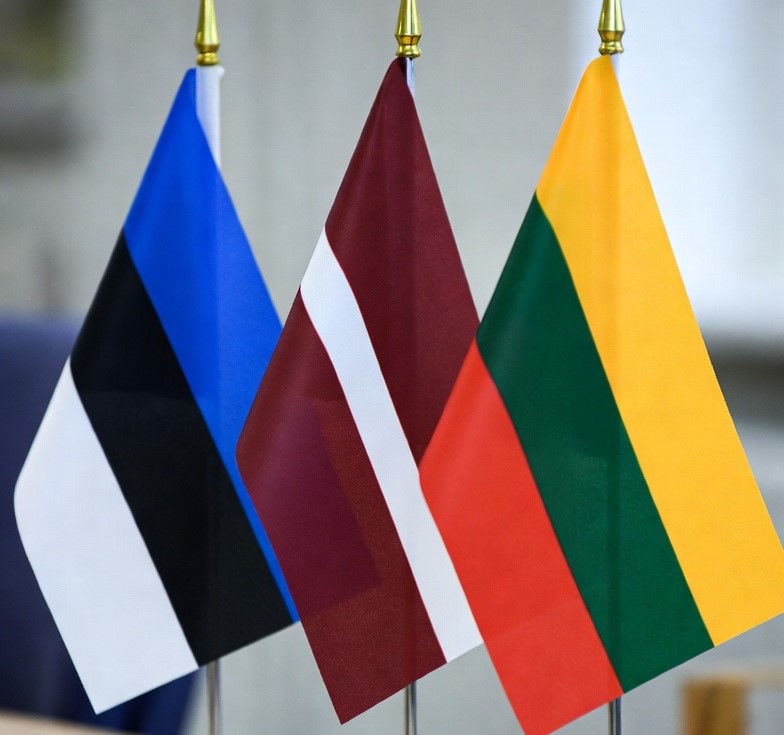
The Baltic Alarm: Why Europe Must Listen to Its Eastern Frontier
PSCRP-BESA Reports No 174 (December 30, 2025)
The Baltic states are preparing for war — not a hypothetical conflict decades away, but one their leaders believe could come within five years. “Russia is a threat today, tomorrow and in the long future,” Finnish Prime Minister Petteri Orpo warned this month. The question is whether Western Europe will listen.
While the world watches Ukraine’s grinding defensive struggle, a parallel crisis is building along NATO’s northeastern edge. The Baltic states, Poland, and Finland are rearming at a pace unseen since the Cold War — not against a theoretical threat, but against one their leaders describe as imminent and inevitable.
Moscow’s territorial demands have only hardened. On December 11, Foreign Minister Sergei Lavrov revived Russia’s December 2021 ultimatums as his baseline for any security arrangement — demands that would require NATO to withdraw all forces and weapons from every country that joined after 1997, effectively dismantling the alliance’s eastern presence. The Kremlin first issued these demands two months before invading Ukraine. That Lavrov is reiterating them now signals how little Russia’s war aims have moderated.
President Vladimir Putin frames this conflict in nakedly imperial terms. Speaking to his Defense Ministry on December 17, he vowed to “liberate” Russia’s “historical lands” by force if diplomacy fails. He has likened his campaign to Peter the Great’s eighteenth-century conquests — a comparison that should alarm every nation once ruled from Moscow or St. Petersburg.
The Scale of Ambition
Putin’s notion of “historical lands” is deliberately boundless. He openly denies Ukrainian statehood — “all of Ukraine is ours,” he told an economic forum this summer — but his revisionism extends far beyond Kyiv. In 2022, he equated the Soviet Union with “historical Russia,” a formulation that encompasses not just Ukraine but the Baltic republics, Finland, Poland, Moldova, the Caucasus, and Central Asia.
U.S. and European intelligence assessments confirm that Putin has not abandoned his maximalist objectives — seizing all of Ukraine and reasserting influence over former Soviet territories. Officials across NATO’s eastern flank take the threat personally. As one Reuters report summarized the mood: the Poles are convinced Russia will eventually turn westward, and the Baltic states believe they will be first in line.
The Hybrid War Is Already Underway
Open warfare against NATO has not begun, but a shadow conflict is well advanced. Russian sabotage, electronic jamming, and military provocations have intensified sharply throughout 2025, with the Baltic Sea as the primary arena.
The region’s infrastructure makes an inviting target. Undersea cables carry data and electricity; pipelines like the Balticconnector (Finland-Estonia) and Baltic Pipe (Norway-Poland) supply natural gas; ten LNG terminals line the coast. When Estonia, Latvia, and Lithuania disconnected from Russia’s power grid earlier this year, three of their four links to the European network ran beneath the waves. Offshore wind farms are proliferating off Denmark, Germany, and soon Poland.
At least eleven suspected sabotage incidents have struck Baltic infrastructure since 2023. The most damaging — ruptures of the Balticconnector and a Finnish-Estonian power cable — appear to have been caused by vessels dragging anchors across the seabed. Repairs took months. A RAND study estimates daily repair costs at €24 million for a telecom cable, €36 million for an oil line, and €75 million for a gas pipeline — figures that multiply over the weeks or months a fix typically requires.
Russia’s “shadow fleet” of sanctions-evading tankers is the prime suspect. Intelligence agencies believe these ships have also launched surveillance drones over airports in Denmark, France, and Germany. Danish officials revealed in October that Russian warships had aimed weapons at Danish naval vessels and helicopters, and simulated ramming maneuvers.
The provocations continued through the holidays. On Christmas morning, Polish jets scrambled to intercept a Russian reconnaissance plane skirting their airspace; overnight, dozens of objects — likely smuggling balloons — drifted in from Belarus, forcing temporary airspace closures. Warsaw warned the timing suggested deliberate provocation. Similar incursions in September saw Russian jets violate Estonian airspace and more than twenty drones penetrate Polish territory.
A Sea Full of Targets
NATO’s Baltic presence looks formidable on paper — eight of the sea’s nine littoral states belong to the alliance. But Russia does not need to match NATO conventionally to cause severe disruption. Hybrid attacks offer deniability, probe alliance cohesion, and impose costs without crossing the threshold that would trigger Article 5.
The target set is expanding. Poland alone may invest over $100 billion by 2040 in offshore wind and LNG capacity; its first nuclear plant, slated for 2036, will sit less than two kilometers from the coast. Germany, Denmark, Sweden, and Finland are all building new wind installations. Much of this infrastructure was planned when Russian aggression seemed remote. Now governments are racing to protect assets they cannot easily defend.
Existing surveillance systems struggle in Baltic conditions. Shallow, debris-strewn waters generate acoustic clutter; heavy shipping masks submarine activity; sharp salinity gradients distort sonar. Poland responded in November by ordering three Swedish A26 submarines — stealthy, shallow-water platforms equipped to deploy divers and underwater drones — for $2.8 billion. Parliament also authorized the navy to use force protecting critical infrastructure beyond territorial waters. As one analyst put it: enough provocations, and submarines start to look like a bargain.
The Suwalki Gap: NATO’s Achilles Heel
No piece of terrain haunts NATO planners like the Suwalki Gap — a 65-kilometer corridor linking Poland to Lithuania, squeezed between Belarus and Russia’s Kaliningrad exclave. Seizing it would sever the Baltic states from overland reinforcement. A 2016 RAND wargame concluded Russian forces could reach Tallinn within 60 hours of an invasion. Finland and Sweden’s NATO membership has opened alternative supply routes by sea and air, but the gap remains a glaring vulnerability.
Berlin is responding with its most significant military commitment since 1945: a permanent panzer brigade in Lithuania and engineering units deploying to Poland in 2026 to help construct the “East Shield” — a $2.5 billion defensive line of anti-tank obstacles, bunkers, and sensors stretching 700 kilometers along Poland’s borders with Russia and Belarus.
The Timeline of Threat
Western leaders are now speaking with unusual bluntness. NATO Secretary General Mark Rutte declared in December that “we are Russia’s next target.” German Defense Minister Boris Pistorius went further, suggesting “we may have already had our last summer of peace”. Senior German and Polish generals have warned of a potential attack within four years.
The European Council on Foreign Relations estimates Russia would need five to ten years after ending its Ukraine campaign to reconstitute forces for a NATO offensive. But the think tank also identified a deeper anxiety gripping European capitals: that Washington, absorbed by domestic politics or tempted by retrenchment, might scale back its commitment to the continent’s defense.
“Baltic officials see no room for complacency. At a December 16 summit of NATO’s eastern flank nations in Helsinki, Finnish Prime Minister Petteri Orpo declared that “Russia is a threat today, tomorrow and in the long future”. Lithuania has committed to spending between 5 and 6 percent of GDP on defense — becoming the first NATO member to meet the benchmark advocated by the Trump administration. On December 27, Vilnius officially withdrew from the Ottawa Treaty banning anti-personnel mines, joining Estonia, Latvia, Poland, and Finland.”
Why the Baltic States See What Others Miss
Russia’s slow, bloody progress in Ukraine should not breed complacency. The war has revealed not Russian weakness but an appetite for casualties that Western democracies cannot match. Moscow can conscript millions; the regime’s domestic legitimacy now rests on military mobilization. Reversing that militarization without destabilizing Russian society may prove impossible.
The Baltic states grasp this reality because they have lived it before — as Czarist provinces, Soviet republics, and Warsaw Pact satellites. Writing in The Baltic Times, European Court of Auditors member Laima Andrikiene captured the shift in outlook: “The illusion of guaranteed safety has been shattered… drones and cyberattacks can breach our borders at any moment”.
The Strategic Imperative
Supporting Ukraine is not charity; it is self-defense by other means. A Russian victory would not satisfy Putin’s ambitions — it would validate them. Ukraine fields Europe’s largest and most battle-hardened army outside Russia itself, backed by a defense industry that has pioneered drone warfare and asymmetric tactics. Allowing those forces and factories to fall under Kremlin control would be a strategic catastrophe, handing Moscow the means to threaten the rest of the continent.
The Baltic states are sounding the alarm because they recognize the warning signs that comfortable Western Europeans have been slow to register. Ukrainians knew what was coming in February 2022. Estonians, Latvians, Lithuanians, Poles, and Finns believe they know what may come next. The question is not whether Putin’s imperial fantasies are realistic — they may well be delusional — but whether he is capable of wreaking havoc in pursuit of them. The answer, plainly, is yes. The time to listen is now, before it is too late.

Baltic States Depopulation: The Effect of the “EU Periphery” or Soviet Legacy?
PSCRP-BESA Reports No 148 (August 25, 2025)
Depopulation—especially in the form of the departure of able-bodied families—is considered today a key socio-economic trend in the Baltic countries. Many researchers – not just journalists in mass media—call this depopulation a “national catastrophe.”
According to the 2024 World Factbook, Latvia ranked first among European countries in terms of depopulation, Lithuania ranked second, and Estonia ranked fifth, behind Poland and Romania. The numbers really do look like a demographic catastrophe.
Estonia, the most demographically prosperous of the Baltic countries, showed 9,691 births and 15,756 deaths last year, in 2024. In Latvia the situation is the same: 12,571 births last year (-13.2% compared to 2023) and 26,341 deaths (-6%); natural decline –13,770. The same happens in Lithuania: 22,068 births, 42,884 deaths; total fertility rate 1.27.
It would seem that the similar economic parameters of these five countries—Estonia, Poland, Romania, Latvia, and Lithuania—point to the underlying reason for depopulation. All of them serve as donors of labor resources to “old Europe.” For their citizens, the status of being EU members makes relocation and employment in more developed countries with higher wages significantly easier. Since it is primarily young and working-age families who move, they tend to postpone having children until after resettling; in Latvia, Lithuania, and Estonia, it is mainly the grandparents who remain, while their grandchildren are raised abroad as “Europeans.”
According to the Ministry of Foreign Affairs and the Migration Department, about 461,000 Lithuanians live abroad, with Germany and Ireland being the largest host countries. The figure is a huge number for a nation with fewer than 2.5 million inhabitants. Moreover, we are seeing migration motivated specifically by employment: Lithuania is among the countries with the fastest growth in the issuance of PD A1 certificates for those working in two or more countries (the category of multi-country employment).
Extremely low pensions deter elderly residents of the Baltics from emigrating. In January 2024, Latvia’s Ministry of Welfare reported that, including supplements, the average pension stood at €563. In Estonia, the figure was somewhat higher at €680, while in Lithuania, in March 2024, it was €596.19. At such pension levels, even €500 in remittances from adult children working in “old” Europe becomes a decisive factor for economic well-being. According to the Bank of Lithuania, private remittances to Lithuania in 2023 amounted to €903.26 million (1.4% of GDP).
At first glance, the reasons for depopulation are obvious. The reasoning outlined above appears correct but somewhat superficial. The economic, mercantile motive for population outflow accurately describes the present situation, but it does not explain why things turned out this way. It does not address why, after the collapse of the USSR and the rapid integration into the European Union, the Baltic states were left without socio-economic stabilizers—factors that would have kept their populations rooted in their traditional places of residence.
Had such stabilizers existed, the economic model might have developed in the opposite direction. One could reasonably assume that European entrepreneurs, recognizing the availability of large groups of well-educated, disciplined, and relatively inexpensive workers, would have started developing production facilities directly in the Baltics—as we see happening today, for example, in Vietnam. But this did not occur, and in the Baltics labor migration grew into full-fledged depopulation. So, what caused this particular demographic trajectory?
The Legacy of Stalinism: The Death of the Baltic Village
A key factor behind the rapid outflow of the Baltic states’ qualified and inexpensive labor force to “old Europe,” before Western European investors arrived in their own countries, lies in the destruction of the social roots of Baltic society—specifically, the rural way of life in these territories.
Before the Second World War, the Baltics were an agrarian region, with the majority of the population living in rural areas. The settlement system consisted mainly of small villages and farmsteads. In Latvia, some eastern districts (Latgale) were dominated by villages, while in other regions the population mostly lived on individual farmsteads. These farmsteads functioned as self-contained economic units with land ownership. The distance between homesteads ranged from 100–150 meters to 1–3 kilometers.
The situation in Estonia differed somewhat, as the land reform of 1919 nationalized noble estates and divided them into smaller plots, which were transferred to local landless peasants for farming in the homestead style. From the expropriated lands, the state created about 56,000 small new farms, whose owners were primarily landless Estonian peasants. Similarly, Lithuania carried out a comparable land reform aimed at forming a prosperous peasant class by creating a homestead-based farming system. By 1938, homestead landownership accounted for 84% of all peasant land in Lithuania.
Thus, the social foundation was not only individual farming (which in the West would be called a farm) but also individual settlement, outside of large villages—the homestead model of land use.
This settlement pattern did not fit the needs of the Soviet regime established in 1940. Despite attempts to establish a Soviet agricultural system in 1940–1941, it wasn’t until around 1949 that they began to implement it in earnest. Under threat of deportation, peasants were forced to “join” collective farms. Stalin’s regime adopted a tactic of forced resettlement. At the end of March 1949, mass deportations of the Baltic republics’ inhabitants to Siberia and the Far North began. During the major March deportation (Operation “Priboi”) alone, 94,779 people were deported. Official figures show that 33,496 were deported from Lithuania, 41,445 from Latvia, and 20,660 from Estonia.
As a result, the remaining rural population was stripped of its traditional way of life. Collectivization was directly tied to the transformation of rural settlements. The goal was to remove people from their homesteads and resettle them into collective farm villages—sometimes larger than small towns. By the mid-1980s, agricultural enterprises (kolkhozes and sovkhozes) covered about 70% of Lithuania’s territory, and large rural settlements accounted for 70–75% of all Lithuanian villages. This arrangement sharply contrasted with the traditional homestead-based settlement structure that had existed just half a century earlier.
Even those born in these new large, artificial “main estates” of collective and state farms felt no emotional attachment to their homes. These places carried no family history or ancestral ties. And even if, by Soviet standards, such settlements offered decent living conditions, their residents often perceived them as prison camps—without guards, but with the right to leave. They had not chosen this place or way of life. The Soviet urban planning strategy promoted the construction of urban-type apartment buildings in these “main estates” as part of a broader ideology of “merging city and countryside.” Moving from one’s own house into an apartment in a multi-story building further severed historical ties with the land. Importantly, this was not ethnic in character: such a “break with the homeland” affected all rural inhabitants of the Baltics—Russians, Estonians, Latvians, and Lithuanians alike.
The collapse of the Soviet system and the subsequent shift in economic structures also radically altered settlement trajectories. The inherited network of settlements, adapted to collective farming, no longer matched the new economic realities. In the former “main estates” of kolkhozes and sovkhozes, the dissolution of collective farms and the rapid decline in agricultural employment became decisive factors of transformation.
In 2023, employment in agriculture in Latvia accounted for 6.75% of total employment. This figure had been falling for four consecutive years and was 3.4 times lower than in 1991. According to the World Bank, agricultural employment in Estonia in this period was only 2.6% of the workforce. In Lithuania in 2023, 5.06% of total employment was in agriculture, a 4.76-fold decrease since 1991. In 1991, agricultural employment reached its peak, accounting for 24.10% of the total workforce.
This dramatic decline in agricultural employment, combined with the earlier destruction of the homestead-based farming system during the Soviet period, produced a population free of local ties and traditions—ready to leave their homeland easily and without deep hesitation in search of any available work in “old Europe,” even in jobs unattractive to Western Europeans themselves.
No factors or circumstances kept these families in the Baltics. They had no access to the traditional rural work of the past. They had no ancestral homesteads. They had no tradition of working independently on their own small plots. What they did have was a good education, a tradition of diligence, a European identity, and EU passports. This rapid relocation of young families from both rural and urban regions of the Baltics occurred so quickly that it outpaced business interest in the region’s cheap labor force.
The project of a “European Vietnam”—a manufacturing hub for EU countries—simply could not keep up with the Baltic youth, who were already rapidly leaving for work in “old Europe.”