
Theme - Belarus
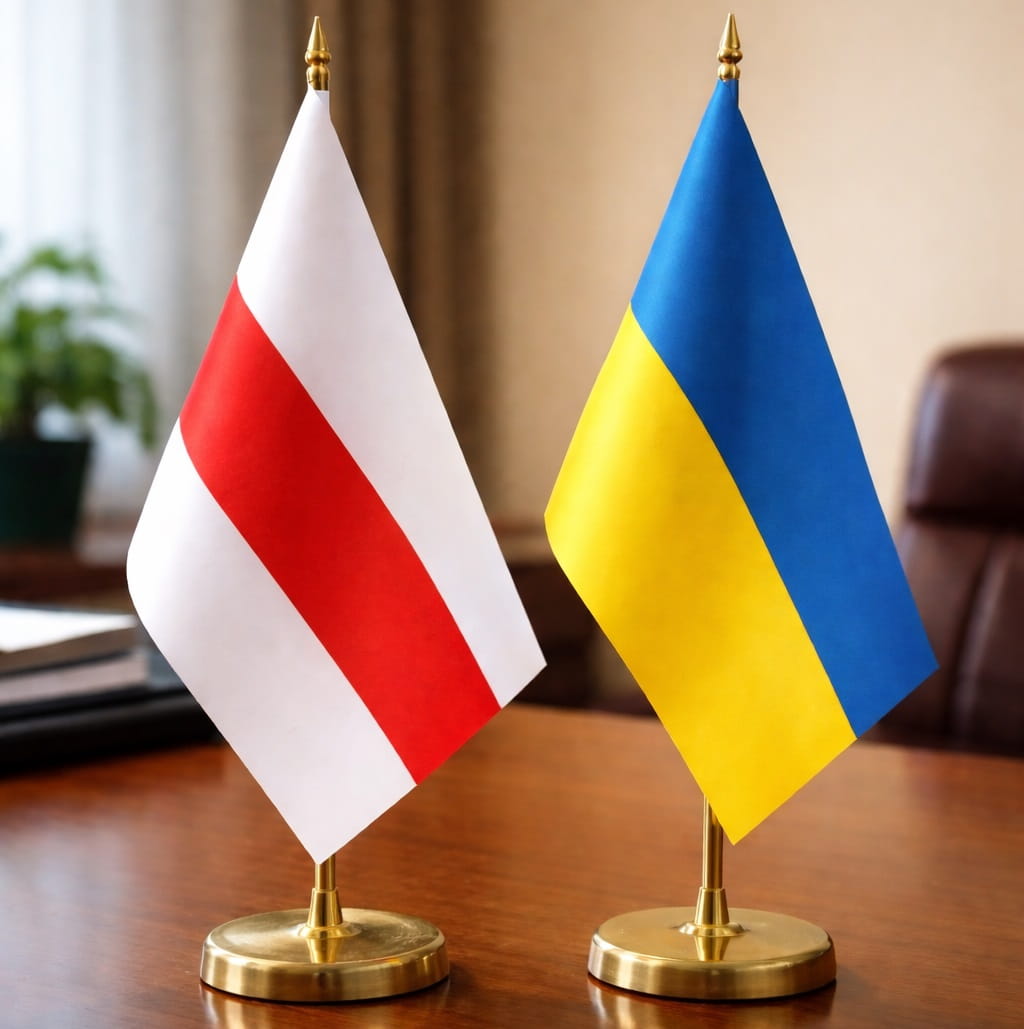
Walk, Don’t Run: A Cautious Reassessment of the Zelenskyy-Tsikhanouskaya Meeting in Vilnius in Light of Israel’s Second Iran-War
PSCRP-BESA Reports No 195 (April 9, 2026)
Several international media outlets have euphorically portrayed the first official meeting between Ukrainian President Volodymyr Zelenskyy and Belarusian opposition leader Sviatlana Tsikhanouskaya in Vilnius on January 25, 2026, as a fundamental moral shift in Kyiv’s stance toward the Belarusian opposition – from strategic distance to meaningful cooperation. Several interpretations presented the alleged motives behind Ukraine’s adapted policy toward the Belarusian dissidents, while ignoring the argumentative weak spots within them. This analysis reassesses the so-called “first official” Zelenskyy-Tsikhanouskaya Meeting and it presents interpretations not mentioned yet in the public discourse: these include Ukraine’s motives to (1) strengthen the pro-European branch of the Belarusian opposition in exile, (2) gain leverage in negotiations with Washington, (3) promote Ukraine’s fast-track EU accession, and (4) Ukrainian domestic politics. These developments can affect Israel’s security policies especially during its ongoing second war with the Mullah Regime in Tehran and even afterwards.
1. Introduction
Since the beginning of 2026, Zelenskyy’s tone towards the Lukashenka regime in Belarus has indeed grown harsher. During a speech at the annual Davos Economic Forum on January 22, 2026, Zelenskyy criticized his Western allies for failing to take decisive action against the Lukashenka regime during the violent crackdown on the protests against the rigged presidential elections in Belarus in August 2020. Three days later – in Vilnius on January 25, 2026 – Zelenskyy dedicated an immense part of his speech to the Belarus issue during a commemoration of the 1863 January Uprising – a revolt against the Russian tsarist empire on the territories of today’s Ukraine, Poland, Lithuania, and Belarus. According to him, Minsk now poses a direct threat to Ukraine and Europe due to the deployment of the Russian Oreshnik missile systems. During this event, what Belarusian exile media dubbed the “first official meeting” between Ukrainian President Volodymyr Zelenskyy and Belarusian opposition leader Sviatlana Tsikhanouskaya took place (even though there had already been several sporadic encounters between the two politicians on the sidelines of international forums). It was reportedly at this meeting that Zelenskyy invited Tsikhanouskaya to visit Ukraine for the first time.
On February 18, 2026, the Ukrainian president also announced that he had imposed targeted sanctions against the Belarusian leader Alyaksandr Lukashenka because of the deployment of the Russian Oreshnik system and Minsk’s provision of its own infrastructure to the Kremlin for controlling Russian combat drones. On February 23, Zelenskyy followed up with further actions. For the first time since the start of the second Russian invasion of Ukraine in February 2022, the Ukrainian president, after several cancellations, gave an interview to a Belarusian exile media outlet – in this case, “Zerkalo.” In it, he stated his intention to differentiate between the Belarusian regime and its citizens. However, he simultaneously issued indirect threats against Belarus, claiming that the Belarusian regime, with its anti-Ukrainian behavior of recent months, was putting all of Belarus at “great risk”, adding that NATO should view the Oreshnik system in Belarus as a legitimate military target. On March 11, 2026, Ukrainian parliamentarians also addressed the issue of Belarus by formally requesting five EU member states – Poland, Finland, Lithuania, Latvia, and Estonia – to completely cease all transit activities between themselves and Belarus, as well as Russia, since the proceeds from it would benefit the Russian war machine.
Due to this, one can witness a flood of comments on this issue within several media outlets during the last weeks, euphorically portraying the so-called “first official meeting” between Zelenskyy and Tsikhanouskaya as a starting point of a fundamental moral shift in Kyiv’s stance toward the Belarusian opposition, from a strategic distance in the past to an alleged meaningful cooperation. Indeed, although Belarus assisted Russia logistically at the beginning of Russia’s second invasion into Ukraine in February 2022, Kyiv was not eager to deepen its cooperation with Lukashenka’s exiled opponents. Instead, Ukraine kept the opposition at arm’s length, trying not to provoke the Lukashenka regime into sending its own troops to Ukraine via the 1000-km long Belarusian-Ukrainian border. Along with other factors, Kyiv was most concerned about the possibility of having to stretch its military forces further along its northern border at the expense of protecting its south-eastern front.
However, this analysis calls for prudence. A reflection on the possible motives behind Ukraine’s cautious overtures in favor of the Belarusian opposition in exile reveals that Kyiv’s slightly adjusted foreign policy approach may be linked to (1) the emergence of a new actor on the Ukrainian-Belarusian track, (2) to gain leverage vis-à-vis Washington, and (3) to promote Ukraine’s fast-track EU accession. (4) Domestic political factors, too, may play a decisive role. In sum, the following will show why this foreign policy adjustment reflects Kyiv’s adaptation to gradually changing geopolitical developments in Eastern Europe that will not lead to a complete shutdown of relations between Kyiv and Minsk and will not prompt Kyiv to put all its eggs in one basket, namely, the basket of the exiled Belarusian opposition.
2. Evaluating previous interpretations and reactions
Previous comments on the Vilnius meeting between Zelenskyy and Tsikhanouskaya showed a wide range of diverse reactions and possible interpretations. However, the relevance of these arguments depends very much on the strength of their argumentation:
Additional Gains in Soft Power and Normative Differentiation from the EU’s Belarus Policy: Some commentaries evolved into speeches of gratitude toward the Ukrainian president, as he dedicated a significant portion of his speech in Vilnius in January 2026 to the issue of Belarus. Particular emphasis was placed on Zelenskyy’s words of reproach directed at Ukraine’s European partners for their alleged inaction during the violent suppression of protests by the Belarusian regime in August 2020, which allowed that regime to remain in power. However, this narrative overlooks the fact that, compared to the EU (which condemned the repression), it was actually Kyiv itself that failed to show much diplomatic sensitivity toward the Belarusian civil society: On August 11, 2020—two days after the crackdown on protests began on August 9, 2020—the then-Ukrainian Minister for Economic Development, Trade, and Agriculture, Ihor Petrashko, met in Kyiv with the then-Belarusian Minister of Agriculture and Food, Ivan Krupko. The subject of their discussion was the promotion of bilateral agricultural cooperation between the two states. This meeting took place during Zelenskyy’s presidency.
Russian Oreshnik missile systems on Belarusian soil: One of the motives that the Ukrainian president himself frequently cites as the official reason is the deployment of the Russian Oreshnik missile system in Belarus. There is no doubt that this—much like the alleged use of Belarusian infrastructure to control Russian drones targeting Ukraine—poses a direct threat to the Ukrainian state. However, the Kremlin has already demonstrated that it does not rely on Belarusian territory to use these weapons against Ukraine. The Oreshnik attacks on Ukraine known to date—those targeting Dnipro in November 2024 and Lviv in January 2026—were launched from Russian territory.
Lukashenka’s changed calculus due to the US-Belarus reapproachment: Similarly, assuming that Ukraine no longer needs to appease Lukashenka, since the Belarusian autocrat has no interest in a direct conflict with Ukraine, given its reapproachment with the White House since January 2025, falls short. The contact between Kyiv and Minsk will remain necessary not only because of political considerations (e.g., preventing Lukashenka from falling entirely into the Kremlin’s hands), but also for humanitarian reasons. Those include maintaining future prisoner-of-war exchanges with Moscow via Belarusian territory. The last exchange of this kind took place in Belarus on March 6, 2026, and thus right in the middle of the current Ukrainian-Belarusian disputes. Moreover, it seems unlikely that Kyiv will risk obstructing the return of abducted Ukrainian children, who were left behind by Russian forces in Belarus, as well as the humanitarian corridor via Belarusian territory for Ukrainians who try to leave the Russian-occupied Ukrainian territories in order to reach the Ukrainian mainland.
The appointment of Budanov as the new head of the Ukrainian Presidential Office: The replacement of the long-serving head of the Ukrainian Presidential Office—Andriy Yermak—on January 2, 2026 (amidst a corruption scandal surrounding the Ukrainian president’s closest circle) by the military intelligence chief, Kyrylo Budanov, is also a very frequently cited argument. The former was a harsh critic of the Belarusian dissidents due to their ambiguous positions on the pre-2022 Russo-Ukrainian relations. The latter, however, functioned as the official responsible for Kyiv’s policy toward the Belarusian opposition in exile since the war began in 2022 (including its political wing, represented by the Tsikhanouskaya camp, as well as its former armed wing, the so-called “Kastus Kalinouski Regiment”). Yet, the proponents of this line of argument fail to note that Budanov played a dual role in this regard: In parallel, he has also served as the personified channel of communication between the Zelenskyy administration and official Minsk since the beginning of the war. Consequently, one should not be too quick to assume that, from now on, only the Belarusian opposition possesses a direct line to the Ukrainian Presidential Office. The aforementioned recent Ukrainian-Russian prisoner exchange conducted on Belarusian territory in March 2026 also points to Kyiv’s continuous contact with Belarusian officials.
So how can Kyiv’s softening attitude toward the Belarusian opposition around Sviatlana Tsikhanouskaya be explained?
3. Reassessment of the “first official” Zelenskyy-Tsikhanouskaya Meeting in Vilnius
3.1. Strengthening the pro-European Branch of the Belarusian Opposition in Exile
As the author of this analysis wrote in his policy memo for the “Program on New Approaches to Research and Security in Eurasia (PONARS Eurasia)” at the George Washington University in February 2026, analysts should pay much more attention to the details of how the December 13, 2025, prisoner release in Belarus unfolded. Here, he wants to elaborate more on this thought:
First, during this event, 123 Belarusian political prisoners were released by the Lukashenka regime. 114 of them were then deported to Ukraine at once, and the other nine to Lithuania. This procedure was particularly unusual: In the past, Minsk handled such releases differently, deporting all released dissidents mainly to Lithuania. Strikingly, among the 112 people deported to Ukraine were the two most internationally famous members of the Belarusian opposition (besides Tsikhanouskaya). One of them was Viktar Babaryka, the former head of Belgazprombank, a subsidiary of Russia’s Gazprom, and later a presidential candidate in the fraudulent 2020 Belarusian elections. The other one was his chief of staff during the 2020 presidential election campaign, who later became a central opposition figure, Maria Kalesnikava. Both received political asylum in Berlin, Germany, after their release. Due to their biographical ties to the Kremlin and their very ambiguous and evasive statements about the Russo-Ukrainian war shortly after their release, one should view them as powerful parts of a, if not pro-Russian, then at least of a Russian-affine sentiment within the Belarusian opposition in exile. Taking this viewpoint, it cannot be in Ukraine’s interest to allow this actor to rise on the horizon of the Ukrainian-Belarusian conundrum. Kyiv is thus well-advised to soften its stance towards the Tsikhanouskaya camp, which represents the Belarusian opposition’s pro-European wing. Consequently, Zelenskyy’s readiness to set up the first official meeting with Tsikhanouskaya in Vilnius on January 25, 2026, could also be interpreted as a preventive move to strengthen the Belarusian opposition’s pro-European camp.
Second, the release of Belarusian political prisoners via Ukrainian territory in December 2025 signaled that Minsk does not fear the contact between Kyiv and its own dissidents. Thus, should Tsikhanouskaya indeed visit Ukraine in the near future, as she states, Minsk will unlikely rethink its attitude towards Ukraine – at least not as long as Kyiv does not introduce Tsikhanouskaya as an official representative of Belarus (but rather as a “private” individual or activist). Moreover, the December 2025 release once again demonstrated the existence of a functioning communication channel between Kyiv and Minsk.
Third, to some degree, preventing the rise of the Russian-affiliated branch within the Belarusian opposition movement becomes, paradoxically, a “common interest” among Kyiv, Minsk, and the Tsikhanouskaya camp: Kyiv does not need an additional internationally active player on the Ukrainian-Belarusian track with an ambiguous position on the Russo-Ukrainian war. Lukashenka’s goal to minimize his dependence on Moscow and to secure an advantageous power transfer for his clan in the future – as hinted at by the constitutional amendments in Belarus on February 27, 2022 – also prevents him from passively observing the rise of additional internal opponents with ties to the Kremlin. Thus, through Ukrainian involvement, both Kyiv and Minsk intertwined Babaryka’s and Kalesnikava’s post-release images with the Ukrainian state. Should they ever again take an unclear position on the Russo-Ukrainian war, or even nurture their Russia-affine stance in the future, it could create an internationally visible reputational burden on both oppositionists. Both would appear ungrateful towards Kyiv on the one hand, which was involved in their liberation, as well as towards their European host countries on the other hand, which follow a clear “Ukraine-First” line. Consequently, Kyiv’s move to set up a short video conference on the next day of the respective prisoner release between Zelenskyy and some of the released dissidents – including Babaryka and Kalesnikava – should be considered a well-thought-out political move by Kyiv. Both dissidents had to publicly and on record state their gratitude to the Ukrainian state and express condemning words about Russia’s war of aggression against it.
Even Tsikhanouskaya should be interested in minimizing the influence of this sentiment within her movement. Not only because figures like Kalesnikava express interest in finding common ground with Lukashenka (whereas Tsikhanouskaya seeks more pressure), but also to weaken such strong competitors to her leadership. It is important to note that such an intersection of interests does not mean that all parties are aware of it or have pre-discussed their overlapping priorities. Rather, the calculus of each party could be based on a more solo-conducted rational level, which can sometimes result in a paradoxical intersection of interests between conflicting parties.
3.2. Bargaining Chips vis-à-vis Washington
Previous comments saw in Kyiv’s alleged course correction towards the Belarusian opposition a clear counter-signal to the Trump administration’s gradual rapprochement with Minsk since January 2025. This lens has some inherent weaknesses, such as the point that Ukraine is unlikely to anger Washington too much while seeking American security guarantees in a post-war period, especially not for the sake of the Belarusian opposition movement. However, a deeper look at the content of the recent Ukrainian sanctions package against Lukashenka and the Ukrainian parliament’s appeal to Poland, Finland, and the three Baltic States suggests that Kyiv is indeed worried about where this recent American-Belarusian détente could lead.
It is striking, in fact, that both Ukrainian initiatives advocate tightening restrictions on the transit of (mineral) resources into and out of Belarus. Indeed, the recently enacted U.S. sanction waivers against the Belarusian potash sector can only take their full effect if Minsk gets access to ports in Lithuania, Latvia, Poland, and/or Ukraine. Among U.S. circles dealing with Belarus, some voices view the prospect of Belarusian potash transit through Ukrainian ports in Odesa not merely as an economic advantage, but also as a peace initiative—one that economically binds two hostile states together, thereby potentially minimizing future military conflicts (resembling, to some degree, the logic behind the European Coal and Steel Community of 1951, which established economic interdependencies primarily between the two former European belligerents: Germany and France). Thus, Kyiv’s call for stricter trade sanctions against Belarus—along with its overtures to Lukashenka’s political opponents—can be interpreted, on the one hand, as a signal of opposition to Washington’s visions for the future of Ukrainian-Belarusian relations. On the other hand, however, it can also be viewed as a bargaining chip vis-à-vis Washington, aimed at securing satisfactory American security guarantees for Ukraine in a post-war period.
3.3 Other possible reasons
However, two additional reasons also deserve attention:
I. Fast-track EU accession: One can also view the first formal meeting between Zelenskyy and Tsikhanouskaya as a political investment by Kyiv in its relations with Lithuania and Poland, whose officials were also present in Vilnius. Both countries are considered the most prominent supporters of the exiled Belarusian opposition and the fiercest critics of the Lukashenka regime. Moreover, Lithuania will assume the EU Council Presidency in the first half of 2027 and promises to keep Ukraine on the EU agenda. In recent weeks, Zelenskyy has once again announced his interest in Ukraine’s fast-track EU accession by 2027. With Poland, on the other hand, Kyiv is trying to intensify its energy and air defense partnership.
II. Presidential election/Strongman-Image: Zelenskyy’s harsher tone towards the Lukashenka regime may also be linked to domestic political developments. Should negotiations for a ceasefire between Kyiv and Moscow prove successful, the presidential elections—which were postponed due to the wartime situation in Ukraine—would have to take place. Here, Valerii Zaluzhnyi could be Zelenskyy’s strongest rival in this context. Zaluzhnyi has served as Commander-in-Chief of the Armed Forces of Ukraine since July 2021. After disagreements with Zelenskyy, he lost his position in February 2024 and was sent to the United Kingdom in July 2024 to serve as Ukraine’s Ambassador there. Followingly, Zelenskyy’s more robust stance toward Belarus allows him to style himself as a “strongman” and, potentially, minimize the reputational contrast between himself and the seasoned military figure Zaluzhnyi. By the same logic, one can also view Zelenskyy’s changed communication strategy since January 2026. Not only does Belarus get rhetorically targeted by the Ukrainian politician (Zelenskyy on January 25, 2026: “For now, Lukashenka’s white spitz has more rights than the people of Belarus, unfortunately” (own translation)). Similarly, Zelenskyy relies on a populist-tinged rhetoric against other critics of Ukraine—such as Hungarian Prime Minister Viktor Orbán (Zelenskyy on March 5, 2026: “[…] we will pass this man’s [Orbán] address to the [Ukrainian] armed forces — let them call him and speak to him in their own language”)—or against Chechen leader Ramzan Kadyrov. Following the United States’ removal of Venezuela’s authoritarian ruler, Nicolás Maduro, on January 3, 2026, Zelenskyy proposed to Washington on January 7, 2026, that it apply the same procedure to Kadyrov.
4. Conclusion: Why Israel should care
This analysis reassessed the so-called “first official” Zelenskyy-Tsikhanouskaya Meeting in Vilnius on January 25, 2026, and its meaning for Ukrainian-Belarusian relations. By highlighting argumentative strengths and weaknesses within the common explanations of this first offical encounter between both politicians, this policy paper presented to the reader analytical lenses not applied yet: these were (1) the strengthening of the pro-European branch of the Belarusian opposition in exile, (2) gaining leverage in negotiations with Washington, (3) the promotion of Ukraine’s fast-track EU-accession, and (4) Ukrainian domestic politics. It is important to emphasize that the mentioned motives do not exclude one another.
To what extent are these developments on the Ukrainian-Belarusian track actually relevant to Israel from a security policy perspective? The Belarusian opposition in exile is, in its majority, generally regarded as being sympathetic to Israel—a sentiment demonstrated particularly by its clear stance of support toward Israel and its existential struggle against the Iran-led Shiite Axis following the Hamas terrorist attack on October 7, 2023. The Minsk regime, conversely, is considered a key ally of the Mullah regime in Iran. Following Israel’s successful elimination of Iranian Supreme Leader Ali Hosseini Khamenei on February 28, 2026, Lukashenka hosted the Iranian Ambassador to Belarus, Alireza Sanei, at his residence on March 4, 2026. During the meeting, the Belarusian leader expressed his condolences and described Khamenei as a “humanist.” However, it remains an open question—not only for Israel but also for Ukraine and Europe—how much the Belarusian opposition in exile actually has serious channels of influence within Belarus’s domestic political landscape that could prove relevant in a post-Lukashenka era.
For now, the above-described developments on the Ukrainian-Belarusian track could have only indirect implications for Israel: During a visit by Lukashenka to China in August 2025, Beijing allegedly emphasized that Belarus’s role as a transit country for Chinese goods into Europe had grown significantly—particularly in the wake of the “12-Day War” between Iran and Israel in the summer of 2025—as that conflict had starkly highlighted the vulnerability of the transit routes for Chinese goods passing through the conflict region. The Chinese calculus behind this statement was based on the hindsight-correct assumption that a new round of the Israeli-Iranian conflict was imminent. Consequently, Beijing urged Minsk not to unnecessarily strain its relations with other transit states, such as Poland and Lithuania. Thus, if Zelenskyy now specifically intends to target Belarus’s role as a transit hub—as outlined above—such a move could run counter not only to American (and European) economic interests but also to Chinese ones. Consequently, this could provide yet another reason for Beijing to exert pressure on one or all of the current belligerents in the ongoing second Iran war. This applies even to the aftermath of the conflict – when the guns will fall silent – to prevent future military eruptions.
However, this analysis casts doubt on whether Kyiv will succeed in compelling Belarus’s EU neighbors to impose stricter restrictions on the movement of (mineral) resources through and from Belarus. Within these EU states, debates are already underway regarding the extent to which the wording of the EU sanctions against Minsk actually prohibits potash imports from Belarus at all. Even a final judicial decision in a legal dispute between Minsk and Vilnius on this matter is awaited by 2027. Additionally, doubts among the Polish and Lithuanian political elites arise regarding the economic and political rationale for these potash sanctions against Minsk, as, on the one hand, the European dependence on Russian potash increases (which is not under EU sanctions). On the other hand, it also multiplies Belarus’s economic and political dependence on access to Russian ports, thereby bringing more money into the Kremlin’s coffers and forcing Minsk to tolerate Moscow’s revisionist plans.
Boris Ginzburg is a political scientist at the Institute for East European Studies (Politics Department) at the Freie Universität Berlin (Germany)
Representation of Jewish and Israeli Issues in the FSU region in Light of Operation “Lion’s Roar.”
PSCRP-BESA Reports No 195 (April 5, 2026)
Introduction
The massacre perpetrated by Hamas and the subsequent “Iron Swords” war catalyzed an unprecedented surge in antisemitic and anti-Israeli discourse across the former Soviet Union (FSU). Some of this hate speech transitioned from rhetoric to physical violence, culminating in a series of anti-Israeli pogroms in the Russian North Caucasus, occurring amidst the notable inaction of local authorities. The commencement of Operation “Rising Lion” on June 13, 2025, triggered a subsequent wave of intensified hostility, synthesizing: classical antisemitic motifs, conspiracy theories, and state-aligned political propaganda. Notably, this period marked the first instance in which anti-Israeli hate speech in the post-Soviet sphere exhibited clear evidence of coordinated external influence.
Admittedly, Iranian and Hamas influence had begun to permeate mainstream discourse—primarily in Russia, the Caucasus, and Central Asian states—as early as 2022, concurrent with the Russian invasion of Ukraine. Turkish influence also expanded significantly following the events of October 7, 2023. However, prior to June 2025, these remained marginal themes propagated by junior figures with limited reach. The onset of the “First Israel-Iran War” transformed these “foreign” sentiments into core components of mainstream propaganda, leveraged in countries like Belarus by high-ranking regime officials.
In the seven months between Operation “Rising Lion” and the outbreak of Operation “Lion’s Roar,” a distinct framework of antisemitic and anti-Israeli public discourse emerged. This narrative relies on a synthesis of classical antisemitism, Soviet-era anti-Zionism, and modern geopolitical grievances, alongside radical Christian and Islamic religious motifs. Furthermore, foreign state actors—most notably the Turkish national broadcaster, TRT — systematically manipulated sections of this discourse. Operating both directly and through local proxies, these actors disseminated virulent propaganda in Russian and various regional languages to radicalize Muslim populations through the use of religious and anti-Zionist tropes.
While foreign influence has grown, the core of the region’s antisemitic discourse remains rooted in local—primarily Russian—sources. Several central motifs have been identified, largely designed to bolster domestic propaganda established since the February 2022 invasion of Ukraine:
– Russia as the Vanguard: Russia is portrayed as the primary defender against “modern Nazism”; consequently, any adversary of Russia’s allies is categorized as a Nazi.
– Israel as the Adversary: The depiction of Israel as a foe serves to consolidate Russia’s image as a strategic partner to the Muslim world.
– Competing Victimhood: Narratives regarding the “collapse of the Holocaust myth” or the “revocation of Jewish victim status” aim to position Russia as the sole legitimate victim of Nazism, thereby marginalizing the historical significance of the Holocaust.
– Soviet Anti-Zionist Echoes: Accusations of Israeli control over the United States and “Israeli aggression” driven by messianic motives mirror traditional Soviet rhetoric, updated with contemporary Russian nationalist sentiment.
– Military Ineffectiveness: Critique of Israeli defense systems serves to promote Russia’s status as a global arms leader while amplifying Iranian claims regarding the success of their strikes.
“Lion’s Roar”: From Domestic Utility to External Propaganda
Given the established infrastructure of hate speech following October 7 and Operation “Rising Lion,” the antisemitic surge following Operation “Lion’s Roar” was anticipated. However, unlike the gradual escalation seen previously, this wave featured a massive volume of hate speech from its inception. According to Nativ’s data as of March 14, 2026 (two weeks into the conflict), approximately 76% of the 59,000 surveyed information items contained antisemitic or anti-Israeli content—a stark increase from the 5%–10% observed in the preceding period.
Within this corpus of hate speech, the following motifs are most prominent:
Themes of Global Jewish Control and Anti-Israeli Rhetoric
Allegations that Jewish/Israeli control over the U.S. government precipitated the war, rendering the U.S. a secondary actor.
The instrumentalization of the “Jeffrey Epstein scandal” to fuel conspiratorial narratives, using euphemisms such as “Epstein’s coalition,” “Epstein’s gang,” or “Ba’al worship” (a derogatory play on Epstein’s first name).
Claims of a Masonic takeover of global institutions.
The deliberate omission of Iran as the aggressor in strikes against the Gulf Emirates to create the illusion of Israeli culpability.
Radical Religious Discourse and Racial Superiority
Claims that religious extremists in Israel seek to “cleanse” the Middle East of non-Jews to facilitate the construction of the Third Temple.
The resurgence of blood libels, including terms like “ritual murder” and “extermination of the Gentiles,” specifically following the attack on a girls’ school in Minab.
The characterization of strikes in Iran as “ritual sacrifices” for the holiday of Purim.
The revival of “Replacement Theory”, asserting that the Russian Orthodox Church has replaced the people of Israel in the divine covenant, thereby stripping Jewish people of their status as the “Chosen People.”
Anti-Zionist Rhetoric
Direct comparisons between the State of Israel and Nazi Germany.
The systematic substitution of “Zionist” or “Jew” for “Israeli.”
Questioning the Semitic origins of modern Jews and questioning the loyalty of Jewish citizens in Russia, Belarus, and Central Asia.
Call for the destruction of Israel
“Holocaust Cancellation” and “Competing Victimhood”
Calls to cease Holocaust commemoration due to alleged Israeli “war crimes.”
Intentional disregard for the role of the Iranian regime in global Holocaust denial.
Demands that Israel defer to Russia out of “gratitude” for the Soviet role in saving Jews during World War II.
Domestic Propaganda Motifs
Exploitation of Ethnic Identity: State media frequently emphasizes the Jewish origins of political dissidents in Russia and Belarus, framing their alleged support for Israel as evidence of ulterior loyalties.
Derision of Political Emigres: Propagandists mock opposition figures who fled to Israel, cynically challenging them to enlist in the Israel Defense Forces. This narrative has expanded beyond Russian and Belarusian circles to target Ukrainian businessmen who recently relocated to Israel.
Decline in Technical Critique: There has been a notable decrease in rhetoric concerning the perceived ineffectiveness of Israeli air defense systems compared to the discourse surrounding operations “Iron Swords” and “Rising Lion.”
Strategic Conflation: Efforts are being made to link Israel and Ukraine in the public consciousness, portraying both nations as common adversaries of the Russian and Belarusian states.
Weaponization of Sports Sanctions: The absence of international sports sanctions against Israel is leveraged as a “double standard” to illustrate Western hypocrisy, tendentiously comparing the geopolitical status of Russia and Belarus to that of Israel.
Implications
The current discourse constitutes extreme hate speech, frequently escalating into virulent incitement and explicit calls for action against Jews and the State of Israel. In Central Asian and Caucasian nations, home to significant Muslim populations, targeted for radicalization by external actors such as Iran, Turkey, and to a lesser extent, China, Pakistan, and Russia—this rhetoric is largely confined to social media. In these jurisdictions, authorities often respond with immediate and stringent enforcement. Similarly, in Armenia, antisemitic discourse remains predominantly online, fueled by domestic opposition figures and sectors of the Western Armenian diaspora that have increasingly aligned with Hamas and the Iranian regime.
In contrast, the situation in Russia and Belarus is markedly different. Here, senior regime propagandists are actively engaged in promoting unbridled antisemitic incitement, utilizing tropes reminiscent of the Tsarist-era “Black Hundreds” or Soviet “Cold War” anti-Zionist campaigns. This domestic rhetoric frequently mirrors and amplifies antisemitic narratives disseminated in the West by figures such as Tucker Carlson. A notable instance of this cross-pollination occurred when the official Belarusian propaganda apparatus targeted Miriam Adelson for her “harmful involvement” in American politics—a targeted attack likely coordinated with external influence mechanisms, given the regional obscurity of the subject. While the exact direction of influence between Western fringe media and Slavic state propaganda remains difficult to isolate, it is evident that Belarus increasingly derives its extremist content from Russian and Iranian sources.
A critical divergence exists between the two states regarding the status of these propagandists:
Belarus: Hate speech is spearheaded by the highest echelons of the regime’s media apparatus. Figures such as Ryhor Azaronak, Andrej Mukavozčyk, and Ksenija Lebedzeva—along with Vadzim Hihin, who holds a senior official position—utilize state-sanctioned broadcast and print media to disseminate their views.
Russia: Primary ideologues such as Aleksandr Dugin, Konstantin Malofeev, Aleksandr Prokhanov, and Maksim Shevchenko—while state-aligned and influential—operate within the second or third tier of the propaganda hierarchy. They rarely echo the Kremlin’s official messaging verbatim. For now, top-tier Russian state media largely refrains from “wild incitement,” maintaining a more disciplined alignment with the Foreign Ministry’s official stance.
However, two significant outliers suggest a potential shift toward more radical official discourse: the March 2 statement by Foreign Ministry Spokeswoman Maria Zakharova regarding “ritual sacrifices” in Minab, and a March 17 segment by Vladimir Solovyov on Russia 1 regarding “Jewish racial superiority.” It should be noted that the sole anti-Israel narrative currently permeating mainstream media and political rhetoric—paralleling its proliferation on social media platforms—is the discourse surrounding alleged Jewish (or, euphemistically, Israeli) control over the United States, which purportedly precipitated the onset of hostilities. Although this trope is unequivocally antisemitic, its operational significance remains marginal at this current juncture.
Nevertheless, it is crucial to consider the substantial traction this narrative maintains within conspiratorial circles across both the West and the Arab world. Furthermore, the paradigm of Zionist control over the United States constituted a prominent fixture of Soviet ideological export during the Cold War era. Consequently, it is highly probable that the motif of Jewish influence over the US may soon emerge as a primary ideological vector. This is particularly likely given that Russian media outlets are increasingly seeking out anti-Zionist Israeli commentators to provide a veneer of legitimacy to narratives concerning a “Jewish takeover of the United States”.
On March 14, 2026, nationalist propagandists in Russia fabricated a hostile, conspiratorial narrative against Israel by blatantly distorting the statements of Major Anna Ukolov, the IDF’s Russian-language spokesperson. Following her comments to the Russian news portal RBC regarding Israel’s capabilities to thwart hostile actors, Russian social media networks propagated the false claim that Israel was threatening to assassinate senior Russian officials and possessed control over the country’s surveillance systems. The campaign, initially sparked by a local Russian-Jewish activist with ties to the authorities, was accompanied by extremist rhetoric fueled by prominent antisemitic ideologues such as Alexander Dugin and Konstantin Malofeev, who depicted Israel as an omnipotent adversary posing a direct threat to Russian sovereignty. Furthermore, senior regime propagandist Vladimir Soloviov demanded on his broadcast that Israel be compelled to issue an official apology, asserting that Jews had once again betrayed the very nation that saved them from the Holocaust. This incident illustrates a dangerous tendency within radical Russian online spaces to manufacture explicit anti-Israel libels, weaponizing routine reports into conspiracy theories that foster hostility. Nevertheless, at this stage, this narrative has remained confined to non-state propaganda; official figures have refrained from commenting, at least publicly, indicating a current divergence between online incitement and stated government policy.
Finally, a distinct linguistic evolution has occurred during this period: the emergence of a new euphemism for “Jew.” Just as “Cosmopolitan” functioned as a coded substitute during the late Stalinist era and “Zionist” following the Six-Day War, the “Epstein affair” has been weaponized as a contemporary linguistic proxy. Terms such as the “Epstein coalition,” “Epstein gang,” or “Epstein group” are now deployed by Russian and Belarusian officials and propagandists alike to facilitate antisemitic discourse. These derivatives are also utilized by Iranian and Turkish “agents of chaos” to foment antisemitism among Muslim populations across Russia, the Caucasus, and Central Asia.
Projections and Recommendations
A month into the conflict, this extreme rhetoric has not yet manifested in widespread physical violence, despite increasing calls to target Jewish communities for their support of Israel. However, there are concerning signs: several communities have been warned to avoid public displays of Zionism, a synagogue in the Russian-controlled region of Abkhazia was vandalized, and an Iranian cell was recently neutralized in Azerbaijan while planning attacks on Jewish targets.
To counter this, a shift from defensive public relations to an active “cognitive offensive” is required. It is essential to expose the influence networks and “agents of chaos” who manufacture this discourse for geopolitical gain.
Dr. Nataniel (Nati) Cantorovich is Director, Information and Research Department, “Nativ” Organization of the Israeli Prime-Minister’s Office, Jerusalem, and is a Research Fellow at the BESA Center’s Post Soviet Conflicts Research Program. This review was conducted as part of the monitoring of antisemitism in the former Soviet Union on behalf of “Nativ – Prime Minister’s Office.”
From Jewish Memory to Ayatollah Praise: A Belarusian Paradox
PSCRP-BESA Reports No 192 (March 23, 2026)
Belarus is an unusual place to consider in the context of the Middle East. Three Israeli presidents were born there, while Belarus itself has had only one president since independence. The Aliaksandr Lukashenka regime in Minsk is well aware of this historical connection and sometimes references it as another convenient talking point rather than a foundation for genuine engagement. Thus, this awareness does not translate into any meaningful support for Israel in its current struggles. The current war in Iran is framed by the Lukashenka administration and its state media through the familiar lens of anti-Western rhetoric and selective moral posturing. Yet, their narratives are somewhat different from that of the Kremlin.
Belarus and Iran maintain steady diplomatic and political ties that have grown somewhat closer in recent years, often framed by both governments as a shared response to Western sanctions. High-level contacts are not uncommon. For example, in August 2025 Aliaksandr Lukashenka hosted Iranian President Masoud Pezeshkian in Minsk, where the two sides discussed expanding cooperation and signed a package of agreements covering areas from industry and technology to tourism and defense-technical cooperation. Pezeshkian remarked during the talks that the two countries share “common positions and views on issues of global importance,” while Lukashenka responded in similar terms, assuring his guest that Iran “has been and remains our friend” and that Belarus intends to fulfill its commitments. The Iranian side also pointed to practical areas where this alignment might develop, including economic and cultural exchanges as well as military-technical cooperation. Pezeshkian noted that Iran has lived under Western sanctions for more than four decades. Belarus, for its part, has also been subject to Western restrictions for many years. In this sense, the language of cooperation between the regimes in Minsk and Tehran is not only about trade or diplomacy but also reflects a broader political narrative in which sanctions are presented less as a constraint than as a reason for closer partnership.
Since the launch of the operations Epic Fury by the United States and Roaring Lion by Israel, the Lukashenka regime reacted just as one would expect. Under Lukashenka and especially after 2020, the Belarusian political scene does not really produce anyone with his kind of media presence or authority in foreign policy. The rest are mostly background players whose role is to echo the main line and occasionally decorate it with institutional language.
On March 2, at the 61st session of the UN Human Rights Council, Belarus’s Permanent Representative in Geneva, Larysa Belskaya, addressed the situation in Iran. There is a certain irony in the setting because the UNHRC has long shown a persistent obsession with the Jewish State. Belskaya followed the usual diplomatic script, expressing concern over the escalation and calling for political and diplomatic solutions. But a closer look reveals some interesting phrasing. She cited the UN Charter and emphasized that the use of force against the “political independence” of a state is prohibited. She went on to describe the U.S. and Israeli actions as “interference under the pretext of so-called human rights protection,” following years of sanctions and culminating in armed aggression. The words “so-called” carry a lot of weight there. She also stressed that “any use of force against the leadership of a sovereign state” is unacceptable. It sounds like a defense of international rules, but really it’s just a rigid regime worrying about keeping another regime and its leadership safe.
On March 4, Lukashenka met with the Iranian ambassador to Belarus, Alireza Sanei, and expressed his solidarity with the regime in Tehran. He claimed that wars are “simply genetically unacceptable for us,” because Belarus, being at the center of many major conflicts, knows their cost all too well. He obviously implied the devastation of World War II, which affected nearly every Belarusian family and claimed over two million lives, including up to 800,000 local Jews. A Belarus-centric reflection on this history makes clear to anyone with a sense of empathy why Israel is based on the principle of “never again” and why it fights desperately to defend itself against those who deny its right to exist. Instead, Lukashenka called Israel’s actions a “treacherous attack” and turned to the personality of the killed Ayatollah Ali Khamenei. He recalled meeting Khamenei a few times and described him as a “humanist” more focused on protecting his people than on military matters. He insisted that the harm done to Khamenei and his family, including the death of his wife from her wounds, was “absolutely unacceptable.” Khamenei spent decades calling for the destruction of Israel, presenting the Jewish State as an enemy that must eventually be eliminated. He has ruled a regime that represses dissent and punishes those who challenge its authority. In the political vocabulary of regimes like those in Minsk and Tehran, “humanism” often seems to mean loyalty to one’s own power and solidarity with fellow rulers under pressure from the outside. Yet one basic question remains: how exactly can a “humanist” describe another country as a “cancerous tumor” and repeatedly call for its eradication?
On 9 March, Lukashenka congratulated Mojtaba Khamenei on taking over as Iran’s supreme leader after his father. In his message, he expressed confidence that Iran would continue defending its independence, maintaining internal stability, preserving its ideological and cultural foundations, and strengthening its international position under the new leadership. Lukashenka also underlined the importance he attaches to Belarus’s partnership with Tehran and signaled interest in expanding contacts and cooperation at all levels. Behind the familiar diplomatic phrasing, the logic is fairly clear. What matters for Minsk is that the system in Tehran remains intact. It is run by people with similar political instincts who view Western pressure as a reason to stand together.
On 13 March Lukashenka again commented on the situation around Iran. On the surface little sounded new. He claimed that the United States and Israel had failed to achieve their goals and presented his own position as “careful,” “balanced,” and “humane.” At the same time he made it clear that Belarus had no intention of becoming involved in the conflict in any way that might create problems for itself. In practice this means rhetorical solidarity with Tehran while keeping Belarus well away from any real political risk.
Yet some of his wording deserves attention. While describing the situation Lukashenka remarked that “the Americans and Jews have already created so many problems for themselves there.” In this context “Jews” is not an acknowledgment of Israel’s Jewish character. It reflects a familiar rhetorical shortcut from (post-)Soviet political slang, where criticism of Israeli policy slides easily into something more suggestive once the line between a state and a people becomes conveniently blurred.
A similar pattern appears when Lukashenka recalls Israel’s operation in Gaza with the phrase “Children… everything is in disarray, there is no living thing left there.” The image is vivid, but the context totally disappears. There is no mention of 7 October, the massacre that started the war, or of the fact that Israel is fighting Hamas, which openly calls for its destruction. For an audience accustomed to state propaganda the picture is simple enough. Israel appears as the source of chaos while the circumstances that forced it to act remain outside the frame.
This narrative collides with realities familiar to many Belarusians. A large number have relatives, friends, or professional contacts in Israel and receive first-hand accounts that differ from the official picture. Belarusian historical memory also includes an awareness of the significant role Jewish communities played in the country’s social and cultural life. Yet in public rhetoric the regime continues to present the conflict in a way that rhetorically aligns with Tehran and fits the broader anti-Western narrative, while the main priority remains the same as always, preserving its own system at home.
Dr. Kiryl Kascian is Head of the Centre for Communication Influences and Propaganda Research, Faculty of Communication of Vilnius University, Lithuania, kiryl.kascian@kf.vu.lt
The 2025 U.S. National Security Strategy and the Conflicts at the Post-Soviet Space
PSCRP-BESA Reports No 171 (December 15, 2025)
The role and place of the new U.S. National Security Strategy (2025) within the framework of the existing international order
The U.S. National Security Strategy (NSS-2025) is not merely another political memorandum but a coherent conceptual framework marking a radical departure from the paradigms of U.S. foreign policy that dominated the post–Cold War period. The system-forming principle of NSS-2025 is the “America First” doctrine, elevated to the status of a strategic imperative. This approach implies a fundamental reassessment of traditional commitments, alliance relationships, and security-provision methods, shifting the focus away from global governance and the maintenance of the liberal international order toward the direct, unconstrained pursuit of the United States’ narrowly defined material interests in the short and medium term.
A number of interrelated operational principles flow from this doctrine, which together shape a new, rigidly pragmatic context for all international relations.
First, there is the primacy of national sovereignty, understood as the absolute right of a state (above all, the United States itself) to define its interests independently, without regard to the norms of transnational institutions or ideological dogmas.
Second, there is a predisposition toward pragmatic non-intervention, which sets an extremely high threshold for foreign-policy actions beyond direct threats to national security, thereby de facto legitimizing the existence of spheres of influence of regional powers.
Third, this is a strategy of burden-shifting, under which allies and partners are required to bear the primary burden of both financial costs and strategic risks associated with ensuring regional stability, while the United States retains the role of supreme arbiter and holder of the key levers of influence.
Finally, fourth, there is the recognition of economic security and technological superiority as the main arena of global competition, where issues of trade, control over supply chains, access to critical resources, and the protection of intellectual property are treated as equal in importance to military-political confrontation.
For the post-Soviet space—a region characterized by a high density of “frozen” and active conflicts, incomplete processes of nation-building, and intense competition among external actors—the application of these principles carries significant transformative potential. NSS-2025 introduces a different optic through which Washington will assess developments from Donbas to the Fergana Valley. Conflicts that were traditionally viewed through the prism of violations of territorial integrity, human rights, or threats to European security risk being re-evaluated exclusively in terms of their impact on U.S. economic interests, the balance of power among great powers, and the degree of strain placed on American diplomatic and military resources.
This approach does not merely alter U.S. tactics; it reconfigures the very environment in which conflicts exist and evolve, encouraging certain actors while weakening others, legitimizing some methods of action and marginalizing others.
Methodological Approaches
The present analysis constitutes a structural study of the potential impact of the key provisions of the new U.S. National Security Strategy (NSS-2025) on the dynamics of conflicts across the former Soviet space.
In this analysis, the doctrinal document is treated as a set of operational principles capable of reshaping the region’s political context—even in cases where a specific conflict in the post-Soviet space is not explicitly mentioned in the text of NSS-2025.
We conceptualize the post-Soviet region as an interconnected system of conflict nodes, which encompasses both interstate confrontations and internal crises of nation-building and statehood.
The analysis consistently applies the principles of NSS-2025 to each subregion and major conflict, identifying likely trajectories of change, opportunities for regional actors, and a fundamental shift in the paradigm of external intervention—not only on the part of the United States, but also of other global actors.
Fundamental Principles of NSS-2025 and Their Interpretation for the Post-Soviet Reality
“America First” and a Narrowed Definition of the National Interest:
The Strategy explicitly states that its objective is the protection of strictly concrete, even material, U.S. interests, discarding ideological goals. This signifies a de-ideologization of the U.S. presence in global affairs—and, in particular, in the post-Soviet space.“The purpose of foreign policy is the protection of core national interests; that is the sole focus of this strategy.”(Section I.1).
“It is not grounded in traditional, political ideology. It is motivated above all by what works for America—or, in two words, ‘America First.'”(Section IV.1).
A Predisposition toward Non-Intervention and the Primacy of National Sovereignty over the Expansion of American Values as the Basis of Influence Policy: The document formally proclaims sovereignty as a supreme political principle, which in practice may be interpreted as an acknowledgment of the right of strong regional powers—within the post-Soviet context, above all Russia—to their own zones (or regions) of interest. In addition, this significantly broadens the boundaries of what is deemed permissible in the domestic politics of other states—even when such practices do not align with U.S. domestic political norms. In essence, authorities across the former Soviet space are granted a de facto carte blanche regarding the degree of regime rigidity, with the obvious exception of actions and measures that are unacceptable under contemporary international law.
“We recognize and affirm that there is nothing inconsistent or hypocritical in acting according to such a realistic assessment or in maintaining good relations with countries whose governing systems and societies differ from ours…”(Section 1, the Principle of “Flexible Realism”).
“For a country whose interests are as numerous and diverse as ours, rigid adherence to non-interventionism is not possible. Yet this predisposition should set a high bar for what constitutes a justified intervention.”(Section IV.1, the Principle of “Predisposition toward Non-Intervention”).
The Balance of Power and Burden-Shifting: The Abandonment of the Global Policeman Role: The United States openly declares the end of the era in which it bore the primary burden of global security, shifting this responsibility onto its allies. When projected onto Europe’s fragmentation and political weakness, combined with the lack of clearly articulated interests in the post-Soviet space among other U.S. allies (with the exception of Turkey), this amounts to a transition from the expansion of a “unified West” to selective, case-by-case engagement in situations where threats to U.S. interests (or opportunities for advancing them) emerge.
“The days of the United States propping up the entire world order like Atlas are over.”(Section IV.2, the Priority of “Burden-Sharing and Burden-Shifting”).
“President Trump has set a new global standard with the Hague Commitment, which pledges NATO countries to spend 5 percent of GDP on defense…”(Section IV.2).
“As the United States rejects the ill-fated concept of global domination for itself, we must prevent the global, and in some cases even regional, domination of others.”(Section IV.1, the Principle of “Balance of Power”).
Economic Security as the Central Arena of Competition:
The document unambiguously identifies the economy as the main front of global competition, placing technological dominance, the reindustrialization of the United States, and American control over supply chains at the forefront. For the post-Soviet space—which, from the perspective of economic geography, constitutes a logistical expanse spanning eleven time zones and a major global resource base for the minerals essential to the sixth technological paradigm—this approach is of critical importance.
“economic security is fundamental to national security”(Section IV.2, the Priority of “Economic Security”)
“the United States must never be dependent on any outside power for core components—from raw materials to parts to finished products—necessary to the nation’s defense or economy.”(Section IV.2).
“We reject the disastrous ‘climate change’ and ‘Net Zero’ ideologies that have so greatly harmed Europe, threaten the United States, and subsidize our adversaries.”(Section IV.2, the Priority of “Energy Dominance”).
Detailed Regional and Country-Specific Analysis
Belarus, Ukraine, and the Baltic States: Managed De-Escalation and the Burden of European Responsibility
Ukraine: From a Paradigm of Victory to a Paradigm of Settlement.
The Strategy explicitly identifies a ceasefire as the objective rather than Ukraine’s victory. The primary burden of support is shifted onto Europe.“It is a core interest of the United States to negotiate an expeditious cessation of hostilities in Ukraine, in order to stabilize European economies, prevent unintended escalation or expansion of the war, and reestablish strategic stability with Russia…” (Section IV.3.C).
“Should present trends continue, the continent will be unrecognizable in 20 years or less. As such, it is far from obvious whether certain European countries will have economies and militaries strong enough to remain reliable allies.” (Section IV.3.C).
Belarus: Legitimation through the Principle of Non-Intervention.
The abandonment of democracy promotion largely removes pressure on Alexander Lukashenko and the political model he has constructed. Moreover, the stability and resilience of the Belarusian regime—unique within the post-Soviet space—its proven capacity for negotiation, and the complete absence of conflicts with other former Soviet republics (with the exception of certain frictions with the Baltic states) transform Minsk into a valuable asset for the pursuit of U.S. interests in the post-Soviet region.“We seek good relations and peaceful commercial relations with the nations of the world without imposing on them democratic or other social change that differs widely from their traditions and histories.” (Section IV.1, the principle of “Flexible Realism”).
The Baltic States: Self-Defense and a Reduction in the Level of Guarantees. The requirement to spend 5% of GDP on defense, combined with rhetoric about Europe’s weakness, calls into question the absolute nature of NATO guarantees toward the Baltic states. To an even greater extent, the Baltic countries find themselves in a zone of political risk due to practices of political restrictions that are often mistakenly associated solely with limitations affecting the Russian-speaking population, but which in reality extend far beyond the so-called “problem of Russian non-citizens.” Clear, high-profile steps by the Trump administration in support of European traditionalists—most notably Alternative for Germany (AfD)—demonstrate the United States’ willingness to support internal opposition within allied countries if, in Washington’s view, their policies undermine “freedoms.” This, in turn, creates an additional instrument of pressure.
“We will oppose elite-driven, anti-democratic restrictions on core liberties in Europe, the Anglosphere, and the rest of the democratic world, especially among our allies.” (Section IV.2).
The South Caucasus: A Theater of Pragmatic Deals and Power Redistribution
Armenia–Azerbaijan: Trump’s “Deal Diplomacy” Model.
The conflict is cited as a successful example of settlement, signaling the United States’ readiness to act as an arbiter based on the balance of power and direct American benefit (the Zangezur Corridor).“President Trump has leveraged his dealmaking ability to secure unprecedented peace in eight conflicts throughout the world… He negotiated peace… between… Armenia and Azerbaijan…” (Section IV.1).
“Seeking peace deals at the President’s direction, even in regions and countries peripheral to our immediate core interests, is an effective way to increase stability, strengthen America’s global influence, realign countries and regions toward our interests, and open new markets.” (Section IV.2, the Priority of “Realignment through Peace”).
Georgia: “Freezing” and the Removal of Territorial Integrity from the Agenda. The principle of taking the de facto balance of power into account, combined with a focus on direct threats to the United States, leads to the marginalization of “frozen” conflicts.
“But to focus on everything is to focus on nothing. America’s core national security interests shall be our focus.” (Section IV.1, the Principle of “Focused Definition of the National Interest”).
Central Asia: A Field of Resource Competition and Managed Instability
General Trend: From Democracy to Resources.
The region is becoming a field of economic competition—primarily with China—for resources and logistical supply chains.
“We must re-secure our own independent and reliable access to the goods we need to defend ourselves and preserve our way of life. This will require expanding American access to critical minerals and materials…” (Section IV.2).
“The United States should instead look to partner with select countries to ameliorate conflict, foster mutually beneficial trade relationships, and transition from a foreign aid paradigm to an investment and growth paradigm…” (Section IV.3.E).
Counterterrorism: Targeted Engagement without an Expanded Presence. The United States will provide resources to combat terrorism while avoiding long-term commitments and, even more so, a sustained military presence.
“And we must remain wary of resurgent Islamist terrorist activity in parts of Africa while avoiding any long-term American presence or commitments.” (Section IV.3.E). This principle, originally formulated with Africa in mind, is directly transposed to Central Asia as well.
Russia: No Longer an Opponent, but a Potential Deal-Making Partner and, in Part, a Competitor
From Total Confrontation to Managed Engagement within the U.S. Orbit of Influence (“Nixon in Reverse”). The document recognizes Russia as a great nuclear power with which pragmatic relations must be built, based on a combination of deterrence and the pursuit of negotiated deals.
“President Trump uses unconventional diplomacy, America’s military might, and economic leverage to surgically extinguish embers of division between nuclear-capable nations and violent wars caused by centuries-long hatred.” (Section IV.1). This directly indicates a readiness for dialogue with nuclear powers, including Russia.
“Managing European relations with Russia will require significant U.S. diplomatic engagement, both to reestablish conditions of strategic stability across the Eurasian landmass, and to mitigate the risk of conflict between Russia and European states.” (Section IV.3.C). This confirms that the United States views itself as a mediator in establishing a new balance with Russia, rather than as a party to the conflict.
Comprehensive Risks and Conclusions Derived from the Strategy
Escalation of Local Conflicts Due to the Perception of a Power Vacuum.
This approach предусматривает preventing the dominance of others, but it does not guarantee protection for any actor in the post-Soviet space in situations where U.S. interests are not directly affected or where such protection would entail high risks for the United States. The doctrine creates a new arena for deal-making over spheres of influence at specific points across the former Soviet space and in specific resource-related conflicts.“The outsized influence of larger, richer, and stronger nations is a timeless truth of international relations.”(Section IV.1).
Fragmentation of the Region into Competing Spheres of Influence. The Strategy encourages states to prioritize their own interests (“the Primacy of Nations”). This leads to the erosion of common rules and the formation of ad hoc coalitions. The document explicitly supports the creation of such coalitions to counter—first and foremost—China, but also Iran, a logic that by analogy is applicable to other regions of the former Soviet space as well:
“We should form coalitions that use our comparative advantages in finance and technology to build export markets with cooperating countries.”(Section IV.3.B).
The Rise of Authoritarianism and Coercive Methods. The abandonment of democracy promotion, combined with a readiness to use force to protect interests (as reflected in the “Trumpian corollary” to the Monroe Doctrine), sets the overall tone. This logic, articulated in the NSS-2025 section on policy in the Western Hemisphere, demonstrates a willingness to undertake unilateral coercive actions, thereby legitimizing the use of force-based approaches by other actors as well.
“Targeted deployments to secure the border and defeat cartels, including where necessary the use of lethal force to replace the failed law enforcement-only strategy of the last several decades”(Section IV.3.A).
Conclusion and Systemic Findings
The text of the U.S. National Security Strategy (2025) consistently constructs a vision of a world in which Washington abandons the role of guarantor of the liberal international order in favor of that of the principal pragmatic actor within a global system of power and economic competition. As the document explicitly states, “The world works best when nations prioritize their interests.” (Section IV.1, “Primacy of Nations”).
For the post-Soviet space, this implies a systemic devaluation of multilateral institutions and ideological commitments. Conflicts that were once framed as problems requiring resolution are, within the logic of the document, transformed either into instruments for concluding deals advantageous to the United States (“Realignment through Peace”) or into peripheral issues, responsibility for which is delegated to regional powers.
The end result will be a return to intense competition over spheres of influence, in which the rights of small states and their societies will depend directly on their resource value and on the ability of local elites to forge short-term, pragmatic alliances with external centers of power.
A key philosophical pillar of the Strategy is the Primacy of Nations, which affirms sovereignty and the right of states to place their own interests first. When combined with a Predisposition to Non-Interventionism, this creates the foundation for the de facto recognition of spheres of influence of great powers—among which the Doctrine explicitly and unambiguously includes the Russian Federation.
The U.S. retreat from the ideology of promoting democracy and human rights (explicitly stated in the sections dealing with Europe and the Middle East) reduces ideological pressure on authoritarian regimes aligned with Russia (Belarus and Central Asia). This may strengthen the Kremlin’s position in conflict management on its own terms (“the Russian world,” peacekeeping on Russian-defined conditions), without regard for Western criticism. The emphasis on “respect for different systems of governance” diminishes the potential for U.S. pressure on the authoritarian tools employed by post-Soviet governments (the suppression of protests in Belarus, the situation in Uzbekistan or Turkmenistan).
The Strategy proclaims economic competition as the central battlefield. The goals of U.S. “reindustrialization,” securing supply chains, and ensuring access to critical materials directly affect the resource-rich post-Soviet region. The region becomes an object of competition for access to rare earth elements, hydrocarbons, and transport corridors. References to Africa as a zone for investment in critical minerals are, by analogy, applicable to Central Asia as well. As the United States seeks to reduce its dependence on China, it may intensify economic diplomacy with Kazakhstan, Uzbekistan, and Azerbaijan. This could alter the balance of influence in a region currently dominated by Russia and China and potentially become a destabilizing factor if local elites maneuver between competing centers of power.
The Strategy proclaims successes in the settlement of numerous conflicts (Cambodia–Thailand, Pakistan–India, and others) as a model. This model (Realignment Through Peace) is based on the president’s personal diplomacy and the use of economic and military leverage for the “surgical” de-escalation of conflicts. Such an approach, which relies on rapid (and often weakly institutionalized) deals among elites, may ignore the deeper root causes of conflicts, including historical grievances and identity-related issues.
The section on the Western Hemisphere notes a willingness to employ lethal force against cartels. While this provision does not directly concern the post-Soviet space, it reflects a broader posture favoring uncompromising use of force to protect national interests.
If implemented, the new U.S. National Security Strategy will mark a fundamental shift from global interventionism to focused pragmatism.
For the post-Soviet space, this creates a paradoxical situation. The weakening of U.S. security guarantees for Eastern Europe, the potential reduction of support for Ukraine, and the retreat from an active role in “frozen” conflicts may generate a power vacuum. This vacuum is likely to be filled by regional powers (Russia, Turkey, Iran) and a global competitor (China), increasing the risk of a new wave of tensions and a redistribution of spheres of influence. At the same time, countries of the region—especially those rich in resources and possessing strategic positions (Russia, Azerbaijan, Kazakhstan, Uzbekistan)—may gain greater room for maneuver, pursuing multi-vector policies by leveraging economic competition among the United States, China, and the European Union.

Cosmopolitan “Belarusianness”: The Formation of Belarusian National Identity as a Factor of State and Regional Stability
PSCRP-BESA Reports No 153 (September 23, 2025)
Explosive Identity
There is no longer any need to convince anyone that questions of national consciousness and identity have become a matter of scholarly debate far beyond the borders of Belarus.
The largest armed conflict in Europe in the past eighty years—the war in southeastern Russia and Ukraine—raises many questions. Some try to explain it through conspiracy theories; others see in it signs of the emergence of a new technological order. One can find many, often exotic, causes.
However, following Occam’s razor, the simplest explanation is usually the best one.
At the heart of the conflict between Russia and Ukraine lies a fundamental difference in how Ukrainians perceive their national identity. This conflict is what is often described as a “war for identity” —whether the dominant view of Ukrainians should be shaped by Russian or Ukrainian perspectives.
This concept emerges within the framework of traditional geopolitical analysis—whether through complex approaches to security dilemmas or territorial disputes—yet it opens the way to deeper ontological dimensions, addressing the foundations of state- and nation-building in the post-Soviet space.
Moscow’s policy toward Ukraine is based on the assumption that modern Ukrainian national identity is artificial, even imposed. This position, most clearly articulated by President Vladimir Putin, rests on the claim that Russians and Ukrainians constitute “one people,” sharing a common historical destiny that should determine their political future.
The further elaboration of this idea can be found in Putin’s July 2021 article “On the Historical Unity of Russians and Ukrainians”, which readers may consult directly.
The Ukrainian perspective represents a diametrically opposed understanding of how national identity is formed. Ukrainian leaders argue that, in the post-Soviet period, the country has developed a new civic national identity, one that “embraces not only the Ukrainian-speaking population of the western part of the country, but also part of the Russian-speaking—though increasingly bilingual—east”.
An in-depth analysis of this position falls outside the scope of this article. Here, we will simply note the fundamental irreconcilability of these two opposing views of Ukrainian identity.
The Phenomenon of Belarusian Identity
Against the backdrop of the intense military confrontation between Ukraine and Russia, it is especially important to look closely at the case of Belarus. Despite modest starting conditions and sharp tensions along the “government–opposition” divide—including, not so long ago, episodes of mass unrest—the republic has experienced no internal conflict comparable to the Donbas, rooted in divergent understandings of national identity. Not a single one in all these years.
So why has this been the case, and what defines today’s Belarusian national identity?
Quite recently, in December 2024, Belarusian sociologists Filipp Bikanov and Konstantin Nesterovich conducted a large-scale study, “Belarusian National Identity in 2024,” published with the Friedrich Ebert Foundation (FES).
Anyone familiar with sociological research in modern Belarus understands how necessary such a comprehensive and fundamental study was. The fact that it was carried out by two independent sociologists gives it particular weight. Even more valuable is that Bikanov and Nesterovich managed to maintain genuine scholarly impartiality.
From this extensive report, we would like to highlight just a few key excerpts.
A statistical analysis of identity-related statements revealed four main components: Russo-Soviet, Belarusian, nationally indifferent, and cosmopolitan. Based on these data, five segments were identified, each reflecting distinct socio-demographic and political characteristics.
The Conscious (11%): This segment is the primary bearer of the “national romanticism” project. It shows the strongest expression of both the Belarusian (4.50) and cosmopolitan (3.70) components. A large majority (73%) hold pro-democratic political views—the highest share among all segments. Members of this cluster are strong advocates of the Belarusian language: most consider it their native tongue and favor its broader use in public life. The demographic profile of this segment is diverse: 63% are men; 32% fall within the 55–64 age group; 52% reside in Minsk; and 61% hold higher education degrees. It also has the highest share of IT professionals (21%).
“The Developing” (25%): A predominantly youth-oriented segment, with 47% aged 18–34 and 49% residing in Minsk. They demonstrate a balanced, moderate expression of all four identity components—combining an appreciation for the Belarusian language and culture with a recognition of Soviet heritage and a cosmopolitan openness. Politically, they represent the most economically dissatisfied group (29%) and tend to move away from pro-Russian foreign policy positions. Their identity is tied less to supranational affiliations and more to participation in cultural events within national projects (e.g., Dziady commemorations and official parades).
The Indifferent (32%): The largest segment, marked by the highest level of national indifference. Its members believe that national culture and language are irrelevant in the modern world and merely create unnecessary barriers. They lean slightly toward Russo-Soviet identity traits but are generally apathetic. Politically, 59% hold neutral positions, while in foreign policy they tend toward either pro-Russian views or ambiguity. Demographically, this group has a somewhat higher share of women (58%), residents of towns with populations of 20,000–100,000 (56%), and individuals with vocational or technical education (51%).
The Soviet (24%): This is the oldest segment, with a majority aged 45 and older (52%). It exhibits the strongest Russo-Soviet component, alongside moderate levels of Belarusian and cosmopolitan identity. Members of this group place high value on the connection between Belarusians and Russians; nearly half support the actions of the Russian army in Ukraine. Domestically, they form the most loyalist segment (34%), positively assessing the country’s economic situation and its leadership. They identify with symbols such as the red-green flag and with holidays like Dozhinki and the Slavianski Bazaar.
The Russified (7%): Their profile closely resembles that of the Indifferent segment, but they identify as Russians rather than Belarusians. They are likely migrants from Russia or individuals with a strongly pronounced Russian identity. Their Russo-Soviet component is less pronounced than in the Soviet segment, but their national indifference is high.
A key conclusion drawn by Bikanov and Nesterovich is that expressions of “Belarusianness” (e.g., regular use of the Belarusian language) and cosmopolitanism (e.g., having foreign friends) are met with positive attitudes across all segments, including the Soviet and Russified groups. In other words, there is not a single segment—even among those divided by other value-based tensions—where “Belarusianness” and cosmopolitanism are perceived as mutually exclusive.
When compared with the Ukrainian sociological landscape, it is especially significant that both Belarusianness and cosmopolitanism are accepted in Belarus by the Soviet and Indifferent clusters. By contrast, the categorical rejection of “Ukrainianness” and cosmopolitanism (the so-called “European choice”) by Ukraine’s Soviet cluster—and later by the Indifferent cluster—led first to the armed uprising in the Donbas and eventually to the full-scale war between southeastern Ukraine and Russia.
On the other hand, support for integration with Western countries produces strong polarization. The so-called Conscious segment registers such views as highly marginal (–8 on the acceptance scale), while the Soviet segment demands their full embrace (+8).
From this, one can conclude that Belarus is not a rhetorical quagmire. While “Belarusianness” and European orientation could, in principle, become issues of foreign policy and even mobilization, they do not trigger rejection across the ideological spectrum of respondent clusters. By contrast, conflict-prone themes—such as the restoration of the USSR—show no visible political prospects, even within the worldview projects of those who support them.
Another difference between developments in Ukraine and Belarus concerns the role and use of the national language.
The study by Bikanov and Nesterovich reveals a gap between the symbolic value and the practical use of the Belarusian language.
Although 63% of urban residents consider Belarusian their native language, it functions as a secondary marker of identity. Only 3% use it as a criterion for identifying someone as Belarusian. Its primary function is more symbolic than communicative, since just 7% report using it most frequently (compared to 88% for Russian).
The image of the Belarusian language in the respondents’ minds is shaped more by value-based characteristics than by perceived utility. When asked to describe it, respondents most often associated Belarusian with being “native” (70%), “beautiful” (61%), “for those who love the country” (60%), and “unique” (54%). Its shortcomings, however, were largely practical: it scored low on parameters such as “usefulness for work” (25% vs. 64% for Russian) and “the language of youth” (23% vs. 49% for Russian). Additionally, 33% still associate it with being “rural.”
As we recall, the deliberate—opponents would say “aggressive”—promotion of the Ukrainian language by authorities in Kyiv, and the equally deliberate, aggressive resistance to its spread by authorities in Donetsk and Luhansk, became the first ideological foundation of the Donbas uprising. Both sides of the Ukrainian conflict used language as a tool of ideological expansion and symbolic victory—something important to note, since in this struggle both Kyiv and Donbas were active players.
Lessons of Crimea
In our view, Belarus’s “safe” identity is not the product of coincidence but rather the result of deliberate state policy. A historical turning point was the annexation of Crimea by Russia in 2014, which prompted Alexander Lukashenko and his ideological apparatus to develop principles of ontological security—an ideological model designed to prevent a “Crimea scenario” in Belarus.
A stable, “seamless,” and non-confrontational identity—as theorized by Anthony Giddens—became one of the key elements of this security.
After the annexation of Crimea, the Belarusian authorities adjusted their official discourse, emphasizing a distinct, routine, and stable Belarusian identity. International political analysts described this shift as a policy of “soft Belarusianization”—a gradual counterbalance to Russian influence.
Between 2014 and 2019, Belarus launched or sanctioned a series of initiatives aimed at strengthening national identity through cultural and historical policy. Various public groups, including civil society, business associations, and political actors, implemented projects to promote Belarusian culture, language, and pre-Soviet historical heritage. These measures gained necessary public support but, unlike in Ukraine and the Baltic states, did not provoke significant resistance from the authorities.
This difference is telling: in Ukraine and the Baltics, similar processes often resulted from concessions by weakened governments to nationally oriented opposition forces. In Belarus, however, such initiatives were under the control of presidential power from the outset.
One of the first symbolic signals to both elites and the population was President Alexander Lukashenko’s 2014 Independence Day speech delivered in Belarusian—a gesture underscoring national cultural and linguistic traditions.
The broader use of Belarusian in official contexts was followed by appointments of civil servants proficient in the language to corresponding posts. This, in turn, led to the emergence of state officials capable of delivering public speeches in Belarusian. In this way, the government demonstrated that the Belarusian language is part of official state communication—without being monopolized by political opposition.
In 2019, the Presidential Administration underwent personnel changes. Historian Alexander Kanoyko, a Doctor of Sciences specializing in the study of the Belarusian language, was appointed chief ideologist. At the same time, President Lukashenko instructed the appointment of new leadership for the Presidential Administration’s department on ideology and information policy. The position was given to Andrey Kuntsevich, a young regional official and Belarusian poet from Mogilev.
In March 2019, Belarus published its Concept of Information Security. This document emphasizes national values and traditions. The Belarusian language, shaped by bilingualism, is presented as an important factor in fostering national consciousness and the spiritual development of society. It also asserts that the development of Belarusian plays a key role in ensuring the country’s humanitarian security. Written in Belarusian, the document was framed as an element of national cohesion, tied to the security of the republic.
A central feature of Belarus’s current historical policy—highlighted in academic discourse—is the construction of a “long genealogy” of national statehood. As noted by independent Belarusian scholar Aliaksei Lastouski, this trend is reflected in school textbooks published between 2020 and 2025.
He observes a growing shift toward presenting the origins of Belarusian statehood in the period of the Principality of Polotsk, as well as emphasizing the Belarusian character of the Grand Duchy of Lithuania (GDL). A striking narrative strategy, also echoed in Lukashenko’s public speeches, is the ontological affirmation of an older lineage of Belarusian statehood, one predating the Soviet period. While subsequent discourse continues to highlight continuity with pre-Soviet political formations, its implicit perspective portrays Russia primarily as a historical neighbor rather than the source of Belarusian statehood.
Conclusions
The Belarusian identity that has taken shape is the result of more than a decade of work by the ideologists of Alexander Lukashenko’s administration, aimed at embedding the regime within an ontological framework of security.
Unlike other identities in the post-Soviet space, the Belarusian model stands out for its coherence, low susceptibility to conflict, and stability.
Yet the main challenge remains unanswered: has Lukashenko’s state-driven ideology succeeded in building an identity in which every—or almost every—Belarusian can recognize themselves? Or might there come a time when a genuine, grassroots identity emerges to fill the gaps left by this carefully cultivated state identity—and what consequences would that have for the stability of the state?
These are questions that only the future can answer.

National-Democratic Movement of Belarus
PSCRP-BESA Reports No 120 (March 18, 2025)
Belarus is the only post-Soviet country whose national language has been losing its positions over the decades that followed the collapse of the USSR. At the same time, it is the only post-Soviet state other than the Russian Federation where Russian has the status of the state language (in Kyrgyzstan, Russian has the status of “official” but not the state language). Despite the fact that the Belarusian language nominally has the same status as the Russian language, the total dominance of the Russian language in Belarus is apparent to anyone who has visited the country. According to the 2019 census, 54.1% of the country’s population called the Belarusian language their mother tongue (while 84.9% identified as ethnic Belarusians), but only 26% said that they speak Belarusian at home. According to experts, in reality this figure is even lower. In many cases a mixed form of speech known as “trasianka”, which has elements of both Russian and Belarusian languages, is referred to as the Belarusian language. According to the National Statistical Committee of Belarus, in the 2023/2024 school year only 8.58% of schoolchildren were taught in the Belarusian language. The curtailment of education in the Belarusian language began when Alexander Lukashenko came to power in 1994: back in the 1994/1995 school year, 40.6% of the country’s schoolchildren were taught in the Belarusian language. Currently, many public services in the country (e.g., courts, law enforcement agencies, STEM higher education) are available only in Russian. Paradoxically, after three decades of independence, Belarusian has found itself in the position of a language whose further existence is under threat. Live communication in Belarusian cities now looks a kind of exotic — a situation that in Europe is comparable, perhaps, only to the situation of the Irish language in Ireland.
However, unlike Irish, which bears limited resemblance to English, Belarusian is very close to Russian. Therefore, since Belarusian language and literature remain compulsory subjects in Belarusian schools, the overwhelming majority of the country’s residents understand Belarusian well, although they are not its active speakers. In everyday life, the dialects of the Belarusian language are spoken by rural residents (and their use is dwindling), while its literary form is spoken almost exclusively by teachers of the Belarusian language and literature, Belarusian-speaking writers, journalists, actors, and the like. The question arises: why does the Lukashenko regime, which pursues a consistent course not just for cooperation, but for integration with Russia, retain state support of the Belarusian language, albeit very limited?
The answer to this question is unambiguous: this regime needs the Belarusian language not as a living language, but as a symbol of the national uniqueness of Belarusians and Belarus. Alexander Lukashenko is not interested in the complete elimination of the Belarusian statehood and its absorption into the Russian Federation, since in this case he would lose power, turning, at best, into the head of one of the regions of the federation, whom Vladimir Putin appoints and dismisses at will. It is no coincidence that despite the fact that the Union State Treaty between Russia and Belarus was signed back in December 1999, right after Vladimir Putin came to power, and that Belarus’ dependence on Russia is very high, Belarus still retains a certain degree of statehood. For the time being, Alexander Lukashenko manages to balance on the verge of complete loss of independence, although he has long ago turned the country under his control into a satellite of Russia.
It is doubtful that without Russian support Alexander Lukashenko would have managed to stay in power during the mass protests against election fraud in 2020–2021. These protests showed that Belarusian civil society falls somewhere between Russia and Ukraine in terms of ‘passionarity’, or commitment to their cause. Unlike the protests of the Russian opposition, which peaked in 2011–2013, the protests of the Belarusian opposition were truly massive (considering the size of the population of both countries), and their participants demonstrated organized behavior and persistence, which the Russians could not even dream of. However, unlike the Ukrainian opposition during the Euromaidan of 2013–2014, the Belarusian opposition did not respond to violence on the part of the authorities by choosing a strategy of peaceful protest.
As a result, the protests in Belarus were suppressed with unprecedented brutality: according to human rights organizations, between 5 and 12 people were killed, at least 6 went missing, more than 1,400 were injured, more than 35,000 were detained by security forces, at least 450 were tortured, at least 663 were sentenced to various prison terms. By comparison, the protests in Russia in 2011–2013 failed to achieve their goals — in spite of the fact that the Russian authorities did not use even a fraction of the violence used against the protesters in Belarus. In the notorious Bolotnaya Square case, opened in Russia against opposition activists, 15 people were sentenced to 2.5 to 4.5 years in general regime correction facilities, 1 person was sentenced to compulsory treatment in a closed psychiatric ward, and 1 person was given a suspended sentence.
It should be noted that the Belarusian opposition actively used and still uses the Belarusian language. Communicating in Belarusian in everyday life became a marker of opposition sentiments for many Belarusian citizens. Moreover, we are mainly talking about people who grew up in Russian-speaking families and consciously switched to the Belarusian language. One can find many accounts of such a transition and recommendations to those wishing to switch from Russian to Belarusian on the Internet. In this respect, modern Belarusian opposition circles are ideological successors to the government of Belarus in the first years of independence (1991–1994), when, under the influence of the small opposition of the Belarusian Popular Front “Adrazhenne” (BPF “Revival”), the conservative majority of the Supreme Soviet made decisions that distanced Belarus from what later became known as the “Russian world”: the Russian language did not enjoy the status of the state language, and the coat of arms and the flag of the Belarusian People’s Republic proclaimed in 1918 were adopted as symbols of the independent Republic of Belarus. It was also proposed that the national anthem of the Belarusian People’s Republic, banned during the Soviet era, be adopted, but this never happened. After Alexander Lukashenko came to power, the flag and coat of arms of the Belarusian SSR were restored, with some adjustments, and the Russian language received the status of the state language along with Belarusian.
After multiple amendments to the Constitution of the Republic of Belarus, allowing Alexander Lukashenko to stay in power indefinitely, and after the forceful suppression of the 2020–2021 protests, many people consider Alexander Lukashenko an illegitimate president. However, this does not cancel the fact that he originally came to power with the support of the majority of Belarusians, opposing the national-democratic course of the BPF, primarily for economic reasons. Nothing of the kind happened in other post-Soviet states, in particular in Ukraine, Lithuania and Latvia that border Belarus. The reason for this difference was the long-standing weakness of the Belarusian national movement compared to the national movements of neighboring nations, including the Ukrainians, who are historically and linguistically close to Belarusians.
In the 17th–18th centuries, Ukrainians had their own autonomous state entity, the Hetmanshchina. The liquidation of the Hetmanshchina and the strengthening of Russian colonial oppression caused discontent of at least part of the Ukrainian elite. Belarus was in this period an integral part of the Grand Duchy of Lithuania, which was dominated by Polish and polonized nobility.
By the beginning of the 19th century, the Ukrainian elite had a good command of their national language. Even after becoming part of Russian literature, many writers of Ukrainian origin retained an interest in Ukrainian issues and adherence to the Ukrainian national narrative — suffice to name the writings of Nikolai Gogol. There were no comparable figures in Belarusian culture in the 19th century. Prominent historians Mykola Kostomarov (1817–1885) and Mykhailo Hrushevsky (1866–1934) actively worked on Ukrainian historiography. Thus, the first issue of the 10-volume “History of Ukraine – Rus’”, positioning Ukraine as the successor of Kievan Rus’, was published in 1898. Comparable editions on the history of Belarus appeared only in the 21st century. The modern Belarusian national narrative considers modern Belarus as the successor of the Grand Duchy of Lithuania and claims its history and symbols.
Additional factors contributing to the development of the Ukrainian national movement were the existence of a “Ukrainian Piedmont” in the form of Galicia and the Ukrainian Greek Catholic Church, which acted as the Ukrainian national church in western Ukraine. This turned Galicia into a springboard for the spread of Ukrainian literature and Ukrainian national ideas throughout most of the Ukrainian ethnic territories that were part of the Russian Empire, just as Piedmont served as a springboard for Giuseppe Garibaldi in unifying Italy. The Belarusian national movement had no such “Piedmont”.
The weakness of the Belarusian national movement in comparison with the Ukrainian one also manifested during the period of the struggle for independence that followed the collapse of the Russian Empire. The Belarusian People’s Republic, proclaimed in March 1918, was unable to form a full-fledged state, as its territory was under German occupation, which did not recognize the independence of the Belarusian People’s Republic, and in December it ceased to exist. In contrast, the Ukrainian People’s Republic existed for three years and was destroyed by the Bolsheviks after fierce resistance. During the short period of independence, many important institutions of Ukrainian statehood were established.
“Belarusization”, i.e., the policy of active expansion of the functions of the Belarusian language pursued in the 1920s, was a particular case of the policy of ‘Korenizatsia’, or ‘indigenization’, carried out in the USSR at large. Its curtailment began in the Belarusian SSR as early as 1929, and its results were much more modest than the achievements of Ukrainianization, the curtailment of which in the Ukrainian SSR was carried out a decade later.
The facts mentioned above predetermined the weakness of the Belarusian national movement and facilitated both linguistic and ideological Russification of Belarus. It is indicative that the poll conducted at the end of 2023 showed that 55% of Belarusians believe that Belarusians, Ukrainians and Russians are parts of the “three-pronged Slavic nation”, and only 42% — that Belarusians are a separate nation. There is no doubt that the modern Belarusian national-democratic opposition relies primarily on the second, smaller, but socially active group of the country’s population that is distancing itself from Russia and Russians.
After the suppression of the 2020—2021 protests, most of the Belarusian opposition leaders who avoided imprisonment found themselves in exile, as well as many thousands of their supporters. At the same time, unlike the Russian opposition, the Belarusian opposition showed a high degree of self-organization. Back in August 2020, at the height of the protests in Belarus, ex-presidential candidate Svetlana Tikhanovskaya announced the creation of the Coordinating Council of the Belarusian opposition (CC), which has since continued to work actively as a single representative body of the national-democratic opposition, with seven party factions. The EU adopted a resolution recognizing the CC as “a temporary representation of people demanding democratic change” and called on all EU member states to assist it.
In August 2022, after the beginning of a full-scale Russian invasion of Ukraine, including the incursion launched from the territory of Belarus, the CC created its executive body, the United Transitional Cabinet of Belarus, headquartered in Vilnius, which became, in fact, the government of Belarus in exile. It was headed by Svetlana Tikhanovskaya. The Belarusian opposition openly says that the transitional cabinet created by it is planning to become the real government of Belarus in the transitional period after the removal of Alexander Lukashenko from power.
Given the current realities of Eastern Europe, it is extremely important that the Transitional Cabinet took upon itself, among other things, the function of forming a new Belarusian army. It should be based on the Belarusian volunteer formations fighting on the side of Ukraine, first of all, the Kastuś Kalinoŭski Regiment. Unlike members of the Russian opposition, the organized Belarusian opposition has no doubts about the necessity to support the AFU.
To summarize, we can state that the fate of Belarus depends to a very large extent on the outcome of the Russian-Ukrainian war. In case of Ukraine’s defeat or freezing of the conflict, the current situation may continue for a long time. And in case of Russia’s defeat, Belarus’s path to Europe may turn out to be very short.

Lithuania Prepares for the Worst Scenario
PSCRP-BESA Reports No 93 (Oct 28, 2024)
In January 2024, three Baltic States agree to establish a common defence zone on their borders with Russia and Belarus. It represents concerns about security in the region. The border of Lithuania and Latvia with Russia and Belarus, and the border of Estonia with Russia could be evaluated as a new line of cold confrontation between Moscow and the Western world. Similarly like during the Cold War in the XX century, now this region lives in the shadow of the threat of real (“hot”) confrontation.
Lithuania is taking security threats seriously, and this is part of the new reality the whole region has been living in since 2014 (and especially since February 2022). Vilnius is implementing measures in the borderland near Russia (Kaliningrad district) and Belarus, including stockpiling anti-tank barriers and other fortifications in so-called “counter mobility parks”. Prepared elements of fortifications could be quickly moved from parks to planned spaces in the situation if the armed conflict seemed unavoidable.
In the Global Militarisation Index, Lithuania is marked as a state with an extreme level of militarisation. At the same time, it should be said that it is not a voluntary choice of Lithuania or other countries of the region. During the past decade, the perception of the security situation and reality of military threats changed in Vilnius drastically. Lithuania is reacting to the modus operandi of such neighbour countries as Russia and Belarus. The short historical overview could allow a better understanding of changes in Lithuanian security discourse.
Lithuania joined NATO at the end of March 2004 and a few days later become a member of the European Union too. For Vilnius, both events have not only practical but symbolic meanings. It was the last step of full integration back into the Western World after decades of Lithuania was excluded from it by Soviet occupation (1940-90/91*).
NATO umbrella became for Lithuania the guarantee that the situation of 1940 will not repeat. Especially keeping in mind that the threat of a direct military confrontation between Russia and NATO seemed unrealistic back in 2004. The Alliance improved the security of Lithuania and other Baltic States by establishing the NATO Air Policing mission in the context of the lack of military air forces capabilities by Lithuania, Latvia, and Estonia. It could also be evaluated as a symbolic gesture from the side of NATO.
The low concern about the security situation in the period after joining NATO shows the fact that Lithuania abolished conscription and turned military service only to professional in 2008. The decision was reviewed after Russia’s actions against Ukraine in 2014. Conscription to the Lithuanian army renewed in 2015.
Vilnius was aware of Russia’s aggression against Georgia in 2008. President of Lithuania Valdas Adamkus was between other leaders of the Baltic States, Poland, and Ukraine who arrived in Tbilisi to support Georgian leader Mikheil Saakashvili on August 13, 2008. For Lithuania, the so-called Five-Day War became proof that Russia was back to very aggressive behaviour toward post-Soviet countries. Unfortunately, the Western World in general not acknowledge this point of view. The political trend was to see Russia’s action in Georgia as an unpleasant accident.
The final turning point (and not only for Lithuania) was the annexation of Crimea in 2014 and the escalation of the conflict in the Donbas region. It grew up concerns that Russia pushed its own geopolitical game to a higher level. The main fear contained the scenario that now Moscow could try to implement hybrid aggression against one or another NATO country to see how the Alliance would react (and without the proper reaction it would be a defeat of NATO). Answering the question “Who could be next?”, the Baltic States were mentioned especially often.
NATO’s decision during the summit in Warsaw in 2016 to deploy in the Baltic States and Poland Alliance’s Enhanced Forward Presence (EFP) a little bit reduced fears in Lithuania. On the other hand, it was understandable that EFP is more subject to strategic communication. It was the message to Moscow that NATO remembers its responsibilities. At the same time, it was recognised that EFP would be not enough to defend the Baltic States and Poland in case of full-scale Russian aggression.
Lithuania is also afraid that could be a primary target of Russia due to the Suwalki gap. This is an 80-kilometre stretch of land on the Polish-Lithuanian border, squeezed between the territory of Russia and Belarus. Politico.eu even called it “the most dangerous place on Earth” in 2022. Suwalki gap is only one land connection between the Baltic States and other NATO allies. In the situation of conflict with NATO, Russia will try to cut it primarily. On the other hand, the role of the Suwalki gap decreased after Finland and Sweden joined the Alliance respectively in 2023 and 2024.
The discoursive understanding of the security situation in Lithuania one more time changed Russia’s war of aggression against Ukraine. If the lesson of 2014 was that Moscow could provide covered (hybrid) aggressive actions against sovereign states, practice since February 2022 showed that Russia also does not consider as taboo old-style convention war. It means that even conventional war between Russia and NATO could not be seen as impossible anymore. Lithuania, together with other Baltic States, understood that in that scenario they would be in the first frontline. This understanding importantly affects defence policy.
Since 2022, Lithuania has been preparing for the worst scenario. The preparations have two general pillars: cooperation with allies and building of own capabilities.
NATO is seen as a main guarantee for the security of Lithuania. Vilnius also trying to establish close teas with some members of the Alliance. For example, in 2023 Vilnius and Berlin signed an agreement that Germany will deploy one military brigade in Lithuania. But it is a quite long process in the context of fast geopolitical changes. The so-called “Lithuanian Brigade” should be fully deployed on the ground in Lithuania only in 2027.
Vilnius drastically grows investment in its military capabilities. In 2014 the main political parties of Lithuania agreed that the military budget should gradually grow up to 2 per cent of GDP till 2020. In 2016 were agreed that growth should be faster, and Lithuania should achieve the goal by 2018. In general, Lithuania has kept the military budget of no less than 2 per cent of the GDP since 2019 (in 2021 it was 1.97 per cent of the GDP). There are some political discussions that that is not enough and that the military budget should be even bigger, i.e. 4 per cent of the GDP.
Lithuania also trying to learn lessons from Russia’s war against Ukraine. Of course, not all Ukrainian practices could be adopted directly due to the smaller territory of Lithuania and its population less than 3 mln. people. At the same time, summarizing different discussions and analyses, there are three main lessons Vilnius learned from mentioned war:
Importance of the air defence and artillery;
Importance of the drone technologies;
Importance of total defence (involving civilian capabilities).
The reaction to the first lesson shows new military purchases of the Lithuanian army. At the end of 2022, Lithuania signed with the U.S. contract to buy artillery systems HIMARS. Vilnius also improved the air defence umbrella by buying NASAM and MSHORAD systems.
Russia’s war against Ukraine gives an impetus to Lithuanian military industries, especially in the sphere of drone technologies. Ukraine is already using Lithuanian FPV (first-person view) drones. Vilnius also appointed 200 mln. Euros support for Lithuanian military industries in 2024.
The reaction to the third lesson is the decision to create possibilities for civilians, who are not in military reserve or not participating in activities of the Lithuanian Riflemen’s Union (a paramilitary organisation involved in the national defence system), to find their place in the paradigm of national defence. In 2024 these civilians got the possibility to register with the military commandant’s office. They will be invited to short military trainings annually. The decision is partly inspired by the Ukrainian practice of territorial defence unions.
This all shows that Lithuania is very serious about the question of security. Consensus about the importance of defence is found on different levels, including politics and society. Keeping in mind its painful historical experience with Russia, Lithuania is preparing for possible direct military aggression from Moscow. At the same time, there is a risk of overlooking other (indirect) threats. Lithuania already has some experience with hybrid action from the side of Belarus and the attempt of the Minsk regime to weaponise processes of migration. There are reasonable suspicions that Russia already implementing some hybrid tactics on the territory of Lithuania too. It shows some acts of possible sabotage, provocations and actions covered as criminal activities. Possibly it is a more topical challenge for the security of Lithuania at present.
*Lithuania officially re-established independence on March 11, 1990, but Moscow did not recognise this decision till the collapse of the coup attempt in Moscow in August 1991.

Kaliningrad — Russia’s Exclave in Europe
PSCRP-BESA Reports No 77 (August 23, 2024)
During an official visit to Ukraine on 13 August 2024, Lithuanian Defense Minister Laurynas Kasčiūnas said against the backdrop of the AFU offensive in Russia’s Kursk Region: “We are now seeing them (Russians — Author) redeploying their troops to Kursk. I say to the Lithuanian people: ‘Look how the Ukrainians are fighting for you, because their fight forces Russia to pull back its troops from Kaliningrad’. We actually call it the ‘demilitarization’ of Kaliningrad, which is happening thanks to the bravery of your (Ukrainian — Author) military, thanks to your decisions.”
This statement indicates, among other things, that the military and political leadership of Lithuania, which directly borders on the Russian Federation’s Kaliningrad region, regards this Russian exclave as a real threat. Indeed, since the beginning of the full-scale Russian aggression against Ukraine, there has been constant speculation about the possibility of a Russian attempt to seize the so-called Suwalki Gap, a strip of land about 100 kilometers long on the border between Poland and Lithuania, which separates the Kaliningrad region from Russian-controlled Belarus. It should be noted that even before the full-scale aggression against Ukraine, Russia used the Kaliningrad region for military blackmail against the EU countries that did not recognize the “new political reality” created by Russia in the form of the annexation of Crimea and the establishment of the puppet regimes of the DNR and LNR in Donbass. The Russians then publicly announced the deployment of tactical missile systems “Iskander” (SS-26 Stone) with a range of up to 500 kilometers in Kaliningrad Oblast.
The discussion of the Suwalki Gap issue was used by the Russian Federation as part of its hybrid warfare against the EU and NATO after the EU sanctions imposed in 2022 left the Russian exclave in a de facto transportation blockade that dealt a heavy blow to its economy.
Ethnic political heritage
Kaliningrad Oblast, the central region of the former East Prussia acquired by the Soviet Union following World War II, shares land borders only with EU member states Poland and Lithuania. The region covers an area of 15,100 square kilometers (according to Rosstat as of the beginning of 2024). A distinctive feature of the current population of the Kaliningrad region (in 2020 it totaled 1,033,914 people), which survived the almost complete deportation of the indigenous German and Lithuanian population in 1945-1951, is its relatively weak rootedness. According to the last Soviet census in 1989, only 359,173 (41.22 %) of the inhabitants of Kaliningrad Oblast were born there. Ethnically, more than 80 % of the region’s population, according to the 2020 census, are East Slavic peoples (78.6 % Russians, 1.22 % Ukrainians, 1.1 % Belarusians).
The geographical remoteness from the Russian mainland, coupled with the relatively weak roots of the Russian and, in general, immigrant population in Kaliningrad Oblast, is combined with the existence of claims to it by German and Lithuanian ethno-political projects, based on the strong historical ties of the respective ethnic groups with the region. These projects have been a tangible factor in the life of Kaliningrad Oblast over the past decades, although neither Germany nor Lithuania have made any territorial claims to the Russian Federation.
Germans have lived in East Prussia for 700 years. Königsberg, now called Kaliningrad, was an important political and cultural hub of Germany. Hundreds of thousands of modern German citizens are natives of East Prussia or their descendants. There are organizations in Germany that have shown interest in the territories lost after World War II, including East Prussia. Against this background, at the end of the 1980s, during the Perestroika period, non-aggressive German penetration into Kaliningrad Oblast began. It manifested primarily in the development of economic and cultural ties, tourism and participation in humanitarian projects.
The German-Russian House, sponsored by Germany, for many years was the most powerful national-cultural organization in Kaliningrad. In 1989, the first Lutheran congregation after World War II appeared in Kaliningrad Oblast, and at the end of the 1990s the number of Lutheran congregations was already about 20. Almost all of their pastors were German citizens. At the same time, there were political conflicts in the 1990s connected with the activities of organizations seeking to restore the German character of Kaliningrad Oblast. Ethnic Germans from Russia living in the territory of the region play a special role in the activities of these organizations. Until 1990 their number in the region was stable and did not exceed 1500 people. After that, the influx of German migrants from the eastern regions of the former USSR intensified.
Despite the fact that Kaliningrad Oblast became a transit point for some of them on their way to Germany, the German community began to grow rapidly: they quickly moved from the 13th position among the region’s ethnic groups to the fifth, behind only Russians, Belarusians, Ukrainians and Lithuanians. The relocation of Russian Germans was an organized process and led to the emergence of relatively compact German settlements in rural areas. The relocation of Russian Germans and further development of the network of German cultural, social, educational and religious institutions functioning in the region were financed primarily by non-governmental German organizations.
The lack of territorial autonomy for Russian Germans and the fact that the republic of Volga Germans, abolished in 1941, could not be restored led to the popularization in the German movement in Russia of the idea of creating a Baltic German Republic within Russia in place of Kaliningrad Oblast. In June 1993, this idea was openly expressed at the first conference of the Russian German society “Freiheit”, held under the slogan “The German state of Königsberg is our historical homeland”. Its appeals in February 1994 to the UN Secretary General and other international organizations with a statement calling for the establishment of German autonomy in the territory of Kaliningrad Oblast led the Oblast administration, which began to perceive the growth of the German population as a potential threat to stability, to close down the “Oisroysen” society operating in Kaliningrad, which openly called for the restoration of East Prussia. However, the “Freiheit” society (officially registered in Moscow) continued its activities for some time.
In a poll conducted in Kaliningrad Oblast at the time, on the willingness to support the right of the Germans deported to Germany after the war to return to their historical homeland, 56% of respondents answered ‘no’, 27% found it difficult to answer, and 17% said ‘yes’. That is, for a very significant minority of the non-German population of the region, the idea of the return of Germans did not seem undesirable. The growth of the German population was tangible, despite the fact that the resettlement in the region and natural increase were compensated to a considerable extent by the continuing emigration to Germany. In 1997 the number of ethnic Germans in Kaliningrad Oblast reached 5.2 thousand people, the 2002 census showed that there were already 8,340 of them, but by 2020, according to the census, it dropped to 4,118.
Over the past 20 years, the Russian authorities have been gradually and increasingly restricting the activities of German organizations in the region. In 2017, the “German-Russian House” was closed down; soon afterwards, the Cultural and Business Center of Russian Germans in Kaliningrad was established, which still operates today with no political agenda whatsoever.
Lithuanian factor
The territory of Kaliningrad Oblast also occupies an important place in the Lithuanian national narrative, being part of the historical Lithuania Minor, which also includes the Klaipeda Region (Memelland), which now belongs to Lithuania. The claims of the Lithuanian national movement to the territory of the present-day Kalinigrad Oblast are based on the following provisions:
Linguistic and cultural kinship of Lithuanians and Prussians, the autochthonous population of the region, which Lithuanians tend to regard as one of the Lithuanian tribes.
The presence of a significant Lithuanian ethnic minority in Prussia in the modern times, primarily in its eastern regions. The latter circumstance led to the term “Lithuania Minor” as opposed to “Lithuania Major”, i.e. the Grand Duchy of Lithuania.
The important role played by Lithuania Minor in the formation of Lithuanian literature and culture.
From the territory that later became Kaliningrad Oblast, the vast majority of local Lithuanians, together with the German population, fled to Germany during the Soviet Army offensive at the end of World War II, or were deported later. The majority of modern Lithuanians in Kaliningrad Oblast are immigrants from the Lithuanian SSR and their descendants. However, this circumstance does not prevent them from considering themselves an indigenous population.
Throughout the post-war period, Lithuanians have been the fourth largest people in Kaliningrad Oblast (after the three East Slavic peoples). The 1959 census recorded 21.3 thousand Lithuanians in the region (3.48% of the population), in 1970 their number reached its maximum level (23.4 thousand), after which there was a downward trend. By 1997 the number of Lithuanians in Kaliningrad Oblast was 18 thousand, by 2010 there were 9769, and only 4279 according to the 2020 census. The main reason for the rapid decrease of the Lithuanian minority in the Russian exclave was their departure to Lithuania or — using Lithuanian passports — to other EU countries.
The Lithuanian (as well as German) community of the region is marked by a high degree of organized community infrastructure. As early as 1993, local Lithuanian cultural societies were organized in the cities of Kaliningrad, Sovetsk, Chernyakhovsk, Gvardeisk, as well as in the districts of Gusev, Krasnoznamensk, Nemanovsk and Slavsk. In 1996 the Kaliningrad Regional Society of Lithuanian Culture “Birute” was registered, and in 1998 the Kaliningrad Regional Association of Lithuanian Language Teachers was registered. The museum of the outstanding Lithuanian cultural figure Vidūnas (1868–1953), operating in the town of Sovetsk, where he lived, not only plays a cultural and educational role, but also symbolizes the autochthony of the Lithuanian community and its continuity with the culture of Lithuania Minor of the pre-war period.
Lithuanian governmental and public organizations until relatively recently actively cooperated with Lithuanian organizations in Kaliningrad Oblast. In a number of cases, conflicts occurred between the Russian authorities and Lithuanian government structures and public organizations, which, in the opinion of the Russian side, de facto ignored Russian sovereignty in the region. After the beginning of the full-scale Russian aggression against Ukraine and Lithuania’s severe restriction of Russian transit to the Kaliningrad region, Lithuanian organizations in the exclave started to face persecution. In particular, the Association of Lithuanian Language Teachers was closed down by court decision[1].
New Kaliningrad identity
A significant part of the Russian-speaking population, numerically dominant in the Kaliningrad region, has also formed its own local-patriotic narrative. This narrative is based on an attempt to appropriate the pre-Russian history of the region. It is quite clearly articulated on the Russian-language website “Our Homeland — East Prussia” dedicated to the history of Kaliningrad Oblast: “The landscape of East Prussia is unchanging. There is no point in denying that the country, which has become our homeland, is an integral part of 700 years of German history and the whole European culture. In the post-war half-century, three generations of people have grown up in the north of East Prussia, forming a new Prussian ethnos. The ambiguity of the concept of “homeland” is an obstacle for many people to realize it. But hopefully, soon the natural territorial identification will be strengthened in the minds of those born on this land after the war, and its fate will be in the hands of people who are proud of and love their homeland — East Prussia”.
In search of a new local identity, some Kaliningrad activists would even show interest in attempts to revitalize the Prussian language, which died out in the 18th century, and in neo-paganism, based on the reconstruction of the religion of the ancient Prussians and promoted through modern music.
However, the construction of a new “East Prussian” local narrative manifested itself not only in local history and youth subculture, but also in the purely political sphere. At the end of 1993, the Baltic Republican Party (BRP) was founded, which proclaimed its goal to upgrade the status of Kaliningrad Oblast to the level of a republic within the Russian Federation, although it did not seek to restore the German character of the region.
In the 2000 elections, the BRP won one seat (out of 31) in the Kaliningrad Regional Duma. However, the BRP was banned after Russia adopted the law “On Political Parties” in 2001, which outlawed all regional political parties. Some of its activists emigrated to the West. BRP leader Sergei Pasko (1951–2015) unsuccessfully tried to have the ban overturned through the Constitutional Court of the Russian Federation.
After his claim was rejected in 2005, the remaining activists in Kaliningrad Oblast established the public movement “Respublika” (“Republic”), whose program contained the same demands as those of the BRP. Over time, this movement has more and more come under the influence of the authorities. Thus, in 2010, activists of the “Respublika” movement picketed consulates of Western European countries in Kaliningrad under the slogan “Kaliningrad is a hostage of Europe”, demanding to ease the visa regime for the residents of the region. This action was supported by the governor. After the beginning of the full-scale invasion of Ukraine by the Russian Federation, the BRP members abroad became more active. They began to demand the creation of an independent Baltic Republic instead of turning Kaliningrad Oblast into a republic within the Russian Federation. The BRP joined the Free Nations of Post-Russia Forum and even held an online referendum on independence.
It is not ruled out that in the conditions of a serious domestic political crisis in the Russian Federation, the question of the political status of the Kaliningrad region will become a pressing issue in the foreseeable future. On the one hand, for its population, free economic interaction with Poland, Lithuania and other EU countries will literally become a matter of survival as soon as the government subsidies for ferry crossings cease. On the other hand, for EU countries, the continued existence of a Russian exclave in Europe will be a constant source of danger. The BRP currently operating outside the Russian Federation and the existing “Respublika” movement in the region are the vehicles of the idea of self-determination of Kaliningrad Oblast – Baltic Republic – East Prussia in one form or another, but necessarily in close contact with the EU countries. In the cultural and social aspect, this contact will also be facilitated by the still existing social structures in the region, which are connected with the German, Lithuanian and Polish national projects.
[1] Yulia Paramonova, “‘There is no Nazism at all’. How Kaliningrad is waging war on Lithuanian culture”, LRT, 25.7.22.