
Theme - Global South
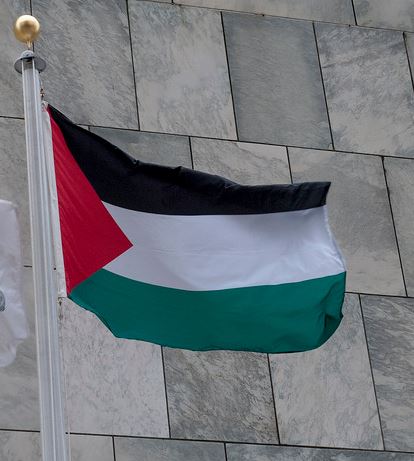
Palestinian Arabs in the Context of Russia’s Demand for Leadership of the Global South and Conflict with the West
PSCRP-BESA Reports No 102 (Dec 11, 2024)
Vladimir Putin’s second presidential term (2004–2008) was marked by Moscow’s obvious desire to regain its status as a global superpower, which had been lost by the Soviet Union as a result of its defeat in the Cold War. The point of official departure from the former policy of open partnership with Western countries and close cooperation with NATO was the so-called 2007 Munich Speech of the Russian President and the invasion of Georgia that followed in August 2008. Moscow’s global claims gained momentum sharply after Russia’s annexation of Crimea in 2014, and received an even more refined doctrinal formulation after February 24, 2022.
A critical element of the Kremlin’s new doctrine, which represented a peculiar synthesis of neoconservatism and formally leftist Soviet ideology, was its anti-colonial aspect: the movement of the unprivileged countries of the Global South against the world economic and political dominance of the Global North, usually identified with the U.S.-led bloc of “old” and “old-new” Western democracies. From the point of view of the Russian leadership, such ideological constructs were to become the common denominator of the geopolitical, diplomatic and economic strategy of the international organizations that Moscow is building as a tool to confront the “collective West”. Notable among them is BRICS — an informal association of initially four non-Western states with rapidly growing economies, established in 2006 at the initiative of the Russian Federation, which has gradually expanded to nine member states, together accounting for 46% of the world’s population and 37% of global GDP.
Moscow’s bid for leadership in the global South also had an obvious Middle East dimension. Already at the beginning of the shift in Russia’s foreign policy, it was made clear there that Moscow was no longer willing to settle for the rather formal status of “co-sponsor of the Middle East peace process,” but intended to set the tone in the region. It is clear that with such an “anti-imperialist” vision, which, incidentally, is shared by ultra-leftist and radical-progressive circles in Western countries, the emergence of the subject of “Israeli colonialism” allegedly oppressing the “freedom-loving people of Palestine” in the official rhetoric of the Kremlin was a matter of time.
As a result, in late 2010s Russia’s initial practice of balancing and mediating between almost all actors involved in the Middle East conflict began to gradually change, and its final reformatting took place after October 7, 2023. This time Moscow almost openly supported Hamas as a satellite of Iran, Russia’s current closest partner in the Middle East.
Russia’s support for the Palestinian National Authority in the West Bank, whose leaders from the very beginning of the Russian military invasion of Ukraine in February 2022 have taken the side of Moscow, where they continue to repeat the long-exhausted formula about the creation of an independent Palestinian state with East Jerusalem as its capital as the only way to resolve the conflict in the Middle East. (In this context, the results of voting by PA residents with Russian citizenship in the March 2024 Russian presidential election are quite revealing. More than 90% of those who took part in the elections in the PA voted for Vladimir Putin, while Vladislav Davankov was the leading candidate among the Russian citizens who voted in Israel)
The appearance of the PNA/PLO and Hamas delegations at the next BRICS summit in Kazan in late October 2024 as honorary observer guests in the “BRICS plus/outreach” format was in line with this policy. The head of the Palestinian Authority Mahmoud Abbas (Abu Mazen) made the most of the arena graciously provided by the organizers and the sympathetic attention of the federal and local Russian press to accuse Israel of “genocide” of Palestinian Arabs, “ethnic cleansing in the Gaza Strip”, and other alleged “violations of international law”. He concluded by demanding that BRICS member states impose sanctions against Israel and expressed hope that “Palestine will be accepted as a member of BRICS” in the near future.
In fact, it is not so much the bilateral relations with the virtual “Palestinian state” that are important for Russia itself, but rather more significant things for Moscow – its attempts to intercept the status of the main sponsor of the “Palestinian cause” from the West in order to gain geopolitical regional and global advocacy perspectives. Apparently, it is within the framework of such a strategy that the Soviet rhetoric about the alleged “pivotal nature of the Palestinian-Israeli conflict for the entire situation in the Middle East” and its “key role in the major regional crises threatening the security and stability of the region” is being revitalized.
Russian society, which until recently was generally favorably disposed toward Israel, has embraced the revival of propaganda clichés that seemed to have been long gone: according to polls, the percentage of Russians sympathizing with the Palestinian Arabs today is many times higher than the percentage of those sympathizing with the Jewish state. In fact, this was not a big surprise. Data collected over 26 years of sociological observations by the authoritative Moscow-based Levada Center showed that although the majority of Russians do not support either side in the Palestinian-Israeli conflict, since 2011 there has been a gradual increase in the share of respondents whose sympathies are on the side of the Palestinian Arabs, while at the same time the number of respondents who support the Israelis has been decreasing. By October 2024, the level of support for Palestinian Arabs exceeded the level of support for Israelis by 4.5 times (28% and 6%, respectively), while 13 years ago the ratio was inverse.
However, also in 2011 there was an absolute maximum — more than 70% — of respondents who did not express sympathy for either side in the conflict. In October 2024, the share of such respondents in Russia amounted to 57% — almost identical (56%) to the share of Americans who chose the same answer option in a parallel survey by the Chicago Council on Global Affairs. At the same time, while the share of those who found it difficult to answer was four times lower than among respondents in Russia, the share of Americans who supported Israel (31%) was five times higher than the share of Russians (6%), among whom the number of those who sympathized with the Palestinians was, on the contrary, 2.5 times higher than among those who sympathized with the Israelis (28% and 11%, respectively).
In light of these data, it is not surprising that the share of American respondents who believe that Israel is protecting its interests in the current conflict and its actions are justified is more than twice as high (32% and 14%) as the share of Russians who share this opinion. But among those who chose the statement “Israel has gone too far and its actions are not justified,” the split was the opposite: 59% of the Russians surveyed and 34% of the Americans thought so.
The fundamental question — What is going to be “the day after”? — eventually leads the debate to the problem of establishing a Palestinian state, which in the romantic period of the Norwegian Accords of 1993–1997 was considered in by many to be the optimal solution to the Palestinian Arab problem and the trigger for ending the almost century-long Arab-Israeli confrontation and the Middle East conflict as a whole. While the idea of resolving the Palestinian-Israeli conflict according to the Oslo model (“two states for two peoples”) has clearly exhausted itself long ago, this formula is still too entrenched in international political and diplomatic discourse to be abandoned without severe consequences for the strategies based on it, the careers built on it, and the diplomatic, political and economic resources invested in it. And it is in this capacity that it remains a notable geopolitical and geostrategic factor.
It seems that public sentiments in the two countries quite accurately reflect the local media agenda: rather diversified in the United States, and relatively homogeneous, with the dominance of pro-government media, in Russia. At first glance, the opinions of Americans and Russians are completely identical on this point: 49% of respondents in both the American and Russian samples were in favor of the creation of an independent Palestinian state. At the same time, the number of those who were against the creation of such a state in the United States (41%) was slightly less than those who were in favor, while in Russia this number was three times less (14%).
However, if for the United States and its allies this subject, in one way or another, mistakenly or not, is still seen as one of the ways to solve the problem, for Russia and its allies it is hardly more than an active propaganda resource and a tool of geopolitical confrontation with the “global West” and competition with China, Turkey and the Saudi bloc for influence in the Middle East.
Kazakhstan And Brics: Cooperation Without Participation
PSCRP-BESA Reports No 99 (Nov 26, 2024)
Kazakhstan refuses to join BRICS, an organization that Russia (and to some extent China) sees as an alternative to the Western-centric world order. Clearly, such a decision inevitably invites retaliatory pressure from Russia. To offset this to some extent, and for a number of other pragmatic reasons, Kazakhstan continues to actively participate in BRICS+ activities (the organization’s interaction with the Global South). This was evidenced by President Tokayev’s participation in the 16th BRICS Summit in Kazan, Russia, which took place October 22–24, 2024. Prior to the summit, Astana received an invitation from Russia to join BRICS, but declined.
What does this position mean in the context of Kazakhstan’s relations with the two key BRICS members, Russia and China? This is a natural manifestation of Kazakhstan’s multi-vector foreign policy. This policy is a strategic approach aimed at balancing relationships with leading world powers, including Russia, while preserving sovereignty and advancing national interests. While maintaining close ties with Russia based on economic dependence, cultural and historical bonds, and security cooperation, Kazakhstan is making efforts to avoid excessive reliance on Moscow. Kazakhstan is developing relations with China, the European Union, the United States, and Turkey. This diversification reduces vulnerability to Russian dominance. Kazakhstan has taken a balanced approach to key international issues related to Russia, such as Russia’s invasion of Ukraine in 2022. Kazakhstan’s relations with Russia in the context of the Russia-Ukraine armed conflict reflect a delicate balancing act driven by Kazakhstan’s commitment to its sovereignty, regional stability, and balanced multi-vector foreign policy. The war has put the bilateral relationship to the test as Kazakhstan seeks to distance itself from Russia’s actions while maintaining critical ties stemming from shared history, geography, and economic interdependence. Through initiatives such as the Trans-Caspian International Transport Route, Kazakhstan seeks to bypass Russian-controlled trade routes.
Kazakhstan’s relations with China are yet another critical component of its foreign policy. Kazakhstan’s ties with China are driven by economic pragmatism, regional cooperation and efforts to create a counterweight to Russian dominance, while carefully managing public concerns about China’s growing influence. As a result, Kazakhstan remains vigilant in balancing Chinese influence and partnerships with other countries to safeguard its sovereignty and maintain a diversified foreign policy approach.
Kazakhstan’s engagement with BRICS reflects its foreign policy approach, which aims to diversify partnerships with leading global and regional powers while maintaining balanced and pragmatic relations. Although Kazakhstan is not a member of BRICS, it views this grouping as an important platform for fostering economic cooperation, multilateralism and collaboration on global issues.
Kazakhstan’s interest in BRICS is aligned with its desire to reduce its dependence on any single power, such as Russia or China, and to expand international partnerships. Kazakhstan has strong economic ties with BRICS members, especially China and Russia, and also with India. Kazakhstan can also use its participation in regional platforms such as the Shanghai Cooperation Organization (SCO), of which China, Russia and India are also members, to align with BRICS-related initiatives.
Although Astana is not currently interested in full membership in BRICS, Kazakhstan may qualify for observer status or limited participation in BRICS+ initiatives.
Kazakhstan’s decision not to join BRICS, while President Kassym-Jomart Tokayev attended the BRICS summit in Kazan, reflects a calculated move consistent with the country’s multi-vector foreign policy. By refraining from joining BRICS, Kazakhstan maintains a neutral position in the global power dynamics. Joining BRICS could be perceived as aligning too closely with the organization’s dominant members, China and Russia, which could alienate Kazakhstan’s Western partners and other allies. Kazakhstan values its sovereignty and avoids being drawn into the political agenda of any bloc, especially one like BRICS, which often positions itself (mainly due to Moscow’s position) as a counterweight to Western-led institutions.
There are many other reasons for this decision. It allows the country to benefit from partnerships with BRICS countries, such as trade and investment opportunities, without being bound by its policies or decisions. Besides, Kazakhstan already cooperates with BRICS members such as Russia, China and India through organizations like the Eurasian Economic Union (with Russia) and the Shanghai Cooperation Organization (with Russia, China and India). This reduces the need for formal membership in BRICS. In recent years, Kazakhstan has also prioritized strengthening regional cooperation in Central Asia, working closely with neighboring countries such as Uzbekistan and Kyrgyzstan. Joining BRICS could shift the focus away from these regional goals. While BRICS membership may expand trade opportunities, Kazakhstan seeks to diversify its economy by engaging with a wider range of partners, including Western countries, South Korea and Japan, as well as BRICS countries. Public opinion in Kazakhstan is cautious about deepening ties with Russia and China, the two dominant players in BRICS. Joining BRICS, of which Russia is a key member, could undermine Kazakhstan’s neutrality in the Russia-Ukraine conflict.
Tokayev’s attendance at Kazan summit reflects Kazakhstan’s interest in exploring partnerships within the BRICS+ framework, which permits non-members to engage in specific initiatives. This pragmatic approach allows Kazakhstan to selectively participate in economic and development projects without full membership. Tokayev’s visit underscores Kazakhstan’s commitment to multilateral diplomacy and its role as a bridge between different geopolitical blocs.
Since the decision of Kazakhstan’s leadership was perceived by the Russian authorities as yet another refusal to follow Moscow’s lead, Russia responded by intensifying the trade war that is slowly being waged between the member countries of the Eurasian Economic Union. On October 17, 2024, Moscow imposed restrictions on import of tomatoes, peppers, fresh melons, wheat, flax seeds and lentils from Kazakhstan. Earlier, on October 2, Russia suspended the transit and import of grain from Kazakhstan. The Russian measures were a response to Kazakhstan’s August 2024 ban on wheat imports, including from Eurasian Economic Union member states. Kazakhstan justified this decision by the need to sell off its own grain stocks, which were not in demand due to cheaper competition from Russian producers.
It is worth noting that since 2022 Russia has been applying various forms of economic pressure on Kazakhstan. Russia has repeatedly interrupted the transit of Kazakh oil through the Caspian Pipeline Consortium (CPC). These disruptions occurred in mid-2022 and early 2023, affecting Kazakhstan’s oil exports to Europe. Russian control over key energy transit routes has allowed Moscow to exert pressure on Kazakhstan’s plans to increase oil exports to Germany as an alternative to Russian supplies.
This pressure from the Kremlin emphasizes that Kazakhstan has to balance preserving its sovereignty with its multi-vector foreign policy while maintaining deep economic and political ties with Russia.