
Theme - Central Asia
Monthly Monitoring of Analytical Publications on Post-Soviet Conflicts
PSCRP-BESA Reports No 234 (September 29, 2026)
August is traditionally considered a month when academic activity grinds to a halt—a trend that applies particularly to publishing. It is precisely in August that reputable journals make room for publications with unusual or even exotic themes, and authors find the time to work on such pieces. In this edition of our monitoring report, we have not strayed beyond the scope of conflicts in the post-Soviet space—and yet, we will be discussing epic heroes, artificial intelligence systems in public service, and medical education amidst political instability.
The article “Multilingual Education in Kazakhstan: Policy and Practice,” authored by Kulpash Koptleuova of Baishev University, Akhmaral Khairzhanova of Kh. Dosmukhamedov Atyrau University (corresponding author), Kamar Aldasheva of Abai Kazakh National Pedagogical University, and colleagues Kulyash Bainiyeva, Alla Leonova, and Gulim Saiynova, appeared in the International Journal of Society, Culture & Language in August 2026. It offers a timely examination of Kazakhstan’s language education policy as an instrument of nation-building and conflict management in a multiethnic post-Soviet state.
The study centers on how official discourses and institutional measures shape the roles of Kazakh as the state language, Russian as the language of interethnic communication, and English as the vehicle of global integration. The authors ask what policy discourses, language ideologies, and status-planning mechanisms define Kazakhstan’s educational language regime, and how far official statistics reflect the stated goal of balancing the three languages. Their method is qualitative document analysis of the Constitution, the 2003 Law on Languages, the State Program for the Development of Education and Science 2020–2025, the 2023 Concept for preschool and secondary education, CLIL guidelines, and national statistical reports, including the 2021 census and 2023 sociological surveys on language proficiency. Following a six-phase thematic procedure adapted from Braun and Clarke, they identify five interlocking themes: the ideological framing of the “Trinity of Languages,” the construction of language hierarchies through status planning, mechanisms of pedagogical implementation, teacher preparation as a persistent challenge, and the tension between nation-building and global competitiveness.
The analysis reveals that the “Trinity” is not a neutral technical arrangement but an ideological construct that privileges Kazakh symbolically while preserving Russian’s functional dominance and casting English in instrumental terms. Constitutional and statutory provisions place Kazakh at the apex, yet Russian retains de facto primacy in administration, education, and everyday life, with 90.6 percent overall proficiency. English has advanced modestly—29 percent of adults report some competence—but advanced command remains limited. Statistical trends confirm a steady expansion of Kazakh-medium schooling and higher education, from roughly 37 percent of students in 1993 to over 70 percent of recent school graduates, yet the authors underscore the uneven rollout of trilingual instruction, the conflation of basic CEFR B1 proficiency with genuine CLIL pedagogical capacity, and the absence of transparent criteria for institutional readiness. These gaps reproduce regional and resource asymmetries, leaving the policy’s equity claims only partially realized.
For scholars of the post-Soviet space, the article contributes a carefully documented case of how language planning seeks to prevent interethnic conflict while consolidating statehood. Its relevance to Israeli academic readers lies in the parallel challenges of managing linguistic diversity within multiethnic societies, the strategic use of education to foster social cohesion, and the delicate balance between national identity and international competitiveness—issues that resonate with Israel’s own experience of nation-building amid competing cultural claims and its growing engagement with Central Asian partners. By illuminating both the achievements and the structural tensions of Kazakhstan’s trilingual project, the study supplies a nuanced lens through which to view language as a potential site of both conflict and accommodation in the wider post-Soviet region.
***
Artem Hmelnykov of Taras Shevchenko National University of Kyiv and Nataliia Khoma of Lviv Polytechnic National University examine the conceptual interdependence of local democracy and local political management in an article published in the Baltic Journal of Economic Studies, volume 12, number 1, 2026. Drawing on a neo-institutional approach, the authors treat local democracy as a value-institutional dimension centred on citizen participation, legitimacy of authority, transparency and accountability, while presenting local political management as the organisational-managerial dimension concerned with the development, adoption and implementation of decisions at the territorial level. Their working hypothesis holds that local democracy supplies the institutional foundation of procedures, norms and practices that confer legitimacy and participatory quality on local governance, and that political management in turn supplies the technologies, competencies and mechanisms through which democratic principles are realised.
The analysis proceeds by first mapping the regulatory and legal prerequisites that enable genuine local democratic institutions—constitutional guarantees of self-government, statutes regulating referendums, public hearings, electronic petitions and participatory budgeting, anti-corruption standards, inclusion norms and financial transparency rules. These elements together constitute the “operating environment” within which management operates. The authors then formulate a dialectical relationship: democracy shapes the rules and opportunities for management, while the quality of management either strengthens trust, participation and institutional resilience or, conversely, undermines them through bureaucratic insulation or opacity. A concise conceptual formula crystallises this mutual dependence: local democracy provides the institutional, value-based and procedural foundation; local political management, resting on that foundation, ensures the formulation and execution of decisions; together they constitute a coherent system of democratic community governance.
Particular attention is given to the prospective post-war reconstruction. Under wartime conditions, local democracy adapted by prioritising mobilisation, solidarity and secure online and offline participation, while local political management performed critical crisis functions—evacuation coordination, defence support, assistance to displaced persons and rapid infrastructure repair. The authors argue that the legitimacy of these managerial actions rested on residual democratic trust. Looking ahead, they contend that reconstruction will amplify the same interdependence: large-scale resource allocation, priority-setting and integration of veterans and returnees will require inclusive consultation, public oversight and budgetary transparency if they are to avoid corruption, social discord and loss of legitimacy. Without robust democratic institutions, even well-funded programmes risk inefficiency; without competent management, democratic procedures remain empty formalities.
The study’s contribution lies in reframing two concepts usually treated in isolation as mutually reinforcing elements of contemporary local governance, and in demonstrating the continued validity of this coordinate system under conditions of existential conflict and recovery. For Israeli academic readers concerned with post-Soviet conflicts, state resilience and the management of contested territories, the analysis offers a timely reminder that the durability of local institutions under external pressure is inseparable from the quality of the democratic-managerial nexus that sustains them. The Ukrainian case illustrates both the vulnerability and the adaptive potential of that nexus, providing comparative insight into how communities maintain governance capacity amid war and prepare for reconstruction without sacrificing legitimacy.
***
Neda Atanasoski and Redi Koobak’s article “Automated Myth and the Postsocialist Digital State: The Imperial Trick of the Kratt AI Initiative in Estonia,” published in Imaginations: Journal of Cross-Cultural Image Studies, volume 17, number 1, 2026 (pages 131–165), examines Estonia’s national strategy for incorporating artificial intelligence into public services. The authors analyze the state’s decision to name these systems after the kratt, a mythic servant from Estonian folklore constructed from everyday objects and animated through supernatural means, which turns on its master when left idle. They advance the concept of “automated myth” to describe folklore embedded in AI systems that naturalizes the link between technological progress and liberal democracy.
The study addresses how cultural narratives shape AI governance in a postsocialist context. Methodologically, the authors combine Roland Barthes’s understanding of myth as depoliticized speech with Evgeny Morozov’s critique of techno-solutionism. They examine state promotional materials for Bürokratt, the world’s first public-service AI virtual assistant, alongside two artistic responses: Eugénie Baccot and Cyril Abad’s digital photo essay The Kratt Metaphor (2024), commissioned for Tartu 2024, and Rasmus Merivoo’s horror-comedy film Kratt (2020). This approach reveals how policy branding and cultural interfaces construct national identity while obscuring geopolitical entanglements.
The central conclusion is that the automation of the kratt myth performs an imperial trick. It indigenizes technofutures as Estonian national heritage, presenting AI as an organic extension of local folklore and identity, while simultaneously masking the influence of Silicon Valley capitalism that has driven postsocialist digital reforms since the 1990s. The authors argue that this process erases the Soviet technological foundations of the present, depoliticizes citizens by recasting them as consumers of efficient services, and naturalizes a model of governance oriented toward global competitiveness and foreign investment. Analysis of Bürokratt shows how the state contrasts the new transparent digital servant with the opaque Soviet bureaucrat, yet the system ultimately aligns Estonia with transnational capital through initiatives such as e-residency. The photo essay aestheticizes technology as continuous with sacred Estonian landscapes and rituals, thereby defanging potential risks, whereas the film satirizes techno-utopianism by exposing hidden costs, including exploited labor and residual imperial relations.
The article contributes to both postsocialist studies and critical AI research by demonstrating that folklore operates as an infrastructure of state power in the era of algorithmic administration. For an Israeli academic audience concerned with transformations in the post-Soviet space, the work illuminates how digital statecraft and techno-nationalism reconfigure sovereignty and identity after the dissolution of the Soviet Union. It highlights cultural mechanisms that sustain new forms of imperial entanglement under the appearance of national innovation and democratic service, offering comparative insight into the long-term political effects of technological modernization in the region.
***
Veja Lianga’s master’s thesis, submitted on 1 August 2026 for the Erasmus Mundus Euroculture program jointly awarded by the University of Strasbourg and Uppsala University, examines the discursive construction of opposition to the Istanbul Convention in Lithuania. Supervised by Sandrine Beaudry (Strasbourg) and Andreaz Fagerberg (Uppsala), the work is framed as an original contribution to the study of anti-gender politics in Central and Eastern Europe.
The central research question asks how Lithuanian political actors discursively constructed “gender” (translated as “social gender”) in opposing ratification of the Council of Europe Convention on Preventing and Combating Violence against Women and Domestic Violence between 2018 and 2024, and how these constructions relate to the broader European anti-gender mobilisation and the restriction of women’s rights. Drawing on literature on the anti-gender movement (Kuhar and Paternotte, Graff and Korolczuk), Europeanization theory, norm contestation, post-Soviet historical legacies, and moral-panic frameworks (Cohen, Butler), the author employs qualitative critical discourse analysis. Primary material consists of quotations from politicians, political spokespeople and religious figures published in mainstream Lithuanian news outlets. The analysis identifies six recurring discursive constructions: gender as ideology, gender as moral threat (especially to children and family), gender as foreign imposition, legal/pragmatic irrelevance, confusion, and cultural irrelevance.
Lianga demonstrates that anti-ratification discourse systematically portrays “gender” as an ideological project that endangers traditional family structures, national sovereignty and cultural identity. These framings closely mirror rhetoric circulating in other EU member states and in Russian discourse, positioning the Istanbul Convention as a symbolic battleground for anxieties over European integration, social change and patriarchal order. The thesis argues that such constructions generate a moral panic that impedes the advancement of gender-equality measures and leaves gaps in protection against gender-based violence unaddressed. Lithuania’s specific post-Soviet and Catholic heritage intensifies the framing of “social gender” as an externally imposed threat, whether attributed to Brussels or residual Soviet influence. Counter-discourses exist but remain marginal within the political arena examined.
By focusing on a smaller Baltic state often overlooked in English-language scholarship that privileges Poland and Hungary, the thesis enriches understanding of how transnational anti-gender narratives are localised and adapted. For an Israeli academic audience interested in conflicts and identity politics in the post-Soviet space, the study offers insight into the mechanisms of norm contestation, the instrumentalisation of historical memory, and the entanglement of religious nationalism with resistance to European legal frameworks—dynamics that illuminate broader patterns of sovereignty claims and cultural security discourses across the region.
***
The syllabus under review, authored by Professor Julia Verkholantsev of the Department of Russian and East European Studies, outlines the intellectual framework and structure of the undergraduate course.
The course is offered at the University of Pennsylvania (Penn).It is a specialized Benjamin Franklin Seminar (BFS) that is currently scheduled for the Fall 2026. Although presented as a pedagogical document rather than a conventional monograph, it functions as a carefully reasoned scholarly intervention into the study of how medieval narratives and material culture have been mobilized to construct modern national identities across Central, Eastern, and Southeastern Europe.
The subject of the course is the phenomenon of “national antiquities”—genealogical origin stories, hagiographic traditions surrounding holy figures of national significance, and sacred objects such as crowns, manuscripts, and icons—and the ways these elements have shaped nationalist discourse from the nineteenth century to the present. Verkholantsev situates the inquiry against the backdrop of contemporary European political rhetoric that continues to draw on medieval sources to assert ethnogenetic claims, territorial entitlement, or historical grievance. The methodological approach is comparative and critical: students are guided to examine primary medieval texts and later historiographic traditions, distinguishing between information, interpretation, argument, and significance, while remaining alert to the methodological weaknesses that allow such materials to be instrumentalized. The syllabus emphasizes active, AI-free engagement with approximately thirty to sixty pages of reading per session, regular production of concise reading notes, and two in-class assessments derived largely from students’ own analytical takeaways. The culminating project requires each participant to curate an imagined national museum, selecting and arranging a limited set of antiquities so as to construct a coherent narrative of national identity.
The central conclusions advanced by the syllabus are that national pasts are not simply recovered but actively constructed, that medieval materials acquire political force only through successive layers of interpretation, and that scholarly scrutiny of these layers is essential for dismantling the uncritical authority they still command in public discourse. Verkholantsev argues that nineteenth- and twentieth-century philological and historiographic scholarship transformed origin myths, royal sainthood, and sacred objects into instruments of nationalist mobilization; the task of contemporary scholarship is therefore to expose the selective and often anachronistic character of those transformations. Case studies of Bohemia and Moravia, Hungary, Poland, the Rus’ lands and the Grand Duchy of Lithuania (encompassing modern Lithuania, Ukraine, and Belarus), and Croatia illustrate how the same medieval repertoire—Attila and Scythian ancestry, St. Wenceslas and the Knights of Blaník, the Holy Crown of St. Stephen, the Częstochowa icon, Varangian legends, Glagolitic script—has been differently appropriated to serve distinct national projects.
The scholarly contribution of the syllabus lies in its insistence on treating national antiquities as objects of critical rather than celebratory study. By combining ethno-symbolic approaches to nationalism with close attention to medieval textual and material evidence, it offers a model for historicizing the very claims that continue to structure political debate in the region. For an Israeli academic audience concerned with conflicts in the post-Soviet space, the syllabus is particularly relevant. Its examination of competing origin narratives in Ukraine, Belarus, and Lithuania, and of the symbolic resources deployed to legitimize or contest political boundaries, supplies analytical tools for understanding how historical memory shapes contemporary identity conflicts. The neutral, source-critical posture modeled throughout the course encourages precise discussion of competing national myths without recourse to partisan labeling, thereby enriching scholarly discourse on the region’s enduring tensions.
Orhan Gültekin, a doctoral student at the Social Sciences University of Ankara’s Institute of Area Studies, published the article “The Social and Political Impact of Turkish TV Series in Central Asia in the Context of Cultural Diplomacy” in the International Journal of Idil-Ural and Turkistan Studies, volume 8, issue 2, pages 337–353, in 2026. The study examines the influence of Turkish television series on the Central Asian Turkic republics of Kazakhstan, Kyrgyzstan, Uzbekistan, and Turkmenistan, framing these productions as instruments of soft power and cultural diplomacy in the post-Soviet environment.
The research rests on a qualitative literature review and secondary-data analysis that draws together sectoral reports, academic studies, field inquiries, and institutional publications. Gültekin organizes the inquiry around a central question: how Turkish series shape political perceptions, everyday social practices, and collective identity constructions in these societies, and through which mechanisms—linguistic affinity, shared religious and historical references, and a synthesis of modern and traditional values—they operate. The analysis proceeds along three interrelated dimensions: the political, the social, and identity formation.
At the political level the author argues that the series transmit Turkey’s experience of modernization and its democratic values, thereby raising the visibility of a “Turkish model” and lending societal legitimacy to interstate diplomatic ties. Socially, linguistic closeness and common cultural codes allow the productions to affect consumption patterns, family norms, and lifestyle preferences; historical dramas reinforce notions of shared ancestry and unity. In the realm of identity, the series supply a unifying reference point of “Turkishness” for populations still negotiating national self-understanding after the dissolution of the Soviet Union. Gültekin concludes that Turkish television drama functions not merely as entertainment but as one of the most effective tools of cultural diplomacy, amplifying Turkey’s regional influence, catalyzing social change, and nourishing a common cultural foundation. The study introduces the notion of “dizi diplomacy” as a contribution to the broader literature on soft power.
For scholars concerned with the post-Soviet space the article offers a concrete case of non-state cultural actors shaping political and social realities in Central Asia. It demonstrates how media flows can reinforce or reconfigure identity narratives in societies that emerged from Soviet institutional frameworks, and how such flows interact with state-led initiatives such as those of TİKA and the Organization of Turkic States. The findings therefore illuminate the softer dimensions of regional realignment and the ways cultural proximity can translate into durable political capital—issues of direct interest to Israeli academic and policy communities that monitor stability, identity politics, and external influence across the former Soviet periphery.
***
The article “Digitalization of medical and healthcare education in a Low- and middle-income country: a mixed-method case study of institutional transformation at Yerevan State Medical University,” authored by Karine Sargsyan and colleagues affiliated with Yerevan State Medical University, the Medical University of Graz, Cedars-Sinai Medical Center, and related Armenian institutions, appeared in Frontiers in Digital Health in August 2026. It examines the deliberate institutional shift toward digital modes of medical training in Armenia, a post-Soviet low- and middle-income setting marked by infrastructural constraints, a lingering Soviet-era pedagogical legacy, and recurrent regional disruptions.
The study is framed as a mixed-methods institutional case study covering the period 2019–2023. Its central subject is the translation of constructivist and activity-based pedagogical theories into practical digital infrastructure, faculty development, student digital literacy programs, simulation-based training, telemedicine, tele-education, and hybrid learning formats. The authors pose the question of how a resource-limited medical university can sustain educational continuity and quality amid pandemic pressures and regional tensions, including the conflict in Artsakh. Methodologically, the work rests on an institutional transformation framework that sequences strategic vision, faculty digital-competency training, infrastructure development, student engagement, digital interventions, assessment, and quality assurance. Supporting evidence is drawn from an anonymous electronic survey of 513 undergraduate medical students (response rate 12.6 percent of the eligible cohort), employing eleven Likert-scale items and optional open comments. Analysis remains descriptive, reporting frequencies, percentages, and mean scores without inferential testing, and is supplemented by institutional observation and process documentation.
The principal findings indicate high levels of student-perceived satisfaction, with an overall positive response rate of 90.2 percent and mean scores ranging from 4.26 to 4.51 on a five-point scale. Respondents reported gains in theoretical knowledge, clinical skills confidence, digital literacy, and appreciation of hybrid flexibility; simulation training received particularly strong endorsement among clinical-year students. Technical barriers scored lowest, suggesting they were not perceived as insurmountable. Qualitative comments praised simulation centers and telemedicine sessions while noting occasional internet instability and the need for further faculty digital preparation and bilingual materials. The authors position these perceptual outcomes as evidence that a coherent institutional strategy—rather than technology alone—can overcome infrastructural, pedagogical, and equity obstacles. They stress that the results reflect self-reported experience rather than objectively measured learning or patient-care gains, and they explicitly limit claims of generalizability to a single institutional trajectory.
In scholarly terms the study contributes a concrete, context-sensitive roadmap for digital transformation within the post-Soviet medical-education landscape. It demonstrates that strategic alignment of mission, sustained faculty development, active student participation, and modest infrastructure investment can generate resilient hybrid and remote educational capacity even under conditions of regional instability. For an Israeli academic audience concerned with conflicts and institutional resilience across the post-Soviet space, the Armenian case offers instructive parallels: the capacity of higher-education institutions in geopolitically exposed environments to maintain professional training pipelines, to mitigate brain-drain pressures, and to preserve human-capital continuity during crises. The documented emphasis on simulation, tele-education, and quality-assurance mechanisms underscores practical pathways for sustaining medical expertise when physical access is constrained—an issue of enduring strategic relevance for regional security and public-health preparedness.
Transactional Diplomacy and Business Style: The Trump Administration in Central Asia
PSCRP-BESA Reports No 203 (May 15, 2026)
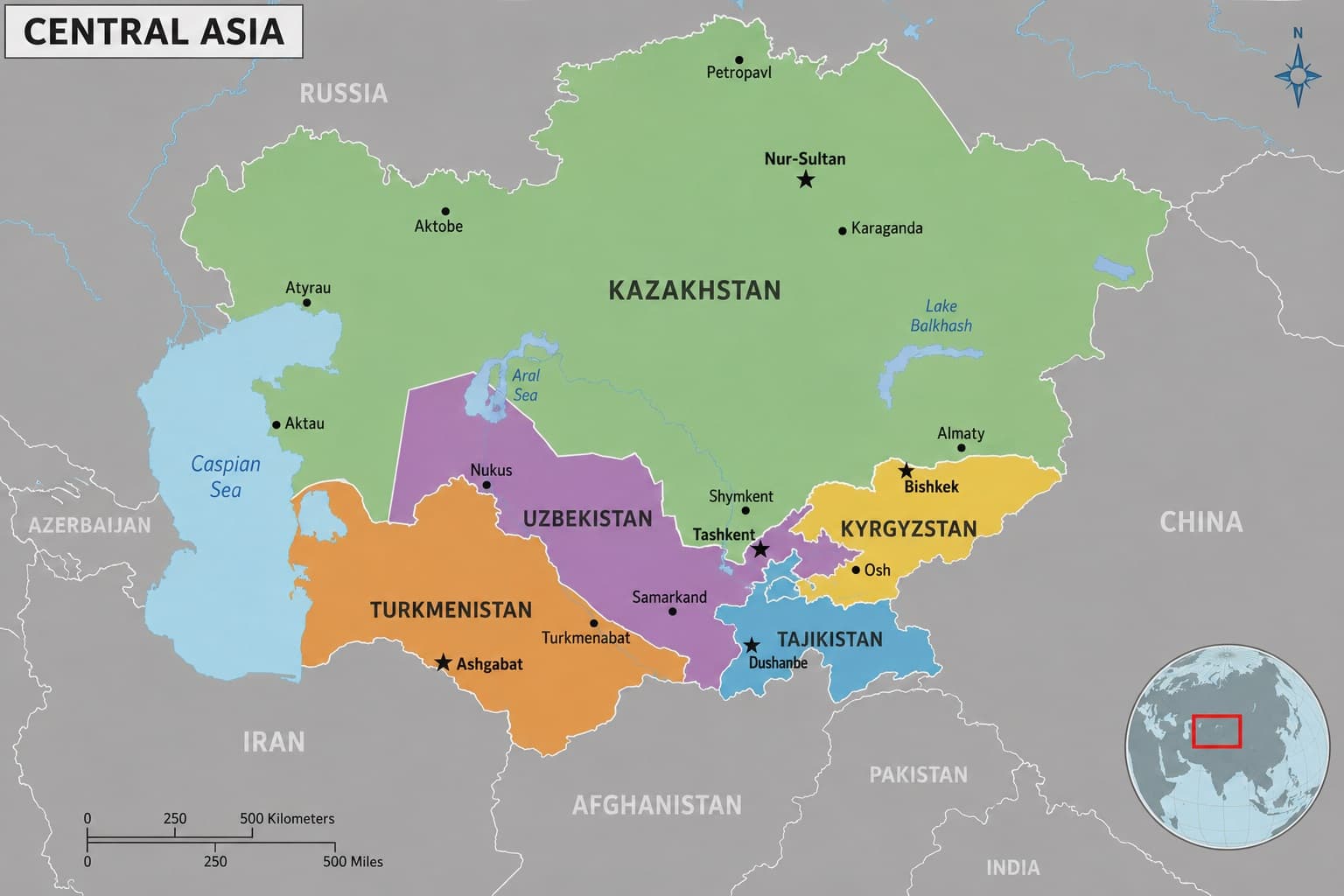
For more than two decades, U.S. policy in Central Asia and the Caspian region was closely linked to the military operation in Afghanistan. The region was viewed primarily as a logistical and political periphery of the Afghan campaign: supply routes ran through it, transit agreements were concluded, and counterterrorism cooperation was developed. The withdrawal of U.S. troops from Afghanistan in August 2021 marked not only the military end of the campaign, but also the end of an entire era of U.S. regional policy. The Afghan factor ceased to be the structural element of the American presence in Central Asia. A strategic vacuum emerged: whereas security had previously defined the agenda, after 2021 Washington no longer had an obvious new “anchor” for a systematic policy in the region. Under these circumstances, the key question is as follows: what will become the new driver of U.S. strategy in Central Asia and the Caspian region? In 2026, the United States Strategy for Central Asia 2019–2025: Advancing Sovereignty and Economic Prosperity expired. Accordingly, a process is underway to formulate a new U.S. strategy. Below, I analyze the new trends that may form a strategy that has in fact been taking shape under the Trump administration in Central Asia and the Caspian region. Many elements of this new policy were already outlined in the 2019–2025 strategy and in the policy of the previous administration; however, the specific features of the Trump administration’s foreign policy have clearly accelerated the transition to a new model of relations. This model can be described as one based on business transactions and flexible diplomatic formats.
Kazakhstan and Uzbekistan as the key Eurasian players in the Board of Peace
Kazakhstan and Uzbekistan played the role of important participants at the inaugural summit of the Board of Peace on February 19, 2026. They were the only representatives of the post-Soviet space (along with Azerbaijan and Armenia). They also represented (together with Azerbaijan) a distinct Eurasian, Turkic and Former Soviet cluster of participants in this organization. Kazakhstan and Uzbekistan were the only Soviet countries that assumed certain financial, political, and even military commitments during this summit. Kazakhstan agreed to participate in the reconstruction of Gaza, undertook financial commitments, and expressed its readiness to send peacekeepers. Uzbekistan declared its readiness to take part in the construction of housing, hospitals, schools, and kindergartens.
In the context of the evolving relations between the Trump administration and these three countries, this carries strategic significance. The participation of the three states signals their willingness to deepen dialogue with the United States on terms that do not imply military-political confrontation with Russia or China — a matter of fundamental importance for the states of Central Asia. All of them pursue multi-vector foreign policies, seeking to maintain good relations simultaneously with the West, Russia, and China. The active participation of the regional countries in the inaugural summit of the Board of Peace demonstrates their readiness to work with Washington outside traditional multilateral frameworks — such as the UN. The emphasis of U.S. foreign policy under the current administration is shifting toward flexible diplomatic formats, business transactions, and infrastructure deals. The countries of Central Asia and the Caspian region are actively seeking to integrate into this model, adapting their multi-vector diplomacy to it.
The renewed interest of the current U.S. administration in Central Asia
It is important to emphasize that the Board of Peace summit continues and consolidates an already existing trend in U.S. relations with Kazakhstan and Uzbekistan as two regional leaders of Central Asia.
The most recent U.S.–Central Asia summit in the C5+1 format took place on November 6, 2025, in Washington under the chairmanship of President Donald Trump. It demonstrated a shift toward concrete economic deals. The emphasis was placed on critical minerals, energy, transport infrastructure, and supply chains.
Uzbekistan announced its intention to purchase American goods and services worth approximately $100 billion over the next decade and about $35 billion in the next three years. Kazakhstan presented a package of 29 agreements, including joint investments totaling nearly $17 billion. At the same time, Kazakhstan announced its support for the Abraham Accords, which creates a favorable political and diplomatic backdrop for economic cooperation with the United States, as well as with Israel as Washington’s key Middle Eastern ally.
In December 2025, Donald Trump invited the presidents of Kazakhstan and Uzbekistan to participate as guests in the G20 summit in Miami in 2026, thereby elevating their international status.
The above-described line of the Trump administration toward flexible diplomacy based on business deals became even more evident during the visit of U.S. Special Representative for South and Central Asia Sergio Gor to Kyrgyzstan and his participation in the B5+1 summit in Bishkek on February 4–5, 2026. “B5+1” is a two-day business forum that brought together representatives of business communities and government bodies from Central Asian countries and the United States. During the forum, discussions focused on the development of agriculture, tourism, the financial and banking sector, transport and logistics, e-commerce and information technology, as well as cooperation in the field of critical minerals.
Gor noted that the “B5+1” forum in Bishkek became a logical continuation of the “C5+1” summit in Washington. He also stated that the United States would strengthen its economic presence in the countries of Central Asia in the coming years. At the same time, the key instrument of engagement will be the private sector. The U.S. government intends to support American businesses operating in the region in order to reduce investment risks. Gor also emphasized the role of TRIPP and the Middle Corridor in enhancing the economic interconnection between the South Caucasus and Central Asia.
Will the Middle Corridor Become “Western” Again Rather Than “Chinese” project?
The Middle Corridor (TITR – Trans-Caspian International Transport Route) connects China, Central Asia, the Caspian Sea, the South Caucasus, Turkey, and Europe. In recent years, it has gained additional relevance for the countries of Central Asia surrounded by the conflicts in Eastern Europe, Afghanistan and the Middle East. In 2026, in particular, southern trade routes from Central Asia have become constrained due to the crisis surrounding Iran and internal instability in Afghanistan. Consequently, the importance of the Middle Corridor for the functioning of Central Asian economies has increased significantly.
From the perspective of geo-economic competition, it is important to note that although today the Middle Corridor is integrated into China’s Belt and Road Initiative, its institutional roots lie in the supported by the West TRACECA project, launched in the 1990s as a tool to ensure the economic independence of the newly independent states of Central Asia and the South Caucasus. This fundamental Western interest in the Middle Corridor persists today.
The intensification of U.S. policy in the South Caucasus (including the TRIPP project -Trump Route for International Peace and Prosperity) and Central Asia under current administration may restore the Western geo-economic dimension of the Middle Corridor and reduce the dominance of the Chinese aspect in the logic of this route. In this sense, the revitalization of the corridor can be seen as a kind of “return” of the Western agenda to Eurasian logistics, with significant geo-economic consequences.
Economic cooperation with the United States within the context of multi-vector foreign policy of Central Asian states
Cooperation with the United States in matters related to transport infrastructure not only serves economic interests but also aligns with the logic of the multi-vector foreign policies pursued by the countries of Central Asia. Through such cooperation, they do not enter into confrontation with China or Russia, while diversifying their foreign partnerships and strengthening their agency in the international arena.
China allows the states of Central Asia to pursue multi-vector foreign policies, provided that China itself remains one of their key vectors. The Middle Corridor — although ideologically and strategically not entirely favorable for Beijing — has significant practical economic importance for the Belt and Road project, particularly at a time when the war between Russia and Ukraine negatively affects the Northern Corridor, and the crisis surrounding Iran constrains the Southern route. Beijing would compete with Washington in Central Asia using geoeconomic instruments, which would be useful for the countries of the region.
Russia has traditionally viewed the Middle Corridor negatively, proposing the Northern route as an alternative. However, in the context of the war with Ukraine and the crisis in its relations with Europe, Russia cannot guarantee the uninterrupted functioning of the Northern route as a viable alternative for Central Asian economies. Moreover, Russia has traditionally anchored its position in Central Asia through military and security-based instruments, whereas China has projected its influence predominantly through economic penetration, infrastructure investment, and trade integration. Consequently, U.S. transaction-based engagement in the region increasingly places Washington in direct geoeconomic competition with China, not with Russia — not only over the development of the Middle Corridor, but also over the long-term configuration of Central Asia’s economic architecture.
Iran has historically taken the most negative stance toward any idea of transit across the Caspian Sea. This project competes with the North–South Corridor via Iran and also contributes to the distancing of the northern Eurasian neighbors from Iran. In the past Iran even attempted to block the division of the sea into national sectors for this purpose. However, under the current conditions of military crisis surrounding Iran, it will not be able to exert significant pressure on the countries of Central Asia. So, the degree of Iranian influence in Central Asia is much less than the influence of China or Russia. Therefore, Central Asian elites may afford serious disagreements with Iranian policy concerning cooperation with USA and Israel.
Conclusion. From a military logic to a logic of geoeconomic influence
If the Afghan era defined the nature of the American presence in Central Asia through security and military instruments, the geoeconomic model emerging under the current administration places strong emphasis on infrastructure, transit, resources, and flexible diplomacy. Formally embedding these three pillars in an articulated U.S. regional strategy would send a clear message to the Central Asian states that American engagement is not ad hoc or crisis-driven, but designed as a durable, long-term framework adapted to contemporary geopolitical realities.
The C5+1 summit in Washington on November 6, 2025, demonstrated the consolidation of the economic agenda as central to U.S. strategy. The focus on critical minerals, investment, and infrastructure became the core element of the dialogue. The Board of Peace (2025) further strengthened the trend toward flexible diplomatic engagement with the countries of the region.
For Kazakhstan, Uzbekistan, and other Central Asian states, it is fundamentally important today that engagement with the United States not be perceived as an anti-Russian or anti-Chinese geopolitical project. The geo-economic logic of cooperation with the United States and flexible engagement formats enables them to maintain balance within the framework of their multi-vector foreign policies. Thus, the demand of Central Asian states has aligned successfully with the new foreign policy emphases advanced by the Trump administration. The softer geoeconomic approach it proposes — compared to the period of the Afghan campaign — is the only politically acceptable format for the countries of Central Asia today.
At the same time, this policy allows for minimizing costs to American taxpayers while maximizing commercial benefits for U.S. investors. Moreover, it enables the United States to address many strategic objectives in a “containment-light” style. Washington is beginning to operate in Central Asia not through direct geostrategic containment of China, Iran, and Russia, as before, but through regionalization, trade, and infrastructure integration. At the same time, it is precisely in Central Asia and the Caspian region that Washington now has a realistic opportunity to engage China on symmetrical terms — through geoeconomic instruments capable of competing with Beijing’s model of outward economic expansion.
Paradoxically, despite the deep ideological differences between the Trump administration on the one hand and the overwhelming majority of European political elites on the other, the administration’s political style in several respects resembles European approaches to Central Asia. The European Union and individual European states operating in the region similarly prioritize pragmatic economic cooperation while avoiding large-scale geopolitical initiatives that could carry significant risks of conflict. That said, unlike the Trump administration, European policy in Central Asia also incorporates support for civil society and the promotion of European values.
For Israel, the Trump administration’s shift in Central Asia toward business-oriented initiatives and transactional diplomacy may prove broadly advantageous. Israel itself has pursued a comparable approach in the region. At present, Central Asian states are actively seeking to expand economic and diplomatic engagement with Israel. In this context, the administration’s operational style in the region can be seen as largely compatible with Israeli approaches.
From Official Neutrality to Public Narrative Wars: Central Asian Reactions to the Iran Conflict. Part 2. Epic Fury in the Social Networks: Central Asian Fusion
PSCRP-BESA Reports No 194 (April 4th, 2026)
Epic Fury in the Social Networks: Anti-Israeli and Anti-American Discourses
In the situation described above, a wide range of anti-Israeli and anti-American stereotypes have spread widely across social media. Numerous videos portraying the alleged “successes” of Iranian strikes against Israel and American forces have circulated widely, particularly in the Tajik-language online environment. More broadly, Iranian propaganda describing supposedly massive losses suffered by the United States and Israel tends to resonate with certain groups within the Central Asian segment of the internet, especially since it is often amplified by channels associated with Islamic fundamentalism or with Russian media networks. At the same time, it should be noted that a significant number of Russian propagandists, who are well-known in Central Asia, have publicly distanced themselves from Iran and emphasize that the war is economically advantageous for Moscow.
Various conspiracy theories have also spread widely in the region and across the broader post-Soviet space. For example, many users claim that the Pakistani airstrikes against Afghanistan were in fact orchestrated by the United States and/or Israel. This interpretation has been particularly widespread in Russia but it has also gained traction in Central Asia.
Many mythologized conspiracy narratives have entered the Central Asian information space through Western media and social networks. In particular, discussions of the current war frequently refer to the so-called “Epstein files.” Several versions of this interpretation circulate online. One of them has an anti-Trump orientation and claims that the war is being used to distract public attention, in a manner reminiscent of the plot of the film Wag the Dog. Another version takes an anti-Israeli form, asserting that Israel allegedly controls American politics through such mechanisms — a narrative that structurally reproduces older conspiracy tropes associated with the infamous forgery The Protocols of the Elders of Zion.
In some comments, even broader generalizations appear that question the democratic character of the political systems of the United States and Israel. Within such conspiratorial interpretations, these states are portrayed as being controlled by corrupt elites acting in the interests of hidden backstage forces. Such arguments reproduce a typical narrative found in conspiracy discourse about the “secret governance” of political processes.
Critical assessments also frequently appear in the comments, reproducing arguments common in a number of Western media outlets, where the legality of military action against Iran is questioned from the standpoint of international law. Discussions also often include criticism of the Arab Gulf states that is typical of Islamist and more radical anti-Western narratives. For example, one commenter writes:
“They are direct accomplices in an act of aggression against a sovereign state. Iran repeatedly issued official warnings to all the countries where these traitors, lackeys of the USA (written in the original in lowercase), have allowed American military bases to be deployed. Such is the fate of such piglets — Tabaki jackals (a reference to Rudyard Kipling’s The Jungle book). This is the natural right of a defending state according to the norms of international law. A country that hosts the aggressor’s military bases — from which strikes are launched, and where command centers, communications systems, surveillance equipment, radars, air defense systems, etc. are located — automatically becomes an accomplice to aggression, and therefore military facilities located in those countries become legitimate targets”.
Such arguments reproduce a widely circulated claim found in a number of anti-Western political narratives — that states allowing the deployment of U.S. military bases on their territory automatically become parties to armed conflicts involving the United States.
It is also noteworthy that the comment uses expressions such as “piglets” (podsvinki in Russian) and “Tabaki”. These metaphors are less characteristic of Middle Eastern propaganda rhetoric than of the Russian information space, where similar language has been used in political polemics, including in public discourse—albeit usually in reference to conflicts in Eastern Europe. From Eastern Europe also comes the insulting practice of writing the names of rival states with lowercase letters, e.g. usa instead of USA.
Finally, one can encounter arguments framed in the spirit of Samuel Huntington’s Clash of Civilizations. For example, some users claim that “the conflict is acquiring civilizational dimensions and Pakistan should threaten to transfer nuclear weapons to Iran in order to force the United States and Israel to stop the war”. This reflects the well-known notion circulating in the global information space about a common “Islamic nuclear bomb”.
Three Sources and Three Components of Anti-Israeli Sentiment in Central Asian Social Media
The examples discussed above illustrate that it is possible to distinguish three groups in Central Asia that express anti-Israeli and anti-American attitudes and that originate from fundamentally different external sources of influence. At the same time, these three informational influences often intersect and closely interact with one another.
These are: Islamist-fundamentalist discourse, Western left-radical discourse, and a Russian-language anti-Western discourse (which in some cases also carries anti-Semitic undertones).
Islamist-Fundamentalist Discourse. The first source of anti-American and anti-Israeli attitudes is connected with religious-political and Islamist narratives that circulate through Islamic media outlets, preaching networks, and social platforms. These narratives are frequently built around themes of solidarity within the Muslim world, support for Palestine, and criticism of Western intervention in the Middle East.
Studies of media discourse show that in Islamically oriented media, the Palestinian question is often interpreted through a religious and civilizational lens, which strengthens emotional mobilization among audiences and helps form durable political interpretations of the conflict.
Such narratives spread not only through traditional media but also through social networks and messaging platforms, which have become key channels for the circulation of politically and religiously framed information about conflicts in the Middle East. Research on digital communication shows that these platforms play an important role in forming transnational networks that support and disseminate political interpretations of international conflicts.
At the same time, within Central Asia the sources of such influence differ from country to country. In Kazakhstan, Kyrgyzstan, and Uzbekistan, these ideas tend to spread primarily through Arab and, especially, Turkish media, as well as through religious organizations and transnational Islamic online platforms. Erdogan-era Turkish political-Islamic media, for example, actively shape discourse around the Palestinian question, presenting it as a central element of broader political and religious solidarity within the Muslim world.
In Tajikistan, by contrast, Iranian informational and even direct political influence may be more visible due to linguistic and cultural proximity. This includes media platforms and cultural initiatives aimed at Persian-speaking audiences. In such cases, political and religious narratives spread through Persian-language information channels and religious networks, which distinguishes Tajikistan’s information environment from that of other Central Asian countries.
Western Pro-Iranian Discourse. A second source of such ideas is a Western pro-Iranian discourse that spreads through international activist networks, English-language social media, and global online platforms. This discourse takes different forms — here we focus primarily on its more radical interpretations, which draw on the concepts of anti-imperialism. In its most radical form, which also influences some anti-Western interpretations in Central Asia, these approaches portray Middle Eastern conflicts involving Iran as part of a broader struggle against “colonial” and “neo-colonial” structures of global power. Such arguments largely echo the official rhetoric of Iranian propaganda. According to some experts, the spread of this discourse is supported by covert Chinese financial backing.
These ideas circulate actively in English-language social media and are often absorbed by part of the younger audience in Central Asian countries, particularly among users oriented toward Western educational and cultural environments.
Russian Anti-Western Discourse. Another important source of the anti-Western narratives discussed above is the Russian information space, which continues to play a significant role in media consumption across Central Asia.
A large share of the region’s population regularly receives news and analytical commentary from Russian television channels, online outlets, and social media platforms. Within this discourse, the United States and Israel are frequently portrayed as key actors of the “collective West,” pursuing an aggressive foreign policy and seeking to preserve global hegemony. Consequently, international crises are often interpreted as the result of Western actions, while their opponents, Iran in this case, are presented as victims or participants in defensive struggles.
Such interpretations are actively disseminated through Russian-language media and the blogosphere and are easily transmitted into local debates in Central Asian societies. Despite the broad presence of Russian media in the region, however, I would rank Russian sources only third in terms of their influence on the formation of anti-Western and anti-Israeli discourse in Central Asia. Among Russian commentators, not only pro-Iranian positions are widespread but also a more moderate alternative perspective articulated by the press secretary of President Putin, Dmitry Peskov: “The war that is taking place is not our war… We must minimize the consequences of global upheavals for our economy and extract benefits where possible…”
The Intersection of Discourses. In the information space of Central Asian countries, where different informational influences intersect, these three types of narratives frequently overlap in practice. In the digital environment, users often reproduce arguments originating from different informational ecosystems simultaneously — for example, combining anti-Western interpretations from Russian media with rhetoric of Islamic solidarity and left-radical critiques of imperialism.
As a result, a hybrid information space is emerging in Central Asia in which ideas that originate in different geopolitical and ideological contexts mix together and are adapted to local political and cultural conditions.
Conclusion
The reaction of Central Asian states to the 2026 war between the United States, Israel, and Iran demonstrates a clear contrast between official diplomacy and the dynamics of public discourse. Governments across the region have adopted cautious neutrality, driven primarily by economic vulnerability, geopolitical constraints, and the long-standing tradition of multi-vector foreign policy. For Central Asian elites, maintaining balanced relations simultaneously with Russia, China, the West, and the Middle East remains a central strategic priority.
At the societal level, however, the situation is far more complex. Social media discussions reveal a fragmented public sphere in which different ideological, cultural, and geopolitical influences compete. Sympathy toward Iran is stronger in regions where Islamic identity or Persian cultural connections are more prominent, particularly in Tajikistan and parts of the Ferghana Valley, while societies shaped more strongly by the legacy of Eurasian nomadic culture tend to display weaker pro-Iranian sentiment. In most cases, however, these differences do not translate into open political confrontation between elites and society, unlike the deeper “elite–street” divide observed in parts of the Arab world.
The analysis also demonstrates that anti-Israeli and anti-American narratives circulating in Central Asian social media originate from three overlapping external information ecosystems: Islamist-fundamentalist discourse, Western radical pro-Iranian discourse, and Russian-language anti-Western (and sometimes simultaneously anti-Semitic) media narratives. Although these discourses differ in origin and ideological foundations, they frequently merge within the digital environment, producing hybrid interpretations of international conflicts. This fusion creates an informational landscape in which religious solidarity, geopolitical resentment, and conspiracy narratives reinforce one another.
Despite this active online environment, the political consequences of these narratives remain limited for now. In most Central Asian countries, strict state control over public demonstrations prevents the transformation of online discourse into mass political mobilization. Nevertheless, the continued spread of anti-Western narratives, especially when combined with Islamist ideological frameworks, carries potential long-term risks for regional security.
Overall, Central Asia’s response to the war reflects the region’s broader geopolitical condition: political neutrality at the level of states, but cultural and political pluralism — and sometimes polarization — within society. As global conflicts increasingly unfold in digital spaces, the interaction between external propaganda networks and local cultural contexts will likely play an increasingly important role in shaping political perceptions across the region.
From Official Neutrality to Public Narrative Wars: Central Asian Reactions to the Iran Conflict. Part 1. Official Neutrality and Divided Societies
PSCRP-BESA Reports No 190 (March 17, 2026)
Official Position: Concerns and Neutrality
The military operation launched by the United States and Israel against Iran on February 28, 2026 may create serious economic challenges for the countries of Central Asia, particularly in the sphere of transportation. The war has significantly disrupted the functioning of two key transport corridors: the International North–South Transport Corridor (Russia – Caspian sea – Iran – India) and the southern branch of the Eurasian East–West transport corridor passing through Iran. This is unfolding against the backdrop of ongoing hostilities in the Black Sea region, which have already had a negative impact on transport routes linking the region with Europe.
Shortly before that, on February 21–22, 2026, the long-simmering conflict between Kabul and Islamabad sharply escalated. This armed confrontation may effectively block the Central Asia-Afghanistan–Pakistan–India transport routes. The hostilities in Iran may also exacerbate instability in Afghanistan due to the close economic ties between the two countries. As a result, the countries of Central Asia may either be forced to increase their involvement in addressing Afghanistan’s internal problems or face growing instability along the Tajik–Afghan and Turkmen–Afghan borders.
If hostilities were to spread to Azerbaijan (a possibility suggested by the Iranian drone strike on Nakhichevan) all international transport routes of Central Asian states could effectively be reduced to the Chinese corridor.
Across the region, there are widespread concerns that the war, and especially the potential collapse of the Iranian regime, could push the Greater Middle East (and subsequently Central Asia) into a period of geopolitical turbulence and uncertainty. Similar references to “turbulence” in the region are also widely found in the Russian press. Among the specific risks mentioned by the Central Asian experts are the possible inflow of refugees from Iran and other Middle Eastern countries into Central Asia.
At the same time, rising oil prices have had a positive impact on Kazakhstan’s economy, partly due to the shortage of oil supplies to China that previously came from the Persian Gulf. A similar dynamic may also benefit Turkmenistan to some extent. For the other countries of the region, however, rising oil prices pose significant economic risks.
Under these circumstances, the states of the region have generally adopted a neutral stance. Such a position allows them greater flexibility in managing the risks outlined above. At the same time, it broadly corresponds to the tradition of the multi-vector foreign policy that has long characterized Central Asian diplomacy.
Kazakhstan has taken a formally neutral but in practice cautiously formulated position that leans toward the Arab Gulf states. Astana has called for a peaceful settlement of the conflict but in its official statements has emphasized the security concerns of the Gulf monarchies and expressed solidarity with their leaders, while simultaneously seeking to maintain good relations with the United States and Israel. President Tokayev sent messages of support to the leaders of the United Arab Emirates, Saudi Arabia, Qatar, Bahrain, Kuwait, and Jordan and held phone conversations with several of them, including the Emir of Qatar and the President of the UAE. At the same time, Astana expressed condolences to Iran over civilian casualties and called for a diplomatic resolution of the conflict but did not issue a separate presidential condolence message regarding the death of Ayatollah Khamenei.
Kyrgyzstan has effectively distanced itself from the conflict, limiting its response to a statement by the Ministry of Foreign Affairs expressing serious concern over the escalation, calling for restraint, and urging a peaceful settlement in accordance with international law.
Uzbekistan has likewise called for a diplomatic resolution of the conflict. President Shavkat Mirziyoyev sent condolences to Iran over the death of Ayatollah Khamenei but did so in cautious terms, avoiding criticism of either the United States or Israel.
Tajikistan, which maintains the closest cultural and political ties with Iran in the region, also expressed concern over the escalation and called for an end to hostilities and a peaceful settlement. At the same time, President Emomali Rahmon was the first leader in the region to send an official telegram of condolences to the Iranian leadership and people following the death of Ayatollah Khamenei, emphasizing solidarity with the “friendly and brotherly” people of Iran. Nevertheless, Dushanbe also avoided direct criticism of the United States or Israel, seeking to maintain the balance characteristic of its multi-vector foreign policy.
Turkmenistan, following its long-standing policy of neutrality, responded in the usual restrained manner. Ashgabat described the escalation of the conflict as “regrettable” and called for a diplomatic resolution.
Divided Societies: Regional Patterns in Public Perceptions of Iran and Its Opponents
An analysis of discussions on social media suggests that although Central Asian societies (like their political elites) generally prefer to maintain neutrality, in some cases one can observe something resembling the gap between elites and “the street” known from the Arab world in attitudes toward the United States and Israel. However, the scale of this divide remains far smaller than what is observed in the Middle East.
The depth of this division also varies significantly across the region due to Central Asia’s cultural heterogeneity. One can distinguish between the classical historical Turan — an Eurasian nomadic civilization encompassing most of Kazakhstan, northern Kyrgyzstan, and much of Turkmenistan — and regions shaped by a mixture of historical Turan and historical Iran, namely the sedentary agricultural areas that today largely belong to Uzbekistan and Tajikistan.
Accordingly, public sympathy toward Iran tends to increase significantly in areas where the influence of fundamentalist Islam is strong (notably in the Uzbek-controlled part of the Ferghana Valley) and in regions where cultural, linguistic, and political-economic ties with Iran are particularly close (especially in Tajikistan). By contrast, in the countries of what may be called classical Turan — where the legacy of Eurasian nomadic culture remains strong and the social role of Islam is somewhat less pronounced (partly in Turkmenistan and especially in northern and central Kazakhstan and northern Kyrgyzstan) — sympathy toward Iran is noticeably weaker. Consequently, the gap between elite positions and public opinion is also smaller in these areas.
This societal divide, together with the presence of certain pro-Iranian sympathies within the public sphere, acts as a constraint on Central Asian elites when it comes to cooperation with the United States and Israel. This situation is similar to the Arab nations.
These internal cultural and religious considerations operate alongside geopolitical constraints stemming from the need to maintain good relations with China and Russia. Given the regional cultural patterns described above, Kazakhstan’s leadership faces the least domestic pressure in terms of religiously motivated public sympathy toward Iran. At the same time, however, Kazakhstan is subject to a certain degree of Chinese influence and very substantial informational and cultural influence from Russia. Since both of these states support Iran, their positions inevitably shape public opinion within Kazakhstan as well. A similar combination of Chinese and Russian influence can also be observed in Kyrgyzstan.
Another important factor is the degree of state control over public expression. As early as the summer of 2025, the Uzbek authorities called on the population to exercise caution when commenting on the Iran–Israel conflict in order to prevent radicalization and potential threats to domestic security. As a result, most Uzbek media coverage limited itself to reporting factual developments and practical consequences for Uzbek citizens (for example, those evacuated from Persian Gulf countries). The same is largely true for Turkmenistan, where the authorities generally prohibit political expression on the Internet altogether.
Kazakh society, by contrast, enjoys a comparatively higher degree of freedom to discuss foreign policy issues than other Central Asian societies. For this reason, the relationship between public attitudes toward the war in Iran and broader political and identity-based orientations can be observed particularly clearly in Kazakhstan.
For Kazakhs, as for other Muslim peoples, it is significant that the hostilities coincided with the month of Ramadan. This inevitably heightens emotional reactions among fasting Muslims. At the same time, contemporary Kazakh society is highly pluralistic and characterized by a complex and multi-layered identity.
As noted above, the Kazakh people historically emerged from a Eurasian nomadic civilization that was not originally connected to the Islamized Middle East. Yet Kazakhstan has long been a crossroads of different cultural and religious traditions. As a result, several distinct influences coexist within the country today:
the relatively liberal Hanafi school of Islamic jurisprudence within traditional Sunni Islam, which predominates among Turkic peoples;
elements of the liberal-modernizing Jadidist Islamic tradition that spread among Turkic peoples in the late Nineteenth and early Twentieth centuries prior to the establishment of the Communist rule, and from which the contemporary liberal current sometimes described as “Euro-Islam” later developed (primarily among Turkic and Balkan Muslims);
the influence of conservative Sunni Islamic traditionalism that expanded after the collapse of the Soviet Union and is often associated with Saudi Arabia, other Middle Eastern countries, and Pakistan;
a composite influence of fundamentalist propaganda originating in the Middle East (Arab countries, Turkey, and Iran), including both Sunni and Shiite components;
the legacy of the Soviet anti-religious tradition together with the growing influence of Western culture among younger generations following the economic reforms that began after the dissolution of the USSR.
Accordingly, under the influence of these different factors, very different assessments of the war can be heard both among the general public and among opinion leaders. Many Kazakh nationalists in the Kazakh-language segment of the internet supported the actions of the United States and Israel, a position that has been sharply criticized in the pro-Russian segment of the online space. Supporters of a more generalized form of Islamic fundamentalism that does not emphasize Sunni identity as in other parts of the world tend to express stronger support for Iran. Advocates of closer alignment with the “Global South” and with the countries of the Shanghai Cooperation Organization have likewise criticized the military operation against Iran.
Liberal groups that favor a pro-Western orientation, while showing a certain degree of sympathy toward the West and Israel, generally support Kazakhstan’s official policy of neutrality. Many centrist commentators similarly defend and justify the government’s neutral stance.
As a result, when the issue of Islamic solidarity arises — particularly during the month of Ramadan – it is interpreted very differently by various groups within society. For fundamentalists or supporters of the “Global South,” solidarity primarily means solidarity with Iran. For supporters of the official state position, it tends to mean solidarity first and foremost with the Arab Gulf states. For some nationalists or pro-Western groups, it may even take the form of sympathy for the Iranian opposition.
Social media activism can sometimes spill over into street-level activity. In Kyrgyzstan, for example, a pro-Iranian rally is reportedly expected to take place. In Kazakhstan, however, such public mobilization is currently unlikely because events in the Middle East are unfolding against the backdrop of more pressing domestic political developments, most notably a referendum on a new constitution on March 15. In the other Central Asian states, where political regimes are generally less liberal, authorities routinely prohibit uncontrolled public demonstrations. Nevertheless, the spread of anti-Israeli and anti-American narratives on social media, combined with the suppression of street-level protest that might otherwise release some of this pressure, may create potential security risks, including the possibility of terrorist acts by pro-Iranian activists.
The 2025 U.S. National Security Strategy and the Conflicts at the Post-Soviet Space
PSCRP-BESA Reports No 171 (December 15, 2025)
The role and place of the new U.S. National Security Strategy (2025) within the framework of the existing international order
The U.S. National Security Strategy (NSS-2025) is not merely another political memorandum but a coherent conceptual framework marking a radical departure from the paradigms of U.S. foreign policy that dominated the post–Cold War period. The system-forming principle of NSS-2025 is the “America First” doctrine, elevated to the status of a strategic imperative. This approach implies a fundamental reassessment of traditional commitments, alliance relationships, and security-provision methods, shifting the focus away from global governance and the maintenance of the liberal international order toward the direct, unconstrained pursuit of the United States’ narrowly defined material interests in the short and medium term.
A number of interrelated operational principles flow from this doctrine, which together shape a new, rigidly pragmatic context for all international relations.
First, there is the primacy of national sovereignty, understood as the absolute right of a state (above all, the United States itself) to define its interests independently, without regard to the norms of transnational institutions or ideological dogmas.
Second, there is a predisposition toward pragmatic non-intervention, which sets an extremely high threshold for foreign-policy actions beyond direct threats to national security, thereby de facto legitimizing the existence of spheres of influence of regional powers.
Third, this is a strategy of burden-shifting, under which allies and partners are required to bear the primary burden of both financial costs and strategic risks associated with ensuring regional stability, while the United States retains the role of supreme arbiter and holder of the key levers of influence.
Finally, fourth, there is the recognition of economic security and technological superiority as the main arena of global competition, where issues of trade, control over supply chains, access to critical resources, and the protection of intellectual property are treated as equal in importance to military-political confrontation.
For the post-Soviet space—a region characterized by a high density of “frozen” and active conflicts, incomplete processes of nation-building, and intense competition among external actors—the application of these principles carries significant transformative potential. NSS-2025 introduces a different optic through which Washington will assess developments from Donbas to the Fergana Valley. Conflicts that were traditionally viewed through the prism of violations of territorial integrity, human rights, or threats to European security risk being re-evaluated exclusively in terms of their impact on U.S. economic interests, the balance of power among great powers, and the degree of strain placed on American diplomatic and military resources.
This approach does not merely alter U.S. tactics; it reconfigures the very environment in which conflicts exist and evolve, encouraging certain actors while weakening others, legitimizing some methods of action and marginalizing others.
Methodological Approaches
The present analysis constitutes a structural study of the potential impact of the key provisions of the new U.S. National Security Strategy (NSS-2025) on the dynamics of conflicts across the former Soviet space.
In this analysis, the doctrinal document is treated as a set of operational principles capable of reshaping the region’s political context—even in cases where a specific conflict in the post-Soviet space is not explicitly mentioned in the text of NSS-2025.
We conceptualize the post-Soviet region as an interconnected system of conflict nodes, which encompasses both interstate confrontations and internal crises of nation-building and statehood.
The analysis consistently applies the principles of NSS-2025 to each subregion and major conflict, identifying likely trajectories of change, opportunities for regional actors, and a fundamental shift in the paradigm of external intervention—not only on the part of the United States, but also of other global actors.
Fundamental Principles of NSS-2025 and Their Interpretation for the Post-Soviet Reality
“America First” and a Narrowed Definition of the National Interest:
The Strategy explicitly states that its objective is the protection of strictly concrete, even material, U.S. interests, discarding ideological goals. This signifies a de-ideologization of the U.S. presence in global affairs—and, in particular, in the post-Soviet space.“The purpose of foreign policy is the protection of core national interests; that is the sole focus of this strategy.”(Section I.1).
“It is not grounded in traditional, political ideology. It is motivated above all by what works for America—or, in two words, ‘America First.'”(Section IV.1).
A Predisposition toward Non-Intervention and the Primacy of National Sovereignty over the Expansion of American Values as the Basis of Influence Policy: The document formally proclaims sovereignty as a supreme political principle, which in practice may be interpreted as an acknowledgment of the right of strong regional powers—within the post-Soviet context, above all Russia—to their own zones (or regions) of interest. In addition, this significantly broadens the boundaries of what is deemed permissible in the domestic politics of other states—even when such practices do not align with U.S. domestic political norms. In essence, authorities across the former Soviet space are granted a de facto carte blanche regarding the degree of regime rigidity, with the obvious exception of actions and measures that are unacceptable under contemporary international law.
“We recognize and affirm that there is nothing inconsistent or hypocritical in acting according to such a realistic assessment or in maintaining good relations with countries whose governing systems and societies differ from ours…”(Section 1, the Principle of “Flexible Realism”).
“For a country whose interests are as numerous and diverse as ours, rigid adherence to non-interventionism is not possible. Yet this predisposition should set a high bar for what constitutes a justified intervention.”(Section IV.1, the Principle of “Predisposition toward Non-Intervention”).
The Balance of Power and Burden-Shifting: The Abandonment of the Global Policeman Role: The United States openly declares the end of the era in which it bore the primary burden of global security, shifting this responsibility onto its allies. When projected onto Europe’s fragmentation and political weakness, combined with the lack of clearly articulated interests in the post-Soviet space among other U.S. allies (with the exception of Turkey), this amounts to a transition from the expansion of a “unified West” to selective, case-by-case engagement in situations where threats to U.S. interests (or opportunities for advancing them) emerge.
“The days of the United States propping up the entire world order like Atlas are over.”(Section IV.2, the Priority of “Burden-Sharing and Burden-Shifting”).
“President Trump has set a new global standard with the Hague Commitment, which pledges NATO countries to spend 5 percent of GDP on defense…”(Section IV.2).
“As the United States rejects the ill-fated concept of global domination for itself, we must prevent the global, and in some cases even regional, domination of others.”(Section IV.1, the Principle of “Balance of Power”).
Economic Security as the Central Arena of Competition:
The document unambiguously identifies the economy as the main front of global competition, placing technological dominance, the reindustrialization of the United States, and American control over supply chains at the forefront. For the post-Soviet space—which, from the perspective of economic geography, constitutes a logistical expanse spanning eleven time zones and a major global resource base for the minerals essential to the sixth technological paradigm—this approach is of critical importance.
“economic security is fundamental to national security”(Section IV.2, the Priority of “Economic Security”)
“the United States must never be dependent on any outside power for core components—from raw materials to parts to finished products—necessary to the nation’s defense or economy.”(Section IV.2).
“We reject the disastrous ‘climate change’ and ‘Net Zero’ ideologies that have so greatly harmed Europe, threaten the United States, and subsidize our adversaries.”(Section IV.2, the Priority of “Energy Dominance”).
Detailed Regional and Country-Specific Analysis
Belarus, Ukraine, and the Baltic States: Managed De-Escalation and the Burden of European Responsibility
Ukraine: From a Paradigm of Victory to a Paradigm of Settlement.
The Strategy explicitly identifies a ceasefire as the objective rather than Ukraine’s victory. The primary burden of support is shifted onto Europe.“It is a core interest of the United States to negotiate an expeditious cessation of hostilities in Ukraine, in order to stabilize European economies, prevent unintended escalation or expansion of the war, and reestablish strategic stability with Russia…” (Section IV.3.C).
“Should present trends continue, the continent will be unrecognizable in 20 years or less. As such, it is far from obvious whether certain European countries will have economies and militaries strong enough to remain reliable allies.” (Section IV.3.C).
Belarus: Legitimation through the Principle of Non-Intervention.
The abandonment of democracy promotion largely removes pressure on Alexander Lukashenko and the political model he has constructed. Moreover, the stability and resilience of the Belarusian regime—unique within the post-Soviet space—its proven capacity for negotiation, and the complete absence of conflicts with other former Soviet republics (with the exception of certain frictions with the Baltic states) transform Minsk into a valuable asset for the pursuit of U.S. interests in the post-Soviet region.“We seek good relations and peaceful commercial relations with the nations of the world without imposing on them democratic or other social change that differs widely from their traditions and histories.” (Section IV.1, the principle of “Flexible Realism”).
The Baltic States: Self-Defense and a Reduction in the Level of Guarantees. The requirement to spend 5% of GDP on defense, combined with rhetoric about Europe’s weakness, calls into question the absolute nature of NATO guarantees toward the Baltic states. To an even greater extent, the Baltic countries find themselves in a zone of political risk due to practices of political restrictions that are often mistakenly associated solely with limitations affecting the Russian-speaking population, but which in reality extend far beyond the so-called “problem of Russian non-citizens.” Clear, high-profile steps by the Trump administration in support of European traditionalists—most notably Alternative for Germany (AfD)—demonstrate the United States’ willingness to support internal opposition within allied countries if, in Washington’s view, their policies undermine “freedoms.” This, in turn, creates an additional instrument of pressure.
“We will oppose elite-driven, anti-democratic restrictions on core liberties in Europe, the Anglosphere, and the rest of the democratic world, especially among our allies.” (Section IV.2).
The South Caucasus: A Theater of Pragmatic Deals and Power Redistribution
Armenia–Azerbaijan: Trump’s “Deal Diplomacy” Model.
The conflict is cited as a successful example of settlement, signaling the United States’ readiness to act as an arbiter based on the balance of power and direct American benefit (the Zangezur Corridor).“President Trump has leveraged his dealmaking ability to secure unprecedented peace in eight conflicts throughout the world… He negotiated peace… between… Armenia and Azerbaijan…” (Section IV.1).
“Seeking peace deals at the President’s direction, even in regions and countries peripheral to our immediate core interests, is an effective way to increase stability, strengthen America’s global influence, realign countries and regions toward our interests, and open new markets.” (Section IV.2, the Priority of “Realignment through Peace”).
Georgia: “Freezing” and the Removal of Territorial Integrity from the Agenda. The principle of taking the de facto balance of power into account, combined with a focus on direct threats to the United States, leads to the marginalization of “frozen” conflicts.
“But to focus on everything is to focus on nothing. America’s core national security interests shall be our focus.” (Section IV.1, the Principle of “Focused Definition of the National Interest”).
Central Asia: A Field of Resource Competition and Managed Instability
General Trend: From Democracy to Resources.
The region is becoming a field of economic competition—primarily with China—for resources and logistical supply chains.
“We must re-secure our own independent and reliable access to the goods we need to defend ourselves and preserve our way of life. This will require expanding American access to critical minerals and materials…” (Section IV.2).
“The United States should instead look to partner with select countries to ameliorate conflict, foster mutually beneficial trade relationships, and transition from a foreign aid paradigm to an investment and growth paradigm…” (Section IV.3.E).
Counterterrorism: Targeted Engagement without an Expanded Presence. The United States will provide resources to combat terrorism while avoiding long-term commitments and, even more so, a sustained military presence.
“And we must remain wary of resurgent Islamist terrorist activity in parts of Africa while avoiding any long-term American presence or commitments.” (Section IV.3.E). This principle, originally formulated with Africa in mind, is directly transposed to Central Asia as well.
Russia: No Longer an Opponent, but a Potential Deal-Making Partner and, in Part, a Competitor
From Total Confrontation to Managed Engagement within the U.S. Orbit of Influence (“Nixon in Reverse”). The document recognizes Russia as a great nuclear power with which pragmatic relations must be built, based on a combination of deterrence and the pursuit of negotiated deals.
“President Trump uses unconventional diplomacy, America’s military might, and economic leverage to surgically extinguish embers of division between nuclear-capable nations and violent wars caused by centuries-long hatred.” (Section IV.1). This directly indicates a readiness for dialogue with nuclear powers, including Russia.
“Managing European relations with Russia will require significant U.S. diplomatic engagement, both to reestablish conditions of strategic stability across the Eurasian landmass, and to mitigate the risk of conflict between Russia and European states.” (Section IV.3.C). This confirms that the United States views itself as a mediator in establishing a new balance with Russia, rather than as a party to the conflict.
Comprehensive Risks and Conclusions Derived from the Strategy
Escalation of Local Conflicts Due to the Perception of a Power Vacuum.
This approach предусматривает preventing the dominance of others, but it does not guarantee protection for any actor in the post-Soviet space in situations where U.S. interests are not directly affected or where such protection would entail high risks for the United States. The doctrine creates a new arena for deal-making over spheres of influence at specific points across the former Soviet space and in specific resource-related conflicts.“The outsized influence of larger, richer, and stronger nations is a timeless truth of international relations.”(Section IV.1).
Fragmentation of the Region into Competing Spheres of Influence. The Strategy encourages states to prioritize their own interests (“the Primacy of Nations”). This leads to the erosion of common rules and the formation of ad hoc coalitions. The document explicitly supports the creation of such coalitions to counter—first and foremost—China, but also Iran, a logic that by analogy is applicable to other regions of the former Soviet space as well:
“We should form coalitions that use our comparative advantages in finance and technology to build export markets with cooperating countries.”(Section IV.3.B).
The Rise of Authoritarianism and Coercive Methods. The abandonment of democracy promotion, combined with a readiness to use force to protect interests (as reflected in the “Trumpian corollary” to the Monroe Doctrine), sets the overall tone. This logic, articulated in the NSS-2025 section on policy in the Western Hemisphere, demonstrates a willingness to undertake unilateral coercive actions, thereby legitimizing the use of force-based approaches by other actors as well.
“Targeted deployments to secure the border and defeat cartels, including where necessary the use of lethal force to replace the failed law enforcement-only strategy of the last several decades”(Section IV.3.A).
Conclusion and Systemic Findings
The text of the U.S. National Security Strategy (2025) consistently constructs a vision of a world in which Washington abandons the role of guarantor of the liberal international order in favor of that of the principal pragmatic actor within a global system of power and economic competition. As the document explicitly states, “The world works best when nations prioritize their interests.” (Section IV.1, “Primacy of Nations”).
For the post-Soviet space, this implies a systemic devaluation of multilateral institutions and ideological commitments. Conflicts that were once framed as problems requiring resolution are, within the logic of the document, transformed either into instruments for concluding deals advantageous to the United States (“Realignment through Peace”) or into peripheral issues, responsibility for which is delegated to regional powers.
The end result will be a return to intense competition over spheres of influence, in which the rights of small states and their societies will depend directly on their resource value and on the ability of local elites to forge short-term, pragmatic alliances with external centers of power.
A key philosophical pillar of the Strategy is the Primacy of Nations, which affirms sovereignty and the right of states to place their own interests first. When combined with a Predisposition to Non-Interventionism, this creates the foundation for the de facto recognition of spheres of influence of great powers—among which the Doctrine explicitly and unambiguously includes the Russian Federation.
The U.S. retreat from the ideology of promoting democracy and human rights (explicitly stated in the sections dealing with Europe and the Middle East) reduces ideological pressure on authoritarian regimes aligned with Russia (Belarus and Central Asia). This may strengthen the Kremlin’s position in conflict management on its own terms (“the Russian world,” peacekeeping on Russian-defined conditions), without regard for Western criticism. The emphasis on “respect for different systems of governance” diminishes the potential for U.S. pressure on the authoritarian tools employed by post-Soviet governments (the suppression of protests in Belarus, the situation in Uzbekistan or Turkmenistan).
The Strategy proclaims economic competition as the central battlefield. The goals of U.S. “reindustrialization,” securing supply chains, and ensuring access to critical materials directly affect the resource-rich post-Soviet region. The region becomes an object of competition for access to rare earth elements, hydrocarbons, and transport corridors. References to Africa as a zone for investment in critical minerals are, by analogy, applicable to Central Asia as well. As the United States seeks to reduce its dependence on China, it may intensify economic diplomacy with Kazakhstan, Uzbekistan, and Azerbaijan. This could alter the balance of influence in a region currently dominated by Russia and China and potentially become a destabilizing factor if local elites maneuver between competing centers of power.
The Strategy proclaims successes in the settlement of numerous conflicts (Cambodia–Thailand, Pakistan–India, and others) as a model. This model (Realignment Through Peace) is based on the president’s personal diplomacy and the use of economic and military leverage for the “surgical” de-escalation of conflicts. Such an approach, which relies on rapid (and often weakly institutionalized) deals among elites, may ignore the deeper root causes of conflicts, including historical grievances and identity-related issues.
The section on the Western Hemisphere notes a willingness to employ lethal force against cartels. While this provision does not directly concern the post-Soviet space, it reflects a broader posture favoring uncompromising use of force to protect national interests.
If implemented, the new U.S. National Security Strategy will mark a fundamental shift from global interventionism to focused pragmatism.
For the post-Soviet space, this creates a paradoxical situation. The weakening of U.S. security guarantees for Eastern Europe, the potential reduction of support for Ukraine, and the retreat from an active role in “frozen” conflicts may generate a power vacuum. This vacuum is likely to be filled by regional powers (Russia, Turkey, Iran) and a global competitor (China), increasing the risk of a new wave of tensions and a redistribution of spheres of influence. At the same time, countries of the region—especially those rich in resources and possessing strategic positions (Russia, Azerbaijan, Kazakhstan, Uzbekistan)—may gain greater room for maneuver, pursuing multi-vector policies by leveraging economic competition among the United States, China, and the European Union.
Kazakhstan’s Endorsement of the Abraham Accords in the Context of Its Multi-Vector Foreign Policy
PSCRP-BESA Reports No 163 (November 10, 2025)
Kazakhstan’s decision to endorse the Abraham Accords declared on 6 November 2025 in connection with Kazakh president Tokayev’s visit to Washington fits neatly within Astana’s long-standing multi-vector foreign policy, which seeks to balance the interests of major powers while maintaining the broadest possible network of partnerships. For Astana, supporting an initiative aimed at normalizing relations between Israel and a number of Muslim-majority states aligns with core principles of its external strategy: interfaith dialogue, peaceful coexistence, and a deliberate refusal to operate within rigid bloc politics. The move, however, has a clear pragmatic dimension — and it lies not in relations with Israel, but in relations with the Trump administration. By backing the Accords, Kazakhstan extended a meaningful political gesture toward President Donald Trump, for whom the Accords (and the broader idea of advancing peace in the Middle East) represent a signature foreign-policy achievement. Astana has been searching for credible points of engagement with Washington, and symbolic support for the Trump-backed initiative offered a convenient and low-risk way to build political rapport.
Crucially, this step does not contradict Kazakhstan’s overarching commitment to multi-vector foreign policy. On the contrary, it illustrates the flexibility of that doctrine: Astana remains firmly oriented toward cooperation with Russia, China, Turkey, and the wider Islamic world, yet is simultaneously identifying new ways to strengthen its U.S. track — in this case, through a gesture toward Israel. Kazakh policymakers calculated that endorsing the Abraham Accords would allow them to move closer to Trump without crossing any red lines for Moscow or Beijing, whose relations with Kazakhstan carry far greater strategic weight simply by virtue of geography.
Astana is, in fact, seeking a new framework for relations with Washington compared to earlier decades. In the early 2000s, cooperation centered largely on security, particularly on the fight against terrorism during the U.S. mission in Afghanistan. Once the United States withdrew from Afghanistan, that agenda lost its relevance. Under the Biden administration, the format of engagement was effectively exhausted, and by 2024–2025 the bilateral relationship required new substantive content.
Coordinating geopolitically against Russia or China is not an option for any Central Asian capital — Astana, Tashkent, and others expressly rule out participation in anti-Russian or anti-Chinese initiatives. This leaves only one viable basis for deepening ties between Kazakhstan and the United States: economic cooperation, technology, and investment. These areas do not carry the geopolitical risks that could undermine Kazakhstan’s delicate balancing act.
Yet a purely economic foundation was not enough. Kazakhstan’s geographic distance from the United States and the limited scale of bilateral trade meant that economics alone was unlikely to capture Trump’s attention. A political gesture was needed — and support for the Abraham Accords provided precisely that: a symbolic but strategically calibrated step that could anchor a renewed Kazakh-American dialogue without destabilizing Kazakhstan’s relations with its much closer neighbors.
In this context, Kazakhstan’s endorsement of the Abraham Accords becomes a significant political act. It introduces a symbolic layer into Kazakh-American relations that speaks directly to Donald Trump’s foreign-policy priorities. At the same time, Astana is confident that this gesture will not provoke serious irritation in Moscow or Beijing. Unlike any form of military or geopolitical cooperation with the United States, participation in a framework aimed at normalizing relations between Israel and Muslim-majority states can be interpreted in both capitals as a neutral diplomatic initiative, consistent with Kazakhstan’s established foreign-policy behavior.
Indeed, Kazakhstan has long positioned itself as a state that promotes dialogue and de-escalation. It initiated the creation of a nuclear-weapon-free zone in Central Asia; it launched the Conference on Interaction and Confidence-Building Measures in Asia (CICA); it has invested heavily in global interfaith dialogue; and it has at various moments helped facilitate rapprochement between Russia and Turkey as well as between Azerbaijan and Armenia. Against this background, support for the Abraham Accords appears as another iteration of Kazakhstan’s familiar diplomatic toolkit rather than a departure from its established line.
The country that most strongly opposes to the Abraham Accords is Iran. But for Kazakhstan, this does not constitute a decisive constraint. Astana maintains cautious, functional relations with Tehran, and potential criticism from Iran does not rank among its major foreign-policy risks. This is precisely why the Abraham Accords emerged as an ideal vehicle: they allow Kazakhstan to signal goodwill to the Trump administration without disturbing the regional balance on which its multi-vector strategy depends.
Kazakhstan’s decision was not only politically calibrated but also carefully timed. Astana acted at a moment when the broader international environment allowed for a degree of maneuverability: tensions among major powers had eased slightly, and the diplomatic climate was more forgiving.
A key factor was the Gaza ceasefire of 10 October 2025, brokered with the involvement of the Trump administration. This de-escalation reshaped the context by making Kazakhstan’s support for the Accords appear as a contribution to peace rather than an alignment with one of the parties to the conflict.
A second important element of the broader context was the renewed engagement between the United States and China. The meeting between Donald Trump and Xi Jinping on 30 October 2025 — after which both sides signaled a willingness to pursue a “pragmatic exchange” and reopen working-level communication channels — reduced the likelihood that Beijing would interpret Kazakhstan’s move as a shift toward the American camp. It is worth noting that, from China’s perspective, the economic dimension of Kazakhstan’s recent agreements with the United States is far more consequential. Beijing has repeatedly used its dominance in rare-earth minerals as leverage over Washington, while Kazakhstan has now agreed to expand cooperation with the United States precisely in this strategic sector. By comparison, the Abraham Accords do not touch the core lines of U.S.–China rivalry, which is why Beijing views Kazakhstan’s endorsement of the Accords without particular concern.
A third factor that eased political risks was the meeting between Donald Trump and Vladimir Putin on 15 August 2025 in Alaska. Although the talks did not produce breakthroughs and, in fact, the two sides have since resumed trading hostile statements and actions, the meeting nonetheless demonstrated a basic willingness to keep communication open, as well as an element of personal rapport between the two leaders. This temporary softening of tone made it less likely that Moscow would read Kazakhstan’s outreach to Washington as a “geopolitical choice.” If anything, given the current dynamics, Moscow may see President Tokayev’s ability to maintain dialogue with multiple actors as a useful asset in its own search for a workable modus vivendi with Trump.
Finally, in this same vein, it is particularly significant that immediately after his visit to the United States, President Tokayev is scheduled to travel to Russia on 12 November 2025. This serves as an explicit signal to Moscow that Kazakhstan remains committed to the strategic character of the bilateral relationship and is not departing from its multi-vector course.
Kazakhstan’s announcement of support for the Abraham Accords was prompted by the C5+1 Summit in Washington (this diplomatic format includes five Central Asian states and USA). A central outcome of Tokayev’s visit to the summit — and one of strategic importance for the U.S. government — was the formal institutionalization of cooperation on critical and rare-earth minerals. Kazakhstan and the United States signed a Memorandum of Understanding on collaboration in the field of strategic raw materials, laying the groundwork for technology exchange, support for processing facilities, American investment in value-added production chains within Kazakhstan, and the integration of the country into “clean” global supply networks for critical minerals.
Other areas of cooperation include logistics, transport, and advanced technologies, including artificial intelligence — the latter being particularly significant in light of the new domestic and economic priorities recently outlined by President Tokayev.
Kazakhstan’s decision to align itself with the Abraham Accords was, above all, a political gesture aimed at strengthening relations with the Trump administration; for Israel, its practical significance remains limited for now. President Tokayev effectively opened a “political door” toward Washington while preserving room to develop cooperation with Israel gradually and carefully, and strictly within areas that pose no geopolitical risks or tensions in Kazakhstan’s relationships with Russia, China, or its partners in the Muslim world.
For precisely this reason, an economic format is the only viable and natural avenue for Astana. Israel is a global leader in water management, agrotechnology, cybersecurity, medicine, and innovations — sectors in which cooperation offers Kazakhstan tangible benefits and fits squarely within its broader strategy of economic modernization. None of this carries the political weight that could upset regional balances, which makes economic engagement both safe and mutually advantageous.
One of the most promising platforms for such cooperation is the Negev Forum, a multilateral mechanism designed to turn the principles of the Abraham Accords into practical, sector-based collaboration.
It brings together working groups on water and food security, energy, logistics, healthcare, education, and interfaith dialogue. Kazakhstan’s participation in selected clusters would allow it to plug into the technological and investment networks of the Middle East and the United States without straying from its characteristically cautious foreign-policy posture. For the southern regions of Kazakhstan, which increasingly face water scarcity, cooperation on Israeli irrigation technologies, precision agriculture, and the management of arid lands would be particularly relevant.
A further avenue is bilateral cooperation with Israel, which Astana can expand independently of the Abraham Accords framework. Here, Kazakhstan has considerable freedom to choose the most pragmatic directions: joint projects in agrotechnology, energy, transport, innovation, and medical technology; educational partnerships; and new forms of IT collaboration. Israeli companies already have experience working in Central Asia, and Kazakhstan is well-positioned to scale up this engagement without taking steps that would be politically sensitive for its neighbors.
Kazakhstan’s support for the Abraham Accords also carries broader international significance. Astana became the first Muslim-majority country to take advantage of the opening created by the Gaza ceasefire to explore future cooperation with Israel. The move aligns with Kazakhstan’s multi-vector diplomacy, but it also establishes a new precedent within the Muslim world — particularly within the Turkic sphere.
Turkey’s stance is an important part of the picture. President Recep Tayyip Erdoğan has pursued an overtly anti-Israeli line in recent years. Yet the Turkic world is far from uniform: Azerbaijan has developed a markedly different model, building a strategic partnership with Israel. Kazakhstan’s endorsement of the Accords falls squarely within this second, more pragmatic trajectory.
By positioning itself in this way, Kazakhstan may serve as a reference point for other post-Soviet Turkic states. Kyrgyzstan, Uzbekistan, and Turkmenistan closely follow shifts in the region’s diplomatic architecture, and Kazakhstan’s ability to cultivate calm and mutually beneficial relations with Israel could lower the political costs for others to explore similar avenues. The step taken by Astana encourages a view of Israel grounded not in ideological or religious confrontation but in economic and technological opportunity.
For Israel, this is a strategically valuable signal. Kazakhstan’s support could mark the beginning of a transformation of the Abraham Accords from a primarily Middle Eastern initiative into a broader platform for cooperation between Israel and Muslim-majority states — one centered on technological development, infrastructure, energy, water management, and interfaith dialogue. In that sense, it offers Israel a chance to lay new foundations for its relations with the Islamic world in the post-war period — a period one hopes will eventually arrive.

Russia, Kazakhstan, and the West: A Fragile Balance in Central Asia
PSCRP-BESA Reports No 157 (October 6, 2025)
When a former U.S. ambassador says Washington has effectively abandoned Central Asia to Russia and China, it’s not idle chatter. Daniel Rosenblum, who served as ambassador to Uzbekistan from 2019 to 2022 and to Kazakhstan from 2022 until earlier this year, warned that the United States has pulled back so far from the region’s information space that Moscow and Beijing now shape the narrative almost unchallenged. In practical terms, this means one thing: the story Central Asians hear about themselves, their neighbors, and the wider world is written by powers that view them less as partners than as vassals.
That retreat has consequences. Western absence leaves countries like Kazakhstan to fend off Moscow’s neo-imperial ambitions without a counterweight, offering Russia the advantage of presenting itself as the natural arbiter of Central Asian affairs. And while Astana has proven adept at balancing over the years, Russia’s invasion of Ukraine has exposed the limits of tightrope diplomacy. Kazakhstan now finds itself cornered — pulled into sanction circumvention by sheer economic gravity, yet punished by the risk of Western backlash. It is the kind of dilemma only created when bigger players walk off the board.
Kazakhstan Between Survival and Compromise
Kazakhstan’s predicament is unenviable. The full-scale Russian invasion of Ukraine shattered the fragile balance it had maintained between East and West. Suddenly, neutrality became harder to sustain. Kazakhstan’s political and economic ties to Russia are deep, unavoidable, and in some cases coercive.
Sanctions evasion illustrates the trap. On the surface, facilitating parallel imports or gray-zone trade looks like easy money. For Kazakhstan, however, it is also an offer that cannot be refused. Its economy is entwined with Russia’s, from pipelines to financial flows. This makes Astana vulnerable to secondary sanctions, dragging it deeper into Moscow’s embrace even as it risks Western punishment. Refusing such economic engagement would devastate local industries and impoverish ordinary Kazakhs — fuel for political instability in a region where fragility is contagious.
The rational solution is not blanket pressure, but precision. Any sanctions, which seems like an easy solution, should be laser-sharp, leaving space for legitimate commerce. Equally crucial is to open Western markets to Kazakh goods and attract Western investment. Stability will come not from isolation, but from integration.
The Turkic Alternative
For Kazakhstan, survival cannot rest on defensive maneuvering alone. Building alternative frameworks of cooperation is critical, and one of the most promising avenues lies in Turkic integration. The Organization of Turkic States (OTS) — bringing together Kazakhstan, Uzbekistan, Kyrgyzstan, Azerbaijan, and Turkey — has quietly transformed from a cultural talking shop into a geopolitical platform. It offers Kazakhstan not only economic diversification, but also a new form of collective identity that dilutes Moscow’s monopoly on influence in the region.
Turkic cooperation gives Astana something it has long lacked: a community of states that understand both the constraints of geography and the pull of history. For Central Asia, it opens trade corridors that bypass Russia, strengthens collective bargaining power with China, and provides access to Turkey’s NATO connections without forcing an all-or-nothing choice between East and West.
But there’s a subtler dimension. For Turkic minorities inside Russia — Tatars, Bashkirs, Chuvash, and others — the OTS creates an external reference point beyond Moscow’s narrative of “Russian civilization.” It doesn’t mean secession or open defiance, but it does mean exposure to new models of governance, culture, and self-expression that Moscow cannot fully control. In the long run, that could chip away at the Kremlin’s claim to speak unchallenged on behalf of all non-Russian peoples under its flag.
This isn’t to say Turkic integration is a magic wand. The Central Asian republics still compete with one another, and Turkey’s ambitions sometimes raise eyebrows. Yet compared to the dead-end dependency on Moscow, it is a positive-sum project. It creates a gravitational pull of its own—one that makes the region less susceptible to Russian coercion and more confident in articulating a future on its own terms.
Diversifying Away From Moscow
Symbolism matters, but so do barrels of oil. Kazakhstan has started probing alternatives to Russian-controlled export routes, experimenting with new outlets and suppliers. The volumes involved so far are modest, but that almost misses the point. Every barrel of crude that leaves Kazakh territory without crossing Russian pipelines is a statement: Astana is unwilling to remain hostage to Moscow’s infrastructure stranglehold.
Oil is Kazakhstan’s lifeline. Roughly two-thirds of its crude has historically been exported through the Caspian Pipeline Consortium (CPC), which runs directly to Russia’s Black Sea port of Novorossiysk. That dependency gives the Kremlin a dangerous lever: one “technical inspection” or “environmental check” can suddenly halt flows, depriving Kazakhstan of billions in revenue. This is not hypothetical — Moscow has used these tactics before, shutting or slowing the CPC under pretexts that coincided suspiciously with political tensions.
By exploring alternative routes, Kazakhstan is buying insurance against such coercion. The so-called Trans-Caspian corridor — shipping oil across the Caspian Sea to Azerbaijan, and from there via the Baku-Tbilisi-Ceyhan pipeline to Turkey — offers a non-Russian path to global markets.
Of course, the alternatives cannot fully replace Russian routes overnight. Costs are higher, capacity is limited, and building new infrastructure takes years. But in geopolitics, signaling matters almost as much as volume. For investors and partners, diversification signals that Kazakhstan is not resigned to being Moscow’s captive. For Russia, it shows that every act of pressure risks accelerating the erosion of its dominance.
Over time, this diversification could reshape the region’s energy map. If Astana can scale up alternative routes, it not only reduces Moscow’s leverage, but also ties Central Asia more firmly to Europe, Turkey, and beyond. For the West, supporting such diversification is not just an energy policy — it is a strategic bet on Kazakhstan’s sovereignty.
Negotiations and Red Lines
President Kassym-Jomart Tokayev’s recent comments about Kazakhstan’s role in potential Russia-Ukraine negotiations illustrate both caution and fear. Astana has carefully avoided presenting itself as a mediator, preferring instead to offer neutral venues. This hesitation is not just diplomatic modesty — it is rooted in existential concern.
Russian nationalists have repeatedly floated the idea of annexing Kazakhstan’s northern regions. For Astana, even symbolic overexposure risks feeding Moscow’s fantasies. Yet the recent demographic dynamics complicate Russia’s calculus. Recent research highlights the evolving identity of ethnic Russians in Kazakhstan’s north, where Moscow’s appeals increasingly fall flat.
The war in Ukraine has been sobering. What once seemed to Russian nationalists a quick blitzkrieg turned into a quagmire of attrition, destruction, and death. Entire cities have been erased; landmines render vast swathes of territory uninhabitable. For Kazakhstan’s Russian diaspora, the lesson is clear: war is not a parade. It is the nightmare their grandparents warned them about. Few now imagine annexation as a desirable or even feasible path.
A Way Forward
Kazakhstan’s future — and by extension, Central Asia’s stability — hinges on whether the West can muster the discipline to act strategically. The introduction of blanket secondary sanctions risks collapsing fragile economies and forcing them further into Moscow’s orbit. Pinpoint sanctions, combined with meaningful incentives, could do the opposite: empower local governments to resist Russian coercion without destabilizing their populations.
The case for Western responsibility is straightforward. By withdrawing, the U.S. and its allies ceded ground to Russia and China. Supporting Kazakhstan’s diversification, backing Turkic integration, and investing in local economies are not acts of charity. They are investments in global stability.
Former U.S. envoy Daniel Rosenblum put it bluntly: “The biggest challenge today is ourselves. We have to decide as a country, do we want to be engaged in the world or not? If we cut ourselves off from the world, we will ultimately be less secure and less prosperous”. Central Asia doesn’t need sermons, it needs strategy. If the West won’t provide it, Russia and China surely will — and they won’t ask twice.
PSCRP team

Diplomacy of Central Asian and South Caucasus States in Summer–Autumn 2025: Multivector Foreign Policy in Action
PSCRP-BESA Reports No 156 (September 29, 2025)
The core element in the foreign policy of post-Soviet countries in Central Asia and the South Caucasus is so-called multivectoralism: maintaining relations with multiple global actors without binding themselves exclusively to any single one. These states seek to balance ties with the China–Russia axis and the collective West (including the USA and the EU—although it should be noted that the internal fragility of this grouping has never been as evident as it is now). These actors, who claim global influence in the world politics, can be regarded as the first tier of influence in the South Caucasus and Central Asia. A second, regional tier consists of other regional neighbors, with Turkey (and, to a lesser extent, Iran) being the most prominent actors in this “regional league.”
Amid today’s global uncertainty and high risks, the states of the South Caucasus and Central Asia are striving to diversify their foreign policies as much as possible, with the goal of strengthening their autonomy and agency. In Central Eurasia, where these countries are located, there is currently a clear weakening of the Western vector of influence. There are several reasons for that:
The U.S. withdrawal from Afghanistan and the resulting loss of interest in adjacent post-Soviet regions.
The war in Ukraine and the conflict in the Middle East, both of which have diminished the earlier geopolitical relevance of the South Caucasus and Central Asia.
The weakening of the West due to internal political conflicts and the confrontation between the Trump administration and the European political mainstream.
Nevertheless, preserving good relations with the West - and, in many cases, artificially “boosting” this vector of foreign policy despite limited reciprocal interest from the Western side — has become, within the framework of multivectoralism, a strategy of survival for the post-Soviet South. Otherwise, these states risk falling into complete dependence on the China–Russia bloc, which aspires to global influence, as well as on regional powers such as Turkey and Iran.
The above features of foreign policy were clearly visible in the policies of the several key states of the South Caucasus and Central Asia in late summer and early autumn 2025. Two distinct diplomatic styles can be identified: a “soft” Central Asian one (most evident in the recent diplomatic moves of Kazakhstan and Uzbekistan), and a “hard” Caucasian one (best exemplified by the policies of Azerbaijan and Armenia). In both cases, however, there is a clear attempt to rebalance foreign policy so as to reduce dependence on immediate Central Eurasian neighbors by strengthening ties with the West - above all with the United States, as the leader of the Western world.
At the 80th session of the UN General Assembly on 23 September 2025, Kazakhstan’s President Kassym-Jomart Tokayev delivered a speech in which he called for reform of the UN (a logical position, given his earlier service as UN Deputy Secretary-General) and for strengthening the global role of the “middle powers.”
Tokayev stressed that middle powers such as Kazakhstan can contribute to global balance by acting as intermediaries between major powers. He also advocated for diplomatic solutions to armed conflicts, including the war in Ukraine and the conflict in the Middle East.
Amid the UN General Assembly, on 22 September 2025, Wabtec Corporation (USA) announced the signing of a $4.2 billion contract with Kazakhstan’s national railway company, Kazakhstan Temir Zholy, for the supply of 300 locomotives and their long-term maintenance. This agreement is considered the largest locomotive supply contract in Wabtec’s history. The contract goes beyond delivering locomotive kits, including servicing, technical support, and likely local assembly. The deal creates about 11,000 jobs in the United States across supply chains, manufacturing, and maintenance. Previously, Kazakhstan had procured locomotives from Russian manufacturers (Transmashholding).
Several analysts have also drawn attention to the strategic dimensions of the deal. Kazakhstan’s leadership is not only creating jobs in the United States -something the Trump administration welcomes — but also strengthening the Trans-Caspian route to Europe, bypassing Russia and Iran. It should be noted that the West has long supported this route for strategic reasons, while China has also traditionally favored it as part of its broader policy of diversifying continental transport corridors and assisting the development of Central Asian and South Caucasus states. Thus, although the move is unwelcome in Moscow and Tehran, it is well received in Brussels and Washington, and cannot be described as directed against Beijing. Overall, it can be seen as a subtle diplomatic maneuver within the framework of Kazakhstan’s multivector foreign policy. In June 2025, Kazakhstan awarded Russia a major contract for the construction of a nuclear power plant; the new U.S. locomotive contract serves to balance that move.
Russian experts paid even closer attention to the meeting that took place on 23 September 2025 on the sidelines of the 80th UN General Assembly in New York between President Tokayev and President Zelensky of Ukraine. Observers noted that the two leaders conversed in English, rather than Russian. For Tokayev – a career diplomat and polyglot - this was natural and carried little symbolic meaning. For Zelensky, however, the choice was more significant, as he consistently conducts his diplomatic communication either in English or in Ukrainian. During the meeting, Zelensky thanked Kazakhstan for supporting Ukraine’s sovereignty and territorial integrity. Tokayev, in turn, emphasized that a final resolution of the conflict must be achieved through diplomacy. The two leaders also discussed economic and humanitarian cooperation. Afterward, Tokayev stated that Kazakhstan was ready to provide a venue for a meeting between the presidents of Russia and Ukraine, should both sides express interest.
Kazakhstan had previously played a similar role in facilitating rapprochement between Armenia and Azerbaijan, as well as between Russia and Turkey during a flare-up of tensions over Syria. At the same time, in the context of his visit to New York, Uzbekistan’s President Mirziyoyev achieved a significant breakthrough in relations with the Trump administration. Like Kazakhstan, Uzbekistan under its second president seeks to strengthen contacts with the West while avoiding rhetoric directly aimed against Russia or China. Unlike his predecessor Islam Karimov, Mirziyoyev generally avoids political framing in such cases, emphasizing instead the economic pragmatism of his actions.
On 23 September 2025 in New York, on the sidelines of the 80th session of the UN General Assembly, President Mirziyoyev of Uzbekistan met with Donald Trump. During the meeting, the two discussed issues of strategic partnership between Uzbekistan and the United States, expansion of economic cooperation, as well as projects in key sectors (aviation, infrastructure, technology). After the meeting, Trump publicly praised Mirziyoyev, calling him a “man of his word” in reference to the fulfillment of agreements.
Before meeting Trump, Mirziyoyev had held talks with representatives of more than 50 American companies and banks, discussing large-scale business deals. During his UN visit, Uzbekistan and Boeing signed a contract for the purchase of up to 22 Boeing 787 Dreamliner aircraft, valued at more than $8 billion. The initial agreement provides for the delivery of 14 Boeing 787-9 aircraft, with an option for an additional 8 units. The deal is described as the largest of its kind in Central Asia. Deliveries are expected to begin in 2031, with the contract projected to support about 35,000 jobs in the United States.
The foreign policy content of Mirziyoyev’s speech at the UN General Assembly on 23 September 2025 largely mirrored that of Tokayev’s address. He stressed the need to reform international institutions, especially by strengthening the role of developing countries and reshaping the composition of the UN Security Council to better reflect contemporary challenges. He also noted the growing number of conflicts in today’s world, voiced support for diplomatic efforts to resolve the crises in Ukraine and the Middle East and called for the development of regional transport corridors.
The similarity of the policies of Uzbekistan and Kazakhstan, as demonstrated by the September visits of their presidents, became quite clear. In both cases, the countries face growing geopolitical conflicts and global uncertainty, and they seek to strengthen their position through multivector diplomacy—particularly by deepening ties with the U.S. administration. In both cases, diplomacy is pursued through expanding economic cooperation with the United States and promoting transport corridors that enhance economic diversification and reduce dependence on Central Eurasian neighbors.
To strengthen the comparative dimension of the analysis, the diplomatic moves of the leaders of Kazakhstan and Uzbekistan should be contrasted with the summer actions of the leaders of Azerbaijan and Armenia.
On 8 August 2025, a ceremony was held at the White House in Washington, where Armenian Prime Minister Nikol Pashinyan and Azerbaijani President Ilham Aliyev signed a joint declaration. Trump acted as mediator, and the project was named the “Trump Route for International Peace and Prosperity.”
Under the agreements, Armenia granted the American side a 99-year concession for development of the territory. The corridor will function under Armenian law (meaning Armenian jurisdiction remains in place), but the United States will receive exclusive rights to develop infrastructure — roads, railways, energy pipelines, communication lines, and more. The corridor is intended to provide transport connectivity between mainland Azerbaijan and its Nakhchivan exclave through southern Armenia (Syunik/Zangezur). This transit corridor is a key element of the peace agreement between Armenia and Azerbaijan, aimed at normalizing communications and opening transport routes. Russia and Iran expressed concern over the agreement, viewing it as an expansion of U.S. influence in the South Caucasus and a potential weakening of Moscow’s and Tehran’s role in the region.
The agreements are important not only as a U.S.-backed solution to the previously tense diplomatic situation around Zangezur, which threatened to trigger a new war between Azerbaijan and Armenia, but also from a geopolitical perspective. They represent a major strategic step in developing the same Middle Corridor via the Caspian Sea that bypasses Russia and Iran — a route which, as shown above, Central Asian countries have been developing in a more diplomatically cautious manner. It is also significant that Trump thereby signaled Washington’s claim to hegemony in the South Caucasus. Other actors who had previously played a key role in the peace process between Armenia and Azerbaijan (for instance, France and Russia) were thus sidelined.
It should be noted that both Azerbaijan and Armenia have entered into open confrontation with Russia. In Azerbaijan’s case, this concerns the conflict over the Azerbaijani civilian airliner damaged over Chechnya on 25 December 2024, resulting in the deaths of most of its passengers, as well as the crisis surrounding the Azerbaijani diaspora in Russia. Whereas earlier Azerbaijan, within the framework of its multivector foreign policy, sought to maintain a strategic partnership with Russia, this is now far less of a priority for Baku. Demonstrative elements may also be linked to recent developments in the Middle East: the fall of Assad’s regime in Syria and the rise of Turkey-friendly forces, as well as major Israeli strikes — supported by the United States — against the Iranian “axis of resistance.” These events appear to have led President Ilham Aliyev to conclude that Russia’s and Iran’s influence in the Middle East is weakening. At the same time, in the spirit of multivector diplomacy, Aliyev sought to “balance” his deepening contacts with the United States by making a working visit to China on 30 August 2025, during which he exchanged a handshake and brief conversation with then-present Russian President Putin. Thus, Aliyev is leaving open the option of engaging with the China–Russia axis if necessary.
In Armenia’s case, the issue lies in longstanding tensions between Russia’s leadership and Pashinyan’s government. The unresolved conflict with Azerbaijan had represented the sole obstacle preventing Armenia’s full reorientation toward the West. With Trump’s assistance, that obstacle is now beginning to disappear. Moreover, within Armenia’s multivector foreign policy, Yerevan may now have less need to use Tehran — already weakened by Israeli and U.S. actions — alongside the United States and France as a balancing partner in the security sphere. As a “safety net,” however, Armenia remains a member of the Russia-centered CSTO and the Eurasian Economic Union, and it has not severed ties with Tehran completely.
Overall, an analysis of the policies of Armenia and Azerbaijan in late summer and early autumn 2025 reveals clear similarities with the strategies of Kazakhstan and Uzbekistan discussed above. In all the cases, the focus is on multivector foreign policy, on “boosting” the Western vector through engagement with the Trump administration, on economic diplomacy, and on the crucial role of the Trans-Caspian route. The only difference lies in diplomatic style: Kazakhstan and Uzbekistan, while strengthening the American vector, seek to avoid conflict with other foreign policy vectors (above all Moscow), whereas Azerbaijan and Armenia act much more assertively — though still maintaining elements of a multivector “insurance policy” by preserving a certain level of relations with China, Russia, and, in Armenia’s case, Iran.

Kyrgyzstan: Still Moscow’s Client (Wooed by Beijing)
PSCRP-BESA Reports No 155 (September 28, 2025)
At the United Nations General Assembly this year, Kyrgyz President Sadyr Japarov did not disguise where Bishkek’s loyalties lie. In his speech, he castigated Western sanctions on Kyrgyz banks and reaffirmed that his country would not sever ties with Russia. That intervention was not just diplomatic theater. It was a blunt reminder that Kyrgyzstan’s leadership views Moscow not as an optional partner but as the central axis of its political and economic survival.
The sanctions Japarov decried point to the deeper problem. In 2025, Washington and London sanctioned a Kyrgyz bank acquired by a company linked to Ilan Shor, the Moldovan oligarch and convicted bank fraudster with strong ties to the Kremlin. Shor, wanted in Moldova and sanctioned by the U.S. and EU, has reinvented himself as a political operator and fixer for Moscow. According to The Insider, he has offered gifts and cultivated ties with Kyrgyz elites, including providing Japarov with a private jet. More critically, Shor’s networks have been implicated in sanction-evasion schemes, including the use of crypto tokens pegged to the Russian ruble to facilitate cross-border transfers. His involvement in Kyrgyz financial institutions allowed Moscow to reroute transactions through Bishkek at a time when conventional channels were closing. For Washington and Brussels, this was an unacceptable breach; for Japarov, it was apparently a matter of business as usual. His public defense of Kyrgyz banks after the sanctions landed signaled that Bishkek was not only aware of these arrangements but prepared to shield them from international scrutiny.
The financial entanglement dovetails with deep industrial dependence. Russia’s Inter RAO Export is in active negotiations to build a 500-megawatt thermal power plant in Kyrgyzstan, an undertaking that would cement the country’s reliance on Russian capital, equipment, and fuels for decades. The project is not isolated. Moscow and Bishkek are also advancing plans to expand transmission capacity and modernize the national grid. Within the next two years, Russia plans to finish the construction of a solar power plant (SPP) in Kyrgyzstan. There’s another project to build a wind farm with the help of Rosatom in the Central Asian republic. For Kyrgyzstan, where energy shortages are perennial, these projects are politically indispensable. But they come at the price of sovereignty: Kyrgyzstan’s future power supply would be bound by Russian financing and Russian conditions.
The cultural and linguistic sphere is no less saturated by Russian influence. Far from phasing out Moscow’s imprint, Bishkek has deepened it. This year, Kyrgyzstan and Russia launched new cultural initiatives, including digitization of libraries, training for cultural workers, and expanded quotas for Kyrgyz students at Russian universities. Deputy Prime Minister Edil Baisalov went further, explicitly assuring the public that Russian would remain an official language. The decision is not symbolic. Russian is not just a lingua franca in urban Kyrgyzstan; it is the language of commerce, higher education, and labor migration. As hundreds of thousands of Kyrgyz citizens work in Russia each year, remittances flow home through Russian-language contracts, Russian banks, and Russian bureaucracies. Maintaining Russian as an official language means maintaining direct access to those lifelines — and keeping Kyrgyz elites fluent in the language of their patron.
For Moscow, these policies are the essence of soft power: a guarantee that Kyrgyzstan’s next generation will continue to think, study, and work in Russian. For Bishkek, they are a political calculation: dismantling the Russian language’s official status would risk alienating Moscow at a moment when the country’s economy cannot afford the blow.
Russia’s ambitions in Kyrgyzstan extend well beyond energy and language. Moscow has positioned itself as the indispensable partner for cultural policy, higher education, defense cooperation, and infrastructure. Russian universities provide scholarships for Kyrgyz students, binding the country’s professional class to Russian institutions. Security coordination, though less publicized, also continues through the Collective Security Treaty Organization (CSTO), of which Kyrgyzstan is a member. These mechanisms ensure that Bishkek’s maneuvering room remains narrow, whatever the rhetoric of sovereignty.
And yet, Kyrgyzstan is not entirely passive. In late 2024, Bishkek finally broke ground on the long-delayed China-Kyrgyzstan-Uzbekistan (CKU) railway, a major Belt and Road Initiative project aiming to connect China with Central Asia and Europe. When completed, the corridor could carry up to 15 million tons of cargo annually, linking Central Asia directly to Chinese markets and bypassing traditional Russian-controlled routes. For Kyrgyzstan, the project is a lifeline to diversification. For Beijing, it is another spoke in its Belt and Road strategy. But construction will take years, and financing remains uncertain. For now, the railway is a promise of future autonomy; Russia’s influence is the present reality.
The picture that emerges is not of a state balancing two powers with equal dexterity, but of a client state tethered to Moscow while cautiously entertaining Beijing’s overtures. Kyrgyzstan’s leadership, financial system, industry, and cultural policies are all structured in ways that prioritize Russian interests. China may be gaining ground with long-term infrastructure, but it has yet to dislodge Russia’s dominant position.
For Western policymakers, the implications should be clear. Treating Central Asia as an immutable Russian sphere of influence is a strategic mistake. It ensures that Moscow will retain control by default and that Beijing will only expand its presence unchallenged. Kyrgyzstan’s case shows both the risks and the opportunities: a country whose dependence on Russia is entrenched, but whose leaders are pragmatic enough to accept alternatives if they are offered. The West’s failure to invest politically and financially in the region is not neutrality — it is abandonment. And abandonment leaves Central Asia with only two choices: Moscow’s grip or Beijing’s embrace.

Russia’s Recognition Of The Taliban: Strategic Implications For Israel And The Wider Middle East
PSCRP-BESA Reports No 143 (July 20, 2025)
On July 3rd 2025, Russia officially recognized the Taliban as the legitimate government of Afghanistan, becoming the first permanent member of the UN Security Council to do so. The announcement was made by Russia’s Foreign Ministry after it formally accepted the credentials of Taliban-appointed ambassador. The Afghan flag used by the Taliban regime was also raised over the embassy in Moscow—a symbolic step that underscored the shift in Russia’s position from pragmatic engagement to formal recognition.According to the Russian Foreign Ministry, this move reflects “the de facto situation” in Afghanistan and is aimed at establishing a dialogue with the current authorities. Russian officials stressed that the Taliban had consolidated power across the country, which justifies official recognition.
Russia’s official recognition of the Taliban in the summer of 2025 was preceded by a series of gradual steps: since 2022, Moscow maintained diplomatic contacts, allowed the Taliban to manage the Afghan embassy, and included them in a number of cultural and economic forums, including those in Kazan and St. Petersburg. The Taliban appointed an official representative to Moscow in April 2022 and subsequently began to participate regularly in meetings of the “Moscow Format” of consultations on Afghanistan, although their invitations to these events were inconsistent, reflecting internal fluctuations in Russian policy. A notable indicator of these fluctuations was the Taliban’s absence from the St. Petersburg International Economic Forum in 2022 and their exclusion from the “Moscow Format” in October 2022 due to unfulfilled commitments in combating terrorism and in the establishing an inclusive government.
The main obstacle to recognizing the Taliban was Russia’s own counterterrorism legislation. The organization had been designated as a terrorist group since 2003. In December 2024, President Putin signed a law allowing the Supreme Court to remove the Taliban from the list of banned organizations in Russia. In May 2024, the Ministry of Foreign Affairs and the Ministry of Justice submitted a formal request to the president to delist the Taliban as a terrorist organization. Due to continued resistance from the security services involved in counterterrorism, the issue remained stalled during inter-agency coordination. It was only on March 31, 2025, that the Prosecutor General’s Office filed a petition with the Supreme Court requesting permission for the Taliban to operate legally in Russia. On April 17, 2025, the Supreme Court of the Russian Federation suspended the ban on the Taliban’s activities on Russian territory.
An important motive behind Russia’s recognition of the Taliban was the Kremlin’s hope for cooperation with the group in countering the international terrorist organization ISIS-Khorasan, or ISIS-K (originally a branch of the Islamic State operating in Afghanistan and Central Asia), which has been attempting to expand into the post-Soviet space. In this context, ISIS-K carried out a terrorist attack in March 2024 at the Crocus City Hall near Moscow, resulting in 149 deaths. However, many Russian security experts on Afghan issues — including Andrei Serenko — question both the capability and, more importantly, the willingness of the Taliban to combat ISIS-K effectively (according to him some factions of Taliban are connected to ISIS-K).
Officially, the Russian authorities reject such arguments, but unofficially, these concerns are widespread among the security apparatus, including the military and intelligence services. It should be noted that the Taliban’s reputation as a potential ally in the fight against terrorism is viewed with skepticism in many post-Soviet countries due to the group’s ties to various terrorist organizations from Central Asia (for example, there is evidence of connections between the Taliban and the Tajik terrorist group Ansarullah) and the Caucasus. According to persistent reports circulating among Afghanistan experts, following the defeat of ISIS in Iraq and Syria, some militants affiliated with organizations such as the Caucasus Emirate — which had cooperated with ISIS — were relocated to Afghanistan, reportedly with informal assistance from certain Taliban factions)[1].
This has generated skepticism toward the Taliban among some pragmatically minded elements within Russia’s security establishment. Since 2021, such concerns have been actively voiced, particularly within the frameworks of the Collective Security Treaty Organization (CSTO) and the Ministry of Defense. However, the Russian Foreign Ministry has consistently maintained the firm belief that genuine counterterrorism cooperation with the Taliban can be achieved. This viewpoint is reinforced by a broader pattern of state propaganda in contemporary Russia, which portrays the modern world in starkly dualistic terms: all threats to Russia are attributed to the secret services of United States and the United Kingdom, and increasingly to Ukrainian intelligence services (in a more conspiratorial version tailored to the Russian far right, Israel is also implicated). For instance, although international bodies—primarily the U.S. government—identified the Crocus City Hall terrorist attack as having been organized by ISIS-K, a group based in Afghanistan, and executed by ethnic Tajiks, the Russian government officially blamed Ukraine. Thus, Moscow appears to prioritize geopolitical and security calculations, particularly its desire to counter U.S. and NATO influence in Central and South Asia and to deepen its alignment with authoritarian regimes such as Iran and China.
From Israel’s perspective, the primary short-term concern arising from Russia’s policy toward the Taliban stems from the fact that ISIS-K’s likely priority targets in post-Soviet states — and in Russia in particular — may include locations associated with ethnic Jewish communities. Notably, the mentioned bloody terrorist attack at Crocus City Hall near Moscow was preceded by an attempted attack by ISIS-K on a synagogue in the city. This attempted attack was foiled, possibly due to intelligence provided to Russian authorities by Western security services.
Geopolitical aspects of the recognition potentially are even more important for Israel. Russia’s recognition comes amid broader attempts to project influence in Afghanistan through regional forums such as the “Moscow Format” talks, which have included China, Pakistan, Iran, and Central Asian states.
Russia’s recognition of the Taliban should not be viewed in isolation but rather as part of a broader strategic effort to construct an alternative axis of states, united not only by shared interests but also by a common ideological rejection of the Western liberal order. In the Russian strategic imagination, this axis takes the form of a notional “authoritarian international,” comprising states such as:
China – regarded as the leading power of an alternative bloc opposed to the United States;
Iran – positioned as the principal anti-Western force in the Middle East, in confrontation with both the U.S. and its primary regional ally, Israel;
Pakistan – the closest partner of China and an ambiguous broker in Afghan affairs;
The Taliban – a radical but effectively controlling the territory of the country regime, viewed in Moscow today, first of all, as an “anti-Western force.”
For Russian diplomacy in the late-Putin era, the political utility of such regimes lies less in their economic or strategic weight and more in their rhetorical and symbolic value: they serve as proof of a supposedly “anti-Western world” that presents itself as multipolar and as “a defender of the Global South”. In practice, however, this vision often reproduces imperial and neocolonial dynamics — particularly, toward smaller states in Central Asia. The formation of such a bloc could pressure Central Asian states — currently wavering both in their approach to cooperation with the West in the context of the conflict in Ukraine and in their relations with Israel in the context of current Middle Eastern conflict — to adopt a firmer anti-Western and pro-authoritarian stance in favor of alignment with the Russia–China–Iran axis. Faced with a geopolitical environment increasingly polarized between liberal democracies and authoritarian powers, these states may be compelled to prioritize short-term security guarantees and economic dependencies over diversified foreign relations. This shift would not only undermine their emerging multi-vector diplomacy but could also weaken their independence. Potential terrorist threat from Taliban could contribute to this shift, so from this point of view Russia and CSTO can provide a security guarantee at the cost of independence.
In the medium- to long-term perspective, the formation of such a bloc could pose serious strategic challenges for both the United States and Israel by granting Iran greater strategic depth, thereby making it less vulnerable to aerial strikes and external military pressure. In the short term, the primary risk to Israel lies in a growing diplomatic isolation across Central Eurasia and South Asia, where shifting alliances could limit its regional engagement.
That said, this emerging authoritarian Eurasian bloc still remains largely hypothetical. It lacks institutional consolidation: neither BRICS, nor the Shanghai Cooperation Organization (SCO), nor the Moscow Format on Afghanistan constitutes a cohesive alliance. These platforms function more as discussion forums than unified geopolitical groupings. Moreover, deep internal contradictions persist among the bloc’s prospective members, particularly regarding each other and the Taliban:
Iran and the Taliban are divided by entrenched sectarian hostility, representing radical Shi’a and Sunni Islamist regimes, respectively, and involving the issue of Afghanistan’s Shi’a Hazara minority.
China, while engaged diplomatically, is cautious about publicly endorsing radical Islamist governments. This caution stems from its domestic concerns in Xinjiang, where the Uyghur Islamist movement has established links with certain Taliban factions, much like jihadist groups from Central Asia and the post-Soviet space[2].
Pakistan maintains a precarious balance between its deepening dependency on China and its enduring need for Western support, particularly in economic and security domains. At the same time, serious tensions exist between Pakistan and Iran, especially along their shared border, where cross-border attacks and insurgent movements have fuelled mutual distrust. Pakistan also harbours grievances toward both Russia and Iran due to their growing strategic overtures toward India — Islamabad’s principal regional rival. Moreover, Pakistan’s relationship with the Taliban is strained by the ongoing insurgency in the country’s northwest, where Tehrik-e-Taliban Pakistan (TTP) continues its armed struggle against the Pakistani state. Although formally distinct from the Afghan Taliban, the two groups have maintained operational and ideological linkages, with reported cooperation involving Middle Eastern and post-Soviet jihadist networks[3]. Finally, the Afghan Taliban, like many Afghan political actors across the spectrum, rejects the legitimacy of the Durand Line — the colonial-era boundary drawn by the British in 1893 that divided the Pashtun population between Afghanistan and what was then British India. This enduring non-recognition fuels strategic mistrust and nationalist sensitivities in Pakistan, which regards the boundary as settled and inviolable.
Finally, it should be emphasized that, in the long term, the recognition of the Taliban challenges the very foundation of international law and, as such, is likely to undermine prospects for sustainable peace in Eurasia and the wider Middle East. By legitimizing a regime that came to power through force, lacks democratic legitimacy, commits serious violations against human rights (in particular, against women and girls) and continues to maintain ties with transnational terrorist groups, this move sets a precedent that weakens international norms regarding governance, human rights, and counterterrorism. In doing so, it risks deepening instability across already fragile region.
[1] Kazantsev A. International Networks of Jihadism: Central Asia, Caucasus, Middle East and Afghanistan, Moscow, MGIMO publishing house, 2019.
[2] Kazantsev A. International Networks of Jihadism: Central Asia, Caucasus, Middle East and Afghanistan, Moscow, MGIMO publishing house, 2019.
[3] Kazantsev A. International Networks of Jihadism: Central Asia, Caucasus, Middle East and Afghanistan, Moscow, MGIMO publishing house, 2019.

No Real Alliance for Iran and “Stans”: Iran’s Post-Soviet and Islamic Neighbors to the North-East Refuse to Join Its Confrontational Agenda
PSCRP-BESA Reports No 141 (July 10, 2025)
None of the Muslim states bordering Iran to the northeast (they are usually called ‘stans’, from the Persian word “country”)—including Central Asian post-Soviet states (Turkmenistan, Tajikistan, Uzbekistan, Kazakhstan and Kyrgyzstan), Pakistan and Afghanistan —are willing to become entangled in Tehran’s escalating confrontation with Israel or the West. This is especially clear in the case of the former Soviet Central Asian secular republics. The Central Asian states adhere to multi-vector foreign policies that balance between Russia, China, the West, and the Islamic world, carefully avoiding entanglements in ideological or military blocs. Even Iran’s most conservative immediate neighbor, Turkmenistan, has officially declared itself neutral.
This approach was also obvious in the recent Israeli-Iranian clash. According to observers, neither Israel nor Iran are key partners for the Central Asian countries in the political, military, economic, or security spheres, as well as – at least for the time being—in the foreign trade sphere. At the same time, they fear that a full-scale Iranian-Israeli conflict could negatively affect transport and communication projects aimed at providing Central Asian countries with access to Iran’s seaports in the Persian Gulf and the Arabian Sea coast, which provide further access to the Indian Ocean, Southeast Asia, South Asia, and East Africa.
In addition, a tough confrontation between Israel and Iran could trigger the radicalization of Islamist circles that actively promote pro-Palestinian and anti-Israeli narratives. Finally, Tajikistan and Uzbekistan fear that an escalation of the conflict between the US, Israel and Iran raises concerns not only because of the nuclear threat but also because of the possible collapse of governance in Iran, which would provoke a mass exodus of refugees to the east – through Afghanistan to Tajikistan and Uzbekistan.
The regimes that employ militant Islamist ideologies—such as the Taliban in Afghanistan or the leadership in Pakistan —are unwilling to offer Iran more than occasional expressions of rhetorical solidarity or anti-Israeli sentiment. While these regimes may echo elements of Iran’s discourse for domestic or symbolic reasons, they have shown no inclination to become militarily involved in Tehran’s confrontation with Israel, and certainly not with the United States. Their priority remains regime survival and internal stability, not ideological adventurism on behalf of regional allies. The sectarian divide between Sunni and Shīʿa Muslims is important from this point of view, but pragmatic considerations are key determinants of foreign policy. The Taliban, despite their strict Islamist Sunni worldview, are primarily focused on consolidating power within Afghanistan and avoiding renewed international isolation in the condition of extreme economic crisis.
Strategically, the most important position is that of Pakistan, which possesses a powerful military and nuclear weapons. However, Pakistan, for its part, maintains a delicate balancing act between its Sunni Islamic ideological identity and its geostrategic interests, including its relations with Gulf countries, China, and the United States. For both Afghanistan and Pakistan, the costs of direct military confrontation with Israel and, especially, with the U.S., far outweigh any potential gains from aligning with Iran. Thus, Iran remains largely isolated in its most radical positions, able to extract only rhetorical sympathy—but no substantive backing—from even its most ostensibly ideologically aligned neighbors.
Ultimately, the most Iran can realistically expect from its post-Soviet and eastern Islamic neighbors is rhetorical sympathy or diplomatic hedging. Strategic alignment—especially on issues as sensitive as nuclear deterrence or military escalation—is a line none of them are prepared to cross. Since Pakistan’s position is strategically the most crucial, and in light of the spread of false claims that Islamabad pledged support to Iran with its nuclear arsenal, let us examine the current state of Iran–Pakistan relations. Later, we will also consider some tensions between Iran and the Taliban—in the context of general strategic relations between Tehran and Islamabad.
On June 16, 2025, a video appeared on social media and in some newspapers showing Iranian IRGC General and National Security Council member Mohsen Rezaei allegedly appealing to Pakistan for support. In this supposedly authentic footage, Rezaei, speaking on Iranian state television amid an intense missile exchange with Israel, stated: “Pakistan has assured us that if Israel uses nuclear missiles, Islamabad will also attack it with nuclear weapons.”
This statement, which appeared to invoke Pakistan’s nuclear capacity, was swiftly and categorically rejected by Islamabad. Deputy Prime Minister and Foreign Minister Ishaq Dar dismissed the claim outright as “fake, fabricated” based on analysis from fact-checkers like iVerify Pakistan that confirmed no credible Iranian source supported the claim. He also emphasized that Pakistan’s nuclear arsenal is reserved solely for defensive purposes against direct threats to its sovereignty—implicitly referring to its longstanding conflict with India. “This is irresponsible and false news,” said Dar. He added, “From our side, there has been no such statement. It was fabricated.” Dar said, “We have checked that it was an AI-generated clip and it was fake. He warned that Pakistan should be very careful, saying, “This is not a children’s matter. This is a serious war, like ours with India.”
“A second whisper campaign on X (formerly Twitter), citing an unverified report from Israel’s Channel 10, alleged Pakistan had warned Washington it would launch nuclear strikes on Israel to defend Iran”. This statement was also refuted in Pakistan as disinformation: Pakistani government has never told anything like that to Washington.
This reaction is particularly understandable given Pakistan’s own precarious security environment, especially its enduring rivalry with India. In early May 2025, following a terrorist attack in Indian-administered Kashmir on April 22 (claimed by Indian authorities to be perpetrated by Pakistan-linked militants), India launched a series of missile and airstrikes on Pakistani territory—code-named “Operation Sindoor”—on May 7 2025. Pakistan responded by launching a combination of drone and artillery strikes. These events marked the most significant military escalation between the two nuclear-armed rivals in decades, raising intense concerns of a potential slide toward nuclear confrontation. International diplomatic alarm was immediate. U.S. Secretary of State Marco Rubio and Vice President J.D. Vance intervened, mediating a ceasefire by May 10, 2025, after approximately four days of high-intensity conflict. The specter of nuclear escalation was not hypothetical; both nations had prepared their nuclear command systems for potential activation.
In this situation Islamabad must guard against rhetoric that could be interpreted as involvement in third-party disputes, thereby preserving its deterrence credibility and avoiding unnecessary diplomatic fallout. Pakistan’s nuclear doctrine remains strictly defensive; any military entanglement—especially in foreign-driven escalatory scenarios—could inadvertently cross unwelcome nuclear thresholds. After nearly going to war with India, any participation—rhetorical or otherwise—in another state’s nuclear discourse would be highly destabilizing and strategically counterproductive. Adding further complexity is the history of strained bilateral relations between Pakistan and Iran, particularly in the border region of Balochistan. Pakistan–Iran relations in Balochistan are governed by a fraught mix of counterinsurgency cooperation and repeated provocations. Frequent militant activity and military incursions reinforce mutual suspicion.
Since the 1980s, Iran’s Sistan–Balochistan and Pakistan’s Balochistan provinces have been epicenters of militant separatist insurgencies (Jaish al-Adl, Baloch Liberation Army). Both nations accuse each other of either harboring or failing to adequately suppress these groups. In 2014, Iranian border guards briefly occupied Nok Kundi (inside Pakistan) and launched rocket attacks that injured civilians, triggering Pakistani protests and diplomatic tension. Iranian missile and drone strikes on January 16, 2024, targeted Jaish al-Adl positions in Panjgur, Pakistan, killing civilians, according to Pakistani reports. Between 2023 and early 2024, multiple Pakistani military patrols in Kech and Panjgur districts came under “terrorist” fire traced back to militants allegedly operating from across the Iranian border. Pakistan’s retaliatory Operation Marg Bar Sarmachar (January 18, 2024) saw air, drone, and artillery strikes on militants in Iran’s Sistan–Baluchestan—marking the first Pakistani strike on Iranian soil since the Iran–Iraq War. Both governments are expanding border infrastructure, including fencing projects and planned fortifications by Iran, aimed at curbing trafficking and militant infiltration.
Therefore, amid the Iran–Israel crisis, Pakistan sealed pedestrian crossings at Taftan, Gabd-Rimdan, Chedgi, Jirrak, and Rideeg Mand, citing security and refugee concerns in Balochistan Pakistan’s leadership is acutely aware that militant flare-ups in Balochistan not only threaten internal stability but also risk reigniting tensions with Iran—making regional escalation a constant concern. Despite episodic cooperation, Islamabad and Tehran remain wary, blaming each other for enabling hostile groups—a dynamic that amplifies the strategic significance of any cross-border incident. From this point of view, Pakistan’s refusal to join ideological alignments, such as the Iran’s anti-Israel rhetoric in nuclear sphere, is rooted in pragmatic self-interest—a precaution to avoid conflagration along its volatile western flank. Finally, Pakistan already faces considerable challenges from the protracted Afghan refugee crisis, and its capacity to absorb additional pressure along its western frontier is limited.
Also, there is an issue of mutual distrust between Pakistan and Iran, which is deeply rooted in sectarian geopolitics. Pakistan’s historic connections with Sunni, anti-Shīʿa Taliban in Afghanistan is seen by Iran as a direct threat to Hazārā Shīʿa communities and Shīʿa influence in the region. During Taliban rule in the late 1990s and the resurgence since 2021, Hazārā communities have faced severe persecution—forced conversions, massacres, and systemic marginalization . Iran has long championed the Hazārā minority in Afghanistan, supporting groups like Hezb-e Wahdat during the 1990s Afghan civil war to counterbalance Taliban influence and Pashtun dominance.
Iran’s protection of Hazārā and support for rival factions in Afghanistan deeply unsettles Pakistan, which perceives these moves as strategic counterweights to its own regional posture. The result is a nuanced strategic rivalry—marked not by overt hostility—but by proxy competition, border skirmishes, and sectarian undercurrents that profoundly shape bilateral interactions. Tehran continues its backing economically and cultural-religiously, with Hazārā populations seeing Iran as a protective patron amid Taliban ascendancy. This is a situation very similar to Iranian support for Shīʿa groups in the Arab world (in the countries like Lebanon, Syria or Iraq), however, this part of Iranian policy is not so well known in the wider world. Tehran’s proximity to Taliban-held zones and intermittent border skirmishes indicate strategic distrust: Iran supports post-Taliban security actors such as Hazārā militias to mitigate Taliban dominance. There is also the issue of growing sectarian tensions in Pakistan itself. Semi-autonomous North-Western regions of Pakistan like Kurram have seen deadly Sunni–Shīʿa violence—often exacerbated by extremist groups like Lashkar-e-Jhangvi, which Pakistan-based Sunni militants (sometimes having good connections with Pakistani army) have funded and supported. Finally, Pakistan and Iran both accuse each other of harboring militant proxies—Pakistan blames Tehran for supporting Hazārā-linked groups, while Iran rhetorically accuses Pakistani military intelligence ISI (together with Israeli Mossad) of backing Taliban/al-Qaeda factions with anti-Shīʿa agendas.
In conclusion, Pakistan’s measured response to the nuclear aspects of war between Iran and Israel illustrates a calculated approach to regional security. Islamabad is distancing itself from escalatory rhetoric and maintaining a focus on its own strategic imperatives. This is logical, especially considering Pakistan’s own issues with Iran in Baluchistan and Afghanistan and Pakistan’s strategic rivalry with India. Islamabad is carefully avoiding symbolic commitments that could compromise national interests or entangle this state in new conflicts beyond its borders. The same principle can be applied also to the Taliban, which has its own disagreements with Tehran concerning sectarian agenda and Hazārā issue.
These considerations, at least at first glance, also dominate Islamabad’s policy towards the Central Asia. Since late 1990s-early 2000s, Islamabad, which was eager to show a higher profile than India in this region, tried to utilize the independence of the Central Asian republics from the USSR in order to bring to life Pakistan’s dream of strategic depth, believe Melissa Iqbal and Teresita Schaffer. According to them, for Pakistan developing political ties with the Central Asians and to serve as a bridge between them and the rest of the world has much more meaning than simply military space. The same is true quarter centuries later, while economic cooperation especially in the field of energy with the Central Asia with their 46% of the world’s gas reserves, play even more important role than before. Hence, Islamabad also has to take seriously the Central Asian regimes’ concerns of the Israel-Iran conflict.

Iran Expands Its Reach Into Central Asia Through Trade and Transport
PSCRP-BESA Reports No 133 (June 04, 2025)
On May 15, a free trade agreement between Iran and the Eurasian Economic Union came into force, cutting tariffs on most goods traded between the Islamic Republic and the bloc’s members. The deal reflects a broader effort by Tehran to expand its influence across Central Asia, using trade, infrastructure, and political ties to embed itself more deeply in the region’s economic architecture.
As Western attention has drifted away from Central Asia, and Russia’s dominance has weakened under the strain of sanctions and war, Iran is steadily positioning itself as a vital link in the region’s trade and transit networks. This effort is part of Tehran’s long-running strategy to counter its own international isolation and to leverage its geographic position between East and West.
Tehran’s campaign comes at a moment of opportunity. The five Central Asian republics — Kazakhstan, Uzbekistan, Turkmenistan, Tajikistan and Kyrgyzstan — are increasingly seeking alternatives to the traditional transit routes that have tied them to Moscow or made them dependent on Chinese infrastructure. Iran offers an appealing option: a gateway to the Persian Gulf and Indian Ocean, access to European markets via Turkey, and industrial and technological partnerships that diversify the region’s economic relationships. Recent months have seen a flurry of high-level diplomatic exchanges, with Iranian officials visiting Dushanbe, Tashkent and Astana, while Central Asian leaders have reciprocated with state visits to Tehran, underscoring the deepening political dimension of these ties.
The Strategic Pivot
The centerpiece of this strategy is Iran’s so-called Look East policy. Promoted by Supreme Leader Ayatollah Ali Khamenei since the late 2010s, the policy aims to pivot Iran’s diplomatic and economic focus toward China, Russia and Central Asia. The approach accelerated after the collapse of the 2015 nuclear agreement with world powers and the reimposition of U.S. sanctions.
On paper, the policy has produced some success: Iran has joined regional organizations such as the Shanghai Cooperation Organization and secured trade agreements with the Eurasian bloc. China is now Iran’s main oil buyer. But analysts note that Tehran’s eastern partnerships remain largely transactional. As Alex Vatanka wrote for Perry World House, “These relationships are driven more by pragmatic opportunism than by ideological solidarity or durable alliances.” Iran’s leadership sees ties with China and Russia as a hedge against U.S. pressure, not as permanent alliances.
This realism underpins Tehran’s careful courtship of Central Asia. While Chinese investment remains dominant in many sectors, the Central Asian states are wary of overdependence on Beijing and eager to diversify their economic ties. Iran is positioning itself as a reliable, geographically logical alternative.
Until recently, Iran’s economic footprint in the region was modest. It is changing rapidly. In 2022, trade between Iran and Kazakhstan surpassed $500 million, with both sides targeting $1 billion with a prospect of $3 billion. Trade with Turkmenistan is expected to increase by more than 30 percent, with strengthening ties in private sectors of both countries. Commerce with Tajikistan reached nearly $380 million, supported by joint projects in energy, pharmaceuticals and engineering. These figures are growing as Tehran pursues deeper ties.
Control of Key Corridors
Iran’s strategic importance lies not only in trade volumes but in its control of key transit routes. The country is now a critical node in the evolving Eurasian Land Bridge, a network of rail and multimodal corridors linking China with Europe through Central Asia and the Middle East. Two main routes — one via Kazakhstan, Uzbekistan, Turkmenistan, Iran and Turkey; the other via Kyrgyzstan, Uzbekistan, Turkmenistan, Iran and Turkey — offer shippers an alternative to Russian-controlled corridors and to the congested maritime path through the Suez Canal.
Iran’s geography gives it an advantage. Goods traveling through Iran can reach Europe via Turkey’s modern rail system, bypassing Russian bottlenecks. Iran also connects Central Asia to the Persian Gulf and Indian Ocean, providing outlets for exports that would otherwise be trapped inland.
The linchpin of Tehran’s southern strategy is Chabahar Port, a deep-water facility on the Gulf of Oman developed in cooperation with India. In May 2024, India and Iran signed a 10-year agreement to operate and expand the port, which is largely insulated from U.S. sanctions due to Indian involvement. Chabahar offers Central Asian exporters a critical southern outlet, bypassing both Pakistan and Russian routes. Uzbekistan and Kazakhstan are negotiating to join the Chabahar transit framework, which would further entrench Iranian control over regional trade.
Industrial Influence and Political Risks
Beyond transit, Iran is cultivating industrial partnerships. Iranian firms are pursuing joint ventures in energy technology, pharmaceuticals, water management, construction and agriculture. These projects not only generate revenue but also create deeper supply-chain dependencies, giving Tehran additional levers of influence.
Iran’s ambitions are not purely economic. In regions such as Tajikistan, Iranian-backed cultural and religious initiatives are already underway, raising concerns in some Western and regional circles about Tehran’s potential to build proxy networks. Iran’s track record in the Middle East — where it has used similar methods to shape politics in Lebanon, Iraq, Syria and Yemen — suggests that it could employ the same tactics in Central Asia if given the opportunity.
The stakes are high. The more Central Asian trade depends on Iranian corridors and infrastructure, the more leverage Tehran will have over the region’s foreign policy. This could affect voting patterns in international forums, participation in sanctions regimes, and regional alignments.
Iran’s deepening engagement with Central Asia is no accident. It reflects a deliberate strategy to exploit power vacuum and turn the Islamic Republic into a central player in the region’s economic and political landscape. In a world where Russia is distracted, China is cautious and Western influence is fading, Tehran’s expanding role in Central Asia deserves careful attention — not only from regional governments but from global powers that still hope to shape the future of Eurasian trade and diplomacy.

Vorukh Exclave in the Fergana Valley: How to Overcome the Conflict Created by Stalin
PSCRP-BESA Reports No 130 (May 12, 2025)
Judging by the extremely cautious reports in analytical publications of Central Asia, Kyrgyzstan and Tajikistan are at the final stage of the process of delimitation of the state border dividing the two republics in the Fergana Valley. The unsettled borderline of the area near the Tajik exclave of Vorukh has formed an acute conflict for all decades after the collapse of the USSR, occasionally turning into armed clashes.
The border between the Isfara district and the Batken district, at that time the Kara-Kyrgyz Autonomous Region within the Russian Federation, was first defined by a resolution of the Central Committee of the Communist Party of Bolsheviks a century ago, in 1924. In that extremely vague document, Vorukh was not an enclave; there was a direct open territory, a road connecting Vorukh with the rest of the Isfara district.
The dispute between the neighboring republics arose in the 1950s, when the construction of the Tortkul reservoir and the Tortkul canal was planned. At that time, several thousand hectares of territory belonging to the Isfara district were proposed to be transferred to the Kyrgyz Republic. In exchange, the Kyrgyz side was supposed to use the Tortkul reservoir as an inter-republican one and assist in irrigating about 3.5 thousand hectares of land in the Isfara district. The Presidium of the Supreme Soviet of the Tajik SSR did not ratify it and rejected it; neighboring Kyrgyzstan ratified the document.
The situation may seem fantastic to the Soviet bureaucracy, which sought to control every step of the authorities of the national republics, but nevertheless, Moscow preferred to pretend that the problem simply did not exist.
The first shots were fired almost exactly half a century ago: on New Year’s Day, December 31, 1974, hunting weapons were used. Of course, the USSR authorities kept the situation secret – Moscow made a new decision on the redistribution of territories, without taking into account the opinions of either side in the conflict. The next time the conflict entered the stage of open confrontation was in 1989, when the formal pretext was the water use regime of the Isfarinka River . And again, Moscow by force imposed on the local leaders of that time a new territorial solution that did not suit either the Tajik or the Kyrgyz sides, and the only purpose of which was to hide the very fact of the conflict.
The list of episodes in this confrontation, including bloody ones, could go on for a very long time, as it arose from the Soviet bureaucracy’s tendency to ignore and hush up objective contradictions between the national territories of the USSR. The last time shots were fired was in mid-September 2022; that episode became the largest and bloodiest in the entire history of Kyrgyz-Tajik conflicts on the border – the parties used not only small arms and mortars, but also heavy armored vehicles and aviation. As a result, about 100 people died, and more than 140 thousand local residents had to be evacuated.
And yet, according to very cautious, but already official reports, we are seeing an extremely rare example of a territorial conflict in the post-Soviet space that is close to finding a mutually acceptable solution.
At the end of March, Kamchybek Tashiev, co-chairman of the intergovernmental commission on border delimitation and demarcation (and simultaneously deputy chairman of the Cabinet of Ministers of Kyrgyzstan, head of the State Committee for National Security), spoke at a meeting of the Zhogorku Kenesh (parliament), where the Cabinet of Ministers submitted draft interstate agreements with Tajikistan. In parallel with the consideration of the draft of the main agreement on the Kyrgyz-Tajik state border, documents regulating the issues of construction and operation of highways between the states, as well as the access regime to water and energy facilities were submitted to the parliament for approval – these documents have already been adopted by the Parliament of the Republic.
The Tajik side was given a territory of one thousand hectares of pasturelands in the Vorukh exclave area, in exchange for which similar areas of cattle grazing lands were received in the Chon-Alai district on the Karaganda-Sai section, and he specified that the Tajik side had initially put forward a request for a larger volume of territory, citing the growth of the exclave’s population. Representatives of Kyrgyzstan at the negotiations considered it inappropriate to take such a step, since the exclave’s territory would increase significantly, which could potentially cause additional complications in the future.
The Golovnoy hydrotechnical structures, where a large-scale incident involving weapons occurred four years ago, were divided equally, despite initial objections from the Kyrgyz side. Bishkek agreed to make concessions to the Tajik side after receiving an offer of compensation – a total of seven hundred and fifty hectares of territory in various disputed areas were received for the concessions.
The area around Tort-Kocho, which is the intersection of the strategic Osh-Razzakov highway and the highway that connects the mainland of Tajikistan with the Vorukh exclave, has acquired the status of joint use. This status allows both countries to jointly exploit this section without creating mutual security threats.
A few days ago, on April 29, in the Batken region of Kyrgyzstan, in the Koshmolo area of Tort-Gul aiyl aimak, work began to install equipment on the Kyrgyz-Tajik state border . The ceremony to launch the work took place at a strategically important point – on a stele located at the junction of the borders of Kyrgyzstan, Uzbekistan and Tajikistan.
The parties reached compromise agreements after reaching an agreement to determine the configuration of the border, essentially starting work on developing agreements anew. Until that moment, all the decades of independence had been attempts to refer to the extremely contradictory and fragmentary documentation of the Stalinist and subsequent periods of the USSR, including cartographic materials and documentation dating back to the 1920s.
It was precisely this rejection of pseudo-historicism, the willingness to begin a dialogue not as two “republics of the USSR,” but as two modern independent states, that led to hope for success.
All territorial conflicts of the former USSR, without exception, employ arguments based on Soviet bureaucracy and documents from the USSR authorities. The conflict around the exclave of Vorukh clearly shows that these documents cannot be considered as arguments. The communist leaders were interested in concealing disputes, not in resolving them.
The path chosen by the current leaders of Kyrgyzstan and Tajikistan—the search for consensus on the platform of national interests of the new independent states – could become an example for developing approaches for other countries of the former Soviet Union.

Black Hole in Central Asia: How Moscow Is Pulling Kazakhstan and Uzbekistan Toward Its Event Horizon
PSCRP-BESA Reports No 126 (April 21, 2025)
Astrophysicists define a black hole as an object whose gravity is so intense that nothing — not even light — can escape once it crosses the event horizon. Since the Kremlin launched its full‑scale invasion of Ukraine in 2022, Russia has begun acting like a geopolitical black hole in its own neighborhood. Facing Western sanctions and battlefield losses, Moscow is accelerating the draw on the two most dynamic economies in Central Asia — Kazakhstan and Uzbekistan — through energy deals, trade manipulation and political theatre. The closer these states drift, the harder (and costlier) it will be for them to break free.
Moscow tightens the energy umbilical cord
Russia has moved aggressively this spring to deepen energy integration with its two most important Central‑Asian neighbors. On 11 April Deputy Prime Minister Alexander Novak met a high‑level Kazakh delegation in Moscow to “increase transit deliveries of oil and gas” and expand joint projects from coal‑fired power stations to a possible Russian‑built nuclear plant.
Only three days earlier, officials from Moscow and Tashkent signed a package launching practical work on the long‑stalled Trans‑Afghan railway, envisioned as a 573‑kilometre corridor that would tie Uzbek trade routes ever closer to Russia’s rail network. And bilateral trade in gas is booming: Russian exports to Uzbekistan jumped 4.5‑fold in 2024, the countries confirmed this month.
Parallel‑import lifeline poses risks to Central Asian countries
These infrastructure deals are about more than commerce. Western sanctions have choked Russia’s access to sophisticated components, and the Kremlin increasingly relies on Central‑Asian partners to re‑export banned goods. The EU’s 16th sanctions package (February 2024) explicitly black‑listed 53 new firms — 34 of them outside Russia — for “supporting Russia’s military‑industrial complex or engaging in sanctions circumvention.”
Kazakh economists are already warning of the cost: in 2024 Kazakhstan’s trade deficit with Russia widened by 31% as imports of Russian goods surged, cementing what the Association of Kazakhstan Financiers calls “a long‑term trend.”
The Chinese factor—and why the stakes are existential for Moscow
Beijing has become Central Asia’s largest investor, and Chinese firms are negotiating everything from the Power of Siberia‑2 gas link to expanding LNG purchases. China has already overtaken Russia as the top trade partner for every Central‑Asian state except Tajikistan. As one Carnegie paper notes, Beijing’s pledge in 2022 to “resolutely support Kazakhstan’s independence, sovereignty and territorial integrity” signaled that China, not Russia, now guarantees the region’s security balance.
Foreign‑minister Sergei Lavrov’s unusually effusive visit to Almaty on 10 April (“Kazakhstan is our reliable ally”) underscored how urgently Moscow feels the need to out‑charm China. For Beijing, Central Asia is one more Belt‑and‑Road arena; for the Kremlin, retaining influence is a question of regime survival, providing both sanction‑busting channels and strategic depth against isolation, which followed the Russian offensive in Ukraine.
For the Kremlin, holding Kazakhstan and Uzbekistan in its orbit is more than nostalgia. These states provide:
Logistic corridors immune to Western naval power;
Hard currency from transit fees;
A covert route for sanctioned technology; and
Political optics that Moscow is not internationally isolated.
Without them, Russia’s sanctions‑dodging ecosystem collapses.
A rare window for the West
The other gravitational force in the region is now the European Union. At the first‑ever EU–Central Asia summit in Samarkand (April 4), Commission President Ursula von der Leyen announced a €12 billion Global Gateway package to upgrade transport links (including the Trans‑Caspian Corridor), digital networks and renewable energy.
Less than three weeks earlier, the European Investment Bank signed a €200 million framework loan with Kazakhstan’s Development Bank to finance road upgrades and green power, the first EU‑backed money earmarked directly for the Trans‑Caspian route.
If Washington and Brussels mobilize capital and technology at scale — fast‑track renewable grids, finance container hubs at Aktau and Navoi, and anchor democratic governance reforms — Astana and Tashkent can pull free of Moscow’s orbit and emerge as prosperous, genuinely independent democracies.
Taken together, these initiatives offer Astana and Tashkent an exit trajectory: diversified markets, rule‑of‑law lending standards, and physical corridors that bypass the Russian chokepoints now weaponized by the Kremlin. The opportunity window may be brief, but it is wide — and the thrust it can deliver is powerful enough to counter Russia’s pull before the region crosses the point of no return.
Inside the event horizon: racism and extraction
Moscow’s treatment of Central‑Asian migrants offers a glimpse of life inside the black hole. In a 63‑page report released in March 2025, Human Rights Watch documents “rising xenophobic harassment and violence” against an estimated 3.3 million Central‑Asian workers, including arbitrary detentions and coerced military recruitment for the Ukraine front. “Every day we face discrimination, cruelty from law‑enforcement,” one Tajik migrant told HRW.
Russia’s economic model relies on these migrants while denying them rights — exporting poverty back to their home countries and entrenching patronage networks. The same pattern would apply to Kazakhstan’s and Uzbekistan’s domestic elites if Moscow tightens its grip: security guarantees for ruling circles in exchange for loyalty, cheap commodities, and political alignment with the Kremlin’s war effort.
Can the West counter the singularity?
Physics tells us that to escape a black hole you must apply a force greater than its gravitational pull before crossing the event horizon. Kazakhstan and Uzbekistan today stand at a Lagrange point between two massive attractors. The Kremlin’s black‑hole strategy pulls with familiar Soviet‑era gravity; China offers capital with no political agenda at the moment, but will most definitely use the Central Asian countries as a springboard for possible confrontation with the West in the future. For the West, in geopolitical terms, it necessitates the following steps — if they want to pull the key Central Asian states into their orbit:
Fast‑track Global Gateway disbursements — roads, dry ports, and green grids that put euros and dollars into local pay‑cheques this year, not in 2030.
Link money to transparency: procurement portals, independent courts and civil‑society participation that inoculate big projects against the rent‑seeking Russia thrives on.
Enforce export‑control intelligence sharing with Kazakh and Uzbek customs, banking supervisors and freight forwarders.
Signal political stakes: high‑level visits, parliamentary partnerships and scholarships that anchor the next generation away from Russian narratives.
Black holes grow by feeding on nearby matter; the more they consume, the stronger their pull. Russia’s war has turned it into exactly that sort of celestial predator — desperate for resources, willing to twist gravity to keep its neighbors in thrall. Yet while astrophysical black holes are inescapable, geopolitical ones are not. Kazakhstan and Uzbekistan can still fire their thrusters — Western capital, rule-of-law reforms, and diversified trade routes — and set a trajectory toward genuine sovereignty and prosperity. Whether Brussels, Washington and like‑minded partners provide the necessary thrust will decide if Central Asia spirals inward into eternal darkness, or breaks free into open space.

China Seeks to Become the New Patron in Central Asia, Displacing Russia
PSCRP-BESA Reports No 118 (March 11, 2025)
Russia, which a dozen years ago aspired to be a major transportation corridor from the Pacific to the Atlantic, is gradually turning into a transportation and logistics desert. The new joint Chinese-Kazakh railroad project has become another stepping stone to exclude Russia from transcontinental logistics chains. At that, Russia loses not only Europe and the Far East as customers and partners: it also loses its leverage in the region it used to consider its fiefdom – namely, Central Asia.
According to the press-service of Kazakhstan Railways, as part of the project, which was launched jointly with the Chinese China Railway Container Transport (CRCT), container trains from the PRC will go through the territory of Turkmenistan, Kazakhstan, Iran and Turkey, and from there – to European countries. The first train on the new route departed from the Chinese city of Chengdu with the final destination in the Polish industrial center of Lodz, the estimated travel time is forty days.
This does not bode well for Russia. Up until the outbreak of the war against Ukraine, cargo from China to Europe mainly traveled through Kazakhstan, Russia and Belarus. However, after the Russian invasion, many companies refused to transit through Russian territory—apparently not only for moral and ethical reasons. There are real fears, if not of physical destruction of cargo, then of very likely problems with Russian customs and other security agencies, which can detain shipments on the most bizarre grounds.
In 2022, after the imposition of harsh international sanctions, the Russian leadership rushed to loudly proclaim the reorientation of its economy towards partnership with China. It seems that the Russian Federation, as usual, missed the memo. It has made itself completely dependent on China, allowing the latter to dictate the terms of the partnership, while the priority markets for Chinese exports remain in the United States and Europe.
According to Eurostat, China is the world’s largest exporter of goods: in 2023, it exported goods worth 3,125 billion euros (17.5% of world exports). It is followed by the EU (€2,557 billion, 14.3%), the United States (€1,869 billion, 10.4%), Japan (€663 billion, 3.7%) and South Korea (€585 billion, 3.3%).
In terms of imports, China ranks third (€2,364 billion, 12.8%), preceded by the United States (€2,934 billion, 15.9%) and the EU (€2,523 billion, 13.7%) and followed by the United Kingdom (€732 billion, 4.0%) and Japan (€727 billion, 3.9%). As we can see, Russia is not in the lead in terms of either exports or imports. This is despite the fact that from 2021 to 2023, imports from China to Russia grew by 121 percent (compared to exports from China to the rest of the world over the same period, which grew by 29 percent), according to the Atlantic Council.
Heavily sanctioned Russia, with its aging and impoverished population, will continue to remain on the periphery of China’s foreign trade balance even with full dependence on China. At the same time, China will seek to minimize its risks in other markets by excluding Russia from logistics chains. Central Asian countries are becoming China’s natural partners in this regard, and not only for purely geographical reasons. After the collapse of the USSR, a significant number of European, predominantly urban population left the region, which, among other reasons, caused a wave of urbanization of the indigenous population. Given the high birth rate and natural population growth, which, according to experts, will continue until the middle of this century, local markets are becoming the focus of attention of major trading powers, primarily China.
Russia however is rapidly losing influence in the region. Central Asian governments are also closely watching the weakening of the CSTO (the way Russia bluntly refused to fulfill its obligations to Armenia during the Second Karabakh War will not soon be forgotten). Russia’s blatantly discriminatory policy toward labor migrants from Central Asia is not strengthening relations with the countries of this region either. Sanctions, war and economic stagnation are also forcing them to look toward more reliable, profitable and promising partners. As a result, Central Asian countries and China are increasingly eyeing each other and turning away from Russia.
A natural consequence of this is the expansion of the partnership between Central Asia and China and the launch of new transportation and logistics projects. In addition to the above-mentioned new route from Chengdu, in early March it became known about the launch of a joint venture in Almaty between JSC Kedentransservice, the largest logistics terminal operator in the Republic of Kazakhstan, and China Xinjiang commercial logistics (Group) Co. Ltd. At the first stage they plan to create a modern complex with an area of 500 hectares and a design capacity of about 350 thousand TEU per year. The plans also include the construction of a railroad terminal, warehouse and multi-temperature zones, open areas for motor vehicles, as well as areas for bulk cargo and grain storage facilities.
And that’s not all: in addition, China is developing two more railroad projects through Central Asian countries, bypassing Russia. The first, the Trans-Caspian International Transportation Route (TITR), was agreed upon in the summer of 2023. It will pass through Kazakhstan, the Caspian Sea, Azerbaijan and Georgia.
The second involves the construction of a railroad through Kyrgyzstan and Uzbekistan to the Caspian Sea, from where cargoes will be delivered to the European Union via Turkey. The project will be implemented by China Railway International.
As for Russia, it will remain on the periphery of this new Silk Road, having finally lost its influence in the region and ceded its traditional spheres of influence to the new patron. All the while, the Russian leadership will continue to tell its population about the turn to the East and the struggle against migrants from Central Asia, whom the Russian public dislikes so much. Yet another cautionary tale of the fall of empires.

Turkmenistan’s Shift Towards The Moscow-Tehran-Beijing Axis
PSCRP-BESA Reports No 114 (February 11, 2025)
In the ongoing geopolitical conflict between Iran and Israel, Iran’s relations with post-Soviet states—especially those with which it shares a direct border—play a crucial role. The tensions between Iran and Azerbaijan, coupled with Azerbaijan’s strategic partnership with Israel, are well-known to experts. Similarly, Iran’s close ties with Armenia are also widely acknowledged. However, a less frequently discussed yet highly significant aspect is the nature of Iran’s relationship with the third post-Soviet state with which it shares a border—Turkmenistan.
Officially, Turkmenistan maintains a policy of neutrality. However, the interpretation of this neutrality shifts in response to changing geopolitical realities. Currently, several factors indicate a gradual realignment of Turkmenistan’s foreign policy towards the Iran-Russia-China axis, a development that runs counter to Israeli interests. This article explores the domestic and international factors driving this shift.
Foreign Policy Factors: Declining U.S. Influence, Russia’s Growing Interest, and Chinese Debt Settlements
The foreign policy approach of Serdar Berdimuhamedow, who assumed the presidency in 2022, largely follows the path set by his father, Gurbanguly Berdimuhamedow. The elder Berdimuhamedow still wields significant influence over Turkmenistan’s policies, holding the titles of National Leader of the Turkmen People, Chairman of the People’s Council of Turkmenistan, and even the honorary title of Protector (Arkadag), a designation reminiscent of other authoritarian figures in Central Asia.
One of the key turning points in Turkmenistan’s geopolitical orientation occurred in June 2021, when the country completed the repayment of Chinese loans used to finance the Turkmenistan-China gas pipeline and the development of the Galkynysh gas field. The sale of gas through this pipeline remains the primary source of foreign currency revenue for Turkmenistan. However, prior to 2021, a significant portion of these earnings was directed toward repaying China, a financial arrangement many analysts likened to a form of neocolonial resource-extraction dependency.
While the precise amount of the repaid debt was never officially disclosed, earlier reports from Turkmen media suggested that China had extended loans amounting to $8.1 billion for Turkmen energy projects. Despite this repayment, Turkmenistan remains one of China’s largest natural gas suppliers. Bilateral trade between the two nations remains robust, reaching over $10.5 billion in 2023—a figure that vastly exceeds Turkmenistan’s trade volume with Russia or the European Union.
Turkmenistan’s ability to alleviate Chinese financial pressure was, in part, made possible by increasing cooperation with Russia, spanning trade, credit agreements, and even informal security guarantees against potential threats from Afghanistan. Historically, Ashgabat had sought to reduce its reliance on Russia’s gas monopoly Gazprom by prioritizing gas exports to China. However, given the shifting geopolitical landscape, Russian energy dominance no longer poses the same threat to Turkmenistan’s economic independence. Consequently, in 2019, Turkmenistan resumed gas exports to Russia.
Following the unprecedented Western sanctions on Moscow in 2022, Russia has aggressively pursued deeper ties with Central Asian nations, including Turkmenistan. Gazprom has expressed interest in using Turkmenistan’s pipeline infrastructure to facilitate the transit of Russian gas exports to China. However, Ashgabat remains cautious, citing past experiences and emphasizing its sovereignty over its gas transit network.
The withdrawal of U.S. forces from Afghanistan in 2021 significantly reduced Western influence in Central Asia, limiting Turkmenistan’s ability to balance between major powers. Additionally, the scale of Turkmenistan’s economic engagement with China and Russia far outweighs its cooperation with Western nations.
The outbreak of the Russia-Ukraine war in 2022 further reinforced Moscow’s scrutiny over the foreign policies of its regional neighbors, ensuring that they do not drift towards the West. However, despite the growing influence of Russia and China, Turkmenistan has attempted to maintain its neutral stance. For instance, Ashgabat continues to explore Western-backed energy projects, such as the Trans-Caspian Gas Pipeline. Nonetheless, strong opposition from both Russia and Iran leaves the project’s future uncertain.
In July 2023, Turkmenistan’s Ministry of Foreign Affairs stated—contradicting the positions of both Tehran and the Kremlin—that no legal or technical barriers exist to the construction of the Trans-Caspian Gas Pipeline. The ministry emphasized the project’s economic viability and its potential contribution to Eurasian energy security. While this declaration signals Turkmenistan’s willingness to engage with Western partners, the geopolitical realities of Russian—and particularly Iranian—resistance present significant challenges. In March 2024, Turkmenistan renewed its proposal to transport natural gas to Turkey via the Caspian Sea and Azerbaijan, citing the 2018 Convention on the Legal Status of the Caspian Sea, which permits the laying of pipelines along the seabed with the agreement of the coastal states.
Strengthening Authoritarianism and Ideological Convergence with Iran and Taliban-Controlled Afghanistan
Many experts initially speculated that Serdar Berdimuhamedow, following the example of his father, would adopt a strategy of relative liberalization to gain popular support before gradually tightening control. Additionally, reforms in neighboring Kazakhstan and Uzbekistan—both of which have improved relations with Turkmenistan—gave some hope for moderate liberalization of the Turkmen regime.
However, these expectations proved mistaken. There has been no repetition of the “Turkmen thaw” that occurred during the early years of Gurbanguly Berdimuhamedow’s rule. Instead, following the ascension of the country’s third president, Turkmenistan has experienced a growing trend toward “state conservatism”—a trend that is widespread in contemporary Central Eurasia.
Under Serdar Berdimuhamedow, the government’s control over both public and private life has only intensified. Restrictions on women’s personal freedoms have expanded, including bans on cosmetics, eyelash extensions, hair dyeing, and other beauty treatments deemed inappropriate by state standards. Female government employees have been subjected to compliance inspections based on their appearance and social media posts. Women’s rights to wear clothing outside of the approved dress codes have also been curtailed. Additionally, obtaining permission to leave the country has become increasingly difficult, especially for women. The state has also tightened internet censorship, particularly targeting youth, and introduced more ideological content into schools and universities, including the mandatory study of Gurbanguly Berdimuhamedow’s works.
Although officially framed as a domestic nationalist policy, these measures also serve a foreign policy function. The trend toward “state conservatism” and the promotion of “traditional values” align with the ideological narratives of Turkmenistan’s key geopolitical partners—Russia and China—but resonate particularly well with Iranian Supreme Leader Ali Khamenei’s inner circle and the Taliban leadership in Afghanistan.
This growing authoritarianism and social conservatism isolate Turkmenistan from the West, where issues of human rights and gender equality have always been major foreign policy priorities. Following the U.S. withdrawal from Afghanistan in 2021 and Russia’s full-scale invasion of Ukraine in 2022, Western influence in the region has diminished, prompting Turkmenistan to align its policies more closely with the values of its immediate neighbors.
From a foreign policy perspective, Turkmenistan’s domestic conservative policies under Serdar Berdimuhamedow are also driven by a desire to harmonize relations with Iran’s conservative elite and Afghanistan’s Taliban government. Following the Taliban’s return to power in 2021, Turkmenistan quickly re-established ties with the group. Afghanistan remains an important partner in the TAPI gas pipeline project (Turkmenistan–Afghanistan–Pakistan–India) and in transport corridors connecting Central and South Asia.
Maintaining good relations with the Taliban is also crucial for Ashgabat due to Afghanistan’s demands for a larger share of water from the Amu Darya River. If Afghanistan were to succeed in securing greater water resources, it could significantly impact Turkmenistan and worsen the ecological crisis in the Aral Sea region, already affecting Uzbekistan. This water dispute is expected to escalate in the coming years.
Turkmenistan’s conservative social policies, particularly regarding women’s rights and public morality, may serve as a means of reducing cultural contradictions with the Taliban and building trust in bilateral relations. A similar logic may apply to Turkmenistan’s interactions with Iran.
However, despite Turkmenistan’s ideological alignment with Iran, characterized by the strengthening of authoritarian and even totalitarian tendencies, Ashgabat has not engaged in significant strategic cooperation with Tehran. The two nations lack the necessary economic and military potential for deep collaboration. For instance, Turkmen gas is only relevant to Iran for supplying its remote northern regions, which are far from Iran’s major gas fields. Additionally, Turkmenistan does not possess significant Soviet-era military infrastructure, making military cooperation with Iran unappealing.
For Tehran, however, Turkmenistan’s foreign policy neutrality remains highly valuable. Unlike Azerbaijan, Turkmenistan does not cooperate with Israel or the United States in the security sphere. Iran also fully supports Turkmenistan’s isolationist policies, as they help ensure Iran’s strategic security. Any security collaboration between Turkmenistan and Western powers—especially Israel—would intensify Iran’s geopolitical encirclement, significantly increasing pressure on Tehran. A situation similar to the U.S. military presence in both Iraq and Afghanistan in the past—which created a sense of encirclement for Iran—could reemerge if Turkmenistan were to align with anti-Iranian forces. However, it is worth mentioning that during the period of U.S. military presence in Afghanistan and Iraq, the threat to Iran was mitigated due to certain unofficial agreements, particularly regarding Iraq.
Although Turkmenistan officially maintains a policy of neutrality, its geopolitical stance could theoretically change. During the peak of U.S. engagement in Central Asia, negotiations were held regarding the possibility of using the Mary-2 Soviet-era military airbase in Turkmenistan. Additionally, Turkmenistan once had active economic cooperation with Israel due to historical factors. Notably, the first president of Turkmenistan, Saparmurat Niyazov (Turkmenbashi), had personal ties to the Jewish community, as he was married to a Jewish woman. Moreover, a key behind-the-scenes figure in his administration, Alexander Zhadan, was an ethnic Jew who once served as Chief of Staff of the Central Committee of the Communist Party of Turkmenistan.
Israeli businessman Joseph (Yossi) Maiman played a crucial role in Israeli-Turkmen economic relations. As the founder of the Merhav Group in 1975, Maiman led major projects in Turkmenistan, including the modernization of a refinery. He also served as Israel’s Special Ambassador to Turkmenistan, fostering diplomatic ties. Even after the death of Turkmenbashi, Maiman continued to play a significant role in relations with Turkmenistan. However, his passing in 2021 created a gap in Israel’s ability to engage with Turkmenistan effectively.
Future Prospects: Can the West Engage Turkmenistan?
While Turkmenistan officially adheres to a policy of neutrality, its recent foreign policy adjustments indicate a gradual tilt toward the Russia-Iran-China axis. Nonetheless, Turkmenistan still seeks to balance its relations by exploring Western energy projects such as the Trans-Caspian Gas Pipeline, though significant obstacles remain. As Turkmenistan’s geopolitical stance continues to evolve, it will be crucial to monitor how far Ashgabat is willing to align with Moscow, Tehran, and Beijing—and whether it will continue to uphold its proclaimed neutrality.
Turkmenistan might engage with anti-Iranian forces and distance itself from the Moscow-Tehran-Beijing axis—but only if it receives significant strategic incentives in return. Ashgabat has repeatedly hinted that an attractive proposal could be the construction of the Trans-Caspian Gas Pipeline. This project would undermine Russia’s and Iran’s ambitions in the European energy market while also limiting China’s ability to monopolize Central Asian gas supplies. Additionally, it would strengthen cooperation between Central Asian states and Azerbaijan, through which gas would be transported to Europe.
Recently, the EU, Turkey, and Azerbaijan have shown growing interest in advancing the Trans-Caspian Gas Pipeline, and Israel could strategically support the project to counter Iran’s influence. However, engaging with Turkmenistan carries significant reputational risks for Western actors, given its highly authoritarian domestic policies. Nevertheless, theoretically, under certain circumstances, the construction of the Trans-Caspian pipeline and engagement with Turkmenistan could become one of the priorities of a future Trump administration in Central Eurasia.
Thus, Turkmenistan remains at a geopolitical crossroads, maintaining formal neutrality while leaning toward an alliance with Russia, Iran, and China. However, if sufficiently incentivized, Ashgabat might reconsider its stance, presenting an opportunity for Western and Israeli diplomatic engagement.