
Theme - South Caucasus

Monthly Monitoring of Analytical Publications on Post-Soviet Conflicts
PSCRP-BESA Reports No 234 (September 29, 2026)
August is traditionally considered a month when academic activity grinds to a halt—a trend that applies particularly to publishing. It is precisely in August that reputable journals make room for publications with unusual or even exotic themes, and authors find the time to work on such pieces. In this edition of our monitoring report, we have not strayed beyond the scope of conflicts in the post-Soviet space—and yet, we will be discussing epic heroes, artificial intelligence systems in public service, and medical education amidst political instability.
The article “Multilingual Education in Kazakhstan: Policy and Practice,” authored by Kulpash Koptleuova of Baishev University, Akhmaral Khairzhanova of Kh. Dosmukhamedov Atyrau University (corresponding author), Kamar Aldasheva of Abai Kazakh National Pedagogical University, and colleagues Kulyash Bainiyeva, Alla Leonova, and Gulim Saiynova, appeared in the International Journal of Society, Culture & Language in August 2026. It offers a timely examination of Kazakhstan’s language education policy as an instrument of nation-building and conflict management in a multiethnic post-Soviet state.
The study centers on how official discourses and institutional measures shape the roles of Kazakh as the state language, Russian as the language of interethnic communication, and English as the vehicle of global integration. The authors ask what policy discourses, language ideologies, and status-planning mechanisms define Kazakhstan’s educational language regime, and how far official statistics reflect the stated goal of balancing the three languages. Their method is qualitative document analysis of the Constitution, the 2003 Law on Languages, the State Program for the Development of Education and Science 2020–2025, the 2023 Concept for preschool and secondary education, CLIL guidelines, and national statistical reports, including the 2021 census and 2023 sociological surveys on language proficiency. Following a six-phase thematic procedure adapted from Braun and Clarke, they identify five interlocking themes: the ideological framing of the “Trinity of Languages,” the construction of language hierarchies through status planning, mechanisms of pedagogical implementation, teacher preparation as a persistent challenge, and the tension between nation-building and global competitiveness.
The analysis reveals that the “Trinity” is not a neutral technical arrangement but an ideological construct that privileges Kazakh symbolically while preserving Russian’s functional dominance and casting English in instrumental terms. Constitutional and statutory provisions place Kazakh at the apex, yet Russian retains de facto primacy in administration, education, and everyday life, with 90.6 percent overall proficiency. English has advanced modestly—29 percent of adults report some competence—but advanced command remains limited. Statistical trends confirm a steady expansion of Kazakh-medium schooling and higher education, from roughly 37 percent of students in 1993 to over 70 percent of recent school graduates, yet the authors underscore the uneven rollout of trilingual instruction, the conflation of basic CEFR B1 proficiency with genuine CLIL pedagogical capacity, and the absence of transparent criteria for institutional readiness. These gaps reproduce regional and resource asymmetries, leaving the policy’s equity claims only partially realized.
For scholars of the post-Soviet space, the article contributes a carefully documented case of how language planning seeks to prevent interethnic conflict while consolidating statehood. Its relevance to Israeli academic readers lies in the parallel challenges of managing linguistic diversity within multiethnic societies, the strategic use of education to foster social cohesion, and the delicate balance between national identity and international competitiveness—issues that resonate with Israel’s own experience of nation-building amid competing cultural claims and its growing engagement with Central Asian partners. By illuminating both the achievements and the structural tensions of Kazakhstan’s trilingual project, the study supplies a nuanced lens through which to view language as a potential site of both conflict and accommodation in the wider post-Soviet region.
***
Artem Hmelnykov of Taras Shevchenko National University of Kyiv and Nataliia Khoma of Lviv Polytechnic National University examine the conceptual interdependence of local democracy and local political management in an article published in the Baltic Journal of Economic Studies, volume 12, number 1, 2026. Drawing on a neo-institutional approach, the authors treat local democracy as a value-institutional dimension centred on citizen participation, legitimacy of authority, transparency and accountability, while presenting local political management as the organisational-managerial dimension concerned with the development, adoption and implementation of decisions at the territorial level. Their working hypothesis holds that local democracy supplies the institutional foundation of procedures, norms and practices that confer legitimacy and participatory quality on local governance, and that political management in turn supplies the technologies, competencies and mechanisms through which democratic principles are realised.
The analysis proceeds by first mapping the regulatory and legal prerequisites that enable genuine local democratic institutions—constitutional guarantees of self-government, statutes regulating referendums, public hearings, electronic petitions and participatory budgeting, anti-corruption standards, inclusion norms and financial transparency rules. These elements together constitute the “operating environment” within which management operates. The authors then formulate a dialectical relationship: democracy shapes the rules and opportunities for management, while the quality of management either strengthens trust, participation and institutional resilience or, conversely, undermines them through bureaucratic insulation or opacity. A concise conceptual formula crystallises this mutual dependence: local democracy provides the institutional, value-based and procedural foundation; local political management, resting on that foundation, ensures the formulation and execution of decisions; together they constitute a coherent system of democratic community governance.
Particular attention is given to the prospective post-war reconstruction. Under wartime conditions, local democracy adapted by prioritising mobilisation, solidarity and secure online and offline participation, while local political management performed critical crisis functions—evacuation coordination, defence support, assistance to displaced persons and rapid infrastructure repair. The authors argue that the legitimacy of these managerial actions rested on residual democratic trust. Looking ahead, they contend that reconstruction will amplify the same interdependence: large-scale resource allocation, priority-setting and integration of veterans and returnees will require inclusive consultation, public oversight and budgetary transparency if they are to avoid corruption, social discord and loss of legitimacy. Without robust democratic institutions, even well-funded programmes risk inefficiency; without competent management, democratic procedures remain empty formalities.
The study’s contribution lies in reframing two concepts usually treated in isolation as mutually reinforcing elements of contemporary local governance, and in demonstrating the continued validity of this coordinate system under conditions of existential conflict and recovery. For Israeli academic readers concerned with post-Soviet conflicts, state resilience and the management of contested territories, the analysis offers a timely reminder that the durability of local institutions under external pressure is inseparable from the quality of the democratic-managerial nexus that sustains them. The Ukrainian case illustrates both the vulnerability and the adaptive potential of that nexus, providing comparative insight into how communities maintain governance capacity amid war and prepare for reconstruction without sacrificing legitimacy.
***
Neda Atanasoski and Redi Koobak’s article “Automated Myth and the Postsocialist Digital State: The Imperial Trick of the Kratt AI Initiative in Estonia,” published in Imaginations: Journal of Cross-Cultural Image Studies, volume 17, number 1, 2026 (pages 131–165), examines Estonia’s national strategy for incorporating artificial intelligence into public services. The authors analyze the state’s decision to name these systems after the kratt, a mythic servant from Estonian folklore constructed from everyday objects and animated through supernatural means, which turns on its master when left idle. They advance the concept of “automated myth” to describe folklore embedded in AI systems that naturalizes the link between technological progress and liberal democracy.
The study addresses how cultural narratives shape AI governance in a postsocialist context. Methodologically, the authors combine Roland Barthes’s understanding of myth as depoliticized speech with Evgeny Morozov’s critique of techno-solutionism. They examine state promotional materials for Bürokratt, the world’s first public-service AI virtual assistant, alongside two artistic responses: Eugénie Baccot and Cyril Abad’s digital photo essay The Kratt Metaphor (2024), commissioned for Tartu 2024, and Rasmus Merivoo’s horror-comedy film Kratt (2020). This approach reveals how policy branding and cultural interfaces construct national identity while obscuring geopolitical entanglements.
The central conclusion is that the automation of the kratt myth performs an imperial trick. It indigenizes technofutures as Estonian national heritage, presenting AI as an organic extension of local folklore and identity, while simultaneously masking the influence of Silicon Valley capitalism that has driven postsocialist digital reforms since the 1990s. The authors argue that this process erases the Soviet technological foundations of the present, depoliticizes citizens by recasting them as consumers of efficient services, and naturalizes a model of governance oriented toward global competitiveness and foreign investment. Analysis of Bürokratt shows how the state contrasts the new transparent digital servant with the opaque Soviet bureaucrat, yet the system ultimately aligns Estonia with transnational capital through initiatives such as e-residency. The photo essay aestheticizes technology as continuous with sacred Estonian landscapes and rituals, thereby defanging potential risks, whereas the film satirizes techno-utopianism by exposing hidden costs, including exploited labor and residual imperial relations.
The article contributes to both postsocialist studies and critical AI research by demonstrating that folklore operates as an infrastructure of state power in the era of algorithmic administration. For an Israeli academic audience concerned with transformations in the post-Soviet space, the work illuminates how digital statecraft and techno-nationalism reconfigure sovereignty and identity after the dissolution of the Soviet Union. It highlights cultural mechanisms that sustain new forms of imperial entanglement under the appearance of national innovation and democratic service, offering comparative insight into the long-term political effects of technological modernization in the region.
***
Veja Lianga’s master’s thesis, submitted on 1 August 2026 for the Erasmus Mundus Euroculture program jointly awarded by the University of Strasbourg and Uppsala University, examines the discursive construction of opposition to the Istanbul Convention in Lithuania. Supervised by Sandrine Beaudry (Strasbourg) and Andreaz Fagerberg (Uppsala), the work is framed as an original contribution to the study of anti-gender politics in Central and Eastern Europe.
The central research question asks how Lithuanian political actors discursively constructed “gender” (translated as “social gender”) in opposing ratification of the Council of Europe Convention on Preventing and Combating Violence against Women and Domestic Violence between 2018 and 2024, and how these constructions relate to the broader European anti-gender mobilisation and the restriction of women’s rights. Drawing on literature on the anti-gender movement (Kuhar and Paternotte, Graff and Korolczuk), Europeanization theory, norm contestation, post-Soviet historical legacies, and moral-panic frameworks (Cohen, Butler), the author employs qualitative critical discourse analysis. Primary material consists of quotations from politicians, political spokespeople and religious figures published in mainstream Lithuanian news outlets. The analysis identifies six recurring discursive constructions: gender as ideology, gender as moral threat (especially to children and family), gender as foreign imposition, legal/pragmatic irrelevance, confusion, and cultural irrelevance.
Lianga demonstrates that anti-ratification discourse systematically portrays “gender” as an ideological project that endangers traditional family structures, national sovereignty and cultural identity. These framings closely mirror rhetoric circulating in other EU member states and in Russian discourse, positioning the Istanbul Convention as a symbolic battleground for anxieties over European integration, social change and patriarchal order. The thesis argues that such constructions generate a moral panic that impedes the advancement of gender-equality measures and leaves gaps in protection against gender-based violence unaddressed. Lithuania’s specific post-Soviet and Catholic heritage intensifies the framing of “social gender” as an externally imposed threat, whether attributed to Brussels or residual Soviet influence. Counter-discourses exist but remain marginal within the political arena examined.
By focusing on a smaller Baltic state often overlooked in English-language scholarship that privileges Poland and Hungary, the thesis enriches understanding of how transnational anti-gender narratives are localised and adapted. For an Israeli academic audience interested in conflicts and identity politics in the post-Soviet space, the study offers insight into the mechanisms of norm contestation, the instrumentalisation of historical memory, and the entanglement of religious nationalism with resistance to European legal frameworks—dynamics that illuminate broader patterns of sovereignty claims and cultural security discourses across the region.
***
The syllabus under review, authored by Professor Julia Verkholantsev of the Department of Russian and East European Studies, outlines the intellectual framework and structure of the undergraduate course.
The course is offered at the University of Pennsylvania (Penn).It is a specialized Benjamin Franklin Seminar (BFS) that is currently scheduled for the Fall 2026. Although presented as a pedagogical document rather than a conventional monograph, it functions as a carefully reasoned scholarly intervention into the study of how medieval narratives and material culture have been mobilized to construct modern national identities across Central, Eastern, and Southeastern Europe.
The subject of the course is the phenomenon of “national antiquities”—genealogical origin stories, hagiographic traditions surrounding holy figures of national significance, and sacred objects such as crowns, manuscripts, and icons—and the ways these elements have shaped nationalist discourse from the nineteenth century to the present. Verkholantsev situates the inquiry against the backdrop of contemporary European political rhetoric that continues to draw on medieval sources to assert ethnogenetic claims, territorial entitlement, or historical grievance. The methodological approach is comparative and critical: students are guided to examine primary medieval texts and later historiographic traditions, distinguishing between information, interpretation, argument, and significance, while remaining alert to the methodological weaknesses that allow such materials to be instrumentalized. The syllabus emphasizes active, AI-free engagement with approximately thirty to sixty pages of reading per session, regular production of concise reading notes, and two in-class assessments derived largely from students’ own analytical takeaways. The culminating project requires each participant to curate an imagined national museum, selecting and arranging a limited set of antiquities so as to construct a coherent narrative of national identity.
The central conclusions advanced by the syllabus are that national pasts are not simply recovered but actively constructed, that medieval materials acquire political force only through successive layers of interpretation, and that scholarly scrutiny of these layers is essential for dismantling the uncritical authority they still command in public discourse. Verkholantsev argues that nineteenth- and twentieth-century philological and historiographic scholarship transformed origin myths, royal sainthood, and sacred objects into instruments of nationalist mobilization; the task of contemporary scholarship is therefore to expose the selective and often anachronistic character of those transformations. Case studies of Bohemia and Moravia, Hungary, Poland, the Rus’ lands and the Grand Duchy of Lithuania (encompassing modern Lithuania, Ukraine, and Belarus), and Croatia illustrate how the same medieval repertoire—Attila and Scythian ancestry, St. Wenceslas and the Knights of Blaník, the Holy Crown of St. Stephen, the Częstochowa icon, Varangian legends, Glagolitic script—has been differently appropriated to serve distinct national projects.
The scholarly contribution of the syllabus lies in its insistence on treating national antiquities as objects of critical rather than celebratory study. By combining ethno-symbolic approaches to nationalism with close attention to medieval textual and material evidence, it offers a model for historicizing the very claims that continue to structure political debate in the region. For an Israeli academic audience concerned with conflicts in the post-Soviet space, the syllabus is particularly relevant. Its examination of competing origin narratives in Ukraine, Belarus, and Lithuania, and of the symbolic resources deployed to legitimize or contest political boundaries, supplies analytical tools for understanding how historical memory shapes contemporary identity conflicts. The neutral, source-critical posture modeled throughout the course encourages precise discussion of competing national myths without recourse to partisan labeling, thereby enriching scholarly discourse on the region’s enduring tensions.
Orhan Gültekin, a doctoral student at the Social Sciences University of Ankara’s Institute of Area Studies, published the article “The Social and Political Impact of Turkish TV Series in Central Asia in the Context of Cultural Diplomacy” in the International Journal of Idil-Ural and Turkistan Studies, volume 8, issue 2, pages 337–353, in 2026. The study examines the influence of Turkish television series on the Central Asian Turkic republics of Kazakhstan, Kyrgyzstan, Uzbekistan, and Turkmenistan, framing these productions as instruments of soft power and cultural diplomacy in the post-Soviet environment.
The research rests on a qualitative literature review and secondary-data analysis that draws together sectoral reports, academic studies, field inquiries, and institutional publications. Gültekin organizes the inquiry around a central question: how Turkish series shape political perceptions, everyday social practices, and collective identity constructions in these societies, and through which mechanisms—linguistic affinity, shared religious and historical references, and a synthesis of modern and traditional values—they operate. The analysis proceeds along three interrelated dimensions: the political, the social, and identity formation.
At the political level the author argues that the series transmit Turkey’s experience of modernization and its democratic values, thereby raising the visibility of a “Turkish model” and lending societal legitimacy to interstate diplomatic ties. Socially, linguistic closeness and common cultural codes allow the productions to affect consumption patterns, family norms, and lifestyle preferences; historical dramas reinforce notions of shared ancestry and unity. In the realm of identity, the series supply a unifying reference point of “Turkishness” for populations still negotiating national self-understanding after the dissolution of the Soviet Union. Gültekin concludes that Turkish television drama functions not merely as entertainment but as one of the most effective tools of cultural diplomacy, amplifying Turkey’s regional influence, catalyzing social change, and nourishing a common cultural foundation. The study introduces the notion of “dizi diplomacy” as a contribution to the broader literature on soft power.
For scholars concerned with the post-Soviet space the article offers a concrete case of non-state cultural actors shaping political and social realities in Central Asia. It demonstrates how media flows can reinforce or reconfigure identity narratives in societies that emerged from Soviet institutional frameworks, and how such flows interact with state-led initiatives such as those of TİKA and the Organization of Turkic States. The findings therefore illuminate the softer dimensions of regional realignment and the ways cultural proximity can translate into durable political capital—issues of direct interest to Israeli academic and policy communities that monitor stability, identity politics, and external influence across the former Soviet periphery.
***
The article “Digitalization of medical and healthcare education in a Low- and middle-income country: a mixed-method case study of institutional transformation at Yerevan State Medical University,” authored by Karine Sargsyan and colleagues affiliated with Yerevan State Medical University, the Medical University of Graz, Cedars-Sinai Medical Center, and related Armenian institutions, appeared in Frontiers in Digital Health in August 2026. It examines the deliberate institutional shift toward digital modes of medical training in Armenia, a post-Soviet low- and middle-income setting marked by infrastructural constraints, a lingering Soviet-era pedagogical legacy, and recurrent regional disruptions.
The study is framed as a mixed-methods institutional case study covering the period 2019–2023. Its central subject is the translation of constructivist and activity-based pedagogical theories into practical digital infrastructure, faculty development, student digital literacy programs, simulation-based training, telemedicine, tele-education, and hybrid learning formats. The authors pose the question of how a resource-limited medical university can sustain educational continuity and quality amid pandemic pressures and regional tensions, including the conflict in Artsakh. Methodologically, the work rests on an institutional transformation framework that sequences strategic vision, faculty digital-competency training, infrastructure development, student engagement, digital interventions, assessment, and quality assurance. Supporting evidence is drawn from an anonymous electronic survey of 513 undergraduate medical students (response rate 12.6 percent of the eligible cohort), employing eleven Likert-scale items and optional open comments. Analysis remains descriptive, reporting frequencies, percentages, and mean scores without inferential testing, and is supplemented by institutional observation and process documentation.
The principal findings indicate high levels of student-perceived satisfaction, with an overall positive response rate of 90.2 percent and mean scores ranging from 4.26 to 4.51 on a five-point scale. Respondents reported gains in theoretical knowledge, clinical skills confidence, digital literacy, and appreciation of hybrid flexibility; simulation training received particularly strong endorsement among clinical-year students. Technical barriers scored lowest, suggesting they were not perceived as insurmountable. Qualitative comments praised simulation centers and telemedicine sessions while noting occasional internet instability and the need for further faculty digital preparation and bilingual materials. The authors position these perceptual outcomes as evidence that a coherent institutional strategy—rather than technology alone—can overcome infrastructural, pedagogical, and equity obstacles. They stress that the results reflect self-reported experience rather than objectively measured learning or patient-care gains, and they explicitly limit claims of generalizability to a single institutional trajectory.
In scholarly terms the study contributes a concrete, context-sensitive roadmap for digital transformation within the post-Soviet medical-education landscape. It demonstrates that strategic alignment of mission, sustained faculty development, active student participation, and modest infrastructure investment can generate resilient hybrid and remote educational capacity even under conditions of regional instability. For an Israeli academic audience concerned with conflicts and institutional resilience across the post-Soviet space, the Armenian case offers instructive parallels: the capacity of higher-education institutions in geopolitically exposed environments to maintain professional training pipelines, to mitigate brain-drain pressures, and to preserve human-capital continuity during crises. The documented emphasis on simulation, tele-education, and quality-assurance mechanisms underscores practical pathways for sustaining medical expertise when physical access is constrained—an issue of enduring strategic relevance for regional security and public-health preparedness.
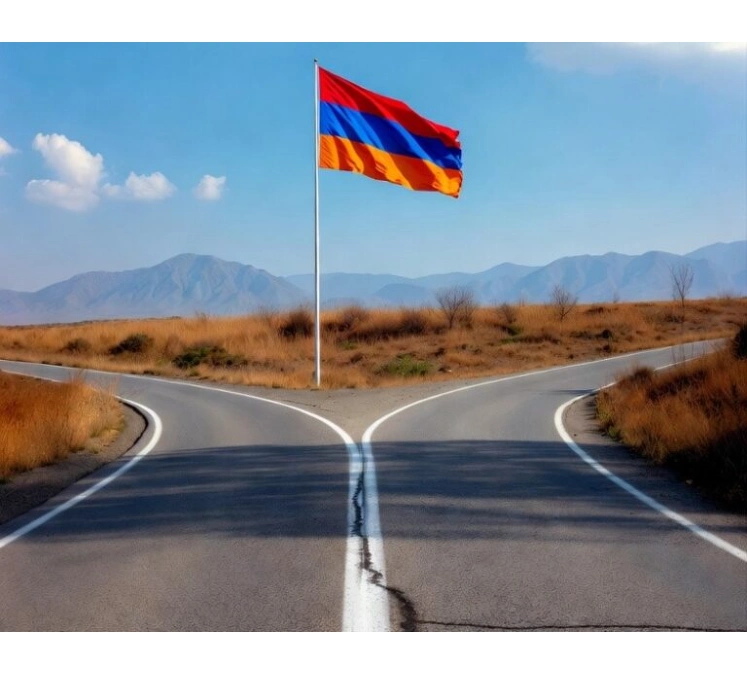
Iran Cut Off from Central Asia as Armenia Keeps an Open Gateway
PSCRP-BESA Reports No 233 (September 27, 2026)
Iran is becoming increasingly isolated. Under pressure from the United States, countries that for years had maintained a relatively neutral stance are beginning to sever their remaining ties with the Islamic Republic. The latest development has been the suspension of air links with Iran. As U.S. sanctions against Tehran expand, more countries are closing their airspace to aircraft operated by Iranian airlines. The process began with the UAE and Iraq, but it has not stopped there.
The main external factor behind the current aviation restrictions is the U.S. Treasury Department’s sanctions package of September 8, 2026, which targeted 36 individuals and entities linked to Iran’s aviation sector, including Iranian airlines and the companies that service them. Washington has also warned foreign businesses about the risk of secondary sanctions.
On September 22, Azerbaijan Airlines (AZAL) announced that flights by Iranian carriers to Azerbaijan would be suspended from that date. The airline said the decision was linked to the new U.S. sanctions package against Iran, particularly the restrictions affecting the aviation sector. Iran Air initially said that it had received no notification, but Azerbaijani authorities later confirmed that the flights would remain suspended until further notice.
Georgia’s Civil Aviation Agency also announced that it would comply with the sanctions regime. Five of the 27 Iranian airlines targeted by the U.S. Treasury sanctions operate flights to Georgia. They will no longer be permitted to serve those routes.
Although the government of Turkmenistan has made no official statement on the issue, a Tehran-Dushanbe flight that had been due to cross Turkmen airspace was forced to return to the Iranian capital. The Civil Aviation Organization of the Islamic Republic said the pilots learned only after takeoff that Turkmen authorities had closed their airspace to Iranian aircraft. They attempted to reroute through Azerbaijan, but permission was denied there as well. The aircraft ultimately turned back.
The broader picture is that the South Caucasus and Central Asia are increasingly isolating Iran due to U.S. sanctions. Tehran appears to have largely lost its ability to persuade neighboring countries to maintain relations with it, whether by appealing to mutual economic interests or by resorting to threats. Iran’s setbacks in the 2025 war with Israel and the 2026 war with Israel and the United States exposed weaknesses in its military capabilities. At the same time, irrational and aggressive actions by the Iranian authorities, including strikes on Azerbaijani and Turkish territory without justification, have further undermined the argument that maintaining close ties with Tehran can help neighboring states avoid security problems. Recent decisions by Georgia, Azerbaijan and, apparently, Turkmenistan show a growing willingness to align with U.S.-led financial and economic pressure on the Iranian government.
There are, however, exceptions. Armenia continues to cooperate with Iran and is even entering into new agreements with Tehran. On September 14, Armenia and Iran signed a protocol establishing a “facilitated customs corridor,” effectively easing the movement of freight between the two countries. Passenger traffic between Armenia and Iran also continued in late September.
Ten days later, on the sidelines of the United Nations General Assembly, Armenian Prime Minister Nikol Pashinyan met Iranian President Masoud Pezeshkian. The two discussed strengthening bilateral relations. Pashinyan expressed satisfaction with the development of Armenian-Iranian cooperation and noted that joint programs were being implemented across a range of sectors.
At almost the same time, Armenian National Assembly Deputy Speaker Ruben Rubinyan received Iran’s Ambassador Extraordinary and Plenipotentiary to Yerevan, Khalil Shirgholami.
During the meeting, the two sides discussed the development of Armenian-Iranian relations and ways to deepen cooperation in a number of areas. They also considered opportunities to expand interparliamentary ties and exchanged views on regional issues.
Meanwhile, Armenian Ambassador to Iran Grigor Hakobyan called for broader cooperation between Yerevan and Tehran in the railway and trade sectors. Hakobyan discussed prospects for expanding rail links with Iran’s Deputy Minister of Roads and Urban Development and CEO of the Islamic Republic of Iran Railways, Jabbar Ali Zakeri. The two sides reviewed the state of railway infrastructure in both countries and discussed opportunities to expand regional transport and economic links. One of the principal projects under consideration is the construction of a railway connecting the two countries through Armenia’s Syunik Province. For Iran, the project has particular strategic significance: the proposed route would cut across the planned TRIPP transport corridor, an initiative pushed by President Trump that Tehran strongly opposes.
More recently, during a visit to Iran, Chairman of Armenia’s State Revenue Committee Eduard Hakobyan met Iran’s Deputy Minister of Economic Affairs and Finance and head of the country’s customs administration, Foroud Asgari. The two signed a protocol establishing an exchange of advance information on goods and vehicles moving through Armenian and Iranian territory under the framework of the “Facilitated Customs Corridor.”
Armenia therefore remains one of the few countries bordering Iran where Tehran’s pressure and incentives still appear to retain some influence. Yerevan continues to expand its cooperation with the Islamic Republic, although it is unclear how long Armenia will be able to move against the broader regional trend. At some point, Yerevan’s potential role in helping Iran circumvent sanctions may find its way onto the agenda in the White House and on Capitol Hill. If that happens, the question will ultimately be put directly to the Armenian authorities.

Reflection and Use of the Iran-Israel War in the South Caucasus
PSCRP-BESA Reports No. 135 (June 18, 2025)
Israeli strikes on Iran and Iran’s ballistic missile attacks on Israel have made it clear where the two main rivals in the South Caucasus — Azerbaijan and Armenia — stand. Monitoring of media and social networks in both countries shows that Baku immediately adopted a neutral position, merely expressing concern over the consequences of military actions. In contrast, Armenian state-affiliated outlets, parties, and diaspora organizations worldwide took a clearly pro-Iranian stance.
For many Armenians, the conflict between Iran and Israel presents an opportunity to pursue political goals and to that end have disseminated and amplified fake news originally circulated by Iranian media and social networks affiliated with the Islamic Revolutionary Guard Corps (IRGC).
Azerbaijan’s Position
On June 13, Azerbaijan’s Ministry of Foreign Affairs issued the following statement: “We are seriously concerned about the military operations carried out by the State of Israel on the territory of the Islamic Republic of Iran. We strongly condemn the escalation of tensions and call on the parties to resolve their existing disagreements exclusively in accordance with international law, through dialogue and diplomatic means. We particularly emphasize the importance of ensuring the safety of the civilian population and civilian infrastructure.”
On June 14, Azerbaijan’s Foreign Minister Jeyhun Bayramov told his Iranian counterpart Abbas Araghchi during a phone conversation that Azerbaijan will not allow its territory to be used by the armed forces of any third country—including against ‘neighboring and friendly Iran.’
This statement came in response to a wave of fake news in Iranian media alleging that Baku’s airfields were being used as launching points for Israeli drones, that Azerbaijan had helped Israeli planes refuel, and that ethnic Azerbaijanis in Iran were being used as agents by Israel against the Islamic Republic.
That same day, Hikmet Hajiyev, Assistant to the President of Azerbaijan and Head of the Department for Foreign Policy Affairs of the Presidential Administration, called the claims that ethnic Azerbaijanis in Iran were being used as agents “absurd and fabricated.”
On June 17, Azerbaijan sent a message through various channels to Israeli leadership, urging them not to strike civilian areas in Iran inhabited by ethnic Azerbaijanis and to avoid harming civilian infrastructure and non-combatants. In particular, this referred to Tabriz, the cultural center of the so-called “Southern Azerbaijanis” — Iran’s largest ethnic minority—which has faced around a century of discrimination by the Pahlavi dynasty and then the Islamic Republic.
Notably, there were no reported strikes in Tabriz’s inhabited areas.
On the same day, the Fars news agency, affiliated with the Islamic Revolutionary Guard Corps (IRGC), released an Arabic-language video addressed to the youth of Muslim countries including the UAE, Bahrain, and Azerbaijan. The video claimed that the Israelis in these countries are “in fact, members of the Zionist regime’s military and must be killed.” “Zionists are legitimate targets, and by eliminating them, you will help accelerate the destruction of the Zionist regime,” the agency stated.
Since the beginning of hostilities, Azerbaijani President Ilham Aliyev has held talks with leaders of various countries, including Turkey, regarding the conflict. However, none of the official statements from these discussions have included any direct condemnation of Israel.
Meanwhile, Azerbaijani media has taken a much more pro-Israel stance. For example, a headline from the pro-government outlet Haqqin reads, “By tearing out Tehran’s fangs, Israel is saving humanity.”
Position of Armenia and the Armenian Diaspora
Typically, in Armenia, official bodies, opposition groups, and diaspora organizations rarely align. However, since the breakout of hostilities, these forces have shown unanimous in supporting Iran.
On June 13, the Armenian Ministry of Foreign Affairs stated that the attack on Iran was “unilateral” and is, “taking place especially ahead of the next round of negotiations, it endangers the peaceful efforts as well as overall regional stability & global peace. We condemn such action & call for immediate cessation of hostilities & adherence to international law.”
A similar statement was made by Alen Simonyan, Speaker of the Armenian Parliament, calling Israel’s attack “unilateral” and a “shatter[ing] global and regional peace efforts.”
On June 14, the Armenian Revolutionary Federation (ARF, Dashnaktsutyun) — a nationalist and socialist political party highly active in the diaspora — went further, calling Israel’s strikes a violation of international law, saying they “endanger the right of life” of Iranian civilians, and condemning “Israel’s actions against Iran and the Iranian people.”
That same day, the liberal newspaper Aravot published an article arguing for supporting Iran on realpolitik grounds.
“Israel is clearly not a friendly country to us—it is, in fact, a close ally of Azerbaijan… Yet, my sympathy in this conflict lies with Iran… Yes, the Iranian regime is undoubtedly authoritarian—but that matters less to me than the fact that Iran genuinely wants to see Armenia as an independent state… Let us recall how Aliyev recently tried to persuade Iran to soften its opposition to the opening of the so-called ‘Zangezur corridor’ — a route that would run through the sovereign territory of Armenia. It’s clear, isn’t it, who benefits from Iran’s weakening?”
The National Democratic Union of Armenia made a more emotional appeal for supporting Iran, speaking of a “millennia of shared history” and “strong friendship forged through numerous trials.”
Well-known Armenian journalist and blogger Mika Badalyan, leader of the opposition movement “Azatagrum” (“Liberation”), said that, “Iran’s success in this confrontation is a vital national interest of Armenia, and I’m glad to see that the broad masses — except for some marginal grant-eaters — understand this and stand with Iran.”
On June 16, Ishkhan Saghatelyan, MP and representative of ARF Dashnaktsutyun’s Supreme Council in Armenia, spoke of concern for Iran’s “large Armenian community” and decried “broad military action against a friendly country.”
On June 17, Iran’s Ambassador to Armenia and likely a high ranking officer in the IRGC, Mehdi Sobhani, said at a press conference in Yerevan that Tehran was grateful for the Armenian government’s “resolute stance in condemning the Israeli aggression” and “the support of the Armenian people.”
Armenian media outlets widely covered this statement.
Position of the Armenian-American Diaspora
The most influential Armenian-American political advocacy group the Armenian National Committee of America (ANCA), also harshly condemned Israel, claiming that its ally Azerbaijan was planning to attack Armenia under the cover of Israeli strikes on Iran. The ANCA statement said Israeli air strikes would “create a cover” for Azerbaijan to strike Armenia, threaten trade routes that “Armenia relies upon for its survival” and spark a “broad regional conflict that reaches the South Caucasus.”
Numerous Armenian media outlets and Telegram channels actively disseminated Iranian fake news — both those alleging direct Azerbaijani involvement in the conflict and other fabrications.
This can be explained by a desire to provoke Tehran into targeting Baku — seen as an easier target than Israel — with the aim of weakening Azerbaijan. Especially popular were fakes claiming that the territory of Karabakh, cleared of Armenian separatists, was used by Israelis as a launch pad for airstrikes. Through such an argument, some Armenians may hope to convince Iran that Azerbaijani control of Karabakh is a threat to both Yerevan and Tehran.
Motivations Behind Disinformation
It’s important to note the difference in target audiences for Iranian and Armenian fakes. As Joseph Epstein, Director of the DC-based Turan Research Center pointed out, Iranian propaganda seeks to create an imaginary “ring of fire around Iran” by claiming that it is fighting not just Israel but a large coalition, which includes the United States, Azerbaijan and Turkey. For years, Tehran has committed itself to destroying Israel and has bragged about its military superiority while dismissing the Jewish State as a vulnerable colonial outpost reliant on foreign powers for its existence. Now, Israel’s military domination of Iran is turning that narrative on its head.
As a result, it is crucial to save face by convincing Iranians that the mighty Islamic Republic could only be crippled by a coalition of nefarious actors supporting Israel behind the scenes.”
For Armenia, the purpose is to further solidify the Iranian-Armenian alliance, foment hostility towards Azerbaijan in Iran and gain support among left and right-wing critics of Israel by tying in Israel’s strikes on Iran to the Armenian-Azerbaijani conflict.

The Impact of the War in Ukraine on the South Caucasus: The End of “the Near Abroad” For Russia
PSCRP-BESA Reports No 133 (May 23, 2025)
The overall situation between Armenia and Azerbaijan has undergone substantial changes in recent years. Both are engaged in peace negotiations that involve numerous difficult decisions on both sides – from border demarcation to the future of regional infrastructure projects such as the Zangezur Corridor. In 2024, Nagorno-Karabakh (unrecognized Armenian enclave on Azerbaijani territory) underwent significant geopolitical shifts following the 2020 war and the exodus of the Armenian population from this territory. In September 2023, after a brief military operation by Azerbaijan, the de facto separatist authorities in Stepanakert capitulated. In the days that followed, over 100,000 Armenians—virtually the entire population—fled to Armenia, citing security concerns, fears of ethnic persecution, and the absence of guarantees for their rights and identity under reinstated Azerbaijani control. On January 1, 2024, the self-proclaimed Republic of Artsakh officially dissolved, leading to the full integration of Karabakh back into Azerbaijan.
On April 19, 2024, Armenia agreed to return four abandoned border villages—Baganis Ayrum, Asagi Askipara, Xeyrimli, and Qizilhacili—to Azerbaijan as an initial step in border delimitation. This decision was reached during the eighth round of talks between Armenian Deputy Prime Minister Mher Grigorian and Azerbaijani counterpart Shahin Mustafayev. The agreement aims to align borders with those established during the Soviet Union’s dissolution (Ministry of Foreign Affairs of the Republic of Armenia 2024). While Armenian Prime Minister Nikol Pashinian supports the move for sovereignty and independence, opposition groups criticize it as a unilateral concession that may jeopardize Armenia’s security.
The “Tavush for the Homeland” movement emerged soon after the Armenian Prime Minister announced the decision, initiated by residents of Armenia’s Tavush region who oppose the government’s move to unilaterally cede border territories to Azerbaijan. Led by Archbishop Bagrat Galstanyan, the movement argues that such territorial changes violate Armenia’s constitution, which requires any alterations to be approved through a national referendum. They contend that the ongoing border demarcation lacks legal standing and was agreed upon under coercion from Azerbaijan.
Subsequently, in June 2024, Russian peacekeeping forces, stationed in the region since the 2020 ceasefire, completed their withdrawal from Karabakh. Throughout the year, Azerbaijan launched massive infrastructure projects in the region, including renewable energy developments such as solar parks and wind farms. These initiatives were highlighted during the 2024 United Nations Climate Change Conference (COP29), hosted by Azerbaijan in November.
By the end of 2024, Armenia and Azerbaijan have made alleged progress toward a peace agreement. This included discussions on constitutional amendments in Armenia to address Azerbaijani concerns and the potential establishment of new transportation corridors to enhance regional connectivity. On 18 March 2024, the EU welcomed the successful conclusion of negotiations between Armenia and Azerbaijan on the full text of the draft Agreement on Peace and Establishment of Interstate Relation (European Parliament 2025). Nevertheless, the extent to which the agreements reached truly constitute progress in the negotiations—remains largely unclear.
In recent years, there have been growing assertions in the academic literature about “the end of the near abroad” for Russia—suggesting that the notion of Russia holding a special status in much of the post-Soviet space has come to an end. In his 2024 article “The End of the Near Abroad”, de Waal argues that Russia’s war in Ukraine has fundamentally reshaped the geopolitical landscape of the post-Soviet region. The concept of the “near abroad”—which implied Russia’s privileged influence over its neighbors—has significantly eroded. Indeed, in recent years, we have seen several clear signs of this shift. Most often, this refers to the signals that political leaders send outward, indicating their disagreement with Russia’s policies toward their countries.
On 24 October 2023, Armenia’s Ministry of Foreign Affairs summoned Russian Ambassador Sergey Kopyrkin to deliver a formal note of protest. The protest concerned a television program aired on Russia’s First Channel on 23 October, which, according to the Armenian side, contained offensive and entirely unacceptable remarks directed at senior officials of the Republic of Armenia. The broadcast featured harsh criticism of Prime Minister Nikol Pashinyan, accusing him of pursuing an “anti-Russian” foreign policy, and portrayed Pashinyan, along with several government officials and civil society activists, as “puppets of George Soros.” The program, titled “Nikol Pashinyan: Harbinger of Trouble,” opened with the host claiming that Pashinyan “has gone too far” and “has steamrolled his country under the United States’ agenda and surrendered the country into the EU’s grip”). In the discussion, the invited speakers spoke about Pashinyan’s alleged attempts to stage a Maidan-style uprising in Armenia and his consultations with the U.S. Embassy, drawing direct parallels with the political developments in Ukraine. At the same time, the broadcast did not portray a conflict between Armenians and Russians; it emphasized that Armenians are not opposed to the Russian people. Rather, it is Pashinyan who holds power, and he is described as being controlled by the West. The narrative, on the one hand, leaves room for the restoration of relations between Armenia and Russia, and on the other hand, provides Russia with a justification for possible political or even military interference.
In November 2024, Pashinyan declined to participate in the CSTO summit held in Astana, Kazakhstan. His press secretary, Nazeli Baghdasaryan, stated that Armenia’s decision to freeze its participation in CSTO activities remained unchanged. The Armenian government’s dissatisfaction with the CSTO stems from perceived inaction during conflicts involving Armenia. In February 2024, Pashinyan announced that Armenia had effectively frozen its participation in the CSTO, stating that the organization posed a threat to Armenia’s national security. At the same time, Armenia remains a member of the CSTO, and no viable alternative security arrangement currently exists in the event of a military attack on its territory. This effectively leaves Armenia in a highly disadvantaged position, constantly balancing between major powers.
External actors consistently signal to the countries of the region that their choices imply a certain irreversibility, and that security cannot be ensured independently. Nevertheless, the current state of affairs is unique in its own way, as the traditional lever of influence—Karabakh—has been lost, with its status effectively determined by one side of the conflict through military force. We can observe that both the Armenian leadership—and to an even greater extent, the Azerbaijani leadership—tend to be critical of third-party involvement and are pursuing a path shaped primarily by internal political dynamics.
In Armenia’s case, the desire to reduce dependence on Russia has led to the search for alternative partners. On March 26, 2025, the Armenian National Assembly adopted a bill to launch the country’s EU accession process. The legislation received 64 votes in favor and 7 against. This decision followed a public petition that garnered over 50,000 signatures, reflecting substantial domestic support for EU integration. In March 2024, the European Parliament passed a resolution confirming that Armenia meets the criteria outlined in Article 49 of the Maastricht Treaty, thereby affirming Armenia’s eligibility to apply for EU membership. The resolution also highlighted the Comprehensive and Enhanced Partnership Agreement (CEPA) as a foundation for deeper integration and potential future association with the EU.
The European Parliament’s resolution outlines several factors considered in relation to Armenia’s potential candidacy. These include Armenia’s decision to freeze its membership in the Collective Security Treaty Organization (CSTO), its efforts to reduce security dependence on the Russian Federation, and its attempts to diversify security partnerships—such as through increased military cooperation with France, Greece, and other EU Member States. The resolution also notes that Russia’s purported security guarantees to Armenia have proven to be unreliable. Additionally, Armenia has become a party to the Rome Statute of the International Criminal Court (ICC). The resolution further describes the events of 2024 in Karabakh as ones that “may amount to ethnic cleansing.” A portion of the resolution thus is directly based on the premise that Armenia’s application is being considered as a result of the confrontation between two larger players—the EU and Russia.
The decline in relations with Russia is not unique to Armenia. In December 2024, Azerbaijan Airlines Flight 8243, en route from Baku to Grozny, crashed near Aktau, Kazakhstan, resulting in 38 fatalities out of 67 passengers and crew. Initial reports indicated the aircraft was damaged by “external objects” before impact, leading to speculation about the cause (Trend News Agency 2025). Azerbaijani President Ilham Aliyev criticized Russia for attempting to “hush up” the incident and demanded accountability. In early February 2025, the Azerbaijani government issued an official notification to Russia, demanding the cessation of activities of the Russian cultural center, known as the “Russian House” (Русский дом), in Baku. Its main activities included promoting Russian culture, science, and education; strengthening the position of the Russian language; supporting compatriots; organizing youth projects; facilitating international development; and engaging in historical and memorial activities. By doing so, Azerbaijan demonstrated to Russia that it is not part of the so-called “Russian world” and seeks to be recognized as an independent player.
Azerbaijani President Ilham Aliyev has consistently criticized both the OSCE Minsk Group and Russia for what he views as ineffective involvement in the Armenia-Azerbaijan conflict. He argues that international mediation efforts—especially those led by actors he considers biased—undermine the realities on the ground. As a result, Azerbaijan had to solve the conflict itself, as none of the third parties involved could suggest any viable solution.
The current situation is notable because past Western and Russian diplomatic engagement focused largely on Karabakh, preventing direct bilateral dialogue between Armenia and Azerbaijan. Russia’s waning influence has opened the door for other regional actors, particularly Iran and Turkey, each pursuing their own strategic interests. Tehran is especially alarmed by Ankara’s support for the proposed Zangezur Corridor, which would bypass Iran and create a direct link between Turkey and Central Asia via Armenia and Azerbaijan. This project threatens to undermine two key Iranian geopolitical advantages: its exclusive role in facilitating access between Nakhchivan and Baku, and its direct land connection to Armenia.
The circumstances described have raised concerns within the research community about potential Russian efforts to reassert its influence in the region—whether through political, economic, or military means. Regardless of whether regional countries distance themselves from one major power or another, they remain engaged in a delicate balancing act that will ultimately shape their trajectory. However, rising tensions among global powers increase the risk of this balance being disrupted.

A Few Dollars More: Why Political Orientation of South Caucasus Countries Shifts From the EU Toward Russia. Part I – Georgia
PSCRP-BESA Reports No 122 (March 31, 2025)
Just two years ago, the future political orientation of Armenia and Georgia toward closer ties with Western countries—primarily the European Union—appeared to have no alternative.
Immediately after Georgia gained independence in 1991, its leadership set state policy priorities aimed at establishing close relations with Western countries, chiefly the United States and the European Union. As early as 1996, Georgia signed a Partnership and Cooperation Agreement with the EU, and in 1999, it became a member of the Council of Europe. Five years later, in 2004, a committee on European integration was established in the Georgian parliament, and the position of State Minister for European and Euro-Atlantic Integration was created. Two years after that, in 2006, Georgia abolished visa requirements for EU citizens making short-term visits to the country. Another two years later, the EU reciprocated by launching the Eastern Partnership initiative to deepen ties with post-Soviet states, including Georgia. The effort culminated in the signing of an EU-Georgia Association Agreement in 2014, followed by a visa-free regime three years later.
Georgia applied for EU membership alongside Moldova on March 3, 2022. In June of the same year, the European Commission recommended granting candidate status to both republics, but the decision on Tbilisi’s application was postponed. Georgia ultimately received candidate status in December 2023.
Yet, on November 28, 2024, the Georgian authorities announced their decision to suspend EU accession negotiations from the national agenda until 2028. What happened?
Formally, Georgia’s partnership with Western countries began deteriorating after the adoption of the Law on Transparency of Foreign Influence and the Law on Protection of Family Values and Minors, which prohibits LGBTQ+ propaganda.
The EU froze relations with Georgia, canceled high-level meetings, halted financial assistance, and paused the country’s integration into the bloc, citing unmet preconditions for starting accession talks. Simultaneously, the U.S. suspended strategic partnership agreements and partial funding, imposing financial sanctions on Bidzina Ivanishvili, honorary chairman of the ruling party Georgian Dream. Five EU member states, alongside the UK, U.S., and Ukraine, introduced visa sanctions against over 300 Georgian officials.
The West accuses Georgia’s current leadership of democratic backsliding and anti-Western rhetoric. Georgian authorities attribute the rift to Western dissatisfaction with the country’s neutral stance on the Ukraine conflict and its insistence on preserving sovereignty.
However, the public rhetoric of both sides fails scrutiny: these are consequences—not root causes—of the seemingly abrupt reorientation of Georgia’s strategic vector.
Georgia, like Armenia (to be discussed later), is undeniably a country with democratic procedures for forming governments. Yet the political influence of business elites far exceeds traditional Western electoral models of sponsorship or support. The dirigisme of large businesses over Georgian and Armenian national politics is beyond the scope of this analysis, though it is well-documented in academic consensus by colleagues’ research.
Prior to February 2022, Russian authorities themselves anticipated a gradual thaw with the West and thus did not force Georgian elites into a binary geopolitical choice. The collapse of Russia-Europe normalization prospects made reintegrating Georgia and Armenia into Moscow’s political orbit a cornerstone of Russia’s new geopolitical strategy in the South Caucasus. In this context, Russia found its most convenient leverage within these states: national business elites, heavily dependent on maintaining commercial ties with Moscow and thus vulnerable to pressure.
In the late 1980s, during the twilight of the USSR, Bidzina Ivanishvili—dubbed “Georgia’s owner” and honorary chairman of Georgian Dream–Democratic Georgia—began his entrepreneurial career in Russia alongside Vitaly Malkin. By 1990, the partners had become leading electronics distributors. Ivanishvili owned Rossiyskiy Kredit (one of Russia’s largest banks), the agricultural conglomerate Stoilenskaya Niva, the pharmacy chain Doctor Stoletov, Moscow’s Minsk and Tsentralnaya hotels, and numerous industrial assets across Russia.
In October 2011, Ivanishvili announced the sale of all his Russian businesses, claiming he sought to create an opposition party in Georgia to challenge President Mikheil Saakashvili. However, most economic analysts in Russia and Georgia remain deeply skeptical that Ivanishvili’s Russian empire—which earned him nearly $7.5 billion and placed him 373rd in Forbes’ global rankings—was liquidated at peak profitability.
Regardless, official data suffices to confirm Georgian business elites’ extreme dependence on Moscow. According to Georgia’s National Statistics Office (Sakstat), Georgia-Russia trade turnover grew by 5.4% in 2024 compared to 2023, reaching $2.5 billion, making Russia Georgia’s second-largest trade partner after Turkey.
But this is hardly the crux.
First, consider Russian investments and ownership in Georgia. In strategically critical sectors like energy, Russian entities dominate: JSC Telasi, JSC Khrami HPP-1, JSC Khrami HPP-2, Mtkvari Energy TPP, Larsi HPP, Shilda HPP, and the unified energy system SakRusEnergo—all are Russian-owned and financed.
In mining, JSC RMG Copper and LLC RMG Gold belong to the Russian holding Mining Investment, ultimately owned by businessman Dmitry Troitsky. These firms specialize in copper and gold ore extraction and processing. Even Georgia’s iconic mineral water brand, Borjomi, is owned by IDS Borjomi of Russian billionaire Mikhail Fridman.
The brevity of this article precludes a full exposition of Russian capital’s penetration into Georgia’s major industries. Suffice it to note that, should the Kremlin order Russian businesses to “pressure” Tbilisi, it possesses more than sufficient leverage.
The second factor is Georgian business in Russia.
Alexandre Djaparidze is the only Georgian besides Ivanishvili on Forbes’ global rich list, ranking 61st among Moscow’s 200 wealthiest individuals. David Yakobashvili, founder of Russia’s largest dairy and juice company, Wimm-Bill-Dann (later sold to PepsiCo), remains Georgia’s most influential Jewish businessman in Russia, owning several key—albeit less visible—enterprises. A third example is Konstantin Mirilashvili, owner of Russian agro-holding Evroservice, a leader in Russia’s sugar and meat markets. Georgian entrepreneurs also dominate Russia’s restaurant sector, highly sensitive to regulatory shifts.
All these figures wield political clout in Tbilisi and serve as convenient tools for Moscow, given their reliance on Russian authorities’ goodwill toward their businesses.
The third factor emerged recently, directly tied to the Ukraine war and the mass exodus of Russian businesses—primarily to Georgia.
From February 2022 to February 2023 alone, over 16,000 individual enterprises (IEs) were registered in Georgia under Russian citizens’ names. By comparison, in the previous 27 years (January 1995–February 2022), Russians founded just 7,788 companies in Georgia. Russians have not merely relocated—they have intricately linked Georgia’s small and medium businesses to their remaining operations in Russia, creating tens of thousands of high-paying jobs. Official statistics obscure exact numbers, but Georgian authorities cautiously estimate 63,000 Russian relocants, while experts double this figure. Even the lower official number represents 5–7% of Georgia’s economically active population. Crucially, the average age of these relocants is 27–30—peak productivity years.
Their purchasing power is evident in Tbilisi’s 94% and Batumi’s 76% annual spikes in new property transactions, with premium housing demand in Adjara surging by 339%.
Given business’s decisive influence on electoral processes and government behavior in Georgia, the above facts make it unlikely that the pro-European aspirations of the population will translate into official policy.
In Part II, we will analyze why Armenia not only remains in Moscow’s orbit but shows signs of selective alignment. While many reasons mirror those discussed here, significant distinctions exist.

What are the Expectations from Trump in the South Caucasus?
PSCRP-BESA Reports No 116 (February 26, 2025)
The countries of the South Caucasus have approached Trump’s presidency under vastly different circumstances, which is unsurprising given that this region has never been geopolitically unified. Until recently, Georgia appeared aligned with the West, Armenia with Eurasia, and Azerbaijan with Central Asia. Yet, despite these orientations, they managed to interact—whether through alliances, conflicts, or trade.
The situation changed after 2020, when the 44-day war forced both Azerbaijan and Armenia to confront geopolitical realities, culminating between September 2023 and March 2024. The events of this brief period have presented the region’s countries with urgent challenges demanding immediate solutions.
Georgia’s leadership
Since Russia’s large-scale aggression against Ukraine, Georgia’s leadership has focused almost exclusively on maintaining power. The government opted for confrontation with its Western partners, appeasement of Russia, and the entrenchment of a political system where the informal rule of Bidzina Ivanishvili would remain unchallenged. This path was highly risky, as alienating Western allies not only exposed Georgia to severe socio-economic shocks but also increased its vulnerability to Kremlin influence. The Georgian economy relies heavily on a banking and financial sector integrated into international (i.e., Western) financial institutions, as well as on raw material exports (such as manganese and ferroalloys) to the EU. Additionally, its transport infrastructure plays a crucial role in the Trans-Caspian International Transport Route (TCITR, also known as the Middle Corridor). All these elements are critically susceptible to potential sanctions from both Europe and the United States.
Nevertheless, the Georgian authorities, seemingly resigned to their fate, severed ties with the West, openly abandoning past achievements and shaping an image of a nation that has rejected democracy, even as an idea. This culminated in the adoption of a series of anti-democratic laws, particularly in the electoral and judicial spheres, the blatant falsification of the October 2024 elections, a deliberate provocation in withdrawing from EU membership negotiations, and, finally, the brutal suppression of protests—actions that neither the EU nor the US could ignore.
This policy would have been politically suicidal for both the country and its leadership were it not for their bet on Trump’s victory. The Georgian government calculated that, with Trump in power, it could negotiate with the new US administration on the basis of ideological alignment and a shared enemy—an idea they began promoting from the moment of Trump’s victory by rebranding the “global war party” as the deep state. This bet paid off, as Georgia’s authorities now have the opportunity to gain Trump’s attention by co-authoring an alternative UN resolution on Russian aggression in Ukraine.
Whether the Trump administration will appreciate this move remains to be seen. The future of Georgia’s leadership now depends less on ideological affinity and diplomatic support and more on Trump’s negotiations with Moscow, Ankara, and Beijing.
Armenia’s Position
On the surface, Armenia appears to be the ultimate loser. The war was lost. An adversary that Armenians occupied for 30 years now stands at their borders, militarily capable of seizing the entire country and cutting it off from its ally, Iran. Hopes that a Democratic administration in Washington—one that had steadfastly supported Armenia without demanding concessions—would remain in power have been dashed. The strategic plan of waiting for a systemic crisis in Azerbaijan (and perhaps even facilitating it) before reviving the Karabakh conflict along the Kosovo model—a plan long supported by Armenian society and its diaspora—has collapsed.
For Armenia’s leadership, the widespread expectation of Karabakh’s reoccupation is a major obstacle to achieving peace and relieving the national psychological distress that has persisted since autumn 2020. However, the present moment offers an opportunity to abandon these long-term, illusory hopes of revanche, allowing Prime Minister Pashinyan room for compromise with Baku. Ultimately, these aspirations can always be revisited, but for now, progress in the peace process and improved relations with Turkey could serve as strong electoral assets for Pashinyan.
Thus, Armenia’s main expectations from Trump’s administration revolve around maintaining the status quo and securing guarantees that Azerbaijan will not resort to force. While the probability of Azerbaijan using force remains minimal, it is not zero, and the situation could change. To mitigate this risk, Armenia has influential allies within Trump’s administration, ranging from the establishment figure Marco Rubio to the anti-establishment Tulsi Gabbard. Therefore, Yerevan’s position is not as dire as it may seem. Moreover, the Charter on Strategic Partnership, signed under the previous US administration, serves as a tangible roadmap for advancing Armenian-Azerbaijani relations. If Georgia was able to extract significant benefits from a similar agreement in the late 2000s, there is no reason why Armenia, with its stronger foothold in US political circles, cannot do the same.
Azerbaijan’s Strategy
Azerbaijan, in the most advantageous position of the three, is now operating on a completely different level. The lingering psychological scars of its long war with Armenia remain, yet Baku is acutely aware of its economy’s critical dependence on European energy markets. However, this market is primarily Italian, where Azerbaijan enjoys strong relations, and Eastern European, where Baku has not just partners but genuine allies. Additionally, Azerbaijan’s energy exports extend beyond Europe to Israel, a strategic partner and major consumer of Azerbaijani oil.
With Trump’s administration, the risk of sanctions against Azerbaijan has diminished to near zero, allowing Baku to postpone Armenian-Azerbaijani settlement efforts and pursue concessions—from changes to Armenia’s constitution to opening a corridor to Nakhchivan and Turkey. There is no need for Baku to rush.
More importantly, Azerbaijan is undertaking a much more ambitious initiative: securing its long-term security through active participation in Middle Eastern and Eurasian (Central Asian) projects. Baku’s strong partnerships with Turkey, Israel, Uzbekistan, and Kazakhstan provide a solid foundation for this strategy. These projects not only yield economic dividends (such as involvement in TCITR, the development of Israel’s Tamar gas field, and Syria’s reconstruction) but also establish a political buffer against two existential threats to Azerbaijan: Russia and Iran. The recent diplomatic travels of Hikmet Hajiyev, Azerbaijan’s Presidential Advisor, underscore this approach.
The only potential weak link in Azerbaijan’s carefully constructed network is Georgia. Should Georgia fall under Russian influence, it would pose an unpleasant surprise for Baku. However, Azerbaijan’s leverage in this scenario is limited, leaving it to hope that this does not come to pass. Otherwise, Azerbaijan’s main expectations from Trump’s administration lie in US support for regional projects that will solidify its status as a mid-tier power.
In summary, Tbilisi seeks Trump’s recognition of its government as an ideological ally; Yerevan hopes for security assurances and the preservation of the status quo; and Baku anticipates US backing for its regional ambitions. The rest will be determined by time.

Sniper Rifles and Microchips: Who Enables the Russian War Machine in Ukraine
PSCRP-BESA Reports No 103 (Dec 14, 2024)
Western weapons and electronic components continue to surface in Russian military hardware deployed in Ukraine, despite ongoing international efforts to restrict Moscow’s access to advanced technology. Recent reports from both European and Ukrainian investigative sources indicate that key Western-manufactured parts, including microchips and optical systems, have been identified in Russian unmanned aerial vehicles (UAVs) and other military equipment used in the war.
According to the recent report by the French intelligence news platform Intelligence Online, Western components have been discovered in the Merlin VR, a Russian experimental intelligence-gathering drone. It appears that the downed UAV contained parts produced by American semiconductor company Analog Devices and Dutch manufacturer Ampleon. The experts note that all of the circuit boards appear to have been acquired from Western sources.
The drone was developed in 2021 by the Smolensk Research Institute of Modern Telecommunications Technologies and is capable of flying at an altitude of over 4,800 meters. It is designed for advanced reconnaissance missions and can stay in the air for almost ten hours. Ukrainian officials reported finding a French-made infrared sensor (Lynred Pico1024) on board when they shot down the first Merlin-VR in 2022.
Russia employs elaborate networks involving multiple intermediaries and shell companies to obscure the final destination of procured components. Russia often routes goods through several countries, altering their documentation to conceal their origin and end use.
At the moment, it is still unknown where exactly these components came from, but since the beginning of the war in Ukraine, the main bypass routes have been the countries of the former USSR, with Belarus, Armenia, Kazakhstan, and Kyrgyzstan being the most frequently mentioned.
The strategic partnership between Belarus and Russia in procuring Western microchips has significantly bolstered Russia’s military capabilities. Investigations revealed that Belarusian companies exported over $125 million worth of microchips, including Western-made ones, to Russia between September 2022 and June 2024. Russia received around 10,000 microchips of American and European origin. These include Intel products used in the operation and navigation of aerial bombs, Su-35S and Su-34 fighter jets, Korsar UAVs and Kalibr missiles.
Complex schemes involving companies connected to the close allies of Belarusian President Alexander Lukashenko made these supplies possible.
The largest supplier of Western microchips from Belarus to Russia is Pervy Kontinent, a company established just two months after the start of Russia’s full-scale invasion of Ukraine. From January to June 2024 alone, Pervy Kontinent sold 1,665 microchips to Russian firms, valued at $155,000. BIC identified the company’s owner as Ilya Tarasyuk, who has nearly 20 years of experience working in Belarus’s defense industry. The company’s primary buyer in Russia is Staut, a firm under U.S. and E.U. sanctions.
In response to Belarus’s support for Russia’s military aggression against Ukraine, the United States and the European Union have implemented a series of sanctions targeting tens of Belarusian individuals, entities, and economic sectors.
Armenia also stands out from the «blacklist» of those circumventing sanctions, as it is openly distancing itself from the Kremlin regime. However, the actions bear greater weight than mere words. A joint statement by the U.S. Department of Justice, Department of Commerce, and U.S. Treasury identified Armenia as among “third-party intermediaries or transshipment points to evade Russian- and Belarusian-related sanctions and export controls.” The New York Times revealed a 2023 document from the Bureau of Industry and Security that Armenia witnessed a staggering 515% surge in the import of chips and processors from the United States in 2022 compared to 2021, and a 212% increase from the European Union during the same period. Furthermore, Armenia subsequently exported 97% of these products to Russia.
Russia also used Armenia to circumvent sanctions by purchasing through it items classified as dual-use—intended for civilian applications but also applicable in military contexts. Armenia can legally acquire certain technologies, which are later diverted to military use by the Russians.
According to Ukrainian sources, Armenia actively utilized the maritime route connecting the ports of Batumi (Georgia) and Novorossiysk (Russia) to re-export sanctioned goods to the Russian Federation. Consequently, the Armenian Shipping Company was responsible for the weekly transportation of 600 containers along the Batumi-Novorossiysk sea route. Despite all this, the United States and the European Union failed to impose sufficient sanctions on Armenia.
Kazakhstan also emerged as a significant conduit in the process of circumventing the sanctions. In 2022, Kazakhstan’s imports of microchips more than doubled, exceeding $75 million. Subsequently, exports of these microchips to Russia increased seventyfold, from $245,000 in 2021 to $18 million in 2022.
Also, Kazakhstan imported nearly $5 million worth of drones, primarily from China, and re-exported $1.23 million worth to Russia. Prior to Russia’s full-scale invasion of Ukraine, Kazakhstan’s drone imports were negligible.
A recent joint investigation by The Insider, Investigace.cz, IrpiMedia, and Vlast.kz revealed that companies from the EU, the US, and Türkiye have increased weapon exports to FSU countries such as Armenia, Georgia, Kazakhstan, Kyrgyzstan, and Uzbekistan over the past three years. The weapons were re-exported to Russia, enabling sanctions circumvention.
The export of sniper rifles and shotguns from Italy to Armenia has increased almost 30 times over four years. Kyrgyzstan did not purchase any weapons from Italy in 2020 and 2021, but it received 882 units in 2022 and 4,434 in 2023. Weapon exports from Turkey to Georgia rose from 8,426 units in 2019 to 18,843 in 2023.
The investigation also discovered links between the Luxembourg-based branch of the Beretta holding company and Russian firms. Journalists highlighted that the holding remains the majority owner of a Russian arms importer despite sanctions, directly violating both US sanctions and the EU Council’s 2014 resolution.
Such findings highlight multiple layers of concern. They point to the incomplete efficacy of current sanctions and export controls. Despite wide-ranging restrictions designed to prevent Russia from acquiring advanced components, loopholes and less-scrupulous intermediaries appear to be undermining those efforts. Companies in Europe, North America, and Asia may inadvertently supply parts that end up in Russian military hardware, often through opaque supply chains.
These revelations call for more stringent international cooperation to tighten technology transfer controls. Governments and industry stakeholders need to conduct more thorough vetting of end-users, impose mandatory “end-use certificates” subject to verification, and implement advanced monitoring of supply chains. To quickly detect and thwart any suspicious procurement attempts, institutions overseeing global trade must strengthen their intelligence-sharing frameworks.

Pool of Terror: Iran is Recruiting Operatives From the Former Soviet Union to Target Israelis
PSCRP-BESA Reports No 101 (Nov 29, 2024)
Recent events in the UAE and Central Asia show that Iran is again boosting recruitment of individuals from former Soviet republics for various purposes, including terrorist attacks and intelligence-gathering activities. Tehran plans to use these individuals directly against Israeli “targets” this time. The abduction and murder of Rabbi Zvi Kogan by three Uzbek terrorists is the most recent case. Despite the lack of public disclosure of definitive evidence linking this attack to Iran, experts point to several factors that support this conclusion.
The Modus Operandi is consistent with Iranian tactics:
The circumstances surrounding Rabbi Kogan’s murder align with methods previously attributed to Iranian operations, such as targeting individuals abroad through criminal proxies.
The incident occurred amid heightened tensions between Israel and Iran, with Iran historically opposing normalization efforts between Israel and Arab states, with an emphasis on the Persian Gulf emirates.
While direct ties of the apprehended perpetrators to Iran have not been confirmed, the use of foreign nationals in such operations is known to be a trademark tactic of the IRGC. One might think to first look into the Muslim denomination these terrorist operatives are a part of, however, no concrete evidence has surfaced to link them with Shia Islam – the primary religion in Iran.
ISIS might have carried out the attack, but it is well known that this organization consistently takes responsibility for the sake of clout, while Iran consistently refutes any involvement in such actions. Besides, the MO of the attack is different from those preferred by ISIS, which focus less on individual clandestine assassinations and more on mass casualty attacks.
Tajiks are known to be the IRGC’s primary recruiting pool; however, what about the Uzbeks?
Let’s examine previous cases in more detail. From December 2023 till January 2024, there were a series of failed attempts to attack Jewish Agency offices and the Ohr Avner Jewish Center in Almaty (Kazakhstan), an arson attempt on a farm belonging to the Israeli Saxovat Broyler Co. in Tashkent (Uzbekistan), and smaller events following the same pattern.
In August 2024, it became known that the organization behind these attempts was the IRGC-controlled Iraqi militia, Kata’ib Hezbollah (Hezbollah Brigades). The main coordinator, according to several sources, was Tajik operative Muhammad Ali Burhanov, also known as Sayed Hamid al-Tajiki.
According to the GFATF (Global Fight Against Terrorism Funding), Burhanov was recruited while studying at Al-Mustafa University in Iran—a known recruitment center for Tehran-backed militant groups, which is operating under the Islamic Propaganda Bureau of the Qom Seminary. The IRGC Qods Force’s Department 400 coordinates Burhanov’s activities. His handlers are Hossein Rahmani and Hossein Rahban, who are behind other attempts to murder Israelis abroad. For example, a November 2022 case in Georgia, where agents of the IRGC tried to kill a prominent Israeli businessman.
According to The Washington Institute, Qods Force’s Department 400 sometimes collaborates with ISIS and the Taliban despite deep-seated sectarian differences and opposing objectives.
It is crucial to remember that such sectarian differences as Sunni vs Shia Islam have not stopped the IRGC and Qods force from supporting Sunni terrorist groups before, as is the case with Hamas and the Palestinian Islamic Jihad.
This brings us back to the recent murder of Rabbi Kogan in the UAE, where three Uzbek nationals were involved. Previously there were no cases of IRGC recruiting Uzbeks—Iranians prefer Tajik Shias. Tajikistan’s population shares linguistic and cultural ties with Iran, as both are Persian-speaking nations. Since 2013, the IRGC has enlisted Tajiks to fight in Syria alongside pro-Assad forces. They were instrumental in key battles, including the recapture of Aleppo, under the command of Iranian military advisors.
By recruiting Tajiks, Iran aims to extend its influence into Central Asia, countering the presence of other regional powers and promoting its ideological and political interests. Furthermore, the emergence of ISIS-Khorasan (ISIS-K), also known as the Islamic State Khorasan Province (ISKP), in Afghanistan and its recruitment of Central Asians, including Tajiks and Balochis, presents a significant threat to Iran. By recruiting Tajik Shia fighters, Iran seeks to counterbalance Sunni groups.
Interestingly enough, ISIS-Khorasan is actively recruiting Uzbeks to fight in Afghanistan. Reports indicate that ISKP has deliberately expanded its social media efforts in the Uzbek language.
As previously mentioned, the relationship between ISKP and Iran is hostile. In January 2024, ISKP claimed responsibility for twin bombings in the Iranian city of Kerman, Iran, during a ceremony commemorating Qasem Soleimani, resulting in nearly 100 fatalities. In August 2024, Iran’s Intelligence Ministry announced the detention of 14 ISKP members, alleging their involvement in planning attacks within the country.
It is difficult to imagine that the IRGC and ISKP have found common ground. However, taking into account the above-mentioned Qods Force’s Department 400 ties to ISIS and desperate need for any retaliatory action against Israel (considering the failed attacks in Uzbekistan and Kazakhstan), there is the probability of a joint operation aimed to murder a prominent Israeli citizen. ISIS may have “loaned” its operatives or provided a “blessing” for the use of Uzbeks.
Another possibility exists, one that carries even greater risk. There is a chance that IRGC emissaries have found a way to recruit representatives of a tiny (between 200,000 and 300,000) Uzbek Shia minority living in Bukhara and Samarkand. Their existence is hardly common knowledge in the Arab world and in the West, as they are primarily comprised of descendants of ethnic Iranians, who live there for 2-3 hundred years. Uzbek extremists, being associated with Sunni groups such as Al Qaeda and ISIS, are much less visible and identifiable as IRGC agents and thus constitute a larger threat.
The history of the IRGC’s recruiting of the citizens of the FSU countries:
The IRGC has reportedly engaged criminal gangs from former Soviet regions for operations abroad, including espionage and violent acts. This strategy leverages existing criminal networks to conduct activities that further Iran’s strategic interests while maintaining plausible deniability. As was mentioned above, Tajikistan and ethnic Tajiks are the major recruiting pools for Iranian proxy militias. Yet they are not the only source of operatives that share cultural and ideological affinity with Iranians.
Conversely, Azerbaijan is one of the most frequent locations where the IRGC attempts to carry out terrorist attacks against Jewish and Israeli targets. The highly experienced local national security service DTX foils the vast majority of such plots.
In 2004, 2007, 2012, 2017, and 2022, DTX neutralized and apprehended several mixed groups of terrorists, comprising both local and foreign citizens (Lebanese and Afghans, for example). Iran trained most of them to gather intelligence and carry out attacks on Israeli and, occasionally, other Western embassies.
It should be mentioned that the IRGC has its own proxy organization for spreading khomeinist ideology inside Azerbaijan, Hussainiyoun. This organization aims to destabilize the government of Azerbaijan per the mission given to it by Tehran. If and when the opportunity presents itself, Husayniyun operatives emphasize their opposition to Azerbaijani ties with Israel through incitement of local unrest. It is no mere coincidence that the leader of Husayniyun, Tawhid Ibrahim Begli, started his organization in Qom, a known recruitment center for these types of groups, as previously presented. The organization was even named by Qassem Soleimani himself.
In March 2023, an Iranian agent tried to murder Azerbaijani MP Fazil Mustafa, known for his staunch support for strengthening relations with Israel.
An Afghan citizen received a 10-year sentence in October 2024 for his attempt to attack the Israeli embassy in Baku in July 2023. He had several local accomplices, recruited by the IRGC, who were also apprehended.
In October 2021, Cypriot authorities arrested a dual Russian-Azerbaijani national suspected of planning attacks on Israeli businessmen in Cyprus. He was using a Russian passport to operate from Turkish-controlled Northern Cyprus as an operational and transit area.
In November 2022, Georgian security services thwarted an IRGC plot to assassinate an Israeli businessman in Tbilisi. A hitman of Pakistani origin had a support team of several persons with dual Iranian-Georgian citizenship, who provided him with weapons and transportation.
The IRGC primarily seeks to enlist kindred Shia Muslims to act out its bidding across the globe, yet occasionally even cooperates with Sunni groups, as long as their geopolitical goals surpass the cultural and religious differences. However, there have been cases where non-Muslims and non-Islamic entities have served other purposes. For instance, money laundering, sanction evasion, and the supply of dual-use materials have involved several Armenian businessmen and companies, including banks.
All this demonstrates how much influence and free reign the tentacles of Tehran have throughout the southern hemisphere of the post-Soviet world, especially now, when there is no longer the same level of Russian influence to stave off the propagation of extremist, fundamentalist, and Islamic ideas.

The French Factor in the Georgian Elections and on the Southern Caucasus in General
PSCRP-BESA Reports No 95 (Oct 31, 2024)
For the past two decades, the European Union has actively pursued influence in the post-Soviet region. France, attempting to align countries like Georgia with Western political and economic frameworks, plays a prominent role in this trend.
Since the 2008 Russo-Georgian War, Tbilisi has sought closer ties with the EU and NATO. This period represented a critical opportunity for France, among some other the EU members, to consolidate its influence, especially as Georgia had publicly expressed aspirations for Euro-Atlantic integration. However, the EU’s response has been marked by indecision and limited support, often stopping short of the robust backing necessary to strengthen Georgia’s position vis-à-vis Russia. Instead, Georgia was kept at arm’s length, while had been offered rather symbolic support, lacking the decisive action that could have solidified Georgia’s path towards European integration. Even recent moves towards Georgia’s membership have been overshadowed by critiques from European leaders, including French President Emmanuel Macron, regarding Georgia’s legislative direction, signaling ambivalence rather than solidarity.
The internal political dynamics in Georgia further illustrate the challenges of Western intervention. The recent parliamentary elections, where the ruling “Georgian Dream” party of Bidzina Ivanishvili—a businessman with obvious and open ties to Russia—won a majority (however, challenged by the opposition, which accused GD of stealing elections), highlighted a political struggle between pro-European and pro-Russian camps. Ivanishvili, former Georgian Prime-Minister widely viewed as a Kremlin-friendly figure, capitalized on a key issue for Georgians: the threat of a destructive confrontation with Russia. Macron’s public encouragement for Georgia to “return to the European path” ahead of the elections was perceived by official Tbilisi and the GD supporters as undue interference, alienating Georgian voters who prioritized peace over escalating tensions with Russia. For many Georgians, Macron’s remarks suggested a provocation rather than genuine support, ultimately casting the West as a destabilizing influence rather than a reliable ally.
This critique was also focused on the opponent of Ivanishvili and informal opposition leader, the Georgian President Salome Zurabishvili. She was born in France, and kept its citizenship till 2018 when she had to renounce it due to Georgian law that requires a president to hold only Georgian citizenship, and since the 1970s had been working in the French Foreign Ministry for 30 years.
Three weeks before the election day, the French President met with Salome Zurabishvili. Following their meeting at the Élysée Palace, the French diplomatic service issued a statement noting that Macron expressed regret over the adoption of certain laws in Georgia that had moved the country away from the European path. This referred to the “foreign agents” law in Georgia. Passed in 2023, the law required that all organizations receiving more than 20% of their funding from abroad register as “foreign agents” and disclose detailed reports on their activities. President Zourabichvili vetoed the bill (influenced by the mass protests in Georgia against “Russian law”), but Parliament subsequently overrode her decision with a further vote. The Speaker of the Georgian Parliament signed the bill into law on June 3, 2024, and it took effect in early August. The EU expressed concern, stating that the legislation conflicts with core EU principles and values and would “negatively impact Georgia’s EU path.” At the European Council meeting in June 2024, EU leaders indicated that Georgia’s candidacy for EU membership was on hold unless the government adjusted its approach. EU military assistance to Georgia has been suspended, and broader EU financial support is under review. Additionally, Germany and France have announced the suspension of their bilateral aid to the country.
In a strategic move to address voter sentiment just days before the election, Bidzina Ivanishvili, leader of the ruling Georgian Dream party, gave an interview to the popular Georgian broadcaster Imedi In this interview, Ivanishvili made a striking claim: he stated that a leader from a Western nation had previously suggested to former Georgian Prime Minister Irakli Garibashvili (who served from 2021 to 2024) that Georgia should engage in a military conflict with Russia. In recounting the interaction, Ivanishvili explained that Garibashvili asked the Western official how long Georgia could realistically withstand a renewed war with Russia, recalling the 2008 conflict in which Georgia had relied heavily on anticipated Western support. The Western leader allegedly estimated Georgia could hold out for “three to four days.” When Garibashvili questioned whether a brief confrontation justified such potential devastation, the response, as conveyed by Ivanishvili, was blunt: “You are three million; they can’t kill all of you in three to four days. Then you could move to guerrilla warfare in the forests, and we will support you”.
Although Ivanishvili refrained from naming the Western official or their country, many Georgians inferred that the description fit the style of French diplomacy under President Emmanuel Macron. Ivanishvili’s narrative, whether it was correct or not, thus resonated deeply with a few of the Georgian voters, framing the opposition’s pro-Western stance as perilously naïve. This message underscored Ivanishvili’s broader campaign theme: a vote for Georgian Dream was a “vote for stability and peace”, while the opposition’s alignment with certain Western influences, “advocating confrontation and threatened national security“.
Ivanishvili secured victory by framing the election as a stark choice: either support his Georgian Dream party or risk a war with Russia. Throughout the campaign, Georgian Dream repeatedly accused Paris, Washington, and Brussels—referred to as the “Party of Global War”—of pushing for a “second front” against Russia at Georgia’s expense. According to this logic (in fact, accepted by not few of Georgian citizens), the West, especially NATO and the EU, seems inclined to leverage regional disputes as a means to counterbalance Russian influence, even at the risk of intensifying local conflicts.
Georgia has faced implicit expectations from Western powers to adopt a confrontational stance towards Russia, despite its limited military capacity compared to the Kremlin. Ivanishvili’s remarks on Western proposals to provoke conflict with Russia underscore the lack of strategic depth in these policies. Rather than offering substantial support, the West’s encouragement of a more adversarial approach appears reckless and disconnected from the realities of Georgia’s military limitations and the immense human costs involved.
In this context, it is crucial to note that France’s policy in the South Caucasus appears to rely on destabilization to assert influence. Macron’s approach in the region extends beyond Georgia and reflects a consistent pattern that has fueled tensions. French support for Armenia, which often aligns with domestic and diaspora-driven interests, has led to strained relations with Azerbaijan, a secular, Muslim-majority nation essential to Europe’s energy security. Macron’s public statements, alongside symbolic gestures that challenge Azerbaijan’s sovereignty—particularly by supporting Armenian revanchist sentiments regarding the disputed Nagorno-Karabakh region—have demonstrated a focus on short-term political gains rather than fostering stable, mutually beneficial alliances.
One contributing factor to the rising tensions in the region is the extensive arms shipments from France to Armenia, even as Armenia and Azerbaijan near the final stages of a peace agreement. This military support risks intensifying regional friction and complicating efforts for a lasting peace, as it could embolden Armenian hardliners to pursue confrontational goals rather than diplomatic solutions. This approach highlights France’s prioritization of geopolitical influence over stability in the South Caucasus, adding layers of complexity to the peace process between Yerevan and Baku.
Following a recent meeting at the BRICS summit in Kazan, Azerbaijani President Ilham Aliyev and Armenian Prime Minister Nikol Pashinyan have taken notable steps towards a peace agreement, directing their foreign ministers to expedite negotiations on an “Agreement on the Establishment of Peace and Interstate Relations.” Central to these discussions is the issue of border delimitation, as both Armenia and Azerbaijan retain control over territories each claims. The complexities surrounding these territorial disputes continue to impede progress, and talks on opening regional transportation links have reportedly been postponed. Nevertheless, Pashinyan indicated that around 90 percent of the peace terms have been agreed upon, marking substantial progress despite ongoing challenges.
In Kazan, Pashinyan urged Azerbaijan to finalize and sign the current version of the agreement, suggesting that any unresolved points could be addressed post-signature. This pragmatic approach aims to secure an immediate foundation for peace, enabling both countries to shift focus toward economic and political stabilization while working out lingering issues later. However, with both nations wary of territorial compromises and regional interests at play, the pressure on Baku and Yerevan to adopt a long-term, stable framework remains significant. The outcomes of these accelerated negotiations will be pivotal for South Caucasus stability, given the broader regional dynamics involving key players such as Russia and the European Union.
It is crucial to highlight that last week, the Speaker of the Armenian National Assembly, Alen Simonyan, acknowledged from the parliamentary podium that “the fact remains: the territory of Karabakh, which we are discussing, has been and is internationally recognized as part of Azerbaijan.” Simonyan emphasized that Azerbaijan conducted its operation in Karabakh with “at least three to four UN Security Council resolutions” supporting its actions. This statement underscores a significant shift in Armenia’s official stance, acknowledging the international framework that recognizes Karabakh as Azerbaijani territory.
At the same time, the topic of Karabakh remains one of the key issues in France’s regional rhetoric. So, it is a question, whether reconciliation between Yerevan and Baku still is a part of Paris’s plans.

Iran Fights for Influence in the post-Soviet Space: Turkic States Are Cautious
PSCRP-BESA Reports No 88 (Oct 13, 2024)
The war in Ukraine has substantially weakened Russia’s position in Central Asia and the Southern Caucasus, requiring an increasing amount of resources to sustain. Iran is endeavoring to fill the power vacuum that Russia left in these post-Soviet regions while simultaneously exercising caution to prevent conflict. Tehran is committed to the economic integration of the post-Soviet republics in these regions, with an emphasis on fortifying its relationships with the Eurasian Economic Union (EAEU) and its member states (Armenia, Belarus, Kazakhstan, Kyrgyzstan, and Uzbekistan) as well as the Economic Cooperation Organization (ECO). Nevertheless, Iran’s success is inconsistent, and its underlying objectives are a source of debate.
The following is an examination of the situation regarding Iran’s relations with key countries in both aforementioned regions: Kazakhstan, Uzbekistan, Azerbaijan, and Armenia. Three of these nations are Turkic, meaning Tehran also competes with Ankara for influence over them.
Kazakhstan
This Central Asian republic is perhaps among the richest in natural resources in the entire world, maintaining vast mines of many different metals, chiefly uranium, as well as oil. Being a Muslim country and geographically positioned in Central Asia, Kazakhstan has three regional superpowers around it, all eyeing its resources curiously: China, Russia, and Iran. Lately, Iran has been playing the Muslim affinity card more than ever in order to strengthen its ties with Kazakhstan.
Previously, Kazakh trade would go either to China through other neighbors or would utilize Russia as a gateway to the markets of the West, such as Europe. However, the outbreak of the war in Ukraine led to Russia’s exclusion from most European markets, preventing Kazakh products from reaching their intended consumers. Naturally, Kazakhstan would have to look elsewhere in order to ensure it can generate wealth through trade as well as import goods.
Local media highlight that the main areas of cooperation between Tehran and Astana are energy and agriculture, but despite Iran’s efforts, there has been little progress in both sectors.
“Tehran used to serve as a conduit for Kazakhstan to the Persian Gulf for oil exports to northern Iran. It was the fastest route to global markets, but sanctions have now closed this access,” reports Eurasia Today. “Iran is not a significant trading partner for us, although it is of interest for diversifying export routes,” says Meruert Makhmutova, director of the Public Policy Research Center.
In the agriculture sphere, Kazakhstan’s Majilis began ratifying a free trade agreement between the Eurasian Economic Union and Iran in early October, but this is not seen as a major milestone, as the initial agreement was signed in Russia in December 2023.
Iran is interested in obtaining EAEU observer state status. The decision to grant such status to a foreign partner must be adopted by the heads of the EAEU member states at the Supreme Eurasian Economic Council’s meeting. The closest one will take place in May 2025, and its agenda is not published yet.
Local media report that Kazakhstan is preparing to sign a free trade agreement with Iran, with a potential trade volume of up to $3 billion, primarily focusing on agricultural products, particularly grain. However, this agreement might only materialize in 2025 and will depend on crop yields. In mid-2024, Iran declined to purchase Kazakh grain due to a very high domestic harvest.
In the political sphere, Iran failed to influence Kazakhstan’s stance on the Gaza and Lebanon conflicts. In early October, Kazakhstan’s Foreign Ministry urged all parties to take immediate steps to restrain violence, emphasizing the inadmissibility of force to prevent civilian casualties and avoid further escalation into a full-scale military conflict.
Despite pressure from Iran, Qatar, and other Muslim countries, Kazakhstan seeks to maintain favorable relations with Israel, adopting a neutral stance on the conflicts in Gaza and Lebanon. This is driven by both strong economic ties—Kazakhstan is a major oil supplier to Israel—and political interests. Kazakhstan, through its connections with Israel and major Jewish organizations, is engaged in a legal battle in the U.S. to recover billions of dollars laundered through BTA Bank.
Uzbekistan
Similarly to Iran’s attempt to warm ties and cooperate with Kazakhstan, Tehran also seeks to push up trade and joint projects with Uzbekistan, one of the largest countries in the region in terms of population. Uzbekistan’s population is third in the region, behind Pakistan and Afghanistan. Iran already maintains strong ties with Pakistan, while Taliban-ruled Afghanistan is somewhat hostile to it.
The substantial Uzbek population provides Tehran with a significant market for exporting goods, including construction materials, tea, and various food products, while importing energy resources, metals in considerable volumes, and cotton. Uzbekistan is the fourth largest producer of cotton.
Being a landlocked nation, Uzbekistan is prioritizing its involvement in transit initiatives and communication corridors, notably the Iran-Afghanistan-Uzbekistan transit project via the Chabahar port. The southern ports of Iran—Chabahar and Bandar Abbas—are strategic for Uzbekistan, with priority given to transportation and utilizing these capacities in economic relations with Iran.
However, these cooperation initiatives are not going well. Throughout the first 7 months of 2024, Uzbekistan and Iran experienced over 17% decline in trade turnover to nearly $256 million, while during the same period in 2023 trade turnover was almost $300 million. Uzbek exports have declined almost 30%.
A year ago, in June, during the 15th Iran-Uzbekistan Joint Economic Cooperation Committee, the sides signed a memorandum of understanding aiming to increase bilateral trade to $1 billion within the next two years. As of now, it seems they will not be reaching that benchmark. However, this issue does not stem from the Uzbek side, as their total foreign trade turnover increased by 5.4% in the first 7 months of 2024 compared to the same period in 2023.
The stalling of the Uzbekistan-Turkmenistan-Iran-India transport corridor, as envisioned in the Ashgabat Agreement of 2016, could be the reason for this. Alternatively, quoting PSCRP expert Vladimir Mesamed, “despite the solid groundwork for integration, Uzbek-Iranian relations still have a distinct smell of confrontation… In the sphere of bilateral relations, there is still a chill of mutual distrust, which is explained by the religious factor. The creation of independent Uzbekistan was accompanied by a kind of Islamic boom, which naturally emerged after decades of dictate of official state atheism. The authorities tried to forcefully curb the manifestations of fundamentalism without eradicating its causes. Under these circumstances, the development of bilateral interaction between the Republic of Uzbekistan and the Islamic Republic of Iran, where the principle of governance is based on Islamic laws, was destined if not for harsh rejection by the Uzbek leadership, then certainly not for the most favorable treatment.”
On October 12th, Uzbek President Shavkat Mirziyoyev and Iranian President Masoud Pezeshkian met during an international forum in Ashgabat, Turkmenistan. However, no significant joint statements were made following their meeting.
Like in the case of Kazakhstan, Uzbekistan is not exactly siding with Iran in its current conflict with Israel. Boycotting Israel is not a viable option. This September, Israeli authorities signed a grain agreement with Azerbaijan and Uzbekistan that will guarantee all of Israel’s wheat needs against the backdrop of the global food crisis and the ongoing war in Ukraine. In exchange for wheat, Uzbekistan will receive advanced agricultural technologies from Israel.
Azerbaijan
The nearly year-long attempt at demonstrative rapprochement with Baku was effectively nullified by a series of statements from Tehran, which hinted at the possibility of strikes on Azerbaijani energy facilities as an act of revenge aimed at Israel.
“Top generals within the Islamic Revolutionary Guard Corps (IRGC) are insisting on a direct strike on Tel Aviv and other Israeli cities, focusing on military bases to avoid civilian casualties. But Masoud Pezeshkian, the newly elected president, has suggested targeting secret Israeli bases in Iran’s neighboring countries,” the British Telegraph reported in August. In October, the threat was reiterated: IRGC-linked social media accounts have already spread reports that Tehran has warned the United States that in the event of action against Iranian oil refineries, the Islamic Republic will target oil facilities in Azerbaijan and in Arab states.
The reopening of the Azerbaijani embassy in Tehran after the terrorist act (Baku succumbed to Iranian pressure) and the visit of the late President Raisi to Azerbaijan to improve bilateral ties still did not matter. Despite everything, Tehran considers Baku first and foremost an ally of Israel. “Azerbaijan supplies 40% of Israel’s energy needs, and Azerbaijan’s oil and gas infrastructure is the backbone of its independence in the geopolitically tense region. Not only does Azerbaijan meet nearly 40% of Israel’s demand for crude oil, Azerbaijan’s state energy giant SOCAR, alongside British Petroleum and Israel’s NewMed, was awarded a license to explore an area to the north of Israel’s Leviathan gas field in the Eastern Mediterranean,” notes the Modern Diplomacy project.
The strategic relations between Israel and Azerbaijan, particularly in defense and intelligence, have long been a point of concern for Iran. In recent developments, Iranian media outlets have repeated unfounded claims about the presence of Israeli military bases in Azerbaijan. These allegations have been heightened in the context of possible Israeli retaliation for Iran’s missile strikes. Iran’s diplomat Abbas Mousavi has also falsely accused Israel of deploying military planes and other assets in Azerbaijan as part of sabotage efforts against the Islamic Republic, fueling further tension in the region. Iranian media also resumed their demonization of Azerbaijan, accusing it of attempting to instigate unrest among the Southern Azerbaijani minority, a group that has endured decades of discrimination. They also present the alleged instigation as a component of the “Zionist scheme.”
But Israel is not the only problem for Iran. Recently, Iran and Russia have found themselves at odds over the Zangezur Corridor Project, a proposed transit route through Armenia that would link Azerbaijan to Turkey. Iran opposes this plan as it threatens its geopolitical influence in the South Caucasus and potentially isolates Iran by reducing its role in regional transit routes. Russia, on the other hand, sees the corridor as a strategic opportunity to bolster its influence in the region and maintain leverage over Armenia and Azerbaijan. For the time being, Tehran and Moscow managed to quell this disagreement by considering their alliance in the war against Ukraine, but the issue persisted.
Thus, the relations between Baku and Tehran are stumbling, as the latter almost always finds the reason for escalation.
Armenia
Despite Armenia being a Russian satellite for three decades since the fall of the USSR, Iran has long used Armenia as a transit point for the sale of weapons, money laundering, and the procurement of sanctioned materials, including for its nuclear program. IRGC agents have reportedly been active in Armenia for at least two decades. The importance of Armenia for Iran is rising today, as it serves as a key transit country for Iranian goods, particularly as international sanctions limit Iran’s access to global markets.
Tehran evidently does not take statements of the Armenian leadership about leaving Russia for the West at their face value. The Iranian state news agency Mehr reported on the inauguration of Iran’s Trade Center in Yerevan on October 1st, calling it Tehran’s “gateway to the Eurasian Economic Union (EAEU).
“This could mark a new chapter and a fresh start for the further development of economic relations between Armenia and Iran. The cooperation formed in this center will create a bright future and opportunities for business representatives,” said Iran’s Minister of Industry, Mines, and Trade, Seyed Mohammad Atabak. This year, Armenia chairs the Eurasian Economic Union (EAEU), and on October 1, Yerevan hosted the III Eurasian Economic Forum, coinciding with the Eurasian Intergovernmental Council meeting. A special EAEU-Iran business dialogue honored Iran’s representatives, including First Vice President Mohammad-Reza Aref.
Less than a month before that, Iran announced collaboration with Armenia amounting to approximately $3 billion. Iran’s Ambassador to Armenia, Mehdi Sobhani, said that foresees “great potential for cooperation between our countries. The fields in which we already collaborate can serve as a strong foundation for the further development of commercial, political, and economic relations between Armenia and Iran,” adding, “We are determined to utilize all available potential”.
At the end of July, it became known that Iran and Armenia had signed a major arms deal worth $500 million. Iran plans to supply Armenia with drones like Shahed 136, Shahed 129, Shahed 197, Mohajer, and air defense missile systems like 3rd Khordad, Majid, 15th Khordad, and Arman.
Armenia has set its defense budget for 2024 at $1.4 billion, potentially allocating $500 million—more than a third—for purchases from Iran. Given Armenia’s limited financial capacity, this substantial allocation suggests the possibility of alternative arrangements as part of a broader secret agreement—Armenia has agreed to the establishment of Iranian bases on its soil.
Despite the heavily publicized pivot to the West, the Russian military (over 3500 soldiers) remains stationed in Armenia, with no clear dates set for their departure. Therefore, Armenia could potentially host both the Russian and Iranian military simultaneously.
Thus, Iran has failed to strengthen its position in both Central Asia and the South Caucasus, particularly in energy-rich countries such as Kazakhstan and Azerbaijan, which have multivector policies. Uzbekistan is ready to cooperate, but it is not as much like Armenia, which sees in Iran not just an economic partner but an ally. Armenia provides Iran with a crucial partner in the South Caucasus, especially as Tehran seeks to counterbalance Turkish and Azerbaijani influence in the region, which plays into Yerevan’s hands.

What Are the Expectations of the Caucasus from the U.S. Elections?
PSCRP-BESA Reports No 86 (Sept 24, 2024)
Recently, there has been more and more talk about a multipolar world: the U.S. hegemony established after the Cold War is allegedly over, and the country can no longer claim global domination. This is a delusion— the U.S. still surpasses all other countries in terms of resources, finance, technology and military power. However, to maintain this leadership, it must hold its ground in all these areas.
Without leadership, the very existence of the U.S., as well as the global financial and security system, will be jeopardized. However, U.S. resources are limited and it has to choose its priorities, although many believe it is making wrong choices. The American political elite is not a monolithic entity, but rather a conglomerate of competing groups, each of which puts its own agenda above national interests. The so-called “deep state,” that is, the bureaucracy, defines the boundaries of national interests. Thus, U.S. foreign policy is a compromise between different political groups and the worldview of the “deep state.”
I will put forward a thesis that many may disagree with: today no one is seriously challenging the United States except marginal forces acting as proxies for other systemic players. Anti-Americanism is an attempt to negotiate with Washington on their own terms, and the success of such negotiations depends not only on a country’s resources, but also on its influence on the American domestic political landscape. This is true for other countries as well, but the U.S. remains the most powerful nation.
This is important for understanding the hopes of the political elites in the South Caucasus for the U.S. elections. Although the countries of this region are geographically close, they differ significantly. The expectations of Baku and Yerevan cannot be viewed in isolation, and in terms of influencing American political factions, Armenia has an advantage over Azerbaijan.
The public opinion formed about 150 years ago at the Berlin Congress of 1878 on the “Armenian question in the Ottoman Empire” created a powerful Armenian lobby in Western countries, particularly the United States. It has a well-developed infrastructure aimed at protecting Armenian interests and countering “Turkish” influence in a broad sense, including Azerbaijan. This structure, which includes political, financial and media resources, operates autonomously. Any reconciliation between Armenia, Azerbaijan and Turkey would deal a fatal blow to it, as the very basis for protecting Armenia from the “threat” posed by Turkey would vanish. It is not a single organization, but rather a conglomerate of groups and political traditions that have developed over the last 150 years.
Add to the mix the ideological dimension of the Democratic Party, the leader of modern liberalism. Many in this camp consider Erdoğan a dictator, and their position is non-negotiable. In addition, the Armenian diaspora in the U.S. is traditionally more organized and can exert more influence, especially on Democrats, than Azerbaijanis. The Armenian lobby is traditionally supported by the Greek and Assyrian lobbies, and its main instrument of influence is the U.S. Congress.
Democratic candidate Kamala Harris actively supports the interests of the Armenian community and recognizes the Armenian Genocide, which is important for the lobby. She opposed the use of force by Azerbaijan against the territorial integrity of Armenia, although Karabakh belongs to Azerbaijan. While the support of the Armenian lobby is not decisive for Harris, Democrats do not want to lose the Armenian vote. The lobby takes advantage of this and pressures Harris to increase her support.
Unlike Harris, Donald Trump is not connected to the Armenian lobby, and the majority of American Armenians are not his voters, so he has no obligations to them. Moreover, under Trump, the position of the Armenian lobby in the U.S. has weakened. Although Trump has no particular sympathy for Azerbaijan, his neutral stance is more favorable for Baku than the Democrats with their close ties with Azerbaijan’s opponents.
Armenia benefits from Harris’ victory, while Azerbaijan would very much prefer Trump. However, there is a nuance: Azerbaijan has a clear advantage in its relationship with the “deep state.” The influence of the Armenian lobby extends to the State Department: first, it is the Congress that approves ambassadors, and second, high-ranking State Department employees often have to deal with uncomfortable questions from the House Foreign Affairs Committee. However, for the Pentagon, the Department of Energy, and the U.S. intelligence agencies, Azerbaijan is much more important than Armenia because of its role in the Middle East, especially with regard to Iran.
Can the victory of a particular candidate radically change the situation in the South Caucasus? No, but politics is a process of creating new realities. Important topics for the region include the strengthening of Russian influence, the implementation of the Trans-Caspian transport and energy corridors with the EU, and the integration of the Caucasus and Central Asia (the Turkic project). The success of these projects requires political stability, which is impossible without a peace agreement between Azerbaijan and Armenia. The success of this process largely depends on U.S. policy.
Unlike Armenia and Azerbaijan, Georgia doesn’t have a powerful lobby, strategic geopolitical position or natural resources to sustain U.S. interest. The neoconservative political group that supported Georgia’s Euro-Atlantic aspirations is now weak. Obama’s attempt to reset relations with Russia, which brought Ivanishvili to power, has shifted Georgia’s foreign policy toward the “Russian world.” It is still an open question as to which of the American candidates will challenge this.
The ruling circles believe that Trump is more favorable to the current government than Harris, based on his isolationism and ties to Viktor Orbán, who supports the “Georgian Dream” in the West. However, this approach is quite simplistic. It is more important to ask which American administration is willing to cede the South Caucasus to Russia and increase Moscow’s influence over Turkey and the Middle East. The effectiveness of the Democrats in this matter is evident from the current situation in Georgia. The upcoming elections in Georgia will show whether the current or future administration (if the Democrats win) is ready to take real steps to prevent the country from falling into the “Russian world.”
What the Trump administration will do if he wins remains an open question. Will it ignore Georgia’s integration into Russia’s economic and political system while maintaining the illusion of a Euro-Atlantic course? Most likely, no. There are no serious political groups in the U.S. that support the current Georgian government, and the “deep state” understands the real balance of forces in the region.
For the U.S., it is also important to redirect Turkey’s geopolitical interests from the Middle East to Central Asia. West-East projects (Trans-Caspian transport corridor, energy corridor, Turkic initiatives) are impossible without the participation of Turkey and Georgia. This requires the U.S. to improve relations with Ankara and prevent Russia from increasing its influence in Georgia. Which administration will be more successful on this issue remains unclear.
In conclusion, supporting candidates in U.S. elections is like rooting for a sports team. Not only is it uncertain who will win, but it is also unclear how the new U.S. administration will act in the Caucasus region.

Recent Cracks in Russian-Iranian Relations
PSCRP-BESA Reports No 83 (Sept 15, 2024)
In the past month, Iran has summoned the Russian ambassador, the Iranian Foreign Ministry congratulated Ukraine on its Independence Day and Iranian senior officials have publicly accused Russia of a “stab in the back.”
These developments have largely gone under the radar but are parts of growing fundamental divergences of interest between Moscow and Tehran.
Yet while some cracks have emerged in the relationship, they haven’t stopped Tehran from sending short-range ballistic missiles to Moscow in what U.S. senior security officials have deemed a “dramatic escalation in Iran’s support for Russia’s war.” They also haven’t stopped one of Moscow’s top defense officials, Sergei Shoigu from announcing an imminent bilateral treaty between Russia and Iran.
This hot and cold dynamic has consistently existed between Russia and Iran. And even though both countries are currently cooperating more than in the past, this does not preclude competition in mutual regions of influence. In the West, there are two misperceptions about Russian-Iranian relations. The first presumes that Russia and Iran are allies that easily cooperate, akin to Hitler’s Germany and Mussolini’s Italy. The second is that the Russian-Iranian relationship is brittle enough that either party could easily be coaxed out of cooperation.
The reality is a bit more complex. Currently, Russia and Iran both need each other and have thus been necessitated to cooperated. However, both Moscow and Iran have fundamental differences that are likely unsolvable and there is very little trust between the two countries.
The currently chapter of the Russian-Iranian relationship is based on anti-Western cooperation. Fighting the West has overcome the tacit and historical distrust between the two powers that has existed since the Iranian Revolution. But despite working together politically and militarily, both Moscow and Tehran have continued competing for influence in areas like the Middle East and Caucasus, sometimes pushing for opposing outcomes.
This means that, as BESA’s own Dr. Andrei Kazantsev-Vaisman wrote, relations will never develop into a Stalin-Mao-style full military alliance, but that they will still continue as long as both sides benefit. As Kazantsev-Vaisman noted, the Iranian and Russian economies both rely on exporting often-sanctioned fuel and raw materials and thus economically cannot offer each other much but competition. In fact, in the past, both Russia and Iran have offered to supply energy when the other was more isolated. During former US President Donald Trump’s zero tolerance for Iranian oil exports policy, Russia took over many of Iran’s contracts. Following the outbreak of war in Ukraine, Iran offered to supply energy to Europe. But while Iran used to be a junior partner to Russia, Moscow’s war in Ukraine has caused Tehran to gain the upper hand in the relationship.
Differences over the Zangezur Corridor
The largest current disagreement between Russia and Iran is over the Zangezur Corridor, a proposed route connecting mainland Azerbaijan to the Nakhichevan enclave through Armenian territory along the Iranian border. The route was agreed to by both parties in a 2020 ceasefire agreement, but Yerevan, with prodding from Iran, has since vehemently opposed the project. Last month, Azerbaijan dropped its demand for the corridor as it had become a major roadblock to achieving a peace agreement with Armenia.
Iran has consistently spoken out against the establishment of the Zangezur Corridor, referring to it as a “red line” as it would put Iran’s northern border under complete Turkish and Azerbaijani control. Iran has a tense relationship with Azerbaijan for several reasons: it believes Baku could inspire separatist sentiment in its own sizeable oppressed Azerbaijani community, it is opposed to Baku’s close ties to its archenemy Israel and competitor Turkey and it dislikes the idea of a neighboring secular government with a Shia majority population that presents an alternative example to its people.
The issue of Zangezur is of such importance to Tehran that Supreme Leader Ali Khamenei brought it up with Armenian Prime Minister Nikol Pashinyan during the latter’s visit to Tehran in July for the Iranian presidential inauguration. It is a sign of Armenia’s importance to Iran that Pashinyan was one of three foreign government leaders that secured meetings with Khamenei during the event.
Following Russian President Vladimir Putin’s visit to Baku last month, Russian Foreign Minister Sergei Lavrov expressed Russia’s support for the corridor, despite Baku’s decision to drop the issue. Moscow likely believes it would be able to administer such a corridor with peacekeeping troops as was outlined in a 2020 agreement and therefore save some of the influence it has lost in the region over the past several years.
Russia’s decision to support the corridor led to a wave of Iranian condemnation from Foreign Minister Abbas Araghchi, who called it a “red line” to national security official Fadahossein Maleki, who called Russia’s policy shift a “stab in the back” to parliamentarian Ali Nikzad who called on both Russia and Azerbaijan to respect Iran’s borders. It also led to a flurry of articles criticizing Russia in Iranian state media outlets like Tasnim and Mehr.
For Russia, it is of vital importance to keep its influence in this strategic border region. In the past few years, the administration of Armenian Prime Minister Nikol Pashinyan has tried to drift away from Moscow after thirty years of total dependence and Baku has always balanced its relations with Moscow. Previously, Russia was able to maintain leverage over both countries through its support to the Armenian separatist Karabakh region. But since Azerbaijan took back the enclave, Russia sees the Zangezur corridor in its interest as it would hope to control the corridor with its peacekeepers, much as it tried to do in the Karabakh region after the Second Karabakh War in 2020.
It is telling that Iranian pressure following Lavrov’s announcement worked. In a meeting with Iranian security officials, Shoigu, who has become one of Putin’s main liaisons with Tehran, assured them that Russia’s position on Zangezur hadn’t changed. Moscow was forced to sacrifice its interests in the Caucasus to keep the support of a crucial ally in its war effort proving that, currently, Iran has more leverage over Russia than Russia has over Iran.
Middle East
Besides the Caucasus, Russia and Iran have been butting heads in the Middle East, particularly over Syria and Israel. In order to keep power during the Arab Spring, Syrian President Bashar al-Assad gave up much of his independence to Russia and Iran. But both countries have opposing goals in Syria. Russia wants to keep it as a stable vassal in the Middle East, and Iran wants to use it as part of its “axis of resistance,” particularly in its war against Israel.
In the past, Russia has positioned itself between Israel and Iran in Syria, using its modus operandi of creating reliance to Moscow from both parties. It did this by sometimes allowing Israel to carry out airstrikes against pro-Iranian targets while sometimes giving them cover.
Following October 7, Moscow broke from its policy of cordiality with Israel and threw its political weight behind Iran, taking a Soviet-style, anti-Zionist stance. The reason it did so was less about the Middle East and more about Ukraine. Russia had become reliant on Iran for supplying it with drones and ballistic missiles. Additionally, as Moscow became more globally isolated due to the war in Ukraine, it started to look to win over influence from the Global South, whose populations and governments are largely in support of far-left revolutionary and anti-colonial struggles. The Palestinian Cause has positioned itself in the center of such ideology, so by taking a pro-Palestinian position, Moscow also hoped to win more support from these nations. Additionally, since the invasion of Ukraine, Russia began seeing the world much more in a battle of us vs. them. Although Russia has worked with Israel in the past, it recognizes that Jerusalem is the closest ally to the United States, and thus is on the other side.
But unlike the Soviet Union before it, Russia’s current anti-Israel pivot was a political decision and not an ideological one. And it is one that is now putting its foothold in the Middle East, Syria, in danger.
To prevent Syria from being drawn into war, Russia has tried to block Iranian and Iranian proxy attacks originating from Southern Syria. Moscow set up observation posts along the Syrian-Israeli border following Israeli assassinations of high ranking Iranian officials in December 2023 and April 2024. This policy has achieved limited success. While there haven’t been attacks originating from Syrian territory since October 7th, Iran and Hezbollah have often operated in Southern Syria, leading to a significant number of Israeli strikes in the area.
However, although Russia wants to prevent regional war in the Middle East, especially one that would endanger its vassal, it still benefits from some level of conflict. With global focus on the Middle East, less attention is being paid to Russia’s war in Europe. So far, the Syrian government hasn’t been dragged into the conflict, but should Iran become more desperate, it may try to force the Assad regime into playing a larger role, creating more friction with Moscow.
More Reasons to Cooperate
Despite their disagreements, Russia and Iran currently have more reasons to cooperate than not. For one, both are waging wars against the West whether directly or through proxies. If either one of those conflicts were to be solved, then the West’s attention could be focused solely on the other.
Both countries also realized they can cooperate to fight their political and economic isolation. Recently, Iran has joined several alternative international cooperation organizations that Russia is a part of like BRICS and the Shanghai Cooperation Organization. As targets of global economic sanctions, Moscow and Iran have worked together on sanctions evasion. They are also working towards setting up a North-South railroad through Azerbaijan, although no significant progress has been made so far.
Yet all the same, at around $4 billion in 2023, Iran isn’t even in Russia’s top ten economic partners in trade volume. Even after the war in Ukraine, the sum of Russian-Iranian imports and exports lags significantly behind Russia’s trade volume with European Union members like Italy, the Netherlands and Germany, which all still import significant amounts of Russian energy. In fact, even the United States has a significantly larger trade volume with Russia over $5 billion last year. So economic cooperation is limited.
But both Russia and Iran have chosen aggressive and belligerent policy that prioritizes political aspirations over economic gain. So as long as they have the political reasons to cooperate, they will continue to do so.

Secret Weapon Deal with Armenia Helps Iran to Disrupt the South Caucasus
PSCRP-BESA Reports No 73 (July 29, 2024)
Iranian weapons murder Israeli Children
Iran is waging war against Israel and its allies on all fronts. On July 28, an Iranian-made Falaq missile fired by Hezbollah struck a playground in Majdal Shams, killing 14 children. Iranian media initially praised “Hezbollah’s crushing blow that killed six Zionists“. However, shortly after, Iranian propaganda altered the narrative, claiming that an Iron Dome interceptor had hit the children in Majdal Shams. The IRGC channel on Telegram reported that claim.
Yerevan plays the destructive role assigned to it by Tehran
Iran’s actions extend beyond military assaults on Israel through its proxies; it is actively working in other regions to undermine Israel’s allies. The American Persian-language channel Iran International revealed the existence of a major arms deal between Iran and Armenia, estimated at half a billion dollars. The Armenian shopping list includes UAVs (Shahed 136 loitering munitions and attack drones) and air defense systems such as 3 Khordad, Majid, 15 Khordad, and Arman.
The Armenian Ministry of Finance reported that defense expenditures have increased by eighty percent this year compared to 2020. Armenia’s defense budget for 2024 is $1.4 billion, meaning the amount intended to finance the deal with Iran constitutes one-third of the defense budget. Armenia is a poor country with limited revenue sources, which raises questions about the funding for this deal with Iran. Payment may be made through loans or services provided by Armenia to Iran.
Iran International emphasizes that the arms deal is not limited to supplying weapons, but also includes strengthening relations and cooperation in security, intelligence, training, and instruction. Most concerningly, one clause mentions establishing military bases on Armenian soil. If the deal goes through, Iran will not only increase its influence over Armenia but also maintain an overt Iranian military presence on Armenian territory.
Implementing some of this cooperation practically is necessary as air defense systems and UAVs require demanding and prolonged training – these complex weapon systems cannot simply be operated upon delivery. This will also necessitate the presence of Iranian experts in Armenia.
The Armenian Ministry of Defense and Ministry of Foreign Affairs have vehemently denied the existence of any such deal. However, the tone of their emphatic denial suggests that there may be truth to the reports. Yet the analyst David Karapetain maintained that Armenia’s need for Iranian weapons was urgent, suggesting that Armenian officials were right to deny the deal because it would compromise Iran.
Armenia Has Never Sung a Song of Peace
To understand the nature of the relationship between Armenia and Iran, one must consider the broader geopolitical picture in the Caucasus. Armenia was defeated by Azerbaijan in the Second Karabakh War in 2020. The Karabakh issue itself was resolved in January 2024. It’s important to note that the conflict between Armenia and Azerbaijan is not a typical dispute between the two countries where each side has legitimate claims.
Ethnic Armenians, who never wanted to live under Azerbaijani rule, inhabited the Karabakh region located in the territory of sovereign Azerbaijan. They also refused to accept Azerbaijani citizenship. Armenia has no legal basis for its claims in this conflict: Karabakh is internationally recognized Azerbaijani territory. Armenia itself has never recognized Karabakh’s independence, but supported the uprising of Armenian separatists and supplied them with weapons. The Armenian leadership, up to the current Prime Minister Nikol Pashinyan, had no peace plans or intentions to reach a political settlement with Azerbaijan.
Western attitudes toward Israel are always critical; no Israeli claim is taken for granted. For instance, Israel has always had to propose peace plans or alternatives. International journalists not only ask Israelis tough questions, but they only ask tough questions with no empathy whatsoever. Israel never enjoys indulgences of any kind. No report from the IDF press office is taken as a reliable source of information. Israel is always under constant scrutiny.
The Western stance on Armenia contrasts with this attitude: no one has ever demanded that the Armenian leadership suggest ways to resolve the conflict with Azerbaijan. The Armenian leadership has never faced the requirement to make “tough decisions” and relinquish its historical rights to Karabakh, which they refer to as Artsakh. During the Second Karabakh War in 2020, Armenia’s representatives were facing a host of amicable media that rarely bothered to fact-check Armenian side’s statements.
The leniency shown by the West allowed the Armenian leadership to overlook two immutable facts: Armenia’s lack of resources and weak alliances, and Azerbaijan’s status as an influential energy exporter and ally of Turkey. Finally, Armenia was unable to back up its claims legally, given that Karabakh is on Azerbaijan’s sovereign territory. As such, the issue of Karabakh could never be framed as a geopolitical controversy.
The Karabakh conflict ended with the voluntary decision of the ethnic Armenians to leave the region. Shortly after the repatriation of the Karabakh Armenians to Armenia, Prime Minister Pashinyan decided to end the conflict with Azerbaijan. Despite this, numerous obstacles stand in Pashinyan’s way.
A striking contrast can be noted between the Jewish and Armenian diasporas in terms of their attitudes towards the geopolitics of their ethnic countries. The Jewish diaspora as a whole never automatically supports the most hawkish Israeli politicians and certainly does not pressure Israelis to adopt hawkish political positions. The Armenian Diaspora has the most intransigent stance towards Azerbaijan and Turkey. Many Armenians in Armenia consider Pashiniyan a traitor.
Antisemitism of the most violent and ugly kind is widespread among Armenians. It cannot be explained, let alone justified, by supply of Israeli weapons to Azerbaijan. If arms supply is the reason, it would be much more logical for Armenians to hate Turkey more than Israel, as Turkish aid to Azerbaijan is much more significant. After October 7, Armenian Telegram channels erupted with antisemitic curses, Holocaust denial, and identification with Hamas. Some Armenian antisemitic tropes seem to echo Tehran’s talking points, translated from Persian.
Why Does Shiite Iran Support Christian Armenia?
Iran closely watches developments in the Caucasus, as the region holds strategic value for Tehran. The Tehran regime expresses concern over the possibility of a route from Azerbaijan to Turkey along the Zangezur corridor: the materialization of this project would facilitate the passage of goods and energy from Azerbaijan through Turkey to Europe and the Middle East, sidelining Iran.
Iran views Azerbaijan as a bitter enemy and, of course, accuses Baku of giving a foothold to Zionists and NATO. However, one must keep in mind that Azerbaijan bothers Iran not only because of its relations with Israel, but also because of its very existence as a secular Shiite state with a Western orientation. No one can ignore the elephant in the room: the problem of ethnic Azerbaijanis in northern Iran. They are the most significant ethnic minority in Iran, numbering over forty million people. They are Iranians and Shiites but speak Azerbaijani language. The Iranian regime practices ethnic discrimination: it prevents Azerbaijanis and other ethnic minorities from realizing the right to educate their children in their national language along with Persian and to consume media in their national language. Azerbaijanis in Iran, of course, support Azerbaijan, contrary to the regime, which fully supports Armenia.
The Iranian regime is concerned about the weakening of Russian influence in the Caucasus, which leads to the strengthening of Azerbaijan and Turkey. Accordingly, the importance of Armenia is also growing. Iranian influence in Armenia is only increasing. The Iranian presence in Armenia has a destructive potential as it undermines the fragile stability. Iranian propaganda pits the Armenian population against Pashinyan’s government and Israel. As military ties between Iran and Armenia strengthen, Iran may push Armenia into new military ventures against Azerbaijan. Armenia’s use of Iranian weapons is an excellent testing ground for Iranians to examine the quality of their products under operational conditions and then transfer them to Hezbollah or the Houthis. Iran’s physical presence in Armenia will facilitate terrorist and sabotage operations by the Quds Force of the Revolutionary Guards against Azerbaijan and Israel.
Even before the disclosure by Iran International, many indications were pointing to the strengthening of military cooperation between Armenia and Iran. A French-speaking Armenian published a few days before Iran International that Iran and Armenia were conducting negotiations towards signing an agreement or arms deal. The military advisor to the Iranian leader, Rahim Safavi, noted that Iran is interested in exporting its UAVs, and that among the customers are countries like Venezuela and Armenia. Both Western and Armenian sources reported that Armenia was equipping itself with Iranian UAVs. An Iranian pro-regime YouTube channel reported on July 23 about the supply of Iranian missiles to Armenia. An Iranian Telegram channel specializing in reports about the Caucasus also reported on the deal and added that the news was confirmed by Armenian sources. In a telegram post, detailed images of all types of weapons included in the deal were added to the verbal report.
A Terrorist Facilitator in Diplomat’s Clothing
Iran’s ambassador to Armenia, Mehdi Sobhani, vehemently denied the existence of the deal. However, alongside the denial, Sobhani angrily denounced the illegitimate American interference in relations between Iran and Armenia. Sobhani a much more important figure than his role as Iran’s ambassador to Armenia. Prior to his appointment as Ambassador to Armenia, Mehdi Sobhani was Iran’s Ambassador to Damascus. The position of the Iranian ambassador to Damascus is staffed by senior officers of the Revolutionary Guards. Thus, the role of the Iranian ambassador to Damascus or Beirut is not a diplomatic position but a military one: the Iranian ambassador in these two Arab capitals is engaged in coordinating the actions of the Quds Force of the Revolutionary Guards with Hezbollah in Lebanon or with the Assad regime in Syria.
Mehdi Sobhani is also constantly engaged in incitement against the State of Israel. On April 16, the Russian-language Revolutionary Guards channel quoted Sobhani as saying explicitly, “Certain media outlets are slandering Iran after the Iranian attack against the Zionists. Israeli weapons killed Armenian soldiers during the Second Karabakh War; Israel causes instability in the Caucasus.”
The appointment of a senior Revolutionary Guard officer like Mehdi Sobhani as ambassador to Yerevan shows the military importance the Iranian regime attaches to the Caucasus and Armenia. This should worry not only Azerbaijan and Israel but also the West.
Yerevan must choose between the West and Tehran
Armenia is taking advantage of its distancing itself from Russia and receiving support from the West in the form of financial contributions and military aid, particularly from France.
Yerevan cannot continue to play a double game: it wants to get closer to the West to receive Western weapons and aid, while strengthening its ties with the Iranian regime. Iranian presence in the Caucasus threatens the security of the region. In addition, Armenia serves as a transit point to circumvent sanctions for Russia and Iran. Iranian and Russian intelligence services and military experts are very active in Armenia.
There is no reason to allow them free access to modern Western weaponry. The Iranian regime is murderous and illegitimate, and any contact with it, especially the use of its lethal weapons, is unacceptable.

The South Caucasus and Iran’s New Political Reality
PSCRP-BESA Reports No 72 (July 25, 2024)
There is a well-known observation that foreign policy is a continuation of domestic policy. However, it is often the other way around, and in general this division is unnecessary. The example of Iran today proves this. To say that Pezeshkian’s victory came as a surprise to most Iranian experts is to say nothing. Everyone expected Parliament Speaker Mohammad Bagher Ghalibaf to become president. Moreover, some even saw the dark shadow of this son of the Islamic Revolutionary Guard Corps behind the plane crash that took place in the mountains of West Azerbaijan Province. But, as it turned out, not everything is so clear cut. The speaker remained a speaker, not even making it to the second round. And even the war hero, veteran invalid, ultra-conservative Saeed Jalili had to experience the bitterness of defeat against a unique, modest doctor from Tabriz, Masoud Pezeshkian.
However, speaking about the modest doctor, I have somewhat exaggerated. Of course, even before his election, Masoud Pezeshkian was a prominent political figure — he is a former Minister of Health and a former Deputy Speaker of Parliament. However, this does not even come close to the regalia of the political heavyweights among his competitors. Now evil tongues can say as much as they like that Rahbar, facing eternity, needed a politically weak president, who under no circumstances could not only compete (Jalili could not have done that either), but also interfere in the process of transfer of supreme power, which will inevitably come sooner or later. Rahbar looked quite cheerful during the elections, though, but the Iranian political elites decided to hedge their bets.
To say that political weakness is the only reason for Masoud Pezeshkian’s victory would be grossly unfair. The system for admitting presidential candidates is strictly regulated: the Guardian Council can reject anyone on the basis of any carelessly spoken word. This initial screening allows for a relatively fair election later on, since all undesirable candidates are already weeded out at the initial stage. But even against this background, Pezeshkian stood out. The only reformer, as much as one can be a reformer in Iran, the only representative of an ethnic minority (at least among those who do not hide it in public). To what extent Azerbaijani Turks are an ethnic minority in Iran, though, is debatable. But that is not what is at issue here.
The presidential election in Iran is both a kind of barometer of public opinion and an answer to the question of what the active part of the public wants. This time, the active part of the public really wanted change, despite the fact that the two previous attempts to bring such desires to fruition, under Presidents Khatami and Rouhani, can hardly be called successful. The reforms of these reformers were too superficial, if they can be called reforms at all. Time will tell how deep the changes will be this time, but one way or another, we are dealing with a new political reality in Iran, and this reality directly affects all of Iran’s neighbors, including the countries of the South Caucasus.
Azerbaijan
Perhaps, the only people who were also satisfied by Masoud Pezeshkian’s victory were Azerbaijanis. But we are talking about the public emotion. And it is not only because Pezeshkian is an ethnic Azerbaijani. After all, Rahbar himself is an ethnic Azerbaijani. But in the case of Pezeshkian, another thing is important: the president-elect not only does not hide his Azerbaijani origin, but also emphasizes it, and even publicly takes pride in it. By the way, his opponents tried to use this against him, accusing him of Turkism during the elections, but the effect was the opposite.
The enthusiasm of the general public is pretty high: on the “News of Caucasus” channel during a live broadcast I was even asked whether Iran would join the Organization of Turkic States. At the same time, the general opinion of experts can be described as restrained optimism. It is clear why it is restrained – the very nature of the Iranian state considers Azerbaijan, a country with a Shiite majority, as a “legitimate” target for promoting of the Islamic revolution, in other words, Iranian interventionism. However, the optimism is no less understandable. The fact that Iran’s top political leadership has allowed a candidate like Pezeshkian to win is evidence of Iran’s willingness to settle relations with its northern neighbor, which have been very problematic in recent years.
The normalization of relations began under former Iranian President Raisi, who in fact died while returning from a meeting with Azerbaijani President Ilham Aliyev. And Raisi, as is well known, was neither a Turk nor a reformer. In the current situation, it is imperative for Iran to take advantage of the new geopolitical realities in the South Caucasus. All previous schemes were destroyed after the 44-day war. And nothing new has emerged yet. However, Armenia’s stubbornness in the issue of the Zangezur corridor (a 40-kilometer stretch of road linking the Nakhchivan Autonomous Republic with the rest of Azerbaijan) has allowed Iran to propose a similar corridor through its own territory, along the right bank of the border river Aras. Agreements have already been reached and work has already begun on the road route, which is part of a large-scale set of works to develop transportation infrastructure linking Iran and Azerbaijan, launched by Baku after the 44-day war in 2020. The construction of the Rasht-Astara section of the railroad, in which Russia is extremely interested and which Iran has been sabotaging for more than a decade, is another matter. And while Pezeshkian’s support for the construction of roads along the Aras is unquestionable, things may not be so clear-cut in the case of the Rasht-Astara section. After all, Pezeshkian has been a prominent figure in the Iranian-Turkish friendship community for years. Nothing is yet known about Pezeshkian’s attitude toward Russia.
It must be noted that, the voices in Iran that are constantly talking about the “Zionist Baku Republic” will now have to, if not fall silent, then significantly diminish. However, so far we are only talking about the potentialities, but time will show what they will turn into.
Armenia
The formula “the friend of my enemy is my enemy” does not always work in politics, but it is never neglected. In this sense, Armenia is no exception: everything that pleases Azerbaijanis almost immediately becomes a matter of concern for Armenians. Especially when it comes to a country like Iran.
For thirty years after independence, Russia has been Armenia’s main security guarantor, but Iran was always perceived as a reliable safety net. After the defeat in the 44-day war in 2020 and the special operation in September 2023, when frustration with Moscow peaked in Armenia, many opinion polls pointed to a military alliance with Iran as the most reliable security format. This is despite the fact that the society as a whole is oriented toward the West. This is not surprising: Europe is far away, the U.S. is even farther away, and Iran is close by.
A colleague of mine who recently returned from Armenia told me that Yerevan was very concerned about Aliyev’s invitation to Tehran, to which I reasonably objected that Aliyev had also invited Pezeshkian to Baku. This is not a fundamental issue, but it is very revealing. However, one should not draw far-reaching conclusions. For Iran, Armenia remains an extremely important country that ensures the balance of power in the region and the possibility, albeit potential, of a presence in the South Caucasus. In this sense, Armenia has nothing to worry about: if necessary, Iran will provide it with gas and will gladly fill the void left by Russia. Although hopes for escalation, especially military escalation, between Azerbaijan and Iran will have to be abandoned for now. Both Tehran and Baku are well aware of the cost of such a scenario, so they will try to make the most of the Pezeshkian factor.
Georgia
Georgia is the only country in the South Caucasus that does not border Iran. In Georgia there is little interest in what is happening in Iran, not only among the general public, but also among political analysts and politicians. TV channels give a very simplified picture of events in this country, and Iranians are perceived only as tourists who come to Georgia as the nearest Western country to get away from the realities of their regime.
However, if Georgia is not interested in Iran, it does not mean that Iran is not interested in Georgia. First of all, it is interested in Georgian Azerbaijanis as a target audience for ideological influence. It should be said that over the last thirty years Iran has managed to achieve serious success in this field. A small but organized group of population has been created for whom Shiism is a priority marker of identity (which, by the way, does not prevent them from being loyal and even patriotic citizens of the country). This group is referred to as “religiozniks” in areas populated by ethnic Azerbaijanis; this term is not widespread elsewhere. The organization and cohesion of this group is so great that in recent years political parties have become seriously engaged in them, hoping to get their votes in elections. In addition, this ethnic minority provides a disproportionate number of opinion leaders: its members lead in industries such as journalism, teaching, and politics.
Naturally, in the areas populated by ethnic Azerbaijanis the elections were followed very closely and their results were received with great enthusiasm. Otherwise, the only episode related to Iran, which got the media attention, was the trip of the Prime Minister of Georgia Irakli Kobakhidze to the funeral of the President of Iran. The pro-governmental media covered this trip quite neutrally, while the opposition media presented it as a marker of Georgia’s foreign policy U-turn from the West. Which, by the way, is not groundless. And yes, today Georgia can hardly be called a partner of Iran, but everything is changing very quickly.

Armenia and Georgia: Two Very Different Protests. Part 1.
PSCRP-BESA Reports No 62 (June 7, 2024)
The South Caucasus has been in a zone of political turbulence since September 2020, when after 44 days of fighting Azerbaijan managed to regain control over most of the occupied territories. Much more could have been achieved, however, in November 2020 Moscow intervened, whose aggressive actions forced Baku to sit down at a virtual negotiating table with Armenia and agree to the deployment of a Russian peacekeeping contingent on the territory of the former Nagorno-Karabakh Autonomous Region. The parties’ statement of nine points issued at night regulated virtually everything, but solved nothing. However, subsequent events turned out to be extremely favorable for Azerbaijan and extremely unfavorable for Armenia.
The failure of Moscow’s plans to seize Ukraine and the practical implementation of the “USSR 2.0” project, whatever its name may be, untied Baku’s hands in resolving the Karabakh conflict. Already in September 2022, as a result of a brief military operation, the Azerbaijani armed forces took over a number of dominant heights on the Armenian-Azerbaijani border and brought under fire control the communications linking the southern Armenian region of Syunik with the central part of the country. For the first time, the territories that were part of the Armenian SSR came under the control of Azerbaijan. For the first time, Armenian society faced a real threat of losing not only Karabakh (in the public Armenian consciousness — the territory of the former NKAO and adjacent occupied Azerbaijani regions), but also the territory of Armenia proper. The Syunik district separating the Nakhichevan Autonomous Republic from the central part of Azerbaijan was of particular concern to the Armenian side. By that time, the implementation of almost all the points of interest to Azerbaijan in the trilateral agreements between Russia, Armenia and Azerbaijan concluded after the 44-day war had hit a dead end. The Russians stationed their military in Karabakh, provided a transportation corridor with Armenia and “forgot” both about the issues of reintegration of the region into Azerbaijan and the opening of communication with the Nakhchivan Autonomous Republic. However, the Russian military never received the mandate of peacekeepers, but who cared about such trifles, especially since in Baku they were called peacekeepers, trying not to poke the bear.
Therefore, as soon as Baku had an opportunity to change the status quo on the ground, it did not fail to seize it. Let me remind you once again that such an opportunity appeared as a result of the Kharkiv offensive of the Ukrainian armed forces. Then there was a long story with a strange blockade of Karabakh by Azerbaijani environmentalists. Strange, because for several months the de facto authorities of Karabakh were constantly offered to receive everything they needed, however, not through the Lachin corridor, which was controlled by the Russian military, but through the territory of Azerbaijan. In fact, decisions on this issue were made not so much by the Karabakh authorities but in Moscow. And Moscow did not want Karabakh to be reintegrated into Azerbaijan at all.
This situation lasted from December 2022 to September 2023, when Baku managed to regain control over Karabakh as a result of a military operation. The Armenian population, however, left Karabakh. Why this happened is the subject of another detailed discussion. Baku managed to take advantage of another weakness of Russia: let us recall that it was at this time that Ukraine tried to organize an offensive in the Zaporizhzhya region. The offensive was not successful, but then, in September 2022, no one knew how it would turn out. Thus, in fact, the Karabakh issue was completely resolved by Azerbaijan.
The issue of Armenian-Azerbaijani settlement, border delimitation, opening communications and overcoming the burden of the historical past still remains. It is extremely difficult to do all this. There is a comfortable confidence in Armenian society, regardless of political orientation, that the war for Karabakh was lost not to Azerbaijan, but to hostile Turkey and to Russia, which betrayed Armenia. This unwittingly paints a picture of further expansion of Azerbaijan and Turkey against Armenia with the tacit consent of Russia. This, in turn, calls into question the political leadership of the country, and more precisely, the ability of this political leadership to ensure Armenia’s security without Russia.
To be fair, it should be noted that the Armenian leadership has been sparing no effort to address pressing security issues all this time. All possible players were involved in the process, from France and the United States to Iran, India and some Arab countries. The political situation in France and the United States allowed the Armenian diaspora to actively lobby on this issue: with elections ahead, the votes of voters sympathetic to Armenia were not insignificant. There was no need to convince Iran and India of anything. However, it was obvious from the very beginning that the capabilities and even the willingness of external players were clearly insufficient to replace Russia, which for many years had been the exclusive guarantor of Armenia’s security.
Subsequently, Pashinyan and members of his team became convinced that there was no alternative to the agreements with Baku. The last large-scale political attack on Azerbaijan was launched in late 2023-early 2024. But Baku cared little about all those angry resolutions of various parliaments, congressional hearings and so on. Everyone knew that the reaction would be limited to indignant statements that would eventually fade away. The point is that the demand to transfer this territory under some prospective international jurisdiction and to ensure the return of the Armenian population there was so unrealistic that it was, to put it mildly, not serious to consider all this outside the context of election campaigns. And so it happened: the West made some noise and moved on, Tehran started looking for ways to normalize relations with Baku, and Pashinian’s government started normalizing relations with Azerbaijan, not forgetting the normalization of relations with Turkey.
The reason for this development was objective necessity. Many people in today’s Armenia understand this perfectly well. In the absence of any reasonable alternative to himself in the form of an opposition, Pashinyan could afford it. The losing side here were the forces opposing Nikol Pashinyan, and these are the forces associated with the Armenian diaspora. Let us remind the reader that the largest Armenian diasporas are located in Russia, the United States and France. And one of the most important institutions uniting the Armenian diaspora is the Armenian Apostolic Church. The rejection of the idea of miatsum (“unification”) and, what is even scarier for the diaspora, the normalization of relations with Turkey, which is inevitable after the normalization of relations with Azerbaijan, deprives the Armenian diaspora of the political platform on which they have stood for more than a hundred years. Therefore, they could not ignore what was happening.
The most convenient moment to start to sway Pashinyan’s power was the decision to hand over to Azerbaijan four deserted villages (or rather, the ruins thereof) that were part of the Azerbaijani SSR and were seized by the Armenian side during the First Karabakh War.
Archbishop Bagrat was at the head of the protests against the current government. The move has resonated widely both inside and outside the country, especially among the Armenian diaspora, which actively supports the protest movement. For the first time since 2018, the protests have been led by a figure who does not irritate the majority of Armenian society (both inside the country and in the diaspora). And this circumstance may prove to be a key factor in the future.
But who is he, Archbishop Bagrat? Archbishop Bagrat (Vazgen Galstanyan), also known as Bagrat Srbazan, is a well-known figure of the Armenian Apostolic Church, Archbishop of the Diocese of Tavush. He was born on May 20, 1971 in the city of Leninakan (Gyumri). In 2006 Bagrat Galstyan was ordained to the diaconate. He was the head of the Department of Conceptual Provisions of the Mother See of Holy Etchmiadzin.
He actively participated in church events and patriotic movements. In 2018, Bagrat Galstyan became a member of the Board of Trustees of the Aurora Foundation. In 2019, he became a goodwill ambassador of this foundation. And the founder of the Aurora Foundation is none other than Ruben Vardanyan, who is now in a Baku pre-trial detention center. In addition to Armenian citizenship, Bagrat also has Canadian citizenship, which he received while serving in that country. The Canadian passport, by the way, blocks Bagrat’s possibility to take the prime minister’s chair. However, if the case takes a revolutionary turn, no one will pay attention to it.
The “Tavush in the Name of Motherland” movement, created by Archbishop Bagrat, opposes the demarcation of the border with Azerbaijan and believes that Karabakh should not be part of Azerbaijan. In fact, the protest offers nothing new and actually copies the events of 2018. The same foot march of one person, joined by others who are caring about the cause, along with rallying in the square and blocking the streets. What’s different is that, unlike 2018, this protest is not gaining a critical mass of support. And this is understandable. The Achilles’ heel of the current protest is the absence of a positive program — not because Archbishop Bagrat cannot offer it, but because it does not exist in principle. The balance of forces in the region is such that no matter who and no matter how loud calls for the return of Karabakh and the continuation of the struggle, it is physically impossible. Archbishop Bagrat’s protest is based not on calculation, but on emotions — love for one’s homeland, people, history and so on. On the fact that any leader is inevitably responsible for the country’s defeat, and what has happened, in the collective unconscious of the Armenian people, is undoubtedly a defeat and a severe psychological trauma. And those involved in this protest want not so much to change the future as to punish Pashinyan and his revolutionary team for the past.
As of today, it is clear that Pashinyan’s power is not threatened yet, but these actions may well be seen as a potential plan for the future. After all, Pashinyan will still have to make unpopular decisions. Attempts of the opposition from among the former representatives of the ruling elite to take part in the protest are more harmful than useful. But it can’t be helped, no one can forbid them. As for Moscow’s position, everything that weakens Pashinyan in the public space is objectively beneficial to the Kremlin. However, this protest is hardly perceived there as an opportunity to replace the authorities in Armenia. Rather, it is a potential future option in case Pashinyan really decides to reformat Armenia’s foreign policy course and finally move away from Russia. However, this hardly depends on Pashinyan today: at the global level, everything is decided on the fronts of Ukraine, and at the regional level — in Georgia. More on what is happening in Georgia will follow in the next part of this piece.

New Chapters in Iran’s Proxy Strategy to Fight the West
BESA Center Perspectives Paper No. 2,197, May 18, 2023
EXECUTIVE SUMMARY: With the outbreak of war in Ukraine, the Islamic Republic of Iran found a new avenue through which to carry on its anti-Western and anti-Israeli missions. Tehran has pledged to support its Russian ally in Ukraine and is sending weapons and other supplies to the Russian war effort. It is similarly assisting Armenia, its ally in the Caucasus, in its ongoing conflict with Israel- and-Turkey-backed Azerbaijan.
The Russian Invasion of Ukraine
The Russian war effort in Ukraine has stalled. Major Western military aid to Ukraine, utilized by now battle-hardened Ukrainians, has caused Russia to lose the initiative, as evidenced by the Kharkiv counteroffensive in September, the liberation of Kherson in November, and the Bakhmut stalemate.
This decline in momentum began to change, however, when Iran ramped up its delivery of military equipment, primarily drones and engines, to Russia. Iranian deliveries to Russia include several types of UAVs, chief among them the Shahed 136 loitering munition. This weapon has been used extensively to target Ukrainian civilian infrastructure and the power grid.
Iran has also smuggled Mohajer 6, Shahed 129, and Shahed 191 drones to the Russian Navy using an Iranian state-owned airline and boats. Some deliveries went via “Iran Air Cargo” planes that traveled through Armenian air space and used civilian airports there. These more sophisticated drones provide aerial surveillance and engage targets using armaments fitted under their wings.
The provision of these drones represents a steep escalation in Iran’s aid to the Russian war machine. According to a CNN report, the Shahed 136 warhead was substantially modified by its Iranian manufacturers to comply with Russian demands that they inflict greater damage on Ukrainian targets, primarily civilian infrastructure.
Despite official Iranian claims that the drones were delivered to Russia before the outbreak of the war, reports by the UK Defense Ministry state that new batches were supplied as late as mid-March 2023. While new shipments from Iran to Russia are being counteracted by additional air defense systems sent to Ukraine by the West, no supply is limitless, and Iran’s efforts to drag out the conflict may lead to a gradual halt in Western support for Ukraine.
We are already seeing several EU countries push for a diplomatic solution in order to mitigate the potential for lasting economic damage caused by the billions spent on military aid to Ukraine. In the aftermath of the invasion, many European countries drastically increased their own defense spending, leading to a general European rearmament reminiscent of the Cold War. The increase in European defense budgets is diverting funds from other enterprises. This trend is likely to continue as long as countries such as Iran maintain a steady stream of military aid to the Russian side.
Tehran is also using Moscow’s war effort as a proving ground for its munitions. The feedback received from Russian troops is analyzed by Iran’s DIO (Defense Industry Organizations) and then used to improve the weapons’ efficiency elsewhere. For example, improvements resulting from Russian feedback are applied to the weapons Iran sends to Hezbollah and Hamas to use in their conflict with Israel.
US media reports claim that Iranian officials have toured a site in Russia where a new drone factory is to be set up to supply the Russian army in Ukraine. According to the Ukrainian General Staff, Iranian instructors have been sighted in occupied Luhansk Oblast. Their mission, apparently, is to teach the Russians how to operate the UAVs. Tehran is no doubt giving such support to Russia in the hope of getting something in return – support for its nuclear program, for instance.
Iran stands to gain from a prolonged Ukrainian conflict not only from the opportunity it provides to test weaponry but also from the reduction in global media coverage of Iran’s domestic crises. Large-scale bloody protests aimed at achieving basic human rights are still going on inside Iran. Media coverage of these protests is much more limited than it once was, due in part to Iranian censorship but also because the world’s focus is on Ukraine. The more Tehran helps Russia prolong the war, the more it stands to benefit from reduced media attention to problems on its own soil. In September 2022, the so-called “Hijab Revolution” took place, and in February 2023, the fight for independence of Southern Azerbaijan began in northwestern Iran. Both of these movements have suffered from diminished global media attention.
Escalating Conflicts in the Caucasus
The Caucasus region has been plagued by hostilities between Azerbaijan and Armenia for decades. Iran has long maintained that it will not tolerate an Israeli military or intelligence presence in Azerbaijan and has pledged support to Armenia on multiple occasions. Iranian munitions – the same ones now undergoing field testing in Ukraine – were actively used by the Armenian military during the previous round of fighting, and Iranian UAVs were used by Armenia in April 2023. Iranian emissaries are reported to have been seen in Karabakh, a separatist enclave populated by Armenians on Azerbaijani territory.
By assisting Yerevan, Tehran is inflicting a serious blow to the West and to Israel. Azerbaijan is a major energy supplier, especially now that Russia is under sanctions and Europe is searching for alternative sources of energy. Attacks on Azerbaijan may damage gas and oil exports and hit Israel’s economic security.
Building on that, Iran’s IRGC and Land Force exercises on the Iranian-Azeri border last October and official regime statements proclaiming them to be a show of force and response to Israeli activity in Azerbaijan, indicate that Tehran has no qualms about assisting Armenia against Azerbaijan and attempting to weaken Israeli influence.
A major point of Iranian hostility towards Azerbaijan is the planned Zangezur corridor. Azerbaijan is split by Armenia into the mainland to the east and the exclave of Nakhchivan bordering Turkey to the west. As part of the ceasefire agreement after its victory in the 2020 Karabakh war, Azerbaijan pushed for the creation of a corridor to connect the mainland with Nakhchivan. This would cut Armenia off from its ally Iran, which vehemently opposes it.
The corridor would bring an end to Azerbaijan’s transport of goods to Nakhchivan through Iranian territory, limiting Iran’s control of the area and the cargo that passes through it. Tehran has been using Yerevan as a route through which to bypass Western sanctions, so cutting it off would severely damage the Iranian economy and particularly its military industrial complex.
Tehran has been outspoken about alleged “Zionist puppeteering of Azerbaijan” for years, claims that have often been accompanied by anti-Semitic statements and caricatures. Tehran’s accusations include direct involvement in the Zangezur corridor project. According to numerous Iranian official statements, such as from IRGC leadership, the Zangezur project is a case of “cooperation between NATO, Israel and additional enemies of Iran”. Some official statements from Tehran claim the corridor should never be constructed because the whole region in fact belongs to Iran, and go so far as to call for the annexation of Nakhchivan.
Iran is also meddling in the Caucasus with regard to the foreign enclave on Azerbaijani territory. This land is recognized internationally as part of Azerbaijan but is populated by ethnic Armenians, and it now hosts Russian military “peacekeepers”. According to The Armenian Weekly, the Iranian media did not cover “Artsakh” much until the 2020 war. Following that war, it became one of Iran’s most discussed topics. According to several Western media outlets, the Iranians and the Russians see this enclave as a “kill switch” for the supply of Azerbaijani energy resources to the EU and to Israel.
Tehran has increased its involvement in the Caucasus by means of weapons supplies and military cooperation with Armenia. In addition, the IRGC unit “Qods Force”, once commanded by Qassem Soleimani, created a number of Khomeinist-Islamist organizations made up of Khomeinist ethnic Azeris who had fled Azerbaijani territory. One such organization, created in the image of other IRGC proxies in the Middle East, is the Hüseyniyyun group. Several members of the organization were trained by the Qods Force, heeding Soleimani’s instructions and orders, and were then sent to engage enemies of Iran in Syria and Azerbaijan. According to the subscription-locked Telegram channel AZfront, members of the Islamist organization in Azerbaijan would act as Iranian propagandists and destabilizers, attempting to sway public opinion against the pro-Israel government and to initiate a “return to roots” by advertising Iran as a friendly neighbor and crucial ally against “Western imperialism”.
On January 27, 2023, the Azerbaijani embassy in Tehran was stormed by a gunman armed with military-grade firearms. It is believed that the attack was orchestrated by the IRGC. Tehran denies these claims despite many coincidences and facts that make it seem pre-planned.
The response from Baku was swift: the embassy suspended its work in Iran following the deadly attack. The attack exacerbated tensions between Iran and Azerbaijan, leading to speculation about whether an escalation towards open hostilities might take place.
Fighting the Jewish State
The third proxy war in which Iran is engaged is its war against Israel. The Qods force has been operating in Syria for a long time with the object of establishing infrastructure to enable strikes into northern Israel while creating a more efficient arms supply route to other Iranian proxies in the region.
Until recently, the Syrian regime had the undivided attention and military backing of Russia. The Syrian civil war even saw the Russian air force and special forces assist in training as well as fighting alongside Assad’s army. This changed once Russia’s invasion of Ukraine started going downhill. Russian activity in Syria decreased swiftly and drastically, and the majority of assets were transferred to the Ukrainian theater. The power vacuum left by the Russians in Syria allowed the Qods force to ramp up its own activity on a massive scale.
The Qods force was already actively transporting weapons, constructing intelligence networks, and initiating strikes into Israel before the Russian withdrawal. With a larger power base in Syria, Iranian subterfuge presents a greater threat to Israel and its security interests on the Syrian border. Before the war in Ukraine, Moscow agreed with Jerusalem that it would block Iranian weapons shipments to its cells in Syria and Lebanon. It was also understood that Russia would not interfere with IAF missions to destroy Iranian/Syrian targets threatening Israeli security. These agreements are no longer relevant due to the minimizing of Russian influence in Syria, a change that leads directly to more conflict on this front.
Iranian influence on terrorist organizations doesn’t end in Syria. Tehran has ties with and smuggles weapons to Islamic Jihad in Gaza, Jenin, and Hebron, from where they have launched countless attacks on Israel. Whether it be rocket strikes from Gaza and Lebanon or incitement of Palestinians to commit terrorist attacks, the IRGC’s fingerprints are everywhere. Moreover, Iranian-sponsored cells of ethnic Azerbaijanis, trained by Hüseyniyyun, were sent to target Israelis in Cyprus and Georgia but were apprehended by local security services.
How This Strategy Is Backfiring on Iran
Opposition to Tehran is not sitting idly by while Iran injects itself into all these conflicts. We are witnessing the formation of a global anti-Tehran coalition composed of all the nations Iran has wronged and fought against in recent years. But there are still those who ally themselves with Iran.
Beijing endorsed Tehran with an official visit on February 14 from Chinese leader Xi Jinping, who met with Iranian President Ebrahim Raisi. They reportedly discussed how Tehran, Beijing, and Moscow form a counterweight to Washington’s global hegemony.
With regard to Ukraine, we are seeing political pushback at the UN and in international conferences calling out Iran’s military support for Russia. According to the Telegram-based Strategic Study Forum, the US pledged to give seized Iranian weaponry and ammunition to Ukraine. Meanwhile, Israeli drone strikes in Iran like the one on January 28, 2023, as well as other intelligence operations, harm the Iranian drone industry and consequently support Ukraine.
In December 2023, Azerbaijan reacted to the Iranian encroachment by conducting military exercises together with Turkey on the border with Iran. The joint drills mirrored Iran’s military muscle-flexing, when it tried to intimidate Azerbaijan by crossing the Araks River and demonstrating its ability to capture strategic heights. Azerbaijan and Turkey were unfazed by the Iranian exercises and demonstrated their ability to match and even surpass Iranian strength, as when Turkey displayed its advanced F-16 jets.
In January 2023, Israel and the US conducted the Juniper Oak 23 exercise, the largest joint exercise between CENTCOM and the IDF to date. With this in mind, experts from the Foundation for Defense of Democracies believe it is in Kyiv’s best interests to align itself with Israel and join Jerusalem in its fight against Tehran and its proxies.