
Theme - China
China Seeks to Become the New Patron in Central Asia, Displacing Russia
PSCRP-BESA Reports No 118 (March 11, 2025)
Russia, which a dozen years ago aspired to be a major transportation corridor from the Pacific to the Atlantic, is gradually turning into a transportation and logistics desert. The new joint Chinese-Kazakh railroad project has become another stepping stone to exclude Russia from transcontinental logistics chains. At that, Russia loses not only Europe and the Far East as customers and partners: it also loses its leverage in the region it used to consider its fiefdom – namely, Central Asia.
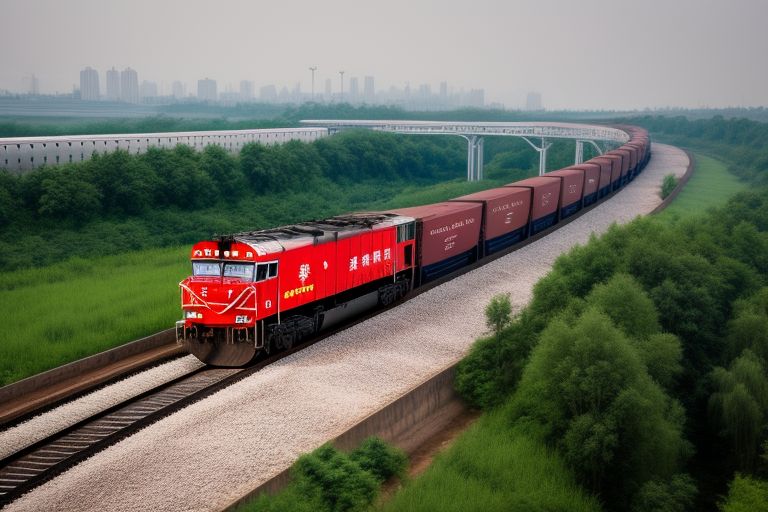
According to the press-service of Kazakhstan Railways, as part of the project, which was launched jointly with the Chinese China Railway Container Transport (CRCT), container trains from the PRC will go through the territory of Turkmenistan, Kazakhstan, Iran and Turkey, and from there – to European countries. The first train on the new route departed from the Chinese city of Chengdu with the final destination in the Polish industrial center of Lodz, the estimated travel time is forty days.
This does not bode well for Russia. Up until the outbreak of the war against Ukraine, cargo from China to Europe mainly traveled through Kazakhstan, Russia and Belarus. However, after the Russian invasion, many companies refused to transit through Russian territory—apparently not only for moral and ethical reasons. There are real fears, if not of physical destruction of cargo, then of very likely problems with Russian customs and other security agencies, which can detain shipments on the most bizarre grounds.
In 2022, after the imposition of harsh international sanctions, the Russian leadership rushed to loudly proclaim the reorientation of its economy towards partnership with China. It seems that the Russian Federation, as usual, missed the memo. It has made itself completely dependent on China, allowing the latter to dictate the terms of the partnership, while the priority markets for Chinese exports remain in the United States and Europe.
According to Eurostat, China is the world’s largest exporter of goods: in 2023, it exported goods worth 3,125 billion euros (17.5% of world exports). It is followed by the EU (€2,557 billion, 14.3%), the United States (€1,869 billion, 10.4%), Japan (€663 billion, 3.7%) and South Korea (€585 billion, 3.3%).
In terms of imports, China ranks third (€2,364 billion, 12.8%), preceded by the United States (€2,934 billion, 15.9%) and the EU (€2,523 billion, 13.7%) and followed by the United Kingdom (€732 billion, 4.0%) and Japan (€727 billion, 3.9%). As we can see, Russia is not in the lead in terms of either exports or imports. This is despite the fact that from 2021 to 2023, imports from China to Russia grew by 121 percent (compared to exports from China to the rest of the world over the same period, which grew by 29 percent), according to the Atlantic Council.
Heavily sanctioned Russia, with its aging and impoverished population, will continue to remain on the periphery of China’s foreign trade balance even with full dependence on China. At the same time, China will seek to minimize its risks in other markets by excluding Russia from logistics chains. Central Asian countries are becoming China’s natural partners in this regard, and not only for purely geographical reasons. After the collapse of the USSR, a significant number of European, predominantly urban population left the region, which, among other reasons, caused a wave of urbanization of the indigenous population. Given the high birth rate and natural population growth, which, according to experts, will continue until the middle of this century, local markets are becoming the focus of attention of major trading powers, primarily China.
Russia however is rapidly losing influence in the region. Central Asian governments are also closely watching the weakening of the CSTO (the way Russia bluntly refused to fulfill its obligations to Armenia during the Second Karabakh War will not soon be forgotten). Russia’s blatantly discriminatory policy toward labor migrants from Central Asia is not strengthening relations with the countries of this region either. Sanctions, war and economic stagnation are also forcing them to look toward more reliable, profitable and promising partners. As a result, Central Asian countries and China are increasingly eyeing each other and turning away from Russia.
A natural consequence of this is the expansion of the partnership between Central Asia and China and the launch of new transportation and logistics projects. In addition to the above-mentioned new route from Chengdu, in early March it became known about the launch of a joint venture in Almaty between JSC Kedentransservice, the largest logistics terminal operator in the Republic of Kazakhstan, and China Xinjiang commercial logistics (Group) Co. Ltd. At the first stage they plan to create a modern complex with an area of 500 hectares and a design capacity of about 350 thousand TEU per year. The plans also include the construction of a railroad terminal, warehouse and multi-temperature zones, open areas for motor vehicles, as well as areas for bulk cargo and grain storage facilities.
And that’s not all: in addition, China is developing two more railroad projects through Central Asian countries, bypassing Russia. The first, the Trans-Caspian International Transportation Route (TITR), was agreed upon in the summer of 2023. It will pass through Kazakhstan, the Caspian Sea, Azerbaijan and Georgia.
The second involves the construction of a railroad through Kyrgyzstan and Uzbekistan to the Caspian Sea, from where cargoes will be delivered to the European Union via Turkey. The project will be implemented by China Railway International.
As for Russia, it will remain on the periphery of this new Silk Road, having finally lost its influence in the region and ceded its traditional spheres of influence to the new patron. All the while, the Russian leadership will continue to tell its population about the turn to the East and the struggle against migrants from Central Asia, whom the Russian public dislikes so much. Yet another cautionary tale of the fall of empires.

On China’s Territorial Claims Against the Russian Federation
PSCRP-BESA Reports No 116 (March 1, 2025)
A year and a half ago, in the summer of 2023, a forum titled “Yakutia and the Provinces of China: Sister-City Relations for Strengthening Russian-Chinese Relations” was held in Yakutsk, the capital of the Russian Republic of Sakha. Given that China is Yakutia’s most important foreign trade partner and considering Russia’s increased dependence on China after launching its full-scale aggression against Ukraine, this event was not surprising. However, in the lead-up to this international gathering, several publications appeared on the semi-official Chinese blog platform Sohu.com, seemingly intended for a domestic audience, promoting certain narratives that could not fail to alarm Russians:
Yakutia is a region fighting for independence, but this struggle is doomed to fail because Russia will never allow it.
Yakutia is the second-largest territory in the world (after China) populated by representatives of the “yellow race.” Historically, it has strong ties to China.
Yakutia is extremely rich in natural resources, but harsh natural conditions and a dire economic situation are causing mass emigration. In the foreseeable future, it faces depopulation.
Chinese-Yakut ties must be developed as widely as possible. Beyond mutually beneficial economic cooperation, this will grant Yakutia a certain degree of autonomy.
Against this backdrop—perhaps in response to the media activism of Yakut independence supporters and not without the involvement of Russian security services—an open letter by a group of Yakut intellectuals began circulating online. Its main argument was: “For the Yakut people, the disintegration of Russia would be a catastrophe. In that case, Yakutia would become part of the Chinese state.”
However, Russia chose not to respond openly to this Chinese propaganda move. The forum in Yakutsk proceeded successfully, and ties between China and the Republic of Sakha continue to strengthen. In May 2024, the head of the republic, Aisen Nikolaev, stated in an interview with China’s Xinhua News Agency that “China is Yakutia’s largest trading partner. More than 45% of the region’s foreign trade is with China, and its volume continues to grow year after year”.
The authors of the aforementioned publications on Sohu.com among other things expressed shock at Yakutia’s extremely harsh climate: winter lasts from October to April, with temperatures dropping below -50°C and in some areas reaching -70°C. Because of this, the settlement of Yakutia by Chinese people or its takeover by the People’s Liberation Army of China (PLA) seems highly unlikely. However, according to the PLA’s “strategic boundaries and living space” doctrine—stating that “population growth and limited resources naturally create the need for expansion beyond internationally recognized borders”—the Republic of Sakha, whether remaining within the Russian Federation or gaining nominal independence, could easily fall within China’s “living space” without being formally annexed.
Besides Yakutia’s immense natural resources, it is also strategically important for China due to its access to the Arctic Ocean—an increasingly critical factor amid global warming and the ongoing geopolitical struggle for the Arctic.
It is also worth noting that directly south of Yakutia are Russian regions to which China has almost openly laid claim, as they were once part of the Qing Empire. These include the Amur Oblast, the Jewish Autonomous Oblast, most of Khabarovsk Krai (excluding the Tuguro-Chumikansky, Ayano-Maysky, and Okhotsky districts), and Primorsky Krai. Nominally, territorial disputes between Russia and China were resolved when Russian President Vladimir Putin and Chinese President Hu Jintao signed a border demarcation agreement on October 14, 2004. Under this agreement, Russia ceded several border areas totaling 337 square kilometers to China. However, from the Chinese perspective, Russia still occupies much larger Chinese territories, meaning historical justice has not been restored.
It is no coincidence that Taiwanese President Lai Ching-te publicly rebuked the Chinese government, accusing it of hypocrisy: “If China truly cares about territorial integrity, why not reclaim the lands occupied by Russia under the Treaty of Aigun? Russia is currently very weak, isn’t it? They could demand these territories back, but they don’t. Clearly, Beijing’s true goal in seeking control over Taiwan is not about territory but about dominance in the western Pacific region.”
According to the Treaty of Aigun (1858) and the Convention of Peking (1860), signed between the Russian Empire and the Qing Dynasty—then weakened by the Second Opium War with Britain, France, and the U.S.—China was forced to cede vast lands along the left and right banks of the Amur River. The Chinese consider these treaties unfair and patiently await the restoration of historical justice. Notably, they continue to use their own names for cities and geographical features in these territories, much to the Russians’ frustration.
The territories annexed by Russia from the Qing Empire were never ethnically Chinese. Before Russian colonization, they were primarily inhabited by indigenous Tungusic-Manchu peoples (Evenks, Nanai, Udege, and others), who were closely related to the Manchus—the rulers of China in the 17th century and the founders of the Qing Empire. In 1911, the Chinese overthrew the Manchu dynasty, but this has not stopped them from considering these former Manchu territories as inherently their own, following their own historical logic. It would not be an exaggeration to say that the Chinese have appropriated Manchu history.
Before Russia’s full-scale aggression against Ukraine, the author had visited Siberia and the Russian Far East multiple times. The most striking observations were the low standard of living among the vast majority of the population, widespread anti-Moscow sentiments due to the federal government’s ruthless exploitation of the region’s resources, and the low population density. Chinese presence was noticeable, especially in the extensive illegal logging carried out by Chinese companies in these areas. However, in all four federal subjects of this region, the Russian and Russian-speaking population clearly dominates.
In Amur Oblast, according to the 2010 census, ethnic Russians made up 94.74% of the population, Ukrainians 2.02%, Belarusians 0.51%, and officially recorded Chinese only 0.08%. Indigenous Siberian and Far Eastern peoples of Mongoloid descent—Koreans, Evenks, Yakuts, Buryats, and Tuvans—accounted for a total of 0.53%. The population density of the oblast, which had a population of 750,000 in 2024 according to the Russian Federal Statistics Service (a quarter less than in 1989), is only 2.07 people per km².
In the Jewish Autonomous Oblast, the 2010 census recorded 92.33% Russians, 2.82% Ukrainians, 0.94% Jews, 0.42% Belarusians, and only 0.05% Chinese. Indigenous Mongoloid peoples—Koreans, Yakuts, Nanai, Buryats, Evenks, Nivkhs, Ulchs, Udege, and Evens—together accounted for 0.43%. The population density is 4.02 people per km². As of 2024, the region’s population, according to the Russian Federal Statistics Service, is 146,000, having continuously declined since 1992, when it stood at 220,000.
In Khabarovsk Krai, according to the 2010 census, 92.86% of residents were Russians, 0.64% Ukrainians, 0.12% Belarusians, and officially 0.06% Chinese. Indigenous Mongoloid peoples—Nanai, Koreans, Evenks, Ulchs, Nivkhs, Buryats, Evens, Yakuts, Udege, Negidals, Orochs, and Tuvans—collectively accounted for 2.42%. The population density is 1.62 people per km² (though it is particularly low in the three northern districts of the krai, which China does not claim). According to the 2024 Russian Federal Statistics, the population is 1,278,000, down from 1,625,000 in 1991.
In Primorsky Krai, the 2010 census recorded 92.52% Russians, 2.76% Ukrainians, 0.33% Belarusians, and 0.16% Chinese. Indigenous Mongoloid peoples—Koreans, Buryats, Udege, Yakuts, Tuvans, Nanai, Taz, Nivkhs, Orochs, Ulchs, and Oroks—accounted for 1.23%. The population density is significantly higher than in the three other mentioned federal subjects, reaching 10.97 people per km². According to 2024 Russian Federal Statistics, its population is 1,806,000, having declined from 2,315,000 in 1992.
For comparison, the population of Heilongjiang Province, China, according to the 2020 census, was 31,850,000, several times larger than the combined population of all four bordering Russian regions. The population density in Heilongjiang is 70 people per km². Thus, if the Chinese authorities decide to act, Chinese settlers could quickly become, if not the majority, then a significant part of the population in these four Russian federal subjects. Moreover, official statistics regarding the number of ethnic Chinese in Russia (19,644 people according to the 2021 census) are clearly understated. Unofficial estimates suggest that the real number of Chinese in Russia—particularly in Siberia and the Far East—is many times higher.
It is possible that China may pursue a return to the borders established by the Treaty of Nerchinsk (1689) if the Russian central government significantly weakens. Depending on circumstances, Beijing could either openly annex these territories or temporarily support the revival of the Far Eastern Republic, which existed from 1920 to 1922. This idea was actively discussed in the early 1990s and, as I personally know, still has its supporters today. One way or another, China intends to include these lands within its “living space.” Notably, Koreans, Evenks, and Nanai are among the 54 officially recognized ethnic minorities in China—as are Russians.
Turkmenistan’s Shift Towards The Moscow-Tehran-Beijing Axis
PSCRP-BESA Reports No 114 (February 11, 2025)
In the ongoing geopolitical conflict between Iran and Israel, Iran’s relations with post-Soviet states—especially those with which it shares a direct border—play a crucial role. The tensions between Iran and Azerbaijan, coupled with Azerbaijan’s strategic partnership with Israel, are well-known to experts. Similarly, Iran’s close ties with Armenia are also widely acknowledged. However, a less frequently discussed yet highly significant aspect is the nature of Iran’s relationship with the third post-Soviet state with which it shares a border—Turkmenistan.
Officially, Turkmenistan maintains a policy of neutrality. However, the interpretation of this neutrality shifts in response to changing geopolitical realities. Currently, several factors indicate a gradual realignment of Turkmenistan’s foreign policy towards the Iran-Russia-China axis, a development that runs counter to Israeli interests. This article explores the domestic and international factors driving this shift.
Foreign Policy Factors: Declining U.S. Influence, Russia’s Growing Interest, and Chinese Debt Settlements
The foreign policy approach of Serdar Berdimuhamedow, who assumed the presidency in 2022, largely follows the path set by his father, Gurbanguly Berdimuhamedow. The elder Berdimuhamedow still wields significant influence over Turkmenistan’s policies, holding the titles of National Leader of the Turkmen People, Chairman of the People’s Council of Turkmenistan, and even the honorary title of Protector (Arkadag), a designation reminiscent of other authoritarian figures in Central Asia.
One of the key turning points in Turkmenistan’s geopolitical orientation occurred in June 2021, when the country completed the repayment of Chinese loans used to finance the Turkmenistan-China gas pipeline and the development of the Galkynysh gas field. The sale of gas through this pipeline remains the primary source of foreign currency revenue for Turkmenistan. However, prior to 2021, a significant portion of these earnings was directed toward repaying China, a financial arrangement many analysts likened to a form of neocolonial resource-extraction dependency.
While the precise amount of the repaid debt was never officially disclosed, earlier reports from Turkmen media suggested that China had extended loans amounting to $8.1 billion for Turkmen energy projects. Despite this repayment, Turkmenistan remains one of China’s largest natural gas suppliers. Bilateral trade between the two nations remains robust, reaching over $10.5 billion in 2023—a figure that vastly exceeds Turkmenistan’s trade volume with Russia or the European Union.
Turkmenistan’s ability to alleviate Chinese financial pressure was, in part, made possible by increasing cooperation with Russia, spanning trade, credit agreements, and even informal security guarantees against potential threats from Afghanistan. Historically, Ashgabat had sought to reduce its reliance on Russia’s gas monopoly Gazprom by prioritizing gas exports to China. However, given the shifting geopolitical landscape, Russian energy dominance no longer poses the same threat to Turkmenistan’s economic independence. Consequently, in 2019, Turkmenistan resumed gas exports to Russia.
Following the unprecedented Western sanctions on Moscow in 2022, Russia has aggressively pursued deeper ties with Central Asian nations, including Turkmenistan. Gazprom has expressed interest in using Turkmenistan’s pipeline infrastructure to facilitate the transit of Russian gas exports to China. However, Ashgabat remains cautious, citing past experiences and emphasizing its sovereignty over its gas transit network.
The withdrawal of U.S. forces from Afghanistan in 2021 significantly reduced Western influence in Central Asia, limiting Turkmenistan’s ability to balance between major powers. Additionally, the scale of Turkmenistan’s economic engagement with China and Russia far outweighs its cooperation with Western nations.
The outbreak of the Russia-Ukraine war in 2022 further reinforced Moscow’s scrutiny over the foreign policies of its regional neighbors, ensuring that they do not drift towards the West. However, despite the growing influence of Russia and China, Turkmenistan has attempted to maintain its neutral stance. For instance, Ashgabat continues to explore Western-backed energy projects, such as the Trans-Caspian Gas Pipeline. Nonetheless, strong opposition from both Russia and Iran leaves the project’s future uncertain.
In July 2023, Turkmenistan’s Ministry of Foreign Affairs stated—contradicting the positions of both Tehran and the Kremlin—that no legal or technical barriers exist to the construction of the Trans-Caspian Gas Pipeline. The ministry emphasized the project’s economic viability and its potential contribution to Eurasian energy security. While this declaration signals Turkmenistan’s willingness to engage with Western partners, the geopolitical realities of Russian—and particularly Iranian—resistance present significant challenges. In March 2024, Turkmenistan renewed its proposal to transport natural gas to Turkey via the Caspian Sea and Azerbaijan, citing the 2018 Convention on the Legal Status of the Caspian Sea, which permits the laying of pipelines along the seabed with the agreement of the coastal states.
Strengthening Authoritarianism and Ideological Convergence with Iran and Taliban-Controlled Afghanistan
Many experts initially speculated that Serdar Berdimuhamedow, following the example of his father, would adopt a strategy of relative liberalization to gain popular support before gradually tightening control. Additionally, reforms in neighboring Kazakhstan and Uzbekistan—both of which have improved relations with Turkmenistan—gave some hope for moderate liberalization of the Turkmen regime.
However, these expectations proved mistaken. There has been no repetition of the “Turkmen thaw” that occurred during the early years of Gurbanguly Berdimuhamedow’s rule. Instead, following the ascension of the country’s third president, Turkmenistan has experienced a growing trend toward “state conservatism”—a trend that is widespread in contemporary Central Eurasia.
Under Serdar Berdimuhamedow, the government’s control over both public and private life has only intensified. Restrictions on women’s personal freedoms have expanded, including bans on cosmetics, eyelash extensions, hair dyeing, and other beauty treatments deemed inappropriate by state standards. Female government employees have been subjected to compliance inspections based on their appearance and social media posts. Women’s rights to wear clothing outside of the approved dress codes have also been curtailed. Additionally, obtaining permission to leave the country has become increasingly difficult, especially for women. The state has also tightened internet censorship, particularly targeting youth, and introduced more ideological content into schools and universities, including the mandatory study of Gurbanguly Berdimuhamedow’s works.
Although officially framed as a domestic nationalist policy, these measures also serve a foreign policy function. The trend toward “state conservatism” and the promotion of “traditional values” align with the ideological narratives of Turkmenistan’s key geopolitical partners—Russia and China—but resonate particularly well with Iranian Supreme Leader Ali Khamenei’s inner circle and the Taliban leadership in Afghanistan.
This growing authoritarianism and social conservatism isolate Turkmenistan from the West, where issues of human rights and gender equality have always been major foreign policy priorities. Following the U.S. withdrawal from Afghanistan in 2021 and Russia’s full-scale invasion of Ukraine in 2022, Western influence in the region has diminished, prompting Turkmenistan to align its policies more closely with the values of its immediate neighbors.
From a foreign policy perspective, Turkmenistan’s domestic conservative policies under Serdar Berdimuhamedow are also driven by a desire to harmonize relations with Iran’s conservative elite and Afghanistan’s Taliban government. Following the Taliban’s return to power in 2021, Turkmenistan quickly re-established ties with the group. Afghanistan remains an important partner in the TAPI gas pipeline project (Turkmenistan–Afghanistan–Pakistan–India) and in transport corridors connecting Central and South Asia.
Maintaining good relations with the Taliban is also crucial for Ashgabat due to Afghanistan’s demands for a larger share of water from the Amu Darya River. If Afghanistan were to succeed in securing greater water resources, it could significantly impact Turkmenistan and worsen the ecological crisis in the Aral Sea region, already affecting Uzbekistan. This water dispute is expected to escalate in the coming years.
Turkmenistan’s conservative social policies, particularly regarding women’s rights and public morality, may serve as a means of reducing cultural contradictions with the Taliban and building trust in bilateral relations. A similar logic may apply to Turkmenistan’s interactions with Iran.
However, despite Turkmenistan’s ideological alignment with Iran, characterized by the strengthening of authoritarian and even totalitarian tendencies, Ashgabat has not engaged in significant strategic cooperation with Tehran. The two nations lack the necessary economic and military potential for deep collaboration. For instance, Turkmen gas is only relevant to Iran for supplying its remote northern regions, which are far from Iran’s major gas fields. Additionally, Turkmenistan does not possess significant Soviet-era military infrastructure, making military cooperation with Iran unappealing.
For Tehran, however, Turkmenistan’s foreign policy neutrality remains highly valuable. Unlike Azerbaijan, Turkmenistan does not cooperate with Israel or the United States in the security sphere. Iran also fully supports Turkmenistan’s isolationist policies, as they help ensure Iran’s strategic security. Any security collaboration between Turkmenistan and Western powers—especially Israel—would intensify Iran’s geopolitical encirclement, significantly increasing pressure on Tehran. A situation similar to the U.S. military presence in both Iraq and Afghanistan in the past—which created a sense of encirclement for Iran—could reemerge if Turkmenistan were to align with anti-Iranian forces. However, it is worth mentioning that during the period of U.S. military presence in Afghanistan and Iraq, the threat to Iran was mitigated due to certain unofficial agreements, particularly regarding Iraq.
Although Turkmenistan officially maintains a policy of neutrality, its geopolitical stance could theoretically change. During the peak of U.S. engagement in Central Asia, negotiations were held regarding the possibility of using the Mary-2 Soviet-era military airbase in Turkmenistan. Additionally, Turkmenistan once had active economic cooperation with Israel due to historical factors. Notably, the first president of Turkmenistan, Saparmurat Niyazov (Turkmenbashi), had personal ties to the Jewish community, as he was married to a Jewish woman. Moreover, a key behind-the-scenes figure in his administration, Alexander Zhadan, was an ethnic Jew who once served as Chief of Staff of the Central Committee of the Communist Party of Turkmenistan.
Israeli businessman Joseph (Yossi) Maiman played a crucial role in Israeli-Turkmen economic relations. As the founder of the Merhav Group in 1975, Maiman led major projects in Turkmenistan, including the modernization of a refinery. He also served as Israel’s Special Ambassador to Turkmenistan, fostering diplomatic ties. Even after the death of Turkmenbashi, Maiman continued to play a significant role in relations with Turkmenistan. However, his passing in 2021 created a gap in Israel’s ability to engage with Turkmenistan effectively.
Future Prospects: Can the West Engage Turkmenistan?
While Turkmenistan officially adheres to a policy of neutrality, its recent foreign policy adjustments indicate a gradual tilt toward the Russia-Iran-China axis. Nonetheless, Turkmenistan still seeks to balance its relations by exploring Western energy projects such as the Trans-Caspian Gas Pipeline, though significant obstacles remain. As Turkmenistan’s geopolitical stance continues to evolve, it will be crucial to monitor how far Ashgabat is willing to align with Moscow, Tehran, and Beijing—and whether it will continue to uphold its proclaimed neutrality.
Turkmenistan might engage with anti-Iranian forces and distance itself from the Moscow-Tehran-Beijing axis—but only if it receives significant strategic incentives in return. Ashgabat has repeatedly hinted that an attractive proposal could be the construction of the Trans-Caspian Gas Pipeline. This project would undermine Russia’s and Iran’s ambitions in the European energy market while also limiting China’s ability to monopolize Central Asian gas supplies. Additionally, it would strengthen cooperation between Central Asian states and Azerbaijan, through which gas would be transported to Europe.
Recently, the EU, Turkey, and Azerbaijan have shown growing interest in advancing the Trans-Caspian Gas Pipeline, and Israel could strategically support the project to counter Iran’s influence. However, engaging with Turkmenistan carries significant reputational risks for Western actors, given its highly authoritarian domestic policies. Nevertheless, theoretically, under certain circumstances, the construction of the Trans-Caspian pipeline and engagement with Turkmenistan could become one of the priorities of a future Trump administration in Central Eurasia.
Thus, Turkmenistan remains at a geopolitical crossroads, maintaining formal neutrality while leaning toward an alliance with Russia, Iran, and China. However, if sufficiently incentivized, Ashgabat might reconsider its stance, presenting an opportunity for Western and Israeli diplomatic engagement.