
Theme - EU

Monthly Monitoring of Analytical Publications on Post-Soviet Conflicts
PSCRP-BESA Reports No 234 (September 29, 2026)
August is traditionally considered a month when academic activity grinds to a halt—a trend that applies particularly to publishing. It is precisely in August that reputable journals make room for publications with unusual or even exotic themes, and authors find the time to work on such pieces. In this edition of our monitoring report, we have not strayed beyond the scope of conflicts in the post-Soviet space—and yet, we will be discussing epic heroes, artificial intelligence systems in public service, and medical education amidst political instability.
The article “Multilingual Education in Kazakhstan: Policy and Practice,” authored by Kulpash Koptleuova of Baishev University, Akhmaral Khairzhanova of Kh. Dosmukhamedov Atyrau University (corresponding author), Kamar Aldasheva of Abai Kazakh National Pedagogical University, and colleagues Kulyash Bainiyeva, Alla Leonova, and Gulim Saiynova, appeared in the International Journal of Society, Culture & Language in August 2026. It offers a timely examination of Kazakhstan’s language education policy as an instrument of nation-building and conflict management in a multiethnic post-Soviet state.
The study centers on how official discourses and institutional measures shape the roles of Kazakh as the state language, Russian as the language of interethnic communication, and English as the vehicle of global integration. The authors ask what policy discourses, language ideologies, and status-planning mechanisms define Kazakhstan’s educational language regime, and how far official statistics reflect the stated goal of balancing the three languages. Their method is qualitative document analysis of the Constitution, the 2003 Law on Languages, the State Program for the Development of Education and Science 2020–2025, the 2023 Concept for preschool and secondary education, CLIL guidelines, and national statistical reports, including the 2021 census and 2023 sociological surveys on language proficiency. Following a six-phase thematic procedure adapted from Braun and Clarke, they identify five interlocking themes: the ideological framing of the “Trinity of Languages,” the construction of language hierarchies through status planning, mechanisms of pedagogical implementation, teacher preparation as a persistent challenge, and the tension between nation-building and global competitiveness.
The analysis reveals that the “Trinity” is not a neutral technical arrangement but an ideological construct that privileges Kazakh symbolically while preserving Russian’s functional dominance and casting English in instrumental terms. Constitutional and statutory provisions place Kazakh at the apex, yet Russian retains de facto primacy in administration, education, and everyday life, with 90.6 percent overall proficiency. English has advanced modestly—29 percent of adults report some competence—but advanced command remains limited. Statistical trends confirm a steady expansion of Kazakh-medium schooling and higher education, from roughly 37 percent of students in 1993 to over 70 percent of recent school graduates, yet the authors underscore the uneven rollout of trilingual instruction, the conflation of basic CEFR B1 proficiency with genuine CLIL pedagogical capacity, and the absence of transparent criteria for institutional readiness. These gaps reproduce regional and resource asymmetries, leaving the policy’s equity claims only partially realized.
For scholars of the post-Soviet space, the article contributes a carefully documented case of how language planning seeks to prevent interethnic conflict while consolidating statehood. Its relevance to Israeli academic readers lies in the parallel challenges of managing linguistic diversity within multiethnic societies, the strategic use of education to foster social cohesion, and the delicate balance between national identity and international competitiveness—issues that resonate with Israel’s own experience of nation-building amid competing cultural claims and its growing engagement with Central Asian partners. By illuminating both the achievements and the structural tensions of Kazakhstan’s trilingual project, the study supplies a nuanced lens through which to view language as a potential site of both conflict and accommodation in the wider post-Soviet region.
***
Artem Hmelnykov of Taras Shevchenko National University of Kyiv and Nataliia Khoma of Lviv Polytechnic National University examine the conceptual interdependence of local democracy and local political management in an article published in the Baltic Journal of Economic Studies, volume 12, number 1, 2026. Drawing on a neo-institutional approach, the authors treat local democracy as a value-institutional dimension centred on citizen participation, legitimacy of authority, transparency and accountability, while presenting local political management as the organisational-managerial dimension concerned with the development, adoption and implementation of decisions at the territorial level. Their working hypothesis holds that local democracy supplies the institutional foundation of procedures, norms and practices that confer legitimacy and participatory quality on local governance, and that political management in turn supplies the technologies, competencies and mechanisms through which democratic principles are realised.
The analysis proceeds by first mapping the regulatory and legal prerequisites that enable genuine local democratic institutions—constitutional guarantees of self-government, statutes regulating referendums, public hearings, electronic petitions and participatory budgeting, anti-corruption standards, inclusion norms and financial transparency rules. These elements together constitute the “operating environment” within which management operates. The authors then formulate a dialectical relationship: democracy shapes the rules and opportunities for management, while the quality of management either strengthens trust, participation and institutional resilience or, conversely, undermines them through bureaucratic insulation or opacity. A concise conceptual formula crystallises this mutual dependence: local democracy provides the institutional, value-based and procedural foundation; local political management, resting on that foundation, ensures the formulation and execution of decisions; together they constitute a coherent system of democratic community governance.
Particular attention is given to the prospective post-war reconstruction. Under wartime conditions, local democracy adapted by prioritising mobilisation, solidarity and secure online and offline participation, while local political management performed critical crisis functions—evacuation coordination, defence support, assistance to displaced persons and rapid infrastructure repair. The authors argue that the legitimacy of these managerial actions rested on residual democratic trust. Looking ahead, they contend that reconstruction will amplify the same interdependence: large-scale resource allocation, priority-setting and integration of veterans and returnees will require inclusive consultation, public oversight and budgetary transparency if they are to avoid corruption, social discord and loss of legitimacy. Without robust democratic institutions, even well-funded programmes risk inefficiency; without competent management, democratic procedures remain empty formalities.
The study’s contribution lies in reframing two concepts usually treated in isolation as mutually reinforcing elements of contemporary local governance, and in demonstrating the continued validity of this coordinate system under conditions of existential conflict and recovery. For Israeli academic readers concerned with post-Soviet conflicts, state resilience and the management of contested territories, the analysis offers a timely reminder that the durability of local institutions under external pressure is inseparable from the quality of the democratic-managerial nexus that sustains them. The Ukrainian case illustrates both the vulnerability and the adaptive potential of that nexus, providing comparative insight into how communities maintain governance capacity amid war and prepare for reconstruction without sacrificing legitimacy.
***
Neda Atanasoski and Redi Koobak’s article “Automated Myth and the Postsocialist Digital State: The Imperial Trick of the Kratt AI Initiative in Estonia,” published in Imaginations: Journal of Cross-Cultural Image Studies, volume 17, number 1, 2026 (pages 131–165), examines Estonia’s national strategy for incorporating artificial intelligence into public services. The authors analyze the state’s decision to name these systems after the kratt, a mythic servant from Estonian folklore constructed from everyday objects and animated through supernatural means, which turns on its master when left idle. They advance the concept of “automated myth” to describe folklore embedded in AI systems that naturalizes the link between technological progress and liberal democracy.
The study addresses how cultural narratives shape AI governance in a postsocialist context. Methodologically, the authors combine Roland Barthes’s understanding of myth as depoliticized speech with Evgeny Morozov’s critique of techno-solutionism. They examine state promotional materials for Bürokratt, the world’s first public-service AI virtual assistant, alongside two artistic responses: Eugénie Baccot and Cyril Abad’s digital photo essay The Kratt Metaphor (2024), commissioned for Tartu 2024, and Rasmus Merivoo’s horror-comedy film Kratt (2020). This approach reveals how policy branding and cultural interfaces construct national identity while obscuring geopolitical entanglements.
The central conclusion is that the automation of the kratt myth performs an imperial trick. It indigenizes technofutures as Estonian national heritage, presenting AI as an organic extension of local folklore and identity, while simultaneously masking the influence of Silicon Valley capitalism that has driven postsocialist digital reforms since the 1990s. The authors argue that this process erases the Soviet technological foundations of the present, depoliticizes citizens by recasting them as consumers of efficient services, and naturalizes a model of governance oriented toward global competitiveness and foreign investment. Analysis of Bürokratt shows how the state contrasts the new transparent digital servant with the opaque Soviet bureaucrat, yet the system ultimately aligns Estonia with transnational capital through initiatives such as e-residency. The photo essay aestheticizes technology as continuous with sacred Estonian landscapes and rituals, thereby defanging potential risks, whereas the film satirizes techno-utopianism by exposing hidden costs, including exploited labor and residual imperial relations.
The article contributes to both postsocialist studies and critical AI research by demonstrating that folklore operates as an infrastructure of state power in the era of algorithmic administration. For an Israeli academic audience concerned with transformations in the post-Soviet space, the work illuminates how digital statecraft and techno-nationalism reconfigure sovereignty and identity after the dissolution of the Soviet Union. It highlights cultural mechanisms that sustain new forms of imperial entanglement under the appearance of national innovation and democratic service, offering comparative insight into the long-term political effects of technological modernization in the region.
***
Veja Lianga’s master’s thesis, submitted on 1 August 2026 for the Erasmus Mundus Euroculture program jointly awarded by the University of Strasbourg and Uppsala University, examines the discursive construction of opposition to the Istanbul Convention in Lithuania. Supervised by Sandrine Beaudry (Strasbourg) and Andreaz Fagerberg (Uppsala), the work is framed as an original contribution to the study of anti-gender politics in Central and Eastern Europe.
The central research question asks how Lithuanian political actors discursively constructed “gender” (translated as “social gender”) in opposing ratification of the Council of Europe Convention on Preventing and Combating Violence against Women and Domestic Violence between 2018 and 2024, and how these constructions relate to the broader European anti-gender mobilisation and the restriction of women’s rights. Drawing on literature on the anti-gender movement (Kuhar and Paternotte, Graff and Korolczuk), Europeanization theory, norm contestation, post-Soviet historical legacies, and moral-panic frameworks (Cohen, Butler), the author employs qualitative critical discourse analysis. Primary material consists of quotations from politicians, political spokespeople and religious figures published in mainstream Lithuanian news outlets. The analysis identifies six recurring discursive constructions: gender as ideology, gender as moral threat (especially to children and family), gender as foreign imposition, legal/pragmatic irrelevance, confusion, and cultural irrelevance.
Lianga demonstrates that anti-ratification discourse systematically portrays “gender” as an ideological project that endangers traditional family structures, national sovereignty and cultural identity. These framings closely mirror rhetoric circulating in other EU member states and in Russian discourse, positioning the Istanbul Convention as a symbolic battleground for anxieties over European integration, social change and patriarchal order. The thesis argues that such constructions generate a moral panic that impedes the advancement of gender-equality measures and leaves gaps in protection against gender-based violence unaddressed. Lithuania’s specific post-Soviet and Catholic heritage intensifies the framing of “social gender” as an externally imposed threat, whether attributed to Brussels or residual Soviet influence. Counter-discourses exist but remain marginal within the political arena examined.
By focusing on a smaller Baltic state often overlooked in English-language scholarship that privileges Poland and Hungary, the thesis enriches understanding of how transnational anti-gender narratives are localised and adapted. For an Israeli academic audience interested in conflicts and identity politics in the post-Soviet space, the study offers insight into the mechanisms of norm contestation, the instrumentalisation of historical memory, and the entanglement of religious nationalism with resistance to European legal frameworks—dynamics that illuminate broader patterns of sovereignty claims and cultural security discourses across the region.
***
The syllabus under review, authored by Professor Julia Verkholantsev of the Department of Russian and East European Studies, outlines the intellectual framework and structure of the undergraduate course.
The course is offered at the University of Pennsylvania (Penn).It is a specialized Benjamin Franklin Seminar (BFS) that is currently scheduled for the Fall 2026. Although presented as a pedagogical document rather than a conventional monograph, it functions as a carefully reasoned scholarly intervention into the study of how medieval narratives and material culture have been mobilized to construct modern national identities across Central, Eastern, and Southeastern Europe.
The subject of the course is the phenomenon of “national antiquities”—genealogical origin stories, hagiographic traditions surrounding holy figures of national significance, and sacred objects such as crowns, manuscripts, and icons—and the ways these elements have shaped nationalist discourse from the nineteenth century to the present. Verkholantsev situates the inquiry against the backdrop of contemporary European political rhetoric that continues to draw on medieval sources to assert ethnogenetic claims, territorial entitlement, or historical grievance. The methodological approach is comparative and critical: students are guided to examine primary medieval texts and later historiographic traditions, distinguishing between information, interpretation, argument, and significance, while remaining alert to the methodological weaknesses that allow such materials to be instrumentalized. The syllabus emphasizes active, AI-free engagement with approximately thirty to sixty pages of reading per session, regular production of concise reading notes, and two in-class assessments derived largely from students’ own analytical takeaways. The culminating project requires each participant to curate an imagined national museum, selecting and arranging a limited set of antiquities so as to construct a coherent narrative of national identity.
The central conclusions advanced by the syllabus are that national pasts are not simply recovered but actively constructed, that medieval materials acquire political force only through successive layers of interpretation, and that scholarly scrutiny of these layers is essential for dismantling the uncritical authority they still command in public discourse. Verkholantsev argues that nineteenth- and twentieth-century philological and historiographic scholarship transformed origin myths, royal sainthood, and sacred objects into instruments of nationalist mobilization; the task of contemporary scholarship is therefore to expose the selective and often anachronistic character of those transformations. Case studies of Bohemia and Moravia, Hungary, Poland, the Rus’ lands and the Grand Duchy of Lithuania (encompassing modern Lithuania, Ukraine, and Belarus), and Croatia illustrate how the same medieval repertoire—Attila and Scythian ancestry, St. Wenceslas and the Knights of Blaník, the Holy Crown of St. Stephen, the Częstochowa icon, Varangian legends, Glagolitic script—has been differently appropriated to serve distinct national projects.
The scholarly contribution of the syllabus lies in its insistence on treating national antiquities as objects of critical rather than celebratory study. By combining ethno-symbolic approaches to nationalism with close attention to medieval textual and material evidence, it offers a model for historicizing the very claims that continue to structure political debate in the region. For an Israeli academic audience concerned with conflicts in the post-Soviet space, the syllabus is particularly relevant. Its examination of competing origin narratives in Ukraine, Belarus, and Lithuania, and of the symbolic resources deployed to legitimize or contest political boundaries, supplies analytical tools for understanding how historical memory shapes contemporary identity conflicts. The neutral, source-critical posture modeled throughout the course encourages precise discussion of competing national myths without recourse to partisan labeling, thereby enriching scholarly discourse on the region’s enduring tensions.
Orhan Gültekin, a doctoral student at the Social Sciences University of Ankara’s Institute of Area Studies, published the article “The Social and Political Impact of Turkish TV Series in Central Asia in the Context of Cultural Diplomacy” in the International Journal of Idil-Ural and Turkistan Studies, volume 8, issue 2, pages 337–353, in 2026. The study examines the influence of Turkish television series on the Central Asian Turkic republics of Kazakhstan, Kyrgyzstan, Uzbekistan, and Turkmenistan, framing these productions as instruments of soft power and cultural diplomacy in the post-Soviet environment.
The research rests on a qualitative literature review and secondary-data analysis that draws together sectoral reports, academic studies, field inquiries, and institutional publications. Gültekin organizes the inquiry around a central question: how Turkish series shape political perceptions, everyday social practices, and collective identity constructions in these societies, and through which mechanisms—linguistic affinity, shared religious and historical references, and a synthesis of modern and traditional values—they operate. The analysis proceeds along three interrelated dimensions: the political, the social, and identity formation.
At the political level the author argues that the series transmit Turkey’s experience of modernization and its democratic values, thereby raising the visibility of a “Turkish model” and lending societal legitimacy to interstate diplomatic ties. Socially, linguistic closeness and common cultural codes allow the productions to affect consumption patterns, family norms, and lifestyle preferences; historical dramas reinforce notions of shared ancestry and unity. In the realm of identity, the series supply a unifying reference point of “Turkishness” for populations still negotiating national self-understanding after the dissolution of the Soviet Union. Gültekin concludes that Turkish television drama functions not merely as entertainment but as one of the most effective tools of cultural diplomacy, amplifying Turkey’s regional influence, catalyzing social change, and nourishing a common cultural foundation. The study introduces the notion of “dizi diplomacy” as a contribution to the broader literature on soft power.
For scholars concerned with the post-Soviet space the article offers a concrete case of non-state cultural actors shaping political and social realities in Central Asia. It demonstrates how media flows can reinforce or reconfigure identity narratives in societies that emerged from Soviet institutional frameworks, and how such flows interact with state-led initiatives such as those of TİKA and the Organization of Turkic States. The findings therefore illuminate the softer dimensions of regional realignment and the ways cultural proximity can translate into durable political capital—issues of direct interest to Israeli academic and policy communities that monitor stability, identity politics, and external influence across the former Soviet periphery.
***
The article “Digitalization of medical and healthcare education in a Low- and middle-income country: a mixed-method case study of institutional transformation at Yerevan State Medical University,” authored by Karine Sargsyan and colleagues affiliated with Yerevan State Medical University, the Medical University of Graz, Cedars-Sinai Medical Center, and related Armenian institutions, appeared in Frontiers in Digital Health in August 2026. It examines the deliberate institutional shift toward digital modes of medical training in Armenia, a post-Soviet low- and middle-income setting marked by infrastructural constraints, a lingering Soviet-era pedagogical legacy, and recurrent regional disruptions.
The study is framed as a mixed-methods institutional case study covering the period 2019–2023. Its central subject is the translation of constructivist and activity-based pedagogical theories into practical digital infrastructure, faculty development, student digital literacy programs, simulation-based training, telemedicine, tele-education, and hybrid learning formats. The authors pose the question of how a resource-limited medical university can sustain educational continuity and quality amid pandemic pressures and regional tensions, including the conflict in Artsakh. Methodologically, the work rests on an institutional transformation framework that sequences strategic vision, faculty digital-competency training, infrastructure development, student engagement, digital interventions, assessment, and quality assurance. Supporting evidence is drawn from an anonymous electronic survey of 513 undergraduate medical students (response rate 12.6 percent of the eligible cohort), employing eleven Likert-scale items and optional open comments. Analysis remains descriptive, reporting frequencies, percentages, and mean scores without inferential testing, and is supplemented by institutional observation and process documentation.
The principal findings indicate high levels of student-perceived satisfaction, with an overall positive response rate of 90.2 percent and mean scores ranging from 4.26 to 4.51 on a five-point scale. Respondents reported gains in theoretical knowledge, clinical skills confidence, digital literacy, and appreciation of hybrid flexibility; simulation training received particularly strong endorsement among clinical-year students. Technical barriers scored lowest, suggesting they were not perceived as insurmountable. Qualitative comments praised simulation centers and telemedicine sessions while noting occasional internet instability and the need for further faculty digital preparation and bilingual materials. The authors position these perceptual outcomes as evidence that a coherent institutional strategy—rather than technology alone—can overcome infrastructural, pedagogical, and equity obstacles. They stress that the results reflect self-reported experience rather than objectively measured learning or patient-care gains, and they explicitly limit claims of generalizability to a single institutional trajectory.
In scholarly terms the study contributes a concrete, context-sensitive roadmap for digital transformation within the post-Soviet medical-education landscape. It demonstrates that strategic alignment of mission, sustained faculty development, active student participation, and modest infrastructure investment can generate resilient hybrid and remote educational capacity even under conditions of regional instability. For an Israeli academic audience concerned with conflicts and institutional resilience across the post-Soviet space, the Armenian case offers instructive parallels: the capacity of higher-education institutions in geopolitically exposed environments to maintain professional training pipelines, to mitigate brain-drain pressures, and to preserve human-capital continuity during crises. The documented emphasis on simulation, tele-education, and quality-assurance mechanisms underscores practical pathways for sustaining medical expertise when physical access is constrained—an issue of enduring strategic relevance for regional security and public-health preparedness.
Fortifying the Frontier, Forgetting the Fundamentals: The Baltic States’ Puzzling Confidence
PSCRP-BESA Reports No 232 (September 23, 2026)
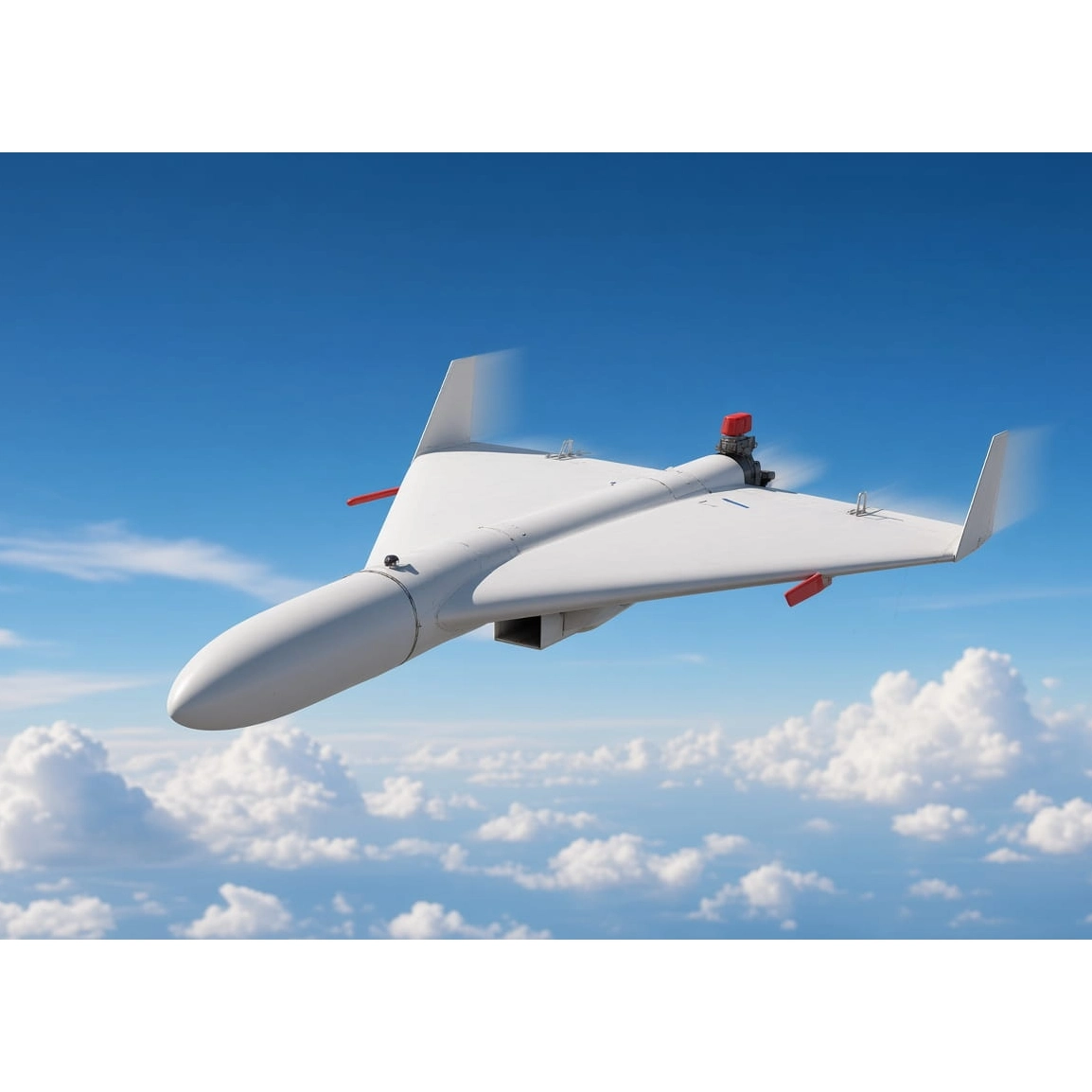
September has not been a quiet month on NATO’s northeastern edge. Russia opened polling stations for its parliamentary election at crossing points with Poland and the three Baltic states, a suspected Russian drone triggered fresh NATO scrambles over Lithuania days after a missile struck near a civilian train carrying European officials close to the Polish border, and analysts spent the month weighing whether Vladimir Putin might test the alliance’s resolve before winter. Estonia, Latvia, and Lithuania have spent four years arguing they are simultaneously the alliance’s most exposed members and its most prepared. September’s record invites a mild but persistent question: prepared for what, exactly, and with what?
A Familiar Kind of Escalation
The month’s drone and airspace incidents follow a pattern established over the spring and summer. Reporting from CBS News on September 8 described Lithuania training ordinary citizens to fly and disable drones, alongside underground command posts and anti-tank obstacles scattered across the country. The Foreign Policy dispatch of September 15 placed the latest Lithuanian incursion in the context of a train attack in Ukraine that narrowly missed senior European figures, a coincidence read in Brussels as a message rather than an accident.
US intelligence assessments first reported by the Wall Street Journal, and confirmed independently by CNN, describe a range of scenarios in which Putin might test NATO’s resolve on the alliance’s eastern flank sometime between this autumn and 2029, running from cyberattacks and deniable proxy groups to, at the outer end, a small-scale ground incursion. The reports rate the probability of that outer scenario as low but rising over time, and note that such a move has traditionally been considered unlikely precisely because it would activate Article 5, the very guarantee this piece questions below.
Numerous unnamed sources have also floated a more specific and more alarming claim over the past month: that Russia’s General Staff has drawn up plans for an additional mobilization of roughly 600,000 troops across 2026 and 2027, timed to follow the September 18–20 State Duma elections. It remains genuinely difficult to establish whether this represents a substantiated military plan, a piece of Russian hybrid warfare designed to unsettle Baltic publics, or one of several interested parties in the broader conflict testing the waters with a convenient leak. The rumor has, in any case, already become part of the psychological environment this piece is describing, regardless of its truth.
Set against all this is a curious diplomatic footnote from late August. CIA Director John Ratcliffe made an unannounced trip to Moscow on August 25, reportedly to warn the Kremlin against escalating with Estonia, Latvia, and Lithuania specifically. That a visit of this kind was thought necessary says something about how seriously Washington takes the risk. It also raises a question the public record does not yet answer: a warning delivered quietly in Moscow sits oddly next to a public American posture, discussed below, in which the commitment to defend the same three countries has been left deliberately vague.
Four Years, One Wall That Is Not a Wall
What, then, has actually been built since February 2022? The headline figures are real. All three Baltic states have reached or are approaching NATO’s 2035 target of spending five percent of GDP on defense, and the European Union has begun channeling roughly fourteen billion dollars in loans toward regional security investment, according to RFE/RL reporting cited above. Germany has committed an armored brigade to Lithuania, the United Kingdom leads the multinational battlegroup in Estonia, and Canada leads the one in Latvia. NATO has layered Baltic Sentry and Eastern Sentry over the region’s air, sea, and cyber domains since early and mid-2025.
Look past the announcements, though, and the picture thins. The “Baltic Drone Wall,” discussed publicly for more than a year, remains largely a name. As one unnamed Baltic official told RFE/RL in August, “it’s easier to talk about the drone wall than to build one. But let’s be frank: Nobody has this wall yet, not even the Ukrainians.” Rail Baltica, the EU-funded line meant to let NATO move troops and equipment into the region without relying on Soviet-gauge track, was supposed to open this year; it is now targeted for 2030, amid cost overruns and design changes. The military training ground at Kapčiamiestis, meant to secure the Suwalłki Corridor, has drawn public skepticism even from a former commander of Lithuania’s armed forces, who complained that officials have offered little beyond “believe me, we need it.” The IISS Military Balance for 2026 makes a related point about the wider eastern flank: when twenty-three drones crossed into Poland from Belarus in September 2025, at most four were shot down despite advance warning.
A second opinion is worth setting against this account. CEPA’s own reporting describes Estonia, Latvia, and Lithuania as, after Finland, the best-prepared states in Europe to face Russian hybrid aggression, pointing to their rapid and technically demanding exit from the Soviet-era BRELL power grid and to institutional experience accumulated since 2014. CEPA’s own analysts nonetheless add that an effective future response remains unlikely without greater investment and cooperation from the wider EU, a caveat that narrows the distance between this account and RFE/RL’s rather than closing it.
Poking the Bear on Borrowed Time
This is the part that produces genuine puzzlement rather than mere criticism. The Baltic governments have spent four years adopting an unmistakably confrontational public posture toward Moscow: expelling diplomats, banning Russian tourists, publicizing every airspace violation, and now hosting a training ground explicitly framed as a hedge against Russian ambitions in the Suwalłki gap. Carnegie’s own analysis from May noted that the three governments have avoided directly confronting Donald Trump on defense spending while doing everything possible to entrench NATO’s regional posture before any American drawdown becomes irreversible. That is a sensible hedge if the underlying military balance supports it.
Not every analyst reads the underlying balance as alarming as the previous section implies. The Atlantic Council’s assessment of September 17 pushes back against the more alarmed readings above, and its reasoning rests on two points. First, so long as Ukraine continues to absorb the bulk of Russia’s available combat power, Moscow lacks the spare capacity for a Baltic adventure, which is itself one reason the three Baltic states remain among Ukraine’s largest donors relative to GDP. Second, Baltic security officials themselves object to being framed as “virtually defenseless,” pointing to the battlegroups, reserve systems, and fortifications described above. The Council adds, however, that Baltic threat assessments would likely shift upward quickly if a ceasefire in Ukraine were reached, a comment on how contingent today’s reassurance actually is.
The EUobserver reporting from August adds a further layer of unease regardless of which reading one accepts. Baltic officials interviewed anonymously worry less about the drones themselves than about the “political chaos and hesitation” a false-flag incident might trigger among allies in its first hours. The frontline states’ own security establishment, in other words, is not fully confident that a genuine crisis would produce a fast, unified NATO response.
Would Article 5 Actually Be Invoked?
The deeper reason for skepticism lies in Washington rather than in Tallinn, Riga, or Vilnius. Donald Trump’s own comments on the alliance’s mutual-defense clause have been strikingly noncommittal. En route to the 2025 Hague summit, asked whether the United States would honor Article 5, he replied, “depends on your definition. There’s numerous definitions of Article 5,” a formulation he has never fully walked back. A Reuters investigation published in September, based on interviews with more than fifty current and former officials, found that this ambiguity has already begun reshaping European defense planning, with at least eight member states diversifying away from American weapons and technology in anticipation of reduced US involvement. The same reporting noted that roughly half the American troops previously stationed at Mihail Kogălniceanu Air Base in Romania, a key eastern-flank facility, had already departed as part of a broader realignment.
A second opinion comes from within the American political system itself. Writing in Newsweek this month, a sitting member of the US House of Representatives argued that Trump “has since reaffirmed America’s Article 5 commitment,” while also warning that his mixed messages “carry real risks”. The two halves of that argument sit uneasily together: reassurance and warning, offered by the same author, about the same guarantee, within the same short piece.
None of the above resolve the puzzle cleanly. The Baltic states have genuinely reinforced their positions since 2022, and their public defiance may be precisely the correct strategy if it buys time for slower-moving investments to mature. But the combination of loud provocation, incomplete fortification, and an American security guarantee that its own president describes as a matter of “definition” leaves an observer with a reasonable question: on whose confidence, exactly, is this policy resting?
Kazakhstan’s Policy of Diversifying the Routes of Energy Supplies to Europe: Interests of Israel and the EU
PSCRP-BESA Reports No 108 (Jan 5, 2025)
Faced with new challenges amid the war in Ukraine and increased pressure from Russia, Kazakhstan is taking a series of strategic measures to diversify its hydrocarbon trade and reduce dependence on the Russian route for transportation to Europe.
Traditionally, Kazakhstan has been heavily reliant on Russian transport infrastructure for exporting oil and gas. Given that Iran blocks Central Asian countries’ access to the Persian Gulf and considering the traditional supply routes to Europe established during the Soviet era, Russia’s territory appeared to be the most obvious path to Europe. The Caspian Pipeline Consortium (CPC) route, via the Russian port of Novorossiysk, exported the majority of Kazakh oil. The CPC project was implemented with the participation of major international corporations at a time when relations between Russia and the West seemed stable, and thus, the potential risk of a “new Cold War” was not factored in. However, since 2022, this route has become highly vulnerable due to ongoing military actions in the Black Sea and Russia’s political pressure aimed at fully subordinating Kazakhstan to Russian priorities amid Moscow’s conflict with the West and Ukraine.
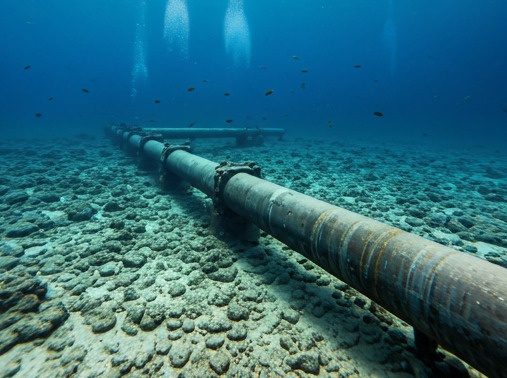
In response, Kazakhstan has intensified efforts in recent years to develop alternative routes, such as the Caspian Sea corridor. The Kazakh port of Aktau is becoming an important logistics hub for transporting oil and other goods to Europe via Azerbaijan, Georgia, and Turkey. Overall, Kazakhstan is actively developing trade and economic relations with China, Turkey, the European Union, South Asia, and the Middle East. However, the main direction for diversifying Kazakh oil supplies to Europe—where the majority of oil from Caspian fields is exported—has become the Trans-Caspian International Transport Route.
The Trans-Caspian route has given rise to an intriguing geopolitical dynamic that diverges from the usual anti-Western Eurasian axis of Beijing-Moscow-Tehran. Iran has consistently and aggressively opposed any Trans-Caspian energy transportation projects, fearing competition with its own energy exports to Turkey and Europe. The large-scale supply of Caspian oil and gas to European markets would render Iranian exports economically unviable. This would enable Europe to support U.S. sanctions against Iran indefinitely without bearing significant economic costs. Conversely, in the absence of alternative supplies, Europe has historically hesitated to fully embrace such sanctions due to the economic harm they inflict—especially now, with Russian energy supplies largely blocked.
In this context, supporting energy deliveries via the Trans-Caspian route is a direct national interest for Israel, though this is rarely discussed in Israeli expert and political circles. Such support not only undermines Iran’s economic interests but also strengthens Israel’s relations with Azerbaijan, an informal strategic partner, and with Central Asian countries that maintain a neutral stance in Middle Eastern conflicts.
It is evident that supporting the construction of Trans-Caspian energy transportation routes—for both Kazakh oil and natural gas from Turkmenistan and Kazakhstan—aligns with the interests of the EU and the broader Western coalition. These routes bolster the EU’s energy security amid its conflict with Russia, enhance the independence of Central Asian countries from both Russia and China, and encourage greater economic alignment of the South Caucasus with the West. Moreover, they tie Turkey more closely to its Western policy vector, reducing Ankara’s incentives to engage with Moscow. For the Turkish government, transforming Turkey into an energy hub is a critical strategy for overcoming its prolonged economic crisis. This goal becomes even more appealing when it involves the resale of energy resources from friendly Turkic nations.
Russia supports Iran’s stance against the construction of Trans-Caspian pipelines as such projects weaken Moscow’s leverage over Europe through energy pressure and create competition for Russian oil and gas. Additionally, Moscow fears that advancing Turkic integration projects through pipelines could undermine its influence in the southern post-Soviet region. Finally, the development of Trans-Caspian routes would further enhance the economic independence of Central Asian countries, Azerbaijan, and Georgia from Russia.
However, China’s interests in this case are opposite to those of Russia and Iran. For China, the Trans-Caspian routes represent the middle corridor of its Belt and Road Initiative (BRI), where the establishment of routes through Kazakhstan to Europe plays a crucial role. Due to the conflict in Ukraine, the northern corridor of the BRI through Russia to Europe has been blocked, while the southern corridor faces obstacles from conflicts involving Iran and the broader Middle East. Consequently, the middle corridor through the Caspian Sea becomes important for China. Thus, Kazakhstan and other Central Asian countries receive support for Trans-Caspian routes not only from the collective West but also from Beijing. Simultaneously, Kazakhstan garners backing from Turkey and other Turkic nations, which serve as significant partners in energy, logistics, and security.
Over the past five years, the export of Kazakh oil via various routes has undergone significant changes. The Caspian Pipeline Consortium (CPC) through Russia remains the primary export route for Kazakh oil, accounting for about 80% of total shipments.
In 2019, 55.6 million tons of oil were exported through the CPC, accounting for 77% of Kazakhstan’s total oil exports. In 2020, exports via the CPC decreased to 51.8 million tons (75.6% of the total), driven by a general reduction in production and exports due to the pandemic. In 2021, exports through the CPC rose to 53.2 million tons (78.7% of the total). However, in 2022, exports via the CPC declined to 52.0 million tons (80.8% of the total). This decrease occurred despite a favorable post-pandemic recovery, which, under normal circumstances, would have led to a substantial increase in shipments. Russia’s pressure and Kazakhstan’s efforts to diversify supply routes were the reasons for the decline.
In 2023, 56.5 million tons of oil were transported through the CPC (80% of the total), an 8% increase compared to 2022. In 2023, Kazakhstan also significantly increased oil exports, bypassing Russian ports, doubling volumes to 3.73 million tons (primarily via the Caspian Sea) compared to 1.91 million tons in 2022. Shipments through the port of Aktau to Azerbaijan alone rose to 1.5 million tons from 0.3 million tons in 2022. Exports via the Baku–Tbilisi–Ceyhan (BTC) pipeline increased to 1.4 million tons.
Thus, despite the dominant role of the Caspian Pipeline Consortium (CPC) in exporting Kazakh oil, recent years have seen a trend toward increasing shipments through alternative routes, such as the Trans-Caspian route via Azerbaijan and Turkey. This shift reflects Kazakhstan’s desire to diversify export pathways and reduce dependency on the Russian route, particularly amid the ongoing war.
A significant factor in this development has been Russian political pressure, driven by the Kremlin’s discontent with Kazakhstan’s continuation of its multi-vector foreign policy during the conflict. In 2022, Russia repeatedly suspended Kazakh oil exports through the port of Novorossiysk, citing various reasons.
The alleged discovery of World War II-era mines in the port’s waters halted oil shipments through Novorossiysk in June 2022. The port area was fully closed for demining, leading to a suspension of exports. Demining operations were scheduled for June 20 and were expected to last until the end of the month.
In July 2022, Russia again blocked the operation of the pipeline transporting Kazakh oil through Novorossiysk. This occurred shortly after Kazakh President Kassym-Jomart Tokayev publicly declared, in Putin’s presence, Kazakhstan’s non-recognition of the self-proclaimed republics in eastern Ukraine.
In August 2022, the CPC announced a reduction in oil flow through Novorossiysk due to defects discovered in the floating storage tank systems.
In 2023 and 2024, further suspensions of Kazakh oil shipments through the CPC to Novorossiysk occurred, including in December 2023 and April 2024. However, experts believe these suspensions were not politically motivated.
In light of the risks that emerged after 2022, Kazakhstan has formulated ambitious plans to expand oil shipments across the Caspian Sea, bypassing Russia.
Kazakhstan’s Minister of Energy, Almasadam Satkaliyev, announced in November 2024 the country’s intention to increase oil shipments via the Baku–Tbilisi–Ceyhan (BTC) pipeline to 20 million tons per year. However, he did not specify a timeline for implementing these plans. In total, Kazakhstan is set to export 68.8 million tons of oil in 2024, including 55.4 million tons through the CPC pipeline via Novorossiysk, 8.6 million tons via the Atyrau-Samara pipeline also through Russia, 3.6 million tons across the Caspian Sea, and 1.1 million tons via the pipeline to China.
To support the growth of exports across the Caspian Sea, Kazakhstan and Azerbaijan are negotiating port modernization and increasing the capacity of maritime oil transport. Discussions are also ongoing regarding the potential construction of a Trans-Caspian oil pipeline, which could significantly shift the regional landscape. However, this project remains far from realization at present.
Turkmenistan and Kazakhstan have also long expressed interest in building a Trans-Caspian natural gas pipeline to Azerbaijan. However, this initiative faces technical, financial, and political challenges, including pressure from Russia and Iran. Nevertheless, the gas reserves of Turkmenistan and Kazakhstan are sufficient to address the European Union’s energy concerns arising from its conflict with Russia, should the project be completed.
Kazakhstan also wields leverage over Russia in the oil and gas sector, allowing it to continue exporting hydrocarbons to Europe through Russian territory. Russia has begun redirecting a small portion of its gas and oil, previously destined for Europe, via Kazakhstan to Uzbekistan. Additionally, Russia has unsuccessfully sought access to Turkmenistan’s gas transport network, which passes through Kazakhstan to China. Between 2022 and 2024, the transit of Russian oil through Kazakhstan’s pipeline system to China significantly increased. These shipments occur via a pipeline that transports oil from Siberia through Kazakhstan’s Priirtyshsk and Atasu to Alashankou in China. In 2023, the transit volume reached approximately 9.14 million tons, and this figure is expected to approach 10 million tons by the end of 2024. Thus, Kazakhstan exports oil to Europe via Russian territory, while Russia exports oil to China via Kazakh territory. This situation exemplifies classic mutual interdependence.
Plans are also underway to increase the export of Russian natural gas through a proposed pipeline from Russia via Kazakhstan to China. Unlike the stalled pipeline project between Mongolia and China, this route has not faced significant obstacles. The projected capacity of the pipeline is 45 billion cubic meters per year, with 10 billion cubic meters earmarked for gasifying various regions in Kazakhstan.
In addition to its energy role, Kazakhstan plays a crucial part in facilitating Russia’s foreign trade amid international sanctions. This includes the practices of Russian companies in the sphere of bypassing international sanctions. However, official Astana, in coordination with the U.S. and the EU, has taken significant steps to combat sanctions evasion. Despite these efforts, completely resolving this issue is nearly impossible due to the Eurasian Economic Union (EAEU), which creates an integrated economic space between Russia and Kazakhstan modeled after the EU.
Overall, Kazakhstan, alongside its diversification strategy, possesses certain tools that compel the Russian government to negotiate. Certain compromises between Astana and Moscow, particularly in oil and gas trade, are inevitable. These two countries share the world’s longest land border and have a high degree of economic interdependence, formally institutionalized through the EAEU.
Even if Kazakhstan successfully increases oil shipments to Azerbaijan to 20 million tons—although no specific timeline has been provided—this will still represent a small share compared to the 50-60 million tons of oil exported to Europe via the Russian port of Novorossiysk. The situation in oil supplies could be dramatically altered by constructing a Trans-Caspian oil pipeline, while the gas supply landscape could shift with the development of a Trans-Caspian gas pipeline. However, these projects would require significant political decisions from multiple international actors to overcome pressure from Iran and Russia, as well as substantial investments.
The collective West and Israel could have vested interests in supporting such initiatives. This could lead to the creation of a powerful regional coalition of post-Soviet states, Turkey, the West, and Israel against Iran and Russia, with China likely adopting a neutral stance. The development of Trans-Caspian energy routes, alongside the trade corridor from India to Europe via Arab countries and Israel, could contribute to a complete restructuring of the Greater Middle East. In essence, such a system of new transportation routes would encircle and isolate Iran entirely.
Lithuania Prepares for the Worst Scenario
PSCRP-BESA Reports No 93 (Oct 28, 2024)
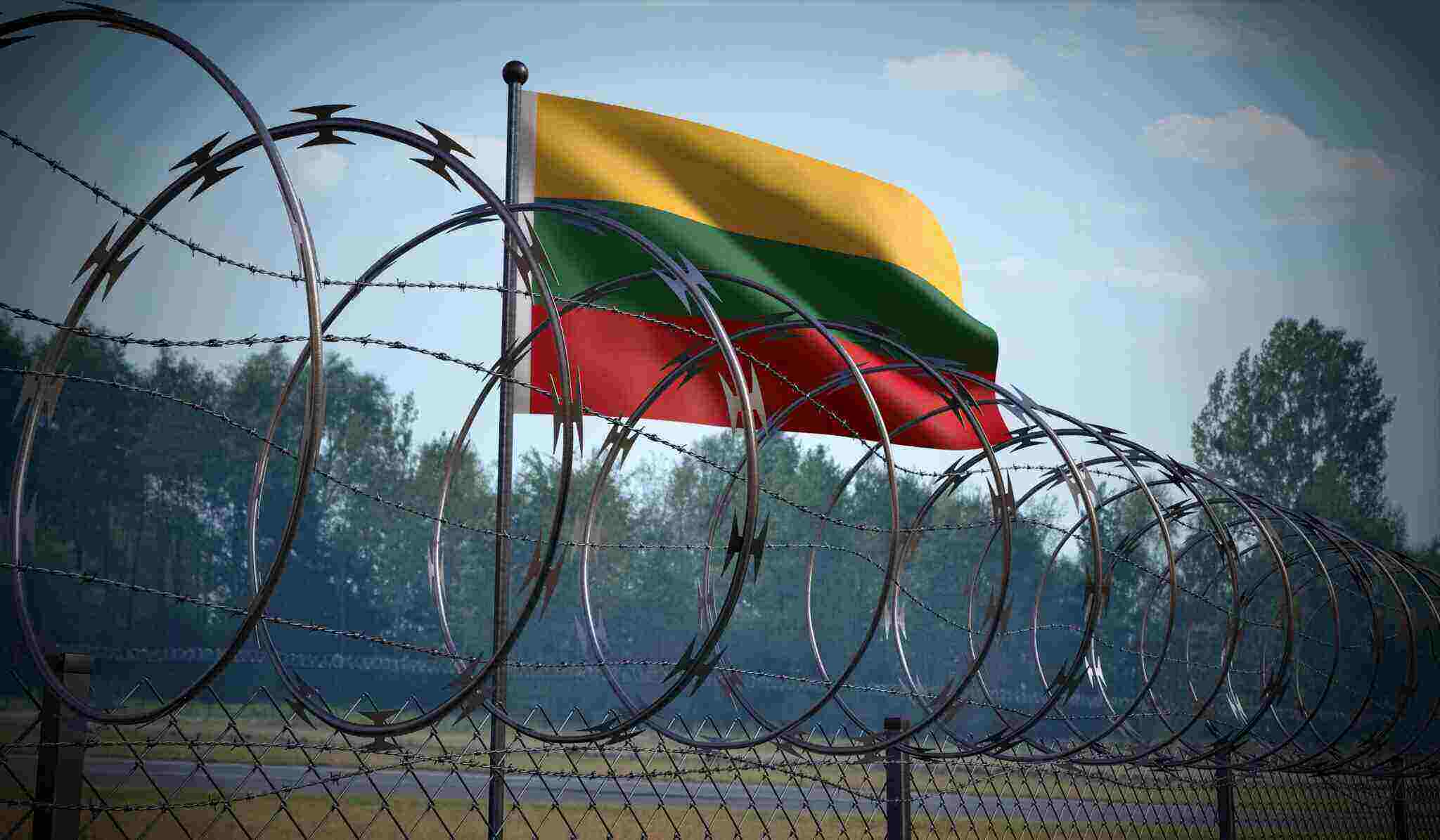
In January 2024, three Baltic States agree to establish a common defence zone on their borders with Russia and Belarus. It represents concerns about security in the region. The border of Lithuania and Latvia with Russia and Belarus, and the border of Estonia with Russia could be evaluated as a new line of cold confrontation between Moscow and the Western world. Similarly like during the Cold War in the XX century, now this region lives in the shadow of the threat of real (“hot”) confrontation.
Lithuania is taking security threats seriously, and this is part of the new reality the whole region has been living in since 2014 (and especially since February 2022). Vilnius is implementing measures in the borderland near Russia (Kaliningrad district) and Belarus, including stockpiling anti-tank barriers and other fortifications in so-called “counter mobility parks”. Prepared elements of fortifications could be quickly moved from parks to planned spaces in the situation if the armed conflict seemed unavoidable.
In the Global Militarisation Index, Lithuania is marked as a state with an extreme level of militarisation. At the same time, it should be said that it is not a voluntary choice of Lithuania or other countries of the region. During the past decade, the perception of the security situation and reality of military threats changed in Vilnius drastically. Lithuania is reacting to the modus operandi of such neighbour countries as Russia and Belarus. The short historical overview could allow a better understanding of changes in Lithuanian security discourse.
Lithuania joined NATO at the end of March 2004 and a few days later become a member of the European Union too. For Vilnius, both events have not only practical but symbolic meanings. It was the last step of full integration back into the Western World after decades of Lithuania was excluded from it by Soviet occupation (1940-90/91*).
NATO umbrella became for Lithuania the guarantee that the situation of 1940 will not repeat. Especially keeping in mind that the threat of a direct military confrontation between Russia and NATO seemed unrealistic back in 2004. The Alliance improved the security of Lithuania and other Baltic States by establishing the NATO Air Policing mission in the context of the lack of military air forces capabilities by Lithuania, Latvia, and Estonia. It could also be evaluated as a symbolic gesture from the side of NATO.
The low concern about the security situation in the period after joining NATO shows the fact that Lithuania abolished conscription and turned military service only to professional in 2008. The decision was reviewed after Russia’s actions against Ukraine in 2014. Conscription to the Lithuanian army renewed in 2015.
Vilnius was aware of Russia’s aggression against Georgia in 2008. President of Lithuania Valdas Adamkus was between other leaders of the Baltic States, Poland, and Ukraine who arrived in Tbilisi to support Georgian leader Mikheil Saakashvili on August 13, 2008. For Lithuania, the so-called Five-Day War became proof that Russia was back to very aggressive behaviour toward post-Soviet countries. Unfortunately, the Western World in general not acknowledge this point of view. The political trend was to see Russia’s action in Georgia as an unpleasant accident.
The final turning point (and not only for Lithuania) was the annexation of Crimea in 2014 and the escalation of the conflict in the Donbas region. It grew up concerns that Russia pushed its own geopolitical game to a higher level. The main fear contained the scenario that now Moscow could try to implement hybrid aggression against one or another NATO country to see how the Alliance would react (and without the proper reaction it would be a defeat of NATO). Answering the question “Who could be next?”, the Baltic States were mentioned especially often.
NATO’s decision during the summit in Warsaw in 2016 to deploy in the Baltic States and Poland Alliance’s Enhanced Forward Presence (EFP) a little bit reduced fears in Lithuania. On the other hand, it was understandable that EFP is more subject to strategic communication. It was the message to Moscow that NATO remembers its responsibilities. At the same time, it was recognised that EFP would be not enough to defend the Baltic States and Poland in case of full-scale Russian aggression.
Lithuania is also afraid that could be a primary target of Russia due to the Suwalki gap. This is an 80-kilometre stretch of land on the Polish-Lithuanian border, squeezed between the territory of Russia and Belarus. Politico.eu even called it “the most dangerous place on Earth” in 2022. Suwalki gap is only one land connection between the Baltic States and other NATO allies. In the situation of conflict with NATO, Russia will try to cut it primarily. On the other hand, the role of the Suwalki gap decreased after Finland and Sweden joined the Alliance respectively in 2023 and 2024.
The discoursive understanding of the security situation in Lithuania one more time changed Russia’s war of aggression against Ukraine. If the lesson of 2014 was that Moscow could provide covered (hybrid) aggressive actions against sovereign states, practice since February 2022 showed that Russia also does not consider as taboo old-style convention war. It means that even conventional war between Russia and NATO could not be seen as impossible anymore. Lithuania, together with other Baltic States, understood that in that scenario they would be in the first frontline. This understanding importantly affects defence policy.
Since 2022, Lithuania has been preparing for the worst scenario. The preparations have two general pillars: cooperation with allies and building of own capabilities.
NATO is seen as a main guarantee for the security of Lithuania. Vilnius also trying to establish close teas with some members of the Alliance. For example, in 2023 Vilnius and Berlin signed an agreement that Germany will deploy one military brigade in Lithuania. But it is a quite long process in the context of fast geopolitical changes. The so-called “Lithuanian Brigade” should be fully deployed on the ground in Lithuania only in 2027.
Vilnius drastically grows investment in its military capabilities. In 2014 the main political parties of Lithuania agreed that the military budget should gradually grow up to 2 per cent of GDP till 2020. In 2016 were agreed that growth should be faster, and Lithuania should achieve the goal by 2018. In general, Lithuania has kept the military budget of no less than 2 per cent of the GDP since 2019 (in 2021 it was 1.97 per cent of the GDP). There are some political discussions that that is not enough and that the military budget should be even bigger, i.e. 4 per cent of the GDP.
Lithuania also trying to learn lessons from Russia’s war against Ukraine. Of course, not all Ukrainian practices could be adopted directly due to the smaller territory of Lithuania and its population less than 3 mln. people. At the same time, summarizing different discussions and analyses, there are three main lessons Vilnius learned from mentioned war:
Importance of the air defence and artillery;
Importance of the drone technologies;
Importance of total defence (involving civilian capabilities).
The reaction to the first lesson shows new military purchases of the Lithuanian army. At the end of 2022, Lithuania signed with the U.S. contract to buy artillery systems HIMARS. Vilnius also improved the air defence umbrella by buying NASAM and MSHORAD systems.
Russia’s war against Ukraine gives an impetus to Lithuanian military industries, especially in the sphere of drone technologies. Ukraine is already using Lithuanian FPV (first-person view) drones. Vilnius also appointed 200 mln. Euros support for Lithuanian military industries in 2024.
The reaction to the third lesson is the decision to create possibilities for civilians, who are not in military reserve or not participating in activities of the Lithuanian Riflemen’s Union (a paramilitary organisation involved in the national defence system), to find their place in the paradigm of national defence. In 2024 these civilians got the possibility to register with the military commandant’s office. They will be invited to short military trainings annually. The decision is partly inspired by the Ukrainian practice of territorial defence unions.
This all shows that Lithuania is very serious about the question of security. Consensus about the importance of defence is found on different levels, including politics and society. Keeping in mind its painful historical experience with Russia, Lithuania is preparing for possible direct military aggression from Moscow. At the same time, there is a risk of overlooking other (indirect) threats. Lithuania already has some experience with hybrid action from the side of Belarus and the attempt of the Minsk regime to weaponise processes of migration. There are reasonable suspicions that Russia already implementing some hybrid tactics on the territory of Lithuania too. It shows some acts of possible sabotage, provocations and actions covered as criminal activities. Possibly it is a more topical challenge for the security of Lithuania at present.
*Lithuania officially re-established independence on March 11, 1990, but Moscow did not recognise this decision till the collapse of the coup attempt in Moscow in August 1991.
Kaliningrad — Russia’s Exclave in Europe
PSCRP-BESA Reports No 77 (August 23, 2024)
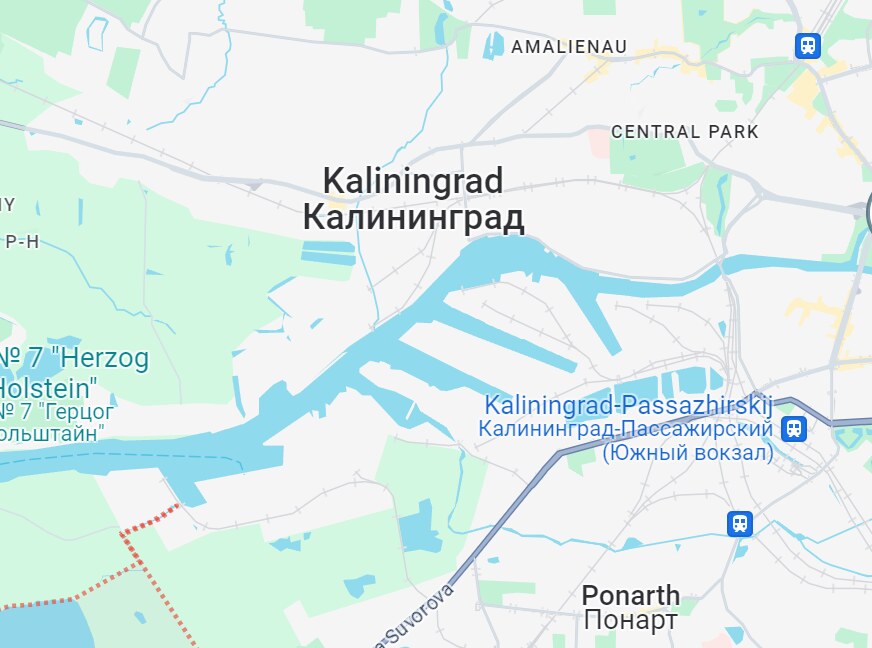
During an official visit to Ukraine on 13 August 2024, Lithuanian Defense Minister Laurynas Kasčiūnas said against the backdrop of the AFU offensive in Russia’s Kursk Region: “We are now seeing them (Russians — Author) redeploying their troops to Kursk. I say to the Lithuanian people: ‘Look how the Ukrainians are fighting for you, because their fight forces Russia to pull back its troops from Kaliningrad’. We actually call it the ‘demilitarization’ of Kaliningrad, which is happening thanks to the bravery of your (Ukrainian — Author) military, thanks to your decisions.”
This statement indicates, among other things, that the military and political leadership of Lithuania, which directly borders on the Russian Federation’s Kaliningrad region, regards this Russian exclave as a real threat. Indeed, since the beginning of the full-scale Russian aggression against Ukraine, there has been constant speculation about the possibility of a Russian attempt to seize the so-called Suwalki Gap, a strip of land about 100 kilometers long on the border between Poland and Lithuania, which separates the Kaliningrad region from Russian-controlled Belarus. It should be noted that even before the full-scale aggression against Ukraine, Russia used the Kaliningrad region for military blackmail against the EU countries that did not recognize the “new political reality” created by Russia in the form of the annexation of Crimea and the establishment of the puppet regimes of the DNR and LNR in Donbass. The Russians then publicly announced the deployment of tactical missile systems “Iskander” (SS-26 Stone) with a range of up to 500 kilometers in Kaliningrad Oblast.
The discussion of the Suwalki Gap issue was used by the Russian Federation as part of its hybrid warfare against the EU and NATO after the EU sanctions imposed in 2022 left the Russian exclave in a de facto transportation blockade that dealt a heavy blow to its economy.
Ethnic political heritage
Kaliningrad Oblast, the central region of the former East Prussia acquired by the Soviet Union following World War II, shares land borders only with EU member states Poland and Lithuania. The region covers an area of 15,100 square kilometers (according to Rosstat as of the beginning of 2024). A distinctive feature of the current population of the Kaliningrad region (in 2020 it totaled 1,033,914 people), which survived the almost complete deportation of the indigenous German and Lithuanian population in 1945-1951, is its relatively weak rootedness. According to the last Soviet census in 1989, only 359,173 (41.22 %) of the inhabitants of Kaliningrad Oblast were born there. Ethnically, more than 80 % of the region’s population, according to the 2020 census, are East Slavic peoples (78.6 % Russians, 1.22 % Ukrainians, 1.1 % Belarusians).
The geographical remoteness from the Russian mainland, coupled with the relatively weak roots of the Russian and, in general, immigrant population in Kaliningrad Oblast, is combined with the existence of claims to it by German and Lithuanian ethno-political projects, based on the strong historical ties of the respective ethnic groups with the region. These projects have been a tangible factor in the life of Kaliningrad Oblast over the past decades, although neither Germany nor Lithuania have made any territorial claims to the Russian Federation.
Germans have lived in East Prussia for 700 years. Königsberg, now called Kaliningrad, was an important political and cultural hub of Germany. Hundreds of thousands of modern German citizens are natives of East Prussia or their descendants. There are organizations in Germany that have shown interest in the territories lost after World War II, including East Prussia. Against this background, at the end of the 1980s, during the Perestroika period, non-aggressive German penetration into Kaliningrad Oblast began. It manifested primarily in the development of economic and cultural ties, tourism and participation in humanitarian projects.
The German-Russian House, sponsored by Germany, for many years was the most powerful national-cultural organization in Kaliningrad. In 1989, the first Lutheran congregation after World War II appeared in Kaliningrad Oblast, and at the end of the 1990s the number of Lutheran congregations was already about 20. Almost all of their pastors were German citizens. At the same time, there were political conflicts in the 1990s connected with the activities of organizations seeking to restore the German character of Kaliningrad Oblast. Ethnic Germans from Russia living in the territory of the region play a special role in the activities of these organizations. Until 1990 their number in the region was stable and did not exceed 1500 people. After that, the influx of German migrants from the eastern regions of the former USSR intensified.
Despite the fact that Kaliningrad Oblast became a transit point for some of them on their way to Germany, the German community began to grow rapidly: they quickly moved from the 13th position among the region’s ethnic groups to the fifth, behind only Russians, Belarusians, Ukrainians and Lithuanians. The relocation of Russian Germans was an organized process and led to the emergence of relatively compact German settlements in rural areas. The relocation of Russian Germans and further development of the network of German cultural, social, educational and religious institutions functioning in the region were financed primarily by non-governmental German organizations.
The lack of territorial autonomy for Russian Germans and the fact that the republic of Volga Germans, abolished in 1941, could not be restored led to the popularization in the German movement in Russia of the idea of creating a Baltic German Republic within Russia in place of Kaliningrad Oblast. In June 1993, this idea was openly expressed at the first conference of the Russian German society “Freiheit”, held under the slogan “The German state of Königsberg is our historical homeland”. Its appeals in February 1994 to the UN Secretary General and other international organizations with a statement calling for the establishment of German autonomy in the territory of Kaliningrad Oblast led the Oblast administration, which began to perceive the growth of the German population as a potential threat to stability, to close down the “Oisroysen” society operating in Kaliningrad, which openly called for the restoration of East Prussia. However, the “Freiheit” society (officially registered in Moscow) continued its activities for some time.
In a poll conducted in Kaliningrad Oblast at the time, on the willingness to support the right of the Germans deported to Germany after the war to return to their historical homeland, 56% of respondents answered ‘no’, 27% found it difficult to answer, and 17% said ‘yes’. That is, for a very significant minority of the non-German population of the region, the idea of the return of Germans did not seem undesirable. The growth of the German population was tangible, despite the fact that the resettlement in the region and natural increase were compensated to a considerable extent by the continuing emigration to Germany. In 1997 the number of ethnic Germans in Kaliningrad Oblast reached 5.2 thousand people, the 2002 census showed that there were already 8,340 of them, but by 2020, according to the census, it dropped to 4,118.
Over the past 20 years, the Russian authorities have been gradually and increasingly restricting the activities of German organizations in the region. In 2017, the “German-Russian House” was closed down; soon afterwards, the Cultural and Business Center of Russian Germans in Kaliningrad was established, which still operates today with no political agenda whatsoever.
Lithuanian factor
The territory of Kaliningrad Oblast also occupies an important place in the Lithuanian national narrative, being part of the historical Lithuania Minor, which also includes the Klaipeda Region (Memelland), which now belongs to Lithuania. The claims of the Lithuanian national movement to the territory of the present-day Kalinigrad Oblast are based on the following provisions:
Linguistic and cultural kinship of Lithuanians and Prussians, the autochthonous population of the region, which Lithuanians tend to regard as one of the Lithuanian tribes.
The presence of a significant Lithuanian ethnic minority in Prussia in the modern times, primarily in its eastern regions. The latter circumstance led to the term “Lithuania Minor” as opposed to “Lithuania Major”, i.e. the Grand Duchy of Lithuania.
The important role played by Lithuania Minor in the formation of Lithuanian literature and culture.
From the territory that later became Kaliningrad Oblast, the vast majority of local Lithuanians, together with the German population, fled to Germany during the Soviet Army offensive at the end of World War II, or were deported later. The majority of modern Lithuanians in Kaliningrad Oblast are immigrants from the Lithuanian SSR and their descendants. However, this circumstance does not prevent them from considering themselves an indigenous population.
Throughout the post-war period, Lithuanians have been the fourth largest people in Kaliningrad Oblast (after the three East Slavic peoples). The 1959 census recorded 21.3 thousand Lithuanians in the region (3.48% of the population), in 1970 their number reached its maximum level (23.4 thousand), after which there was a downward trend. By 1997 the number of Lithuanians in Kaliningrad Oblast was 18 thousand, by 2010 there were 9769, and only 4279 according to the 2020 census. The main reason for the rapid decrease of the Lithuanian minority in the Russian exclave was their departure to Lithuania or — using Lithuanian passports — to other EU countries.
The Lithuanian (as well as German) community of the region is marked by a high degree of organized community infrastructure. As early as 1993, local Lithuanian cultural societies were organized in the cities of Kaliningrad, Sovetsk, Chernyakhovsk, Gvardeisk, as well as in the districts of Gusev, Krasnoznamensk, Nemanovsk and Slavsk. In 1996 the Kaliningrad Regional Society of Lithuanian Culture “Birute” was registered, and in 1998 the Kaliningrad Regional Association of Lithuanian Language Teachers was registered. The museum of the outstanding Lithuanian cultural figure Vidūnas (1868–1953), operating in the town of Sovetsk, where he lived, not only plays a cultural and educational role, but also symbolizes the autochthony of the Lithuanian community and its continuity with the culture of Lithuania Minor of the pre-war period.
Lithuanian governmental and public organizations until relatively recently actively cooperated with Lithuanian organizations in Kaliningrad Oblast. In a number of cases, conflicts occurred between the Russian authorities and Lithuanian government structures and public organizations, which, in the opinion of the Russian side, de facto ignored Russian sovereignty in the region. After the beginning of the full-scale Russian aggression against Ukraine and Lithuania’s severe restriction of Russian transit to the Kaliningrad region, Lithuanian organizations in the exclave started to face persecution. In particular, the Association of Lithuanian Language Teachers was closed down by court decision[1].
New Kaliningrad identity
A significant part of the Russian-speaking population, numerically dominant in the Kaliningrad region, has also formed its own local-patriotic narrative. This narrative is based on an attempt to appropriate the pre-Russian history of the region. It is quite clearly articulated on the Russian-language website “Our Homeland — East Prussia” dedicated to the history of Kaliningrad Oblast: “The landscape of East Prussia is unchanging. There is no point in denying that the country, which has become our homeland, is an integral part of 700 years of German history and the whole European culture. In the post-war half-century, three generations of people have grown up in the north of East Prussia, forming a new Prussian ethnos. The ambiguity of the concept of “homeland” is an obstacle for many people to realize it. But hopefully, soon the natural territorial identification will be strengthened in the minds of those born on this land after the war, and its fate will be in the hands of people who are proud of and love their homeland — East Prussia”.
In search of a new local identity, some Kaliningrad activists would even show interest in attempts to revitalize the Prussian language, which died out in the 18th century, and in neo-paganism, based on the reconstruction of the religion of the ancient Prussians and promoted through modern music.
However, the construction of a new “East Prussian” local narrative manifested itself not only in local history and youth subculture, but also in the purely political sphere. At the end of 1993, the Baltic Republican Party (BRP) was founded, which proclaimed its goal to upgrade the status of Kaliningrad Oblast to the level of a republic within the Russian Federation, although it did not seek to restore the German character of the region.
In the 2000 elections, the BRP won one seat (out of 31) in the Kaliningrad Regional Duma. However, the BRP was banned after Russia adopted the law “On Political Parties” in 2001, which outlawed all regional political parties. Some of its activists emigrated to the West. BRP leader Sergei Pasko (1951–2015) unsuccessfully tried to have the ban overturned through the Constitutional Court of the Russian Federation.
After his claim was rejected in 2005, the remaining activists in Kaliningrad Oblast established the public movement “Respublika” (“Republic”), whose program contained the same demands as those of the BRP. Over time, this movement has more and more come under the influence of the authorities. Thus, in 2010, activists of the “Respublika” movement picketed consulates of Western European countries in Kaliningrad under the slogan “Kaliningrad is a hostage of Europe”, demanding to ease the visa regime for the residents of the region. This action was supported by the governor. After the beginning of the full-scale invasion of Ukraine by the Russian Federation, the BRP members abroad became more active. They began to demand the creation of an independent Baltic Republic instead of turning Kaliningrad Oblast into a republic within the Russian Federation. The BRP joined the Free Nations of Post-Russia Forum and even held an online referendum on independence.
It is not ruled out that in the conditions of a serious domestic political crisis in the Russian Federation, the question of the political status of the Kaliningrad region will become a pressing issue in the foreseeable future. On the one hand, for its population, free economic interaction with Poland, Lithuania and other EU countries will literally become a matter of survival as soon as the government subsidies for ferry crossings cease. On the other hand, for EU countries, the continued existence of a Russian exclave in Europe will be a constant source of danger. The BRP currently operating outside the Russian Federation and the existing “Respublika” movement in the region are the vehicles of the idea of self-determination of Kaliningrad Oblast – Baltic Republic – East Prussia in one form or another, but necessarily in close contact with the EU countries. In the cultural and social aspect, this contact will also be facilitated by the still existing social structures in the region, which are connected with the German, Lithuanian and Polish national projects.
[1] Yulia Paramonova, “‘There is no Nazism at all’. How Kaliningrad is waging war on Lithuanian culture”, LRT, 25.7.22.