
Theme - Lithuania
Lithuania’s LRT Crisis as a Test of Civil Resilience and Engagement
PSCRP-BESA Reports No 175 (January 08, 2026)
by Kiryl Kascian
The recent developments around Lithuania’s public broadcaster, LRT, caught a lot of attention both within the country and internationally. The situation runs deeper than just legislative efforts to reform LRT’s management. On one hand, this issue largely reflects the effects of the extreme plurality of the country’s political system. On the other hand, it also shows how the Lithuanian public perceives its national broadcaster.
LRT status and relevant contexts
Before discussing the specifics, the legal status and public perception of the LRT should be addressed. The LRT is a public body that’s owned by the State. For many years, the LRT has built a strong reputation in Lithuania as a reliable source for impartial news, and it generally enjoys a high level of public trust in Lithuanian society. Its management and daily operations are guided by the Lithuanian National Radio and Television Law.
In April 2025, the Lithuanian Seimas (Parliament) tasked the National Audit Office of Lithuania to comprehensively look into how the LRT operated between 2021 and 2024, specifically checking its economy, efficiency, and effectiveness. When their report came out on October 31, 2025, it generally showed that the LRT handles its money in a clear and efficient way. However, it also suggested that the LRT could make some improvements, particularly with how it hires staff, manages its purchases, and makes its programs easier for everyone to access.
The findings of the audit report offered various stakeholders in Lithuania different ways to interpret its content. The management of the LRT considers these results to be more about operational and procedural weaknesses that can be fixed using the public broadcaster’s existing resources. However, certain groups within the Lithuanian political landscape perceive this situation as deeper systemic problems. The Nemunas Dawn (Lithuanian: Nemuno Aušra) party, a member of the ruling coalition, has been the main proponent of proposed changes concerning the LRT. They argued that these issues require legislative action and should address both financial and management matters, particularly the ability to remove the Director General. This populist party was established in the autumn of 2023, and its leader, Remigijus Žemaitaitis, is known, among other things, for his antisemitic remarks.
The excessive role played by the Nemunas Dawn party can largely be attributed to the highly pluralistic nature of Lithuania’s political system. The outcomes of several recent parliamentary elections in Lithuania demonstrate that forming a government requires a coalition of multiple political parties. This dynamic allows certain political groups, which might otherwise have limited opportunities to influence policy-making, to gain considerable weight. Following the most recent parliamentary election in October 2024, some commentators even described Žemaitaitis as a “kingmaker” in the formation of the ruling coalition. Despite his toxic reputation, it was very difficult for other political groups to form a viable coalition without the participation of Žemaitaitis and his party.
A key illustration of the Nemunas Dawn party’s outsized influence became evident during the coalition talks following Prime Minister Gintautas Paluckas’s resignation in August 2025. Although Nemunas Dawn was initially expected to secure three ministries, they ended up with the Ministry of Culture instead of the Energy Ministry. The core aspect here is that the Ministry of Culture oversees information and media policy in Lithuania. This switch, and the subsequent appointment of Ignotas Adomavičius, a Nemunas Dawn member with no prior experience in cultural matters, sparked widespread protests within Lithuania’s cultural community. Adomavičius ultimately resigned on October 3, 2025, after only a week in the position. While Adomavičius faced direct criticism for his activities and statements, the protests primarily signified a broader opposition to the Nemunas Dawn’s assertion of control over the cultural domain. In other words, the story of the one-week rule of the Nemunas Dawn in the ministry demonstrates that the party’s excessive weight in Lithuanian politics clashes with the unwillingness of the society to entrust it with responsibility for such sensitive domains as culture.
Under the Lithuanian National Radio and Television Law, the LRT is led by a Director General. Since 2018, Monika Garbačiauskaitė-Budrienė has held this position, and she’s currently serving her second term. She was reappointed in October 2023, at a time when Ingrida Šimonytė’s government, which was a coalition of the Homeland Union – Lithuanian Christian Democrats, the Liberal Movement of the Republic of Lithuania, and the Freedom Party, was still in power.
The position of Director General became one of the main targets of the proposed legislative amendments. On one hand, these changes aim to lower the voting threshold for the LRT Council for the possible early dismissal of the Director General. Currently, it requires at least eight out of twelve members voting openly, but the new proposal would reduce this to just over half (seven out of twelve) and introduce a secret ballot. Additionally, they plan to introduce new grounds for removing the Director General. While dismissal currently needs a justification specifically based on public interest, these new amendments could allow for removal if the Council rejects the broadcaster’s annual activity report or decides the Director General isn’t performing their duties correctly. These amendments seek to simplify the process for potentially removing the Director General earlier. Moreover, they also make it impossible for the public to identify how individual LRT Council members vote on the issue.
Vulnerability of the political neutrality
Analyzing the developments around the LRT requires addressing three key aspects. The first of these concerns legal issues. Specifically, amendments proposed by the Nemunas Dawn party are inconsistent with Article 5 of the European Media Freedom Act. This article mandates that EU Member States ensure independent and transparent procedures for appointing and dismissing public service media management. It further stipulates that any dismissal of management of public service media providers before their term ends must be justified, exceptional, based on pre-established national criteria, include prior notification, and allow for judicial review. A secret ballot contradicts the concept of transparency, and its combination with a lowered threshold makes the public broadcaster significantly more vulnerable to any political instability. Nevertheless, these concerns did not prevent the legislator from voting on, on November 27, 2025, an amendment to the Law on LRT at first reading, which included the above-described changes to ease the dismissal of the LRT Director General.
The second aspect of the situation concerns procedural issues. In December 2025, when the governmental coalition tried to fast-track the adoption of the legislation on the LRT, Lithuania’s parliament witnessed its first-ever filibuster. Opposition Members of Parliament responded by submitting hundreds of amendments, many of which were intentionally absurd. The most notable of these involved a satirical proposal concerning Nuodėgulis, MP Agnė Širinskienė’s cat, suggesting the LRT Director General could only be dismissed if the cat expressed a lack of confidence. This amendment aimed to satirize the opposition’s perception of the legislative process as rushed and politicized. Despite being a joke, this “cat amendment” got unexpectedly approved. It attracted significant public and media attention and demonstrated how filibuster tactics can be used to critique legislation, especially when its passage is being pushed through quickly.
The third aspect concerns personal and social dimensions. Opponents of the amendments claim that these changes are primarily designed to remove Monika Garbačiauskaitė-Budrienė from her role. Moreover, about two-thirds of LRT employees strongly oppose the legislative changes. They demand the LRT Council’s resignation and also accuse Mindaugas Jurkynas, the LRT Council Chairman, of backing these amendments. They claim these changes were forced through parliament. Their argument is that the Council failed to protect LRT from political pressure and secure its editorial freedom. Overall, Lithuanian civil society demonstrated maturity through its mobilization to protect the current status of LRT. For example, on December 9, 2025, a protest rally in front of the parliament drew at least 12,000 people. An online petition also gained significant popularity, collecting over 144,000 signatures. Even sports events served as platforms for addressing this issue. On December 27, 2025, during a basketball game in Vilnius between two most decorated Lithuanian teams, Rytas Vilnius and Žalgiris Kaunas, their fans demonstrated unity on the matter of media freedom by chanting their message to policymakers.
What does this story demonstrate?
As President Gitanas Nausėda stated, the process of the adoption of the legislative amendments looked as if “Lithuania is staging a hybrid attack against itself” and not for the country’s benefit. Later, he said that the ruling coalition committed not to fast-track the amendments, whereas the opposition promised not to use filibustering tactics. The coalition representatives pledged to introduce a revised bill by February 2026, and its preparation seems to involve opposition and experts. The formation of a working group to draft a revised bill could be seen as a positive move toward a compromise. This group includes both MPs and media representatives, and it is expected to involve external experts. Even with the working group’s unbalanced makeup, the ruling coalition’s representatives need to recognize the serious reputational risks of dismissing the concerns of the opposition and the media.
The civil society therefore acted as a watchdog against the politicization of the public broadcaster’s status, viewing it as a threat to free media. Moreover, this situation highlighted the social value of the public broadcaster in its existing form. However, it also revealed the vulnerability of Lithuania’s extremely pluralistic political system. This scenario was exemplified by the role of Nemunas Dawn in the process, where a populist party with limited political capital gained disproportionate influence due to the political expediency of maintaining a viable governmental coalition.
Dr. Kiryl Kascian is Director of the Centre for Communication Influences and Propaganda Research, Faculty of Communication of Vilnius University, Lithuania. kiryl.kascian@kf.vu.lt
Baltic States Depopulation: The Effect of the “EU Periphery” or Soviet Legacy?
PSCRP-BESA Reports No 148 (August 25, 2025)
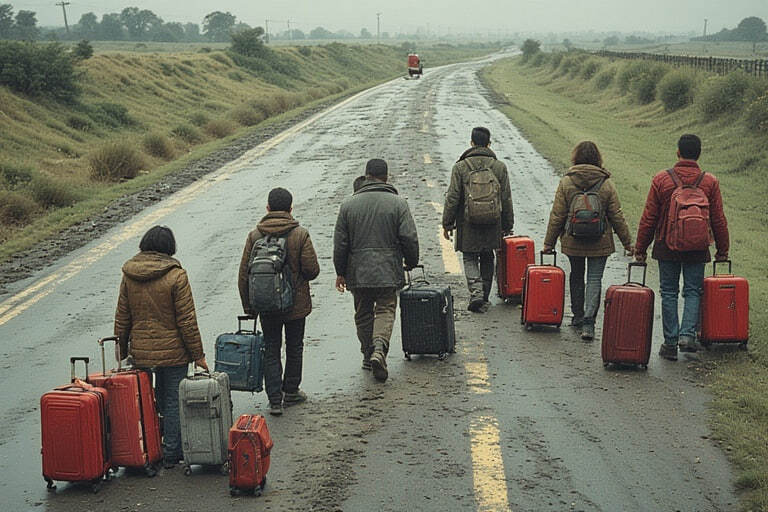
Depopulation—especially in the form of the departure of able-bodied families—is considered today a key socio-economic trend in the Baltic countries. Many researchers – not just journalists in mass media—call this depopulation a “national catastrophe.”
According to the 2024 World Factbook, Latvia ranked first among European countries in terms of depopulation, Lithuania ranked second, and Estonia ranked fifth, behind Poland and Romania. The numbers really do look like a demographic catastrophe.
Estonia, the most demographically prosperous of the Baltic countries, showed 9,691 births and 15,756 deaths last year, in 2024. In Latvia the situation is the same: 12,571 births last year (-13.2% compared to 2023) and 26,341 deaths (-6%); natural decline –13,770. The same happens in Lithuania: 22,068 births, 42,884 deaths; total fertility rate 1.27.
It would seem that the similar economic parameters of these five countries—Estonia, Poland, Romania, Latvia, and Lithuania—point to the underlying reason for depopulation. All of them serve as donors of labor resources to “old Europe.” For their citizens, the status of being EU members makes relocation and employment in more developed countries with higher wages significantly easier. Since it is primarily young and working-age families who move, they tend to postpone having children until after resettling; in Latvia, Lithuania, and Estonia, it is mainly the grandparents who remain, while their grandchildren are raised abroad as “Europeans.”
According to the Ministry of Foreign Affairs and the Migration Department, about 461,000 Lithuanians live abroad, with Germany and Ireland being the largest host countries. The figure is a huge number for a nation with fewer than 2.5 million inhabitants. Moreover, we are seeing migration motivated specifically by employment: Lithuania is among the countries with the fastest growth in the issuance of PD A1 certificates for those working in two or more countries (the category of multi-country employment).
Extremely low pensions deter elderly residents of the Baltics from emigrating. In January 2024, Latvia’s Ministry of Welfare reported that, including supplements, the average pension stood at €563. In Estonia, the figure was somewhat higher at €680, while in Lithuania, in March 2024, it was €596.19. At such pension levels, even €500 in remittances from adult children working in “old” Europe becomes a decisive factor for economic well-being. According to the Bank of Lithuania, private remittances to Lithuania in 2023 amounted to €903.26 million (1.4% of GDP).
At first glance, the reasons for depopulation are obvious. The reasoning outlined above appears correct but somewhat superficial. The economic, mercantile motive for population outflow accurately describes the present situation, but it does not explain why things turned out this way. It does not address why, after the collapse of the USSR and the rapid integration into the European Union, the Baltic states were left without socio-economic stabilizers—factors that would have kept their populations rooted in their traditional places of residence.
Had such stabilizers existed, the economic model might have developed in the opposite direction. One could reasonably assume that European entrepreneurs, recognizing the availability of large groups of well-educated, disciplined, and relatively inexpensive workers, would have started developing production facilities directly in the Baltics—as we see happening today, for example, in Vietnam. But this did not occur, and in the Baltics labor migration grew into full-fledged depopulation. So, what caused this particular demographic trajectory?
The Legacy of Stalinism: The Death of the Baltic Village
A key factor behind the rapid outflow of the Baltic states’ qualified and inexpensive labor force to “old Europe,” before Western European investors arrived in their own countries, lies in the destruction of the social roots of Baltic society—specifically, the rural way of life in these territories.
Before the Second World War, the Baltics were an agrarian region, with the majority of the population living in rural areas. The settlement system consisted mainly of small villages and farmsteads. In Latvia, some eastern districts (Latgale) were dominated by villages, while in other regions the population mostly lived on individual farmsteads. These farmsteads functioned as self-contained economic units with land ownership. The distance between homesteads ranged from 100–150 meters to 1–3 kilometers.
The situation in Estonia differed somewhat, as the land reform of 1919 nationalized noble estates and divided them into smaller plots, which were transferred to local landless peasants for farming in the homestead style. From the expropriated lands, the state created about 56,000 small new farms, whose owners were primarily landless Estonian peasants. Similarly, Lithuania carried out a comparable land reform aimed at forming a prosperous peasant class by creating a homestead-based farming system. By 1938, homestead landownership accounted for 84% of all peasant land in Lithuania.
Thus, the social foundation was not only individual farming (which in the West would be called a farm) but also individual settlement, outside of large villages—the homestead model of land use.
This settlement pattern did not fit the needs of the Soviet regime established in 1940. Despite attempts to establish a Soviet agricultural system in 1940–1941, it wasn’t until around 1949 that they began to implement it in earnest. Under threat of deportation, peasants were forced to “join” collective farms. Stalin’s regime adopted a tactic of forced resettlement. At the end of March 1949, mass deportations of the Baltic republics’ inhabitants to Siberia and the Far North began. During the major March deportation (Operation “Priboi”) alone, 94,779 people were deported. Official figures show that 33,496 were deported from Lithuania, 41,445 from Latvia, and 20,660 from Estonia.
As a result, the remaining rural population was stripped of its traditional way of life. Collectivization was directly tied to the transformation of rural settlements. The goal was to remove people from their homesteads and resettle them into collective farm villages—sometimes larger than small towns. By the mid-1980s, agricultural enterprises (kolkhozes and sovkhozes) covered about 70% of Lithuania’s territory, and large rural settlements accounted for 70–75% of all Lithuanian villages. This arrangement sharply contrasted with the traditional homestead-based settlement structure that had existed just half a century earlier.
Even those born in these new large, artificial “main estates” of collective and state farms felt no emotional attachment to their homes. These places carried no family history or ancestral ties. And even if, by Soviet standards, such settlements offered decent living conditions, their residents often perceived them as prison camps—without guards, but with the right to leave. They had not chosen this place or way of life. The Soviet urban planning strategy promoted the construction of urban-type apartment buildings in these “main estates” as part of a broader ideology of “merging city and countryside.” Moving from one’s own house into an apartment in a multi-story building further severed historical ties with the land. Importantly, this was not ethnic in character: such a “break with the homeland” affected all rural inhabitants of the Baltics—Russians, Estonians, Latvians, and Lithuanians alike.
The collapse of the Soviet system and the subsequent shift in economic structures also radically altered settlement trajectories. The inherited network of settlements, adapted to collective farming, no longer matched the new economic realities. In the former “main estates” of kolkhozes and sovkhozes, the dissolution of collective farms and the rapid decline in agricultural employment became decisive factors of transformation.
In 2023, employment in agriculture in Latvia accounted for 6.75% of total employment. This figure had been falling for four consecutive years and was 3.4 times lower than in 1991. According to the World Bank, agricultural employment in Estonia in this period was only 2.6% of the workforce. In Lithuania in 2023, 5.06% of total employment was in agriculture, a 4.76-fold decrease since 1991. In 1991, agricultural employment reached its peak, accounting for 24.10% of the total workforce.
This dramatic decline in agricultural employment, combined with the earlier destruction of the homestead-based farming system during the Soviet period, produced a population free of local ties and traditions—ready to leave their homeland easily and without deep hesitation in search of any available work in “old Europe,” even in jobs unattractive to Western Europeans themselves.
No factors or circumstances kept these families in the Baltics. They had no access to the traditional rural work of the past. They had no ancestral homesteads. They had no tradition of working independently on their own small plots. What they did have was a good education, a tradition of diligence, a European identity, and EU passports. This rapid relocation of young families from both rural and urban regions of the Baltics occurred so quickly that it outpaced business interest in the region’s cheap labor force.
The project of a “European Vietnam”—a manufacturing hub for EU countries—simply could not keep up with the Baltic youth, who were already rapidly leaving for work in “old Europe.”
Lithuania Prepares for the Worst Scenario
PSCRP-BESA Reports No 93 (Oct 28, 2024)
In January 2024, three Baltic States agree to establish a common defence zone on their borders with Russia and Belarus. It represents concerns about security in the region. The border of Lithuania and Latvia with Russia and Belarus, and the border of Estonia with Russia could be evaluated as a new line of cold confrontation between Moscow and the Western world. Similarly like during the Cold War in the XX century, now this region lives in the shadow of the threat of real (“hot”) confrontation.
Lithuania is taking security threats seriously, and this is part of the new reality the whole region has been living in since 2014 (and especially since February 2022). Vilnius is implementing measures in the borderland near Russia (Kaliningrad district) and Belarus, including stockpiling anti-tank barriers and other fortifications in so-called “counter mobility parks”. Prepared elements of fortifications could be quickly moved from parks to planned spaces in the situation if the armed conflict seemed unavoidable.
In the Global Militarisation Index, Lithuania is marked as a state with an extreme level of militarisation. At the same time, it should be said that it is not a voluntary choice of Lithuania or other countries of the region. During the past decade, the perception of the security situation and reality of military threats changed in Vilnius drastically. Lithuania is reacting to the modus operandi of such neighbour countries as Russia and Belarus. The short historical overview could allow a better understanding of changes in Lithuanian security discourse.
Lithuania joined NATO at the end of March 2004 and a few days later become a member of the European Union too. For Vilnius, both events have not only practical but symbolic meanings. It was the last step of full integration back into the Western World after decades of Lithuania was excluded from it by Soviet occupation (1940-90/91*).
NATO umbrella became for Lithuania the guarantee that the situation of 1940 will not repeat. Especially keeping in mind that the threat of a direct military confrontation between Russia and NATO seemed unrealistic back in 2004. The Alliance improved the security of Lithuania and other Baltic States by establishing the NATO Air Policing mission in the context of the lack of military air forces capabilities by Lithuania, Latvia, and Estonia. It could also be evaluated as a symbolic gesture from the side of NATO.
The low concern about the security situation in the period after joining NATO shows the fact that Lithuania abolished conscription and turned military service only to professional in 2008. The decision was reviewed after Russia’s actions against Ukraine in 2014. Conscription to the Lithuanian army renewed in 2015.
Vilnius was aware of Russia’s aggression against Georgia in 2008. President of Lithuania Valdas Adamkus was between other leaders of the Baltic States, Poland, and Ukraine who arrived in Tbilisi to support Georgian leader Mikheil Saakashvili on August 13, 2008. For Lithuania, the so-called Five-Day War became proof that Russia was back to very aggressive behaviour toward post-Soviet countries. Unfortunately, the Western World in general not acknowledge this point of view. The political trend was to see Russia’s action in Georgia as an unpleasant accident.
The final turning point (and not only for Lithuania) was the annexation of Crimea in 2014 and the escalation of the conflict in the Donbas region. It grew up concerns that Russia pushed its own geopolitical game to a higher level. The main fear contained the scenario that now Moscow could try to implement hybrid aggression against one or another NATO country to see how the Alliance would react (and without the proper reaction it would be a defeat of NATO). Answering the question “Who could be next?”, the Baltic States were mentioned especially often.
NATO’s decision during the summit in Warsaw in 2016 to deploy in the Baltic States and Poland Alliance’s Enhanced Forward Presence (EFP) a little bit reduced fears in Lithuania. On the other hand, it was understandable that EFP is more subject to strategic communication. It was the message to Moscow that NATO remembers its responsibilities. At the same time, it was recognised that EFP would be not enough to defend the Baltic States and Poland in case of full-scale Russian aggression.
Lithuania is also afraid that could be a primary target of Russia due to the Suwalki gap. This is an 80-kilometre stretch of land on the Polish-Lithuanian border, squeezed between the territory of Russia and Belarus. Politico.eu even called it “the most dangerous place on Earth” in 2022. Suwalki gap is only one land connection between the Baltic States and other NATO allies. In the situation of conflict with NATO, Russia will try to cut it primarily. On the other hand, the role of the Suwalki gap decreased after Finland and Sweden joined the Alliance respectively in 2023 and 2024.
The discoursive understanding of the security situation in Lithuania one more time changed Russia’s war of aggression against Ukraine. If the lesson of 2014 was that Moscow could provide covered (hybrid) aggressive actions against sovereign states, practice since February 2022 showed that Russia also does not consider as taboo old-style convention war. It means that even conventional war between Russia and NATO could not be seen as impossible anymore. Lithuania, together with other Baltic States, understood that in that scenario they would be in the first frontline. This understanding importantly affects defence policy.
Since 2022, Lithuania has been preparing for the worst scenario. The preparations have two general pillars: cooperation with allies and building of own capabilities.
NATO is seen as a main guarantee for the security of Lithuania. Vilnius also trying to establish close teas with some members of the Alliance. For example, in 2023 Vilnius and Berlin signed an agreement that Germany will deploy one military brigade in Lithuania. But it is a quite long process in the context of fast geopolitical changes. The so-called “Lithuanian Brigade” should be fully deployed on the ground in Lithuania only in 2027.
Vilnius drastically grows investment in its military capabilities. In 2014 the main political parties of Lithuania agreed that the military budget should gradually grow up to 2 per cent of GDP till 2020. In 2016 were agreed that growth should be faster, and Lithuania should achieve the goal by 2018. In general, Lithuania has kept the military budget of no less than 2 per cent of the GDP since 2019 (in 2021 it was 1.97 per cent of the GDP). There are some political discussions that that is not enough and that the military budget should be even bigger, i.e. 4 per cent of the GDP.
Lithuania also trying to learn lessons from Russia’s war against Ukraine. Of course, not all Ukrainian practices could be adopted directly due to the smaller territory of Lithuania and its population less than 3 mln. people. At the same time, summarizing different discussions and analyses, there are three main lessons Vilnius learned from mentioned war:
Importance of the air defence and artillery;
Importance of the drone technologies;
Importance of total defence (involving civilian capabilities).
The reaction to the first lesson shows new military purchases of the Lithuanian army. At the end of 2022, Lithuania signed with the U.S. contract to buy artillery systems HIMARS. Vilnius also improved the air defence umbrella by buying NASAM and MSHORAD systems.
Russia’s war against Ukraine gives an impetus to Lithuanian military industries, especially in the sphere of drone technologies. Ukraine is already using Lithuanian FPV (first-person view) drones. Vilnius also appointed 200 mln. Euros support for Lithuanian military industries in 2024.
The reaction to the third lesson is the decision to create possibilities for civilians, who are not in military reserve or not participating in activities of the Lithuanian Riflemen’s Union (a paramilitary organisation involved in the national defence system), to find their place in the paradigm of national defence. In 2024 these civilians got the possibility to register with the military commandant’s office. They will be invited to short military trainings annually. The decision is partly inspired by the Ukrainian practice of territorial defence unions.
This all shows that Lithuania is very serious about the question of security. Consensus about the importance of defence is found on different levels, including politics and society. Keeping in mind its painful historical experience with Russia, Lithuania is preparing for possible direct military aggression from Moscow. At the same time, there is a risk of overlooking other (indirect) threats. Lithuania already has some experience with hybrid action from the side of Belarus and the attempt of the Minsk regime to weaponise processes of migration. There are reasonable suspicions that Russia already implementing some hybrid tactics on the territory of Lithuania too. It shows some acts of possible sabotage, provocations and actions covered as criminal activities. Possibly it is a more topical challenge for the security of Lithuania at present.
*Lithuania officially re-established independence on March 11, 1990, but Moscow did not recognise this decision till the collapse of the coup attempt in Moscow in August 1991.
Kaliningrad — Russia’s Exclave in Europe
PSCRP-BESA Reports No 77 (August 23, 2024)
During an official visit to Ukraine on 13 August 2024, Lithuanian Defense Minister Laurynas Kasčiūnas said against the backdrop of the AFU offensive in Russia’s Kursk Region: “We are now seeing them (Russians — Author) redeploying their troops to Kursk. I say to the Lithuanian people: ‘Look how the Ukrainians are fighting for you, because their fight forces Russia to pull back its troops from Kaliningrad’. We actually call it the ‘demilitarization’ of Kaliningrad, which is happening thanks to the bravery of your (Ukrainian — Author) military, thanks to your decisions.”
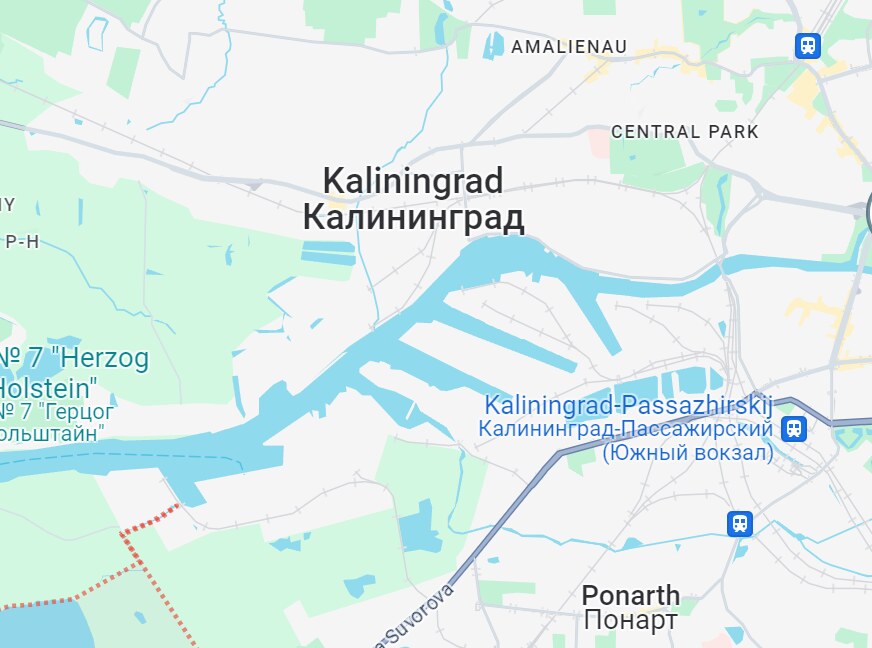
This statement indicates, among other things, that the military and political leadership of Lithuania, which directly borders on the Russian Federation’s Kaliningrad region, regards this Russian exclave as a real threat. Indeed, since the beginning of the full-scale Russian aggression against Ukraine, there has been constant speculation about the possibility of a Russian attempt to seize the so-called Suwalki Gap, a strip of land about 100 kilometers long on the border between Poland and Lithuania, which separates the Kaliningrad region from Russian-controlled Belarus. It should be noted that even before the full-scale aggression against Ukraine, Russia used the Kaliningrad region for military blackmail against the EU countries that did not recognize the “new political reality” created by Russia in the form of the annexation of Crimea and the establishment of the puppet regimes of the DNR and LNR in Donbass. The Russians then publicly announced the deployment of tactical missile systems “Iskander” (SS-26 Stone) with a range of up to 500 kilometers in Kaliningrad Oblast.
The discussion of the Suwalki Gap issue was used by the Russian Federation as part of its hybrid warfare against the EU and NATO after the EU sanctions imposed in 2022 left the Russian exclave in a de facto transportation blockade that dealt a heavy blow to its economy.
Ethnic political heritage
Kaliningrad Oblast, the central region of the former East Prussia acquired by the Soviet Union following World War II, shares land borders only with EU member states Poland and Lithuania. The region covers an area of 15,100 square kilometers (according to Rosstat as of the beginning of 2024). A distinctive feature of the current population of the Kaliningrad region (in 2020 it totaled 1,033,914 people), which survived the almost complete deportation of the indigenous German and Lithuanian population in 1945-1951, is its relatively weak rootedness. According to the last Soviet census in 1989, only 359,173 (41.22 %) of the inhabitants of Kaliningrad Oblast were born there. Ethnically, more than 80 % of the region’s population, according to the 2020 census, are East Slavic peoples (78.6 % Russians, 1.22 % Ukrainians, 1.1 % Belarusians).
The geographical remoteness from the Russian mainland, coupled with the relatively weak roots of the Russian and, in general, immigrant population in Kaliningrad Oblast, is combined with the existence of claims to it by German and Lithuanian ethno-political projects, based on the strong historical ties of the respective ethnic groups with the region. These projects have been a tangible factor in the life of Kaliningrad Oblast over the past decades, although neither Germany nor Lithuania have made any territorial claims to the Russian Federation.
Germans have lived in East Prussia for 700 years. Königsberg, now called Kaliningrad, was an important political and cultural hub of Germany. Hundreds of thousands of modern German citizens are natives of East Prussia or their descendants. There are organizations in Germany that have shown interest in the territories lost after World War II, including East Prussia. Against this background, at the end of the 1980s, during the Perestroika period, non-aggressive German penetration into Kaliningrad Oblast began. It manifested primarily in the development of economic and cultural ties, tourism and participation in humanitarian projects.
The German-Russian House, sponsored by Germany, for many years was the most powerful national-cultural organization in Kaliningrad. In 1989, the first Lutheran congregation after World War II appeared in Kaliningrad Oblast, and at the end of the 1990s the number of Lutheran congregations was already about 20. Almost all of their pastors were German citizens. At the same time, there were political conflicts in the 1990s connected with the activities of organizations seeking to restore the German character of Kaliningrad Oblast. Ethnic Germans from Russia living in the territory of the region play a special role in the activities of these organizations. Until 1990 their number in the region was stable and did not exceed 1500 people. After that, the influx of German migrants from the eastern regions of the former USSR intensified.
Despite the fact that Kaliningrad Oblast became a transit point for some of them on their way to Germany, the German community began to grow rapidly: they quickly moved from the 13th position among the region’s ethnic groups to the fifth, behind only Russians, Belarusians, Ukrainians and Lithuanians. The relocation of Russian Germans was an organized process and led to the emergence of relatively compact German settlements in rural areas. The relocation of Russian Germans and further development of the network of German cultural, social, educational and religious institutions functioning in the region were financed primarily by non-governmental German organizations.
The lack of territorial autonomy for Russian Germans and the fact that the republic of Volga Germans, abolished in 1941, could not be restored led to the popularization in the German movement in Russia of the idea of creating a Baltic German Republic within Russia in place of Kaliningrad Oblast. In June 1993, this idea was openly expressed at the first conference of the Russian German society “Freiheit”, held under the slogan “The German state of Königsberg is our historical homeland”. Its appeals in February 1994 to the UN Secretary General and other international organizations with a statement calling for the establishment of German autonomy in the territory of Kaliningrad Oblast led the Oblast administration, which began to perceive the growth of the German population as a potential threat to stability, to close down the “Oisroysen” society operating in Kaliningrad, which openly called for the restoration of East Prussia. However, the “Freiheit” society (officially registered in Moscow) continued its activities for some time.
In a poll conducted in Kaliningrad Oblast at the time, on the willingness to support the right of the Germans deported to Germany after the war to return to their historical homeland, 56% of respondents answered ‘no’, 27% found it difficult to answer, and 17% said ‘yes’. That is, for a very significant minority of the non-German population of the region, the idea of the return of Germans did not seem undesirable. The growth of the German population was tangible, despite the fact that the resettlement in the region and natural increase were compensated to a considerable extent by the continuing emigration to Germany. In 1997 the number of ethnic Germans in Kaliningrad Oblast reached 5.2 thousand people, the 2002 census showed that there were already 8,340 of them, but by 2020, according to the census, it dropped to 4,118.
Over the past 20 years, the Russian authorities have been gradually and increasingly restricting the activities of German organizations in the region. In 2017, the “German-Russian House” was closed down; soon afterwards, the Cultural and Business Center of Russian Germans in Kaliningrad was established, which still operates today with no political agenda whatsoever.
Lithuanian factor
The territory of Kaliningrad Oblast also occupies an important place in the Lithuanian national narrative, being part of the historical Lithuania Minor, which also includes the Klaipeda Region (Memelland), which now belongs to Lithuania. The claims of the Lithuanian national movement to the territory of the present-day Kalinigrad Oblast are based on the following provisions:
Linguistic and cultural kinship of Lithuanians and Prussians, the autochthonous population of the region, which Lithuanians tend to regard as one of the Lithuanian tribes.
The presence of a significant Lithuanian ethnic minority in Prussia in the modern times, primarily in its eastern regions. The latter circumstance led to the term “Lithuania Minor” as opposed to “Lithuania Major”, i.e. the Grand Duchy of Lithuania.
The important role played by Lithuania Minor in the formation of Lithuanian literature and culture.
From the territory that later became Kaliningrad Oblast, the vast majority of local Lithuanians, together with the German population, fled to Germany during the Soviet Army offensive at the end of World War II, or were deported later. The majority of modern Lithuanians in Kaliningrad Oblast are immigrants from the Lithuanian SSR and their descendants. However, this circumstance does not prevent them from considering themselves an indigenous population.
Throughout the post-war period, Lithuanians have been the fourth largest people in Kaliningrad Oblast (after the three East Slavic peoples). The 1959 census recorded 21.3 thousand Lithuanians in the region (3.48% of the population), in 1970 their number reached its maximum level (23.4 thousand), after which there was a downward trend. By 1997 the number of Lithuanians in Kaliningrad Oblast was 18 thousand, by 2010 there were 9769, and only 4279 according to the 2020 census. The main reason for the rapid decrease of the Lithuanian minority in the Russian exclave was their departure to Lithuania or — using Lithuanian passports — to other EU countries.
The Lithuanian (as well as German) community of the region is marked by a high degree of organized community infrastructure. As early as 1993, local Lithuanian cultural societies were organized in the cities of Kaliningrad, Sovetsk, Chernyakhovsk, Gvardeisk, as well as in the districts of Gusev, Krasnoznamensk, Nemanovsk and Slavsk. In 1996 the Kaliningrad Regional Society of Lithuanian Culture “Birute” was registered, and in 1998 the Kaliningrad Regional Association of Lithuanian Language Teachers was registered. The museum of the outstanding Lithuanian cultural figure Vidūnas (1868–1953), operating in the town of Sovetsk, where he lived, not only plays a cultural and educational role, but also symbolizes the autochthony of the Lithuanian community and its continuity with the culture of Lithuania Minor of the pre-war period.
Lithuanian governmental and public organizations until relatively recently actively cooperated with Lithuanian organizations in Kaliningrad Oblast. In a number of cases, conflicts occurred between the Russian authorities and Lithuanian government structures and public organizations, which, in the opinion of the Russian side, de facto ignored Russian sovereignty in the region. After the beginning of the full-scale Russian aggression against Ukraine and Lithuania’s severe restriction of Russian transit to the Kaliningrad region, Lithuanian organizations in the exclave started to face persecution. In particular, the Association of Lithuanian Language Teachers was closed down by court decision[1].
New Kaliningrad identity
A significant part of the Russian-speaking population, numerically dominant in the Kaliningrad region, has also formed its own local-patriotic narrative. This narrative is based on an attempt to appropriate the pre-Russian history of the region. It is quite clearly articulated on the Russian-language website “Our Homeland — East Prussia” dedicated to the history of Kaliningrad Oblast: “The landscape of East Prussia is unchanging. There is no point in denying that the country, which has become our homeland, is an integral part of 700 years of German history and the whole European culture. In the post-war half-century, three generations of people have grown up in the north of East Prussia, forming a new Prussian ethnos. The ambiguity of the concept of “homeland” is an obstacle for many people to realize it. But hopefully, soon the natural territorial identification will be strengthened in the minds of those born on this land after the war, and its fate will be in the hands of people who are proud of and love their homeland — East Prussia”.
In search of a new local identity, some Kaliningrad activists would even show interest in attempts to revitalize the Prussian language, which died out in the 18th century, and in neo-paganism, based on the reconstruction of the religion of the ancient Prussians and promoted through modern music.
However, the construction of a new “East Prussian” local narrative manifested itself not only in local history and youth subculture, but also in the purely political sphere. At the end of 1993, the Baltic Republican Party (BRP) was founded, which proclaimed its goal to upgrade the status of Kaliningrad Oblast to the level of a republic within the Russian Federation, although it did not seek to restore the German character of the region.
In the 2000 elections, the BRP won one seat (out of 31) in the Kaliningrad Regional Duma. However, the BRP was banned after Russia adopted the law “On Political Parties” in 2001, which outlawed all regional political parties. Some of its activists emigrated to the West. BRP leader Sergei Pasko (1951–2015) unsuccessfully tried to have the ban overturned through the Constitutional Court of the Russian Federation.
After his claim was rejected in 2005, the remaining activists in Kaliningrad Oblast established the public movement “Respublika” (“Republic”), whose program contained the same demands as those of the BRP. Over time, this movement has more and more come under the influence of the authorities. Thus, in 2010, activists of the “Respublika” movement picketed consulates of Western European countries in Kaliningrad under the slogan “Kaliningrad is a hostage of Europe”, demanding to ease the visa regime for the residents of the region. This action was supported by the governor. After the beginning of the full-scale invasion of Ukraine by the Russian Federation, the BRP members abroad became more active. They began to demand the creation of an independent Baltic Republic instead of turning Kaliningrad Oblast into a republic within the Russian Federation. The BRP joined the Free Nations of Post-Russia Forum and even held an online referendum on independence.
It is not ruled out that in the conditions of a serious domestic political crisis in the Russian Federation, the question of the political status of the Kaliningrad region will become a pressing issue in the foreseeable future. On the one hand, for its population, free economic interaction with Poland, Lithuania and other EU countries will literally become a matter of survival as soon as the government subsidies for ferry crossings cease. On the other hand, for EU countries, the continued existence of a Russian exclave in Europe will be a constant source of danger. The BRP currently operating outside the Russian Federation and the existing “Respublika” movement in the region are the vehicles of the idea of self-determination of Kaliningrad Oblast – Baltic Republic – East Prussia in one form or another, but necessarily in close contact with the EU countries. In the cultural and social aspect, this contact will also be facilitated by the still existing social structures in the region, which are connected with the German, Lithuanian and Polish national projects.
[1] Yulia Paramonova, “‘There is no Nazism at all’. How Kaliningrad is waging war on Lithuanian culture”, LRT, 25.7.22.